
Lyric Opera House tickets 14 May 2027 - The Sleeping Beauty | GoComGo.com

The Sleeping Beauty

Lyric Opera House, Chicago, USA
All photos (9)
Select date and time
7:30 PM
From
US$ 143

E-tickets: Print at home or at the box office of the event if so specified. You will find more information in your booking confirmation email.

You can only select the category, and not the exact seats.
If you order 2 or 3 tickets: your seats will be next to each other.
If you order 4 or more tickets: your seats will be next to each other, or, if this is not possible, we will provide a combination of groups of seats (at least in pairs, for example 2+2 or 2+3).

Important Info
Type: Ballet
City: Chicago, USA
Starts at: 19:30

E-tickets: Print at home or at the box office of the event if so specified. You will find more information in your booking confirmation email.

You can only select the category, and not the exact seats.
If you order 2 or 3 tickets: your seats will be next to each other.
If you order 4 or more tickets: your seats will be next to each other, or, if this is not possible, we will provide a combination of groups of seats (at least in pairs, for example 2+2 or 2+3).

Cast
Performers
Ballet company: Joffrey Ballet
Orchestra: Lyric Opera Orchestra
Creators
Composer: Pyotr Tchaikovsky
Choreographer: Christopher Wheeldon
Author: Charles Perrault
Librettist: Ivan Vsevolozhsky
Librettist: Marius Petipa
Overview

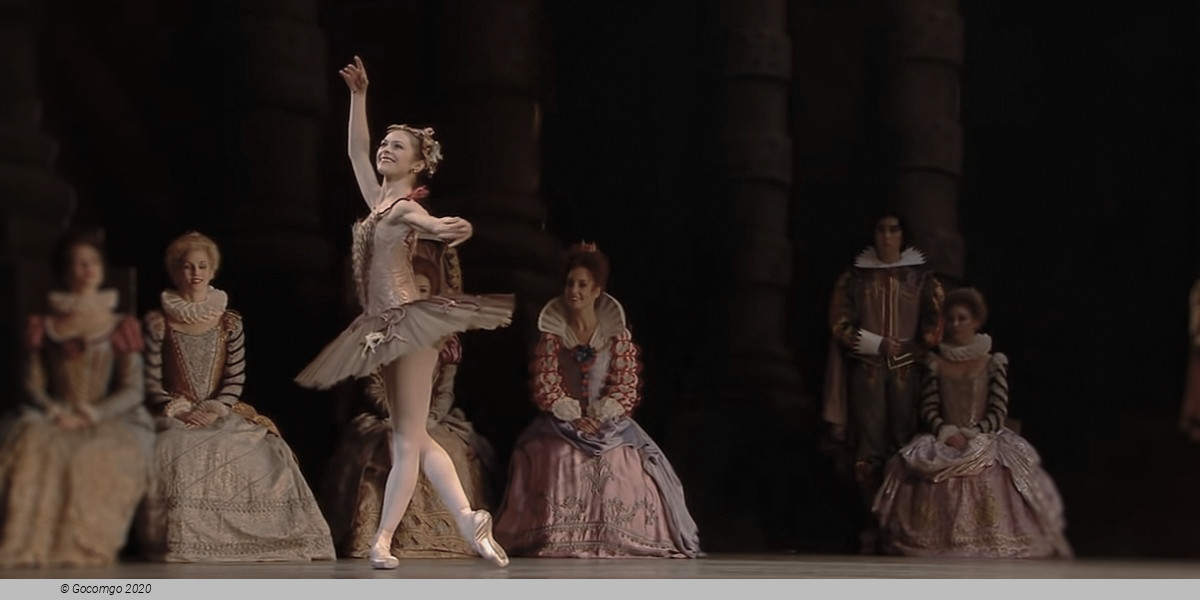
A timeless fairy tale, The Sleeping Beauty frames the enduring struggle between good and evil, as Princess Aurora falls under a spell that threatens to still an entire kingdom—only to be awakened by true love’s kiss. Upon her return, the realm is restored, and light prevails over darkness.

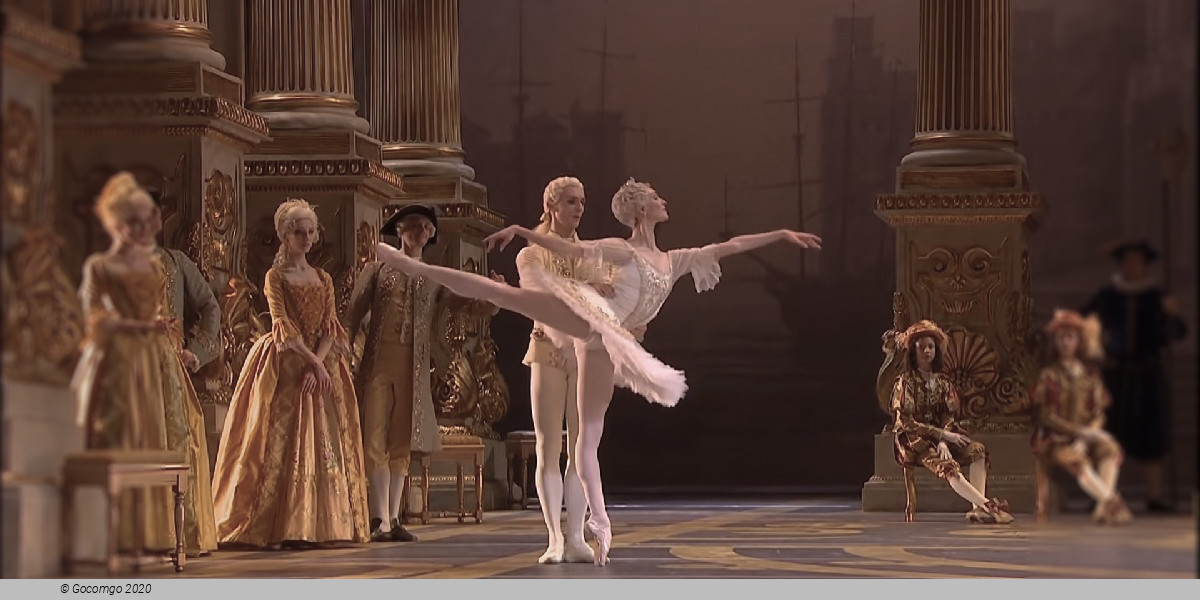
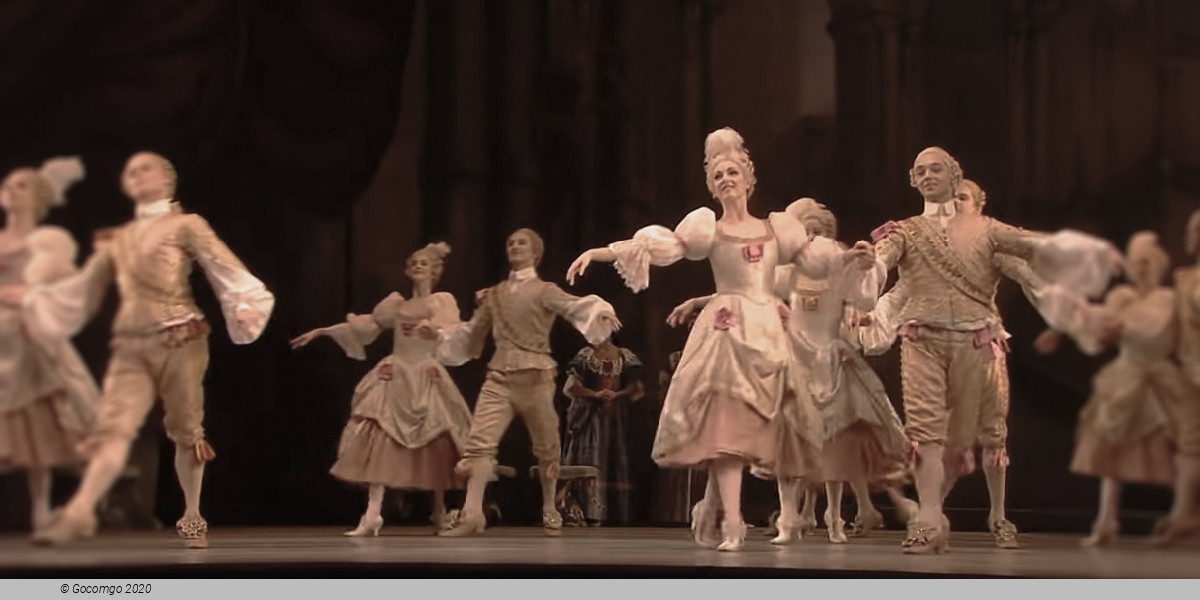
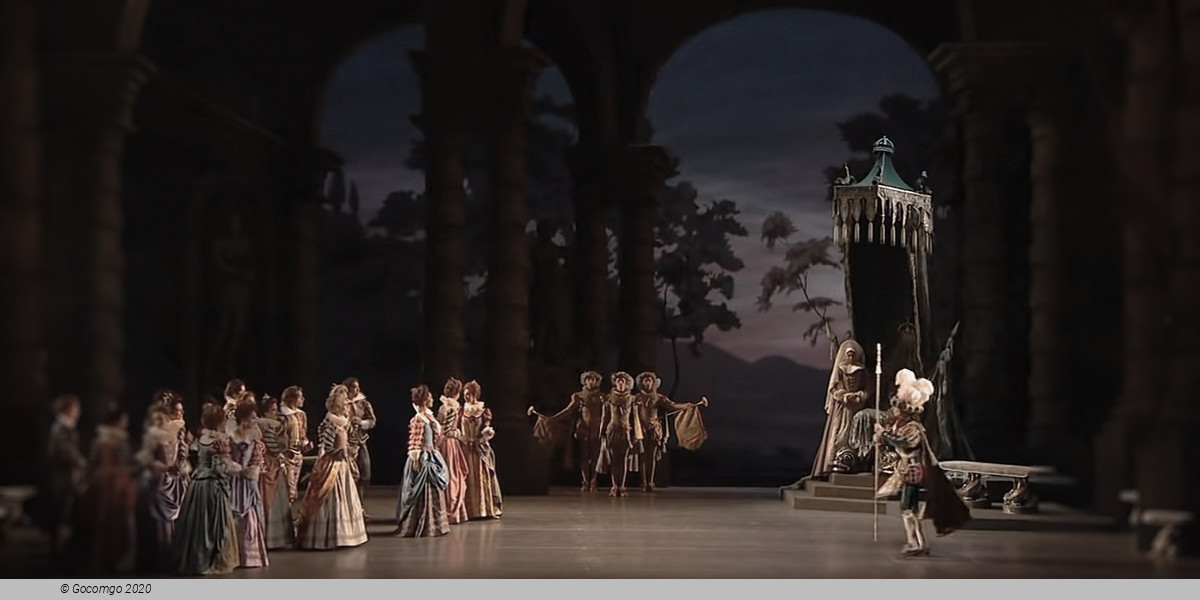
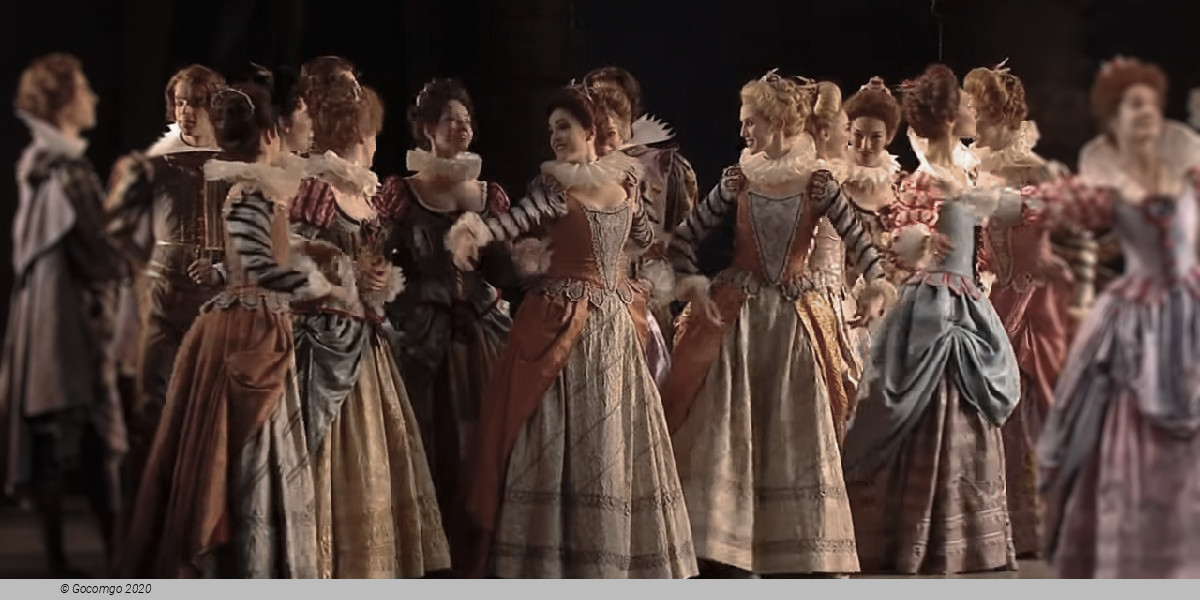
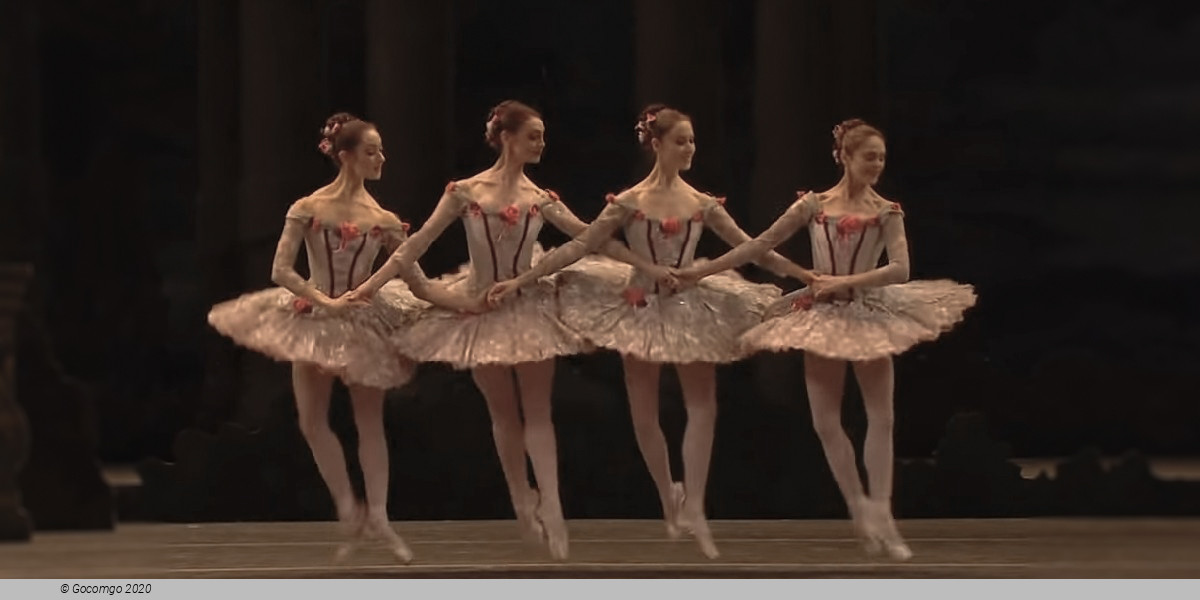
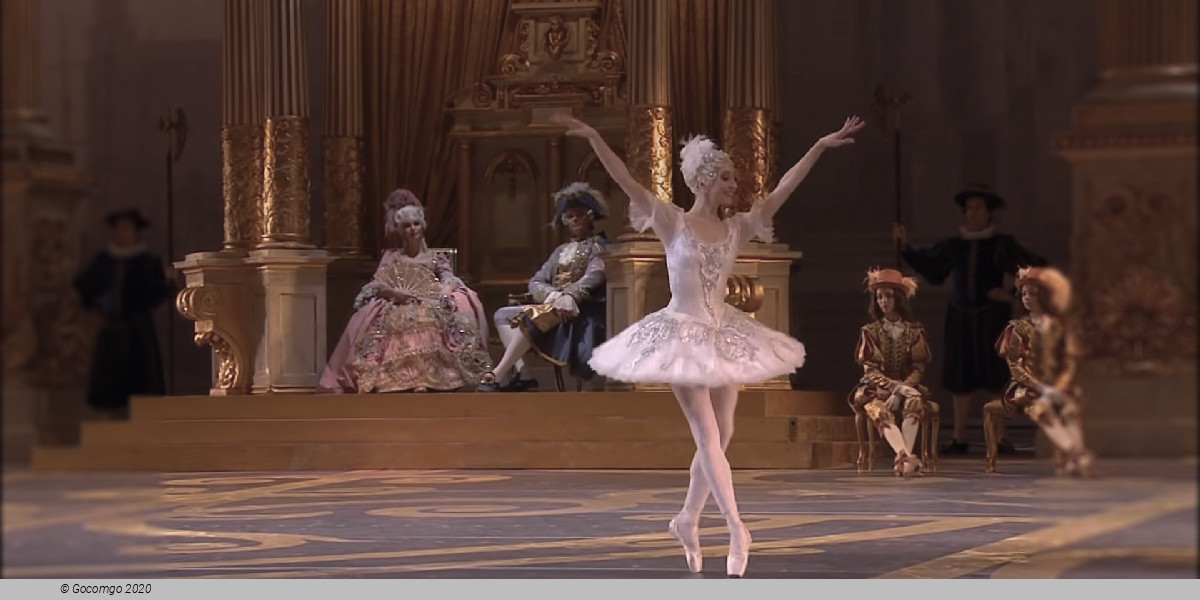
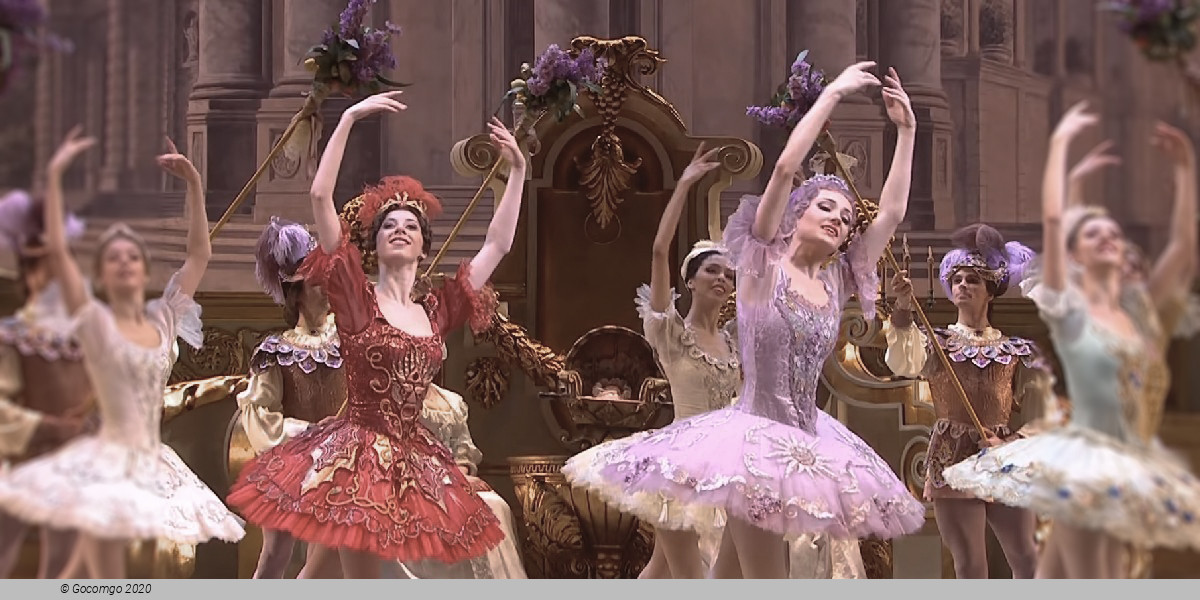
Choreographed by two-time Tony Award®-winner Christopher Wheeldon, The Sleeping Beauty is a theatrical spectacle blending classical elegance with vivid, cinematic storytelling. With dazzling choreography, Jerome Kaplan’s lavish costume and set design, and Tchaikovsky’s unforgettable score, the Joffrey’s season finale blossoms into a magical celebration for audiences of all ages.


From the choreographer of the critically acclaimed Alice’s Adventures in Wonderland, Swan Lake, and The Nutcracker.

History
Premiere of this production: 03 January 1890, Mariinsky Theatre in St. Petersburg

The Sleeping Beauty is a ballet in a prologue and three acts, first performed in 1890. The music was composed by Pyotr Ilyich Tchaikovsky (his opus 66). The score was completed in 1889, and is the second of his three ballets. The original scenario was conceived by Ivan Vsevolozhsky, and is based on Charles Perrault's La Belle au bois dormant. The choreographer of the original production was Marius Petipa.

Synopsis

Time: Baroque
Place: Europe

Prologue (The Christening)

King Florestan XXIV and his Queen have welcomed their first child, Princess Aurora, and declare a grand christening ceremony to honor her. Six fairies are invited to the ceremony to bestow gifts on the child. Each fairy brings a gift of a virtue or positive trait, such as beauty, courage, sweetness, musical talent, and mischief. The most powerful fairy, the Lilac Fairy, arrives with her entourage, but before she can bestow her gift, the evil fairy Carabosse arrives with her minions. Carabosse furiously asks the King and Queen why she had not received an invitation to the christening. The blame falls on Catalabutte, the Master of Ceremonies who was in charge of the guest list. Carabosse gleefully tears his wig off and beats him with her staff, before placing a curse upon the baby princess as revenge: Aurora will indeed grow up to be a beautiful, healthy, delightful young lady, but on her sixteenth birthday she will prick her finger on a Spindle and die. The King and Queen are horrified and beg Carabosse for mercy, but she shows none. However, the Lilac Fairy intervenes. Though she does not have enough power to completely undo the curse, she alters it, allowing the spindle to cause a peaceful 100-year sleep for the princess, rather than death. At the end of those 100 years, she will be woken by the kiss of a handsome prince. Relieved that Aurora's life will ultimately be spared, the court is set at ease.

Act I (The Spell)

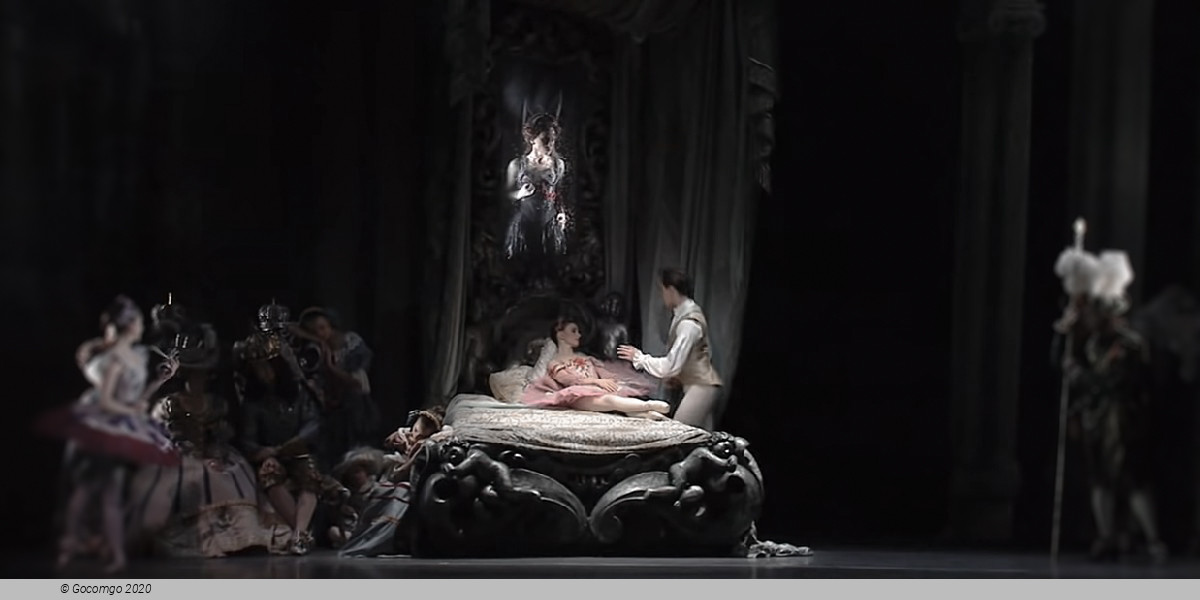
It is the day of Princess Aurora's sixteenth birthday. Celebrations are underway, though the King is still unsettled by Carabosse's omen. The master of ceremonies discovers several peasant ladies frolicking about with knitting needles and alerts the King, who initially sentences the women to a harsh punishment. The Queen gently persuades him to spare the innocent citizens, and he agrees. An elaborate waltz is performed and Princess Aurora arrives. She is introduced to four suitors by her doting parents. Aurora and the suitors perform the famous Rose Adagio. Presently, a cloaked stranger appears and offers a gift to the princess: a spindle. Having never seen one before, Aurora curiously examines the strange object as her parents desperately try to intervene. As predicted, she pricks her finger. While initially appearing to recover quickly, she falls into a swoon and collapses. The cloaked stranger reveals herself to be Carabosse, who believes that her curse still stands and that the princess is dead. Once again, the Lilac Fairy quells the hubbub and reminds the King and Queen that Aurora is merely asleep. The princess is carried off to bed, and the Lilac Fairy casts a spell of slumber over the entire kingdom, which will only be broken when Aurora awakens. A thick layer of thorny plants grows over the palace, hiding it from view.

Act II (The Vision)

One hundred years later, Prince Désiré is attending a hunting party. Though his companions are lighthearted, the prince is unhappy and eventually asks to be left alone. On his own in the forest, he is met by the Lilac Fairy, who has chosen him to awaken Aurora. She shows him a vision of the beautiful princess, and the prince is immediately smitten. The Lilac Fairy explains the situation, and Désiré begs to be taken to the princess. The Lilac Fairy takes him to the hidden castle. Carabosse makes one last attempt to cement her vengeful curse, but the Lilac Fairy and the prince manage to defeat her together at last. Once inside the castle, Désiré awakens Aurora with a kiss. The rest of the court wakes as well, and the King and Queen heartily approve when the prince proposes marriage and the princess accepts.

Act III (The Wedding)

The royal wedding is underway. Guests include the Jewel Fairies: Diamond, Gold, Silver and Sapphire, and of course the Lilac Fairy. Fairytale characters are in attendance, including Puss in Boots and The White Cat, Princess Florine and the Bluebird, and others. Aurora and Désiré perform a grand Pas de Deux, and the entire ensemble dances. The prince and princess are married, with the Lilac Fairy blessing the union.

Structure

Titles of all of the numbers listed here come from Marius Petipa's original scenario, as well as the original libretto and programs of the first production of 1890. Major changes which were made to the score for Petipa's original production are mentioned, and help explain why the score is often heard in different versions in theatres today.

All libretti and programs of works performed on the stages of the Imperial Theatres were titled in French, which was the official language of the Emperor's Court, as well as the language in which balletic terminology is derived.

Prologue — Le baptême de la Princesse Aurore

Venue Info

Lyric Opera House - Chicago
Location   20 North Wacker Drive

The world-renowned Lyric Opera of Chicago performs in one of North America's most beautiful opera houses, the Lyric Opera House at 20 North Wacker Drive.

In 2017, Lyric Opera of Chicago as house manager of the theater announced that the Joffrey Ballet planned to move from its longtime performance venue at the Auditorium Theatre to the opera house in 2020. The announcement coincided with Lyric's presentation of a new production of Gluck's Orfeo ed Euridice by choreographer John Neumeier; the production fused the musical and ballet elements of the opera and featured the Joffrey Ballet.

Opened as the Civic Opera House in 1929, the building was the vision of utility magnate Samuel Insull (1859–1938), a populist billionaire known as "the Prince of Electricity." Insull, the president of the Chicago Civic Opera Association, wanted to erect a new opera house to replace Louis B. Sullivan's Auditorium Building on South Michigan Avenue as the home of the Chicago Civic Opera — one that would be democratic in scope, and would be housed in and supported by a commercial office building.

The design team chosen by Insull, the Chicago architectural firm of Graham, Anderson, Probst & White, wanted the Civic Opera Building to symbolize "the spirit of a community which is still youthful and not much hampered by traditions." The firm was already famous for designing the Field Museum of Natural History, the Wrigley Building on North Michigan Avenue, and the Continental Illinois Bank Building on South LaSalle Street. In the 1930s the firm created the massive Merchandise Mart Building, also on the Chicago River.

From its opening on Nov. 4, 1929 (just six days after the stock-market crash) until Lyric Opera of Chicago was founded in 1954 (as Lyric Theatre), the Lyric Opera House was home to the Chicago Civic Opera, Chicago Grand Opera Company, Chicago City Opera Company and Chicago Opera Company.

Over the years the Lyric Opera House has also hosted visiting opera and dance companies, as well as touring operettas, musical shows, and a great number of orchestral, dance, and vocal concerts. The adjoining Civic Theatre, at the north end of the block-long building, was used to present plays (including the premiere of Tennessee Williams' The Glass Menagerie), dance performances, and films; for a considerable time it also served as a television studio.

The Civic Opera Building is a majestic limestone skyscraper with a 45-story office tower and two 22-story wings. Shaped like a gigantic throne facing the Chicago River between Washington and Madison streets, it was completed after just 22 months of planning and construction.

The auditorium and its backstage areas occupy approximately one-third of the total space of the building. The distinguishing feature on the Wacker Drive side of the Civic Opera Building is the colonnaded portico that runs the entire length of the building. At the south end, large bronze doors open onto the grand foyer of the Lyric Opera House, whose gilt cornices glitter beneath the sparkling lights of Austrian crystal chandeliers and elaborately stenciled ceilings.

The magnificent space, named the Daniel F. and Ada L. Rice Grand Foyer in honor of major benefactors in 1994, features a floor and wainscoting of pink and gray Tennessee marble, and fluted Roman travertine columns and pilasters. The 40-foot-high columns are topped with carved capitals covered in gold leaf. An imposing grand double staircase leads to the mezzanine foyer.

The decorative character of the entire building is a hybrid of Art Nouveau and Art Deco styles. Comedy-tragedy masks and cornucopia of instruments abound as playful ornaments around entrances, inspired by the Paris Opera House designed by Jean-Louis-Charles Garnier.

The famous painted fire curtain (depicting the parade scene from Aida) and the interior decoration details of the Lyric Opera House were created by American artist Jules Guerin in a palette of salmon pinks, roses, olives, golds and bronzes.

In 1993, Lyric Opera of Chicago purchased all of the theater and backstage space in the Civic Opera Building. Previously Lyric Opera had rented the auditorium and backstage areas.

A massive $100-million renovation of the backstage area commenced in 1993, and continued during Lyric's off-seasons (mid-March through early September) through 1996. The improvements made during this project allowed Lyric Opera to continue producing world-class opera well into the 21st century. The purchase and renovation was made possible by Lyric's $100-million "Building on Greatness" capital campaign. The Lyric Opera of Chicago/Chicago Symphony Orchestra Facilities Fund helped launch Lyric's campaign with a $50 million commitment.

The final phase of renovations took place between early April and early August of 1996 when all 3,563 seats, along with the carpeting, were removed from the auditorium so that artisans could clean and completely repaint. Previously, the theater had never been fully repainted since it opened in 1929 — just patched and touched up as needed over the years.

During the summer of 1996 more than 30 highly skilled artisans from around the country worked in the Lyric Opera House six days a week, 10 hours a day, applying 2,000 gallons of gold paint to the elegant ornamentation of the auditorium, Rice Grand Foyer, and all lobbies. The painters also hand-stenciled and hand-detailed the exquisite colorful ornamentation that adorns the Lyric Opera House ceilings.

Every seat in the auditorium was beautifully refurbished for the first time since 1929. The metal portions were repainted and the wood arms were refinished; the upholstery, seat and back of each chair were replaced. 6,000 square yards of new deep-red carpeting were installed in the theater and lobbies of the Lyric Opera House. The 31 boxes on the mezzanine level were rebuilt and enlarged by 18 inches.

A new 500-pound mainstage curtain was installed, made of 580 yards of heavy-weight wool velour and silk fringe to replicate the original 1929 curtain. All the bronze decorative features and railings in the Lyric Opera House were polished to a just-like-new sheen. The beautiful travertine marble was thoroughly cleaned.

Backstage, a 40-foot-high, 40,000-pound soundproof door was installed to acoustically separate the scenery handling area from the mainstage. During the renovation 32 miles of new rope and cable were installed backstage to update the scenery rigging system. Additionally, 170 miles of electrical wiring and 38 miles of electrical conduit were installed throughout the Lyric Opera House.

Important Info
Type: Ballet
City: Chicago, USA
Starts at: 19:30
Top of page