









Laeiszhalle Hamburg 3 February 2021 - Jan-Josef Liefers / Staatskapelle Weimar | GoComGo.com

Jan-Josef Liefers / Staatskapelle Weimar

Laeiszhalle Hamburg, Grosser Saal, Hamburg, Germany
All photos (4)
Select date and time
7:30 PM
Request for Tickets
Important Info
Type: Opera
City: Hamburg, Germany
Starts at: 19:30
Duration:

E-tickets: Print at home or at the box office of the event if so specified. You will find more information in your booking confirmation email.

You can only select the category, and not the exact seats.
If you order 2 or 3 tickets: your seats will be next to each other.
If you order 4 or more tickets: your seats will be next to each other, or, if this is not possible, we will provide a combination of groups of seats (at least in pairs, for example 2+2 or 2+3).

Overview

According to the motto "Everything you always wanted to know about Siegfried", Loriot created his very own version of Wagner's "Ring des Nibelungen". 

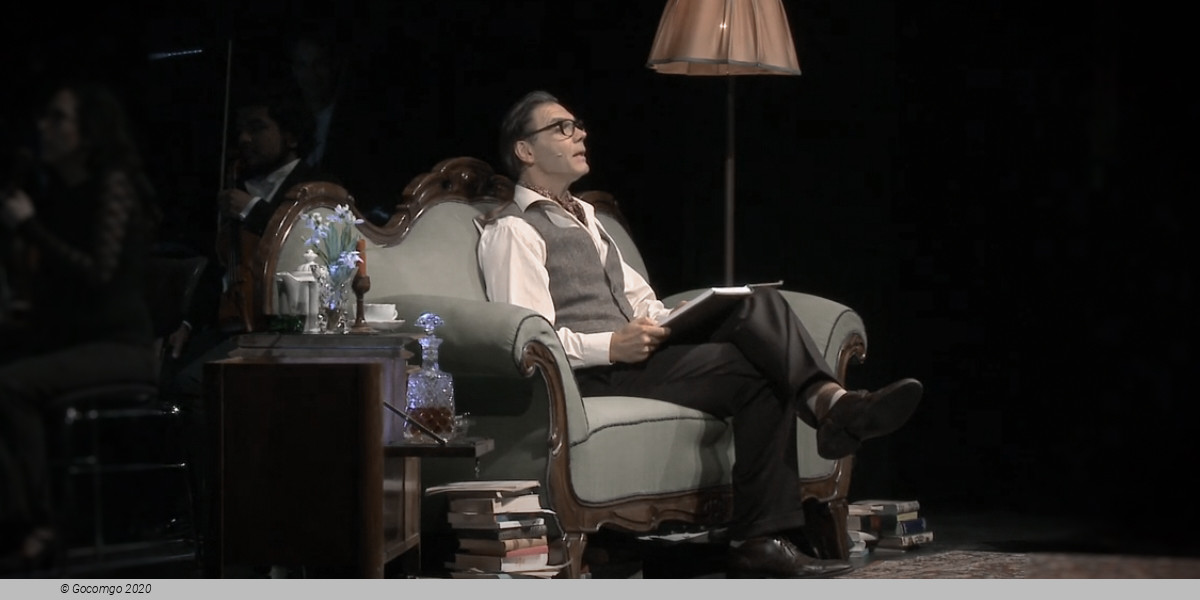
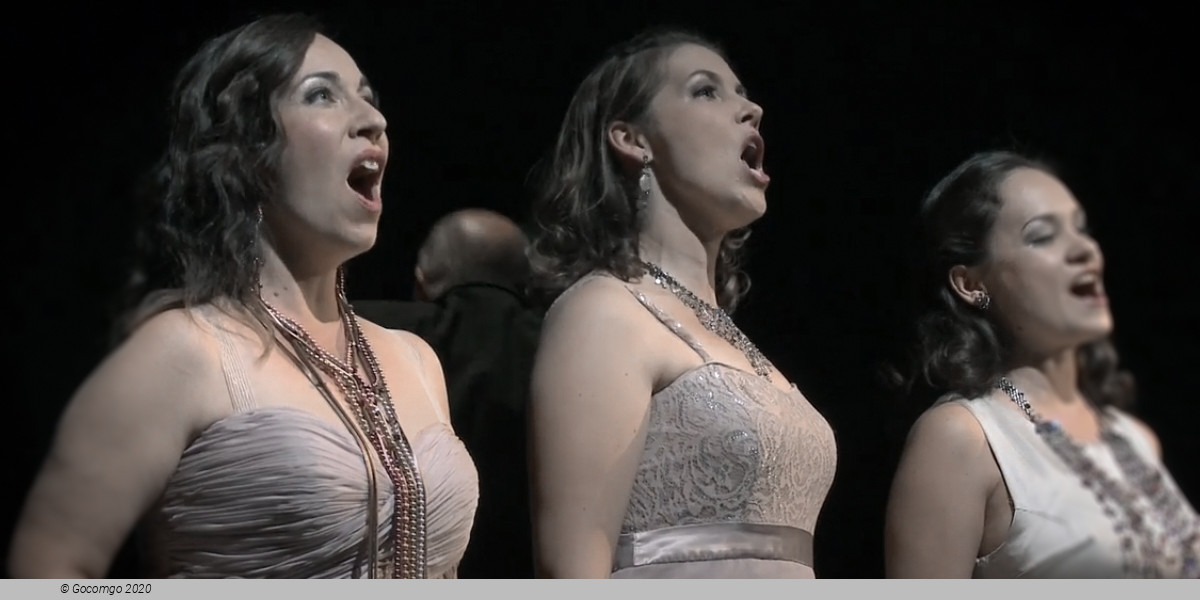
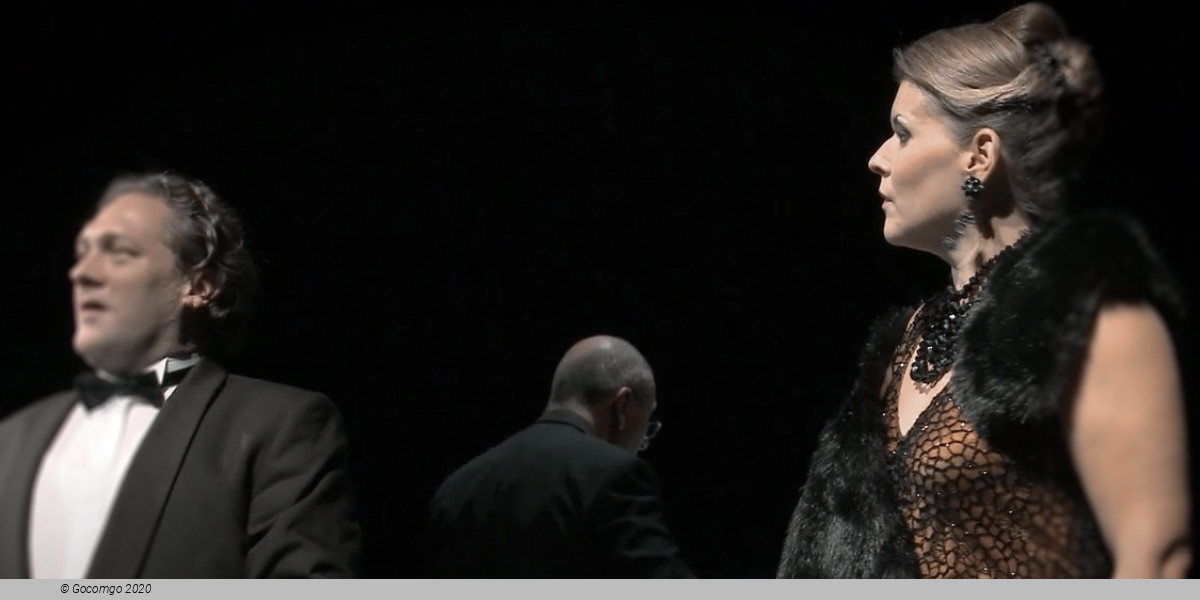
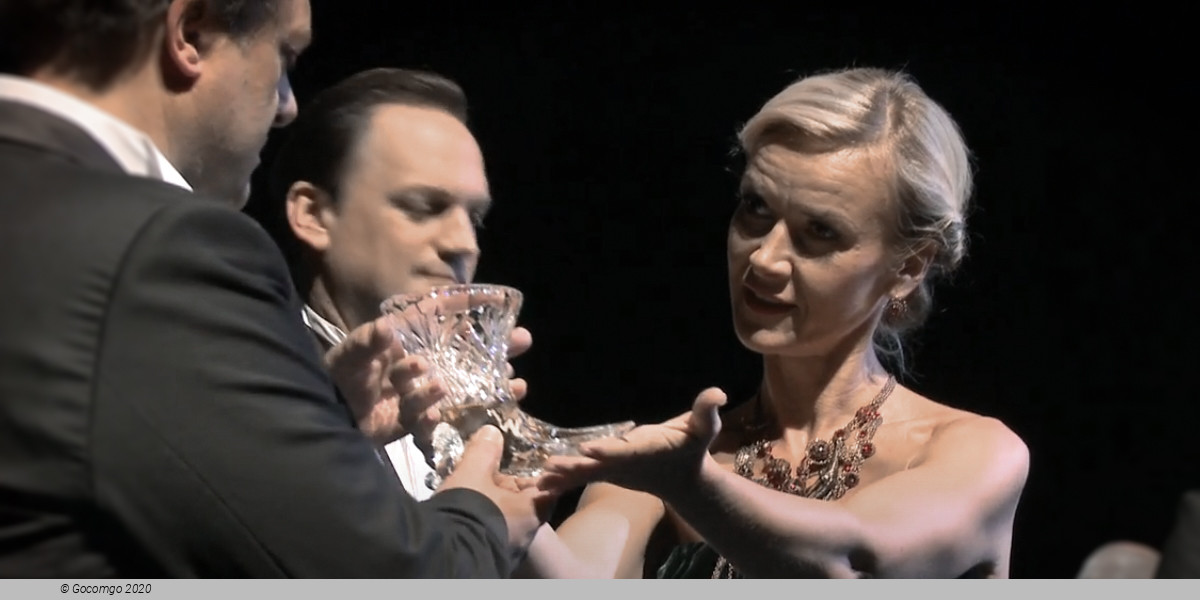
Amusing and astute, the summary of the four operas finally sheds light on the complicated plot and tackles the divine entanglements with wit and depth - not as a satirical, but as a witty and humorous introduction. The insights of the popular humorist are not only a pleasure for opera newbies, but also for Wagner connoisseurs. Jan Josef Liefers, one of the most popular German actors, takes on the role of speaker. He guides you confidently and with a wink through the confused world of the Nibelungs. The Staatskapelle Weimar with an accomplished ensemble of soloists contributes the essential scenes from "Das Rheingold", "Die Walküre", "Siegfried" and "Götterdämmerung". Wagner's monumental masterpiece in the instant version: digestible and entertaining!

PROGRAM
"The ring in one evening"
with music by Richard Wagner and texts by Loriot

History
Premiere of this production: Bayreuth Festspielhaus

Der Ring des Nibelungen (The Ring of the Nibelung), WWV 86, is a cycle of four German-language epic music dramas composed by Richard Wagner. The works are based loosely on characters from Norse sagas and the Nibelungenlied. The composer termed the cycle a "Bühnenfestspiel" (stage festival play), structured in three days preceded by a Vorabend ("preliminary evening"). It is often referred to as the Ring cycle, Wagner's Ring, or simply The Ring.

Synopsis

The plot revolves around a magic ring that grants the power to rule the world, forged by the Nibelung dwarf Alberich from gold he stole from the Rhine maidens in the river Rhine. Wagner described the Ring itself as a Rune-magic taufr ("tine", or "talisman") intended to rule the feminine multiplicative power by a fearful magical act termed "denial of love" (Liebesverzicht). With the assistance of the god Loge, Wotan – the chief of the gods – steals the ring from Alberich, but is forced to hand it over to the giants, Fafner and Fasolt in payment for building the home of the gods, Valhalla, or they will take Freia, who provides the gods with the golden apples that keep them young. Wotan's schemes to regain the ring, spanning generations, drive much of the action in the story. His grandson, the mortal Siegfried, wins the ring by slaying Fafner (who slew Fasolt for the ring) – as Wotan intended – but is eventually betrayed and slain as a result of the intrigues of Alberich's son Hagen, who wants the ring for himself. Finally, the Valkyrie Brünnhilde – Siegfried's lover and Wotan's daughter who lost her immortality for defying her father in an attempt to save Siegfried's father Sigmund – returns the ring to the Rhine maidens as she commits suicide on Siegfried's funeral pyre. Hagen is drowned as he attempts to recover the ring. In the process, the gods and Valhalla are destroyed.

Details of the storylines can be found in the articles on each music drama.

Wagner created the story of the Ring by fusing elements from many German and Scandinavian myths and folk-tales. The Old Norse Edda supplied much of the material for Das Rheingold, while Die Walküre was largely based on the Völsunga saga. Siegfried contains elements from the Eddur, the Völsunga saga and Thidrekssaga. The final Götterdämmerung draws from the 12th-century German poem, the Nibelungenlied, which appears to have been the original inspiration for the Ring.

The Ring has been the subject of myriad interpretations. For example, George Bernard Shaw, in The Perfect Wagnerite, argues for a view of The Ring as an essentially socialist critique of industrial society and its abuses. Robert Donington in Wagner's Ring And Its Symbols interprets it in terms of Jungian psychology, as an account of the development of unconscious archetypes in the mind, leading towards individuation.

Venue Info

Laeiszhalle Hamburg - Hamburg
Location   Johannes-Brahms-Platz

The Laeiszhalle (About this soundlisten)), formerly Musikhalle Hamburg, is a concert hall in the Neustadt of Hamburg, Germany and home to the Hamburger Symphoniker and the Philharmoniker Hamburg. The hall is named after the German shipowning company F. Laeisz, founder of the concert venue. The Baroque Revival Laeiszhalle was planned by the architect Martin Haller and inaugurated at its location on the Hamburg Wallring on June 4, 1908. At that time, the Musikhalle was Germany's largest and most modern concert hall.

Composers such as Richard Strauss, Sergei Prokofiev, Igor Stravinsky and Paul Hindemith played and conducted their works in the Laeiszhalle. Pianist Vladimir Horowitz gave one of his first international performances in 1926; violinist Yehudi Menuhin gave a guest performance in 1930 at the age of twelve. Following World War II, which it survived intact, the Laeiszhalle experienced an intermezzo when the British occupying forces used the space temporarily as a broadcast studio for their radio station BFN. Maria Callas gave concerts in 1959 and 1962. In the 1960s the musical repertoire was also expanded to jazz and pop music, with performances by Pink Floyd, Lale Andersen, Bee Gees, Lynyrd Skynyrd, Udo Jürgens and Elton John.

The Laeizhalle has two separate performance spaces. Due to its relatively low capacity and stage layout, the Laeiszhalle is particularly suitable for the performance of classical and early romantic repertoire, and less so for staging large-scale twentieth-century works. The management of both the Elbphilharmonie and the Laeiszhalle are under the direction of one concert company. Christoph Lieben-Seutter became General and Artistic Director in 2007.

Important Info
Type: Opera
City: Hamburg, Germany
Starts at: 19:30
Duration:
Top of page