Act 1
Kolenatý's law office, Prague, 1922
Vitek, Kolenatý's clerk, notes that the probate case of Gregor v. Prus has been going on for almost a century. Kolenatý represents the middle-class Gregors against the wealthy and aristocratic Prus family. Albert Gregor comes in to ask about the case. Kolenatý is at the Supreme Court, but has not returned because he is expecting the final resolution. Vitek's daughter Kristina, enters. She is a young opera singer, and praises Emilia Marty, a famous singer she has seen rehearsing and admits that she will never be the artist Emilia Marty is.
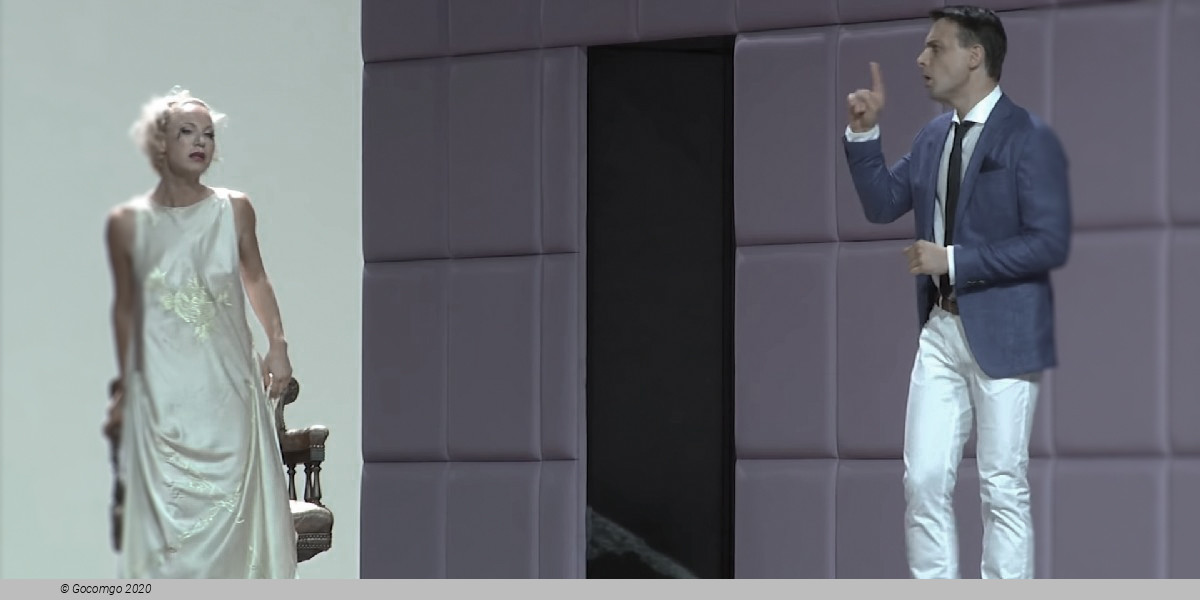
Kolenatý returns to his law office. Emilia Marty enters displaying an interest in the Gregor case, which Kolenatý summarizes for her. Baron Joseph Ferdinand Prus died in 1827, leaving no will or legitimate children. His cousin claimed the estate, but so did Albert's ancestor, Ferdinand Gregor, who asserted that the Baron had promised the estate to him. Each party presented different evidence to support their case, but neither could proffer an actual will. Here Emilia interrupts. Speaking with unusual familiarity of these long-ago events, she states that Ferdinand Gregor was the out-of-wedlock son of Baron Joseph (who was a very centered and diligent man, contradicting Dr. Kolenatý's description) and opera singer Ellian MacGregor. Kolenatý says that the case seems to be on the side of the Prus family, because there is no will. Emilia asks what would be required for Albert Gregor to win, and Kolenatý answers that the missing will is such an item. Emilia says that there is in fact a will, and describes an old cupboard in the Prus mansion where important papers were kept, where that document may be found.
Kolenatý thinks Emilia is inventing stories, but Albert insists that Kolenatý investigate at once, and even threatens to take the case to a rival lawyer. Kolenatý leaves, and Albert tells Emilia that if he does not get the estate, he will be penniless and shoot himself. He is already infatuated with Emilia, and makes advances to her. But Emilia, bored and indifferent, coldly refuses him. However, she asks his help in retrieving a document that will be found with the will.
Kolenatý returns with Jaroslav Prus. They found the will where Emilia said it would be, and Jaroslav congratulates Albert on his victory – if he can prove that Ferdinand Gregor was the Baron's out-of-wedlock son. Emilia says that she can prove that.
Act 2
The empty stage of the opera house
A stagehand and a cleaning woman discuss Emilia's extraordinary performance. Jaroslav Prus enters, seeking Emilia, accompanied by his young son Janek, and Kristina. Kristina is in love with, and in a relationship with, Janek.
Emilia enters, but spurns them all, including Janek, who falls under her spell, and Albert, who brings her expensive flowers. The old Count Hauk-Šendorf enters, and thinks he recognizes Emilia as Eugenia Montez, a Romani woman with whom he had an affair in Andalusia half a century before. Emilia tells him Eugenia is not dead, and in Spanish, calls him by a pet name and asks him for a kiss.
All except Jaroslav leave. He demands an explanation of her strange interest in his family, and reveals that the mother of the Baron's child was recorded as Elina Makropulos, who might be the same as Ellian MacGregor, whose love letters he has read. Prus describes her as a passionate woman with flexible morals, to which Emilia takes offense. He continues saying that only a descendant of Ferdinand Makropoulos can claim the estate. Emilia offers to buy a mysterious document found with the will, but Jaroslav refuses and leaves. Albert returns and again pleads his love, but Emilia merely falls asleep, and Albert leaves. Janek returns, and Emilia asks him to get the document for her. Jaroslav overhears this, and orders Janek to leave. He then agrees to provide the document himself if Emilia will spend the night with him.
Act 3
Emila's hotel room the next morning
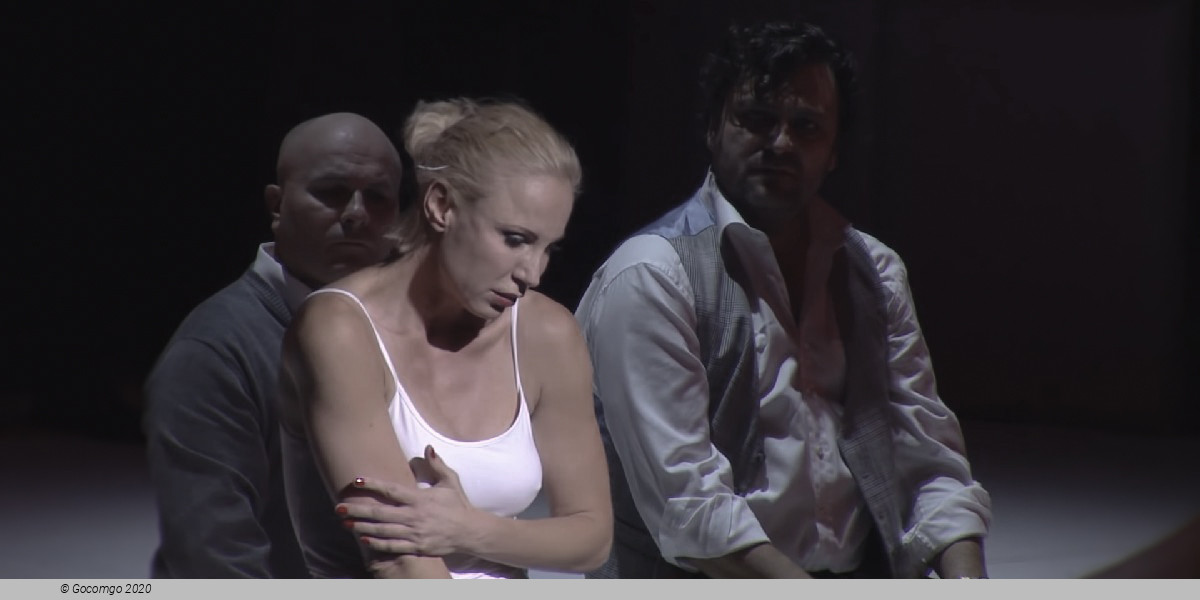
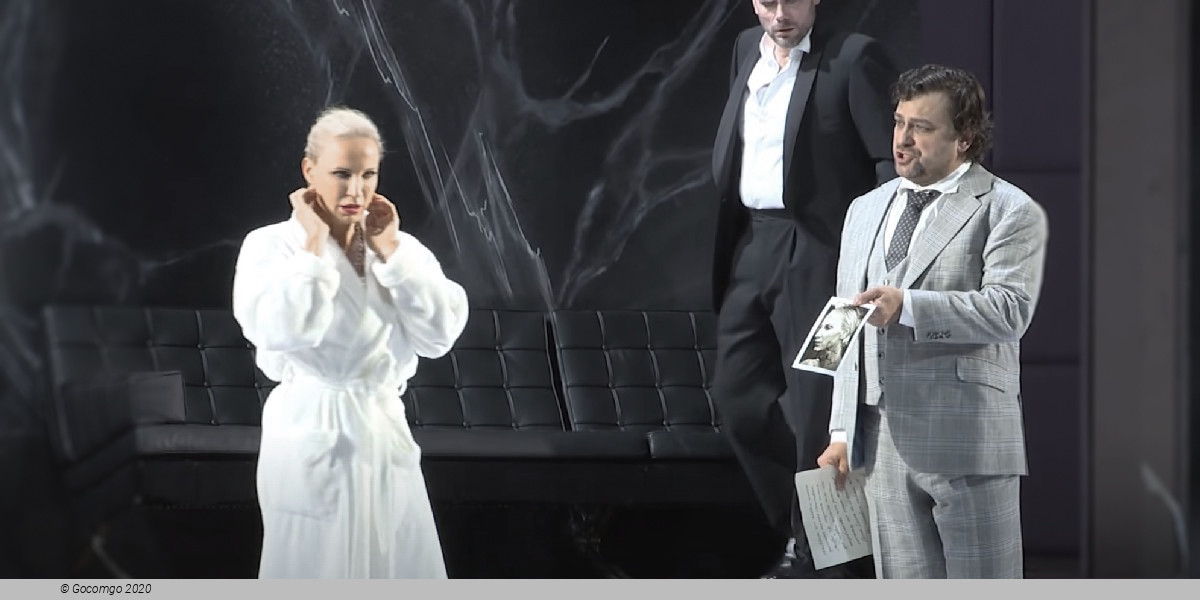
Emilia and Jaroslav have spent the night together. Though disappointed by Emilia's coldness, Jaroslav nonetheless gives her the envelope containing the document. News arrives that his son Janek has committed suicide because of his infatuation with Emilia. Jaroslav grieves, but Emilia is indifferent. Jaroslav hardly has time to express his anger at her reaction before Count Hauk-Šendorf enters. Hauk-Šendorf says that he has left his wife and wants to elope with Emilia to Spain. Albert, Kolenatý, and Kristina enter, with a doctor who takes Count Hauk-Šendorf away. Kolenatý has noticed that Emilia's handwriting matches that of Ellian MacGregor and suspects her of forgery. She leaves the room to get dressed, and says that after she has had her breakfast, she will clarify everything.
The rest of the party begins to search her papers and belongings. The searchers find many documents and keepsakes, all bearing names with the initials 'E.M.' Jaroslav says that the handwriting of Elina Makropulos on Ferdinand's birth certificate also matches that of Emilia.
Emilia returns, drunk and with a pistol, but Albert disarms her. Emilia decides to tell the truth. She is Elina Makropulos, born in 1585, daughter of Hieronymus Makropulos, an alchemist in Emperor Rudolf II's Court, who ordered him to prepare a potion that would extend his life. When the potion was ready, the Emperor ordered his alchemist to test it on his daughter first. She fell into a coma, and Hieronymus was sent to prison. After a week, Elina woke up and fled with the formula, which proved successful. She has since lived an itinerant life for three centuries, becoming one of the best singers of all time. To conceal her longevity, she has assumed many identities, including 'Eugenia Montez', 'Ekaterina Myshkin', and 'Ellian McGregor'. She confided her secret to Baron Joseph and gave him the formula, which he attached to his will for his son. However, the document was lost among the Baron's papers after his death.
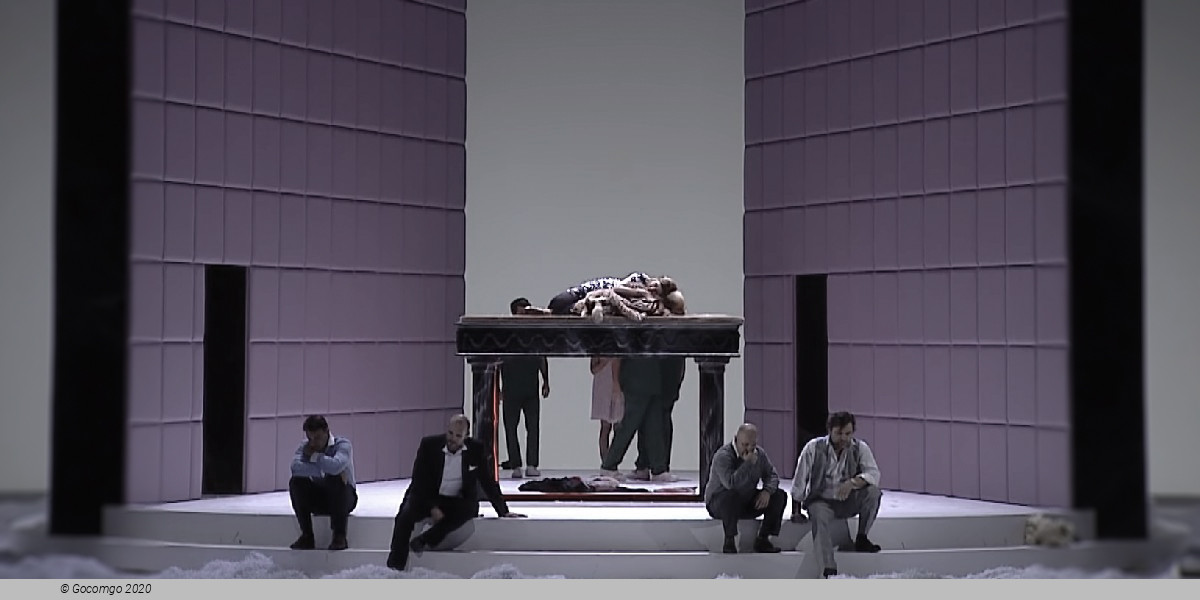
The potion is finally wearing off. Elina had wanted the formula to gain another 300 years of life. As the first signs of old age appear on her face, the others, initially disbelieving her story, come to believe her, and to feel pity for her. Elina has realized that perpetual youth has led her to exhausted apathy and resolves to allow death to come naturally to her, understanding that a sense of transcendence and purpose come from a naturally short span of life. Aging rapidly before the eyes of the astonished onlookers, she offers Kristina the formula so she now can become a great artist herself. However, Kristina burns the parchment in a candle flame. Elina collapses as she recites the first words of the Lord's Prayer in Greek.









 Christian-Zais-Straße 3