
Hessian State Theatre Wiesbaden 25 March 2023 - Rusalka | GoComGo.com

Rusalka

Hessian State Theatre Wiesbaden, Grosses Haus, Wiesbaden, Germany
All photos (5)
Select date and time
7:30 PM
Request for Tickets
Important Info
Type: Opera
City: Wiesbaden, Germany
Starts at: 19:30
Acts: 3
Sung in: Czech
Titles in: German

E-tickets: Print at home or at the box office of the event if so specified. You will find more information in your booking confirmation email.

You can only select the category, and not the exact seats.
If you order 2 or 3 tickets: your seats will be next to each other.
If you order 4 or more tickets: your seats will be next to each other, or, if this is not possible, we will provide a combination of groups of seats (at least in pairs, for example 2+2 or 2+3).

Overview

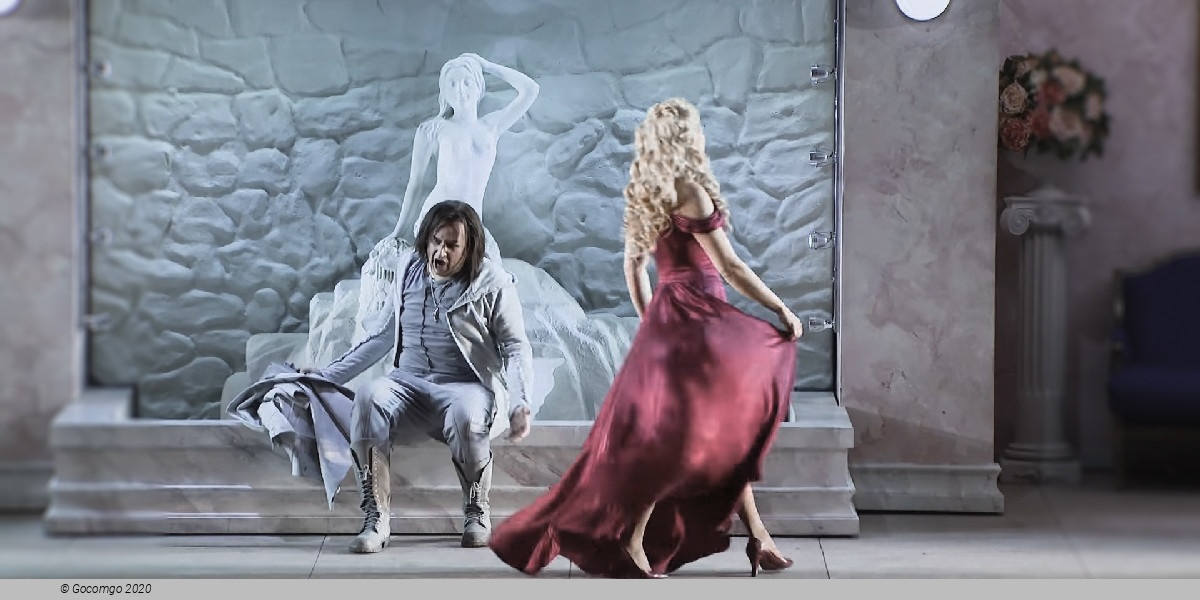
One of the most beloved Czech operas of all time, Antonín Dvořák’s famous "Rusalka" is part of the stable repertoire of many opera companies around the world. Composed as a "lyric fairy tale", the work deals with themes of love, redemption, identity, longing, communication and speechlessness.

Rusalka, a water sprite, falls in love with a prince who comes to swim in the lake where she lives. She is willing to sacrifice everything for the man she loves and, despite all warnings, leaves her watery home to follow the prince. But she soon becomes disillusioned by the human world, wandering endlessly until, finally, she is forced to make the ultimate sacrifice.

History
Premiere of this production: 31 March 1901, Prague

Rusalka is an opera by Antonín Dvořák. The Czech libretto was written by the poet Jaroslav Kvapil (1868–1950) based on the fairy tales of Karel Jaromír Erben and Božena Němcová. A rusalka is a water sprite from Slavic mythology, usually inhabiting a lake or river. Rusalka is one of the most successful Czech operas and represents a cornerstone of the repertoire of Czech opera houses.

Synopsis

Act 1

A meadow by the edge of a lake

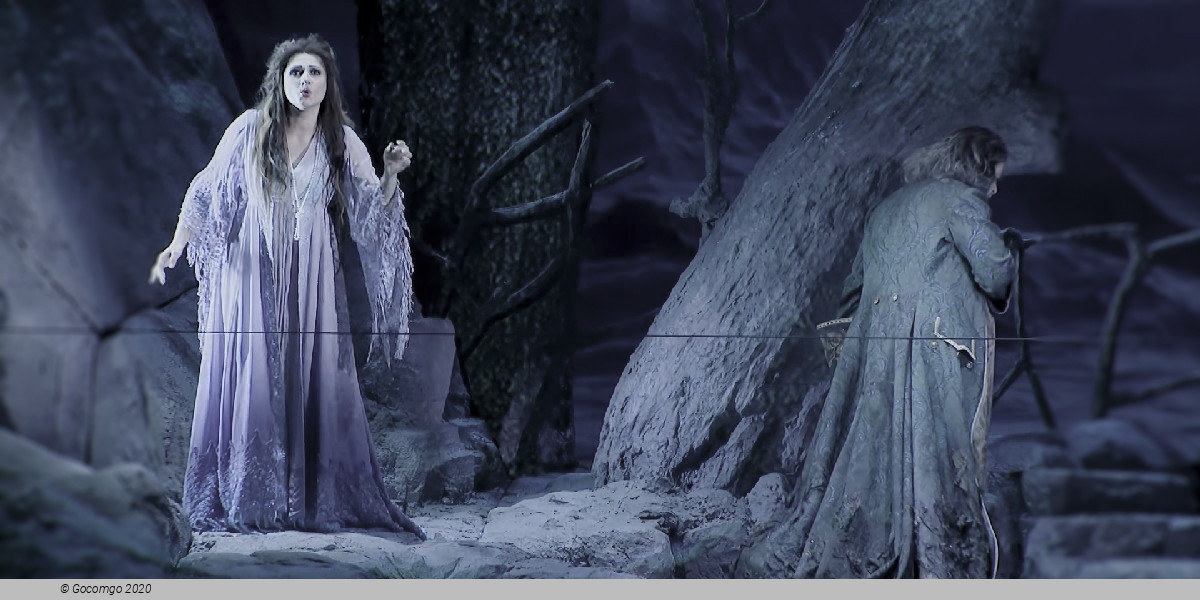
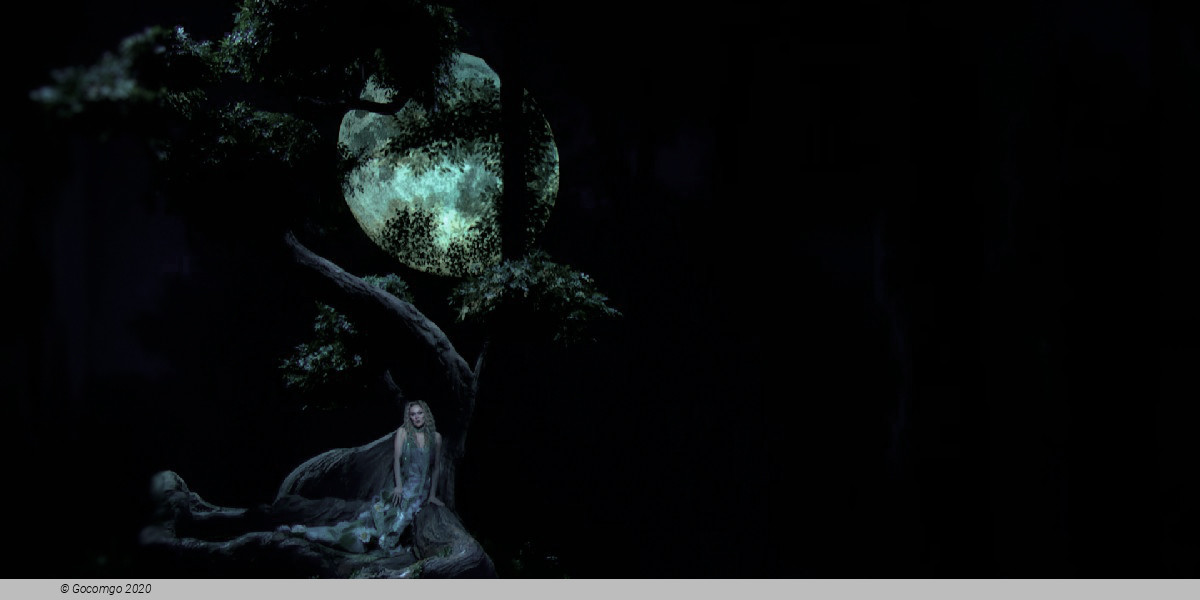
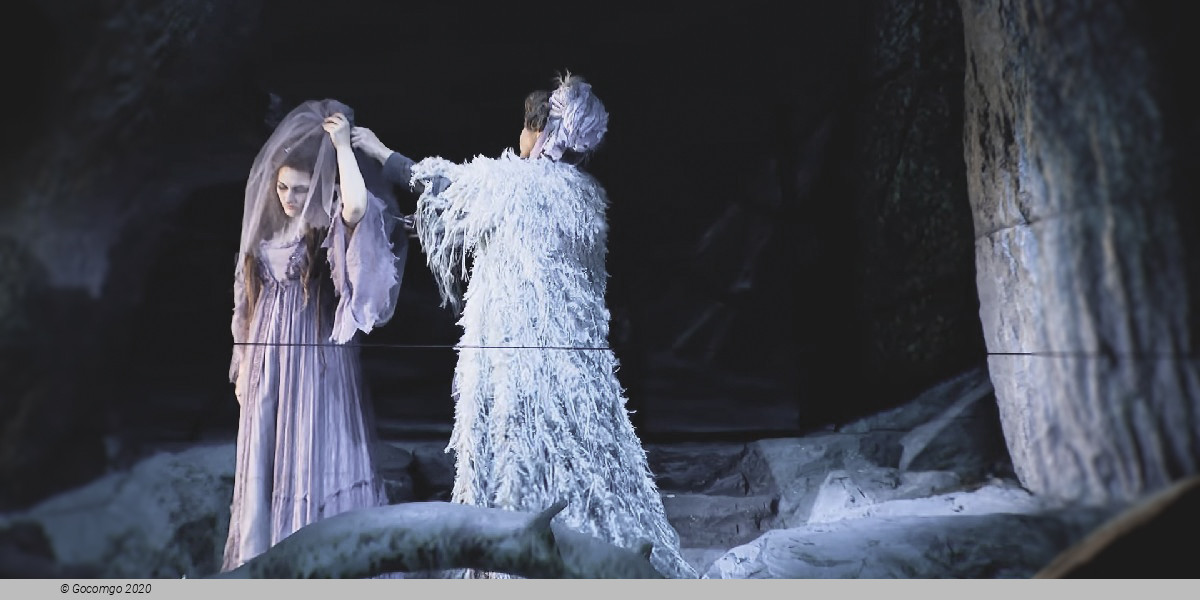
Three wood-sprites tease the Water-Gnome, ruler of the lake. Rusalka, the Water-Nymph, tells her father she has fallen in love with a human Prince who comes to hunt around the lake, and she wants to become human to embrace him. He tells her it is a bad idea, but nonetheless steers her to a witch, Ježibaba, for assistance. Rusalka sings her "Song to the Moon", asking it to tell the Prince of her love. Ježibaba tells Rusalka that, if she becomes human, she will lose the power of speech and immortality; moreover, if she does not find love with the Prince, he will die and she will be eternally damned. Rusalka agrees to the terms and drinks a potion. The Prince, hunting a white doe, finds Rusalka, embraces her, and leads her away, as her father and sisters lament.

Act 2

The garden of the Prince's castle

A Gamekeeper and his nephew, the Kitchen-Boy, note that the Prince is to be married to a mute and nameless bride. They suspect witchcraft and doubt it will last, as the Prince is already lavishing attentions on a Foreign Princess who is a wedding guest. The Foreign Princess, jealous, curses the couple. The prince rejects Rusalka. Rusalka then goes back to the lake with her father the Water Gnome. Though she has now won the Prince's affections, the Foreign Princess is disgusted by the Prince's fickleness and betrayal and she scorns him, telling him to follow his rejected bride to Hell.

Act 3

A meadow by the edge of a lake

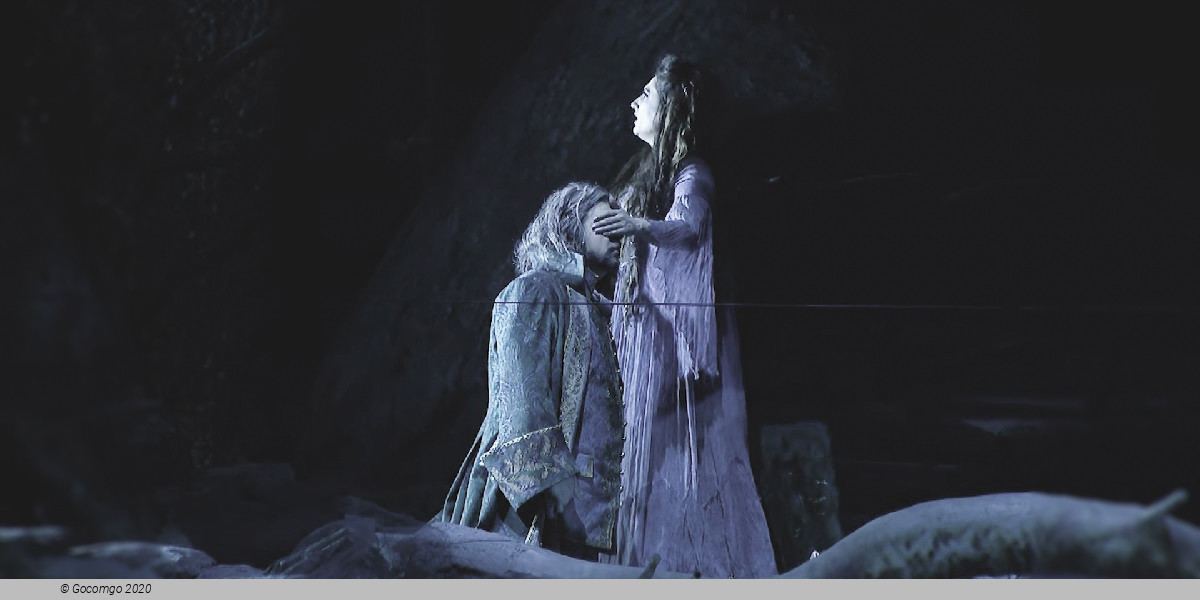
Rusalka asks Ježibaba for a solution to her woes and is told she can save herself if she kills the Prince with the dagger she is given. Rusalka rejects this, throwing the dagger into the lake. Rusalka becomes a bludička, a spirit of death living in the depths of the lake, emerging only to lure humans to their deaths. The Gamekeeper and the Kitchen Boy consult Ježibaba about the Prince, who, they say, has been betrayed by Rusalka. The Water-Goblin says that it was actually the Prince that betrayed Rusalka. The wood-sprites mourn Rusalka's plight. The Prince, searching for his white doe, comes to the lake, senses Rusalka, and calls for her. He asks her to kiss him, even knowing her kiss means death and damnation. They kiss and he dies; and the Water-Goblin comments that "All sacrifices are futile." Rusalka thanks the Prince for letting her experience human love, commends his soul to God, and returns to her place in the depths of the lake as a demon of death.

Venue Info

Hessian State Theatre Wiesbaden - Wiesbaden
Location   Christian-Zais-Straße 3

The Hessisches Staatstheater Wiesbaden ('Hessian State Theatre Wiesbaden') is a German theatre located in Wiesbaden, in the German state Hesse. The company produces operas, plays, ballets, musicals and concerts on four stages. Known also as the Staatstheater Wiesbaden or Theater Wiesbaden, its orchestra is the Hessisches Staatsorchester. The building was inaugurated in 1894. The theatre is the host for the annual festival Internationale Maifestspiele Wiesbaden, established in 1896 after the Bayreuth Festival.

he Hessian State Theatre of Wiesbaden is one of the leading stages in the German-speaking world, and one of the ten most visited theatres in Germany. With more than 300,000 theatregoers coming through its doors in a single season, the theatre is unique in a city which has fewer than 300,000 residents. More than 50 diverse productions are brought to the State Theatre’s stages each season, in addition to regular guest performances and special events such as staged readings and panel discussions. With the ability to simultaneously host productions on all of its various stages, up to five different performances sometimes take place on a single day.

Since taking up his post as Artistic Director in the 2014/2015 season, Uwe Eric Laufenberg makes the most of the entire scope of theatrical possibilities offered by this modern, multi-genre theatre, with a repertoire spanning contemporary and relevant drama, modern self-produced ballet, residencies and guest performances by renowned dance companies, as well as exciting children’s and youth theatre. In the Concert division, the Hessian State Orchestra presents a series of popular concerts in the Kurhaus, while the outstanding Opera programme continues to offer revivals of Wiesbaden mainstays, alongside brand new productions. In addition to the theatre’s world-class operatic ensemble, the innovative casting is supplemented with top-class international guests such as Edita Gruberova and José Cura, both of whom gave acclaimed performances at the 2015 International May Festival (Internationale Maifestspiele), undisputedly Wiesbaden’s annual cultural highlight.

Built in Neo-Baroque style by the famous Viennese architects Ferdinand Fellner and Hermann Helmer, construction of the theatre was initiated and financed by Emperor Wilhelm II and opened in his presence on 16 October 1894.

Wiesbaden city architect Felix Genzmer's magnificent Foyer extension was opened in 1902, while between 1975 - 1978 the auditorium of the Großes Haus (Main Theatre), with its half-sculptures, stucco work and glorious ceiling fresco, was faithfully restored.

Under Prussian Director Georg von Hülsen (1893-1903) the theatre had to make do with only one venue, the Großes Haus (Main Theatre). Nowadays, apart from the Main Theatre (seating 1041), the complex also boasts the Kleines Haus (Small Theatre, with 272 seats), a Studio (89 seats) and its external venue in Schwalbacher Street, the Wartburg (seating 154).

Important Info
Type: Opera
City: Wiesbaden, Germany
Starts at: 19:30
Acts: 3
Sung in: Czech
Titles in: German
Top of page