









Hessian State Theatre Wiesbaden 14 May 2023 - From the House of the Dead | GoComGo.com

From the House of the Dead

Hessian State Theatre Wiesbaden, Grosses Haus, Wiesbaden, Germany
All photos (5)
Select date and time
8 PM
Request for Tickets
Important Info
Type: Opera
City: Wiesbaden, Germany
Starts at: 20:00
Acts: 3
Sung in: Czech
Titles in: German

E-tickets: Print at home or at the box office of the event if so specified. You will find more information in your booking confirmation email.

You can only select the category, and not the exact seats.
If you order 2 or 3 tickets: your seats will be next to each other.
If you order 4 or more tickets: your seats will be next to each other, or, if this is not possible, we will provide a combination of groups of seats (at least in pairs, for example 2+2 or 2+3).

Festival

International May Festival Wiesbaden 2023

The Hessian State Theater in Wiesbaden is again presenting a diverse program for young and old as part of the International May Festival from April 30 to May 31, 2023. All categories of performing arts are represented at the festival: opera and concerts, dance, performance and drama.

Overview

With Janáček's last two operas, "The Makropulos Affair" and "From a House of the Dead", the Hessisches Staatstheater Wiesbaden brings an as yet unprecedented and intriguing double bill to the stage. "To experience these two operas interwoven with each other is an exciting journey beneath the skin of human existence." – Director Nicolas Brieger.

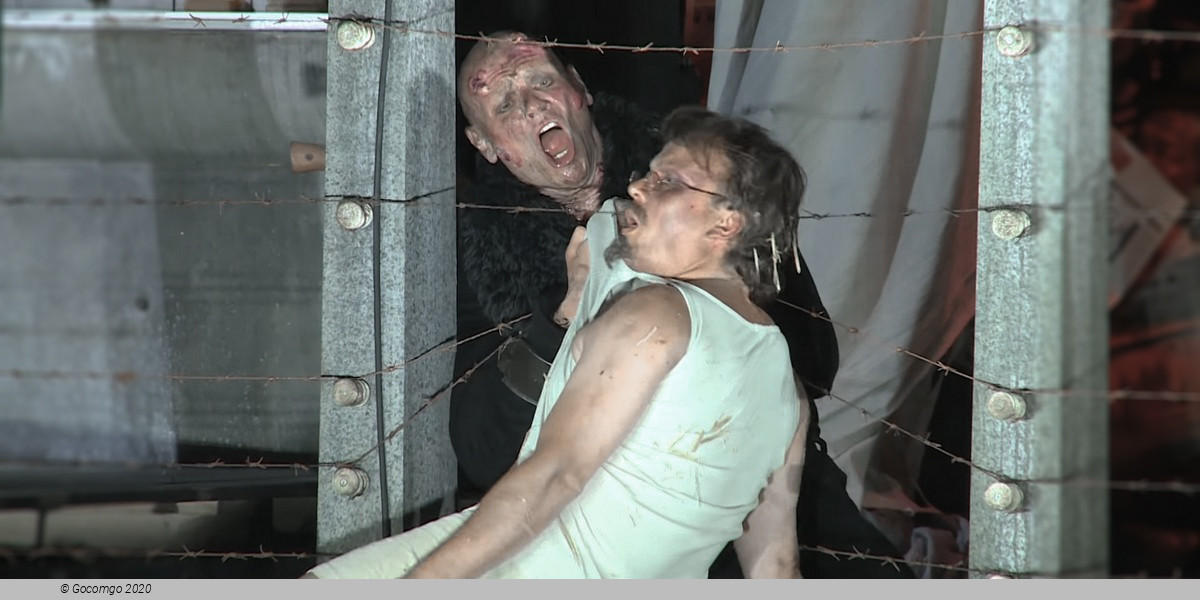
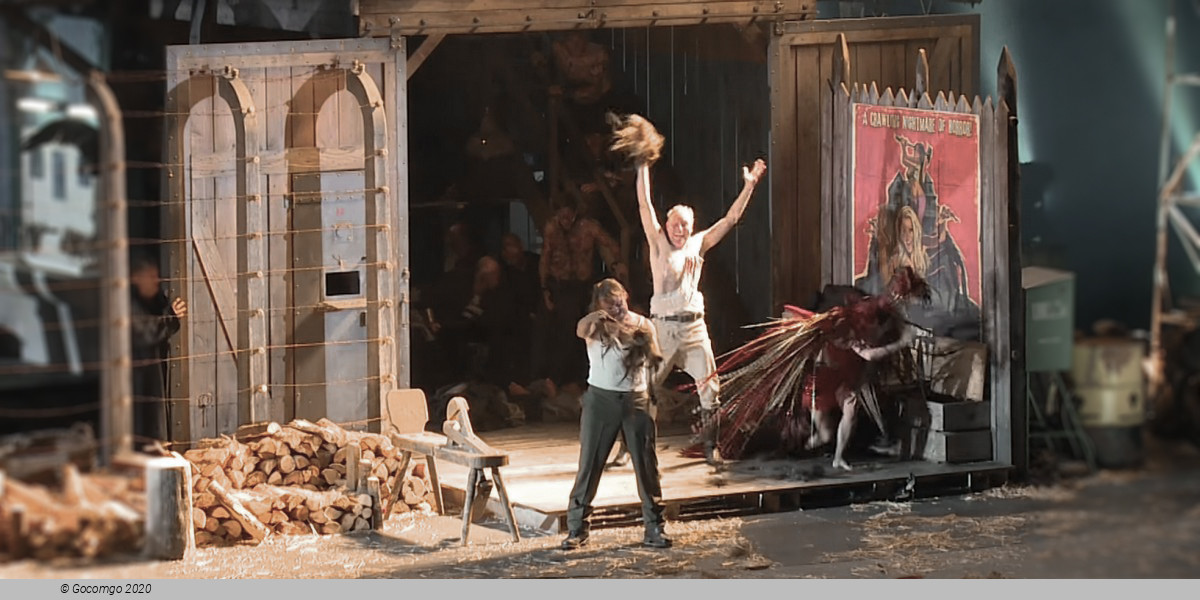
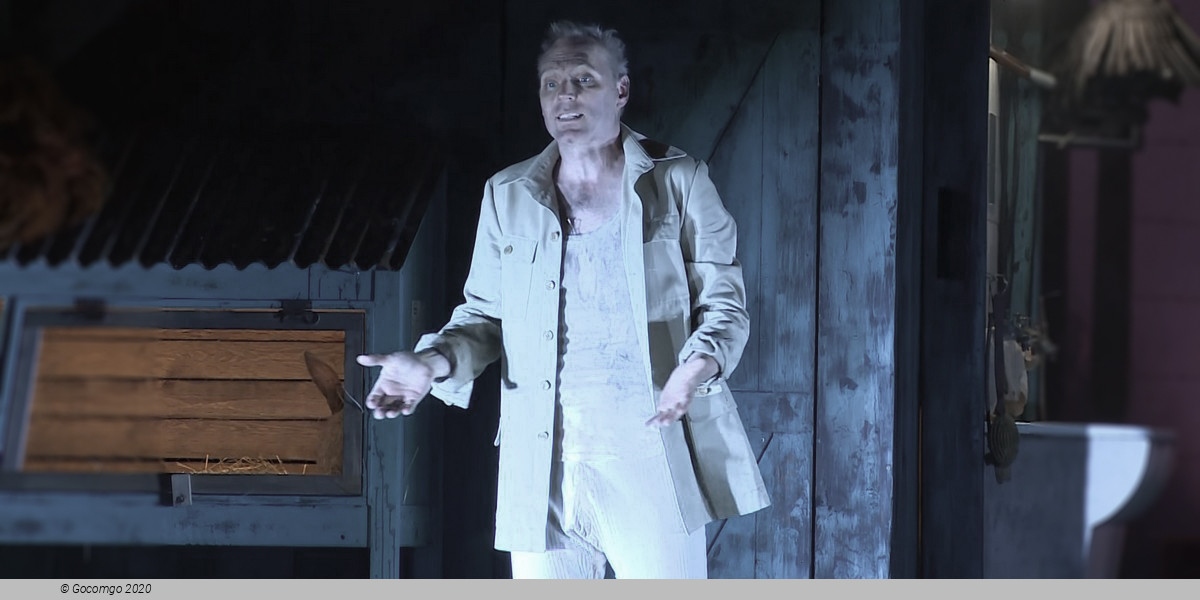
In his last opera, Leoš Janáček set out to "penetrate the depths of humanity, with its most wretched people". On this occasion Janáček's interest in Russian literature led him to Dostoyevsky's novel "Notes from the House of the Dead", set in a Siberian prison. Janáček worked directly from the Russian original, which he himself translated and from which he selected individual passages, dialogues and monologues, writing them directly into the score. In the novel, Dostoyevsky recalls the harrowing experiences of his arrest and banishment to a katorga labour camp. In Janáček's work, the camp becomes a symbol of life: the music is existentially human, at once filled with both beauty and cruelty. The broad themes of his operatic output appear to culminate here: life and death, guilt and forgiveness.

History
Premiere of this production: 12 April 1930, National Theatre Brno

From the House of the Dead is an opera in three acts by Leoš Janáček. The libretto was translated and adapted by the composer from the 1862 novel by Fyodor Dostoevsky. It was the composer's last opera, premiered on 12 April 1930 at the National Theatre Brno, two years after his death.

Synopsis

Act 1
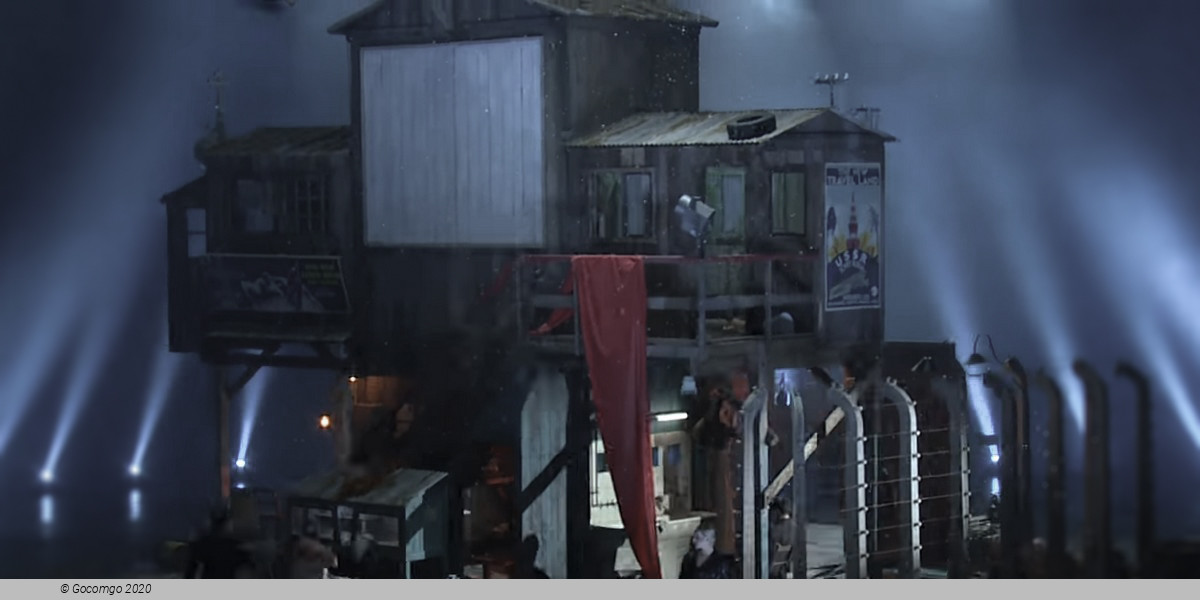
A Siberian prison camp on a winter morning

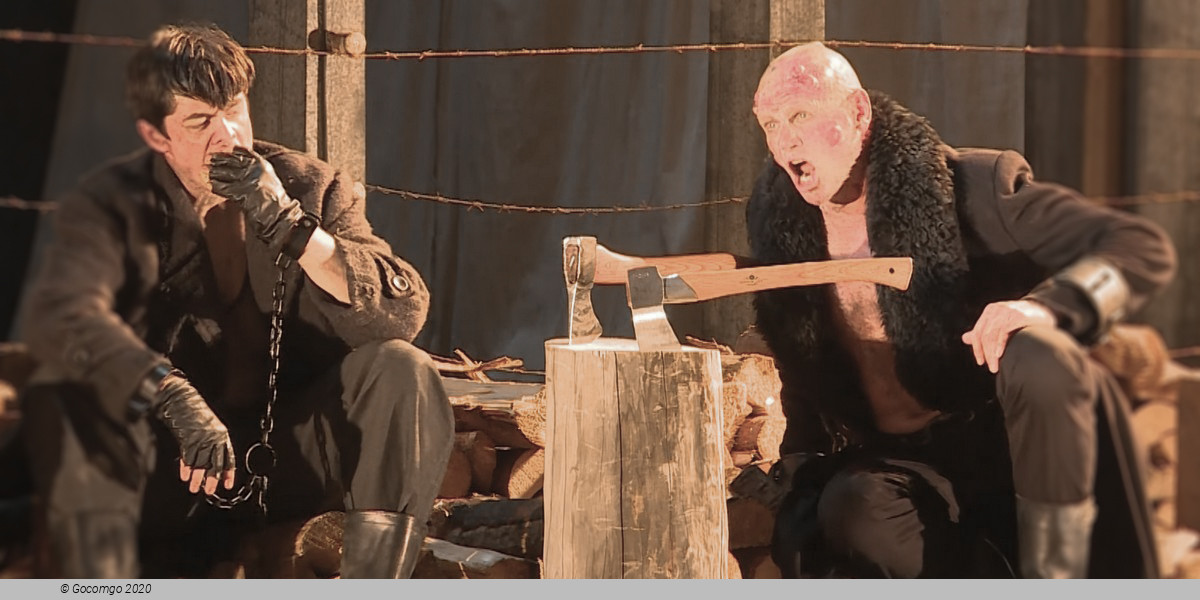
The prisoners get up, two get into a dispute, as the rumour is spread that a nobleman will be the new arrival ("Přivednou dnes pána"). He is Alexandr Petrovitch Goryantchikov, a political prisoner. The prison governor interrogates him and orders him to be flogged ("Jak tě nazývají"). The prisoners have found a wounded eagle and tease the bird until the guards order them to their work ("Zvíře! Nedá se!"). The prisoners lament their fate ("Neuvidí oko již"); one of them, Skuratov, recalls his previous life in Moscow ("Já mlada na hodech byla"). Another, Luka Kuzmitch, tells how he incited a rebellion and killed an officer in his first prison camp ("Aljeja, podávej nitku"). Just as he describes his own flogging, Goryantchikov is dragged in, half dead ("Aljeja! Niti!").

Act 2
Six months later, at the Irtysh river

Goryantchikov has befriended the young tartar Alyeya, asks him about his family and offers to teach him to read and write ("Milý, milý Aljeja"). The prisoners finish work as a holiday begins and a priest blesses the food and the river ("Alexandr Petrovič, bude prazdnik"). Skuratov tells his story: He loved a German girl, Luisa, but when she was to be married to an old relative, Skuratov shot the groom ("Jaj, já pustý zbytečný člověk" – "Přešel den, druhý, třetí"). For the holiday, the prisoners stage a play about Don Juan and Kedril ("Dnes bude můj poslední den") and the pantomime about a beautiful, but unfaithful miller's wife ("Pantomima o pěkné mlynářce"). After the play, a prisoner tries to provoke Goryantchikov, as the nobleman has the means to drink tea even in prison ("Pěkně hráli, co?"). Alyeya gets injured.

Act 3
The prison hospital

Goryantchikov looks after Alyeya, who is happy that he now knows how to read and write ("Isak, prorok boží"). Luka lies dying of tuberculosis and insults Tchekunov for his servile mannerism towards Goryantchikov. Shapkin tells the story of his arrest as a vagrant and how an officer pulled his ear ("Ó, bratři! Ta bolest, to nic!"). Skuratov has gone mad. During the night, Shishkov tells his story, interrupted by the impatient questions of Tcherevin ("Má dět'átka milá"). A rich merchant had a daughter, Akulka, whom a friend of Shishkov's, one Filka Morozov, claimed to have dishonoured ("Ty, pravil Filka" – "A Filka křičí"). She was married to Shishkov who found out that she was a virgin ("A já byl, bratříčku, až do do svatby zpit"). When he discovered that she still loved Filka, Shishkov killed her ("Na druhý den"). Just then, Luka dies and Shishkov recognises him as Filka. A guard fetches Goryantchikov.

Second scene. A drunk prison governor apologises to Goryantchikov for the whipping and tells him that he has been pardoned and is free ("Petrovičí, já jsem tě urazil"). The prisoners release the healed eagle before the guard orders them back to work.

Venue Info

Hessian State Theatre Wiesbaden - Wiesbaden
Location   Christian-Zais-Straße 3

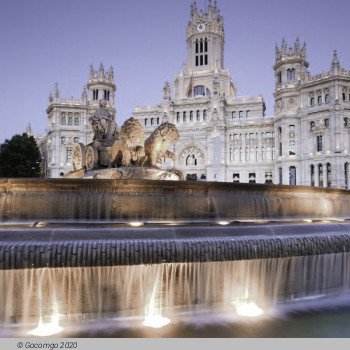
The Hessisches Staatstheater Wiesbaden ('Hessian State Theatre Wiesbaden') is a German theatre located in Wiesbaden, in the German state Hesse. The company produces operas, plays, ballets, musicals and concerts on four stages. Known also as the Staatstheater Wiesbaden or Theater Wiesbaden, its orchestra is the Hessisches Staatsorchester. The building was inaugurated in 1894. The theatre is the host for the annual festival Internationale Maifestspiele Wiesbaden, established in 1896 after the Bayreuth Festival.

he Hessian State Theatre of Wiesbaden is one of the leading stages in the German-speaking world, and one of the ten most visited theatres in Germany. With more than 300,000 theatregoers coming through its doors in a single season, the theatre is unique in a city which has fewer than 300,000 residents. More than 50 diverse productions are brought to the State Theatre’s stages each season, in addition to regular guest performances and special events such as staged readings and panel discussions. With the ability to simultaneously host productions on all of its various stages, up to five different performances sometimes take place on a single day.

Since taking up his post as Artistic Director in the 2014/2015 season, Uwe Eric Laufenberg makes the most of the entire scope of theatrical possibilities offered by this modern, multi-genre theatre, with a repertoire spanning contemporary and relevant drama, modern self-produced ballet, residencies and guest performances by renowned dance companies, as well as exciting children’s and youth theatre. In the Concert division, the Hessian State Orchestra presents a series of popular concerts in the Kurhaus, while the outstanding Opera programme continues to offer revivals of Wiesbaden mainstays, alongside brand new productions. In addition to the theatre’s world-class operatic ensemble, the innovative casting is supplemented with top-class international guests such as Edita Gruberova and José Cura, both of whom gave acclaimed performances at the 2015 International May Festival (Internationale Maifestspiele), undisputedly Wiesbaden’s annual cultural highlight.

Built in Neo-Baroque style by the famous Viennese architects Ferdinand Fellner and Hermann Helmer, construction of the theatre was initiated and financed by Emperor Wilhelm II and opened in his presence on 16 October 1894.

Wiesbaden city architect Felix Genzmer's magnificent Foyer extension was opened in 1902, while between 1975 - 1978 the auditorium of the Großes Haus (Main Theatre), with its half-sculptures, stucco work and glorious ceiling fresco, was faithfully restored.

Under Prussian Director Georg von Hülsen (1893-1903) the theatre had to make do with only one venue, the Großes Haus (Main Theatre). Nowadays, apart from the Main Theatre (seating 1041), the complex also boasts the Kleines Haus (Small Theatre, with 272 seats), a Studio (89 seats) and its external venue in Schwalbacher Street, the Wartburg (seating 154).

Important Info
Type: Opera
City: Wiesbaden, Germany
Starts at: 20:00
Acts: 3
Sung in: Czech
Titles in: German
Top of page