
Haus für Mozart 28 May 2023 - L`Orfeo | GoComGo.com

L`Orfeo

Haus für Mozart, Salzburg, Austria
All photos (9)
Select date and time
11 AM

E-tickets: Print at home or at the box office of the event if so specified. You will find more information in your booking confirmation email.

You can only select the category, and not the exact seats.
If you order 2 or 3 tickets: your seats will be next to each other.
If you order 4 or more tickets: your seats will be next to each other, or, if this is not possible, we will provide a combination of groups of seats (at least in pairs, for example 2+2 or 2+3).

Important Info
Type: Opera
City: Salzburg, Austria
Starts at: 11:00
Acts: 5
Sung in: Italian
Titles in: German,English

E-tickets: Print at home or at the box office of the event if so specified. You will find more information in your booking confirmation email.

You can only select the category, and not the exact seats.
If you order 2 or 3 tickets: your seats will be next to each other.
If you order 4 or more tickets: your seats will be next to each other, or, if this is not possible, we will provide a combination of groups of seats (at least in pairs, for example 2+2 or 2+3).

Festival

Salzburg Festival Whitsun 2023

Experience Salzburg and visit the Salzburg Withsun Festival. Cecilia Bartoli, the art director of the festival, will offer also 2023 an interesting programme.

Overview

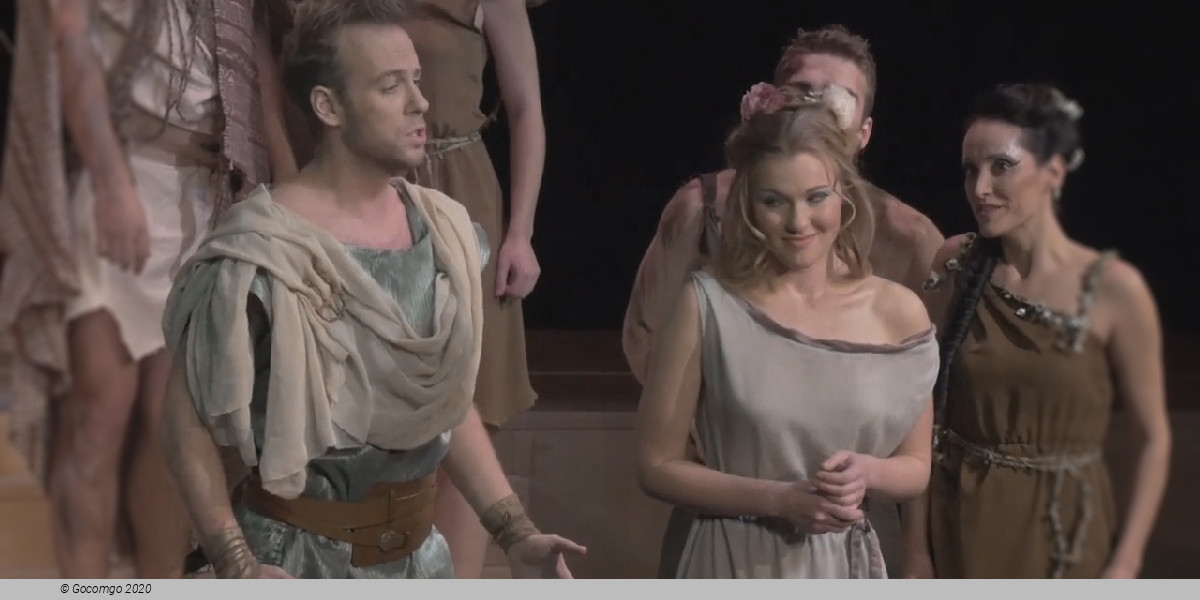
One of the oldest puppeteer groups, the ensemble Carlo Colla & Figli from Milan recounts Monteverdi’s favola in musica with its marionettes, which are surrounded by an antique carousel of painted canvases and voiced by the singers.

Just a few years after opera as a genre had originated in Italy, a substantial contribution to the emergent genre appeared on a stage this side of the Alps with a performance of Claudio Monteverdi’s L’Orfeo at the prince-archbishop’s residence in Salzburg on 27 January 1612. Composed in1607 for the carnival at the ducal court of Mantua, Monteverdi’s work, which is based on the ancient Orpheus myth, marks the actual ‘big bang’ of operatic history.

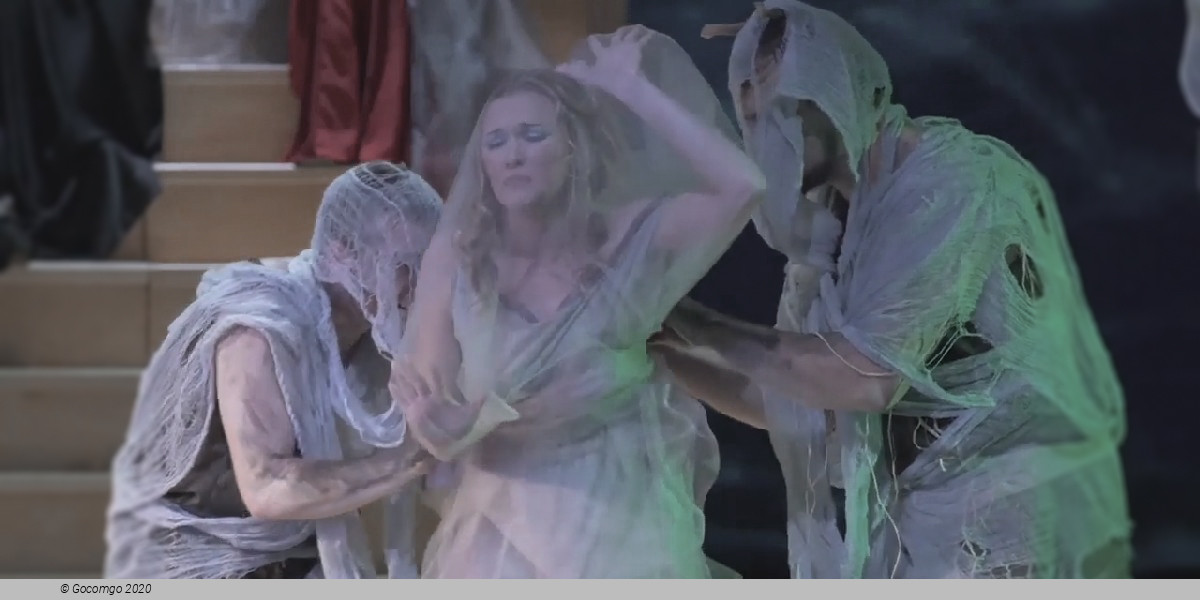
In Monteverdi’s opera, Orfeo also succeeds in bringing his wife back from the underworld by means of an artful lament; however, he loses her forever when he turns round to look at her, and is left behind alone and distraught. Monteverdi elaborated his composition in an entirely novel way, characterizing protagonists and the action with particular motifs or the timbres of the different instruments. Thus Orfeo’s singing is accompanied by the sound of the harp, and the music of the dancing shepherds brightened with flutes and fiddles, while a chorus of trombones adumbrates the sombre atmosphere of the underworld.

History
Premiere of this production: 24 February 1607, Carnival season Mantua

L'Orfeo is a late Renaissance/early Baroque favola in musica, or opera, by Claudio Monteverdi, with a libretto by Alessandro Striggio. It is based on the Greek legend of Orpheus, and tells the story of his descent to Hades and his fruitless attempt to bring his dead bride Eurydice back to the living world. It was written in 1607 for a court performance during the annual Carnival at Mantua. While Jacopo Peri's Dafne is generally recognised as the first work in the opera genre, and the earliest surviving opera is Peri's Euridice, L'Orfeo is the earliest that is still regularly performed.

Synopsis

The action takes place in two contrasting locations: the fields of Thrace (acts 1, 2 and 5) and the Underworld (acts 3 and 4). An instrumental toccata (English: "tucket", meaning a flourish on trumpets) precedes the entrance of La musica, representing the "spirit of music", who sings a prologue of five stanzas of verse. After a gracious welcome to the audience she announces that she can, through sweet sounds, "calm every troubled heart." She sings a further paean to the power of music, before introducing the drama's main protagonist, Orfeo, who "held the wild beasts spellbound with his song".

Act 1

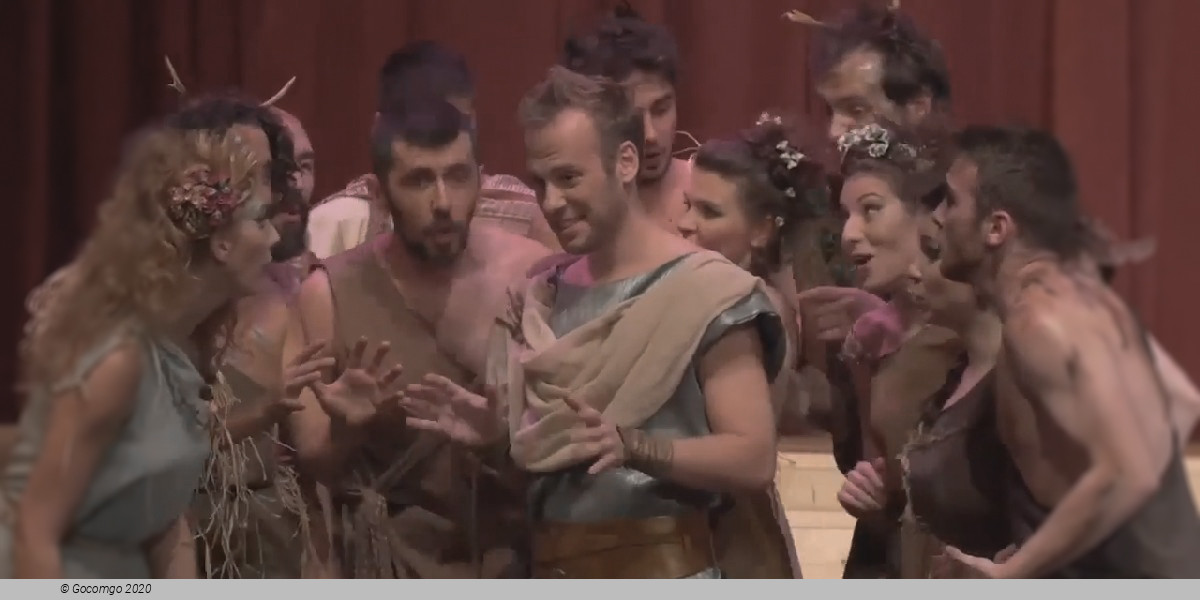
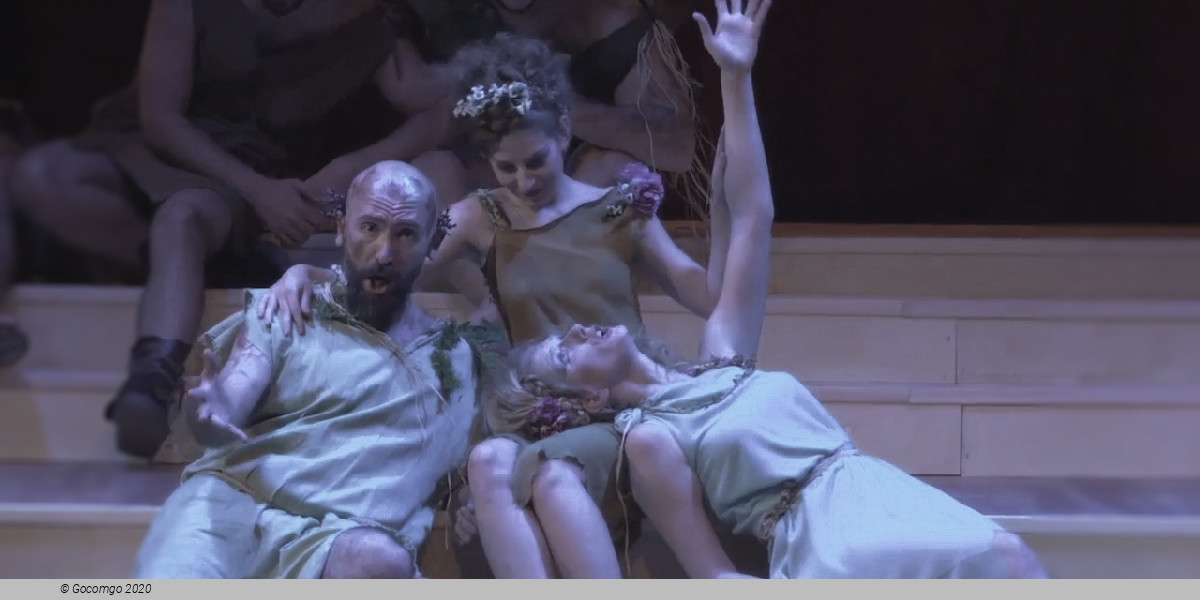
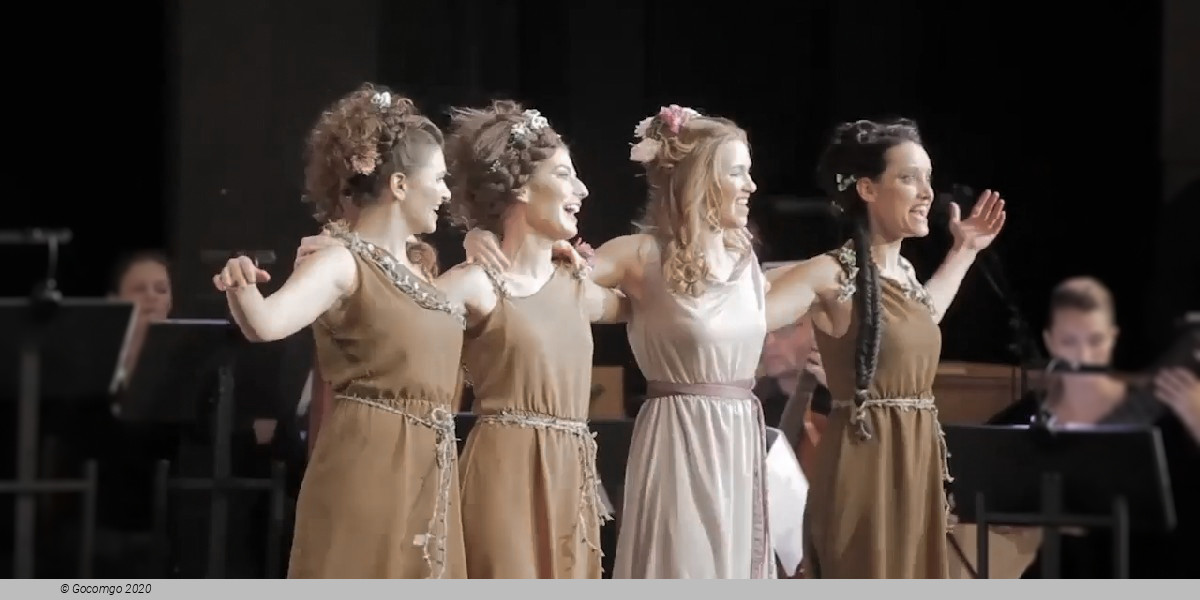
After La musica's final request for silence, the curtain rises on act 1 to reveal a pastoral scene. Orfeo and Euridice enter together with a chorus of nymphs and shepherds, who act in the manner of a Greek chorus, commenting on the action both as a group and as individuals. A shepherd announces that this is the couple's wedding day; the chorus responds, first in a stately invocation ("Come, Hymen, O come") and then in a joyful dance ("Leave the mountains, leave the fountains"). Orfeo and Euridice sing of their love for each other before leaving with most of the group for the wedding ceremony in the temple. Those left on stage sing a brief chorus, commenting on how Orfeo used to be one "for whom sighs were food and weeping was drink" before love brought him to a state of sublime happiness.

Act 2

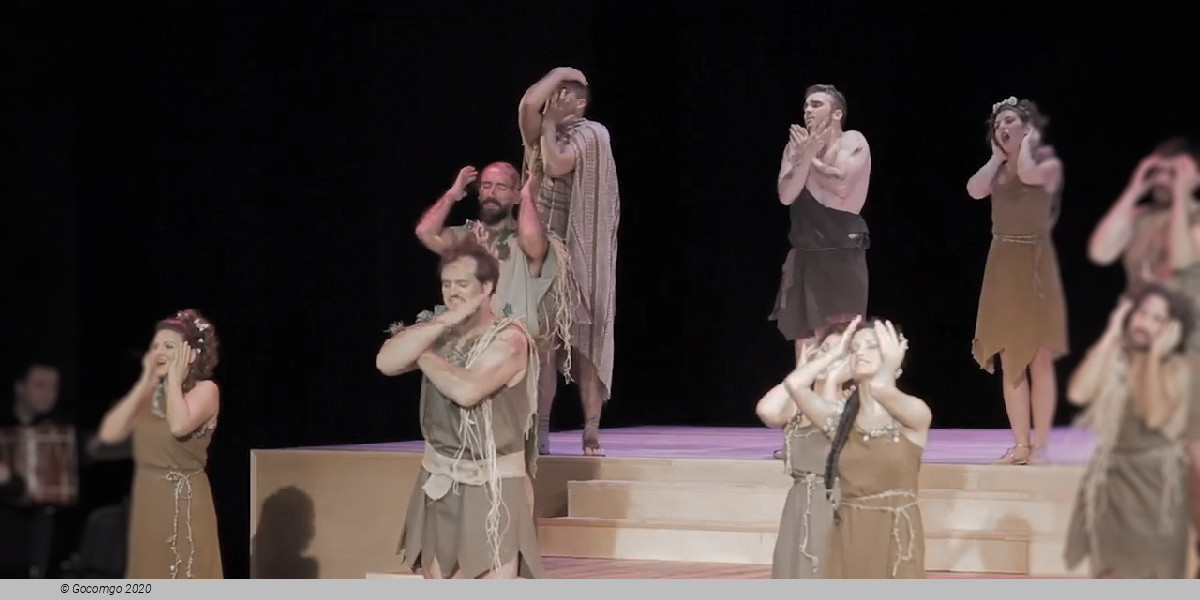
Orfeo returns with the main chorus, and sings with them of the beauties of nature. Orfeo then muses on his former unhappiness, but proclaims: "After grief one is more content, after pain one is happier". The mood of contentment is abruptly ended when La messaggera enters, bringing the news that, while gathering flowers, Euridice has received a fatal snakebite. The chorus expresses its anguish: "Ah, bitter happening, ah, impious and cruel fate!", while the Messaggera castigates herself as the bearing of bad tidings ("For ever I will flee, and in a lonely cavern lead a life in keeping with my sorrow"). Orfeo, after venting his grief and incredulity ("Thou art dead, my life, and I am breathing?"), declares his intention to descend into the Underworld and persuade its ruler to allow Euridice to return to life. Otherwise, he says, "I shall remain with thee in the company of death". He departs, and the chorus resumes its lament.

Act 3

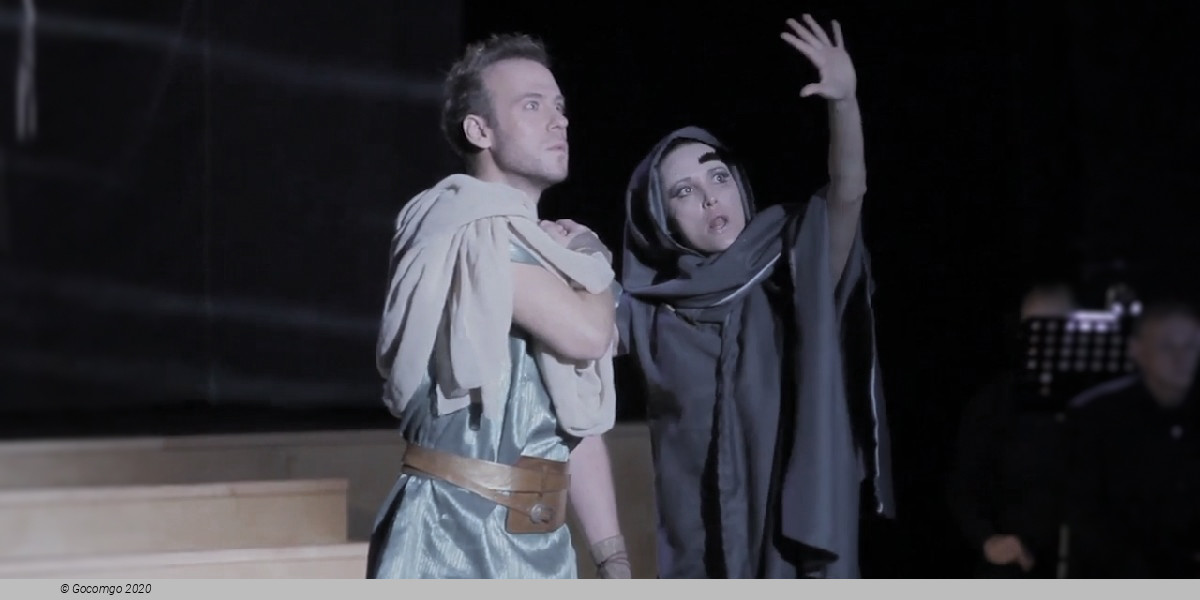
Orfeo is guided by Speranza to the gates of Hades. Having pointed out the words inscribed on the gate ("Abandon hope, all ye who enter here"), Speranza leaves. Orfeo is now confronted with the ferryman Caronte, who addresses Orfeo harshly and refuses to take him across the river Styx. Orfeo attempts to persuade Caronte by singing a flattering song to him ("Mighty spirit and powerful divinity"), but the ferryman is unmoved. However, when Orfeo takes up his lyre and plays, Caronte is soothed into sleep. Seizing his chance, Orfeo steals the ferryman's boat and crosses the river, entering the Underworld while a chorus of spirits reflects that nature cannot defend herself against man: "He has tamed the sea with fragile wood, and disdained the rage of the winds."

Act 4

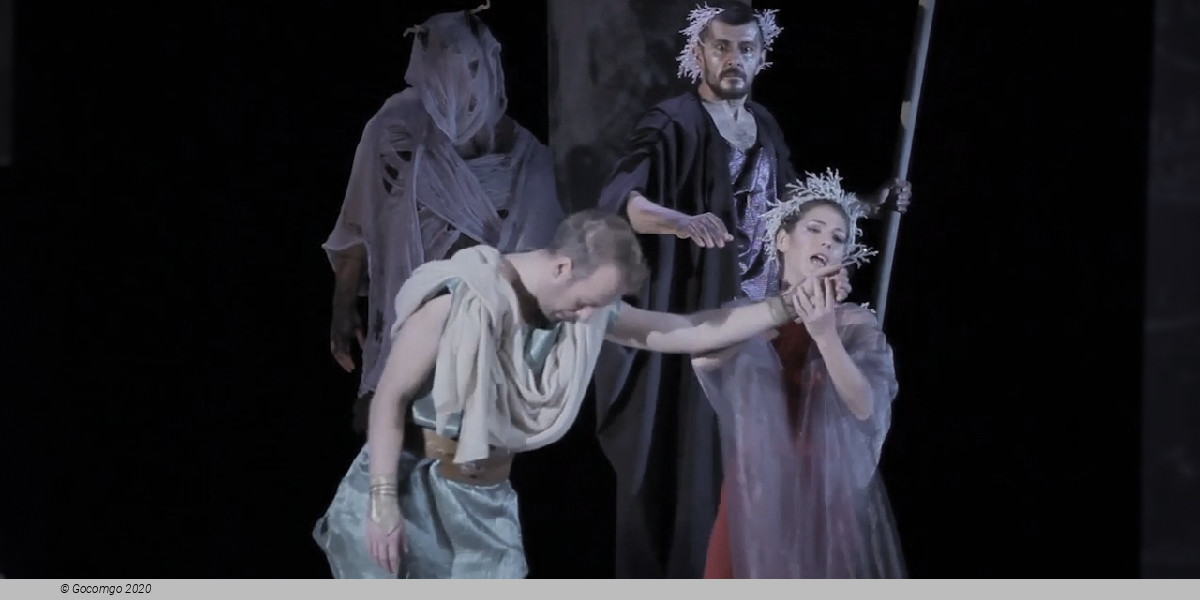
In the Underworld, Proserpina, Queen of Hades, who has been deeply affected by Orfeo's singing, petitions King Plutone, her husband, for Euridice's release. Moved by her pleas, Plutone agrees on the condition that, as he leads Euridice towards the world, Orfeo must not look back. If he does, "a single glance will condemn him to eternal loss". Orfeo enters, leading Euridice and singing confidently that on that day he will rest on his wife's white bosom. But as he sings a note of doubt creeps in: "Who will assure me that she is following?". Perhaps, he thinks, Plutone, driven by envy, has imposed the condition through spite? Suddenly distracted by an off-stage commotion, Orfeo looks round; immediately, the image of Euridice begins to fade. She sings, despairingly: "Losest thou me through too much love?" and disappears. Orfeo attempts to follow her but is drawn away by an unseen force. The chorus of spirits sings that Orfeo, having overcome Hades, was in turn overcome by his passions.

Act 5

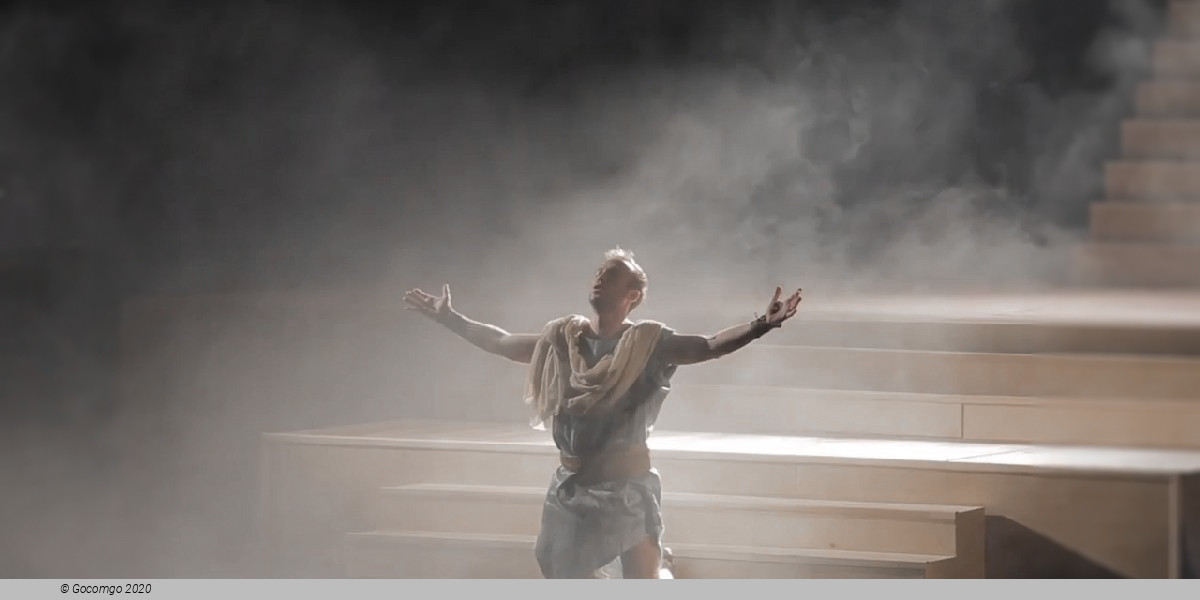
Back in the fields of Thrace, Orfeo has a long soliloquy in which he laments his loss, praises Euridice's beauty and resolves that his heart will never again be pierced by Cupid's arrow. An off-stage echo repeats his final phrases. Suddenly, in a cloud, Apollo descends from the heavens and chastises him: "Why dost thou give thyself up as prey to rage and grief?" He invites Orfeo to leave the world and join him in the heavens, where he will recognise Euridice's likeness in the stars. Orfeo replies that it would be unworthy not to follow the counsel of such a wise father, and together they ascend. A shepherds' chorus concludes that "he who sows in suffering shall reap the fruit of every grace", before the opera ends with a vigorous moresca.

Original libretto ending

In Striggio's 1607 libretto, Orfeo's act 5 soliloquy is interrupted, not by Apollo's appearance but by a chorus of maenads or Bacchantes—wild, drunken women—who sing of the "divine fury" of their master, the god Bacchus. The cause of their wrath is Orfeo and his renunciation of women; he will not escape their heavenly anger, and the longer he evades them the more severe his fate will be. Orfeo leaves the scene and his destiny is left uncertain, as the Bacchantes devote themselves for the rest of the opera to wild singing and dancing in praise of Bacchus. The early music authority Claude Palisca believes that the two endings are not incompatible; Orfeo might evade the fury of the Bacchantes and be rescued by Apollo. However, this alternative ending in any case nearer to original classic myth, where the Bacchantes also appear, but it is made explicit that they torture him to his death, followed by reunion as a shade with Euridice but no apotheosis nor any interaction with Apollo.

Venue Info

Haus für Mozart - Salzburg
Location   Hofstallgasse 1

When it became clear that the ambitious plans to build a festival theater in Hellbrunn could not be realized, the idea of ​​transforming parts of the Hofstallkaserne into a theater hall came to the fore. After only four months of construction, a provisional festival theater was opened in 1925 on the terrain of the Great Winter Riding School with the Salzburg World Theater. Already in 1926 a first reconstruction phase of the insufficient Festspielhaus provisional by Clemens Holzmeister. Adaptations were made again in 1927, and now operas were also presented: Beethoven's Fidelio was performed here in 1927 as the first music theater work.
 

The later so-called "Small Festspielhaus" experienced numerous other renovation phases: 1937 was the rotation of the auditorium by 180 degrees, making a stage house cultivation was necessary. To accomplish this, Governor Franz Rehrl had his birthplace demolished in Toscaninihof. Benno von Arent redesigned the Festspielhaus in 1939 and replaced the wood paneling with a gilded plaster ceiling. The unfavorable visual and acoustic conditions required a further conversion in the years 1962/63. The Salzburg architects Hans Hofmann and Erich Engels gave the hall the form that it had until 2004.

For many years, the Salzburg Festival pursued the plan to create a "House for Mozart", which takes into account the stage works of the composer in every respect: with optimal acoustics and the best visibility from all seats. With the necessary intimacy of the room but at the same time a sufficient seating capacity had to go along. What seems like a squaring of the circle, the team of architects Holzbauer & Valentiny accomplished: The former Small Festival House was transformed in three phases from September 2003 in a "House for Mozart". The auditorium of the Kleine Festspielhaus was widened, shortened and lowered. Two new auditorium seats were created, which extend to the stage on both sides of the hall. Thus, the effect is achieved that not bare walls, but festive people frame the stage from three sides.

The foyer areas have changed considerably compared to the former Kleines Festspielhaus. High, floor-to-ceiling windows open the view to the cityscape in the main foyer - in return, the brightly lit interior of the theater in the evening looks outward. The main foyer is dominated by a 17-meter-high gilded louvre wall, through whose openings a Mozart's head created from Swarovski crystals can be seen. The terrace in front of the hall building was never open to the public since its construction in 1924. With the new building, it has now become part of the pause foyers. The arcade below was glazed and allows the auditorium to be opened from two sides instead of just one. This is the first time you can step directly from the Festspielhaus into the magnificent city landscape.

The new festival lounge on the roof, the SalzburgKulisse (made possible by the patron Gerhard Andlinger), has become a major attraction: the name itself already hints at the magnificent view that offers itself there to the old town of Salzburg. The furnishings of this lounge are made of pear-clad walls, and the tapestries in the niches are by Anton Kolig and Robin Andersen, two contemporaries of Anton Faistauer.

The Faistauer foyer (made possible by the patron Herbert Batliner) became a jewel of the new building: the famous frescoes of this room, created by the Salzburg painter Anton Faistauer in 1926, were removed after the Nazi invasion, in part wantonly destroyed, and could be reapplied until 1956. For the inauguration of the house for Mozart they were fundamentally restored and the room was also restored architecturally to its historical form.

The Holzmeister ensemble from the years 1924/37 has been preserved in its proportions on the outer façade. The visual impression of the façade is determined by the representative hall exits to the terrace designed by the sculptor Josef Zenzmaier. He created large bronze reliefs that were placed above the portals and depict scenes from Mozart's Le nozze di Figaro, Don Giovanni and The Magic Flute , The stone masks of Jakob Adlhart are now clearly visible in front of the entree of the house: under the new concrete roof with cantilevered gold and cantilevered out. Throughout the house, rough-sprayed concrete surfaces contrast with fine gold leaf and create an aesthetic tension.

From the back stage, a large iron gate opens into the Toscaninihof. The six concrete reliefs "Mask-Holding Genii" attached to the left and right of it were knocked off in 1938, but reconstructed in 1979 by their creator Jakob Adlhart. Above this, an organ is attached, which was recorded before the construction of the Great Festival Hall in the bad weather performances of Everyman.

On the occasion of the celebration of Mozart's 250th birthday in the so-called Mozart Year, the House of Mozart was ceremoniously opened on 26 July 2006 with the premiere of Le nozze di Figaro (directed by Claus Guth, conductor: Nikolaus Harnoncourt).

Important Info
Type: Opera
City: Salzburg, Austria
Starts at: 11:00
Acts: 5
Sung in: Italian
Titles in: German,English
Top of page