
Haus für Mozart tickets 22 May 2026 - Premiere Il viaggio a Reims | GoComGo.com

Premiere
Il viaggio a Reims

Haus für Mozart, Salzburg, Austria
All photos (5)
Select date and time
6:30 PM
From
US$ 85

E-tickets: Print at home or at the box office of the event if so specified. You will find more information in your booking confirmation email.

You can only select the category, and not the exact seats.
If you order 2 or 3 tickets: your seats will be next to each other.
If you order 4 or more tickets: your seats will be next to each other, or, if this is not possible, we will provide a combination of groups of seats (at least in pairs, for example 2+2 or 2+3).

Important Info
Type: Opera
City: Salzburg, Austria
Starts at: 18:30
Acts: 1
Sung in: Italian
Titles in: German,English

E-tickets: Print at home or at the box office of the event if so specified. You will find more information in your booking confirmation email.

You can only select the category, and not the exact seats.
If you order 2 or 3 tickets: your seats will be next to each other.
If you order 4 or more tickets: your seats will be next to each other, or, if this is not possible, we will provide a combination of groups of seats (at least in pairs, for example 2+2 or 2+3).

Cast
Performers
Mezzo-Soprano: Cecilia Bartoli (Corinna)
Tenor: Dmitry Korchak (Conte di Libenskof)
Tenor: Edgardo Rocha (Cavalier Belfiore)
Bass-Baritone: Ildebrando D'Arcangelo (Lord Sidney)
Soprano: Mélissa Petit (Contessa di Folleville)
Conductor: Gianluca Capuano
Choir: Choir of the Opéra de Monte-Carlo
Orchestra: Les Musiciens du Prince - Monaco
Mezzo-Soprano: Marina Viotti (Marchesa Melibea)
Mezzo-Soprano: Tara Erraught (Madama Cortese)
Creators
Composer: Gioachino Rossini
Director: Barrie Kosky
Librettist: Luigi Balocchi
Festival

Salzburg Festival Whitsun 2026

Visitors to the Salzburg Festival are invited to Salzburg from 22 to 25 May 2026 for ‘Bon Voyage’.

Overview

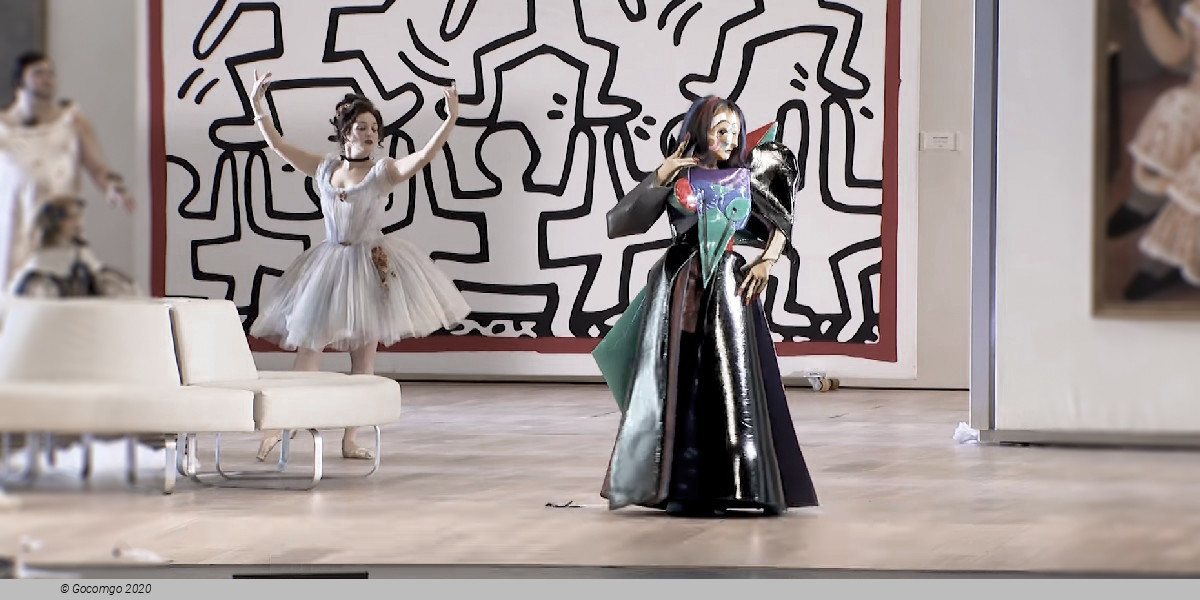
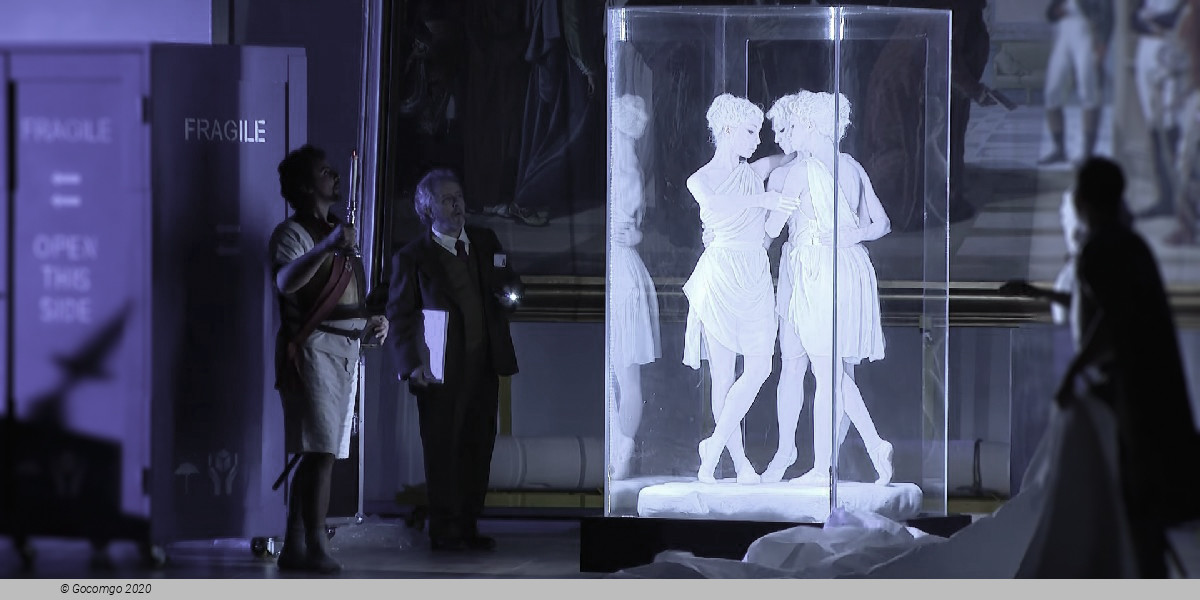
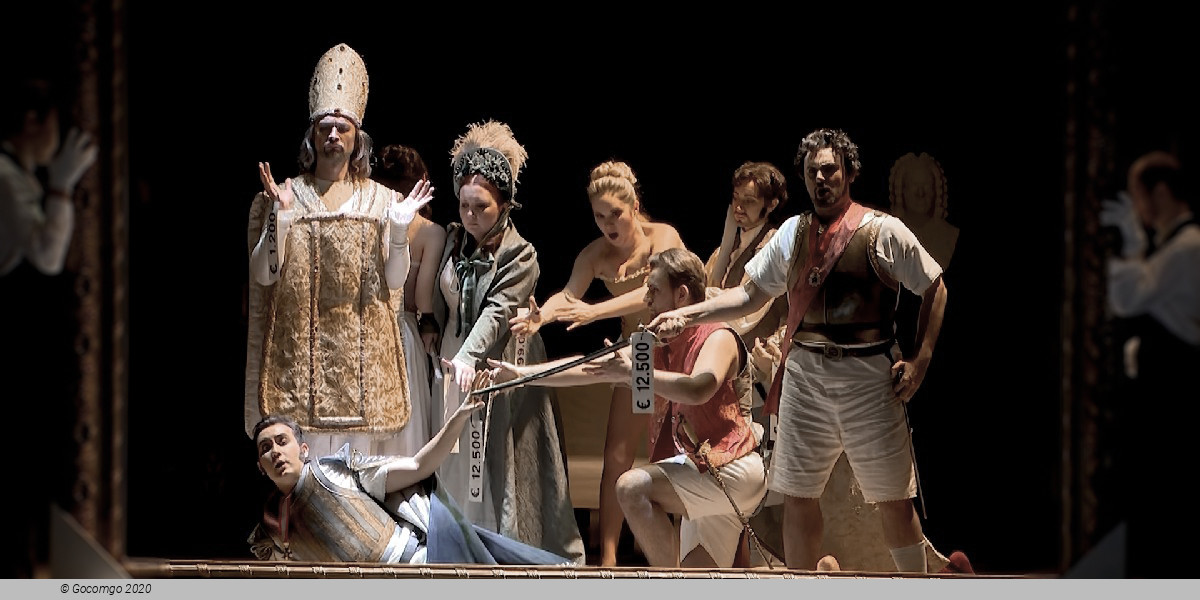
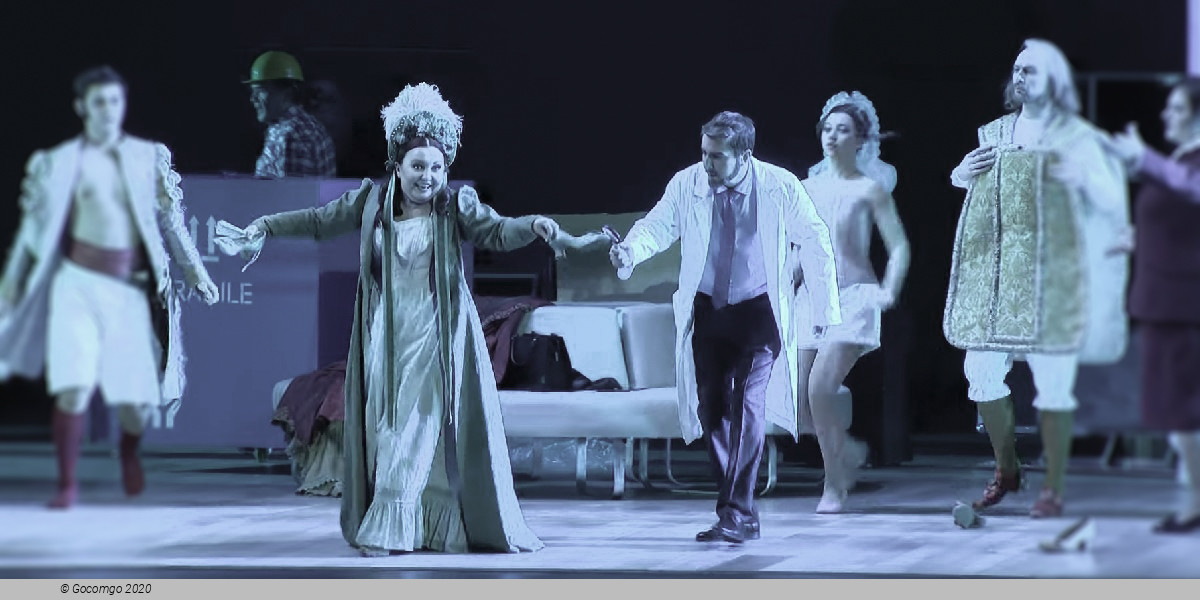
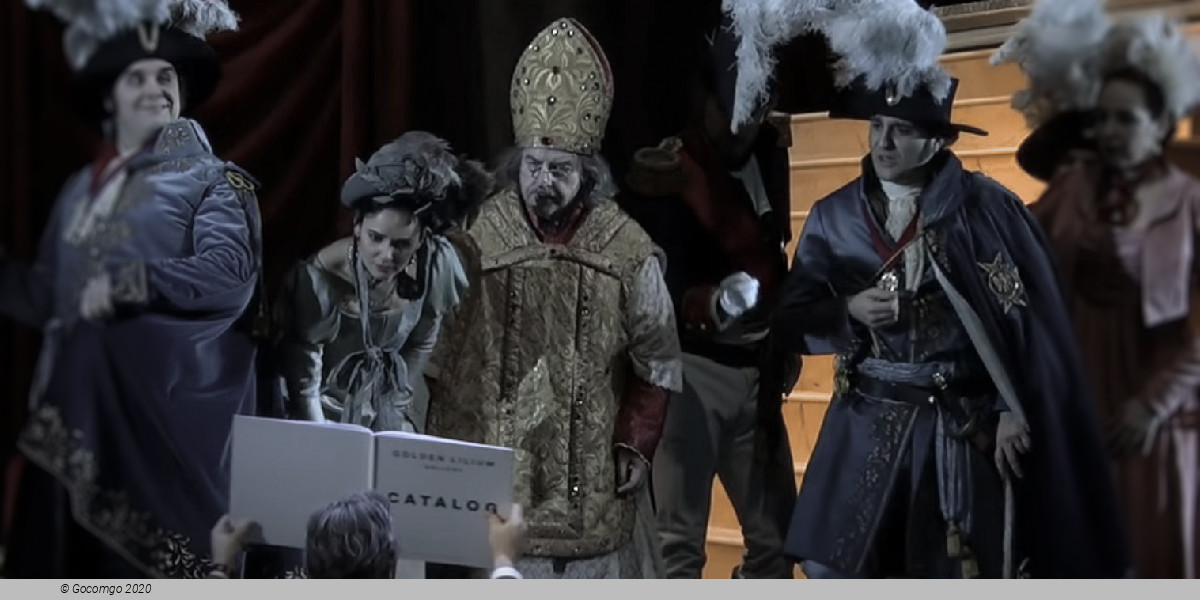
On their way to the coronation of Charles X in Reims, a motley group of travellers gets stranded at a provincial spa hotel. Their trouble is our treat, as we are whisked into an amusing parade of characters caught in a web of flirtation and jealousy, enthusiasm and vanity, lofty ideals and eccentric quirks… Rossini composed Il viaggio a Reims for the festivities celebrating the same historical coronation that features in the opera. This extravagant occasional work boasts no fewer than ten demanding lead roles and is Rossini’s first opera composed for Paris. It was also his last in his native language — a late opera buffa that gleefully pokes fun at national stereotypes (the hotel guests hail from all corners of Europe) and self mockingly parodies the conventions of Italian opera. There’s barely a plot to speak of, but Barrie Kosky’s production packs the piece with Feydeauesque wit, verve and erotic slapstick — ingredients that, together with Rossini’s electrifying music, promise a delirium of comedy and madness.

History
Premiere of this production: 19 June 1825, The Théâtre Italien, Paris

Il viaggio a Reims, ossia L'albergo del giglio d'oro (The Journey to Reims, or The Hotel of the Golden Fleur-de-lis) is an operatic dramma giocoso, originally performed in three acts, by Gioachino Rossini to an Italian libretto by Luigi Balocchi, based in part on Corinne ou l'Italie by Germaine de Staël.

Synopsis

Act 1
Scene 1: Introduction

The housekeeper Maddalena is unhappy with the preparations made by the servants for the arrival of the important people who are travelling to Reims for the coronation of Charles X of France. ("Presto, presto ... su, corraggio") The servants repudiate her assertions. The hotel's doctor, Don Prudenzio, announces that, because of the impending arrivals, the normal business of the spa will be suspended. The spa attendants rejoice and depart. He checks with Antonio that his instructions about the necessary meals for the visitors have been followed.

Madame Cortese, the proprietress of the hotel, appears. She regrets that she will be unable to attend the coronation ("Di vaghi raggi adorno"), but is keen to show off the hotel to the visitors in the hope that they will return some day to take the waters. She particularly requests that everyone should be enthusiastic about each of the travellers' specific interests. Everyone agrees, and she is left alone.

Scene 2: The Countess of Folleville's arrival

The Countess calls for her maid, Modestina, and Madame Cortese goes to search for her. Modestina appears, and the Countess, worried that her clothes have not yet arrived, asks why there has been no reply to a letter that she had sent. Modestina had entrusted the letter to the Countess's cousin, Don Luigino, who immediately arrives to say that the stagecoach which he had hired to carry the boxes had overturned on the way. The Countess faints and Don Luigino calls for help.

Maddalena, Antonio, Don Prudenzio and the servants arrive, together with Baron Trombonok. Don Prudenzio and the Baron argue about how to resuscitate the Countess, but she recovers sufficiently to lament the loss of her garments. ("Partir, o ciel! desio") However, when Modestina appears with a large box containing a beautiful Paris bonnet, she rejoices that it, at least, has been saved from the accident. ("Che miro! Ah! Quel sorpresa!") Everyone is amused by this sudden turn of events, and all except Antonio and the Baron depart.

Scene 3: Sextet

After agreeing with the Baron the arrangements for party's departure in the evening, Antonio leaves. The Baron cannot help laughing at the Countess's sudden recovery and the insanity of the world in general. He is joined by Don Profondo, Don Alvaro, the Marquise Melibea, Count Libenskof. It is clear that Don Alvaro and the Count are rivals for the Marquise's affections. They are all waiting for the new horses which will be necessary for the continuation of the journey, but Madame Cortese, who now arrives, says that she cannot understand why they have not arrived. Alvaro and Libenskof quarrel, the ladies are alarmed, and the Baron and Don Profondo are amused by the idiocy of lovers. ("Non pavento alcun periglio")

A harp prelude is heard, and the poetess Corinna sings offstage of brotherly love, to everyone's delight. ("Arpa gentil")

Act 2
Scene 1: Lord Sidney's aria

Madame Cortese is still waiting for the return of her servant Gelsomino with news of the horses. Lord Sidney approaches, and she muses on his unwillingness to approach Corinna who, she is sure, reciprocates his love.

Sidney, alone, laments his situation. ("Invan strappar dal core") His mood lifts when girls singing in praise of Corinna enter with flowers, but then he is disturbed by Don Profondo's strange requests for information about the location of antiquities, and departs.

Scene 2: Corinna's duet with the Chevalier Belfiore

Profondo is joined by Corinna and her companion Delia. Corinna asks when the party is to depart, and he and Delia leave Corinna alone while they go to see whether the horses have arrived.

Corinna is joined by the Chevalier, who declares his love. ("Nel suo divin sembiante") She is taken aback and repudiates him. The Chevalier retreats, hoping to try again later, and Corinna returns to her room.

Scene 3: Don Profondo's aria

Don Profondo, who has seen the Chevalier with Corinna, reflects that the Countess will scratch the Chevalier's eyes out if she finds out what he has been doing. He then turns his attention to enumerating the effects of his fellow-travellers (as requested by the Baron), noting that their possessions tend to sum up their each of their nations' characteristics. ("Medaglie incomparabili") He looks forward to the impending departure.

The Countess appears, looking for the Chevalier. She is not pleased when Don Profondo tells her that he has been having a poetry lesson. Don Alvaro and Count Libenskof join them, asking about the horses, and the Baron, too, appears, looking woebegone. What has happened? The rest of the travellers arrive, and the Baron produces the courier Zefirino, who is obliged to report that there are no horses to be had anywhere, not even for ready money. There will be no journey to Reims for the coronation!

Scene 4: Grand concerted ensemble for 14 voices

Everyone is horrified. ("Ah! A tal colpo inaspettato") But Madame Cortese appears with a letter from Paris. Don Profondo reads it out: the King will return from Reims in a few days and there will be great festivities. Anyone who was unable to get to Reims will be consoled by an even finer spectacle. The Countess steps forward to invite the entire company to her home in Paris for the celebrations. A stagecoach will convey them there on the following day, but in the meantime a grand banquet, with invitations to the public, will be held at the Golden Lily, paid for with the money that would have been spent at the coronation. Any money left over will be given to the poor.

Act 3
Scene 1: Duet for the Count and the Marquise

When everyone else has left, the Baron tries to reconcile the jealous Count with the Marquise, who has been seen with Don Alvaro. When he departs, the misunderstanding is resolved and harmony is restored. ("D'alma celeste, oh Dio!")

They depart, and the scene changes to the hotel's garden. Antonio and Maddalena ensure that all is prepared for the banquet. The Baron has engaged a travelling company to provide entertainment with singing and dancing.

Scene 2: Finale

After the opening chorus ("L'allegria è un sommo bene"), the Baron introduces a series of short national songs sung by each of the travellers, some of them set to well-known tunes, and ending with, first, a French anthem (the Marche Henri IV) for the Duchesse de Berry, then a rustic Tyrolean duet for Madame Cortese and Don Profondo, and finally an improvised solo for Corinna on one of a number of mostly French subjects suggested by each traveller and drawn from an urn. The winning subject turns out, appropriately enough, to be "Charles X, King of France". The opera ends with dances and a chorus.

Venue Info

Haus für Mozart - Salzburg
Location   Hofstallgasse 1

When it became clear that the ambitious plans to build a festival theater in Hellbrunn could not be realized, the idea of ​​transforming parts of the Hofstallkaserne into a theater hall came to the fore. After only four months of construction, a provisional festival theater was opened in 1925 on the terrain of the Great Winter Riding School with the Salzburg World Theater. Already in 1926 a first reconstruction phase of the insufficient Festspielhaus provisional by Clemens Holzmeister. Adaptations were made again in 1927, and now operas were also presented: Beethoven's Fidelio was performed here in 1927 as the first music theater work.
 

The later so-called "Small Festspielhaus" experienced numerous other renovation phases: 1937 was the rotation of the auditorium by 180 degrees, making a stage house cultivation was necessary. To accomplish this, Governor Franz Rehrl had his birthplace demolished in Toscaninihof. Benno von Arent redesigned the Festspielhaus in 1939 and replaced the wood paneling with a gilded plaster ceiling. The unfavorable visual and acoustic conditions required a further conversion in the years 1962/63. The Salzburg architects Hans Hofmann and Erich Engels gave the hall the form that it had until 2004.

For many years, the Salzburg Festival pursued the plan to create a "House for Mozart", which takes into account the stage works of the composer in every respect: with optimal acoustics and the best visibility from all seats. With the necessary intimacy of the room but at the same time a sufficient seating capacity had to go along. What seems like a squaring of the circle, the team of architects Holzbauer & Valentiny accomplished: The former Small Festival House was transformed in three phases from September 2003 in a "House for Mozart". The auditorium of the Kleine Festspielhaus was widened, shortened and lowered. Two new auditorium seats were created, which extend to the stage on both sides of the hall. Thus, the effect is achieved that not bare walls, but festive people frame the stage from three sides.

The foyer areas have changed considerably compared to the former Kleines Festspielhaus. High, floor-to-ceiling windows open the view to the cityscape in the main foyer - in return, the brightly lit interior of the theater in the evening looks outward. The main foyer is dominated by a 17-meter-high gilded louvre wall, through whose openings a Mozart's head created from Swarovski crystals can be seen. The terrace in front of the hall building was never open to the public since its construction in 1924. With the new building, it has now become part of the pause foyers. The arcade below was glazed and allows the auditorium to be opened from two sides instead of just one. This is the first time you can step directly from the Festspielhaus into the magnificent city landscape.

The new festival lounge on the roof, the SalzburgKulisse (made possible by the patron Gerhard Andlinger), has become a major attraction: the name itself already hints at the magnificent view that offers itself there to the old town of Salzburg. The furnishings of this lounge are made of pear-clad walls, and the tapestries in the niches are by Anton Kolig and Robin Andersen, two contemporaries of Anton Faistauer.

The Faistauer foyer (made possible by the patron Herbert Batliner) became a jewel of the new building: the famous frescoes of this room, created by the Salzburg painter Anton Faistauer in 1926, were removed after the Nazi invasion, in part wantonly destroyed, and could be reapplied until 1956. For the inauguration of the house for Mozart they were fundamentally restored and the room was also restored architecturally to its historical form.

The Holzmeister ensemble from the years 1924/37 has been preserved in its proportions on the outer façade. The visual impression of the façade is determined by the representative hall exits to the terrace designed by the sculptor Josef Zenzmaier. He created large bronze reliefs that were placed above the portals and depict scenes from Mozart's Le nozze di Figaro, Don Giovanni and The Magic Flute , The stone masks of Jakob Adlhart are now clearly visible in front of the entree of the house: under the new concrete roof with cantilevered gold and cantilevered out. Throughout the house, rough-sprayed concrete surfaces contrast with fine gold leaf and create an aesthetic tension.

From the back stage, a large iron gate opens into the Toscaninihof. The six concrete reliefs "Mask-Holding Genii" attached to the left and right of it were knocked off in 1938, but reconstructed in 1979 by their creator Jakob Adlhart. Above this, an organ is attached, which was recorded before the construction of the Great Festival Hall in the bad weather performances of Everyman.

On the occasion of the celebration of Mozart's 250th birthday in the so-called Mozart Year, the House of Mozart was ceremoniously opened on 26 July 2006 with the premiere of Le nozze di Figaro (directed by Claus Guth, conductor: Nikolaus Harnoncourt).

Important Info
Type: Opera
City: Salzburg, Austria
Starts at: 18:30
Acts: 1
Sung in: Italian
Titles in: German,English
Top of page