Haus für Mozart tickets 24 August 2026 - Ariadne auf Naxos | GoComGo.com

Ariadne auf Naxos

Haus für Mozart, Salzburg, Austria
All photos (5)
Select date and time
7:30 PM

E-tickets: Print at home or at the box office of the event if so specified. You will find more information in your booking confirmation email.

You can only select the category, and not the exact seats.
If you order 2 or 3 tickets: your seats will be next to each other.
If you order 4 or more tickets: your seats will be next to each other, or, if this is not possible, we will provide a combination of groups of seats (at least in pairs, for example 2+2 or 2+3).

Important Info
Type: Opera
City: Salzburg, Austria
Starts at: 19:30
Acts: 1
Sung in: German
Titles in: German,English

E-tickets: Print at home or at the box office of the event if so specified. You will find more information in your booking confirmation email.

You can only select the category, and not the exact seats.
If you order 2 or 3 tickets: your seats will be next to each other.
If you order 4 or more tickets: your seats will be next to each other, or, if this is not possible, we will provide a combination of groups of seats (at least in pairs, for example 2+2 or 2+3).

Cast
Performers
Mezzo-Soprano: Elīna Garanča (Ariadne)
Conductor: Manfred Honeck
Tenor: Eric Cutler (Bacchus)
Orchestra: Vienna Philharmonic
Baritone: Christoph Pohl (Music teacher)
Mezzo-Soprano: Kate Lindsey (The composer)
Soprano: Ziyi Dai (Zerbinetta)
Creators
Composer: Richard Strauss
Director: Ersan Mondtag
Librettist: Hugo von Hofmannsthal
Overview

New production

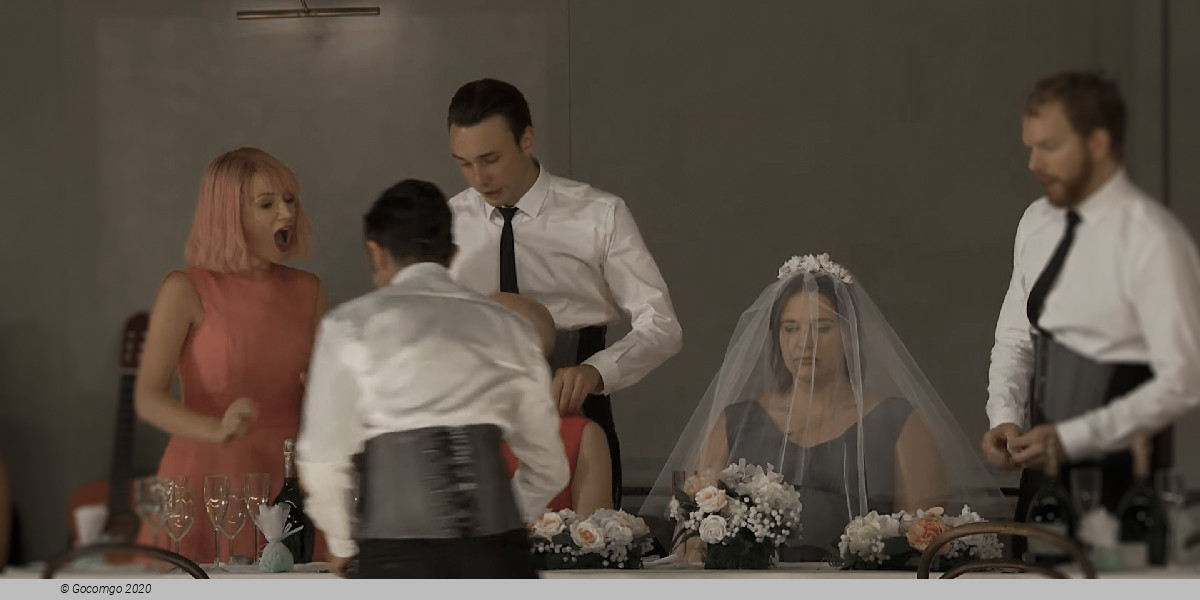
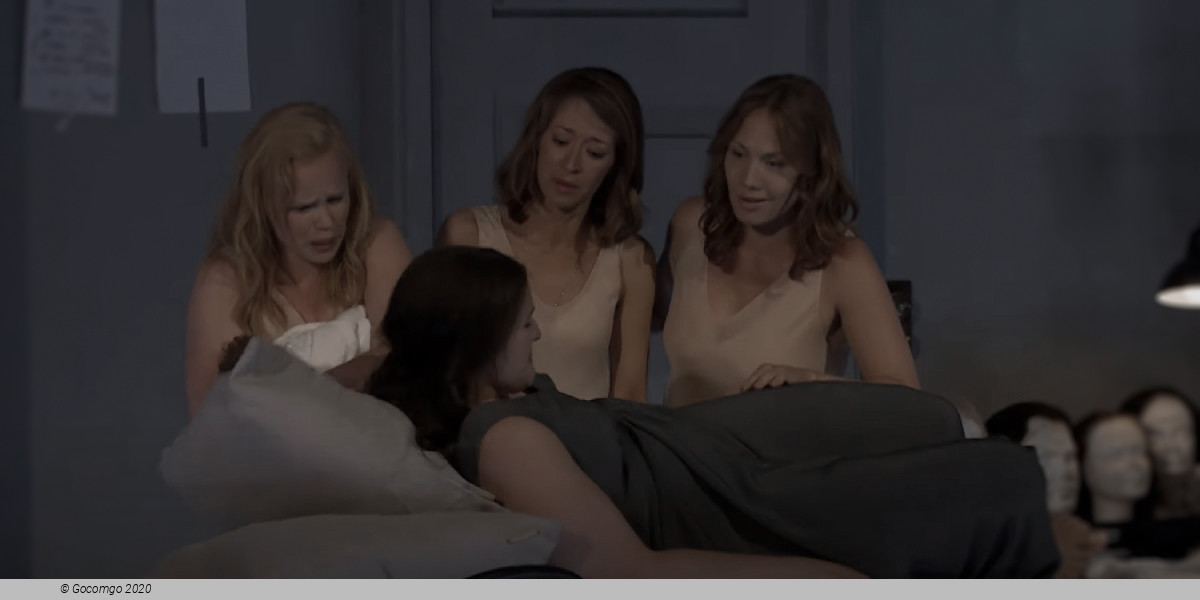
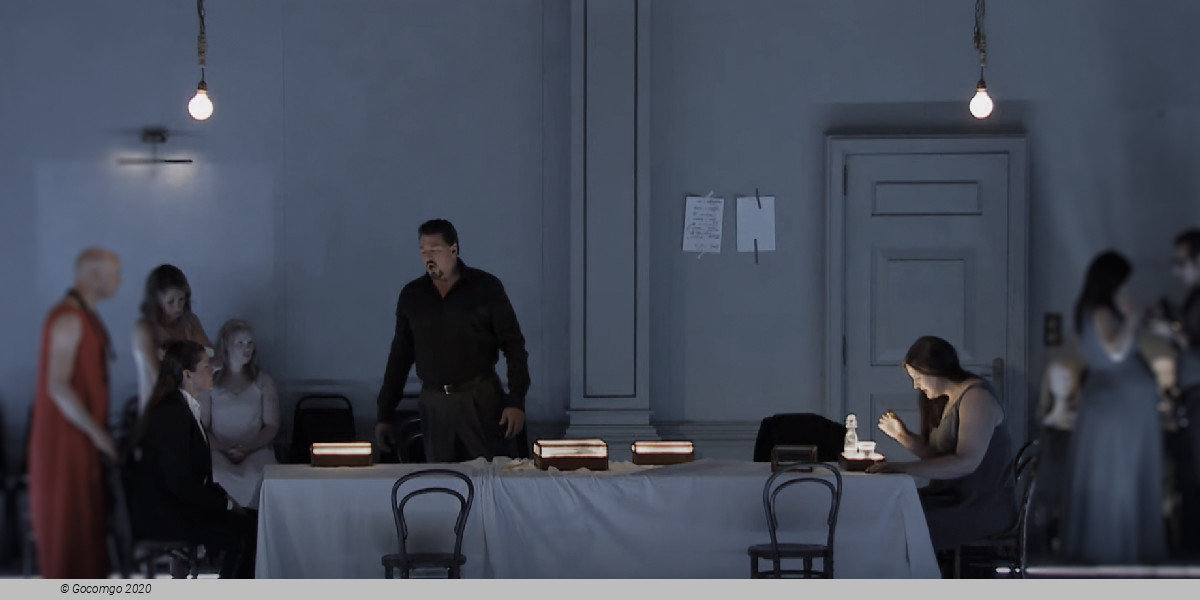
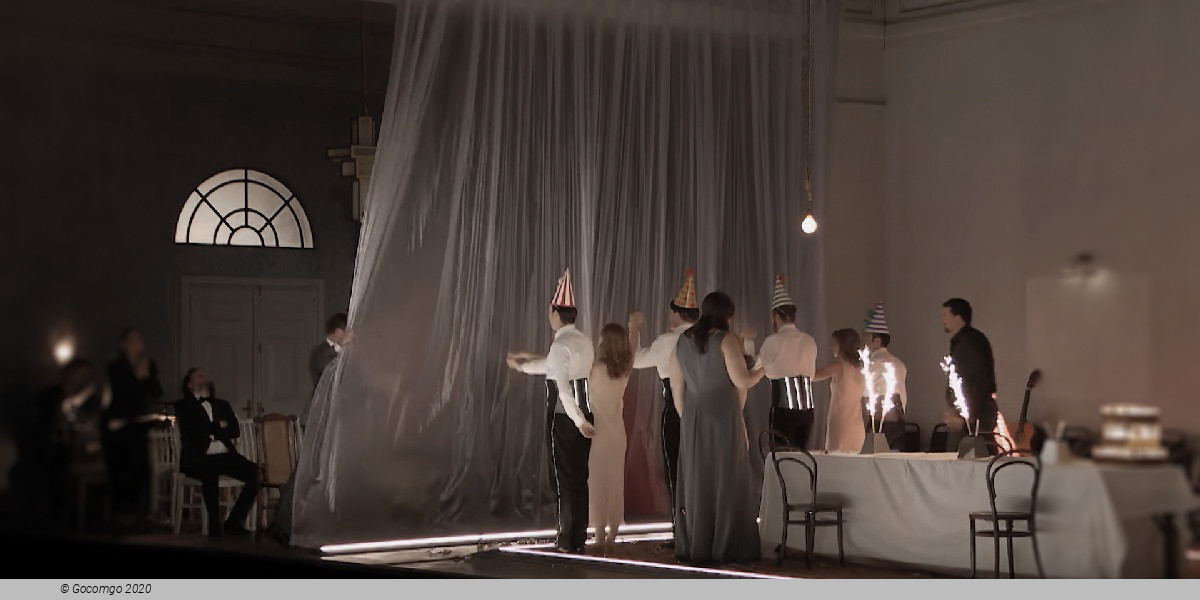
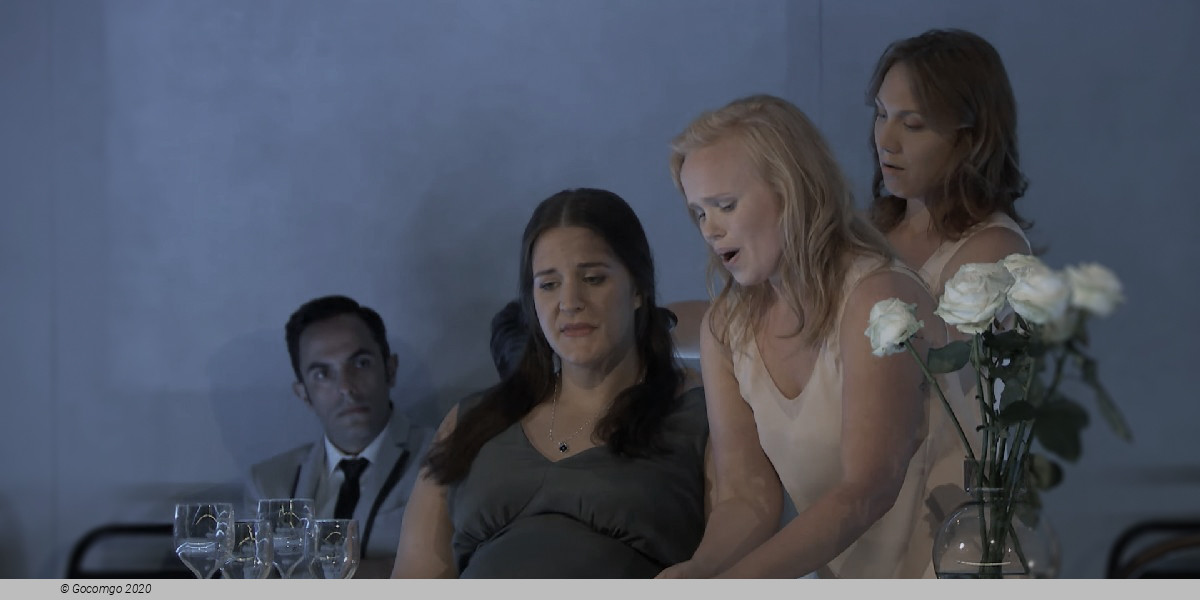
The richest man in Vienna is a pretty dislikable character, at least if the impression his staff give of him is to be believed. Overbearing and ruthless, from afar he summarily overturns the musical programme for a ‘grand assemblée’ at his town house, despite preparations for the performance already being well underway backstage. To him, insulting the artists’ sense of professional pride is a trifle of such supreme unimportance that he couldn’t care less. The opera seria Ariadne auf Naxos, composed specially for the occasion by an up-and-coming composer hoping to make a name for himself, is for him merely one of the postprandial ‘entertainments which promote digestion’, on a par with fireworks or dancing. Best to make it brief, or even better, combine it with an opera buffa, to avoid the risk of boredom.

It’s no coincidence that this excoriating portrait of an ultra-rich philistine who is represented only by his arrogant lackeys recalls the snobbishness skewered by Molière in his comedies. The first version of the opera Ariadne auf Naxos had been developed by Richard Strauss and his librettist Hugo von Hofmannsthal as a part of their adaptation of Molière’s Le Bourgeois gentilhomme. However, this mixture of straight theatre and music theatre did not go down well with the audience when it premiered at the Stuttgart Hoftheater on 25 October 1912.

And it was precisely Hofmannsthal and Strauss’s sense of professional pride that was aroused by this debacle. Accordingly, they replaced Molière’s comedy with an operetta-like ‘Prologue’ with the speaking parts reduced to one role, though retaining the ironic tone and mannered content in their new depiction of the complications surrounding the musical banquet at the plutocrat’s mansion. The opera’s second version was staged at the Court Opera in Vienna on 4 October 1916.

The somewhat hysterical Prologue, in which overwrought artistic personalities collide at a brisk comedic tempo with folk-theatre bawdiness and snide Viennese humour, was translated by Strauss into a buoyant, light-hearted parlando style. By contrast, the festive ‘operatic performance’, combining the Ancient Greek story of Ariadne with the fictitious comedy Die ungetreue Zerbinetta und ihre vier Liebhaber (The fickle Zerbinetta and her four lovers), is more or less classical in its compositional approach, celebrating the triumph of high culture through numerous references to the music of previous centuries.

In relocating this parody of the wealthy phoneys of the Vienna Ringstrasse to the present, director Ersan Mondtag, here making his Salzburg Festival debut, launches into galactic space. Mars is where the richest philistines of our time would really like to hold their banquets, a place where only the super-elite can follow them, and where those who create art rank even below the most menial of the household servants, as freelance toilers, mere sonic confectioners of a musical dessert course.

On this barren planet, the ‘barren island’ of Naxos – where in the second part of the work the encounter between Ariadne and Bacchus takes place – is a silent metaphor for modern ruthlessness. Men who can afford to buy anything lay waste to their home planet with their rapacious business dealings, just as the Greeks denuded their verdant islands to build warships in order to plunder Troy. Afterwards, the victors abscond with their spoils to places that only they can reach and inhabit, as does Bacchus, when he takes Ariadne along with him on his journey to Olympus.

For the egomaniac masters of monetization, it’s just a short hop from one barren wasteland to another. And their futuristic scheme of escaping into space actually has a strong connection with the myth of Ariadne. The true saviour of the Cretan princess, the supplier of Ariadne’s ball of thread, was Daedalus, the first human being to fly, and thus ‘patron saint’ of space travel. Following her death, Ariadne herself will be immortalized by her divine spouse as a constellation in the firmament. And it’s there that the hermetically sealed palaces of the capitalist gods will soon be standing. In their sumptuous sandcastles, Strauss and Hofmannsthal’s farce about the Viennese bourgeoisie can play out anew. Though the concluding fireworks may well be of a very different kind.

Till Briegleb

Translation: Sophie Kidd

History
Premiere of this production: Staatsoper Stuttgart

Ariadne auf Naxos (Ariadne on Naxos) is an opera by Richard Strauss with a German libretto by Hugo von Hofmannsthal. Combining slapstick comedy and consummately beautiful music, the opera's theme is the competition between high and low art for the public's attention.

Venue Info

Haus für Mozart - Salzburg
Location   Hofstallgasse 1

When it became clear that the ambitious plans to build a festival theater in Hellbrunn could not be realized, the idea of ​​transforming parts of the Hofstallkaserne into a theater hall came to the fore. After only four months of construction, a provisional festival theater was opened in 1925 on the terrain of the Great Winter Riding School with the Salzburg World Theater. Already in 1926 a first reconstruction phase of the insufficient Festspielhaus provisional by Clemens Holzmeister. Adaptations were made again in 1927, and now operas were also presented: Beethoven's Fidelio was performed here in 1927 as the first music theater work.
 

The later so-called "Small Festspielhaus" experienced numerous other renovation phases: 1937 was the rotation of the auditorium by 180 degrees, making a stage house cultivation was necessary. To accomplish this, Governor Franz Rehrl had his birthplace demolished in Toscaninihof. Benno von Arent redesigned the Festspielhaus in 1939 and replaced the wood paneling with a gilded plaster ceiling. The unfavorable visual and acoustic conditions required a further conversion in the years 1962/63. The Salzburg architects Hans Hofmann and Erich Engels gave the hall the form that it had until 2004.

For many years, the Salzburg Festival pursued the plan to create a "House for Mozart", which takes into account the stage works of the composer in every respect: with optimal acoustics and the best visibility from all seats. With the necessary intimacy of the room but at the same time a sufficient seating capacity had to go along. What seems like a squaring of the circle, the team of architects Holzbauer & Valentiny accomplished: The former Small Festival House was transformed in three phases from September 2003 in a "House for Mozart". The auditorium of the Kleine Festspielhaus was widened, shortened and lowered. Two new auditorium seats were created, which extend to the stage on both sides of the hall. Thus, the effect is achieved that not bare walls, but festive people frame the stage from three sides.

The foyer areas have changed considerably compared to the former Kleines Festspielhaus. High, floor-to-ceiling windows open the view to the cityscape in the main foyer - in return, the brightly lit interior of the theater in the evening looks outward. The main foyer is dominated by a 17-meter-high gilded louvre wall, through whose openings a Mozart's head created from Swarovski crystals can be seen. The terrace in front of the hall building was never open to the public since its construction in 1924. With the new building, it has now become part of the pause foyers. The arcade below was glazed and allows the auditorium to be opened from two sides instead of just one. This is the first time you can step directly from the Festspielhaus into the magnificent city landscape.

The new festival lounge on the roof, the SalzburgKulisse (made possible by the patron Gerhard Andlinger), has become a major attraction: the name itself already hints at the magnificent view that offers itself there to the old town of Salzburg. The furnishings of this lounge are made of pear-clad walls, and the tapestries in the niches are by Anton Kolig and Robin Andersen, two contemporaries of Anton Faistauer.

The Faistauer foyer (made possible by the patron Herbert Batliner) became a jewel of the new building: the famous frescoes of this room, created by the Salzburg painter Anton Faistauer in 1926, were removed after the Nazi invasion, in part wantonly destroyed, and could be reapplied until 1956. For the inauguration of the house for Mozart they were fundamentally restored and the room was also restored architecturally to its historical form.

The Holzmeister ensemble from the years 1924/37 has been preserved in its proportions on the outer façade. The visual impression of the façade is determined by the representative hall exits to the terrace designed by the sculptor Josef Zenzmaier. He created large bronze reliefs that were placed above the portals and depict scenes from Mozart's Le nozze di Figaro, Don Giovanni and The Magic Flute , The stone masks of Jakob Adlhart are now clearly visible in front of the entree of the house: under the new concrete roof with cantilevered gold and cantilevered out. Throughout the house, rough-sprayed concrete surfaces contrast with fine gold leaf and create an aesthetic tension.

From the back stage, a large iron gate opens into the Toscaninihof. The six concrete reliefs "Mask-Holding Genii" attached to the left and right of it were knocked off in 1938, but reconstructed in 1979 by their creator Jakob Adlhart. Above this, an organ is attached, which was recorded before the construction of the Great Festival Hall in the bad weather performances of Everyman.

On the occasion of the celebration of Mozart's 250th birthday in the so-called Mozart Year, the House of Mozart was ceremoniously opened on 26 July 2006 with the premiere of Le nozze di Figaro (directed by Claus Guth, conductor: Nikolaus Harnoncourt).

Important Info
Type: Opera
City: Salzburg, Austria
Starts at: 19:30
Acts: 1
Sung in: German
Titles in: German,English
Top of page