Grosses Festspielhaus 27 May 2023 - Orphée et Eurydice | GoComGo.com

Orphée et Eurydice

Grosses Festspielhaus, Salzburg, Austria
All photos (7)
Select date and time
7:30 PM

E-tickets: Print at home or at the box office of the event if so specified. You will find more information in your booking confirmation email.

You can only select the category, and not the exact seats.
If you order 2 or 3 tickets: your seats will be next to each other.
If you order 4 or more tickets: your seats will be next to each other, or, if this is not possible, we will provide a combination of groups of seats (at least in pairs, for example 2+2 or 2+3).

Important Info
Type: Opera
City: Salzburg, Austria
Starts at: 19:30
Acts: 3
Sung in: French
Titles in: German,Englisch

E-tickets: Print at home or at the box office of the event if so specified. You will find more information in your booking confirmation email.

You can only select the category, and not the exact seats.
If you order 2 or 3 tickets: your seats will be next to each other.
If you order 4 or more tickets: your seats will be next to each other, or, if this is not possible, we will provide a combination of groups of seats (at least in pairs, for example 2+2 or 2+3).

Festival

Salzburg Festival Whitsun 2023

Experience Salzburg and visit the Salzburg Withsun Festival. Cecilia Bartoli, the art director of the festival, will offer also 2023 an interesting programme.

Overview

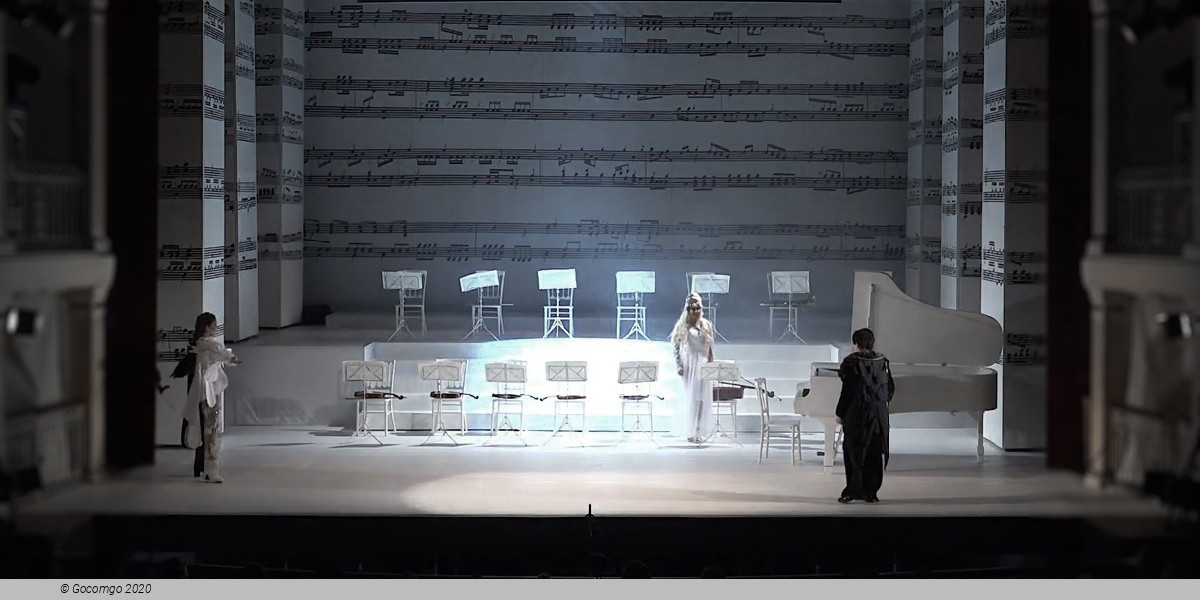
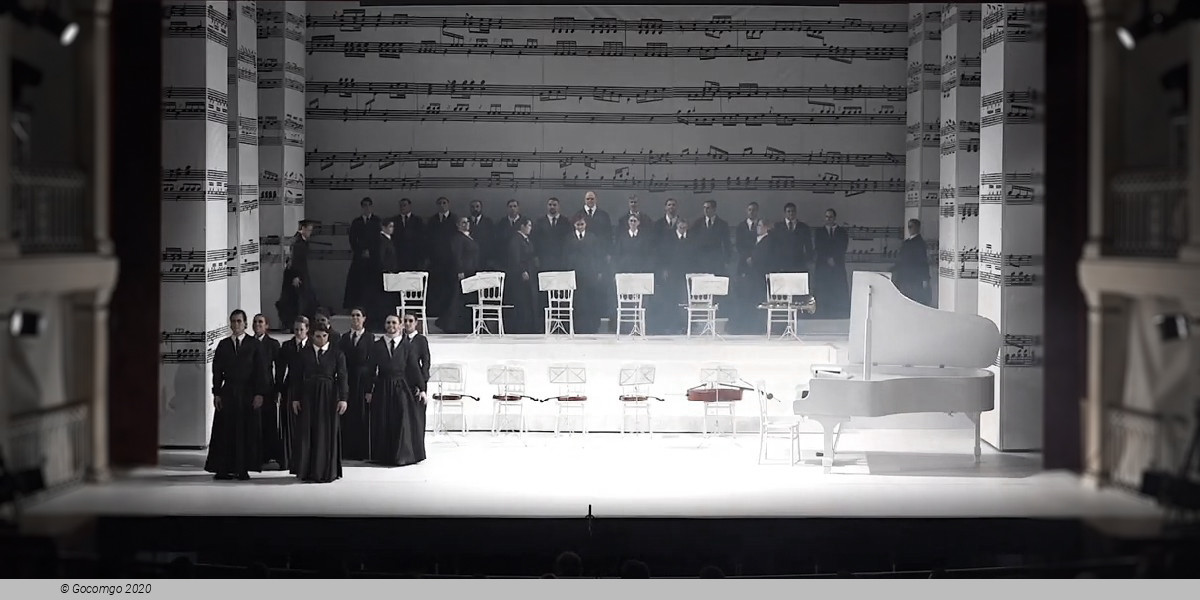
This version provides the ideal basis for a ballet opera, whose action John Neumeier has set in a modern ballet studio.

Christoph Willibald Gluck’s endeavours, undertaken jointly with the librettist Ranieri de’ Calzabigi, to free the predominant style of opera from musical excesses and complicated sub-plots, thus distilling its true essence, culminated in Orfeo ed Euridice in 1762. Ever since, this work has been regarded as the prototype of the ‘reform opera’, which condenses human emotions into one single plot-line. Twelve years after its premiere in Vienna Gluck produced a version in French entitled Orphée et Eurydice that was tailored to Parisian tastes, giving the castrato role of Orphée to a tenor and adding numerous ballet scenes.

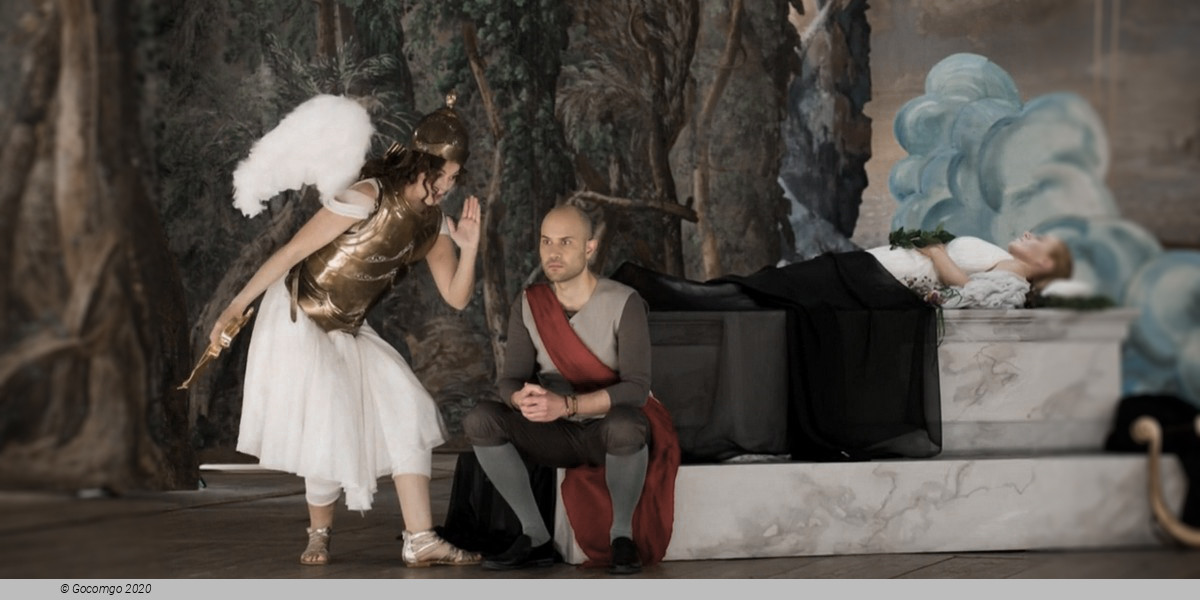
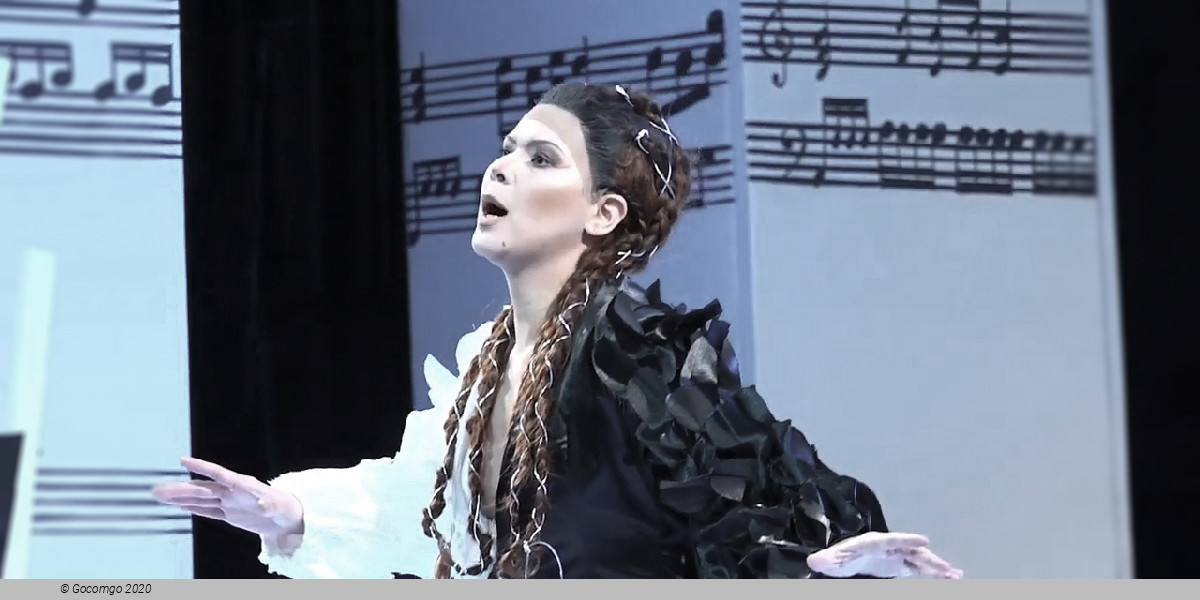
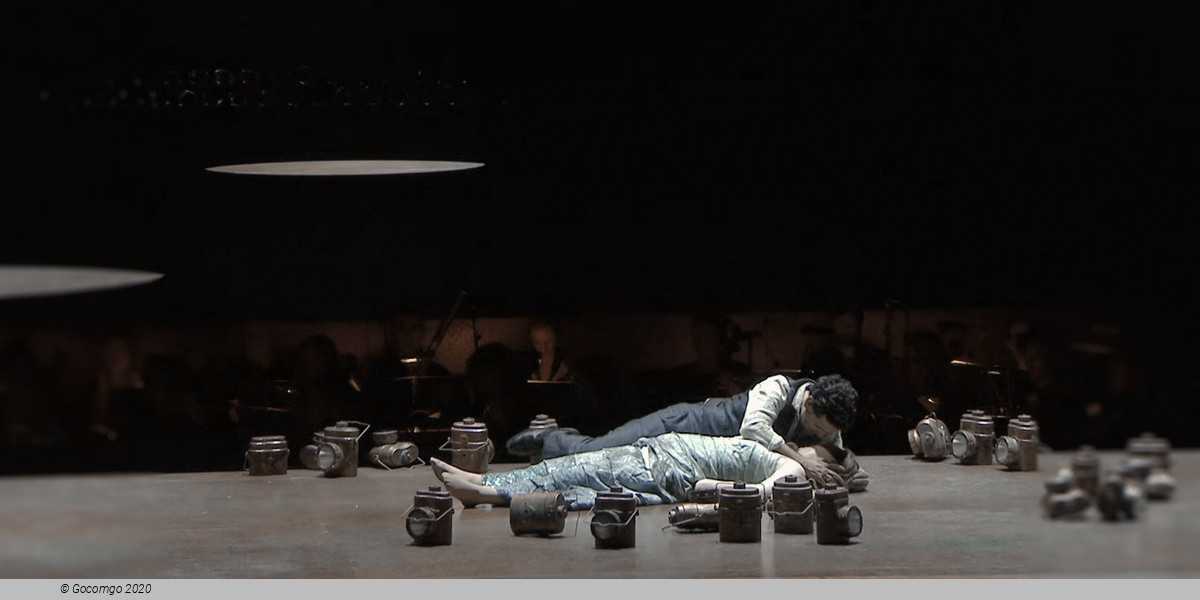
John Neumeier makes use of the overture to tell the backstory: an altercation arises during a rehearsal between the prima ballerina Eurydice and the choreographer Orphée. Furious, she leaves the studio and dies shortly afterwards in a car accident. Now the familiar narrative starts. However, it is not Orphée who doubts the happy outcome but Eurydice who sets things in train when she questions his love, making him turn round to her, and disappears. Devastated, Orphée strikes up the lament ‘J’ai perdu mon Eurydice’, but contrary to the myth Gluck bows to convention of the lieto fine and has Amor intervene in the action, steering it towards a positive conclusion.

A Co-Production of Chicago Lyric Opera, Los Angeles Opera and Hamburg State Opera

History
Premiere of this production: 05 October 1762, Burgtheater in Vienna

Orfeo ed Euridice is an opera composed by Christoph Willibald Gluck, based on the myth of Orpheus and set to a libretto by Ranieri de' Calzabigi. It belongs to the genre of the azione teatrale, meaning an opera on a mythological subject with choruses and dancing.

Synopsis

The first lines of arias, choruses, etc., are given in Italian (1762 version) and French (1774 version).

Act 1

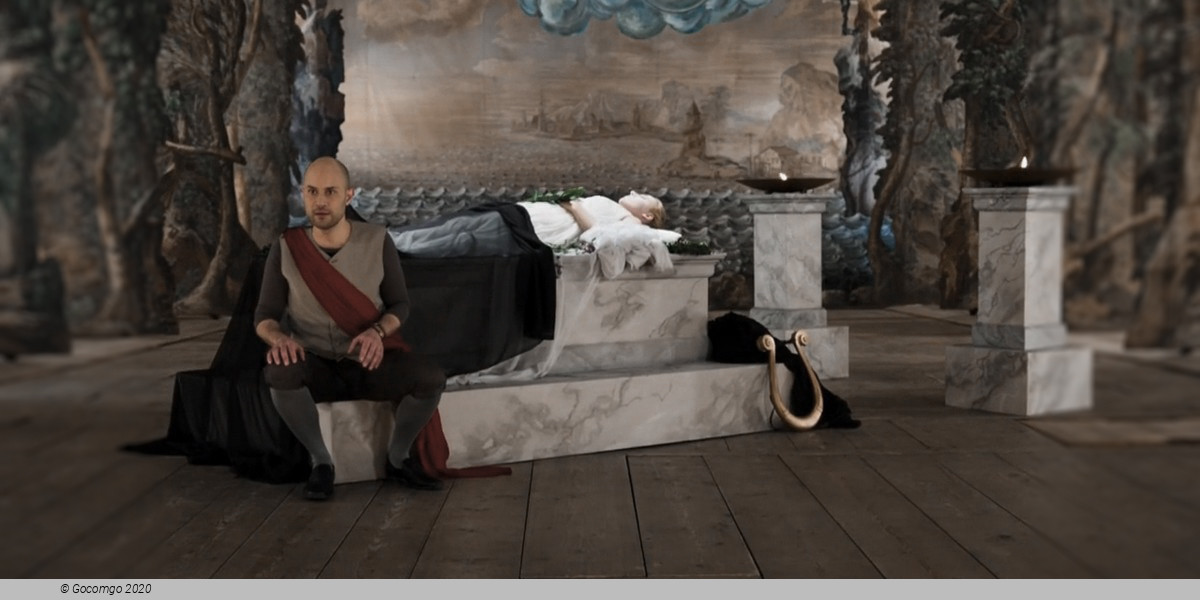
A chorus of nymphs and shepherds join Orfeo around the tomb of his wife Euridice in a solemn chorus of mourning; Orfeo is only able to utter Euridice's name (Chorus and Orfeo: "Ah, se intorno"/"Ah! Dans ce bois"). Orfeo sends the others away and sings of his grief in the aria "Chiamo il mio ben"/"Objet de mon amour", the three verses of which are preceded by expressive recitatives. This technique was extremely radical at the time and indeed proved overly so for those who came after Gluck: Mozart chose to retain the unity of the aria. Amore (Cupid) appears, telling Orfeo that he may go to the Underworld and return with his wife on the condition that he not look at her until they are back on earth (1774 only: aria by Amour, "Si les doux accords"). As encouragement, Amore informs Orfeo that his present suffering shall be short-lived with the aria "Gli sguardi trattieni"/"Soumis au silence". Orfeo resolves to take on the quest. In the 1774 version only he delivers an ariette ("L'espoir renaît dans mon âme") in the older, showier, Italian style, originally composed for an occasional entertainment, Il Parnaso confuso (1765), and subsequently re-used in another one, Le feste d'Apollo (1769).

Act 2

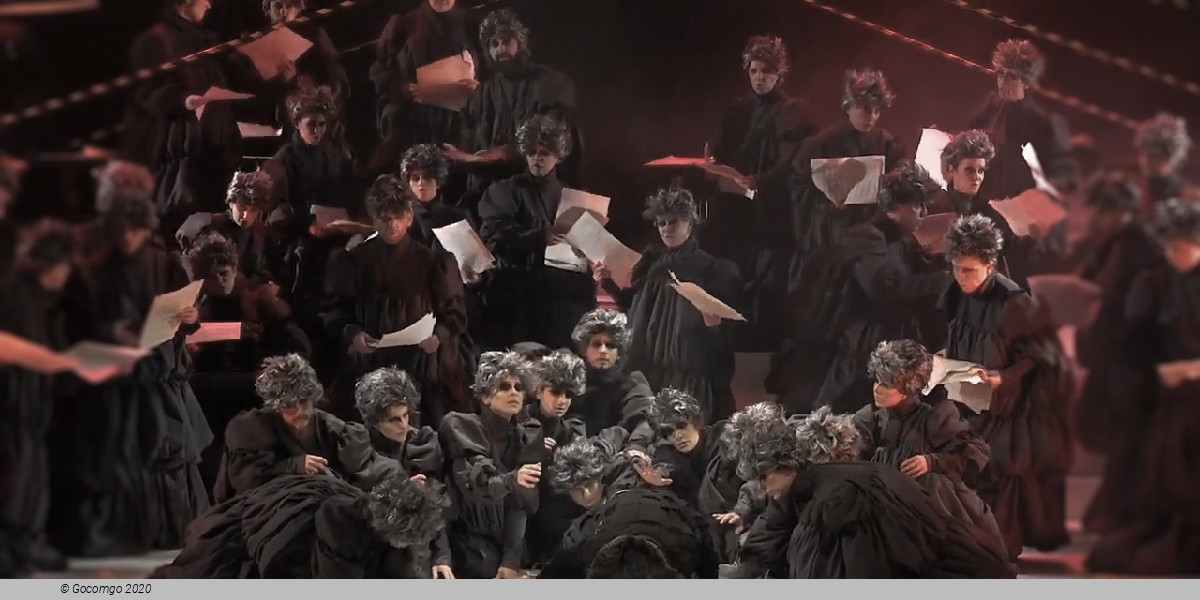
In a rocky landscape, the Furies refuse to admit Orfeo to the Underworld, and sing of Cerberus, its canine guardian ("Chi mai dell’Erebo"/"Quel est l'audacieux"). When Orfeo, accompanied by his lyre (represented in the opera by a harp), begs for pity in the aria "Deh placatevi con me"/"Laissez-vous toucher", he is at first interrupted by cries of "No!"/"Non!" from the Furies, but they are eventually softened by the sweetness of his singing in the arias "Mille pene"/"Ah! La flamme" and "Men tiranne"/"La tendresse", and let him in ("Ah, quale incognito affetto"/"Quels chants doux"). In the 1774 version, the scene ends with the "Dance of the Furies" (No. 28).

The second scene opens in Elysium. The brief ballet of 1762 became the four-movement "Dance of the Blessed Spirits" (with a prominent part for solo flute) in 1774. This is followed (1774 only) by a solo which celebrates happiness in eternal bliss ("Cet asile"), sung by either an unnamed Spirit or Euridice, and repeated by the chorus. Orfeo arrives and marvels at the purity of the air in an arioso ("Che puro ciel"/"Quel nouveau ciel"). But he finds no solace in the beauty of the surroundings, for Euridice is not yet with him. He implores the spirits to bring her to him, which they do (Chorus: "Torna, o bella"/"Près du tendre objet").

Act 3

On the way out of Hades, Euridice is delighted to be returning to earth, but Orfeo, remembering the condition related by Amore in act 1, lets go of her hand and refusing to look at her, does not explain anything to her. She does not understand his action and reproaches him, but he must suffer in silence (Duet: "Vieni, appaga il tuo consorte"/"Viens, suis un époux"). Euridice takes this to be a sign that he no longer loves her, and refuses to continue, concluding that death would be preferable. She sings of her grief at Orfeo's supposed infidelity in the aria "Che fiero momento"/"Fortune ennemie" (in 1774, there is a brief duet before the reprise). Unable to take any more, Orfeo turns and looks at Euridice; again, she dies. Orfeo sings of his grief in the famous aria "Che farò senza Euridice?"/"J’ai perdu mon Eurydice" ("What shall I do without Euridice?"/"I have lost my Euridice") Orfeo decides he will kill himself to join Euridice in Hades, but Amore returns to stop him (1774 only: Trio: "Tendre Amour"). In reward for Orfeo's continued love, Amore returns Euridice to life, and she and Orfeo are reunited. After a four-movement ballet, all sing in praise of Amore ("Trionfi Amore"). In the 1774 version, the chorus ("L’Amour triomphe") precedes the ballet, to which Gluck had added three extra movements.

Venue Info

Grosses Festspielhaus - Salzburg
Location   Hofstallgasse 1

The plans for a Grosses Festspielhaus (Large Festival Hall), where the former archiepiscopal princely stables were located, were drawn up primarily by the architect Clemens Holzmeister; Herbert von Karajan also made many suggestions for the building project, in particular regarding the design of the theatre hall. Every effort was made and no expense spared so as to “insert” between the three-centuries-old façade of the former court stables and the Mönchsberg a theatre with an opera stage whose structure and technical equipment would still meet highest international demands after fifty years. Between autumn 1956 and the early summer of 1960, 55,000 cubic metres of rock were blasted away to create the relevant space. The building was largely financed from the state budget and as a result the Republic of Austria is the owner of the Grosses Festspielhaus.

The Grosses Festspielhaus was opened on 26 July 1960 with a festive ceremony and the performance of Der Rosenkavalier by Richard Strauss conducted by Herbert von Karajan. Even though the new stage was undoubtedly impressive in its dimensions, voices were raised even then expressing regret that it would hardly be suitable for staging operas by Mozart which require a more intimate setting. The ground plan of the auditorium is almost square, nearly 35 metres long and from the stalls as well as from the circle offers ideal acoustic conditions and sight-lines for 2,179 seats. The iron stage curtain weighs 34 tonnes and in the middle is one metre thick. The ground steel plates were created by Rudolf Hoflehner; the main curtain behind it was designed by Leo Wollner.

The décor for the concert hall was renewed in 1993 by Richard Peduzzi. Five bronze doors with handles designed by Toni Schneider-Manzell allow the public access from the Hofstallgasse. The façade is ornamented by a Latin inscription by the Benedictine monk Professor Thomas Michels (Order of St. Benedict): Sacra camenae domus concitis carmine patet quo nos attonitos numen ad auras ferat (The holy house of the muse is open for lovers of the arts, may divine power inspire us and raise us to the heights).

Mostly local materials were used for fitting out the Grosses Festspielhaus: the reinforced concrete columns in the entrance foyer were covered with the conglomerate rock removed from the wall of the Mönchsberg; the floor is made of Adnet marble. Low beam lighting in the sloping ceiling and panel dishes made of glass from Murano create a solid lighting design. Two sculptures created by Wander Bertoni in Carrara marble represent music and drama. The four large-scale paintings in the form of crosses on the theme Dreams with the Wrong Solutions, which were bought by the Austrian patron of the arts and collector Karlheinz Essl and made available on loan to the Salzburg Festival, are by the New York painter and sculptor Robert Longo (1993).

The interval hall adjoining the entrance foyer is largely based on the original ground plan of the archiepiscopal princely stables. The floor of green serpentine is new and contains mosaics of horses by Kurt Fischer. On the wall is a steel relief by Rudolf Hochlehner entitled Homage to Anton von Webern. Through the arch built by Fischer von Erlach one can look out onto the horse statue and fountain and the Schüttkasten which was acquired by the Salzburg Festival in 1987. A separate access on the left of the interval foyer leads via an escalator and steps to the underground car park for the old town centre of Salzburg.

The furnishings for a Patrons’ Lounge on the first floor of the Grosses Festspielhaus were financed by the American patrons of the arts Donald and Jeanne Kahn, who later became major sponsors of the Salzburg Festival. Since 1995 it has served as a reception area for patrons, sponsors as well as their guests and is also used for press conferences and various other functions in connection with the Salzburg Festival.

Important Info
Type: Opera
City: Salzburg, Austria
Starts at: 19:30
Acts: 3
Sung in: French
Titles in: German,Englisch
Top of page