









Vienna State Opera: Orest Tickets | Event Dates & Schedule | GoComGo.com

Orest Tickets

Vienna State Opera, Vienna, Austria
Important Info
Type: Opera
City: Vienna, Austria

E-tickets: Print at home or at the box office of the event if so specified. You will find more information in your booking confirmation email.

You can only select the category, and not the exact seats.
If you order 2 or 3 tickets: your seats will be next to each other.
If you order 4 or more tickets: your seats will be next to each other, or, if this is not possible, we will provide a combination of groups of seats (at least in pairs, for example 2+2 or 2+3).

Cast
Performers
Choose the date to see the peformers
Overview

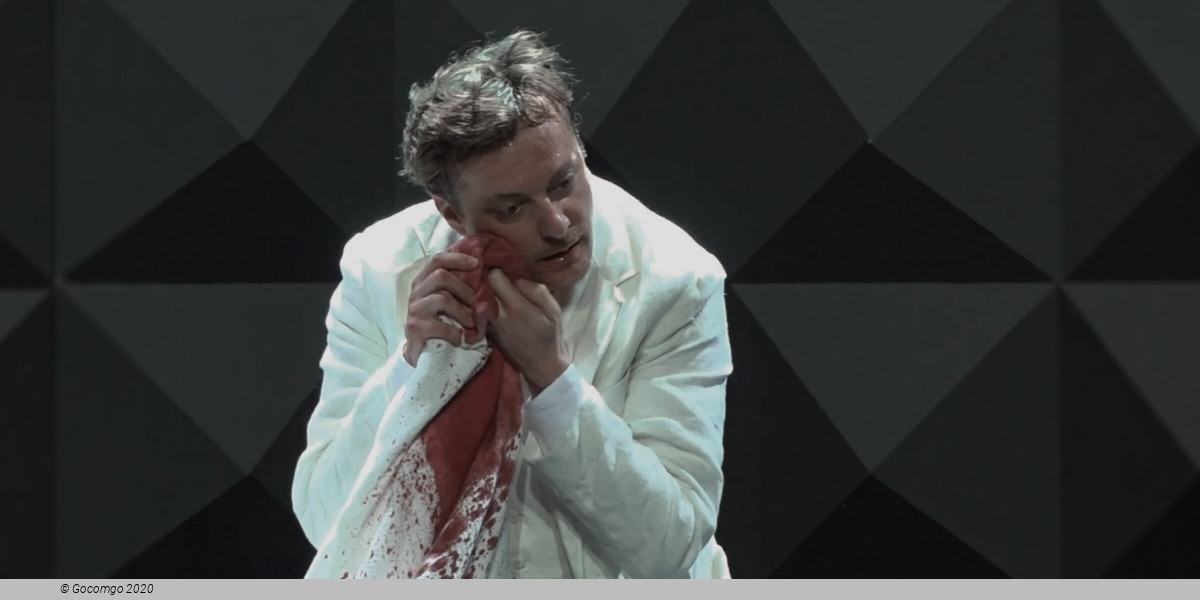
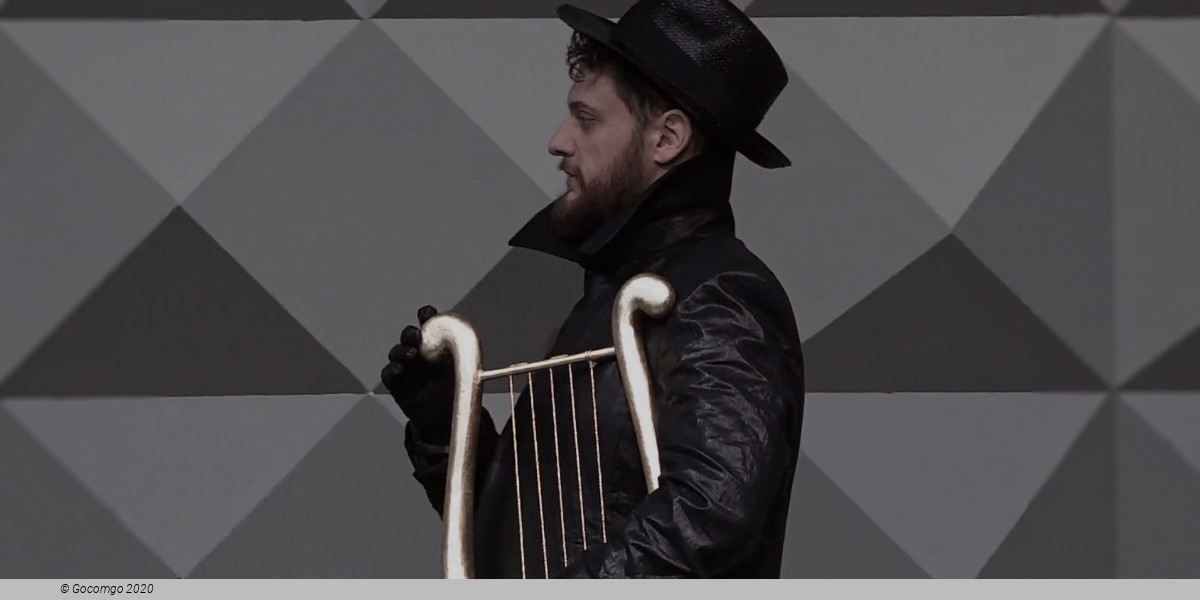
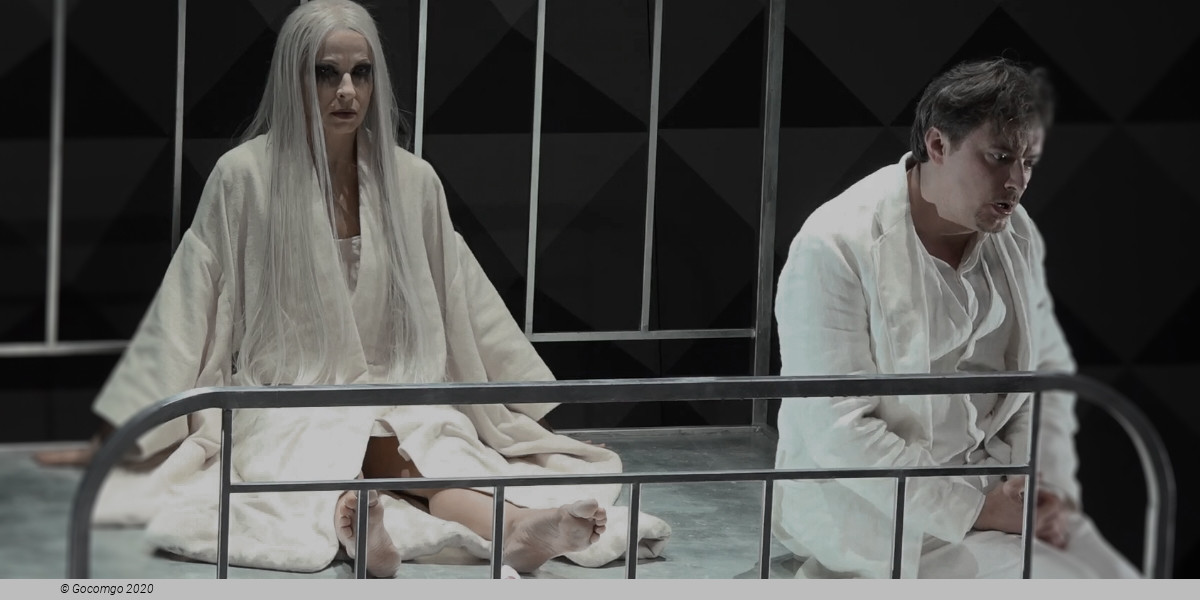
Manfred Trojahn's Orest is based on Euripides' drama of the same title. Writing his own libretto, Trojahn added thoughts from Friedrich Nietzsche's Dionysian-Dithyrambus. The starting point of the action is Orest's committed murder of his mother Klytaemnestra, having been driven by Apollo and Elektra to avenge his father but thus creating new guilt. With Orest, Trojahn wrote a gripping opera of approx. 80 minutes, which has - according to Michael Boder, who conducts the Wiener Staatsoper premiere - musical roots in Richard Strauss, Alban Berg and Arnold Schönberg. To Euripides' drama he added the God Dionysus as a counterpart of Apollo and changed the ending dramatically: instead of Apollo descending as deux ex machina to solve chaos, Orest emancipates himself from the influence of others. 


The Trojan War is over. To avenge the death of his father, Orestes has killed his mother Clytemnestra who had murdered his father, Agamemnon. The god Apollo commanded him to commit this matricide, which was legitimate under his law.

History

Orestes is an Ancient Greek play by Euripides that follows the events of Orestes after he had murdered his mother.

Synopsis

Scene 1
Orestes is now tormented by voices in his head and is pursued by the Furies. Images from the past haunt him, and in his desperation he calls upon Apollo. However, Apollo is not willing to relieve him of his sense of guilt. Instead he tells Orestes to appeal to his uncle Menelaus, who will soon return to Argos from the war. As a contender for the throne of his murdered brother Agamemnon, Menelaus depends on the city remaining at peace. He could accordingly certainly find justification for acquitting Orestes and absolving him. Apollo transforms himself into Dionysus. Speaking in riddles, he entices Orestes to seek great fame. He then announces the return of Helen, the most beautiful of all women, whom he desires for himself.

Scene 2
Helen, wife of Menelaus, returns from Troy. Once greatly admired, she now finds all doors closed to her. Electra, sister of Orestes, curses her for having started the war that brought people nothing but suffering. She would rather see Helen dead than alive. Following the custom, Helen wishes to visit her sister Clytemnestra's tomb to offer a sacrifice. However, she is afraid of the hatred that confronts her in the city and so asks Electra to do this in her place. Outraged, Electra refuses. She suggests that Helen send her daughter Hermione, who played no part in the war. During Helen’s long absence, the young child she left behind has blossomed into a young woman. To protect her mother, Hermione goes to the tomb with the offerings. Electra is fascinated by Hermione’s innocent charm: "She is what we were unable to be!"

Scene 3
Menelaus arrives and urges Orestes to flee with Electra. The men of Argos have reached their verdict without him: death by stoning for both of them. Orestes reports that it was Apollo who commanded him to commit the crime but has now abandoned him. For political reasons, Menelaus declares that he is unable to help them; as a contender for the throne he cannot afford to make enemies in the city. Cursing Menelaus, Orestes collapses. In view of Menelaus’s refusal to act, Electra indulges increasingly in fantasies of violence against him and Helen. Once again she demands bloodshed to achieve a more just world. Distressed by her fanaticism, Menelaus flees the city.

Scene 4
Orestes and Electra are alone. Orestes longs for love, for a different life, and for an end to all violence. But for Electra there can be no love until justice reigns. As Orestes falls asleep, Electra laments the life she has missed and confides her deep despair to the night.
Orestes dreams of the promise of glory made by Dionysus and wonders if he will need to commit further murders to attain it. Electra plays on Orestes’ emotions to incite him to new murders: he must put Helen to death and kill Hermione as well.

Intermezzo and Scene 5
The war has left deep scars on everyone, with the exception of Hermione. Amidst a scene of devastation, she bemoans the destruction in the world and the hate-filled, brutalized society in which she must live. She wonders how the cycle of deed, revenge and judgement can be broken. She wants to protect her mother from the hatred of the world. Spurred on by Electra, Orestes kills Helen. Horrified, Hermione confronts Orestes with the senselessness of his deed. Their eyes lock.

Scene 6
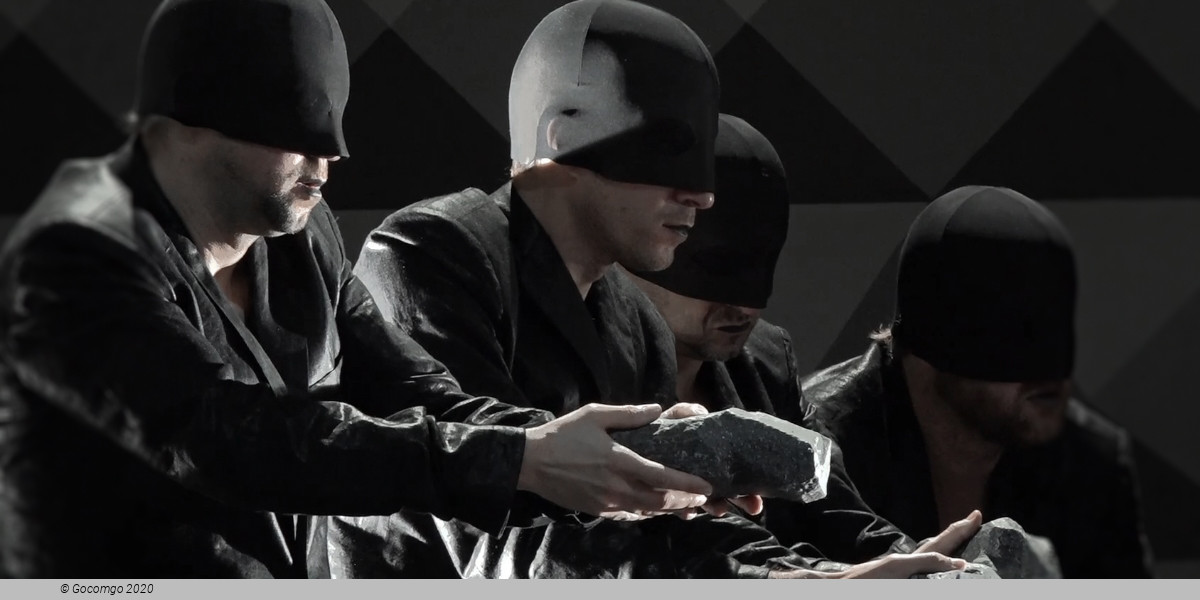
The men of Argos arrive to carry out the sentence. Electra urges Orestes to kill Hermione as well. Mesmerized by Hermione’s gaze, he is incapable of doing the deed. Menelaus prevents Electra from killing Hermione herself.
Dionysus appears and escorts Helen up to the heavenly firmament. Before the spellbound gaze of the bystanders, Orestes refuses to obey the gods any longer. He resists Apollo’s order to enforce his patriarchal law in the city and shows no interest in the fame that Dionysus offers him. He rejects the capriciousness of the gods. Together with Hermione, he wants to break away from the immutable customs of the gods. He sets off to find a life he can determine for himself. The gods no longer hold him in their sway.

Venue Info

Vienna State Opera - Vienna
Location   Opernring 2

The Vienna State Opera is one of the leading opera houses in the world. Its past is steeped in tradition. Its present is alive with richly varied performances and events. Each season, the schedule features 350 performances of more than 60 different operas and ballets. The members of the Vienna Philharmonic are recruited from the Vienna State Opera's orchestra. The building is also the home of the Vienna State Ballet, and it hosts the annual Vienna Opera Ball during the carnival season.

The 1,709-seat Renaissance Revival venue was the first major building on the Vienna Ring Road. It was built from 1861 to 1869 following plans by August Sicard von Sicardsburg and Eduard van der Nüll, and designs by Josef Hlávka. The opera house was inaugurated as the "Vienna Court Opera" (Wiener Hofoper) in the presence of Emperor Franz Joseph I and Empress Elisabeth of Austria. It became known by its current name after the establishment of the First Austrian Republic in 1921. The Vienna State Opera is the successor of the Vienna Court Opera, the original construction site chosen and paid for by Emperor Franz Joseph in 1861.

The opera house was the first major building on the Vienna Ringstrasse commissioned by the Viennese "city expansion fund". Work commenced on the house in 1861 and was completed in 1869, following plans drawn up by architects August Sicard von Sicardsburg and Eduard van der Nüll. It was built in the Neo-Renaissance style by the renowned Czech architect and contractor Josef Hlávka.

Gustav Mahler was one of the many conductors who have worked in Vienna. During his tenure (1897–1907), Mahler cultivated a new generation of singers, such as Anna Bahr-Mildenburg and Selma Kurz, and recruited a stage designer who replaced the lavish historical stage decors with sparse stage scenery corresponding to modernistic, Jugendstil tastes. Mahler also introduced the practice of dimming the lighting in the theatre during performances, which was initially not appreciated by the audience. However, Mahler's reforms were maintained by his successors.

Herbert von Karajan introduced the practice of performing operas exclusively in their original language instead of being translated into German. He also strengthened the ensemble and regular principal singers and introduced the policy of predominantly engaging guest singers. He began a collaboration with La Scala in Milan, in which both productions and orchestrations were shared. This created an opening for the prominent members of the Viennese ensemble to appear in Milan, especially to perform works by Wolfgang Amadeus Mozart and Richard Strauss.

Ballet companies merge

At the beginning of the 2005–2006 season, the ballet companies of the Staatsoper and the Vienna Volksoper were merged under the direction of Gyula Harangozó.

From the 2010–2011 season a new company was formed called Wiener Staatsballet, Vienna State Ballet, under the direction of former Paris Opera Ballet principal dancer Manuel Legris. Legris eliminated Harangozós's policy of presenting nothing but traditional narrative ballets with guest artists in the leading roles, concentrated on establishing a strong in-house ensemble and restored evenings of mixed bill programs, featuring works of George Balanchine, Jerome Robbins, Jiří Kylián, William Forsythe, and many contemporary choreographers, as well as a reduced schedule of the classic ballets.

Opera ball

For many decades, the opera house has been the venue of the Vienna Opera Ball. It is an internationally renowned event, which takes place annually on the last Thursday in Fasching. Those in attendance often include visitors from around the world, especially prominent names in business and politics. The opera ball receives media coverage from a range of outlets.

Important Info
Type: Opera
City: Vienna, Austria

E-tickets: Print at home or at the box office of the event if so specified. You will find more information in your booking confirmation email.

You can only select the category, and not the exact seats.
If you order 2 or 3 tickets: your seats will be next to each other.
If you order 4 or more tickets: your seats will be next to each other, or, if this is not possible, we will provide a combination of groups of seats (at least in pairs, for example 2+2 or 2+3).

Top of page