Warsaw Grand Theatre - Polish National Opera (Teatr Wielki) tickets 21 February 2026 - Die Frau ohne Schatten | GoComGo.com

Die Frau ohne Schatten

Warsaw Grand Theatre - Polish National Opera (Teatr Wielki), Moniuszko Auditorium, Warsaw, Poland
All photos (7)
Select date and time
7 PM

E-tickets: Print at home or at the box office of the event if so specified. You will find more information in your booking confirmation email.

You can only select the category, and not the exact seats.
If you order 2 or 3 tickets: your seats will be next to each other.
If you order 4 or more tickets: your seats will be next to each other, or, if this is not possible, we will provide a combination of groups of seats (at least in pairs, for example 2+2 or 2+3).

Important Info
Type: Opera
City: Warsaw, Poland
Starts at: 19:00
Acts: 3
Sung in: German
Titles in: Polish,English

E-tickets: Print at home or at the box office of the event if so specified. You will find more information in your booking confirmation email.

You can only select the category, and not the exact seats.
If you order 2 or 3 tickets: your seats will be next to each other.
If you order 4 or more tickets: your seats will be next to each other, or, if this is not possible, we will provide a combination of groups of seats (at least in pairs, for example 2+2 or 2+3).

Cast
Performers
Conductor: Bassem Akiki
Soprano: Annemarie Kremer (The Empress)
Chorus: Chorus of the Polish National Opera
Baritone: Lauri Vasar (Barak, the Dyer)
Mezzo-Soprano: Lindsay Ammann (The Nurse)
Soprano: Lise Lindstrom (The Dyer`s Wife)
Orchestra: Orchestra of the Polish National Opera
Tenor: Tadeusz Szlenkier (The Emperor)
Choir: Władysław Skoraczewski Artos Children’s Choir
Creators
Composer: Richard Strauss
Librettist: Hugo von Hofmannsthal
Director: Mariusz Treliński
Overview

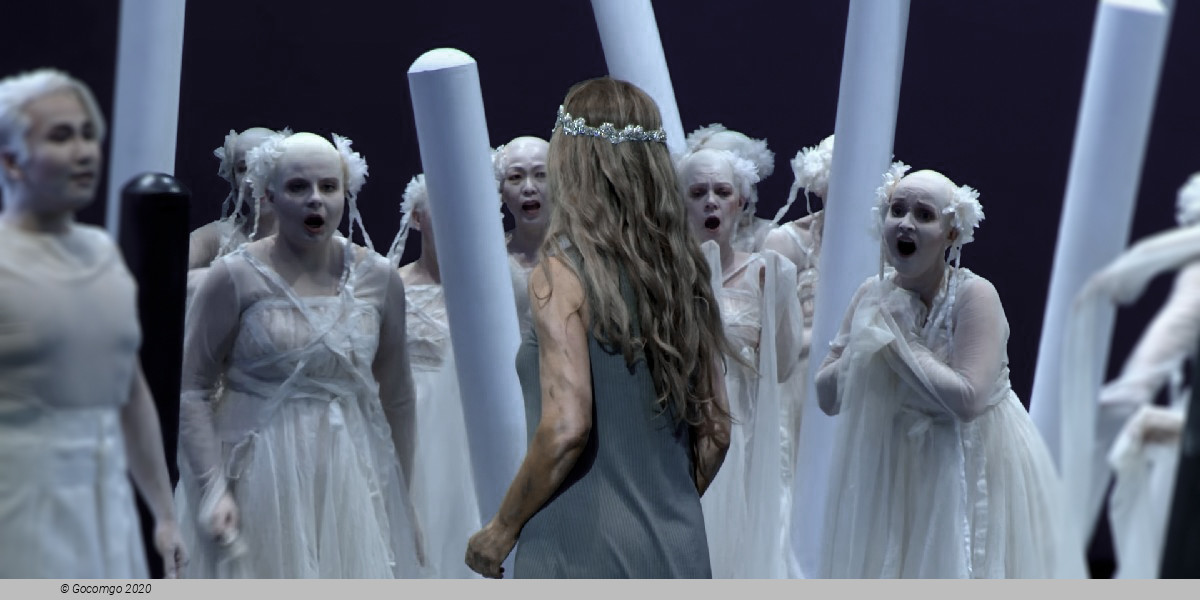
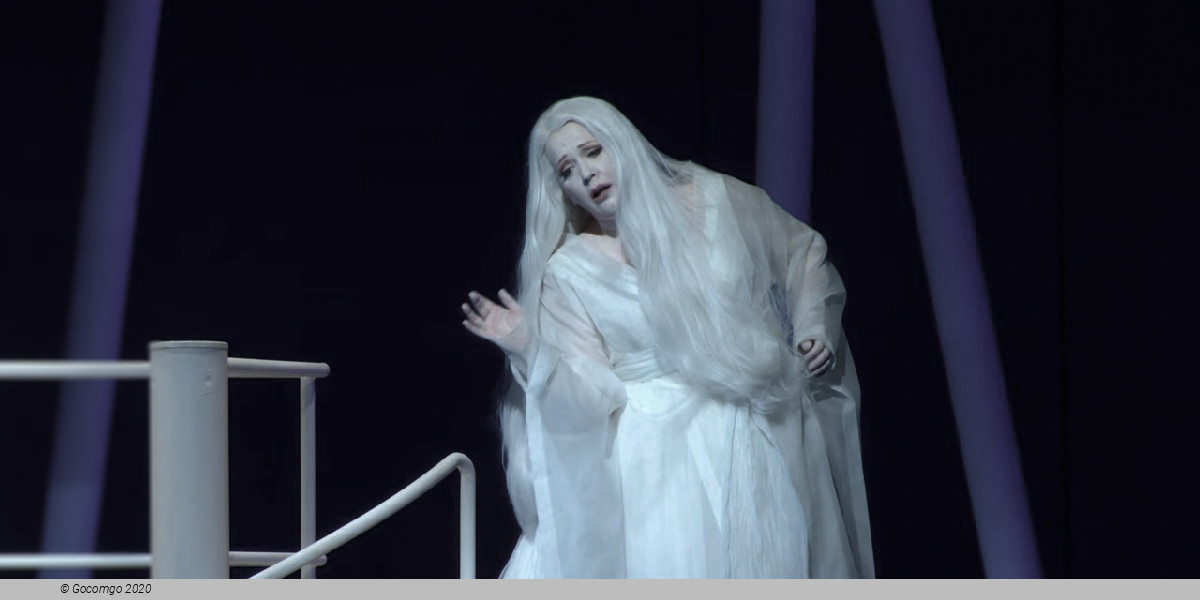
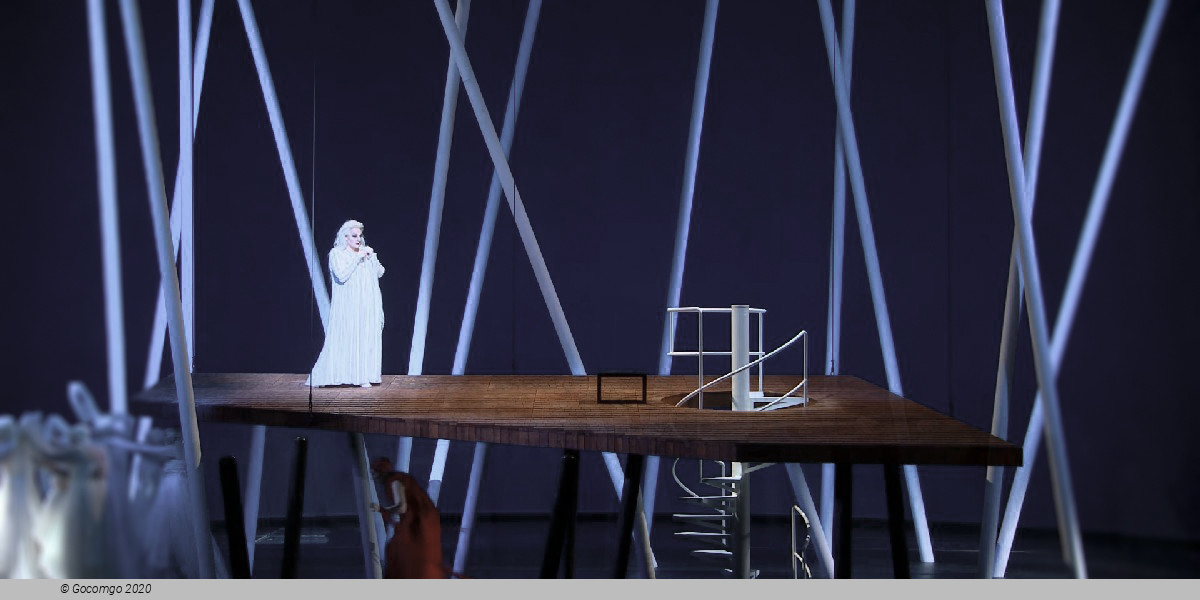
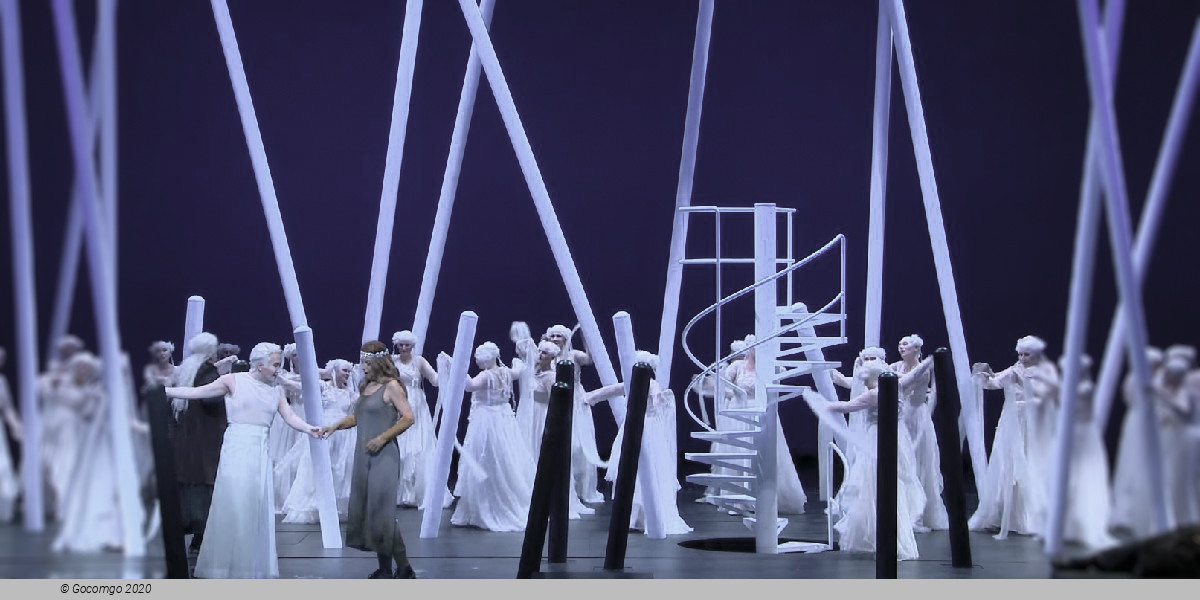
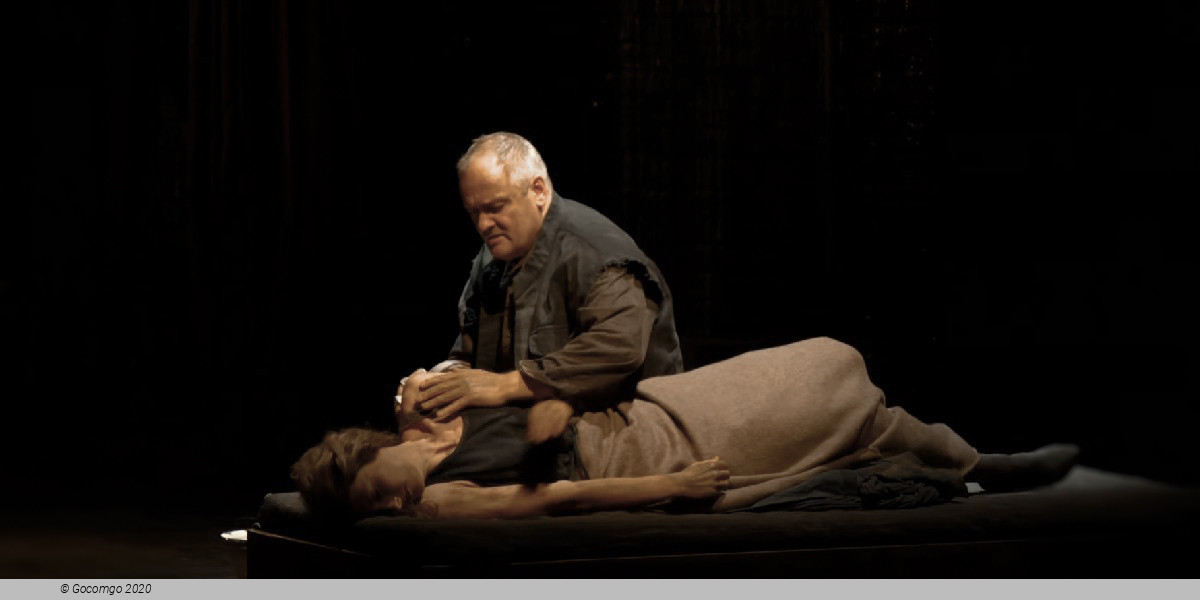
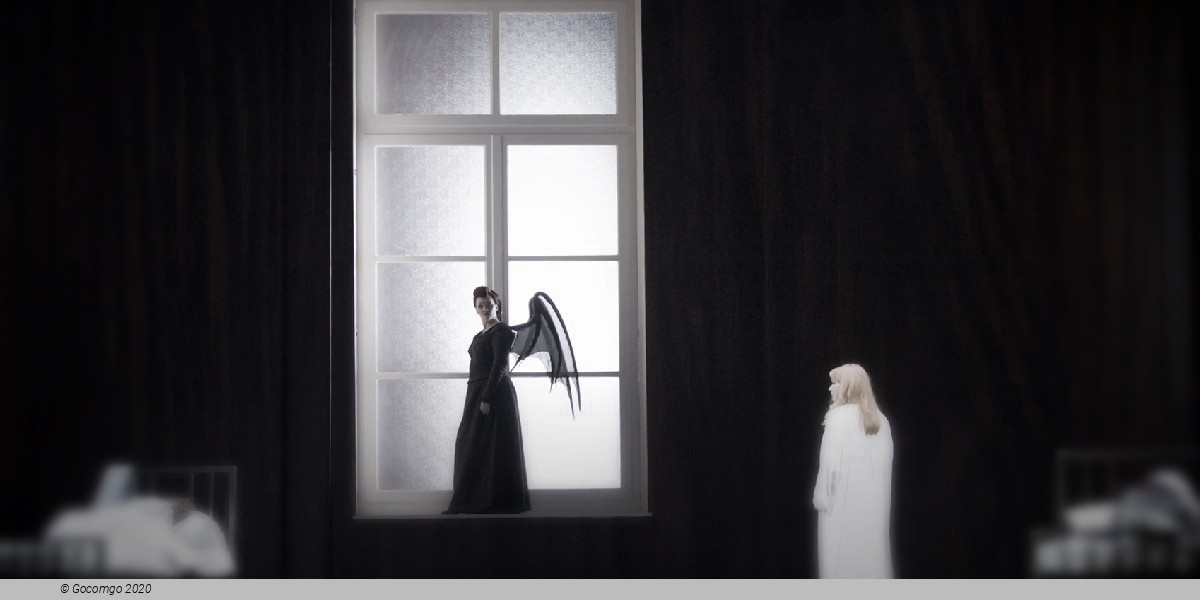
Fascinated with modern opera for years, Mariusz Treliński sees the piece as a contemporary tale of a mentally exhausted woman. The director draws inspiration from the films of Lars von Trier and Ingmar Bergman.

For him, The Woman without a Shadow is not a fantastical tale but a relevant take on the topic of womanhood and maternity. The production is an interplay between symbolism and realism; a psychological drama and engrossing visual and musical experience. Co-produced with the Lyon Opera, it received enthusiastic reviews from the French critics, who praised the extraordinary suggestiveness of the world conjured by Treliński to offer an insight into the female subconsciousness. 

Die Frau ohne Schatten (The Woman without a Shadow) is the fourth collaboration of composer Richard Strauss and lyricist Hugon von Hofmannsthal. Despite abounding in ambiguous symbolism, the opera focuses on the most fundamental human experiences: love, loneliness, feeling unfulfilled, longing.

The piece is a metaphysical fairytale about two married couples suspended between three worlds: the spirit realm ruled by Prince Keikobad, a sumptuous world inhabited by demigods represented by the Emperor and the Empress, and the mortal world of humans: a dyer by the name of Barak and his Wife. The imperial couple are not happy in their relationship. The Empress is the daughter of the mighty Keikobad and can assume different forms. She was captured by the Emperor in the form of a gazelle. She is now trapped in the human shape because she lost a talisman of transformation. Her husband treats her like a trophy and a sexual object. She lives and unfulfilled life, which is why she has lost her shadow. To regain it and save the Emperor’s life, she must experience human misery and compassion. Barak's marriage is also an unhappy one. The couple is mismatched and they live in dismal conditions. Approached with a generous offer that would considerably improve the couple’s lot, the Wife decides to sell her shadow to the Empress. Keikobad’s daughter initially agrees to the deal, before backing away from it, resolved not to condemn the woman to a lifetime of unhappiness. Her good intentions are rewarded with the shadow she longed so much for.

The libretto combines tropes taken from Oriental fairytales and symbolic parables, alluding to certain motifs from Mozart’s The Magic Flute. What underlies the seemingly complicated narrative is a universal tale of an unhappy relationship and endeavours to save it. The story is told with sensual music based on contrasting elements: engrossing harmonies and stark dissonances, momentous tutti sections and soft chamber passages, arias and large choruses.

Production: Opéra de Lyon

History
Premiere of this production: 10 October 1919, Vienna State Opera

Die Frau ohne Schatten (The Woman without a Shadow) is an opera in three acts by Richard Strauss with a libretto by his long-time collaborator, the poet Hugo von Hofmannsthal. It was written between 1911 and either 1915 or 1917. When it premiered in Vienna on 10 October 1919, critics and audiences were unenthusiastic. Many cited problems with Hofmannsthal's complicated and heavily symbolic libretto. However, it is now a standard part of the operatic repertoire.

Synopsis

The opera's story is set in the mythical empire of the Southeastern Islands and involves five principal characters: the Emperor (tenor), the Empress (soprano), her Nurse (mezzo-soprano), Barak, a lowly dyer (bass-baritone), and the Dyer's Wife (dramatic soprano). A sixth character, Keikobad, King of the Spirit Realm and father to the Empress, sets the plot in motion, but never appears on stage. The Empress is half human: she was captured by the Emperor in the form of a gazelle. She assumed human shape and he married her, but she has no shadow. This symbolizes her inability to bear children. Keikobad has decreed that unless the Empress gains a shadow before the end of the twelfth moon, she will be reclaimed by her father and the Emperor will turn to stone.

Act 1

Scene 1

It is dawn, outside the bedchambers of the Emperor and Empress. The Messenger of Keikobad arrives, and tells the Empress's nurse that the Empress must acquire a shadow within three days, or will be forcibly returned to his realm, and the Emperor turned to stone. The Nurse is excited about the prospect of returning to the spirit world, since she hates humans and having to dwell with them.

The Messenger leaves and the Emperor emerges from his bedchamber. He departs on a three-day hunting trip, seeking his favorite falcon, which he drove away for attacking a gazelle that later turned into the Empress. He leaves his wife to the Nurse's care. The Empress emerges from her chamber and reminisces about times when she had the ability to turn into any creature she wanted.

It is revealed that after being attacked by the red falcon that the Emperor is seeking, she lost a talisman that gave transformation powers, and on which was inscribed a curse that foresaw the fate she and the Emperor are about to face if she does not acquire a shadow. The red falcon appears and warns the Empress that the curse is about to be fulfilled. The Empress begs the Nurse to help her get a shadow. The Nurse, who is steeped in magic, suggests descending to the mortal world and finding a woman who will sell her shadow to the Empress.

Scene 2

Barak, a dyer, shares his hut with his Wife and his three brothers: the One-Eyed Man, the One-Armed Man, and the Hunchback. The three brothers fight about a stolen item and are separated by the Wife, who throws a bucket of water at them. The brothers-in-law then argue with the Wife. Barak enters and stops the argument. The Wife wants to have her in-laws thrown out, but her husband refuses.

The Dyer desires children, but his Wife fears the responsibility and has secretly sworn not to have any. The Dyer and his brothers leave, and the Empress and the Nurse arrive in disguise. The Wife wants them out of her house but the Nurse conjures up visions of luxury and promises them to the Wife in return for her shadow. The Wife agrees to deny her husband for three days during which the Nurse and the Empress will live at the Dyer's hut as poor relatives who have come to work as servants.

Barak approaches and the Wife is worried that dinner is not ready, the Nurse once more uses her magic to have everything ready, including the splitting of Barak's bed in two. The Nurse and Empress disappear, and the Wife is greatly upset by the offstage Voices of Unborn Children lamenting, which emerge from the fish that are cooking on the fire. The Dyer returns to find he is barred from his marital bed. The Wife curtly informs him of the impending stay of her "cousins" and goes off to her separate bed. From outside the Town Watchmen are heard singing of the importance of conjugal love. Barak sighs and lies down to sleep on the floor.

Act 2

Scene 1

The Empress, acting as a servant, helps the Dyer leave for work, but is troubled by her role, because Barak is very kind to her. The Nurse conjures up the image of a handsome youth by bringing a broom to life, which tempts the Dyer's Wife. The Dyer returns with his hungry brothers and beggar children. He has had a magnificent day at the market, selling all his goods, and has invited everyone to celebrate. However, his Wife manages to ruin the celebration.

Scene 2

The Emperor is led to his hunting lodge in the forest by the red falcon. He sees the Empress and Nurse surreptitiously enter the lodge, and is suspicious. When he comes closer, he smells a human odor trailing the Empress. Thinking she has betrayed him, he resolves to kill her. He first thinks of using an arrow, and then his sword, and then his bare hands. Finally he realizes he can't do it. He resolves to seek out some isolated ravine to be alone with his misery.

Scene 3

At the Dyer's house, the Dyer is drugged into sleep by the Nurse. The Nurse again conjures up the young man for the Wife, who grows frightened and rouses the Dyer. Barak is surprised to learn that there is a man in his house but then is quickly turned upon by his Wife, who shouts at him, then leaves for the city, leaving her confused husband. Left alone with Barak, the Empress feels more guilty than before.

Scene 4

The Empress goes to sleep at the hunting lodge, but in her sleep she is further troubled by her crime and by the possible fate of the Emperor. In a dream, she sees the Emperor enter her father's realm. Unseen choruses chant the curse of the talisman. Awakening, she is overcome with guilt and remorse.

Scene 5

The next day, the Wife announces that she has sold her shadow. When a fire reveals that she has no shadow, the enraged Barak is ready to kill her. The Empress cries out that she no longer wants the shadow. A sword appears in the Dyer's hand. His brothers restrain him as the Wife declares her remorse and urges Barak to kill her. An earthquake splits the ground and Barak and his wife are swallowed into the earth. The brothers flee, and the Nurse, recognizing Keikobad's hand, spirits the Empress away.

Act 3

Scene 1

In a grotto beneath the realm of Keikobad, the wife and the Dyer are seen in separate chambers, unaware of the other's presence. The Wife is haunted by the Voices of Unborn Children. She protests that she loves the Dyer, who regrets his attempted violence. A voice directs them up separate staircases.

Scene 2

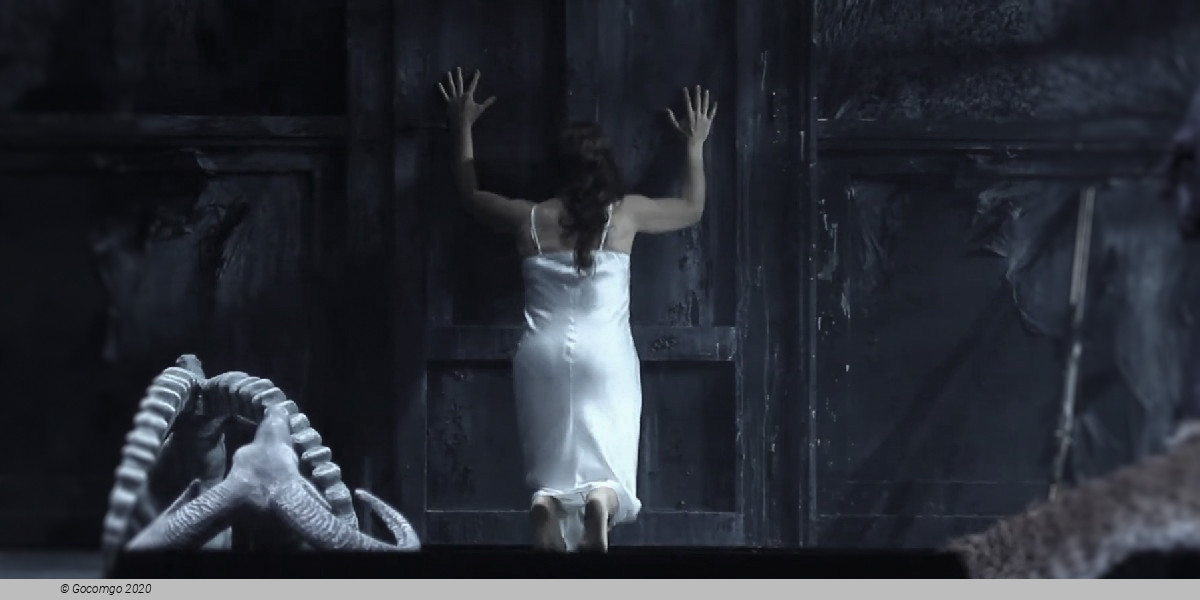
The Empress and Nurse arrive before Keikobad's Temple. The Nurse tries to convince the Empress to escape but she remembers the doors from her dream and knows that her father is waiting for her on the other side. She dismisses the Nurse and enters. The Nurse foretells terrible tortures awaiting the Empress and misleads the Wife and Barak, who are looking for each other, she to die at her husband's hand, he to forgive her and hold her in his arms. Keikobad's Messenger condemns the Nurse to wander the mortal world.

Scene 3

Inside the Temple, the Empress speaks to Keikobad, asking for forgiveness and to find her place amongst those who cast shadows. Keikobad does not answer but shows the Emperor already almost petrified. The Fountain of Life springs up before the Empress, and a temple guardian urges her to drink from it and claim the Wife's shadow for herself. But the Dyer and the Wife are heard offstage, and the Empress refuses to steal their future happiness and become human by robbing humanity from someone else: "Ich will nicht!" ("I will not!"). This act of renunciation frees her: she receives a shadow, and the Emperor is restored to natural form

Scene 4

The scene changes to a beautiful landscape. Barak and his Wife are reunited and she regains her own shadow. Both couples sing of their humanity and praise their Unborn Children.


Venue Info

Warsaw Grand Theatre - Polish National Opera (Teatr Wielki) - Warsaw
Location   plac Teatralny 1

The Grand Theatre in Warsaw is a theatre and opera complex situated on the historic Theatre Square in central Warsaw. The Warsaw Grand Theatre is home to the Polish National Ballet and is one of the largest theatrical venues in the world.

The Theatre was built on Theatre Square between 1825 and 1833, replacing the former building of Marywil, from Polish classicist designs by the Italian architect Antonio Corazzi of Livorno, to provide a new performance venue for existing opera, ballet and drama companies active in Warsaw. The building was remodeled several times and, in the period of Poland's political eclipse from 1795 to 1918, it performed an important cultural and political role in producing many works by Polish composers and choreographers.

It was in the new theatre that Stanisław Moniuszko's two best-known operas received their premieres: the complete version of Halka (1858), and The Haunted Manor (1865). After Frédéric Chopin, Moniuszko was the greatest figure in 19th-century Polish music, for in addition to producing his own works, he was director of the Warsaw Opera from 1858 until his death in 1872.

While director of the Grand Theatre, Moniuszko composed The Countess, Verbum Nobile, The Haunted Manor and Paria, and many songs that make up 12 Polish Songbooks.

Also, under Moniuszko's direction, the wooden Summer Theatre was built close by in the Saxon Garden. Summer performances were given annually, from the repertories of the Grand and Variety (Rozmaitości) theatres. Józef Szczublewski writes that during this time, even though the country had been partitioned out of political existence by its neighbors, the theatre flourished: "the ballet roused the admiration of foreign visitors; there was no equal troupe of comedians to be found between Warsaw and Paris, and Modrzejewska was an inspiration to drama."

The theatre presented operas by Władysław Żeleński, Ignacy Jan Paderewski, Karol Szymanowski and other Polish composers, as well as ballet productions designed by such choreographers as Roman Turczynowicz, Piotr Zajlich and Feliks Parnell. At the same time, the repertoire included major world opera and ballet classics, performed by the most prominent Polish and foreign singers and dancers. It was also here that the Italian choreographer Virgilius Calori produced Pan Twardowski (1874), which (in the musical arrangement first of Adolf Sonnenfeld and then of Ludomir Różycki) has for years been part of the ballet company's repertoire.

During the 1939 battle of Warsaw, the Grand Theatre was bombed and almost completely destroyed, with only the classical façade surviving. During the Warsaw Uprising of 1944 the Germans shot civilians in the burnt-out ruins. The plaque to the right of the main entrance commemorates the suffering and heroism of the victims of fascism.

Important Info
Type: Opera
City: Warsaw, Poland
Starts at: 19:00
Acts: 3
Sung in: German
Titles in: Polish,English
Top of page