
Gran Teatre del Liceu 3 May 2020 - Semiramide Gioachino Rossini (concert version) | GoComGo.com

Semiramide Gioachino Rossini (concert version)

Gran Teatre del Liceu, Barcelona, Spain
All photos (10)
Select date and time
5 PM
Request for Tickets
Important Info
Type: Opera
City: Barcelona, Spain
Starts at: 17:00
Duration: 3h 50min

E-tickets: Print at home or at the box office of the event if so specified. You will find more information in your booking confirmation email.

You can only select the category, and not the exact seats.
If you order 2 or 3 tickets: your seats will be next to each other.
If you order 4 or more tickets: your seats will be next to each other, or, if this is not possible, we will provide a combination of groups of seats (at least in pairs, for example 2+2 or 2+3).

Overview

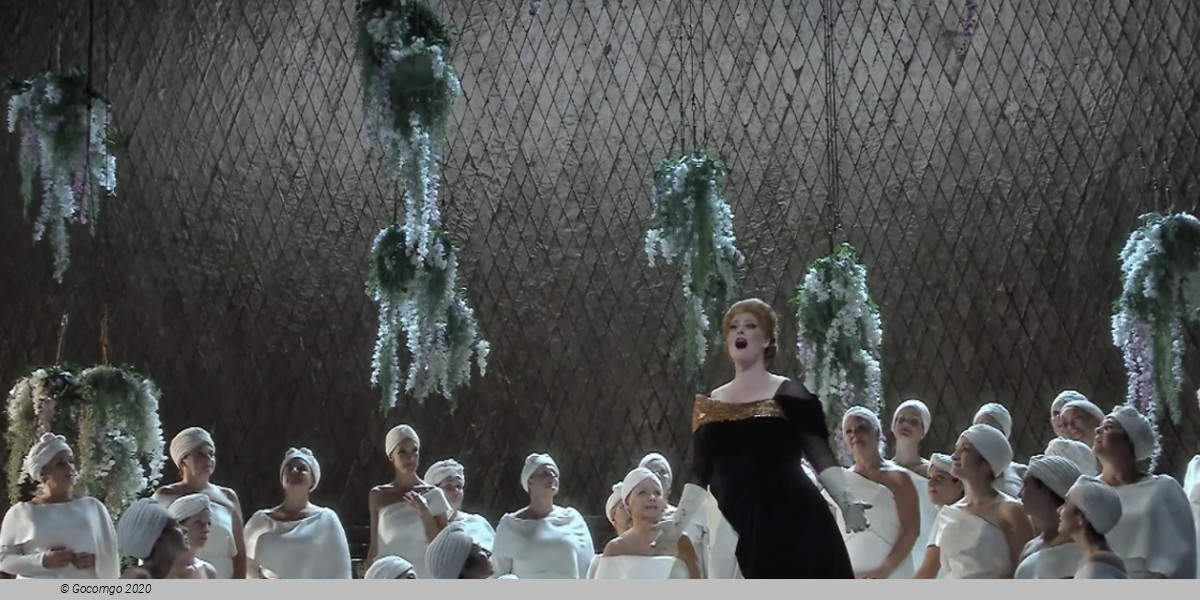
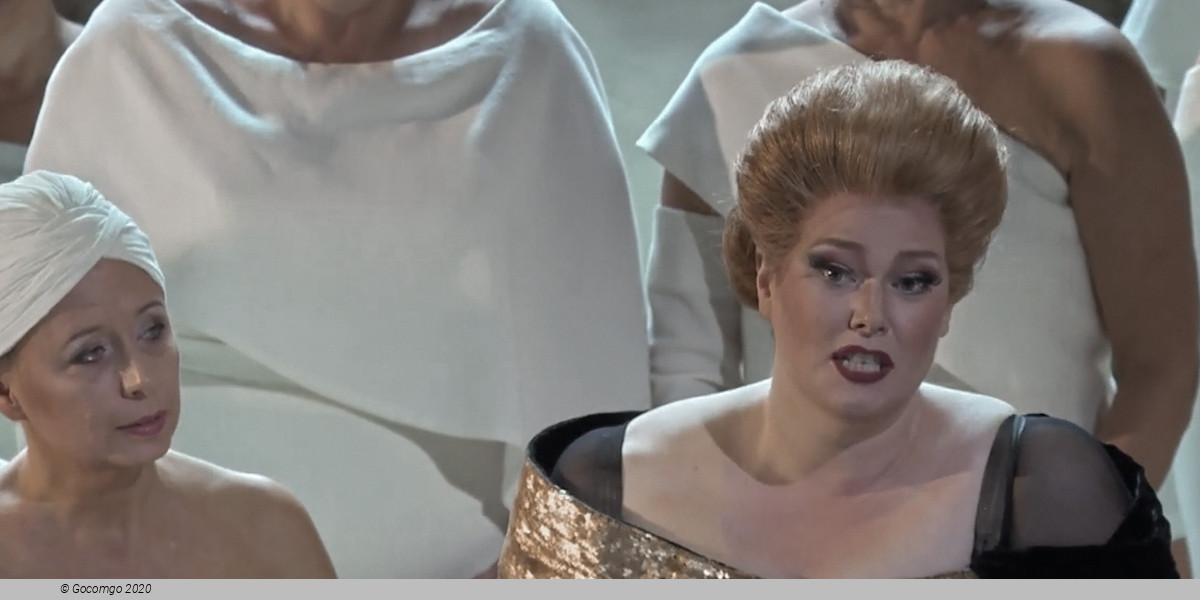
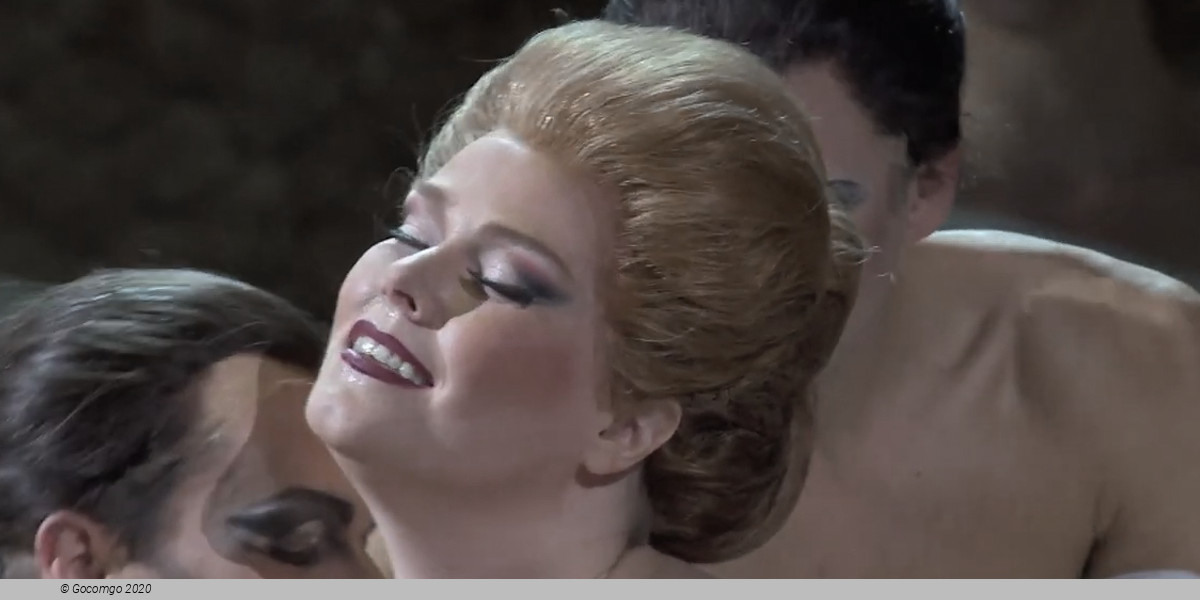
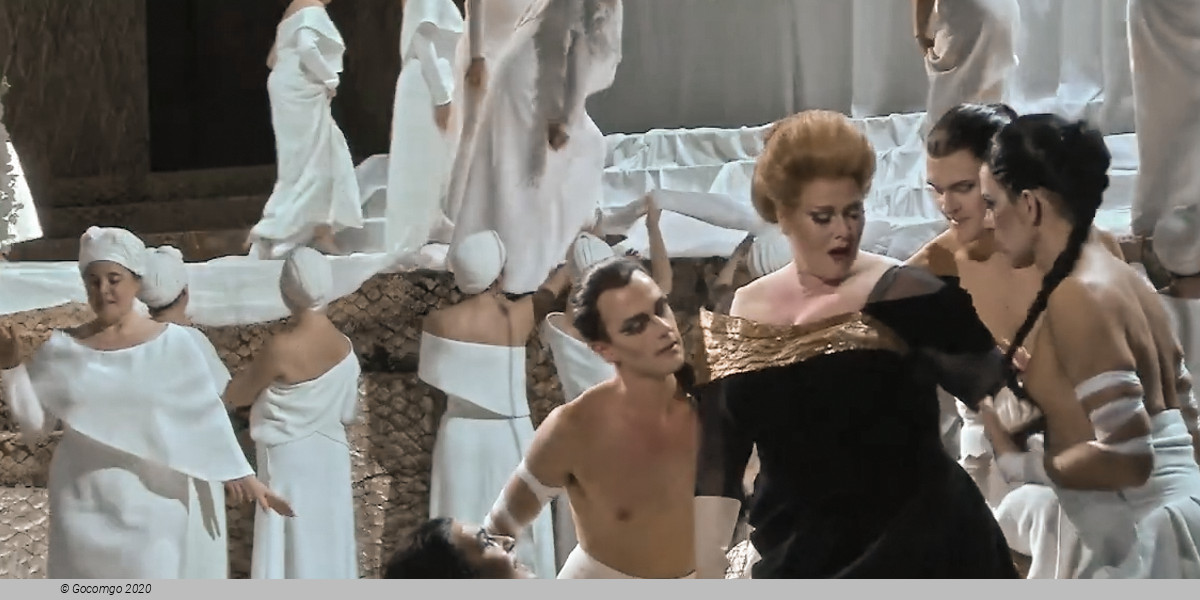
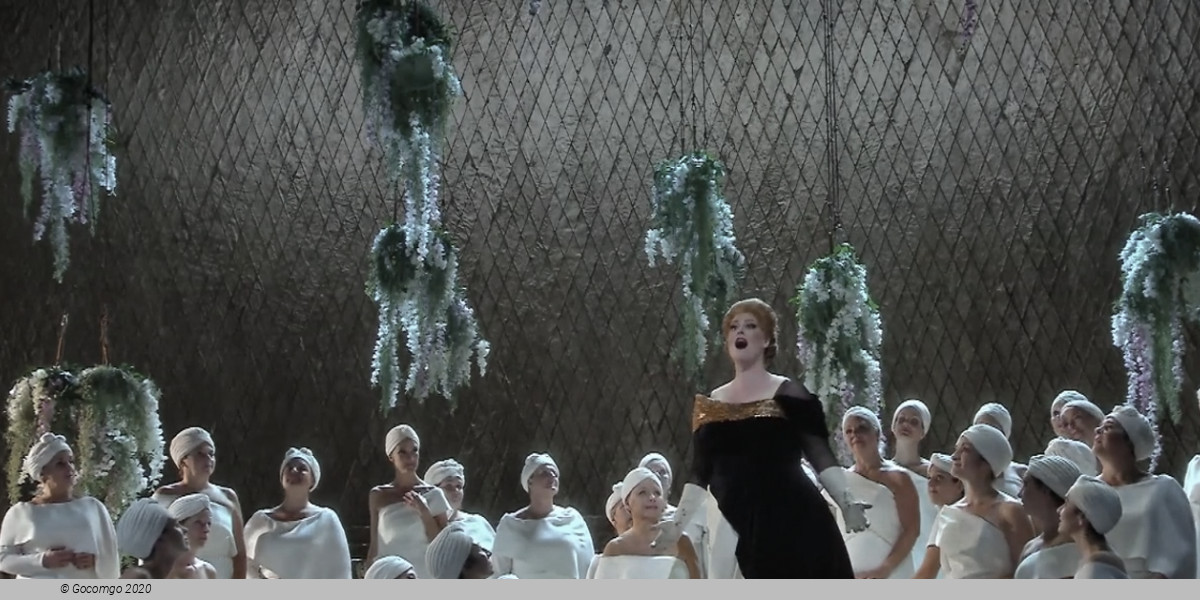
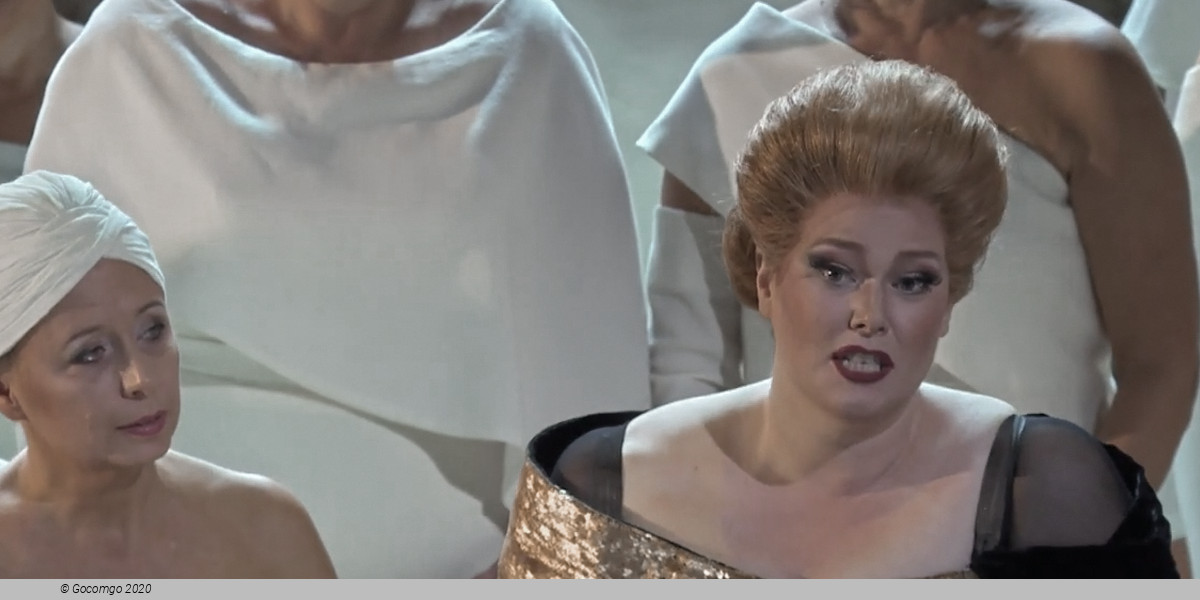
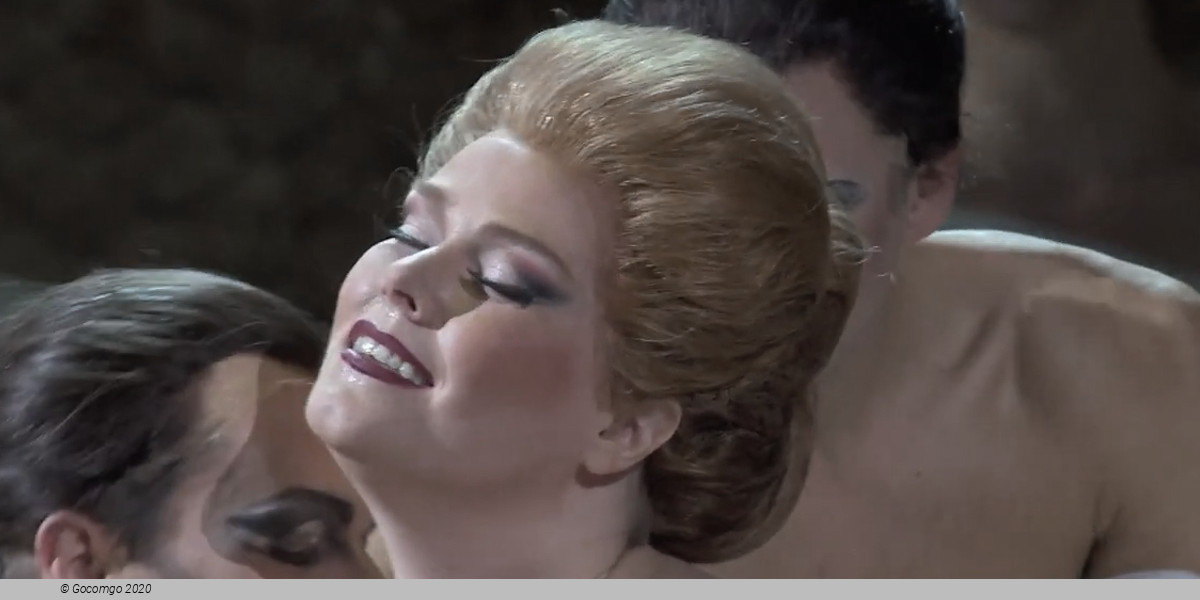
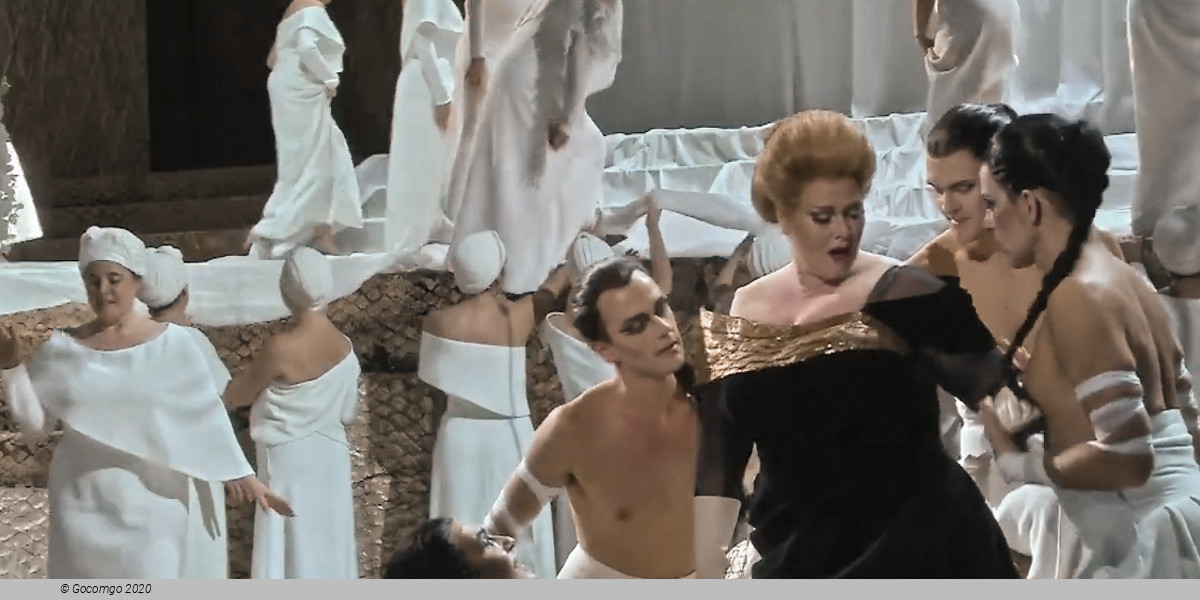
An outstanding tandem of singers on the Liceu's stage: Joyce DiDonato and Levy Sekgapane

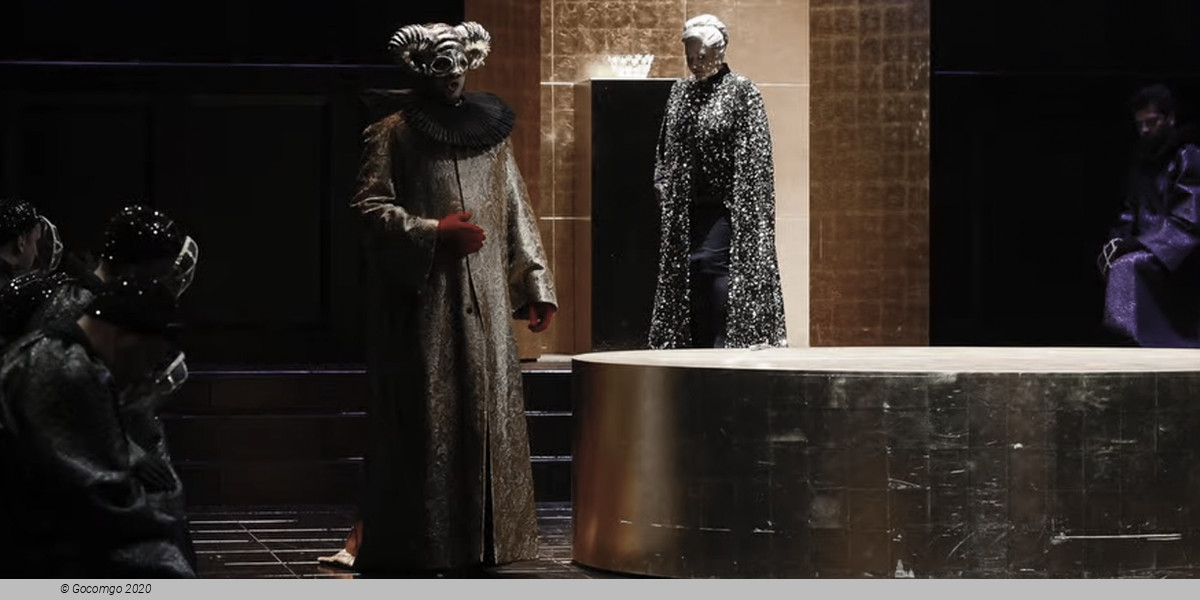
Semiramide, based on a play by Voltaire, was composed between Zelmira and Il viaggio a Reims. It is one of the last examples of opera seria and provides the clearest illustration – along with Tancredi – of how Rossini's dramas evolved towards Romantic bel canto despite their eminently classical themes.

First staged at La Fenice in Venice, Semiramide was Rossini's farewell to Italian opera houses prior to moving to Paris, where he lived until he died.  

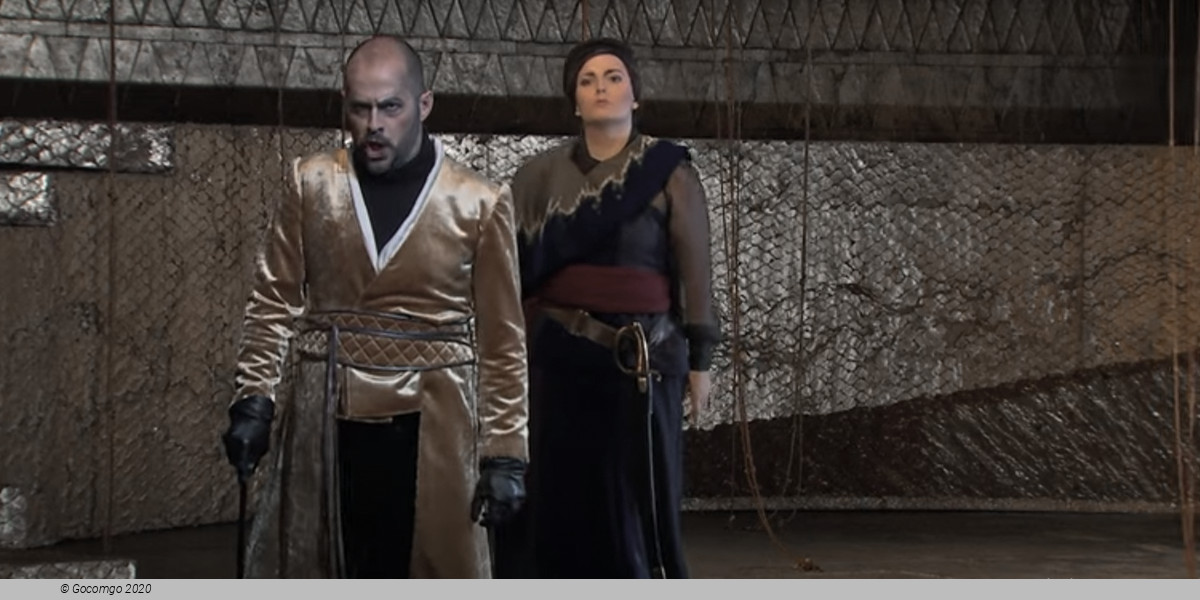
Sharing the stage for this concert version will be two of the most fascinating singers on today's international opera scene: the American  mezzosoprano Joyce DiDonato and the tenor Levy Sekgapane

Melodramma tragico in two acts. Libretto by Gaetano Rossini. World premiere: 03/02/1823 at the Teatro La Fenice in Venice. First Barcelona performance: 20/04/1826 at the Teatre de la Santa Creu. First Liceu performance: 20/04/1854. Last Liceu performance: 12/12/2005. Number of Liceu performances: 41.

History
Premiere of this production: 03 February 1823, La Fenice, Venice

Semiramide is an opera in two acts by Gioachino Rossini. The libretto by Gaetano Rossi is based on Voltaire's tragedy Semiramis, which in turn was based on the legend of Semiramis of Assyria. The opera was first performed at La Fenice in Venice on 3 February 1823.

Synopsis

Time: Antiquity or "Some 2,000 Years before the Christian era"
Place: Babylon

Overture

Semiramide has its own overture, which was almost certainly composed last. Unlike many operatic overtures of the day, it borrowed musical ideas from the opera itself, thus making it unsuitable for use with another score. The range and balance of musical ideas, from the hushed, rhythmic opening through the Andantino for four horns (drawn from the opera itself) and the repetition with pizzicato countermelodies in the strings to the lively allegro, make the overture to Semiramide one of Rossini's finest contributions to the genre and deservedly one of the most popular.

Act 1

Temple of Baal, Babylon

The High Priest Oroe invites all to enter the temple, and Babylonians (along with others from abroad, including Idreno the Indian King) do so carrying offerings to Baal. Assur states that the day has come for the Queen to choose a successor and he reminds all of his own valour. Idreno expresses surprise at Assur's aspirations and all express their individual concerns and fears.

Semiramide enters to the acclaim of all, but Idreno and Assur individually speculate as to who will be chosen. They press the queen to announce her decision, but at the same time Semiramide herself is fearful about making that decision, especially as she appears to be expecting someone's arrival. Suddenly, the temple is plunged into darkness and there is general consternation amidst fears of its imminent collapse. All desert the temple.

Arsace, a warrior, enters. He has been told by his dying father to go to the temple in Babylon, and he was also urgently sent for by Semiramide. He brings with him a casket belonging to his father, but he is puzzled as to why he has been called back to Babylon. He declares his love for Princess Azema who loves him though she has been promised to the dead King Nino's lost son, Ninia. Arsace states his unwillingness to support Assur in his bid for the throne: (Aria: Eccomi alfine in Babilonia... Ah! quel giorno ognor rammento / "Oh, I shall ever remember the day of glory and happiness...").

Arsace asks to see the High Priest. Oroe enters, opens the casket, and exclaims upon seeing it that it contains the holy relics of the dead king. He hints to Arsace about some treachery that had been involved. Seeing Assur approach, Oroe leaves with the relics. Assur arrives and questions the reason for Arsace's return. The two men discuss Azema, with Arsace reaffirming his love for her (Duet: Bella imago degli dei / "Beautiful, divine image, Azema alone do I adore") while Assur states that he too loves her. "You have no idea what love is", the younger man tells the older: (Aria/duet: D'un tenero amor / "That fierce heart of yours is not capable of tender love...")

The entrance hall of the palace

Azema enters, happy that Arsace is now in Babylon. Idreno follows her and asks for her hand; she tells him that this must be Semiramide's decision. "What of your heart?" he asks, assuming that his rival can only be Assur. Scornfully told that it will never be Assur, Idreno is comforted, although he expresses his desire "to punish the wicked boldness of a rival" and continues to express desire for Azema: (Aria: E, se ancor libero / "And, if your fair heart is still free, at least feel some pity in your breast...")

The Hanging Gardens

Having fallen in love with Arsace and believing that he loves her, Semiramide waits for his arrival: (Aria: Bel raggio lusinghier / "A beautiful, enchanting ray of hope and contentment has shone for me at last"). She receives a message from the Oracle, telling her that a wedding will make a new king. She believes this to be a sign from the gods that they approve of her plans, and orders preparations for a wedding. When Arsace arrives, he alludes to his love for Azema without specifically naming her, but he also declares that he will die for his queen if necessary. Semiramide still believes that he really loves her, and vows that she will give him all he desires: (Aria: Serbami ognor sì fido / "Keep your head and your affections ever as devoted to me"). They leave separately.

The Palace Throne Room

All enter to await Semiramide's arrival and her announcement of her choice of successor. Arsace, Idreno, Oroe, and Assur all swear to obey her command, no matter what she decides: (Ensemble: Semiramide, Arsace, Idreno, Oroe and Assur: ( Giuri ognuno, a' sommi Dei / "Let each of you swear to the most high gods to obey my commands..."). She demands loyalty to the man she chooses and they are told that he will also be the queen's husband. When Semiramide names Arsace as her chosen one, Assur is outraged and Idreno accepts the decision but requests Azema's hand, which is granted. After asking Oroe to unite Semiramide and Arsace, Semiramide is horrified by the uproar which emits from the near-by tomb of King Nino: (Aria: Qual mesto gemito Da quella tomba / "What a melancholy groaning from the tomb there..."). All are horrified as King Nino's ghost appears, warning of the crimes to be expiated, telling Arsace that he will reign and to respect the High Priest's wisdom, and commanding him to come down into his tomb. Each character expresses his or her own anguish.

Act 2

A hall in the palace

In a brief encounter, Mitrane warns the royal guard to keep Assur under surveillance and not to allow him to leave the palace. Then Semiramide enters, followed shortly after by Assur.

Conflict between the two soon emerges. She reminds him that it was he who gave the cup of poison to Nino, thus causing his death, and he reminds her that it was she who had prepared it: "Who handed me the cup of death?" he asks. Recalling that at that time she had a son, Ninia, she speculates that he might have been killed by the same man who killed Nino. Assur continues to pressure Semiramide to make him king. In turn, she threatens to reveal the crime, and they sing an extended duet: (Se la vita ancor t'è cara / "If you still hold life dear, go, get yourself out of my sight") recalling the terror and retribution that each could inflict upon the other if the truth came to light. Semiramide continues to demand that Assur acknowledge Arsace as his king.

Rejoicing is heard in the distance, and while Semiramide regains some of her former happiness, Assur becomes resigned to his fate.

King Nino's tomb

Oroe and the Magi are assembled in the tomb. The High Priest urges Arsace to come forward but makes him aware that there may be some unpleasant news awaiting him. Upon his arrival, Oroe tells him that he is Ninia, Nino's son, who had been saved by Fradate (one of the priests) and brought up as his own. Aghast at this news, Arsace then learns that Semiramide is his mother. To reinforce this news, Oroe hands him a scroll, written by the King before his death, the reading of which confirms the Priest's statements. The final blow comes when Arsace reads Nino's words, and realises that his mother and Assur were the ones who killed his father: "Assur was the traitor".

Almost collapsing in grief into Oroe's arms, he asks for comfort: (Aria: In sì barbara sciagura / "In such barbarious misfortune"), but the priests quickly reinforce his need to take immediate revenge. They equip him with armour and a sword and give him the determination to proceed: (cabaletta: Si, vendicato, il genitore / "Yes, my father avenged"). Sword in hand, Arsace leaves.

Semiramide's apartments

Azema and Mitrane are alone, the former complaining that she has lost everything now that Arsace, the love of her life, is due to marry the queen. Entering, Idreno overhears this and is distraught. Azema promises him her hand if he so desires it, but he wishes that she would love him: (Aria: La speranza più soave / "This soul of mine once entertained the fondest hopes"). Two choruses of Maids, Lords, and Indians lead them all to the temple.

In the temple

Semiramide confronts Arsace, who finally hands her the scroll which has revealed all. Horrified, she then understands Arsace's real identity, and becomes remorseful, offering herself to his revengeful blows. He swears filial loyalty, expressing the wish to spare his mother: (Duet: Ebben, a te... Giorno d'orrore... Madre, addio! / "Well then – go on, strike; fulfill a god's behest!/ Let the gods vent their entire wrath upon me first"). Together, they each accept the reality: (Giorno d'orror! E di contento / "Day of horror...and of joy!"), but Arsace declares that he must go to his father's tomb and take whatever action is necessary. Knowing what is in store, Semiramide urges him to "Return to me victorious".

Adjacent to Nino's tomb

Defiantly, Assur enters and proclaims that this will be Arsace's last day on earth. Learning from his men that the people have turned against him, he still vows to kill Arsace. He moves towards the tomb only to find some unknown force, some apparition holding him back: (Deh ti ferma...Que numi furenti / "Oh, stay, be pacified, forgive"). His men urge him on, but still the apparition remains in his mind. His men are puzzled, until he seems to recover and then, with his men beside him, vows to fight on: (cabaletta: Que' Numi furenti, Quell' ombre fremente / "Those wrathful gods, those quivering shades").

Along with Oroe, Arsace enters the tomb. He awaits his rival. Assur enters, also awaiting Arsace. Semiramide then comes in to pray at Nino's tomb, asking for forgiveness and protection for her son: Aria: Al mio pregar t'arrendi: il figlio tuo diffendi / "Yield to my prayer: protect your son"). In the confusion of the darkness, all three – Arsace, Semiramide, and Assur – express some bewilderment as to the loss of their courage at this crucial moment: (Trio: L'usato ardir / "My wonted daring, my courage, where has it gone?"). But in the darkness and seeking to strike Assur, Arsace strikes Semiramide as she steps between them to stop the fight. Surprised to learn Arsace's real identity, Assur is arrested, Semiramide dies, and to general acclaim by the people, Arsace reluctantly accepts that he shall be King.

Venue Info

Gran Teatre del Liceu - Barcelona
Location   La Rambla, 51-59

The Gran Teatre del Liceu, or simply Liceu in Catalan, is a main opera house in Barcelona, Catalonia, located on the central street of the city - La Rambla. The Liceu opened on 4 April 1847.

The Gran Teatre del Liceu dates back to 1837 when at the instigation of Manuel Gibert, a battalion of the National Militia formed the institutional core of the future Teatre in the unused monastery of Montsió (currently Portal del Ángel): a dramatic society of aficionados devoted to the performing arts. The first show premiered on 21 August 1837: El marido de mi mujer, by Ventura de la Vega, a dance number and a skit.

Origins (1837–1847)
In 1837, the Liceo Filodramático de Montesión (Philodramatic Lyceum of Montesión, now named Conservatori Superior de Música del Liceu) was founded in Barcelona to promote musical education (hence the name "Liceo", or lyceum) and organize scenic representations of opera performed by Liceo students.

A theatre was built in the convent building — named Teatro de Montesión or Teatro del Liceo de Montesión — and plays and operas were performed: the first was Vicenzo Bellini's Norma (3 February 1838). The repertoire was Italian, the most performed composers being Donizetti and Mercadante as well as Bellini and Rossini. The Barcelona premiere of Hérold's Zampa was held here.

In 1838, the society changed its name to Liceo Dramático Filarmónico de S. M. la Reina Isabel II (Dramatic Philharmonic Lyceum of H.M. Queen Isabel II). Lack of space, as well as pressures, brought to bear by a group of nuns (who were the former proprietors of the convent and had recovered rights to return), motivated the Liceu to leave its headquarters in 1844. The last theatre performance was on 8 September.

The Trinitarian convent building located in the center of the town at la Rambla was purchased. The managers of the Liceu entrusted Joaquim de Gispert d'Anglí with a project to make the construction of the new building viable. Two different societies were created: a "building society" and an "auxiliary building society". Shareholders of the building society obtained the right of use in perpetuity of some theatre boxes and seats in exchange for their economic contributions. Those of the second society contributed the rest of the money necessary in exchange for property of other spaces in the building including some shops and a private club called the Círculo del Liceo.

In contrast with many other European cities, where the monarchy took on the responsibility of the building and upkeep of opera houses, the Liceu was funded by private shareholders of what would become the Societat del Gran Teatre del Liceu (Great Liceu Theatre Society), organized similarly to a trading company or society. This is reflected in the building's architecture; for example, there exists no royal box. The Queen did not contribute to the construction, so the name of the society was changed to Liceo Filarmónico Dramático, removing the Queen's name from it.

Miquel Garriga i Roca was the architect contracted; the construction began on 11 April 1845. The theatre was inaugurated on 4 April 1847.

Opening, fire, and rebuilding (1847–1862)
The inauguration presented a mixed program including the premieres of José Melchior Gomis' musical Ouverture, a historical play Don Fernando de Antequera by Ventura de la Vega, the ballet La rondeña (The girl from Ronda) by Josep Jurch, and a cantata Il regio himene with music by the musical director of the theatre Marià Obiols. The first complete opera, Donizetti's Anna Bolena was presented on 17 April. At this point, Liceu was the biggest opera house in Europe with 3,500 seats. Other operas performed in the Liceu during the first year were (in chronological order): I due Foscari (Verdi), Il bravo (Mercadante), Parisina d'Este (Donizetti), Giovanna d'Arco (Verdi), Leonora (Mercadante), Ernani (Verdi), Norma (Bellini), Linda di Chamounix (Donizetti) and Il barbiere di Siviglia (Rossini).

The building was severely damaged by fire on 9 April 1861, but it was rebuilt by the architect Josep Oriol Mestres and re-opened on 20 April 1862, performing Bellini's I puritani. From the old building, only the facade, the entrance hall, and the foyer (Mirrors Hall) remained.

Bombing and civil war (1862–1940)
On 7 November 1893, on the opening night of the season and during the second act of the opera Guillaume Tell by Rossini, two Orsini bombs were thrown into the stalls of the opera house. Only one of the bombs exploded; some twenty people were killed and many more were injured. The attack was executed by anarchist Santiago Salvador and deeply shocked Barcelona, becoming a symbol of the turbulent social unrest of the time. The Liceu re-opened its doors on 18 January 1894, but the seats occupied by those killed were not used for a number of years. The second bomb was put in the Van Gogh Museum in 2007 during an exhibit on Barcelona around 1900.

In 1909, the auditorium ornamentation was renewed. Spanish neutrality during World War I allowed the Catalan textile industry to amass enormous wealth by supplying the warring parties. The 1920s were prosperous years and the Liceu became fully established as a leading opera house welcoming better singers, the orchestra leaders of the time, and companies such as Sergei Diaghilev's Ballets Russes.

When the Second Spanish Republic was proclaimed in 1931, political instability meant that the Liceu suffered a severe financial crisis which was only overcome through subsidies from the Barcelona City Council and the government of Catalonia. During the Spanish Civil War, the Liceu was nationalized and took the name the Teatre del Liceu – Teatre Nacional de Catalunya (Liceu Opera House – the National Theatre of Catalonia). The opera seasons were suspended. After the war, it was returned to its original owners in 1939.

"Silver Age" and crisis (1940–1980)
From 1940 to the 1960s, the seasons were high-quality ones. 1955, thanks to the creation of a special board, saw a historic event when for the first time since its foundation, the Bayreuth Festival was staged away from its normal venue. Performances of Parsifal, Tristan und Isolde, and Die Walküre with innovative stage sets by Wieland Wagner were enthusiastically received.

In the 1970s, an economic crisis affected the theatre and the privately based organization could not afford the increasing budgets of modern opera productions and general quality declined.

New direction and second fire (1980–1994)
The death of Joan Antoni Pàmias in 1980 revealed the need for the intervention of the official bodies if the institution was to remain a leading opera house. In 1981, the Generalitat de Catalunya, with Barcelona's City Council and the Societat del Gran Teatre del Liceu, created the Consorci del Gran Teatre del Liceu (Consortium of the Great Liceu Theater) responsible for the theatre's management.

The Deputation of Barcelona and the Spanish Ministry of Culture joined the Consortium in 1985 and 1986 respectively. The Consortium managed to quickly attract the public back to the Liceu owing to a considerable improvement in its artistic standard. This included a more complete and up-to-date perspective of the very nature of an opera performance, a great improvement in the choir and orchestra, careful casting, and attracting the interest of the public to other aspects of productions besides the leading roles alone. This approach, coupled with the new economic support and more demanding and discerning public, resulted in a high standard of production.

The seasons organized by the Consortium maintained high standards in casting, production, and public loyalty, as measured by public attendance, but all this came to a halt with a fire on 31 January 1994. The building was destroyed by a fire caused by a spark that accidentally fell on the curtain during a routine repair. At this time, Paul Hindemith's Mathis der Maler was performing at the theatre and the following opera to be performed was Puccini's Turandot.

The public and institutional response were unanimous on the need to rebuild a new opera house on the same site with improved facilities. The new Liceu is the result of a series of actions to preserve those parts of the building unaffected by the fire, the same ones as had survived the fire in 1861. The auditorium was rebuilt with the same layout, except for the roof paintings which were replaced with new artworks by Perejaume, and state-of-the-art stage technology.

To rebuild and improve the theatre, it became public. The Fundació del Gran Teatre del Liceu (Liceu Great Theater Foundation) was created and the Societat del Gran Teatre del Liceu handed over the ownership of the building to the Foundation. Some owners disagreed with the decision, which was challenged unsuccessfully in court.

Reopening (1994–present)
From 1994 until the reopening in 1999, the opera seasons in Barcelona took place in: Palau Sant Jordi arena (only some massive performances in 1994), Palau de la Música Catalana, and Teatre Victòria. The rebuilt, improved, and the expanded theatre opened on 7 October 1999, with Puccini's Turandot as previewed in 1994 before the fire. The new venue had the same traditional horseshoe-shaped auditorium as before but with greatly improved technical, rehearsal, office, and educational facilities, a new rehearsal hall, a new chamber opera and small performances hall, and much more public space. Architects for the rebuilding project were Ignasi de Solà-Morales and Xavier Fabré i Lluís Dilmé.

Surtitles, projected onto a screen above the proscenium, are used for all opera performances and some lieder concerts. The electronic libretto system provides translations (to English, Spanish, or Catalan) onto small individual monitors for most of the seats.

Important Info
Type: Opera
City: Barcelona, Spain
Starts at: 17:00
Duration: 3h 50min
Top of page