








Gran Teatre del Liceu 3 March 2022 - Pelléas et Mélisande | GoComGo.com

Pelléas et Mélisande

Gran Teatre del Liceu, Main Stage, Barcelona, Spain
All photos (7)
Select date and time
7 PM

E-tickets: Print at home or at the box office of the event if so specified. You will find more information in your booking confirmation email.

You can only select the category, and not the exact seats.
If you order 2 or 3 tickets: your seats will be next to each other.
If you order 4 or more tickets: your seats will be next to each other, or, if this is not possible, we will provide a combination of groups of seats (at least in pairs, for example 2+2 or 2+3).

Important Info
Type: Opera
City: Barcelona, Spain
Starts at: 19:00
Acts: 5
Duration: 3h 20min

E-tickets: Print at home or at the box office of the event if so specified. You will find more information in your booking confirmation email.

You can only select the category, and not the exact seats.
If you order 2 or 3 tickets: your seats will be next to each other.
If you order 4 or more tickets: your seats will be next to each other, or, if this is not possible, we will provide a combination of groups of seats (at least in pairs, for example 2+2 or 2+3).

Overview

A phantasmagoric, mysterious and dramatically well paced voyage.

“Si j’étais Dieu, j’aurais pitié du cœur des hommes” (“If I were God, I would take pity on the hearts of men”)
(Arkel, Pelléas et Mélisande, Scene I, Act IV)

Pelléas et Mélisande, based on the Symbolist play by Maeterlinck, occupies a unique place in the history of opera. Though it met with total incomprehension from critics and the musical world in general after its Paris premiere, its dream-like idiom endows it with great magnetism and power.

The characters are absent, passive beings who roam silently about in a disquieting atmosphere. The enigmatic Mélisande, who possesses a strange beauty, meets the king's grandson Golaud in the forest and goes on to become his wife. When she later falls passionately in love with his younger brother, Pelléas, the relationship ends in both their deaths.

The work is a transposition of the myth of Tristan and Iseult, in which love prevails over the characters' wills and moral laws, finding fulfilment only in death. The musical language, in contrast, is completely new and a far cry from Wagner.

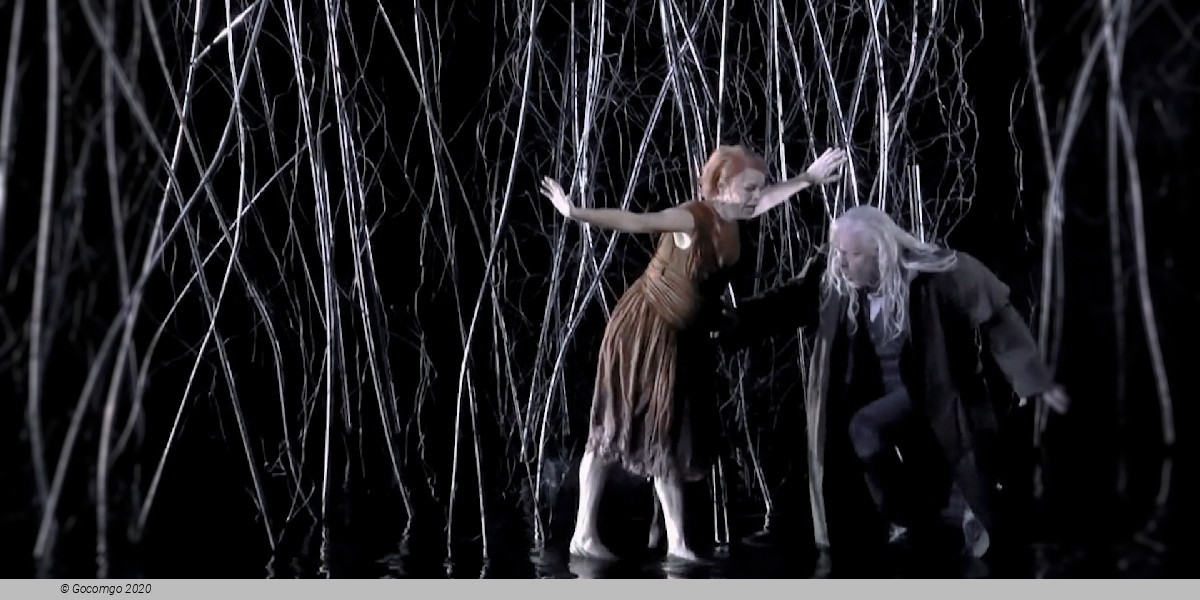
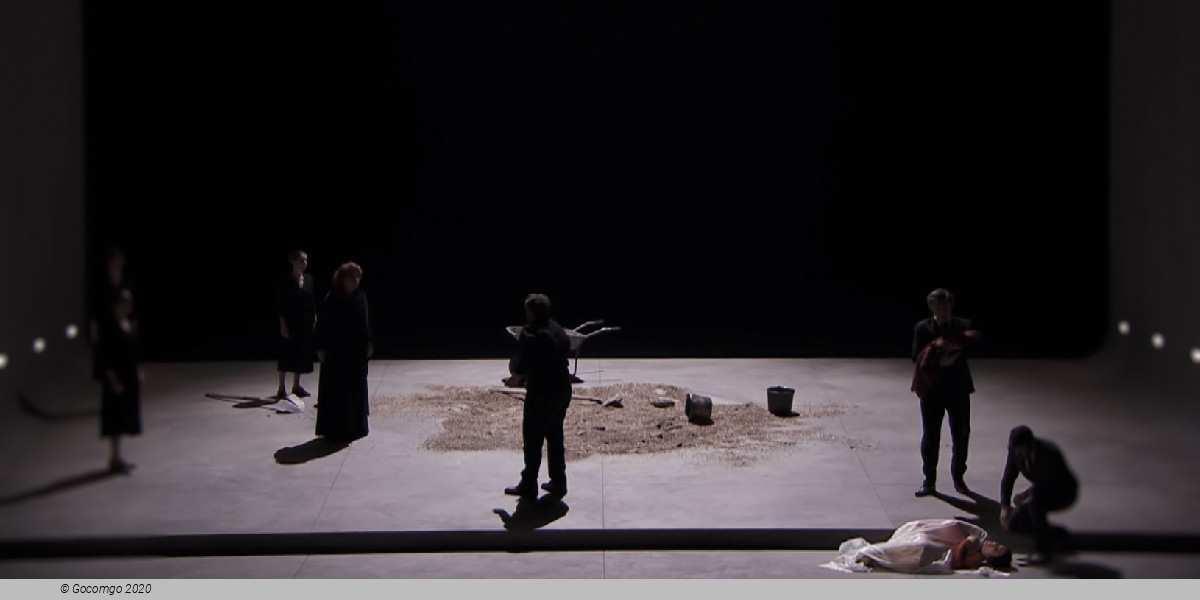
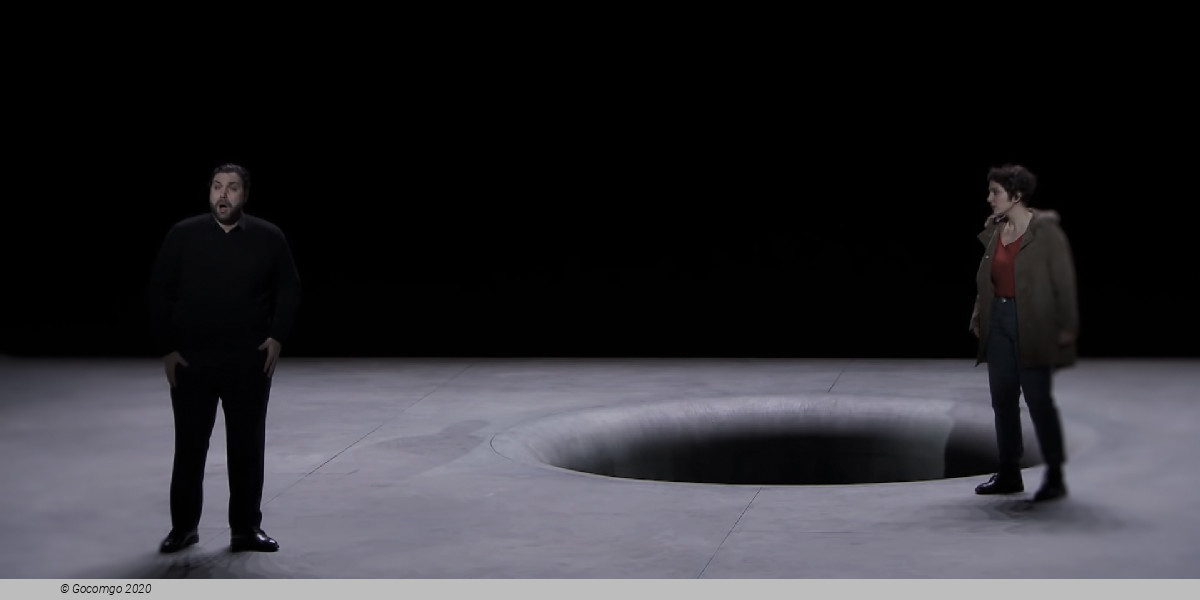
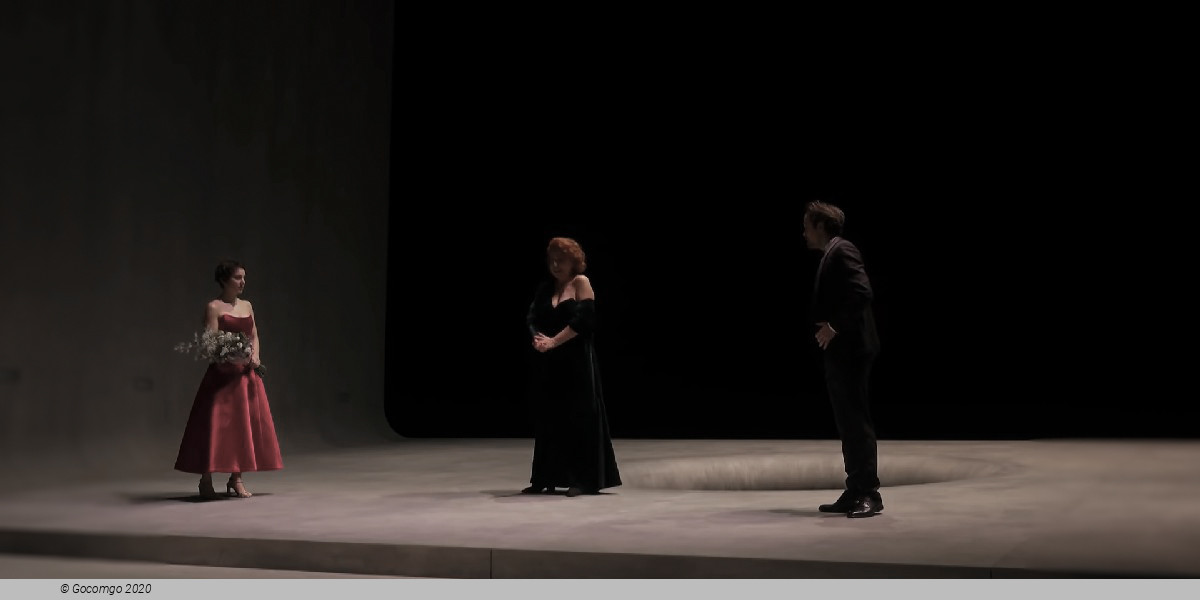
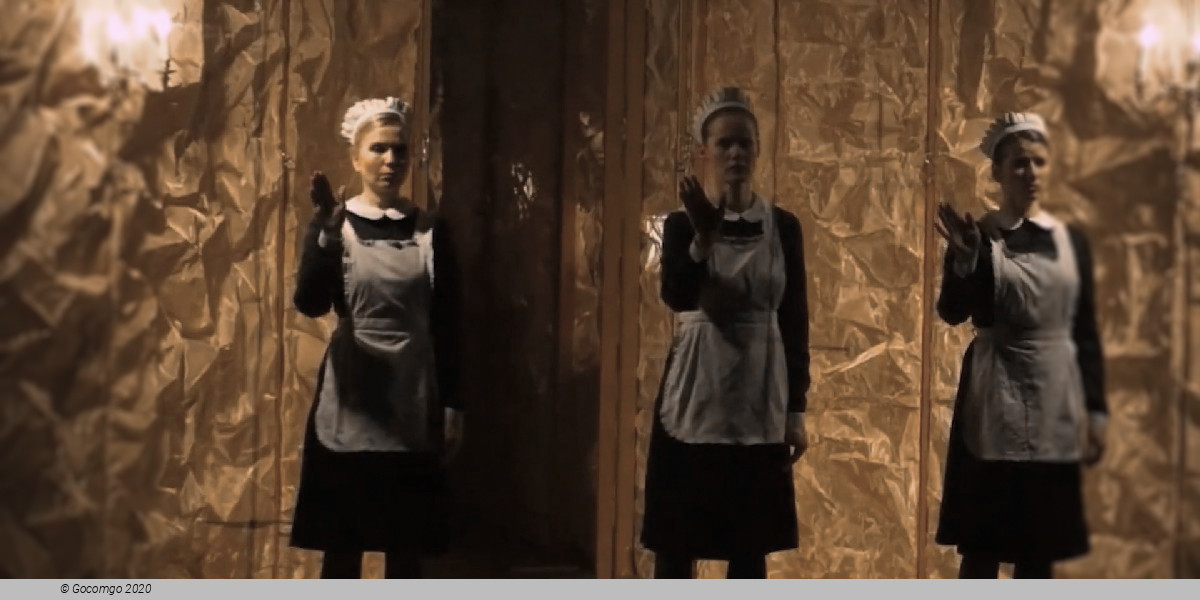
Àlex Ollé interprets the score by resorting to the language of dreams, with additional references to Freud and Surrealism. The resulting aesthetic is akin to the style of other present-day directors such as Lars von Trier or David Lynch. Ollé's version is conceived as an accumulation of impossible questions with no answers. The dominant feature of the set is a large black box which contains a great enigma and functions as a modern metaphor of the human mind. Within it the complex codes of dreams lie hidden, along with the truth about Mélisande's tragic death. It is linked to the outside world by a single basic element: water.

The text is a continuous melopoeia that relates the tragic love triangle by means of a largely static plot.

In this phantasmagoric voyage through unreality, which is troubling, mysterious and dramatically well paced, the main characters see true love as the prime ingredient of paradise.

New productions based on the Dresden Oper production

History
Premiere of this production: 30 April 1902, Opéra-Comique, Paris

Pelléas et Mélisande (Pelléas and Mélisande) is an opera in five acts with music by Claude Debussy. The French libretto was adapted from Maurice Maeterlinck's symbolist play Pelléas et Mélisande. It was premiered at the Salle Favart in Paris by the Opéra-Comique on 30 April 1902 with Jean Périer as Pelléas and Mary Garden as Mélisande in a performance conducted by André Messager, who was instrumental in getting the Opéra-Comique to stage the work. The only opera Debussy ever completed, it is considered a landmark in 20th-century music.

Synopsis

Act 1

Scene 1: A forest

Prince Golaud, grandson of King Arkel of Allemonde, has become lost while hunting in the forest. He discovers a frightened, weeping girl sitting by a spring in which a crown is visible. She reveals her name is Mélisande but nothing else about her origins and refuses to let Golaud retrieve her crown from the water. Golaud persuades her to come with him before the forest gets dark.

Scene 2: A room in the castle

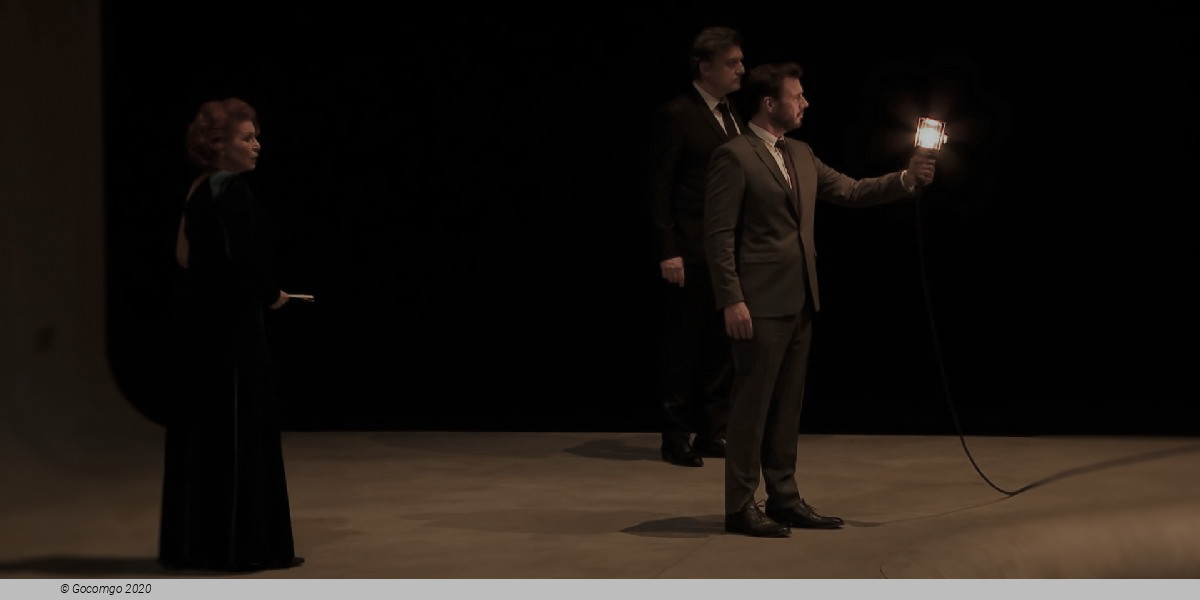
Six months have passed. Geneviève, the mother of the princes Golaud and Pelléas, reads a letter to the aged and nearly blind King Arkel. It was sent by Golaud to his brother Pelléas. In it Golaud reveals that he has married Mélisande, although he knows no more about her than on the day they first met. Golaud fears that Arkel will be angry with him and tells Pelléas to find how he reacts to the news. If the old man is favourable then Pelléas should light a lamp from the tower facing the sea on the third day; if Golaud does not see the lamp shining, he will sail on and never return home. Arkel had planned to marry the widowed Golaud to Princess Ursule in order to put an end to "long wars and ancient hatreds", but he bows to fate and accepts Golaud's marriage to Mélisande. Pelléas enters, weeping. He has received a letter from his friend Marcellus, who is on his deathbed, and wants to travel to say goodbye to him. Arkel thinks Pelléas should wait for the return of Golaud, and also reminds Pelléas of his own father, lying sick in bed in the castle. Geneviève tells Pelléas not to forget to light the lamp for Golaud.

Scene 3: Before the castle

Geneviève and Mélisande walk in the castle grounds. Mélisande remarks how dark the surrounding gardens and forest are. Pelléas arrives. They look out to sea and notice a large ship departing and a lighthouse shining, Mélisande foretells that it will sink. Night falls. Geneviève goes off to look after Yniold, Golaud's young son by his previous marriage. Pelléas attempts to take Melisande's hand to help her down the steep path but she refuses saying that she is holding flowers. He tells her he might have to go away tomorrow. Mélisande asks him why.

Act 2

Scene 1: A well in the park

It is a hot summer day. Pelléas has led Mélisande to one of his favourite spots, the "Blind Men's Well". People used to believe it possessed miraculous powers to cure blindness but since the old king's eyesight started to fail, they no longer come there. Mélisande lies down on the marble rim of the well and tries to see to the bottom. Her hair loosens and falls into the water. Pelléas notices how extraordinarily long it is. He remembers that Golaud first met Mélisande beside a spring and asks if he tried to kiss her at that time but she does not answer. Mélisande plays with the ring Golaud gave her, throwing it up into the air until it slips from her fingers into the well. Pelléas tells her not to be concerned but she is not reassured. He also notes that the clock was striking twelve as the ring dropped into the well. Mélisande asks him what she should tell Golaud. He replies, "the truth."

Scene 2: A room in the castle

Golaud is lying in bed with Mélisande at the bedside. He is wounded, having fallen from his horse while hunting. The horse suddenly bolted for no reason as the clock struck twelve. Mélisande bursts into tears and says she feels ill and unhappy in the castle. She wants to go away with Golaud. He asks her the reason for her unhappiness but she refuses to say. When he asks her if the problem is Pelléas, she replies that he is not the cause but she does not think he likes her. Golaud tells her not to worry: Pelléas can behave oddly and he is still very young. Mélisande complains about the gloominess of the castle, today was the first time she saw the sky. Golaud says that she is too old to be crying for such reasons and takes her hands to comfort her and notices the wedding ring is missing. Golaud becomes furious, Mélisande claims she dropped it in a cave by the sea where she went to collect shells with little Yniold. Golaud orders her to go and search for it at once before the tide comes in, even though night has fallen. When Mélisande replies that she is afraid to go alone, Golaud tells her to take Pelléas along with her.

Scene 3: Before a cave

Pelléas and Mélisande make their way down to the cave in pitch darkness. Mélisande is frightened to enter, but Pelléas tells her she will need to describe the place to Golaud to prove she has been there. The moon comes out lighting the cave and reveals three beggars sleeping in the cave. Pelléas explains there is a famine in the land. He decides they should come back another day.

Act 3

Scene 1: One of the towers of the castle

Mélisande is at the tower window, singing a song (Mes longs cheveux) as she combs her hair. Pelléas appears and asks her to lean out so he can kiss her hand as he is going away the next day. He cannot reach her hand but her long hair tumbles down from the window and he kisses and caresses it instead. Pelléas playfully ties Mélisande's hair to a willow tree in spite of her protests that someone might see them. A flock of doves takes flight. Mélisande panics when she hears Golaud's footsteps approaching. Golaud dismisses Pelléas and Mélisande as nothing but a pair of children and leads Pelléas away.

Scene 2: The vaults of the castle

Golaud leads Pelléas down to the castle vaults, which contain the dungeons and a stagnant pool which has "the scent of death". He tells Pelléas to lean over and look into the chasm while he holds him safely. Pelléas finds the atmosphere stifling and they leave.

Scene 3: A terrace at the entrance of the vaults

Pelléas is relieved to breathe fresh air again. It is noon. He sees Geneviève and Mélisande at a window in the tower. Golaud tells Pelléas that there must be no repeat of the "childish game" between him and Mélisande last night. Mélisande is pregnant and the least shock might disturb her health. It is not the first time he has noticed there might be something between Pelléas and Mélisande but Pelléas should avoid her as much as possible without making this look too obvious.

Scene 4: Before the castle

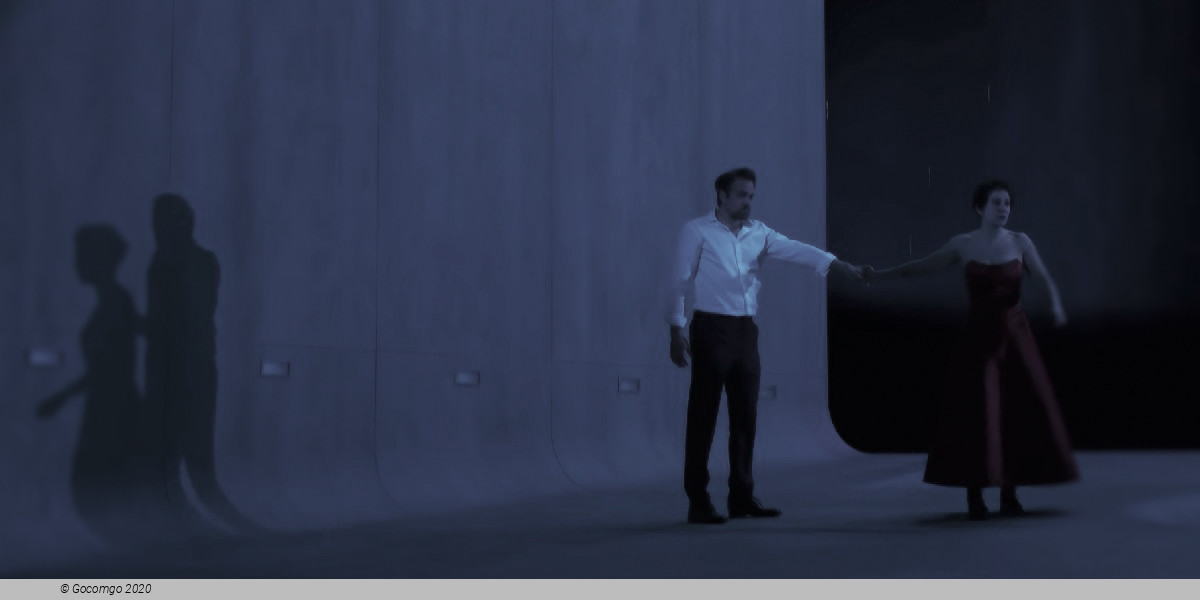
Golaud sits with his little son, Yniold, in the darkness before dawn and questions him about Pelléas and Mélisande. The boy reveals little that Golaud wants to know since he is too innocent to understand what he is asking. He says that Pelléas and Mélisande often quarrel about the door and that they have told Yniold he will one day be as big as his father. Golaud is puzzled when learning that they (Pelléas and Mélisande) never send Yniold away because they are afraid when he is not there and keep on crying in the dark. He admits that he once saw Pelléas and Mélisande kiss "when it was raining". Golaud lifts his son on his shoulders to spy on Pelléas and Mélisande through the window but Yniold says that they are doing nothing other than looking at the light. He threatens to scream unless Golaud lets him down again. Golaud leads him away.

Act 4

Scene 1: A room in the castle

Pelléas tells Mélisande that his father is getting better and has asked him to leave on his travels. He arranges a last meeting with Mélisande by the Blind Men's Well in the park.

Scene 2: The same

Arkel tells Mélisande how he felt sorry for her when she first came to the castle "with the strange, bewildered look of someone constantly awaiting a calamity". But now that is going to change and Mélisande will "open the door to a new era that I foresee". He asks her to kiss him. Golaud bursts in with blood on his forehead — he claims it was caused by a thorn hedge. When Mélisande tries to wipe the blood away, he angrily orders her not to touch him and demands his sword. He says that another peasant has died of starvation. Golaud notices Mélisande is trembling and tells her he is not going to kill her with the sword. He mocks the "great innocence" Arkel says he sees in Mélisande's eyes. He commands her to close them or "I will shut them for a long time." He tells Mélisande that she disgusts him and drags her around the room by her hair. When Golaud leaves, Arkel asks if he is drunk. Mélisande simply replies that he does not love her any more. Arkel comments: "If I were God, I would have pity on the hearts of men".

Scene 3: A well in the park

Yniold tries to lift a boulder to free his golden ball, which is trapped between it and some rocks. As darkness falls, he hears a flock of sheep suddenly stop bleating. A shepherd explains that they have turned onto a path that doesn't lead back to the sheepfold, but does not answer when Yniold asks where they will sleep. Yniold goes off to find someone to talk to.

Scene 4: The same

Pelléas arrives alone at the well. He is worried that he has become deeply involved with Mélisande and fears the consequences. He knows he must leave but first, he wants to see Mélisande one last time and tell her things he has kept to himself. Mélisande arrives. She was able to slip out without Golaud's noticing. At first she is distant but when Pelléas tells her he is going away she becomes more affectionate. After admitting his love for her, Mélisande confesses that she has loved him since she first saw him. Pelléas hears the servants shutting the castle gates for the night. Now they are locked out, but Mélisande says that it is for the better. Pelléas is resigned to fate too. After the two kiss, Mélisande hears something moving in the shadows. It is Golaud, who has been watching the couple from behind a tree. Golaud strikes down a defenseless Pelléas with his sword and kills him. Mélisande is also wounded but she flees into the woods saying to a dying Pelléas that she does not have courage.

Act 5

A bedroom in the castle

Mélisande sleeps in a sick bed after giving birth to her child. The doctor assures Golaud that despite her wound, her condition is not serious. Overcome with guilt, Golaud claims he has killed for no reason. Pelléas and Mélisande merely kissed "like a brother and sister". Mélisande wakes and asks for a window to be opened so she can see the sunset. Golaud asks the doctor and Arkel to leave the room so he can speak with Mélisande alone. He blames himself for everything and begs Mélisande's forgiveness. Golaud presses Mélisande to confess her forbidden love for Pelléas. She maintains her innocence in spite of Golaud's increasingly desperate pleas to her to tell the truth. Arkel and the doctor return. Arkel tells Golaud to stop before he kills Mélisande, but he replies "I have already killed her". Arkel hands Mélisande her newborn baby girl but she is too weak to lift the child in her arms and remarks that the baby does not cry and that she will live a sad existence. The room fills with serving women, although no one can tell who has summoned them. Mélisande quietly dies. At the moment of death, the serving women fall to their knees. Arkel comforts the sobbing Golaud.

Venue Info

Gran Teatre del Liceu - Barcelona
Location   La Rambla, 51-59

The Gran Teatre del Liceu, or simply Liceu in Catalan, is a main opera house in Barcelona, Catalonia, located on the central street of the city - La Rambla. The Liceu opened on 4 April 1847.

The Gran Teatre del Liceu dates back to 1837 when at the instigation of Manuel Gibert, a battalion of the National Militia formed the institutional core of the future Teatre in the unused monastery of Montsió (currently Portal del Ángel): a dramatic society of aficionados devoted to the performing arts. The first show premiered on 21 August 1837: El marido de mi mujer, by Ventura de la Vega, a dance number and a skit.

Origins (1837–1847)
In 1837, the Liceo Filodramático de Montesión (Philodramatic Lyceum of Montesión, now named Conservatori Superior de Música del Liceu) was founded in Barcelona to promote musical education (hence the name "Liceo", or lyceum) and organize scenic representations of opera performed by Liceo students.

A theatre was built in the convent building — named Teatro de Montesión or Teatro del Liceo de Montesión — and plays and operas were performed: the first was Vicenzo Bellini's Norma (3 February 1838). The repertoire was Italian, the most performed composers being Donizetti and Mercadante as well as Bellini and Rossini. The Barcelona premiere of Hérold's Zampa was held here.

In 1838, the society changed its name to Liceo Dramático Filarmónico de S. M. la Reina Isabel II (Dramatic Philharmonic Lyceum of H.M. Queen Isabel II). Lack of space, as well as pressures, brought to bear by a group of nuns (who were the former proprietors of the convent and had recovered rights to return), motivated the Liceu to leave its headquarters in 1844. The last theatre performance was on 8 September.

The Trinitarian convent building located in the center of the town at la Rambla was purchased. The managers of the Liceu entrusted Joaquim de Gispert d'Anglí with a project to make the construction of the new building viable. Two different societies were created: a "building society" and an "auxiliary building society". Shareholders of the building society obtained the right of use in perpetuity of some theatre boxes and seats in exchange for their economic contributions. Those of the second society contributed the rest of the money necessary in exchange for property of other spaces in the building including some shops and a private club called the Círculo del Liceo.

In contrast with many other European cities, where the monarchy took on the responsibility of the building and upkeep of opera houses, the Liceu was funded by private shareholders of what would become the Societat del Gran Teatre del Liceu (Great Liceu Theatre Society), organized similarly to a trading company or society. This is reflected in the building's architecture; for example, there exists no royal box. The Queen did not contribute to the construction, so the name of the society was changed to Liceo Filarmónico Dramático, removing the Queen's name from it.

Miquel Garriga i Roca was the architect contracted; the construction began on 11 April 1845. The theatre was inaugurated on 4 April 1847.

Opening, fire, and rebuilding (1847–1862)
The inauguration presented a mixed program including the premieres of José Melchior Gomis' musical Ouverture, a historical play Don Fernando de Antequera by Ventura de la Vega, the ballet La rondeña (The girl from Ronda) by Josep Jurch, and a cantata Il regio himene with music by the musical director of the theatre Marià Obiols. The first complete opera, Donizetti's Anna Bolena was presented on 17 April. At this point, Liceu was the biggest opera house in Europe with 3,500 seats. Other operas performed in the Liceu during the first year were (in chronological order): I due Foscari (Verdi), Il bravo (Mercadante), Parisina d'Este (Donizetti), Giovanna d'Arco (Verdi), Leonora (Mercadante), Ernani (Verdi), Norma (Bellini), Linda di Chamounix (Donizetti) and Il barbiere di Siviglia (Rossini).

The building was severely damaged by fire on 9 April 1861, but it was rebuilt by the architect Josep Oriol Mestres and re-opened on 20 April 1862, performing Bellini's I puritani. From the old building, only the facade, the entrance hall, and the foyer (Mirrors Hall) remained.

Bombing and civil war (1862–1940)
On 7 November 1893, on the opening night of the season and during the second act of the opera Guillaume Tell by Rossini, two Orsini bombs were thrown into the stalls of the opera house. Only one of the bombs exploded; some twenty people were killed and many more were injured. The attack was executed by anarchist Santiago Salvador and deeply shocked Barcelona, becoming a symbol of the turbulent social unrest of the time. The Liceu re-opened its doors on 18 January 1894, but the seats occupied by those killed were not used for a number of years. The second bomb was put in the Van Gogh Museum in 2007 during an exhibit on Barcelona around 1900.

In 1909, the auditorium ornamentation was renewed. Spanish neutrality during World War I allowed the Catalan textile industry to amass enormous wealth by supplying the warring parties. The 1920s were prosperous years and the Liceu became fully established as a leading opera house welcoming better singers, the orchestra leaders of the time, and companies such as Sergei Diaghilev's Ballets Russes.

When the Second Spanish Republic was proclaimed in 1931, political instability meant that the Liceu suffered a severe financial crisis which was only overcome through subsidies from the Barcelona City Council and the government of Catalonia. During the Spanish Civil War, the Liceu was nationalized and took the name the Teatre del Liceu – Teatre Nacional de Catalunya (Liceu Opera House – the National Theatre of Catalonia). The opera seasons were suspended. After the war, it was returned to its original owners in 1939.

"Silver Age" and crisis (1940–1980)
From 1940 to the 1960s, the seasons were high-quality ones. 1955, thanks to the creation of a special board, saw a historic event when for the first time since its foundation, the Bayreuth Festival was staged away from its normal venue. Performances of Parsifal, Tristan und Isolde, and Die Walküre with innovative stage sets by Wieland Wagner were enthusiastically received.

In the 1970s, an economic crisis affected the theatre and the privately based organization could not afford the increasing budgets of modern opera productions and general quality declined.

New direction and second fire (1980–1994)
The death of Joan Antoni Pàmias in 1980 revealed the need for the intervention of the official bodies if the institution was to remain a leading opera house. In 1981, the Generalitat de Catalunya, with Barcelona's City Council and the Societat del Gran Teatre del Liceu, created the Consorci del Gran Teatre del Liceu (Consortium of the Great Liceu Theater) responsible for the theatre's management.

The Deputation of Barcelona and the Spanish Ministry of Culture joined the Consortium in 1985 and 1986 respectively. The Consortium managed to quickly attract the public back to the Liceu owing to a considerable improvement in its artistic standard. This included a more complete and up-to-date perspective of the very nature of an opera performance, a great improvement in the choir and orchestra, careful casting, and attracting the interest of the public to other aspects of productions besides the leading roles alone. This approach, coupled with the new economic support and more demanding and discerning public, resulted in a high standard of production.

The seasons organized by the Consortium maintained high standards in casting, production, and public loyalty, as measured by public attendance, but all this came to a halt with a fire on 31 January 1994. The building was destroyed by a fire caused by a spark that accidentally fell on the curtain during a routine repair. At this time, Paul Hindemith's Mathis der Maler was performing at the theatre and the following opera to be performed was Puccini's Turandot.

The public and institutional response were unanimous on the need to rebuild a new opera house on the same site with improved facilities. The new Liceu is the result of a series of actions to preserve those parts of the building unaffected by the fire, the same ones as had survived the fire in 1861. The auditorium was rebuilt with the same layout, except for the roof paintings which were replaced with new artworks by Perejaume, and state-of-the-art stage technology.

To rebuild and improve the theatre, it became public. The Fundació del Gran Teatre del Liceu (Liceu Great Theater Foundation) was created and the Societat del Gran Teatre del Liceu handed over the ownership of the building to the Foundation. Some owners disagreed with the decision, which was challenged unsuccessfully in court.

Reopening (1994–present)
From 1994 until the reopening in 1999, the opera seasons in Barcelona took place in: Palau Sant Jordi arena (only some massive performances in 1994), Palau de la Música Catalana, and Teatre Victòria. The rebuilt, improved, and the expanded theatre opened on 7 October 1999, with Puccini's Turandot as previewed in 1994 before the fire. The new venue had the same traditional horseshoe-shaped auditorium as before but with greatly improved technical, rehearsal, office, and educational facilities, a new rehearsal hall, a new chamber opera and small performances hall, and much more public space. Architects for the rebuilding project were Ignasi de Solà-Morales and Xavier Fabré i Lluís Dilmé.

Surtitles, projected onto a screen above the proscenium, are used for all opera performances and some lieder concerts. The electronic libretto system provides translations (to English, Spanish, or Catalan) onto small individual monitors for most of the seats.

Important Info
Type: Opera
City: Barcelona, Spain
Starts at: 19:00
Acts: 5
Duration: 3h 20min
Top of page