Gran Teatre del Liceu tickets 8 November 2026 - I Capuleti e i Montecchi | GoComGo.com

I Capuleti e i Montecchi

Gran Teatre del Liceu, Main Stage, Barcelona, Spain
Select date and time
5 PM
From
US$ 125

E-tickets: Print at home or at the box office of the event if so specified. You will find more information in your booking confirmation email.

You can only select the category, and not the exact seats.
If you order 2 or 3 tickets: your seats will be next to each other.
If you order 4 or more tickets: your seats will be next to each other, or, if this is not possible, we will provide a combination of groups of seats (at least in pairs, for example 2+2 or 2+3).

Important Info
Type: Opera
City: Barcelona, Spain
Starts at: 17:00
Acts: 2
Intervals: 1
Duration: 2h 45min

E-tickets: Print at home or at the box office of the event if so specified. You will find more information in your booking confirmation email.

You can only select the category, and not the exact seats.
If you order 2 or 3 tickets: your seats will be next to each other.
If you order 4 or more tickets: your seats will be next to each other, or, if this is not possible, we will provide a combination of groups of seats (at least in pairs, for example 2+2 or 2+3).

Cast
Performers
Soprano: Lisette Oropesa (Giulietta)
Conductor: Riccardo Frizza
Bass: Alejandro López (Capellio)
Choir: Chorus of the Gran Teatre del Liceu
Tenor: Ivan Ayón-Rivas (Tebaldo)
Bass-Baritone: Marko Mimica (Lorenzo)
Mezzo-Soprano: Raffaella Lupinacci (Romeo)
Creators
Composer: Vincenzo Bellini
Director: Allex Aguilera
Librettist: Felice Romani
Overview

A renewed take on the myth of Romeo and Juliet that turns love into an almost sacrilegious gesture in a world marked by pride and violence

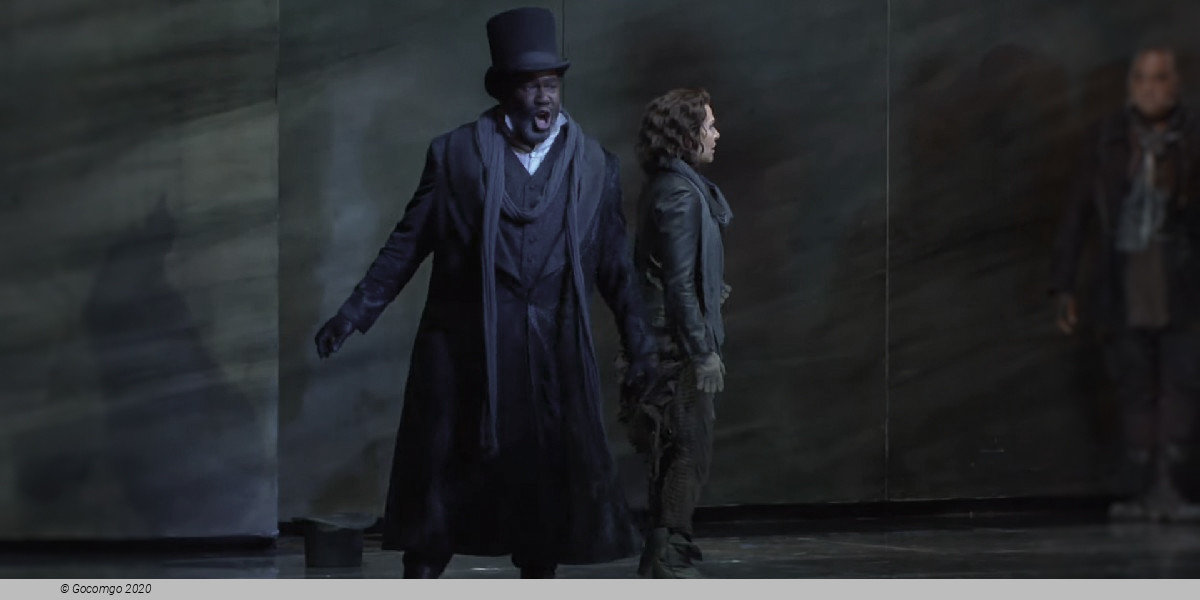
With I Capuleti e i Montecchi, Bellini offers a renewed vision of the Romeo and Juliet myth, transforming love into an almost sacrilegious act in a world marked by pride and violence. Allex Aguilera’s production for the Opéra Royal Wallonie-Liège comes to the Liceu under the musical direction of Riccardo Frizza, featuring Lisette Oropesa and Raffaella Lupinacci, two leading figures in today’s bel canto scene.

The opera moves away from Shakespearean romanticism and belongs instead to the Italian tradition of conflict between rival factions, in which hatred is a destiny rather than a circumstance. Within this tense environment, the secret love between Giulietta and Romeo becomes a force that challenges social norms. To those around them, their love is almost an offence, a fracture in the established order. Love is sacred because it is free, yet it is perceived as sacrilegious because it calls into question the values that uphold family honour.

Bellini transforms this clash into music that breathes with delicacy. His long, ethereal melodies seem to suspend time itself, as though seeking to protect the lovers from a world that condemns them before listening to them. This intimate soundscape turns the drama into a reflection on vulnerability, resilience and the desire to find truth amid chaos.

The ending, marked by the suicide of the two young lovers, takes on a ritual meaning: a final act of fidelity that the world has failed to understand. Death thus becomes a space of ultimate union, where life has denied them the possibility of loving one another freely.

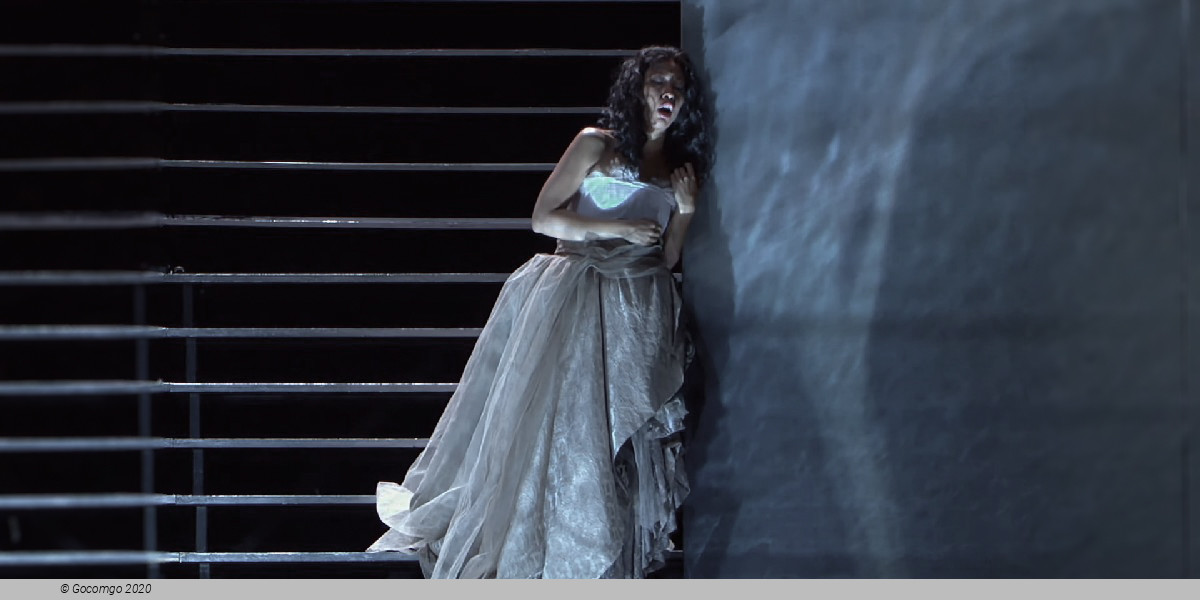
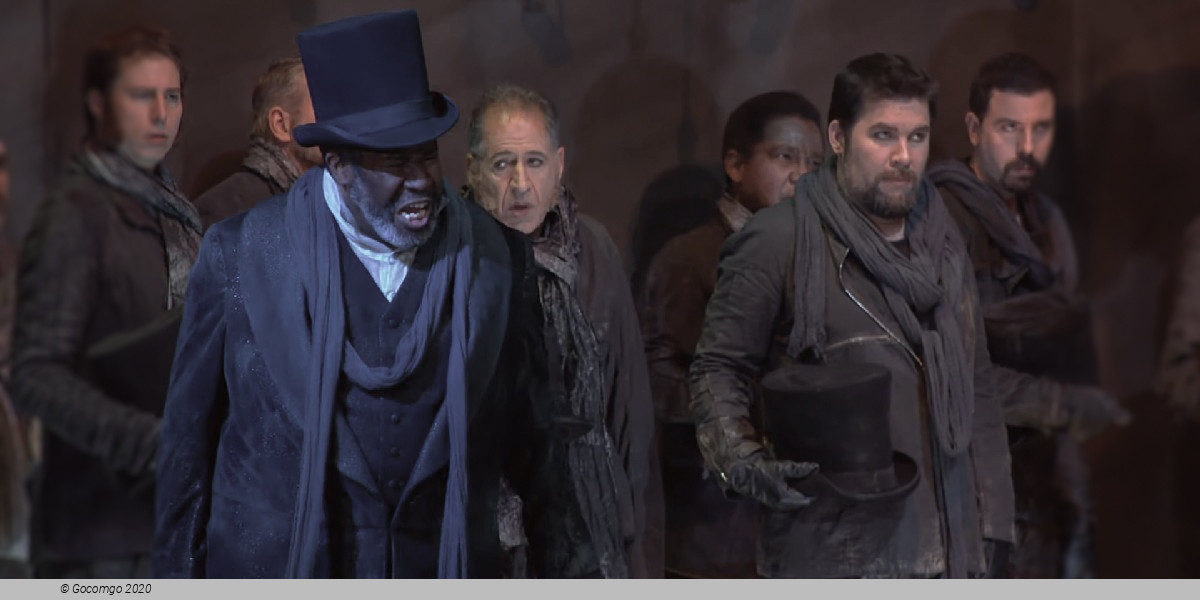
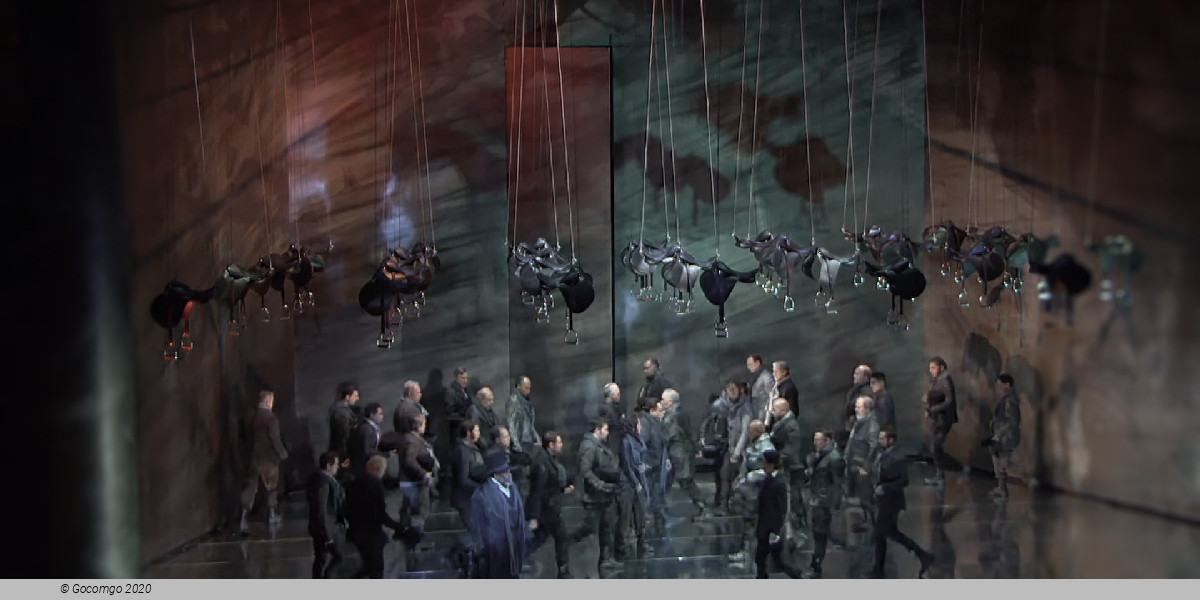
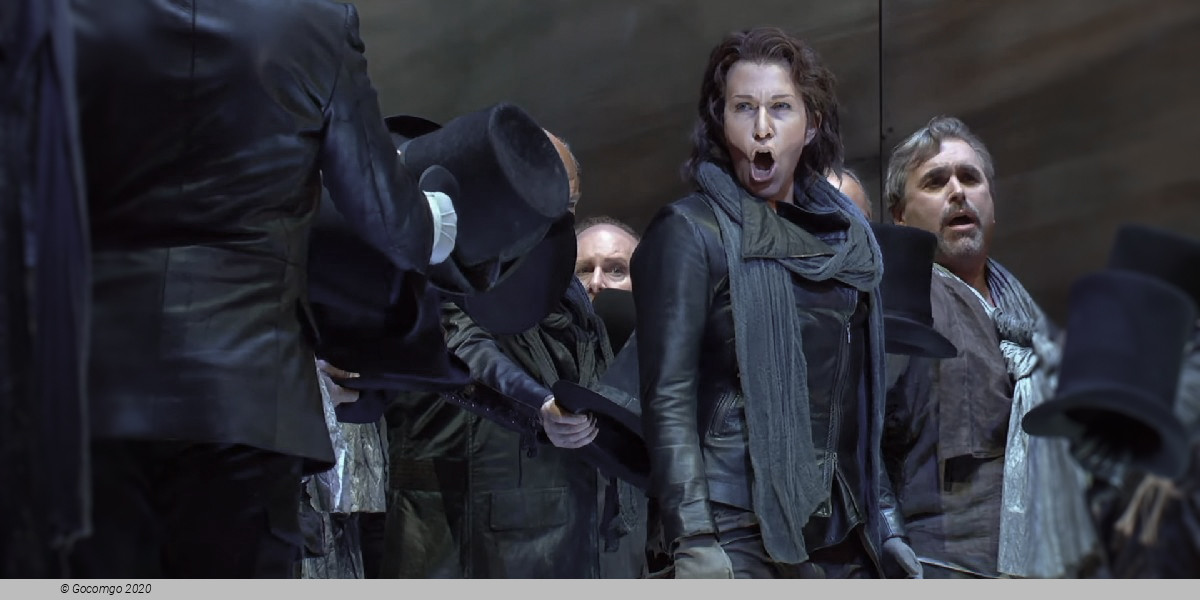
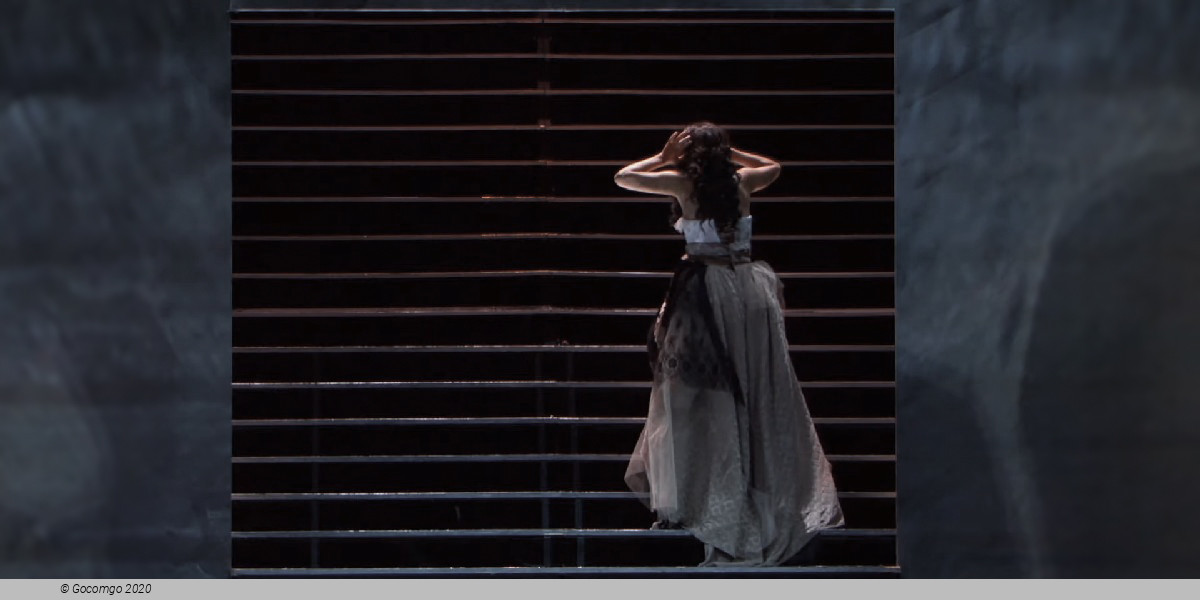
Allex Aguilera’s production explores Juliet’s tragic emancipation through a powerful visual metaphor: from the box that symbolizes social conventions to the sheet of water at the front of the stage, evoking the tragic destinies of doomed heroes. This aquatic scenography creates sublime mirror effects and offers the heroine a fatal liberation in which the myths of Narcissus and Ophelia resonate.

I Capuleti e i Montecchi: a staged prayer in which love seeks a silence of its own amid the noise of conflict.

History
Premiere of this production: 11 March 1830, Teatro La Fenice, Venice

I Capuleti e i Montecchi (The Capulets and the Montagues) is an Italian opera (Tragedia lirica) in two acts by Vincenzo Bellini. The libretto by Felice Romani was a reworking of the story of Romeo and Juliet for an opera by Nicola Vaccai called Giulietta e Romeo and based on the play of the same name by Luigi Scevola written in 1818, thus an Italian source rather than taken directly from William Shakespeare.

Synopsis

In this version of the story the Capuleti and Montecchi are rival political factions (Guelph and Ghibelline respectively) rather than Shakespeare's "two households, both alike in dignity". Capellio is the father of Giulietta (Juliet) and the leader of the Capuleti. Giulietta is betrothed to Tebaldo (Tybalt), however she has already met and fallen in love with Romeo, leader of the Montecchi (Montagues). This is a secret to all but Lorenzo (Lawrence), her doctor and confidant. Complicating matters, Romeo has inadvertently killed the son of Capellio (Giulietta's brother) in battle.

Place: around the palace of Capellio (Capulet) in Verona
Time: 13th century
Sinfonia

Act 1

Scene 1: The Palace

Capellio and Tebaldo address their followers advising rejection of an offer of peace to be brought by an envoy from Romeo, the man who had killed Capellio's son. Tebaldo states that he will avenge the killing to celebrate his marriage to Giulietta: (Cavatina: È serbata a questo acciaro / "And reserved for this sword / is the vengeance of your blood") and he urges Capellio to hasten the moment when he may marry Giulietta and then avenge Capellio, who wants the marriage to take place immediately, brushing aside the objections of Lorenzo that Giulietta is ill with a fever. Tebaldo proclaims his love for Giulietta: Sì: M'Abbraccia / "I love her so much / She is so dear to me". Capellio's men urge him on and arrangements are made to have the wedding take place that day.

While the men proclaim their hatred of the Montecchi, Romeo enters in the guise of a Montecchi envoy, offering peace to be guaranteed by the marriage of Romeo and Giulietta. He explains that Romeo regrets the death of Capellio's son (Cavatina: Ascolta: Se Romeo t'uccise un figlio / "Listen: If Romeo killed your son / he brought him death in battle / And you must blame fate"), and offers to take his place as a second son for the old man. Capellio indicates that Tebaldo has already taken on that role and—together with all his men—rejects all idea of peace: "War! War", the men proclaim. Romeo accepts their challenge of war: (Cabaletta: La tremenda ultrice spada/ "Romeo will prepare to brandish the dread avenging sword / Romeo accepts your challenge of war.)

Scene 2: Giulietta's room

Giulietta enters proclaiming her frustration against all the wedding preparations which she sees about her. Recitative: "I burn, a fire consumes me wholly. In vain do I seek solace from the winds... Where are you Romeo?". Cavatina: Oh! quante volte / "Oh how many times do I weep and beg heaven for you". Lorenzo enters, explaining that he has arranged for Romeo to come to her by a secret door and, when Romeo enters, he tries to persuade Giulietta to escape with him. Duetto: Romeo: Sì, fuggire: a noi non resta / "Yes, flee, for us there is no other escape"; he demands: "What power is greater for you than love?", but she resists in the name of duty, law, and honour, declaring that she would prefer to die of a broken heart. Romeo is distraught: Cantabile: Romeo: Ah crudel, d'onor ragioni / "Oh cruel one, you speak of honour when you were stolen from me?" Giulietta responds "Ah what more you ask of me?", then, in a tempo di mezzo in which each expresses his/her conflicting emotions, the situation becomes more and more impossible for them both.

The sounds of wedding preparations are heard: she urges him to flee; he declares that he will stay and, in a final cabaletta in which Romeo pleads "Come, ah Come! Rely on me", Giulietta continues to resist. Each leaves.

Scene 3: Another part of the palace

The Capuleti are celebrating the forthcoming marriage. All those assembled join in. Romeo enters in disguise and tells Lorenzo, who immediately recognises him, that he is awaiting the support of his soldiers, one thousand of whom are assembled dressed as Ghibelines and who are intent on preventing the wedding. Lorenzo remonstrates with him, but suddenly, the armed attack by the Montecchi takes place as they surge into the palace, Romeo with them. Giulietta is alone, lamenting the state of affairs, Tace il fragor / "The tumult has ended". Then she sees Romeo, who has appeared, and again he urges her to run away with him: "I ask this in the name of promised love", he declares. Capellio, Tebaldo and the Ghibelines discover them, and believe that Romeo is still the Montecchi envoy. As Giulietta tries to shield him from her father, Romeo proudly tells them his true name. The Montecchi enter to protect him and, in a concerted finale involving all from both factions, the lovers are separated by their family members, finally proclaiming: Al furor che si ridesta / "If all hope of ever seeing each other again in life / this will not be the last farewell". Capellio, Tebaldo, and Lorenzo become part of the quintet finale, as the ranks of the supporters of both sides join in the swell.

Act 2

Scene 1: Another part of the Palace

Introduced by a solo for cello, Giulietta awaits news of the fighting. Lorenzo enters and immediately tells her that Romeo lives, but she will soon be taken away to Tebaldo's castle. He offers a solution: that she must take a sleeping potion which will make it appear that she has died. She will then be taken to her family's tomb where he will arrange for Romeo and himself to be present when she awakes. In a state of indecision, she contemplates her options. (Aria: Morte io non temo, il sai / "You know that I do not fear death, / I have always asked death of you...") and she expresses doubts while Lorenzo urges her to take the potion, given that her father is about to come into the room. Taking the bottle, she declares that "only death can wrest me from my cruel father".

With his followers, Capellio comes to order her to leave with Tebaldo at dawn. Her ladies beg her father to be kinder towards her. Proclaiming that she is close to death, she begs her father's forgiveness: Cabaletta: Ah! non poss'io partire / "Ah, I cannot leave without your forgiveness.....Let your anger turn just once to peace", but Capellio rejects her and orders her to her room. He then instructs his men to keep watch on Lorenzo of whom he is suspicious; they are ordered not to allow Lorenzo to have contact with anyone.

Scene 2: The grounds of the palace

An orchestral introduction precedes Romeo's entrance and introduces what Weinstock describes as "his bitter recitative", Deserto è il loco / "This place is abandoned", in which he laments Lorenzo's apparent forgetfulness in failing to meet him as planned. He then hears the noise of someone entering. It is Tebaldo, and the two men begin an angry duet (Tebaldo: Stolto! a un sol mio grido / "With one cry a thousand men will arrive". Romeo: "I scorn you. You will wish the alps and the sea stood between us"). As they are about to begin fighting, the sound of a funeral procession is heard (Pace alla tua bell'anima). They stop and listen, only then realising that it is a procession for Giulietta. In a cabaletta finale, the rivals are united in remorse, asking each other for death as they continue to fight.

Scene 3: The tombs of the Capuleti

Along with his Montecchi followers, Romeo enters the tomb of the Capuleti. The followers mourn Giulietta's death. At her tomb and in order to bid her farewell, Romeo asks for it to be opened. He also asks that the Montecchi leave him alone with Giulietta: Romanza: Deh! tu, bell'anima / "Alas! You, fair soul / Rising up to heaven / turn to me, bear me with you". Realising his only course of action will be death, he swallows poison and, lying down beside her, he hears a sigh, then the sound of her voice. Giulietta wakes up to find that Romeo knew nothing of her simulated death and had been unaware of Lorenzo's plan. Urging him to leave with her, Giulietta gets up but Romeo states that he must remain there forever, explaining that he has already acted to end his life. In a final cabaletta, the couple clings to each other. Then he dies and Giulietta, unable to live on without him, falls dead onto his body. The Capuleti and Montecchi rush in to discover the dead lovers, with Capellio demanding who is responsible: "You, ruthless man", they all proclaim.

Venue Info

Gran Teatre del Liceu - Barcelona
Location   La Rambla, 51-59

The Gran Teatre del Liceu, or simply Liceu in Catalan, is a main opera house in Barcelona, Catalonia, located on the central street of the city - La Rambla. The Liceu opened on 4 April 1847.

The Gran Teatre del Liceu dates back to 1837 when at the instigation of Manuel Gibert, a battalion of the National Militia formed the institutional core of the future Teatre in the unused monastery of Montsió (currently Portal del Ángel): a dramatic society of aficionados devoted to the performing arts. The first show premiered on 21 August 1837: El marido de mi mujer, by Ventura de la Vega, a dance number and a skit.

Origins (1837–1847)
In 1837, the Liceo Filodramático de Montesión (Philodramatic Lyceum of Montesión, now named Conservatori Superior de Música del Liceu) was founded in Barcelona to promote musical education (hence the name "Liceo", or lyceum) and organize scenic representations of opera performed by Liceo students.

A theatre was built in the convent building — named Teatro de Montesión or Teatro del Liceo de Montesión — and plays and operas were performed: the first was Vicenzo Bellini's Norma (3 February 1838). The repertoire was Italian, the most performed composers being Donizetti and Mercadante as well as Bellini and Rossini. The Barcelona premiere of Hérold's Zampa was held here.

In 1838, the society changed its name to Liceo Dramático Filarmónico de S. M. la Reina Isabel II (Dramatic Philharmonic Lyceum of H.M. Queen Isabel II). Lack of space, as well as pressures, brought to bear by a group of nuns (who were the former proprietors of the convent and had recovered rights to return), motivated the Liceu to leave its headquarters in 1844. The last theatre performance was on 8 September.

The Trinitarian convent building located in the center of the town at la Rambla was purchased. The managers of the Liceu entrusted Joaquim de Gispert d'Anglí with a project to make the construction of the new building viable. Two different societies were created: a "building society" and an "auxiliary building society". Shareholders of the building society obtained the right of use in perpetuity of some theatre boxes and seats in exchange for their economic contributions. Those of the second society contributed the rest of the money necessary in exchange for property of other spaces in the building including some shops and a private club called the Círculo del Liceo.

In contrast with many other European cities, where the monarchy took on the responsibility of the building and upkeep of opera houses, the Liceu was funded by private shareholders of what would become the Societat del Gran Teatre del Liceu (Great Liceu Theatre Society), organized similarly to a trading company or society. This is reflected in the building's architecture; for example, there exists no royal box. The Queen did not contribute to the construction, so the name of the society was changed to Liceo Filarmónico Dramático, removing the Queen's name from it.

Miquel Garriga i Roca was the architect contracted; the construction began on 11 April 1845. The theatre was inaugurated on 4 April 1847.

Opening, fire, and rebuilding (1847–1862)
The inauguration presented a mixed program including the premieres of José Melchior Gomis' musical Ouverture, a historical play Don Fernando de Antequera by Ventura de la Vega, the ballet La rondeña (The girl from Ronda) by Josep Jurch, and a cantata Il regio himene with music by the musical director of the theatre Marià Obiols. The first complete opera, Donizetti's Anna Bolena was presented on 17 April. At this point, Liceu was the biggest opera house in Europe with 3,500 seats. Other operas performed in the Liceu during the first year were (in chronological order): I due Foscari (Verdi), Il bravo (Mercadante), Parisina d'Este (Donizetti), Giovanna d'Arco (Verdi), Leonora (Mercadante), Ernani (Verdi), Norma (Bellini), Linda di Chamounix (Donizetti) and Il barbiere di Siviglia (Rossini).

The building was severely damaged by fire on 9 April 1861, but it was rebuilt by the architect Josep Oriol Mestres and re-opened on 20 April 1862, performing Bellini's I puritani. From the old building, only the facade, the entrance hall, and the foyer (Mirrors Hall) remained.

Bombing and civil war (1862–1940)
On 7 November 1893, on the opening night of the season and during the second act of the opera Guillaume Tell by Rossini, two Orsini bombs were thrown into the stalls of the opera house. Only one of the bombs exploded; some twenty people were killed and many more were injured. The attack was executed by anarchist Santiago Salvador and deeply shocked Barcelona, becoming a symbol of the turbulent social unrest of the time. The Liceu re-opened its doors on 18 January 1894, but the seats occupied by those killed were not used for a number of years. The second bomb was put in the Van Gogh Museum in 2007 during an exhibit on Barcelona around 1900.

In 1909, the auditorium ornamentation was renewed. Spanish neutrality during World War I allowed the Catalan textile industry to amass enormous wealth by supplying the warring parties. The 1920s were prosperous years and the Liceu became fully established as a leading opera house welcoming better singers, the orchestra leaders of the time, and companies such as Sergei Diaghilev's Ballets Russes.

When the Second Spanish Republic was proclaimed in 1931, political instability meant that the Liceu suffered a severe financial crisis which was only overcome through subsidies from the Barcelona City Council and the government of Catalonia. During the Spanish Civil War, the Liceu was nationalized and took the name the Teatre del Liceu – Teatre Nacional de Catalunya (Liceu Opera House – the National Theatre of Catalonia). The opera seasons were suspended. After the war, it was returned to its original owners in 1939.

"Silver Age" and crisis (1940–1980)
From 1940 to the 1960s, the seasons were high-quality ones. 1955, thanks to the creation of a special board, saw a historic event when for the first time since its foundation, the Bayreuth Festival was staged away from its normal venue. Performances of Parsifal, Tristan und Isolde, and Die Walküre with innovative stage sets by Wieland Wagner were enthusiastically received.

In the 1970s, an economic crisis affected the theatre and the privately based organization could not afford the increasing budgets of modern opera productions and general quality declined.

New direction and second fire (1980–1994)
The death of Joan Antoni Pàmias in 1980 revealed the need for the intervention of the official bodies if the institution was to remain a leading opera house. In 1981, the Generalitat de Catalunya, with Barcelona's City Council and the Societat del Gran Teatre del Liceu, created the Consorci del Gran Teatre del Liceu (Consortium of the Great Liceu Theater) responsible for the theatre's management.

The Deputation of Barcelona and the Spanish Ministry of Culture joined the Consortium in 1985 and 1986 respectively. The Consortium managed to quickly attract the public back to the Liceu owing to a considerable improvement in its artistic standard. This included a more complete and up-to-date perspective of the very nature of an opera performance, a great improvement in the choir and orchestra, careful casting, and attracting the interest of the public to other aspects of productions besides the leading roles alone. This approach, coupled with the new economic support and more demanding and discerning public, resulted in a high standard of production.

The seasons organized by the Consortium maintained high standards in casting, production, and public loyalty, as measured by public attendance, but all this came to a halt with a fire on 31 January 1994. The building was destroyed by a fire caused by a spark that accidentally fell on the curtain during a routine repair. At this time, Paul Hindemith's Mathis der Maler was performing at the theatre and the following opera to be performed was Puccini's Turandot.

The public and institutional response were unanimous on the need to rebuild a new opera house on the same site with improved facilities. The new Liceu is the result of a series of actions to preserve those parts of the building unaffected by the fire, the same ones as had survived the fire in 1861. The auditorium was rebuilt with the same layout, except for the roof paintings which were replaced with new artworks by Perejaume, and state-of-the-art stage technology.

To rebuild and improve the theatre, it became public. The Fundació del Gran Teatre del Liceu (Liceu Great Theater Foundation) was created and the Societat del Gran Teatre del Liceu handed over the ownership of the building to the Foundation. Some owners disagreed with the decision, which was challenged unsuccessfully in court.

Reopening (1994–present)
From 1994 until the reopening in 1999, the opera seasons in Barcelona took place in: Palau Sant Jordi arena (only some massive performances in 1994), Palau de la Música Catalana, and Teatre Victòria. The rebuilt, improved, and the expanded theatre opened on 7 October 1999, with Puccini's Turandot as previewed in 1994 before the fire. The new venue had the same traditional horseshoe-shaped auditorium as before but with greatly improved technical, rehearsal, office, and educational facilities, a new rehearsal hall, a new chamber opera and small performances hall, and much more public space. Architects for the rebuilding project were Ignasi de Solà-Morales and Xavier Fabré i Lluís Dilmé.

Surtitles, projected onto a screen above the proscenium, are used for all opera performances and some lieder concerts. The electronic libretto system provides translations (to English, Spanish, or Catalan) onto small individual monitors for most of the seats.

Important Info
Type: Opera
City: Barcelona, Spain
Starts at: 17:00
Acts: 2
Intervals: 1
Duration: 2h 45min
Top of page