
Gran Teatre del Liceu 17 February 2023 - Alcina (concert performance) | GoComGo.com

Alcina (concert performance)

Gran Teatre del Liceu, Main Stage, Barcelona, Spain
All photos (6)
Select date and time
7 PM

E-tickets: Print at home or at the box office of the event if so specified. You will find more information in your booking confirmation email.

You can only select the category, and not the exact seats.
If you order 2 or 3 tickets: your seats will be next to each other.
If you order 4 or more tickets: your seats will be next to each other, or, if this is not possible, we will provide a combination of groups of seats (at least in pairs, for example 2+2 or 2+3).

Important Info
Type: Opera
City: Barcelona, Spain
Starts at: 19:00
Acts: 3
Duration: 3h 50min

E-tickets: Print at home or at the box office of the event if so specified. You will find more information in your booking confirmation email.

You can only select the category, and not the exact seats.
If you order 2 or 3 tickets: your seats will be next to each other.
If you order 4 or more tickets: your seats will be next to each other, or, if this is not possible, we will provide a combination of groups of seats (at least in pairs, for example 2+2 or 2+3).

Overview

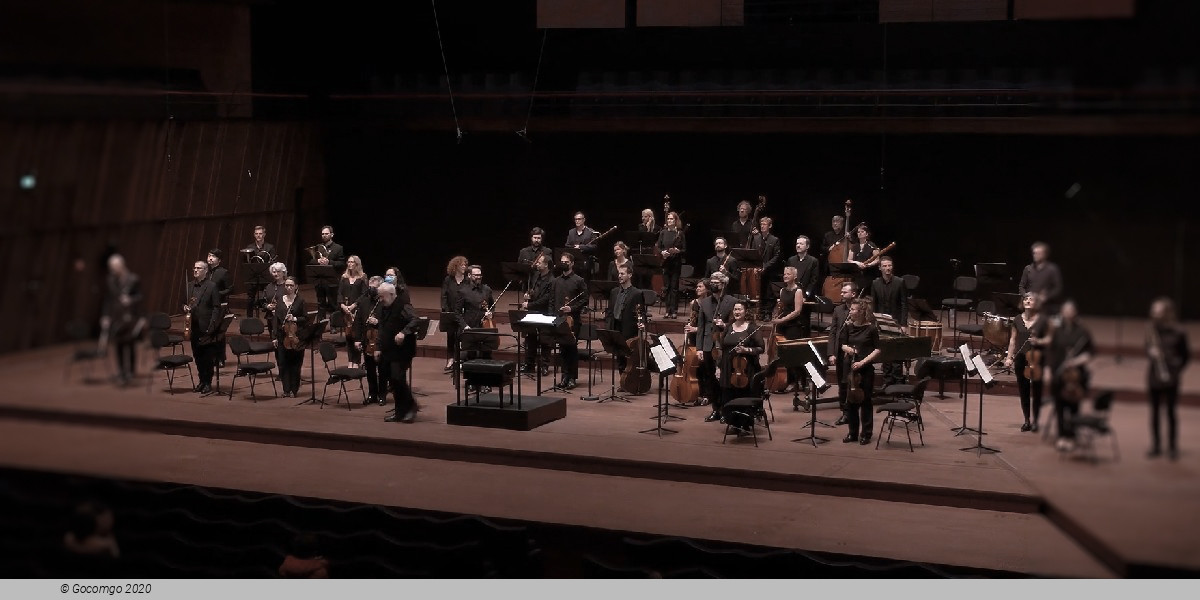
The French conductor Marc Minkowski is a renowned specialist of Handel with a flair for bringing out every shade of colour, however subtle or ambiguous. His will be an ambitious reading of the work which blends feelings, magic and treachery with a spark of humour. Thanks to the outstanding array of soloists and his own ensemble, Les Musiciens du Louvre, Minkowski will reveal the hidden emotions and desires with all the expressiveness Handel wished for. “Tornami a vagheggiar.” (Come back to charm me.)

The plot of Alcina, one Handel's most popular and inspired operas, came from the epic poem Orlando furioso by Ludovico Ariosto. Il caro Sassone ("The dear Saxon", as the composer was nicknamed) filled it with fantasy and fine melodies to produce a highly polished work that ranks alongside Orlando and Ariodante.

First performed at London's Covent Garden in 1735, it tells a tale full of Homeric overtones about the splendidly portrayed sorceress Alcina who lures heroes to her island to seduce them and make them forget their homelands. Bradamante's struggle to liberate Ruggiero from her still captivates us today. Alcina abounds in some of the most beautiful pages Handel ever wrote and the cast for the first night in England included such stars as Carestini and Negri.

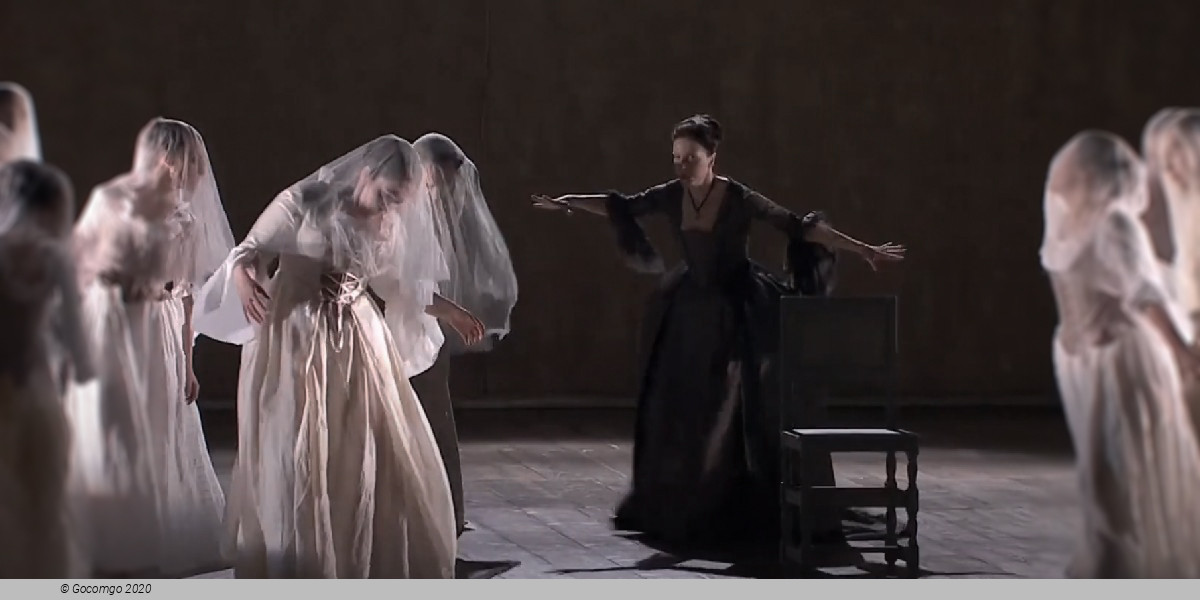
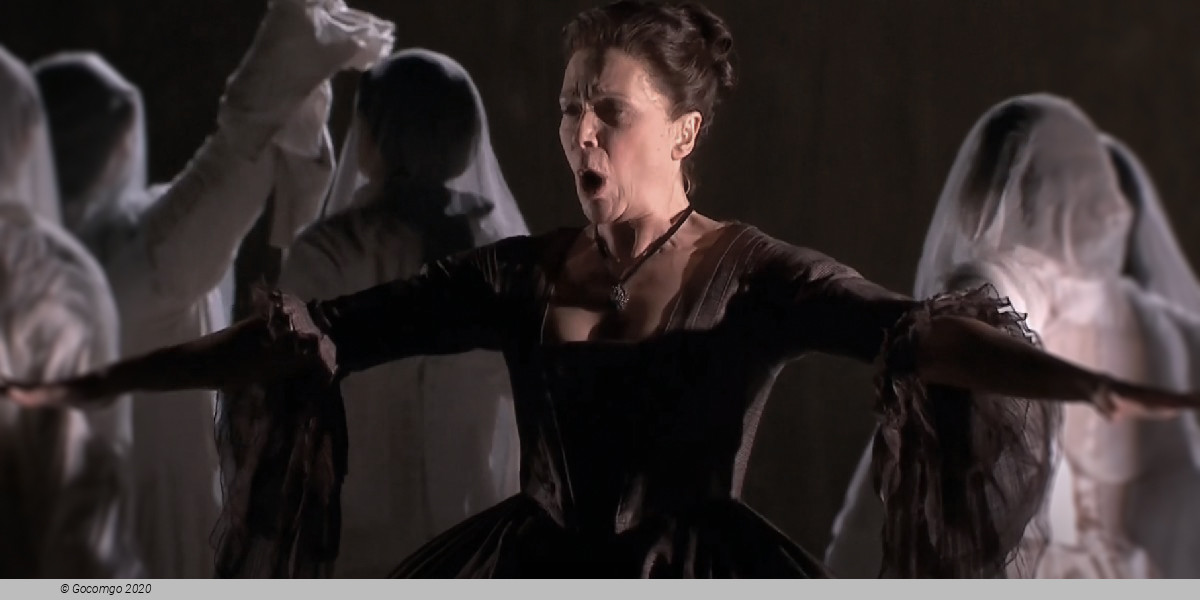
Are the witch's feelings for Ruggiero mere perversion or unbridled passion? Handel in his genius made Alcina one of the most complete and well characterized soprano roles in opera, going beyond her supernatural dimension to portray her as a deeply human, moving woman who suffers. The vanquished sorceress acquires new psychological depth in each successive aria and inspires us with a strange compassion.

Alcina, a mirage-like drama of love and passion, seems tailor-made to encourage vocal fireworks and develop the characters' personalities.

History
Premiere of this production: 16 April 1735, Theatre Royal, Covent Garden, London

Alcina - opera seria by George Frideric Handel. Handel used the libretto of L'isola di Alcina, an opera that was set in 1728 in Rome by Riccardo Broschi, which he acquired the year after during his travels in Italy. Partly altered for better conformity, the story was originally taken from Ludovico Ariosto's Orlando furioso (like those of the Handel operas Orlando and Ariodante), an epic poem. The opera contains several musical sequences with opportunity for dance: these were composed for dancer Marie Sallé.

Synopsis

Prologue
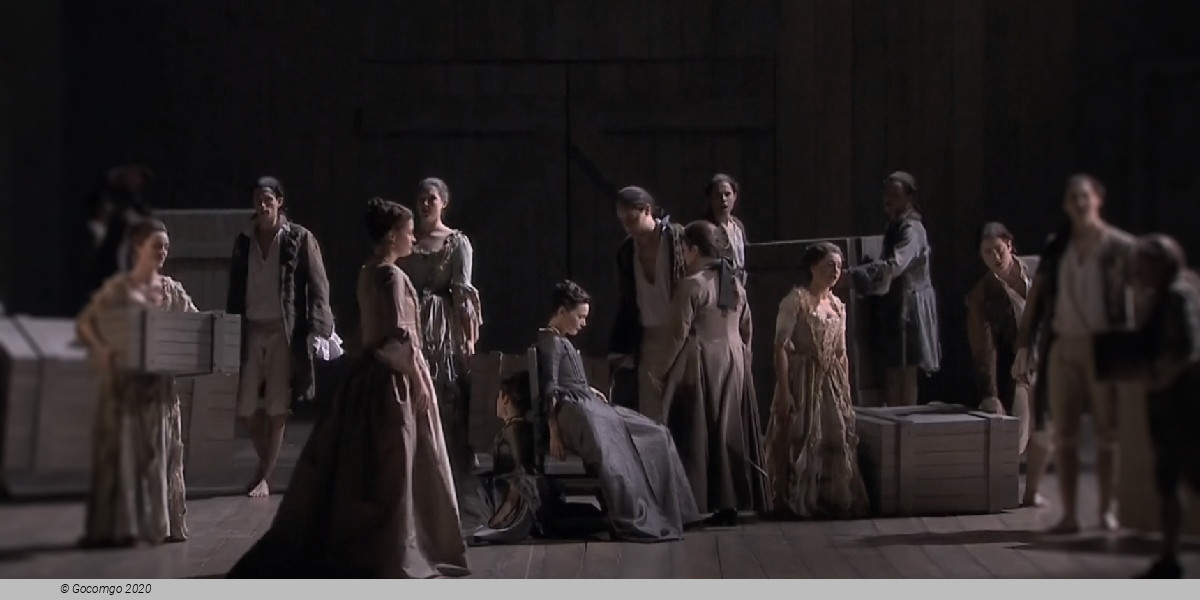
The background of the opera comes from the poem Orlando Furioso. The heroic knight Ruggiero is destined to a short but glorious life, and a benevolent magician is always whisking him away from the arms of his fiancée, Bradamante. Bradamante is not the type to put up with the constant disappearance of her lover, and she spends vast portions of the poem in full armor chasing after him. Just before the opera begins she has rescued him from an enchanted castle, only to have her flying horse (a hippogriff) take a fancy to Ruggiero and fly off with him. Ruggiero and the hippogriff land on an island in the middle of the ocean. As the hippogriff begins to eat the leaves of a myrtle bush, Ruggiero is startled to hear the bush begin to speak. The bush reveals that it was once a living soul named Sir Astolfo, and the island belongs to the sister sorceresses Alcina and Morgana. The beautiful Alcina seduces every knight that lands on her isle, but soon tires of her lovers and changes them into stones, animals, plants, or anything that strikes her fancy. Despite Astolfo's warning, Ruggiero strides off to meet this sorceress – and falls under her spell.

Act 1
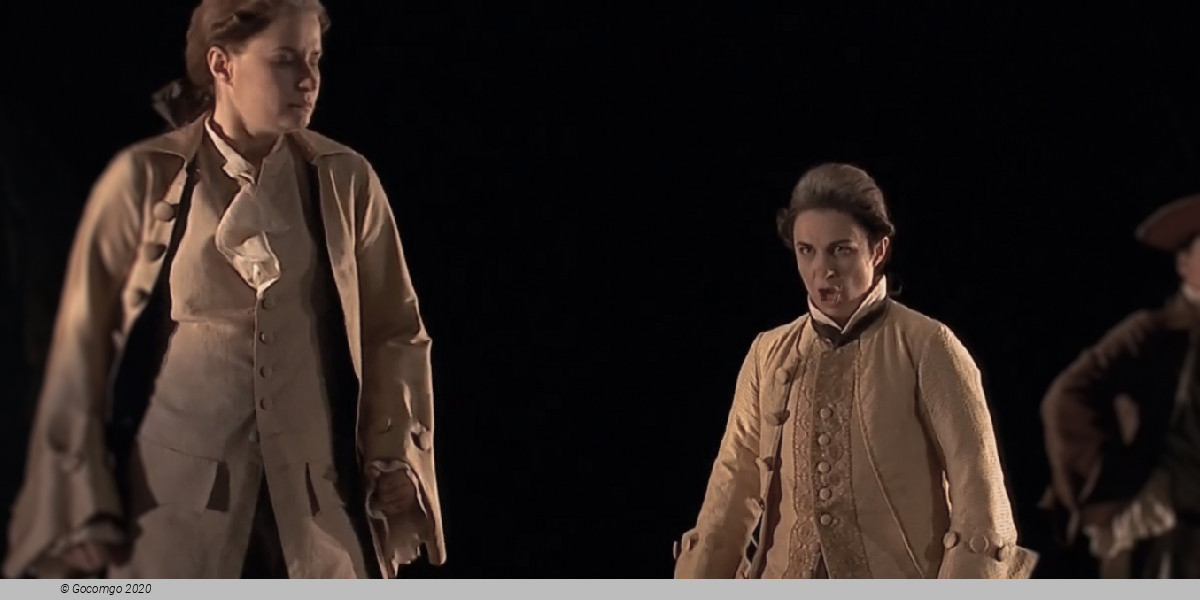
Bradamante, again searching for her lover, arrives on Alcina's island with Ruggiero's former tutor, Melisso. Dressed in armor, Bradamante looks like a young man and goes by the name of her own brother, Ricciardo. She and Melisso possess a magic ring which enables the wearer to see through illusion, which they plan to use to break Alcina's spells and release her captives.

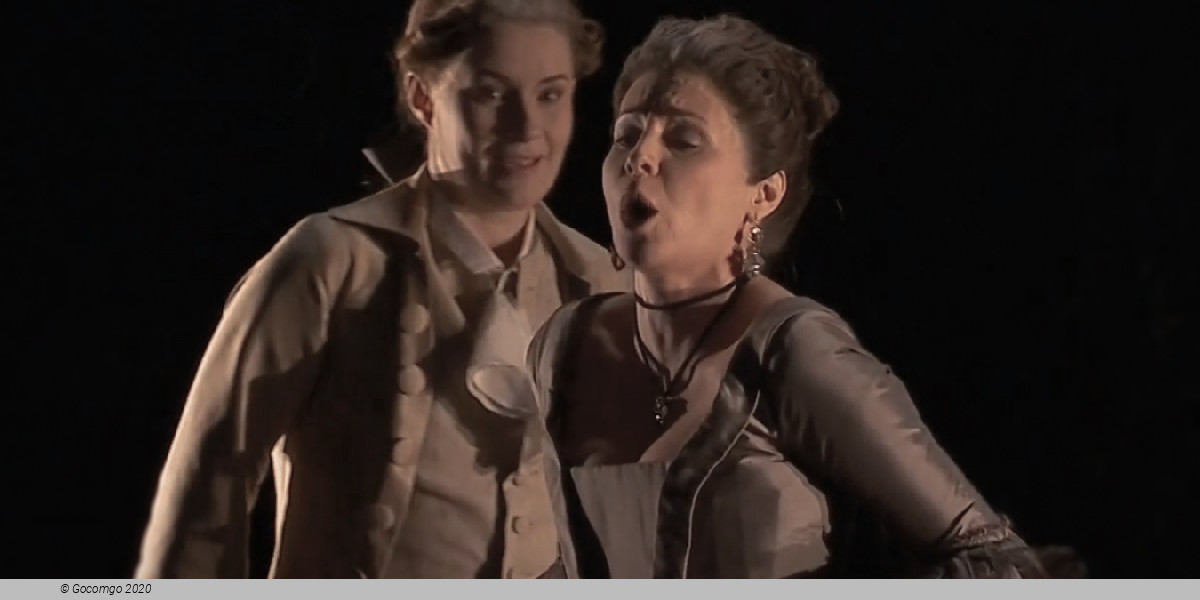
The first person they meet is the sorceress Morgana. Barely human and with no understanding of true love, she immediately abandons her own lover Oronte for the handsome 'Ricciardo.' Morgana conveys the visitors to Alcina's court, where Bradamante is dismayed to discover that Ruggiero is besotted with Alcina and in a state of complete amnesia about his previous life. Also at Alcina's court is a boy, Oberto, who is looking for his father, Astolfo, who was last seen heading toward this island. Bradamante guesses that Astolfo is now transformed into something, but she holds her peace and concerns herself with Ruggiero. Bradamante and Melisso rebuke Ruggiero for his desertion, but he can't think of anything except Alcina.

Meanwhile, Oronte discovers that Morgana has fallen in love with 'Ricciardo,' and challenges 'him' to a duel. Morgana stops the fight, but Oronte is in a foul mood and takes it out on Ruggiero. He tells the young man exactly how Alcina treats her former lovers and adds that, as far as he can tell, Alcina has fallen in love with the newcomer, Ricciardo (Semplicetto! A donna credi? Nr. 12). Ruggiero is horrified and overwhelms Alcina with his jealous fury. Things get even worse when 'Ricciardo' enters and pretends to admire Alcina. Alcina calms Ruggiero (Sì, son quella Nr. 13), but Bradamante is so upset at seeing her fiancé wooed before her very eyes that she reveals her true identity to Ruggiero (La bocca vaga, quell'occhio nero Nr. 14). Melisso hastily contradicts her and Ruggiero becomes very confused.


Alcina tells Morgana that she plans to turn Ricciardo into an animal, just to show Ruggiero how much she really loves him. Morgana begs Ricciardo to escape the island and Alcina's clutches, but 'he' says he'd rather stay, as he loves another. Morgana believes that this other person is herself, and the act ends with Morgana's aria "Tornami a vagheggiar". (In some productions, this aria is sung by Alcina.)

Act 2
Melisso recalls Ruggiero to reason and duty by letting him wear the magic ring: under its influence, Ruggiero sees the island as it really is—a desert, peopled with monsters. Appalled, he realizes he must leave, and sings the famous aria "Verdi prati" ("Green meadows") where he admits that even though he knows the island and Alcina are mere illusion, their beauty will haunt him for the rest of his life.

Melisso warns Ruggiero that he cannot just leave; Alcina still wields immense power, and he should cover his escape by telling her that he wishes to go hunting. Ruggiero agrees, but, thoroughly bewildered by the magic and illusion surrounding him, he refuses to believe his eyes when he at last sees Bradamante as herself, believing that she may be another of Alcina's illusions. Bradamante is in despair, as is Alcina. Convinced of Ruggiero's indifference, she enters to turn Ricciardo into an animal, and Ruggiero has to pull himself together quickly and convince the sorceress that he does not need any proof of her love. It is at this point that the audience realises that Alcina genuinely loves Ruggiero; from now until the end of the opera, she is depicted sympathetically.


Oronte realizes that Ricciardo, Melisso and Ruggiero are in some sort of alliance, and Morgana and Alcina realise they are being deceived. But it is too late: Alcina's powers depend on illusion and, as true love enters her life, her magic powers slip away. As the act ends, Alcina tries to call up evil spirits to stop Ruggiero from leaving her, but her magic fails her.

Act 3
After this the opera finishes swiftly. Morgana and Oronte try to rebuild their relationship; she returns to him and he rebuffs her but (once she is offstage) admits he loves her still. Ruggiero returns to his proper heroic status and sings an aria accompanied by high horns; Oberto is introduced to a lion, to whom he feels strangely attached, and Alcina sings a desolate aria in which she longs for oblivion.

Bradamante and Ruggiero decide that they need to destroy the source of Alcina's magic, usually represented as an urn. Alcina pleads with them, but Ruggiero is deaf to her appeals and smashes the urn. As he does so, everything is both ruined and restored. Alcina's magic palace crumbles to dust and she and Morgana sink into the ground, but Alcina's lovers are returned to their proper selves. The lion turns into Oberto's father, Astolfo, and other people stumble on, "I was a rock," says one, "I a tree" says another, and "I a wave in the ocean..." All the humans sing of their relief and joy, and Alcina is forgotten.

Venue Info

Gran Teatre del Liceu - Barcelona
Location   La Rambla, 51-59

The Gran Teatre del Liceu, or simply Liceu in Catalan, is a main opera house in Barcelona, Catalonia, located on the central street of the city - La Rambla. The Liceu opened on 4 April 1847.

The Gran Teatre del Liceu dates back to 1837 when at the instigation of Manuel Gibert, a battalion of the National Militia formed the institutional core of the future Teatre in the unused monastery of Montsió (currently Portal del Ángel): a dramatic society of aficionados devoted to the performing arts. The first show premiered on 21 August 1837: El marido de mi mujer, by Ventura de la Vega, a dance number and a skit.

Origins (1837–1847)
In 1837, the Liceo Filodramático de Montesión (Philodramatic Lyceum of Montesión, now named Conservatori Superior de Música del Liceu) was founded in Barcelona to promote musical education (hence the name "Liceo", or lyceum) and organize scenic representations of opera performed by Liceo students.

A theatre was built in the convent building — named Teatro de Montesión or Teatro del Liceo de Montesión — and plays and operas were performed: the first was Vicenzo Bellini's Norma (3 February 1838). The repertoire was Italian, the most performed composers being Donizetti and Mercadante as well as Bellini and Rossini. The Barcelona premiere of Hérold's Zampa was held here.

In 1838, the society changed its name to Liceo Dramático Filarmónico de S. M. la Reina Isabel II (Dramatic Philharmonic Lyceum of H.M. Queen Isabel II). Lack of space, as well as pressures, brought to bear by a group of nuns (who were the former proprietors of the convent and had recovered rights to return), motivated the Liceu to leave its headquarters in 1844. The last theatre performance was on 8 September.

The Trinitarian convent building located in the center of the town at la Rambla was purchased. The managers of the Liceu entrusted Joaquim de Gispert d'Anglí with a project to make the construction of the new building viable. Two different societies were created: a "building society" and an "auxiliary building society". Shareholders of the building society obtained the right of use in perpetuity of some theatre boxes and seats in exchange for their economic contributions. Those of the second society contributed the rest of the money necessary in exchange for property of other spaces in the building including some shops and a private club called the Círculo del Liceo.

In contrast with many other European cities, where the monarchy took on the responsibility of the building and upkeep of opera houses, the Liceu was funded by private shareholders of what would become the Societat del Gran Teatre del Liceu (Great Liceu Theatre Society), organized similarly to a trading company or society. This is reflected in the building's architecture; for example, there exists no royal box. The Queen did not contribute to the construction, so the name of the society was changed to Liceo Filarmónico Dramático, removing the Queen's name from it.

Miquel Garriga i Roca was the architect contracted; the construction began on 11 April 1845. The theatre was inaugurated on 4 April 1847.

Opening, fire, and rebuilding (1847–1862)
The inauguration presented a mixed program including the premieres of José Melchior Gomis' musical Ouverture, a historical play Don Fernando de Antequera by Ventura de la Vega, the ballet La rondeña (The girl from Ronda) by Josep Jurch, and a cantata Il regio himene with music by the musical director of the theatre Marià Obiols. The first complete opera, Donizetti's Anna Bolena was presented on 17 April. At this point, Liceu was the biggest opera house in Europe with 3,500 seats. Other operas performed in the Liceu during the first year were (in chronological order): I due Foscari (Verdi), Il bravo (Mercadante), Parisina d'Este (Donizetti), Giovanna d'Arco (Verdi), Leonora (Mercadante), Ernani (Verdi), Norma (Bellini), Linda di Chamounix (Donizetti) and Il barbiere di Siviglia (Rossini).

The building was severely damaged by fire on 9 April 1861, but it was rebuilt by the architect Josep Oriol Mestres and re-opened on 20 April 1862, performing Bellini's I puritani. From the old building, only the facade, the entrance hall, and the foyer (Mirrors Hall) remained.

Bombing and civil war (1862–1940)
On 7 November 1893, on the opening night of the season and during the second act of the opera Guillaume Tell by Rossini, two Orsini bombs were thrown into the stalls of the opera house. Only one of the bombs exploded; some twenty people were killed and many more were injured. The attack was executed by anarchist Santiago Salvador and deeply shocked Barcelona, becoming a symbol of the turbulent social unrest of the time. The Liceu re-opened its doors on 18 January 1894, but the seats occupied by those killed were not used for a number of years. The second bomb was put in the Van Gogh Museum in 2007 during an exhibit on Barcelona around 1900.

In 1909, the auditorium ornamentation was renewed. Spanish neutrality during World War I allowed the Catalan textile industry to amass enormous wealth by supplying the warring parties. The 1920s were prosperous years and the Liceu became fully established as a leading opera house welcoming better singers, the orchestra leaders of the time, and companies such as Sergei Diaghilev's Ballets Russes.

When the Second Spanish Republic was proclaimed in 1931, political instability meant that the Liceu suffered a severe financial crisis which was only overcome through subsidies from the Barcelona City Council and the government of Catalonia. During the Spanish Civil War, the Liceu was nationalized and took the name the Teatre del Liceu – Teatre Nacional de Catalunya (Liceu Opera House – the National Theatre of Catalonia). The opera seasons were suspended. After the war, it was returned to its original owners in 1939.

"Silver Age" and crisis (1940–1980)
From 1940 to the 1960s, the seasons were high-quality ones. 1955, thanks to the creation of a special board, saw a historic event when for the first time since its foundation, the Bayreuth Festival was staged away from its normal venue. Performances of Parsifal, Tristan und Isolde, and Die Walküre with innovative stage sets by Wieland Wagner were enthusiastically received.

In the 1970s, an economic crisis affected the theatre and the privately based organization could not afford the increasing budgets of modern opera productions and general quality declined.

New direction and second fire (1980–1994)
The death of Joan Antoni Pàmias in 1980 revealed the need for the intervention of the official bodies if the institution was to remain a leading opera house. In 1981, the Generalitat de Catalunya, with Barcelona's City Council and the Societat del Gran Teatre del Liceu, created the Consorci del Gran Teatre del Liceu (Consortium of the Great Liceu Theater) responsible for the theatre's management.

The Deputation of Barcelona and the Spanish Ministry of Culture joined the Consortium in 1985 and 1986 respectively. The Consortium managed to quickly attract the public back to the Liceu owing to a considerable improvement in its artistic standard. This included a more complete and up-to-date perspective of the very nature of an opera performance, a great improvement in the choir and orchestra, careful casting, and attracting the interest of the public to other aspects of productions besides the leading roles alone. This approach, coupled with the new economic support and more demanding and discerning public, resulted in a high standard of production.

The seasons organized by the Consortium maintained high standards in casting, production, and public loyalty, as measured by public attendance, but all this came to a halt with a fire on 31 January 1994. The building was destroyed by a fire caused by a spark that accidentally fell on the curtain during a routine repair. At this time, Paul Hindemith's Mathis der Maler was performing at the theatre and the following opera to be performed was Puccini's Turandot.

The public and institutional response were unanimous on the need to rebuild a new opera house on the same site with improved facilities. The new Liceu is the result of a series of actions to preserve those parts of the building unaffected by the fire, the same ones as had survived the fire in 1861. The auditorium was rebuilt with the same layout, except for the roof paintings which were replaced with new artworks by Perejaume, and state-of-the-art stage technology.

To rebuild and improve the theatre, it became public. The Fundació del Gran Teatre del Liceu (Liceu Great Theater Foundation) was created and the Societat del Gran Teatre del Liceu handed over the ownership of the building to the Foundation. Some owners disagreed with the decision, which was challenged unsuccessfully in court.

Reopening (1994–present)
From 1994 until the reopening in 1999, the opera seasons in Barcelona took place in: Palau Sant Jordi arena (only some massive performances in 1994), Palau de la Música Catalana, and Teatre Victòria. The rebuilt, improved, and the expanded theatre opened on 7 October 1999, with Puccini's Turandot as previewed in 1994 before the fire. The new venue had the same traditional horseshoe-shaped auditorium as before but with greatly improved technical, rehearsal, office, and educational facilities, a new rehearsal hall, a new chamber opera and small performances hall, and much more public space. Architects for the rebuilding project were Ignasi de Solà-Morales and Xavier Fabré i Lluís Dilmé.

Surtitles, projected onto a screen above the proscenium, are used for all opera performances and some lieder concerts. The electronic libretto system provides translations (to English, Spanish, or Catalan) onto small individual monitors for most of the seats.

Important Info
Type: Opera
City: Barcelona, Spain
Starts at: 19:00
Acts: 3
Duration: 3h 50min
Top of page