








Seoul Arts Center: La Fille mal gardé Tickets | Event Dates & Schedule | GoComGo.com

La Fille mal gardé Tickets

Seoul Arts Center, Seoul, South Korea
Important Info
Type: Ballet
City: Seoul, South Korea
Duration: 2h 5min

E-tickets: Print at home or at the box office of the event if so specified. You will find more information in your booking confirmation email.

You can only select the category, and not the exact seats.
If you order 2 or 3 tickets: your seats will be next to each other.
If you order 4 or more tickets: your seats will be next to each other, or, if this is not possible, we will provide a combination of groups of seats (at least in pairs, for example 2+2 or 2+3).

Cast
Performers
Choose the date to see the peformers
Overview

Performed by Korean National Ballet

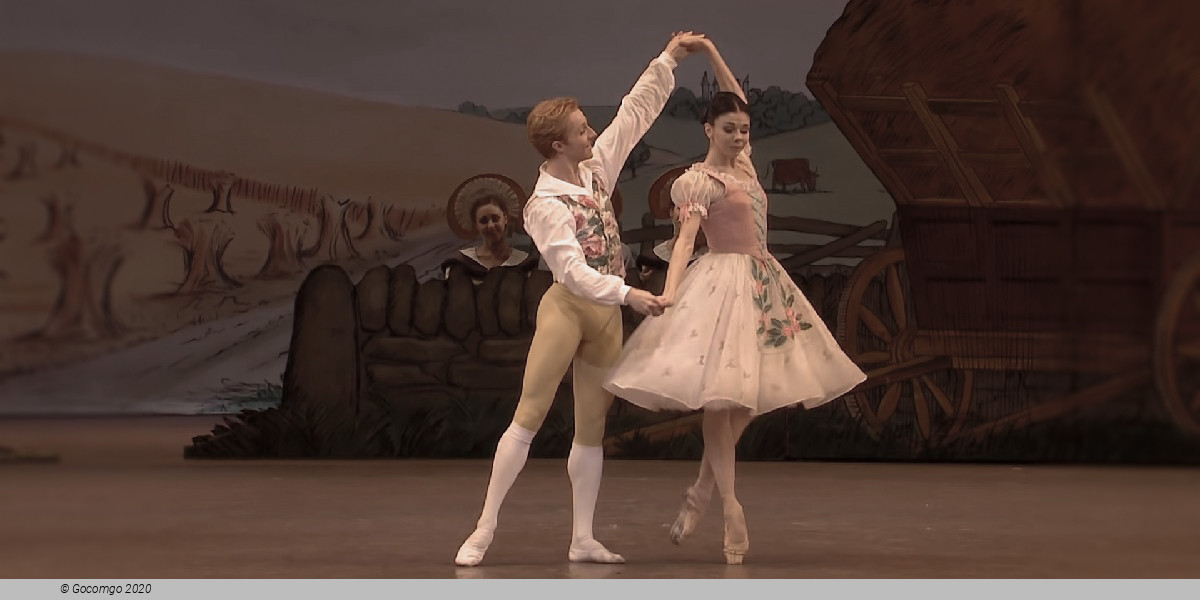
In 1959, the choreographer Frederick Ashton began creating a completely new version of La Fille mal gardée for the Royal Ballet of London. This production premiered on 28 January 1960, with the ballerina Nadia Nerina as Lise, David Blair as Colas, Stanley Holden as the Widow Simone, and Alexander Grant as Alen. Since its inception Ashton's staging has become a celebrated classic of the ballet repertory.

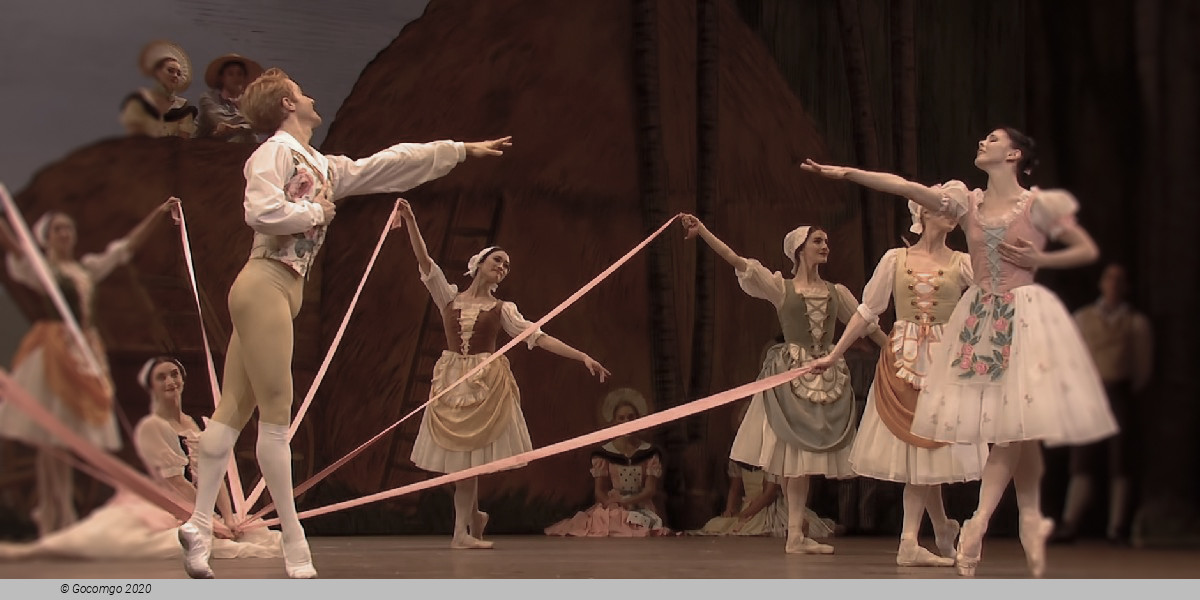
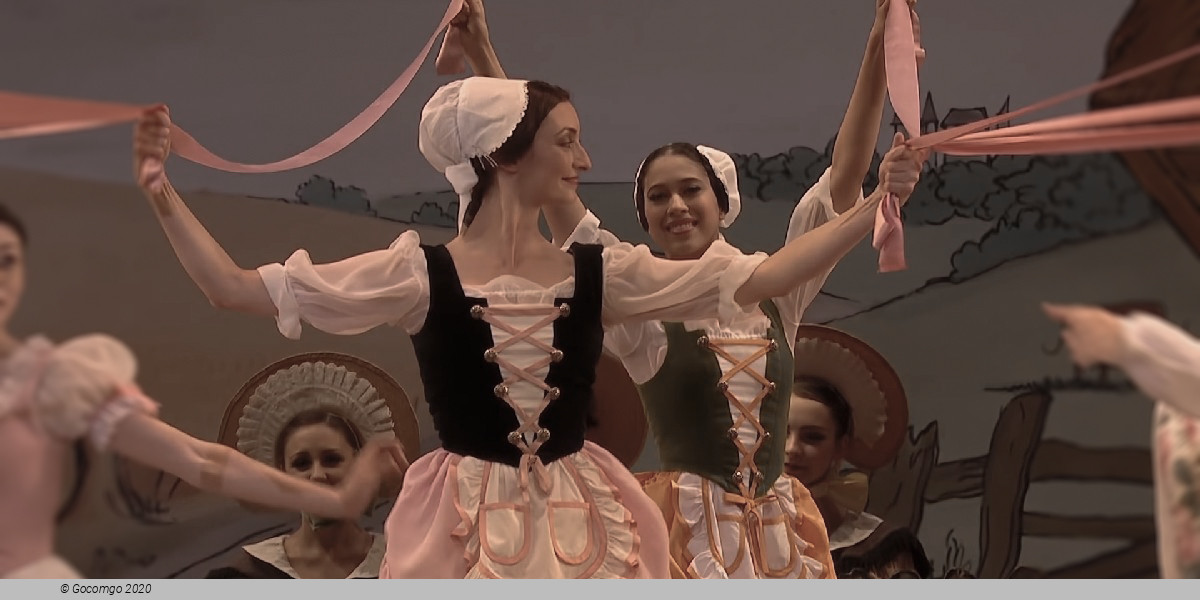
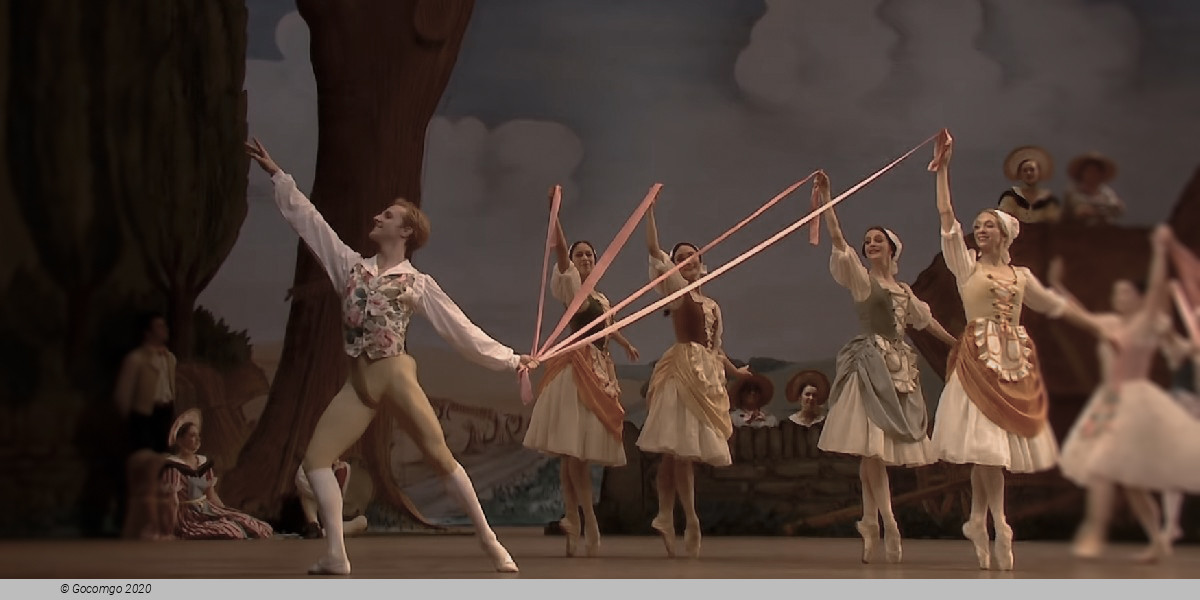
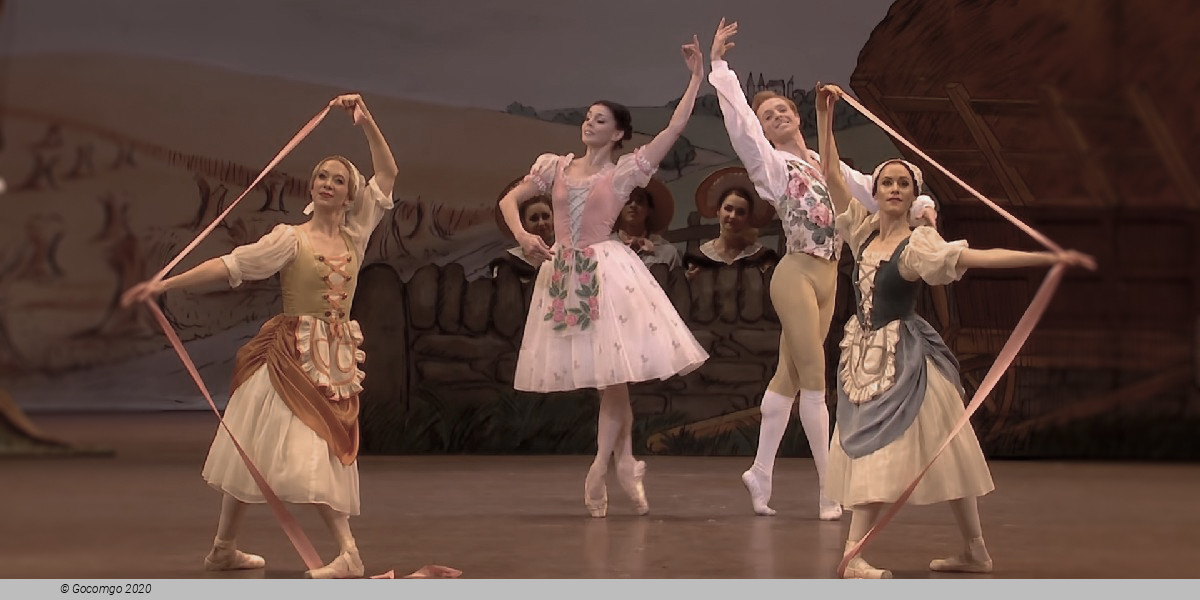
Ashton created what is considered to be among his most masterful choreography for his new version of La Fille mal gardée. He resurrected the Pas de ruban for Lise and Colas, in which the lovers perform a charming pas with intricate tricks using a pink satin ribbon. Ashton took this idea to an entirely new level with the Fanny Elssler pas de deux, devising a spectacular Grand adage for Lise, Colas and eight women with eight ribbons. Ashton also included Petipa's original mimed sequence known as When I'm Married, a passage that was performed by all of the great ballerinas of old when they danced the role of Lise. He was taught this passage by Tamara Karsavina, former Ballerina of the St. Petersburg Imperial Theatres and the Original Ballet Russe. She had in turn learned it from her teacher Pavel Gerdt, once the Imperial Ballet's leading male dancer who partnered all of the great ballerinas of the late 19th century and early 20th century in the role of Lise, including Virginia Zucchi.

Ashton's 1960 version of La Fille mal gardée has been staged for many companies throughout the world and has become the more or less "traditional" version, replacing the productions derived from the Petipa/Ivanov/Gorsky versions danced in Russia to the music of Hertel. Among such companies are the Bolshoi Ballet (2002), and American Ballet Theatre (2004). In spite of this, the famous La Fille mal gardée pas de deux, which is taken from the Petipa/Ivanov/Gorsky versions of the ballet, is still performed with regularity as a gala excerpt, and is often used by various young dancer on the ballet competition circuit.

History
Premiere of this production: 01 July 1789, Grand Théâtre de Bordeaux in Bordeaux, France

La Fille mal gardée is one of the oldest and most important works in the modern ballet repertory, having been kept alive throughout its long performance history by way of many revivals. The work has undergone many changes of title and has had no fewer than six scores, some of which were adaptations of older music.

Synopsis

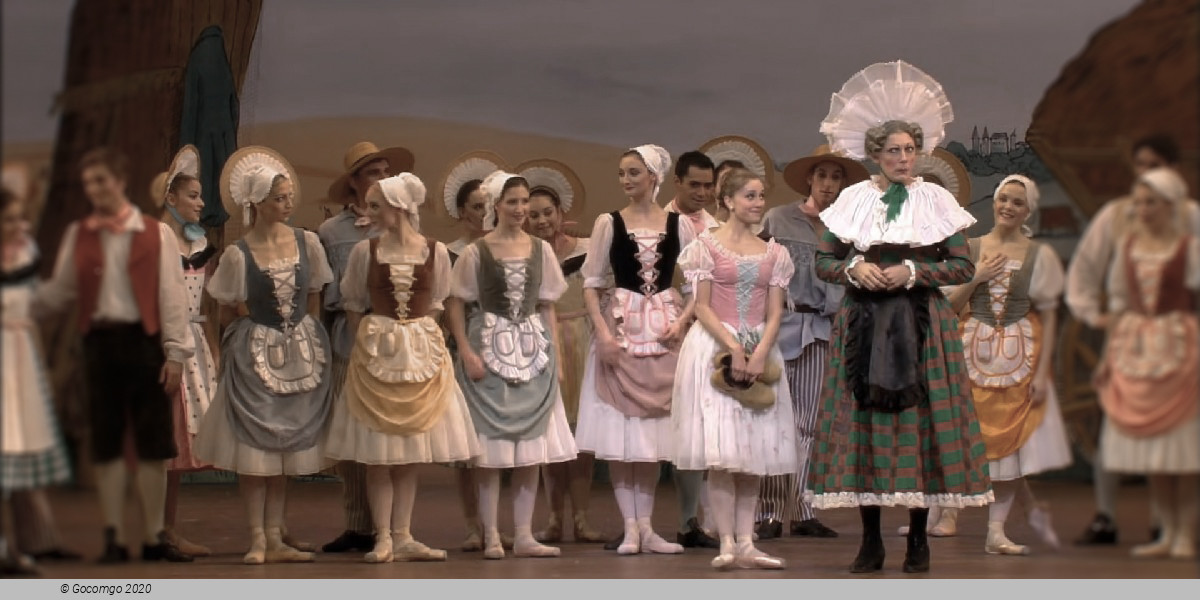
Lise and Colas are in love and want to marry. However, the Widow Simone wants Lise to marry the dimwitted, but extremely rich, Alain, and has arranged (with Alain's father Thomas) for a marriage contract between Lise and Alain. The Widow Simone does her best to keep Lise and Colas apart, but is unsuccessful in her attempts to do so.

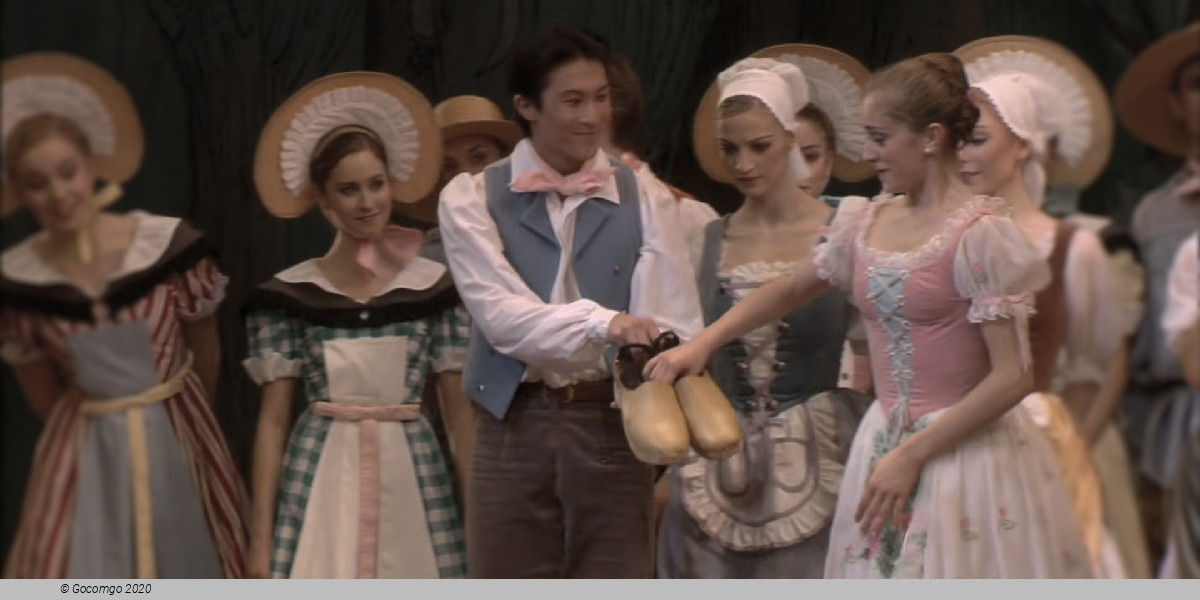
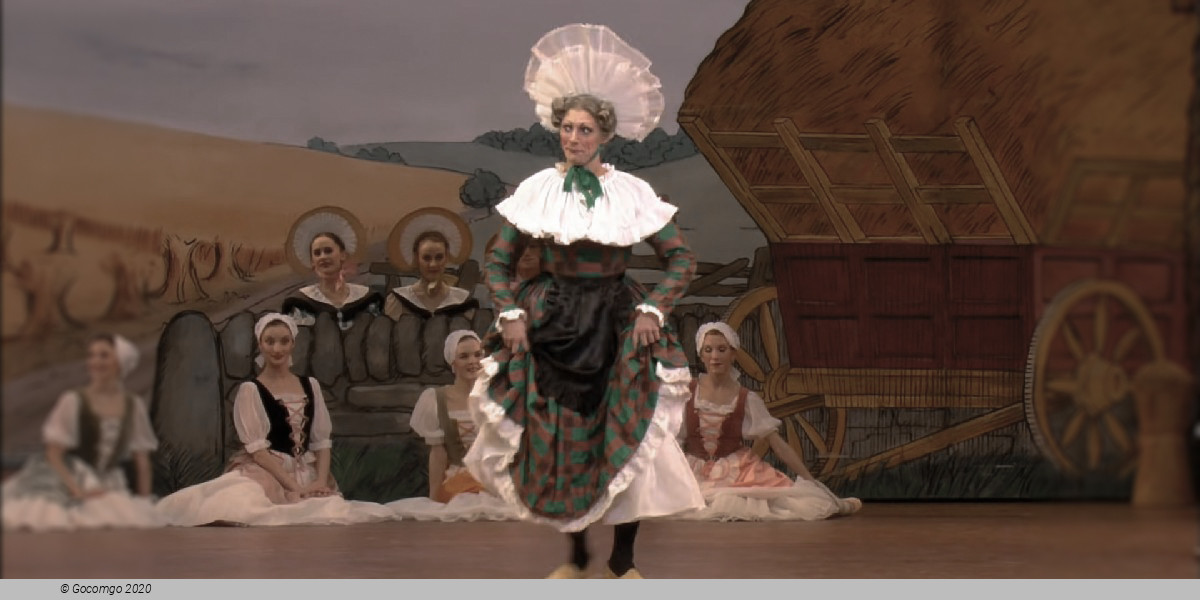
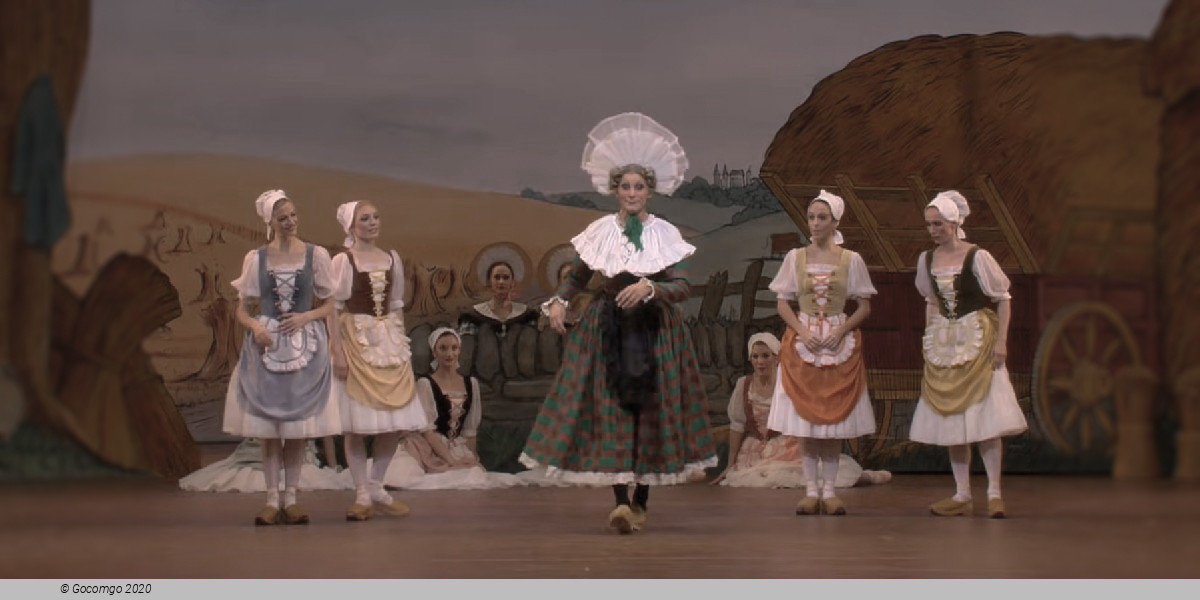
At harvest time the Widow Simone and Lise are taken to the field for a picnic lunch by Thomas and Alain. The farm workers join in a ribbon dance around a maypole, and the girls also join in a clog dance with the Widow Simone. There is a thunderstorm and everyone rushes for shelter. Alain is carried away on the wind by his open umbrella.

The Widow Simone and Lise return to their home. The widow wants Lise to sit down at the spinning wheel and spin, but Lise spins while she is up dancing, nearly strangling the widow. After a while, the widow wants Lise to dance, and Lise shows signs of unhappiness, but obliges. The widow takes a tambourine to play in time with Lise's dancing. When the widow is asleep, Lise tries to steal the key from the widow's pocket, to prevent the widow from locking her in, but is unsuccessful. The crops are brought in by the farm workers, and the widow then leaves the house (after locking the door behind her to prevent Lise from leaving the house). Lise thinks about Colas and mimes being the mother of a large number of children. To her embarrassment, Colas suddenly rises from the stacked crops. At the sound of the Widow Simone's returning to the house, Lise and Colas look around desperately for a place where he can hide. Not finding anywhere suitable in the living room, Lise takes Colas to her room, and she returns to the living room just before Widow Simone enters the house. The Widow Simone orders Lise to go to her room and put on her wedding dress for her forthcoming marriage to Alain. The horrified Lise tries to remain where she is, but the Widow Simone pushes Lise into her room and locks the door.

Thomas arrives with his son Alain (who is still clutching his umbrella). They are accompanied by a notary who is to act as witness to the marriage. The farm workers (friends of both Lise and Colas) also arrive. The Widow Simone gives Alain the key to Lise's room. When Alain unlocks the door to Lise's room, Lise appears in her wedding dress, accompanied by Colas. Thomas and Alain take offence, and the enraged Thomas tears up the marriage contract. Thomas, Alain and the notary leave the house in dudgeon. Lise and Colas then beg the Widow Simone to look favourably upon their suit. Love conquers all and the widow relents. Joyfully celebrating the happy outcome for Lise and Colas, everyone leaves, and the house is left quiet and empty, until Alain returns for his umbrella which he had accidentally left behind. So Alain is also happy with the love of his life – his umbrella.

Venue Info

Seoul Arts Center - Seoul
Location   2406 Nambusunhwan-ro, Seocho-gu

The Seoul Arts Center is an arts complex in the Seocho-gu district of Seoul, in South Korea. It consists of five main buildings: the Opera House, with three auditoriums; the Music Hall, with two concert halls; the Hangaram Art Museum; the Hangaram Design Museum; and the Seoul Calligraphy Art Museum. The Opera House is built in a shape that resembles the traditional Korean bamboo hat called gat.

In January 1982, the government decided to build a Seoul Arts Center, which would be in charge of the overall function of artistic activities, and began to select a site. This announcement was aimed at the 1986 Asian Games and the 1988 Seoul Olympics. The final site was decided in September of the same year at the foot of the mountain between Nambu Beltway and Mt. Umyeon (area: 231,000m²), and on November 14 , 1984, a groundbreaking ceremony was held with the National Gugak Center.

The construction of the Seoul Arts Center was divided into Phase 1 (1984 ~ 1988) and Phase 2 (1988 ~ In February 1988, the first phase of construction, the Music Hall and Calligraphy Hall, was completed and opened. In October 1990, the Hangaram Art Museum and the Seoul Art Archives opened, and on February 15 , 1993 , the Seoul Opera Theater (currently the Opera House) opened and was completed.

Music hall
It opened in 1988, the first among the buildings belonging to the hall, and has a 2523-seat concert hall, the first concert hall in Korea, and a 354-seat recital hall where small-scale performances such as recitals and chamber music are held. It is adjacent to the right side of the Opera House and opposite the Seoul Calligraphy Museum.

Opera House
It is a cylindrical building with a roof in the shape of a lampshade. At the time of its design and construction, it was called "Festival Theater", but when it opened in 1993, the official name of Seoul Opera Theater (Opera House) was changed. The 2,305-seat Opera Theater for large-scale opera, ballet, and musical performances, the 710-seat Towol Theater for plays, small-scale musicals and operas, and a 300-600-seat flexible small theater for small experimental performances are located. It forms the central axis of the entire Seoul Arts Center.

Important Info
Type: Ballet
City: Seoul, South Korea
Duration: 2h 5min

E-tickets: Print at home or at the box office of the event if so specified. You will find more information in your booking confirmation email.

You can only select the category, and not the exact seats.
If you order 2 or 3 tickets: your seats will be next to each other.
If you order 4 or more tickets: your seats will be next to each other, or, if this is not possible, we will provide a combination of groups of seats (at least in pairs, for example 2+2 or 2+3).

Top of page