
Felsenreitschule 27 May 2023 - L'anima del filosofo (Concert Performance) | GoComGo.com

L'anima del filosofo (Concert Performance)

Felsenreitschule, Salzburg, Austria
All photos (1)
Select date and time
3 PM

E-tickets: Print at home or at the box office of the event if so specified. You will find more information in your booking confirmation email.

You can only select the category, and not the exact seats.
If you order 2 or 3 tickets: your seats will be next to each other.
If you order 4 or more tickets: your seats will be next to each other, or, if this is not possible, we will provide a combination of groups of seats (at least in pairs, for example 2+2 or 2+3).

Important Info
Type: Opera
City: Salzburg, Austria
Starts at: 15:00
Acts: 5
Sung in: Italian
Titles in: Englisch,German

E-tickets: Print at home or at the box office of the event if so specified. You will find more information in your booking confirmation email.

You can only select the category, and not the exact seats.
If you order 2 or 3 tickets: your seats will be next to each other.
If you order 4 or more tickets: your seats will be next to each other, or, if this is not possible, we will provide a combination of groups of seats (at least in pairs, for example 2+2 or 2+3).

Festival

Salzburg Festival Whitsun 2023

Experience Salzburg and visit the Salzburg Withsun Festival. Cecilia Bartoli, the art director of the festival, will offer also 2023 an interesting programme.

Overview

Dramma per musica in five Acts.

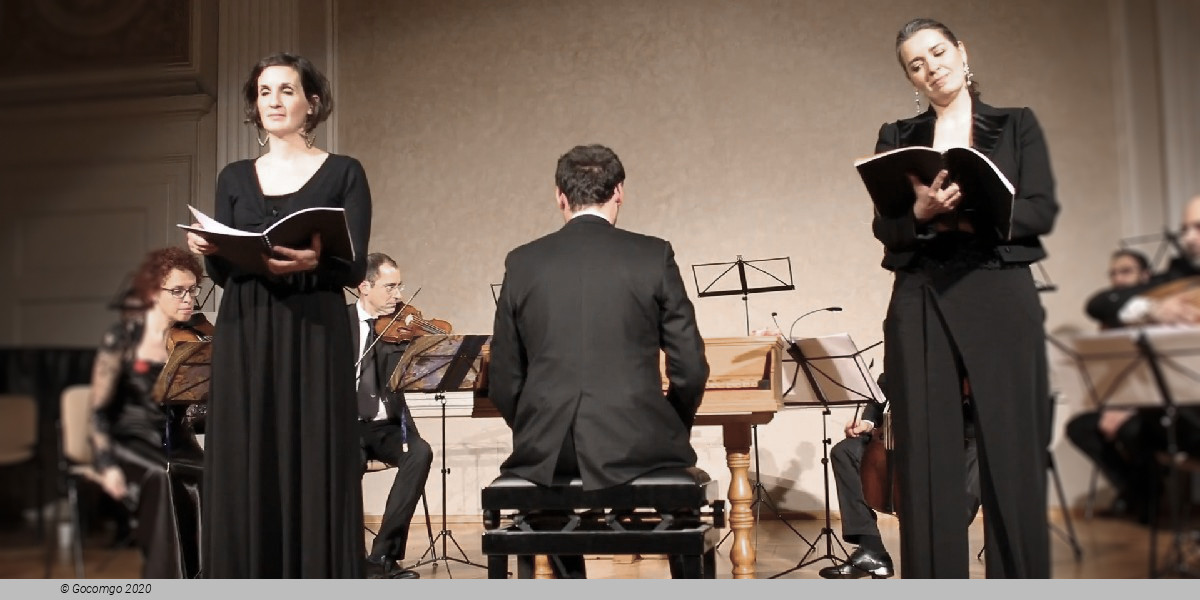
In 1790, after almost 30 years at the Eszterháza court, Joseph Haydn suddenly found himself without an employer. When this came to the ears of impresario Johann Peter Salomon, he promptly engaged Haydn to come to London. There, in addition to twelve symphonies, Haydn would write an opera seria for the Haymarket Theatre. Although regarded as an instrumental composer, Haydn was an experienced opera Kapellmeister who had distinguished himself at the princely court with adaptations of other works as well as 17 operas of his own. Haydn was supplied with a libretto on the preferred subject matter of Orpheus written by Carlo Francesco Badini. Although countless works on this theme had been composed since 1600, Gluck’s reform opera Orfeo ed Euridice was regarded as the absolute measure: reduced to its mythological core, it focusses on the power of love. Thus composer and librettist were forced to explore new paths. Badini’s libretto featured a complex plot with a dramatic conclusion. Haydn wrote extended numbers for the chorus but also included intermezzi and dance interludes as well as richly ornamented coloraturas in traditional da capo arias and scored the work for the largest orchestral forces in his entire oeuvre. The premiere was cancelled when King George III refused permission for it to be staged. L’anima del filosofo was to remain unperformed until its premiere in Florence in 1951.

History
Premiere of this production: 09 June 1951, Teatro della Pergola, Florence

L'anima del filosofo, ossia Orfeo ed Euridice (The Soul of the Philosopher, or Orpheus and Euridice) is an opera in Italian in four acts by Joseph Haydn, the last he ever wrote. The libretto, by Carlo Francesco Badini, is based on the myth of Orpheus and Euridice as told in Ovid's . Composed in 1791, the opera was never performed during Haydn's lifetime.

Venue Info

Felsenreitschule - Salzburg
Location   Hofstallgasse 1

The Felsenreitschule (literally "rock riding school") is a theatre in Salzburg, Austria and a venue of the Salzburg Festival.

History

A first Baroque theatre was erected in 1693–94 at the behest of the Salzburg prince-archbishop Johann Ernst von Thun, according to plans probably designed by Johann Bernhard Fischer von Erlach. Built in the former Mönchsberg quarry for conglomerate rock used in the new Salzburg Cathedral construction, it was located next to the archiepiscopal stables (at the site of the present Großes Festspielhaus) and used as a summer riding school and for animal hunts. The audience was seated in 96 arcades carved into the Mönchsberg rock on three floors. After the secularisation of the prince-archbishopric, the premises were used by the cavalry of the Austrian Imperial-Royal Army as well as by Bundesheer forces after World War I.

From 1926, the Felsenreitschule was used as an open-air theatre for performances of the Salzburg Festival. With the auditorium reversed, the former audience arcades now served as a natural stage setting. The first production was Carlo Goldoni's The Servant of Two Masters, directed by Max Reinhardt. In 1933, Clemens Holzmeister designed for Max Reinhardt the "Faust Town", a multiple-stage setting for Reinhardt's legendary production of Goethe's Faust.

In 1948 Herbert von Karajan first used the Felsenreitschule as an opera stage, for performances of Christoph Willibald Gluck's Orfeo ed Euridice. This was followed in 1949 by the premiere of Carl Orff's setting of the ancient tragedy Antigone by Sophocles, translated into German by Friedrich Hölderlin, conducted by Ferenc Fricsay. Between 1968 and 1970, the Felsenreitschule was again remodeled according to plans by Clemens Holzmeister and inaugurated with Ludwig van Beethoven's Fidelio under the baton of Karl Böhm.

Architecture

The stage has a width of 40 metres (130 ft), and 4 metres (13 ft) understage. Also renovated was the cantilevered grandstand with the underlying scene dock. A light-tight, rain tarp to dampen the noise and protect the stage was also added. This roof can be opened. The theater holds 1412 seats and 25 standing places.

Between the summers of 2010 and 2011 festival, the roof was renewed: The new design added 700 square metres (7,500 sq ft) of floor space for equipment and rehearsal rooms. The new pitched roof consists of three mobile segment surfaces and is on five telescopic arms and can be extended and retracted in six minutes. Suspension points on telescopic supports for stage equipment (hoists), improved sound and heat insulation, and two lighting bridges optimize the action on stage. The Felsenreitschule shares its foyer with the Kleines Festspielhaus (House for Mozart).

In popular culture
The Felsenreitschule was used as a location for the 1965 film version of The Sound of Music. It appears as the site of the Salzburg music festival from which the von Trapp family disappear.

Important Info
Type: Opera
City: Salzburg, Austria
Starts at: 15:00
Acts: 5
Sung in: Italian
Titles in: Englisch,German
Top of page