








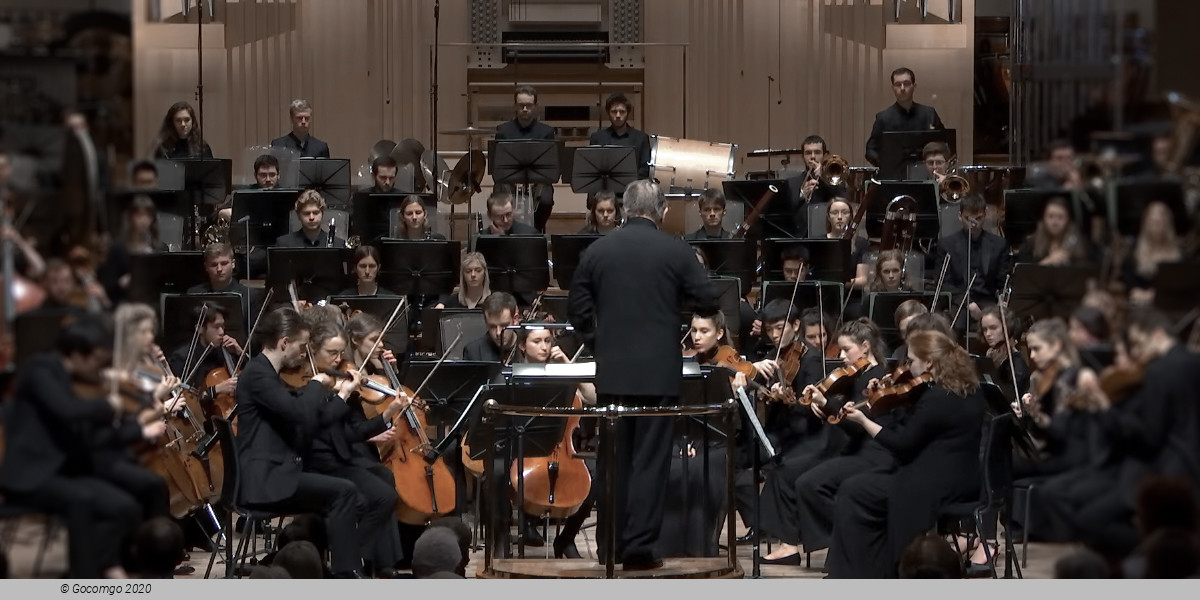
Felsenreitschule tickets 25 May 2026 - Übers Meer (Across the Sea) | GoComGo.com

Übers Meer (Across the Sea)

Felsenreitschule, Salzburg, Austria
All photos (1)
Select date and time
11 AM
From
US$ 103

E-tickets: Print at home or at the box office of the event if so specified. You will find more information in your booking confirmation email.

You can only select the category, and not the exact seats.
If you order 2 or 3 tickets: your seats will be next to each other.
If you order 4 or more tickets: your seats will be next to each other, or, if this is not possible, we will provide a combination of groups of seats (at least in pairs, for example 2+2 or 2+3).

Important Info
Type: Classical Concert
City: Salzburg, Austria
Starts at: 11:00

E-tickets: Print at home or at the box office of the event if so specified. You will find more information in your booking confirmation email.

You can only select the category, and not the exact seats.
If you order 2 or 3 tickets: your seats will be next to each other.
If you order 4 or more tickets: your seats will be next to each other, or, if this is not possible, we will provide a combination of groups of seats (at least in pairs, for example 2+2 or 2+3).

Cast
Performers
Conductor: Christina Pluhar
Soprano: Céline Scheen
Ensemble: L'Arpeggiata
Mezzo-Soprano: Luciana Mancini
Baritone: Renato Dolcini
Tenor: Valerio Contaldo
Countertenor: Vincenzo Capezzuto
Creators
Composer: Claudio Monteverdi
Composer: Diego Pisador
Composer: Francesco Cavalli
Composer: Georg Caspar Schürmann
Composer: Giovanni Ghizzolo
Composer: Luigi Rossi
Composer: Pietro Andrea Ziani
Composer: Sebastián Durón
Composer: Traditional
Festival

Salzburg Festival Whitsun 2026

Visitors to the Salzburg Festival are invited to Salzburg from 22 to 25 May 2026 for ‘Bon Voyage’.

Programme
Francesco Cavalli: La Didone: Sinfonia and Iride’s prologue "Caduta è Troja"
Sebastián Durón: Veneno es de amor la envidia: Escila’s lamento "Ondas, riscos, peces, mares"
Georg Caspar Schürmann: Die getreue Alceste: Sinfonia pour la tempête
Traditional : La Bruja
Giovanni Ghizzolo: Canto di Sirene
Traditional : La Sirena
Pietro Andrea Ziani: Dormite, o pupille
Claudio Monteverdi: Il ritorno d’Ulisse in patria: Ulisse’s monologue "Dormo ancora, o son desto?"
Diego Pisador: Los delfines
Luigi Rossi: Lamento d’Arione
Claudio Monteverdi: Il combattimento di Tancredi e Clorinda
Overview

A musical journey in the footsteps of Odysseus, Arion and Tancredi with works by Cavalli, Durón, Schürmann, Ghizzolo, Monteverdi and others.

Adventures and fateful journeys often begin with a voyage across the sea. It’s a familiar trope from ancient and medieval times that has persisted well into modern times. This musical journey takes us across the breadth of the Mediterranean — long a backdrop for incredible stories, not to mention an object of inspiration for innumerable compositions. Take Ulysses, for instance: after the fall of Troy he spent ten years adrift at sea, waylaid on his journey home by the sorceress Circe, the one-eyed Cyclopes and the beguiling Sirens — adventures that fired the imaginations of Baroque composers such as Claudio Monteverdi and Giovanni Ghizzolo.

According to legend, the ancient Greek singer and poet Arion was rescued by friendly dolphins. He had won a singing contest in Sicily, but the prize money very nearly proved his undoing on the voyage home. In one of his songs, the Salamanca-born Renaissance composer Diego Pisador paid tribute to the dolphins who rushed to Arion’s aid. In 1099, crusaders from the West crossed the Mediterranean to take Jerusalem. Monteverdi’s stormy madrigal tells of the tragic, fatal duel between two lovers — the crusader Tancredi and the Saracen maiden Clorinda — who meet on the battlefield without realizing each other’s identity.

Venue Info

Felsenreitschule - Salzburg
Location   Hofstallgasse 1

The Felsenreitschule (literally "rock riding school") is a theatre in Salzburg, Austria and a venue of the Salzburg Festival.

History

A first Baroque theatre was erected in 1693–94 at the behest of the Salzburg prince-archbishop Johann Ernst von Thun, according to plans probably designed by Johann Bernhard Fischer von Erlach. Built in the former Mönchsberg quarry for conglomerate rock used in the new Salzburg Cathedral construction, it was located next to the archiepiscopal stables (at the site of the present Großes Festspielhaus) and used as a summer riding school and for animal hunts. The audience was seated in 96 arcades carved into the Mönchsberg rock on three floors. After the secularisation of the prince-archbishopric, the premises were used by the cavalry of the Austrian Imperial-Royal Army as well as by Bundesheer forces after World War I.

From 1926, the Felsenreitschule was used as an open-air theatre for performances of the Salzburg Festival. With the auditorium reversed, the former audience arcades now served as a natural stage setting. The first production was Carlo Goldoni's The Servant of Two Masters, directed by Max Reinhardt. In 1933, Clemens Holzmeister designed for Max Reinhardt the "Faust Town", a multiple-stage setting for Reinhardt's legendary production of Goethe's Faust.

In 1948 Herbert von Karajan first used the Felsenreitschule as an opera stage, for performances of Christoph Willibald Gluck's Orfeo ed Euridice. This was followed in 1949 by the premiere of Carl Orff's setting of the ancient tragedy Antigone by Sophocles, translated into German by Friedrich Hölderlin, conducted by Ferenc Fricsay. Between 1968 and 1970, the Felsenreitschule was again remodeled according to plans by Clemens Holzmeister and inaugurated with Ludwig van Beethoven's Fidelio under the baton of Karl Böhm.

Architecture

The stage has a width of 40 metres (130 ft), and 4 metres (13 ft) understage. Also renovated was the cantilevered grandstand with the underlying scene dock. A light-tight, rain tarp to dampen the noise and protect the stage was also added. This roof can be opened. The theater holds 1412 seats and 25 standing places.

Between the summers of 2010 and 2011 festival, the roof was renewed: The new design added 700 square metres (7,500 sq ft) of floor space for equipment and rehearsal rooms. The new pitched roof consists of three mobile segment surfaces and is on five telescopic arms and can be extended and retracted in six minutes. Suspension points on telescopic supports for stage equipment (hoists), improved sound and heat insulation, and two lighting bridges optimize the action on stage. The Felsenreitschule shares its foyer with the Kleines Festspielhaus (House for Mozart).

In popular culture
The Felsenreitschule was used as a location for the 1965 film version of The Sound of Music. It appears as the site of the Salzburg music festival from which the von Trapp family disappear.

Important Info
Type: Classical Concert
City: Salzburg, Austria
Starts at: 11:00
Top of page