

Ellie Caulkins Opera House tickets 17 April 2026 - MASTER WORKS | GoComGo.com

MASTER WORKS

Ellie Caulkins Opera House, Denver, USA
All photos (12)
Select date and time
7:30 PM
From
US$ 94

E-tickets: Print at home or at the box office of the event if so specified. You will find more information in your booking confirmation email.

You can only select the category, and not the exact seats.
If you order 2 or 3 tickets: your seats will be next to each other.
If you order 4 or more tickets: your seats will be next to each other, or, if this is not possible, we will provide a combination of groups of seats (at least in pairs, for example 2+2 or 2+3).

Important Info
Type: Ballet
City: Denver, USA
Starts at: 19:30

E-tickets: Print at home or at the box office of the event if so specified. You will find more information in your booking confirmation email.

You can only select the category, and not the exact seats.
If you order 2 or 3 tickets: your seats will be next to each other.
If you order 4 or more tickets: your seats will be next to each other, or, if this is not possible, we will provide a combination of groups of seats (at least in pairs, for example 2+2 or 2+3).

Cast
Performers
Ballet company: Colorado Ballet
Orchestra: Colorado Symphony
Creators
Composer: Igor Stravinsky
Composer: Johann Sebastian Bach
Choreographer: George Balanchine
Choreographer: Glen Tetley
Librettist: Igor Stravinsky
Librettist: Nicholas Roerich
Overview

Master Works, Colorado Ballet’s annual repertory production, returns with a captivating trio of powerhouse masterpieces that put artistic excellence and innovation on full display—Concerto Barocco by George Balanchine, The Rite of Spring by Glen Tetley, and the world premiere of a new work by Yoshihisa Arai commissioned by Colorado Ballet

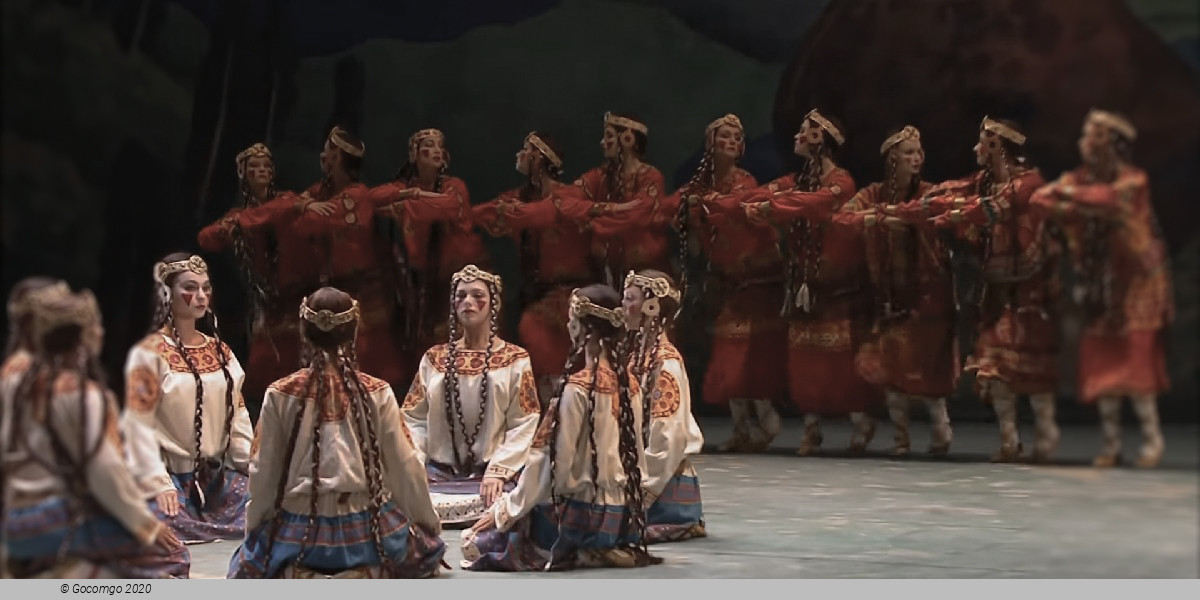
“The Rite of Spring” by Glen Tetley is a powerful, intensely physical ballet that reimagines Stravinsky’s iconic score through Tetley’s signature blend of classical and modern dance. The work explores themes of ritual, sacrifice, and human instinct, using bold group movement, dramatic tension, and raw emotional energy to portray a community confronted with the terrifying necessity of choosing a victim to restore balance and renewal.

Glen Tetley’s “The Rite of Spring” is a fierce, physically explosive reinterpretation of Igor Stravinsky’s groundbreaking 1913 score. Blending classical ballet with modern dance, Tetley transforms the work into a visceral ritual that explores themes of community, instinct, sacrifice, and the primal forces that shape human existence. His choreography emphasizes raw athleticism, deep emotional intensity, and a constant tension between the individual and the collective.

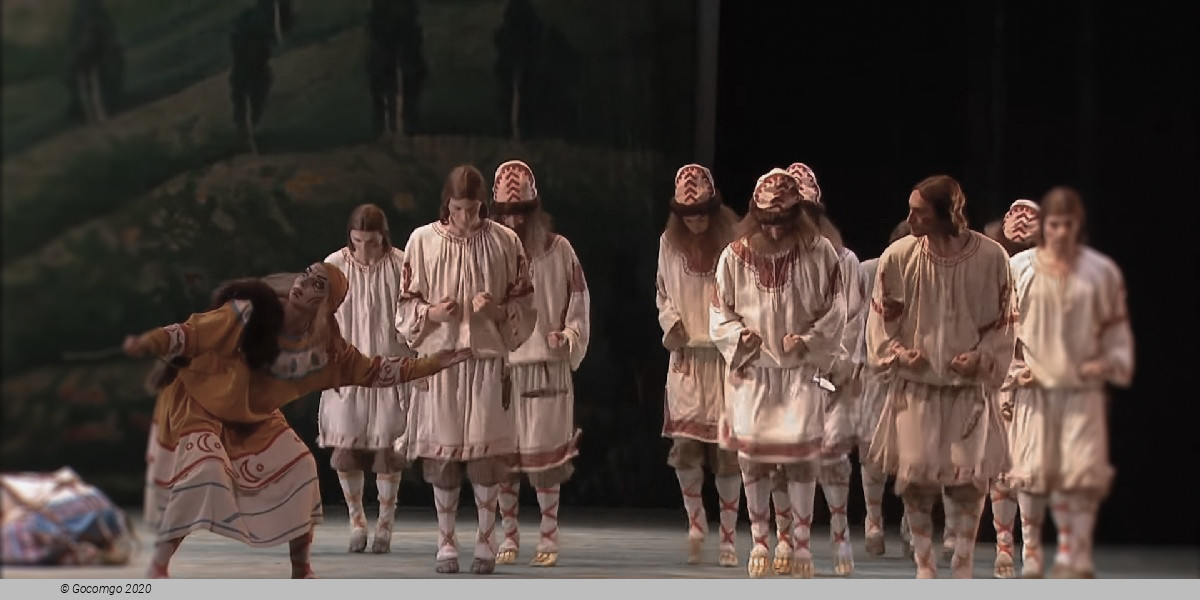
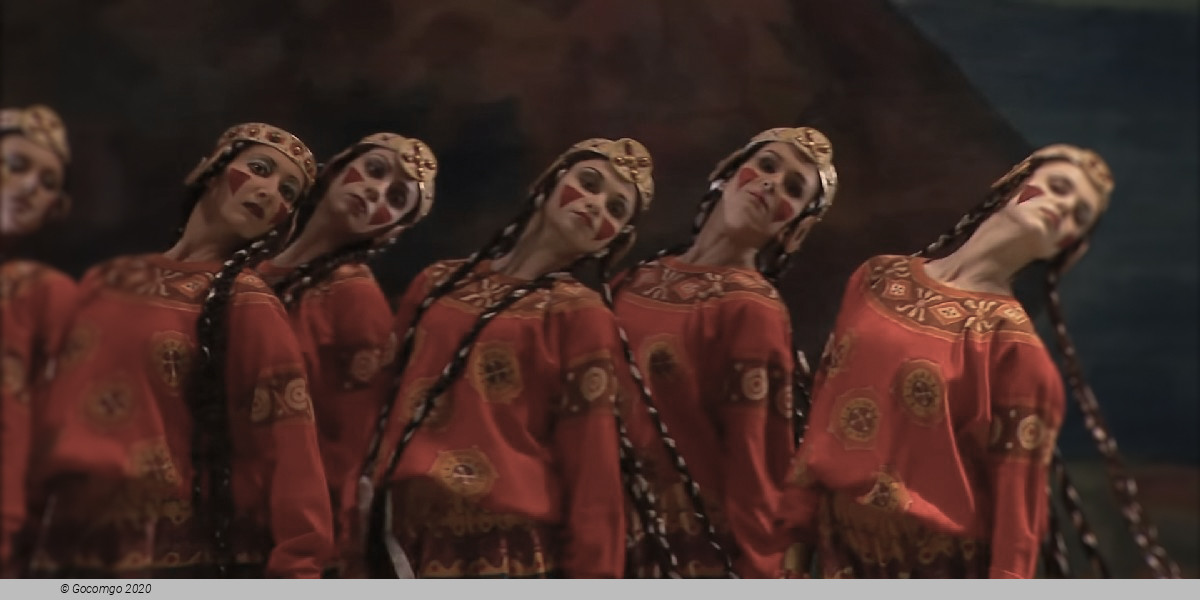
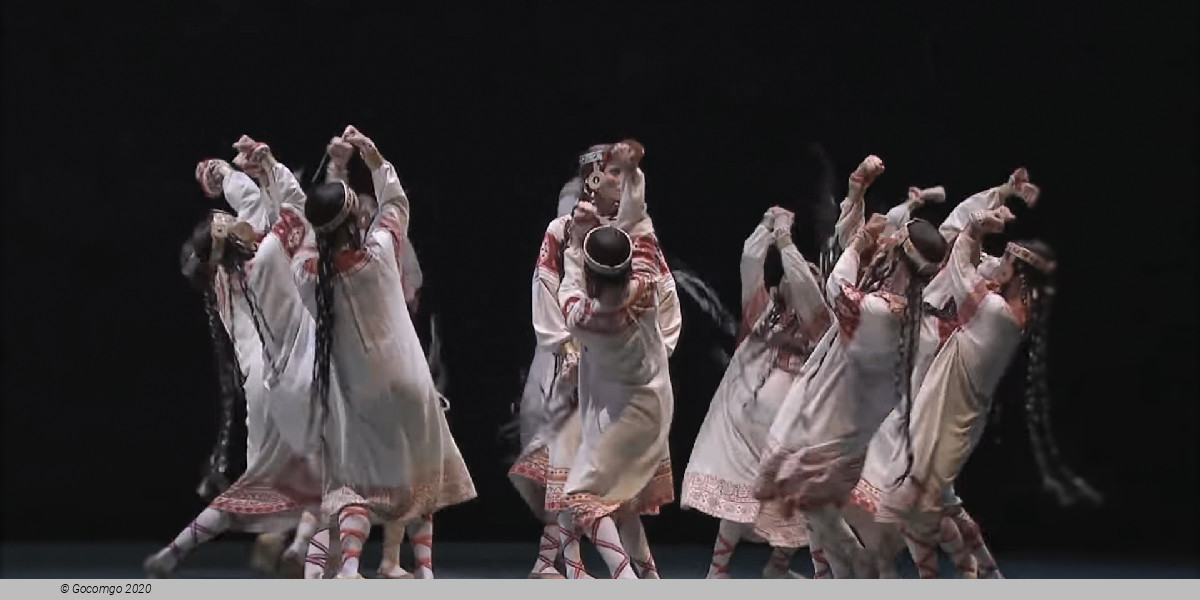
The ballet takes place within a tribal-like society governed by ancient customs. The community moves as a powerful, unified force—driving rhythms, stamping motifs, spirals, and angular shapes dominate the ensemble sections, mirroring Stravinsky’s pounding, unpredictable score. Tetley uses large group formations that surge, collapse, and reform, creating an atmosphere of danger, urgency, and inevitability.

At the center of the drama stands the Chosen One, whose fate is to be sacrificed so that the community may be renewed. In Tetley’s version, the selection of the victim becomes a psychological as well as physical ordeal. The Chosen One is isolated, surrounded, and propelled by the group, struggling against fear, destiny, and the weight of tradition. The final solo—one of the most demanding passages in Tetley’s repertoire—pushes the dancer into extreme emotional and physical territory, embodying terror, surrender, and transcendence.

Visually, Tetley’s staging is typically stark and elemental. The set and costumes often emphasize the earthy, ritualistic nature of the piece—bare legs, muted colors, and sculptural lines highlight the dancers’ bodies and the choreography’s sculptural power. Lighting effects intensify the contrast between collective force and individual vulnerability, reinforcing the ballet’s ritualistic atmosphere.

Unlike some interpretations that lean heavily on storytelling, Tetley’s “Rite” focuses on psychological immediacy and kinesthetic power. It is less about depicting a specific culture and more about expressing a universal human ritual—an ancient cycle of fear, sacrifice, and renewal that resonates across time. Through its relentless energy and uncompromising physicality, the ballet becomes an exploration of humanity’s most primal instincts and the fragile balance between survival and destruction.

Glen Tetley’s “The Rite of Spring” remains one of the most intense and influential modern reinterpretations of Stravinsky’s masterpiece—an emotional storm of movement, rhythm, and ritual that leaves a deep imprint on both performers and audiences.

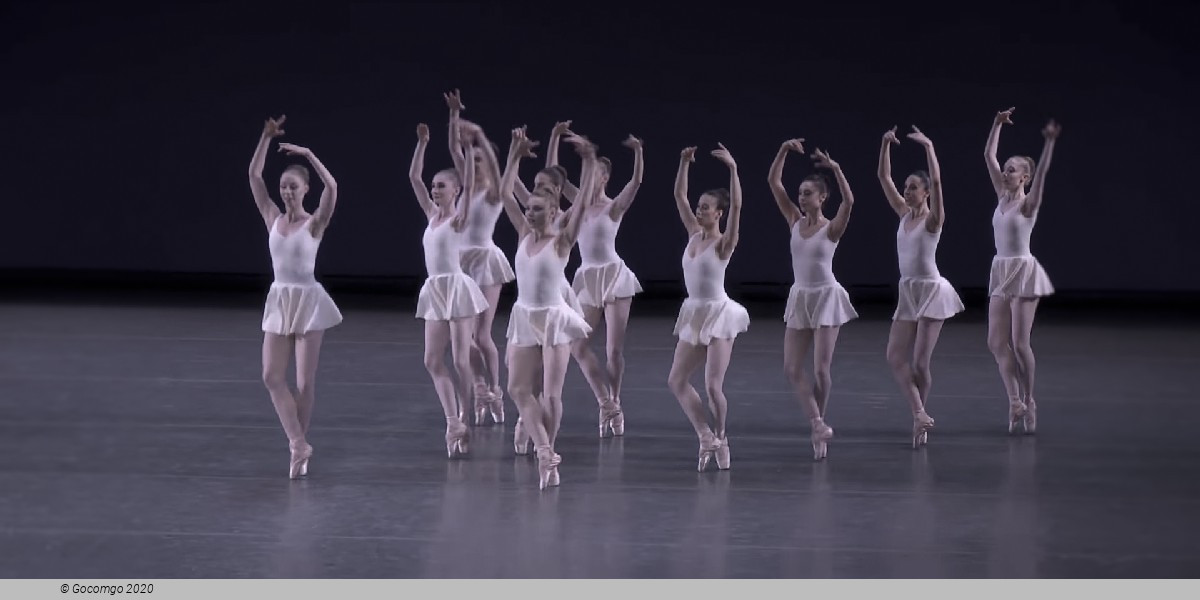
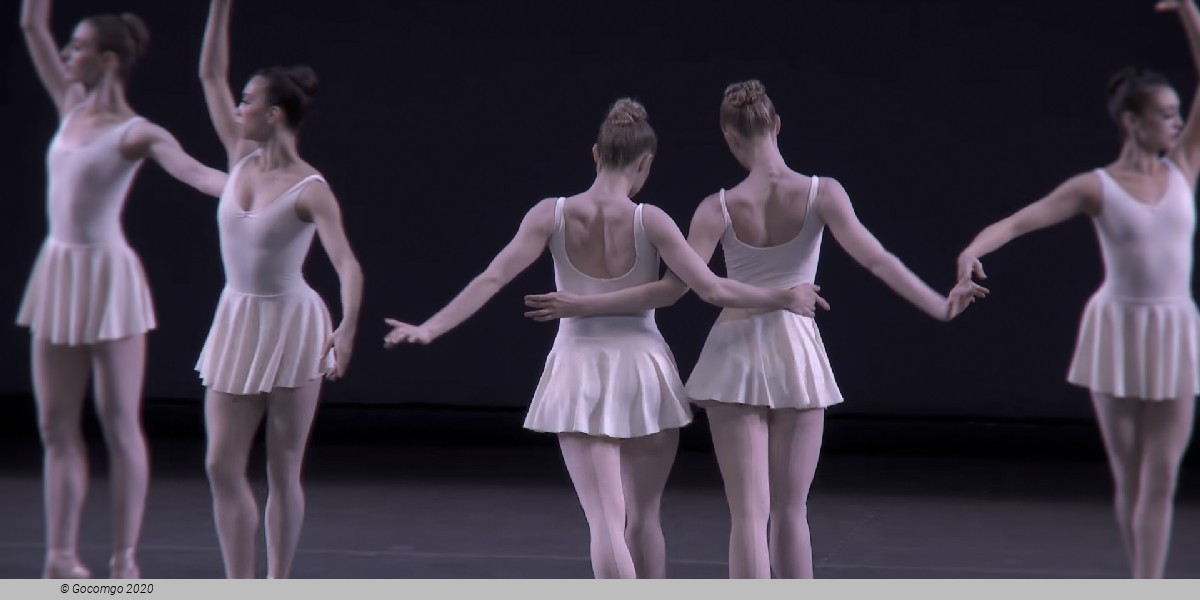
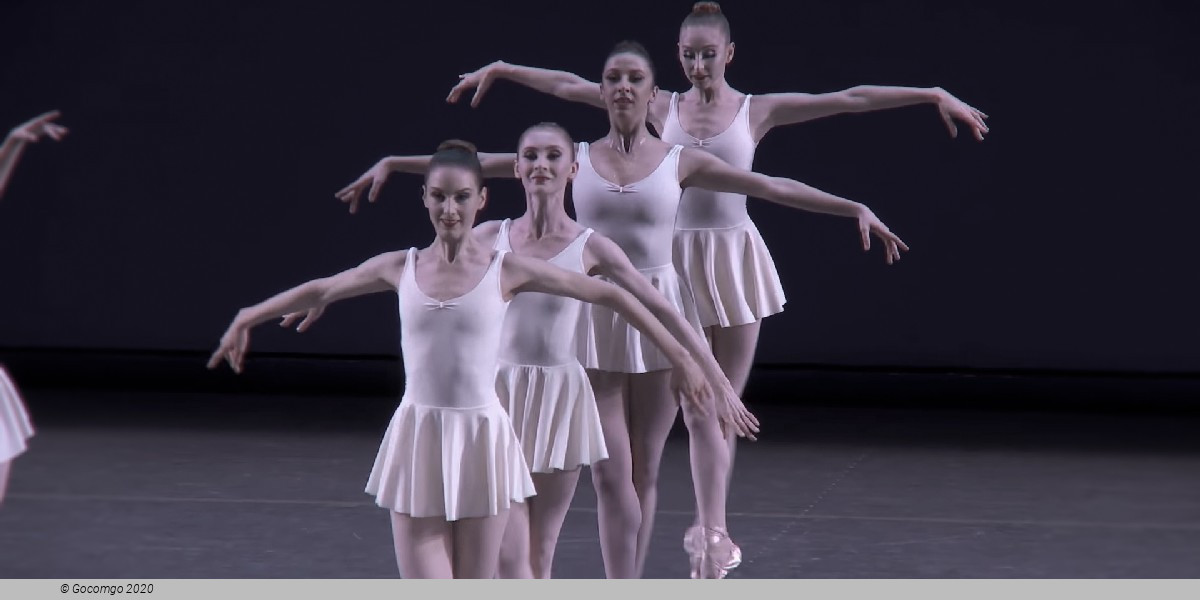
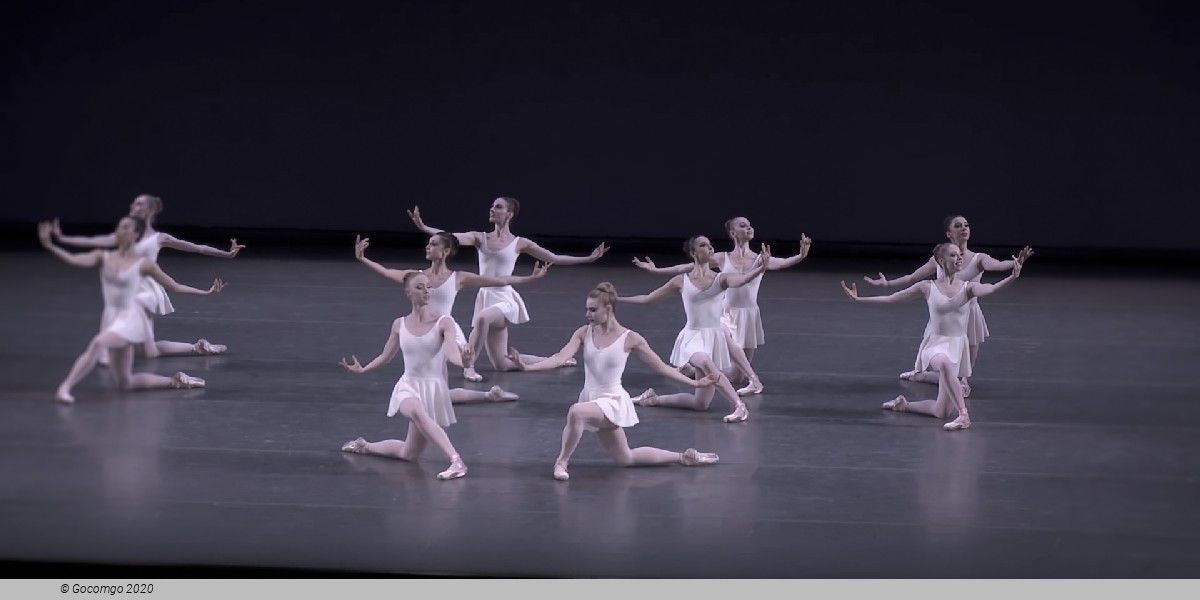
One of Balanchine’s greatest masterpieces, Concerto Barocco is music made visible as two elegant yet dynamic lead ballerinas each depict one of the instrumental soloists in a virtuosic double violin concerto.

Concerto Barocco had its beginnings as a School of American Ballet exercise and was first performed for the Latin American tour of the American Ballet Caravan in 1941. When it entered the repertory of the Ballet Russe de Monte Carlo in 1945, the dancers were dressed in practice clothes, probably the first appearance of what has come to be regarded as the modern ballet costume pioneered by Balanchine.

Concerto Barocco was presented on the first performance of New York City Ballet in 1948, along with Balanchine's Orpheus and Symphony in C. It is considered the quintessential Balanchine ballet of its period, its manner entirely pure, its choreography no more, and no less, than an ideal response to its score, Bach's Double Violin Concerto in D Minor. About the ballet, the critic Clive Barnes wrote, "The three hallmarks of the American classic style are poetry, athleticism, and musicality, and these three graces are exquisitely exploited by Concerto Barocco."

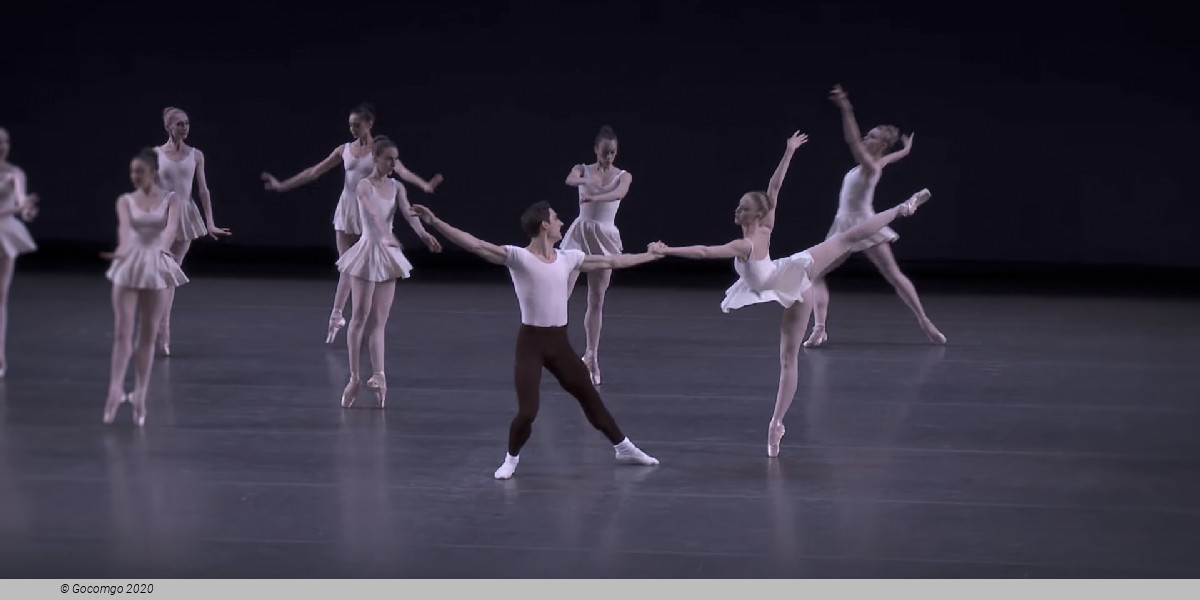
Balanchine said of this work: “If the dance designer sees in the development of classical dancing a counterpart in the development of music and has studied them both, he will derive continual inspiration from great scores.” In the first movement of the concerto, the two ballerinas personify the violins, while a corps of eight women accompany them.

In the second movement, a largo, the male dancer joins the leading woman in a pas de deux. In the concluding allegro section, the entire ensemble expresses the syncopation and rhythmic vitality of Bach’s music.

History
Premiere of this production: 29 May 1913, Théâtre des Champs-Elysées, Paris

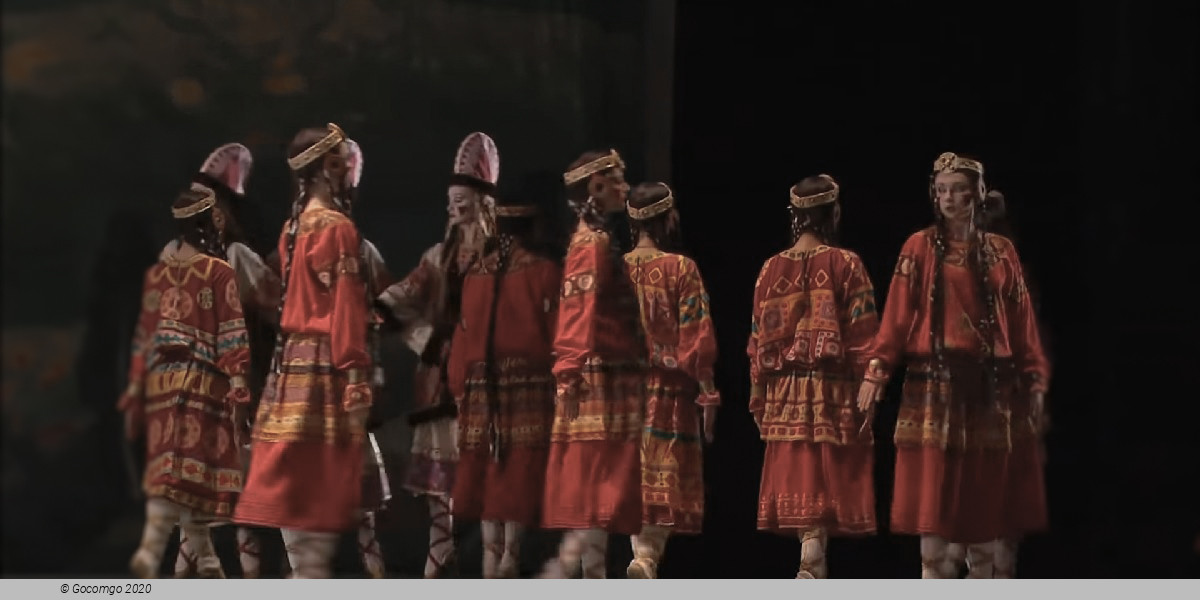
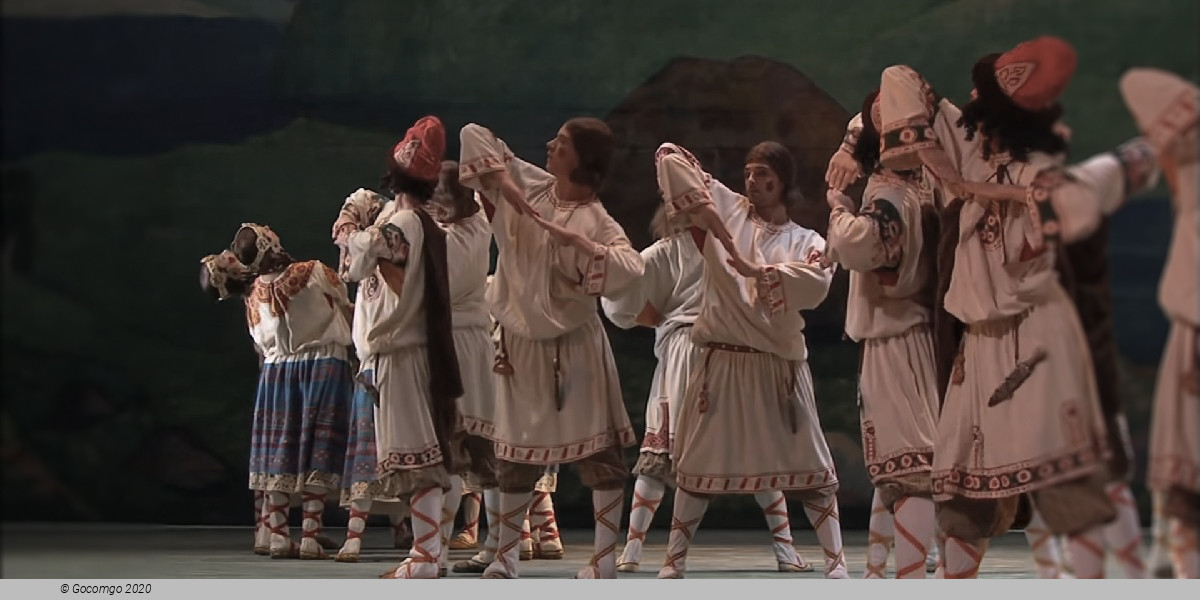
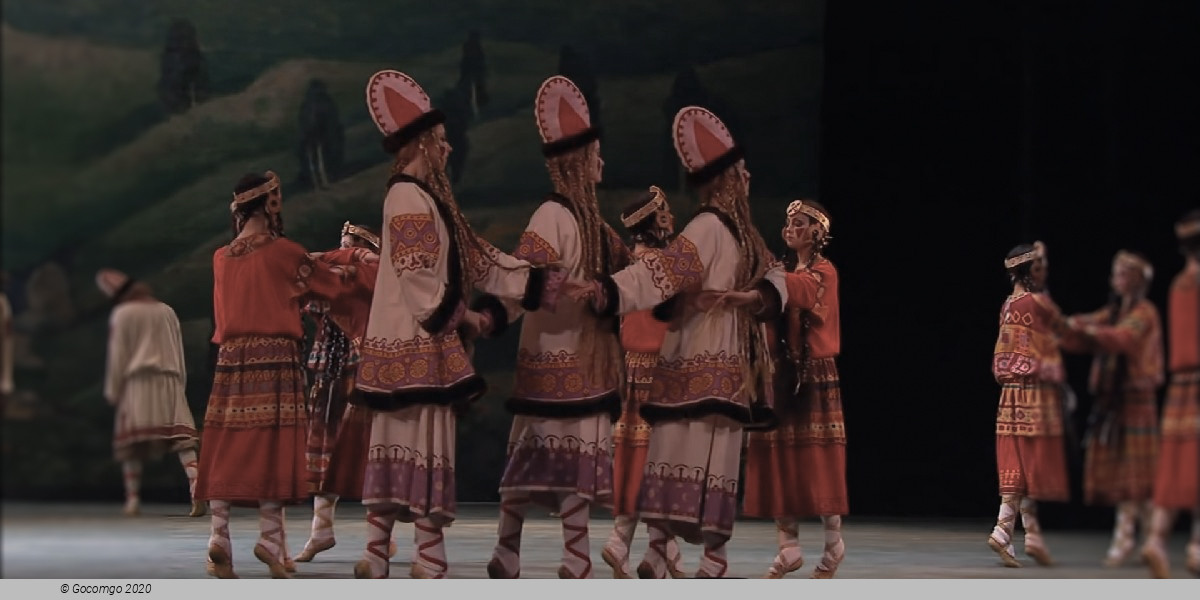
The Rite of Spring (French: Le Sacre du printemps) is a ballet and orchestral concert work by the Russian composer Igor Stravinsky. It was written for the 1913 Paris season of Sergei Diaghilev's Ballets Russes company; the original choreography was by Vaslav Nijinsky with stage designs and costumes by Nicholas Roerich.

Premiere of this production: 27 June 1941, Teatro Municipal, Rio de Janeiro, Brazil

Concerto Barocco is a neoclassical ballet made for students at the School of American Ballet by George Balanchine, subsequently ballet master and co-founder of New York City Ballet, to Johann Sebastian Bach's Concerto in D minor for Two Violins, BWV 1043. After an open dress rehearsal on May 29, 1941, in the Little Theatre of Hunter College, New York, the official premiere took place June 27, 1941, at Teatro Municipal in Rio de Janeiro as part of American Ballet Caravan's South American tour.

Synopsis

In Glen Tetley’s The Rite of Spring, a primordial community gathers to enact a ritual that binds them to the cycles of nature. Tension builds as the group searches for a chosen figure whose sacrifice will renew the earth’s vitality. The Chosen One emerges from within the community, compelled toward an inevitable destiny. Through fierce, driving movement and a sense of spiritual urgency, the ritual intensifies until the Chosen One surrenders fully, completing the ancient rite and releasing the tribe into a moment of cathartic renewal.

Venue Info

Ellie Caulkins Opera House - Denver
Location   1385 Curtis Street, Denver, CO 80204, Соединенные Штаты

Ellie Caulkins Opera House is a modern, state-of-the-art performing arts venue in Denver, known for its excellent acoustics, elegant architecture, and comfortable seating. It hosts opera, ballet, concerts, and major cultural events, offering audiences a refined and immersive artistic experience.

The Ellie Caulkins Opera House, often called “The Ellie,” is one of the premier performing arts venues in the United States and a central jewel of the Denver Performing Arts Complex in Colorado. Originally built in 1908 as the historic Denver Municipal Auditorium, the building underwent a multi-year, $90-million transformation and reopened in 2005 as a world-class opera house designed for modern performance standards while preserving elements of its historic charm.

The theatre is celebrated for its exceptional acoustics, engineered to support the demanding needs of opera, symphonic works, and ballet. Its horseshoe-shaped auditorium, inspired by traditional European opera houses, creates an intimate atmosphere despite its capacity of more than 2,000 seats. Audiences benefit from excellent sightlines, spacious seating, and advanced sound and lighting systems that enhance every performance.

Behind the scenes, “The Ellie” features state-of-the-art production facilities, including a large stage, a deep orchestra pit, advanced fly systems, and modern rehearsal spaces, allowing it to host large-scale productions from opera companies, ballet companies, touring shows, and international artists. The venue is home to Opera Colorado and regularly stages performances by major touring ballet companies, orchestras, and national productions.

Architecturally, the building blends historic exterior elements with a sleek, contemporary interior, combining marble, warm wood, and modern design details. Public spaces such as the Chambers Grant Salon, the lobby, and the grand staircases create an elegant and inviting environment for visitors.

Today, the Ellie Caulkins Opera House stands as one of Denver’s cultural landmarks — a place where world-class opera, ballet, music, and theater come together in a setting designed to offer audiences a rich, immersive, and unforgettable performing arts experience.

Important Info
Type: Ballet
City: Denver, USA
Starts at: 19:30
Top of page