

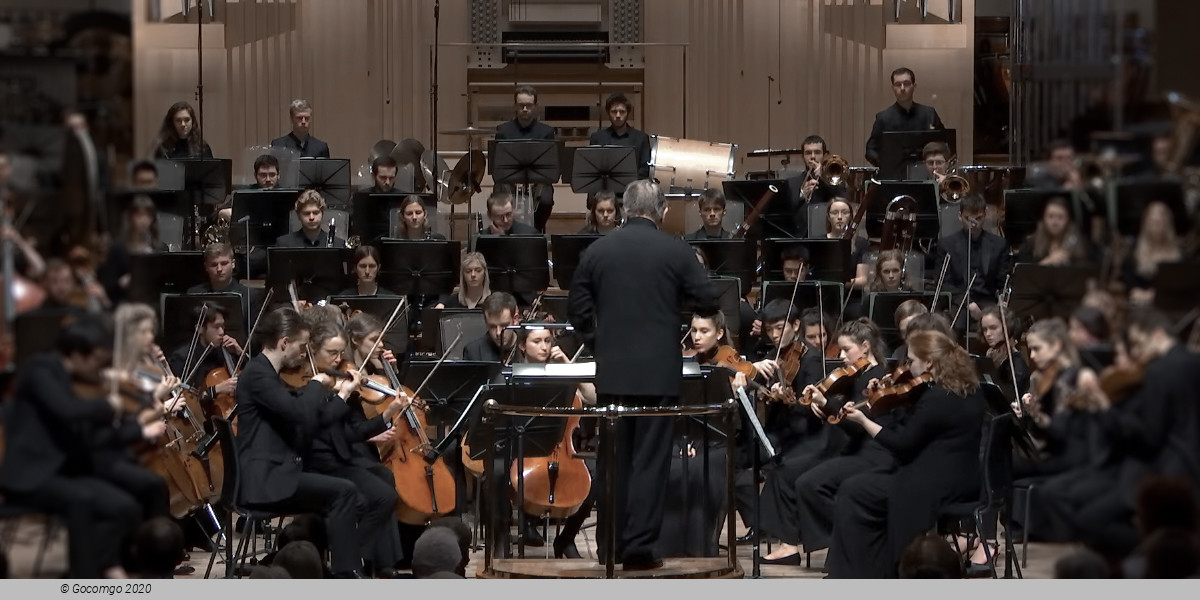
The Église de Verbier hosts morning, afternoon and evening concerts. It is the Verbier Festival’s primary venue for solo, chamber music and vocal recitals.
Steven Isserlis and Claudio Martínez Mehner
Eglise de Verbier,
Verbier, Switzerland
All photos (1)
Select date and time
7:30 PM
From
US$ 102
E-tickets: Print at home or at the box office of the event if so specified. You will find more information in your booking confirmation email.
You can only select the category, and not the exact seats.
If you order 2 or 3 tickets: your seats will be next to each other.
If you order 4 or more tickets: your seats will be next to each other, or, if this is not possible, we will provide a combination of groups of seats (at least in pairs, for example 2+2 or 2+3).
Important Info
Type: Classical Concert
City: Verbier, Switzerland
Starts at: 19:30
Duration: 2h
E-tickets: Print at home or at the box office of the event if so specified. You will find more information in your booking confirmation email.
You can only select the category, and not the exact seats.
If you order 2 or 3 tickets: your seats will be next to each other.
If you order 4 or more tickets: your seats will be next to each other, or, if this is not possible, we will provide a combination of groups of seats (at least in pairs, for example 2+2 or 2+3).
Cast
Creators
Composer:
Ludwig van Beethoven
Composer:
György Kurtág
Composer:
Heinz Holliger
Composer:
Johannes Brahms
Composer:
Robert Schumann
Programme
Ludwig van Beethoven : 12 Variations on Ein Mädchen oder Weibchen, Op.66
Heinz Holliger: Three Lieder for baritone and piano (arr. for cello and piano by H. Holliger)
Johannes Brahms: Cello Sonata no. 1 in E minor for Cello and Piano, Op.38
Robert Schumann: Three Romances, Op.94
György Kurtág: Selection of pieces for solo cello
Ludwig van Beethoven : Cello Sonata no. 5 in D major , Op.102 no.2
Overview
Inventive and curious, Steven Isserlis has crafted a recital in his own image. From Beethoven and Brahms, the program explores Holliger, one of Switzerland’s most renowned composers, and Kurtág, a direct heir of the Hungarian tradition, who will celebrate his 100th birthday in 2026.
One of the world’s most illustrious cello virtuosos, Steven Isserlis is also impressive for the multiplicity of his activities: Artistic director of a concert series, pedagogue, and author of children’s books, he also stands out for his innovative choice of eclectic repertoires, focused on creation and historically informed research. From Beethoven’s seminal works for cello and piano, he takes us on a rediscovery of Brahms’s first Sonata, a tribute to Bach supported by quotations from the ‘Art of Fugue’. As for Schumann’s Romances, they revive the Baroque practice of arranging: originally conceived for oboe, these three charming pieces are now commonly played on violin, horn or clarinet. Isserlis’s appetite for the contemporary repertoire could not ignore the centenary of the most eminent composer still alive: Kurtág, whose style, halfway between Bartók and Webern, leaves a vibrant impression of solemnity.
Venue Info
Eglise de Verbier - Verbier
 Chemin de l’Église
Chemin de l’Église
Important Info
Type: Classical Concert
City: Verbier, Switzerland
Starts at: 19:30
Duration: 2h