








New York City Ballet (David H. Koch Theater) tickets 20 April 2027 - All Balanchine IV | GoComGo.com

All Balanchine IV

New York City Ballet (David H. Koch Theater), Main Stage, New York, USA
All photos (17)
Select date and time
7:30 PM
From
US$ 73

E-tickets: Print at home or at the box office of the event if so specified. You will find more information in your booking confirmation email.

You can only select the category, and not the exact seats.
If you order 2 or 3 tickets: your seats will be next to each other.
If you order 4 or more tickets: your seats will be next to each other, or, if this is not possible, we will provide a combination of groups of seats (at least in pairs, for example 2+2 or 2+3).

Important Info
Type: Ballet
City: New York, USA
Starts at: 19:30
Duration: 16min

E-tickets: Print at home or at the box office of the event if so specified. You will find more information in your booking confirmation email.

You can only select the category, and not the exact seats.
If you order 2 or 3 tickets: your seats will be next to each other.
If you order 4 or more tickets: your seats will be next to each other, or, if this is not possible, we will provide a combination of groups of seats (at least in pairs, for example 2+2 or 2+3).

Cast
Performers
Ballet company: New York City Ballet
Creators
Composer: Pyotr Tchaikovsky
Composer: Johannes Brahms
Composer: Maurice Ravel
Choreographer: George Balanchine
Overview

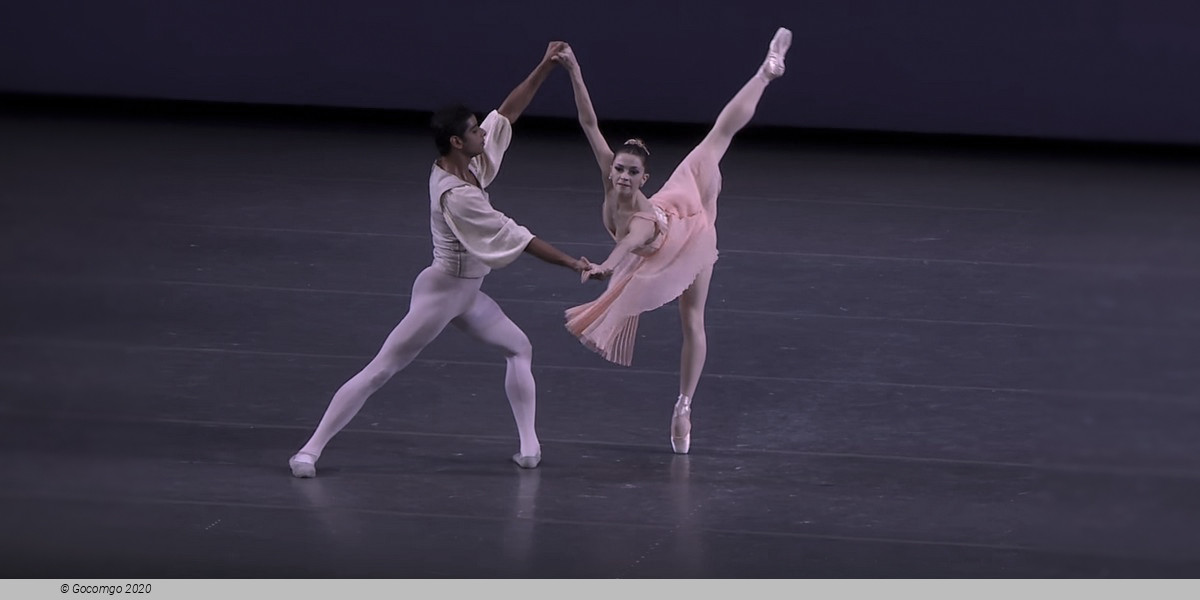
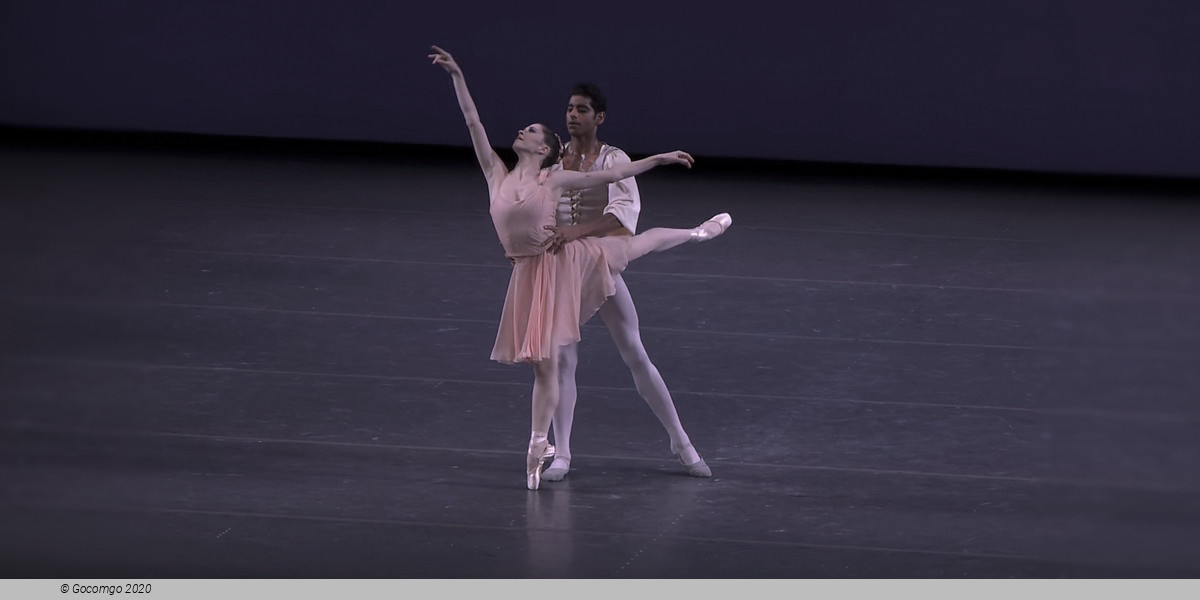
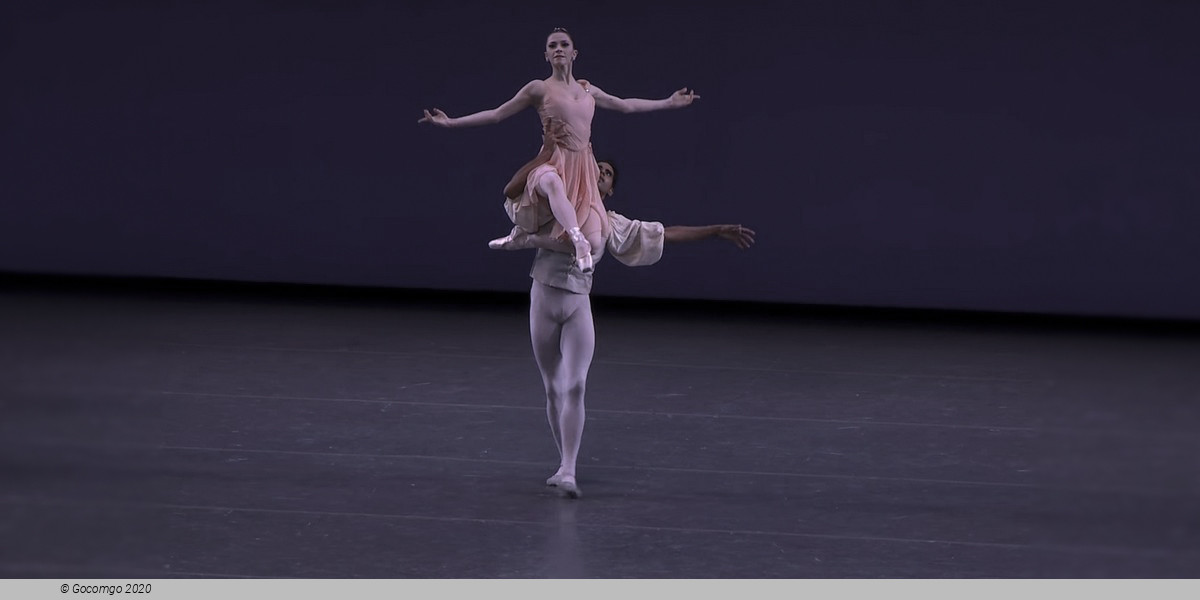
George Balanchine called the exuberant Allegro Brillante “everything I know about classical ballet in thirteen minutes.”

One of George Balanchine’s most joyous, pure dance pieces, Allegro Brillante is characterized by what Maria Tallchief — the ballerina on whom the bravura leading role was created — called "an expansive Russian romanticism." The ballet is set to Tschaikovsky's Piano Concerto No. 3, a work that the composer created from sketches for a composition that was intended to be his Sixth Symphony, but which instead served as a single movement work which was published posthumously in 1894. Balanchine described this ballet as a concentrated essay in the extended classical vocabulary, in which a maximum amount of choreographic development is contained within a rather restricted area of time and space.

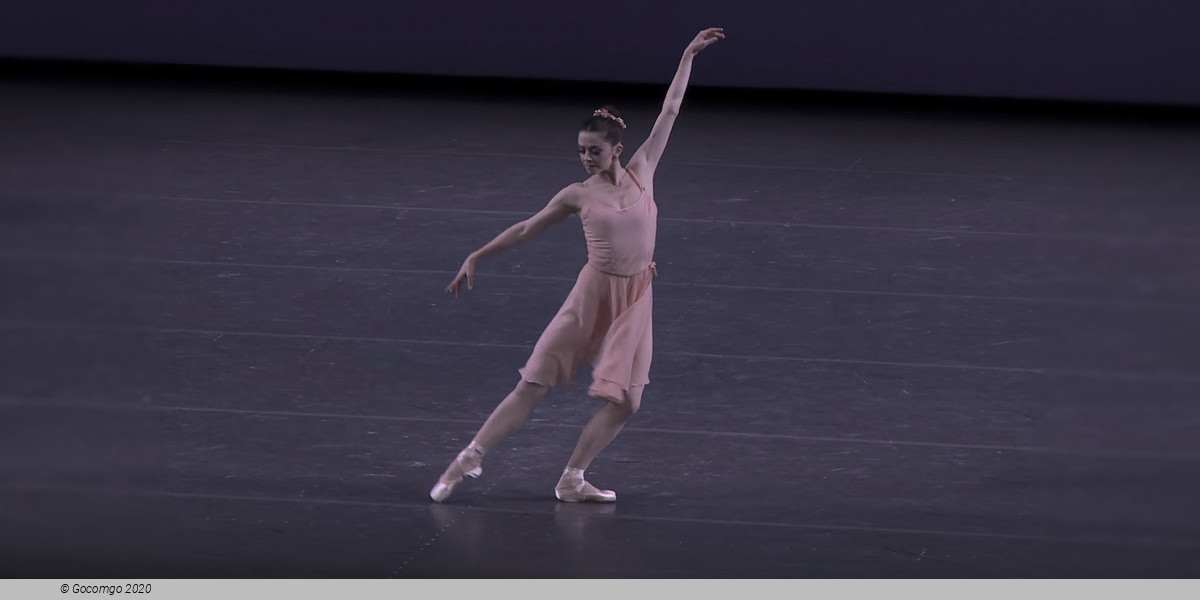
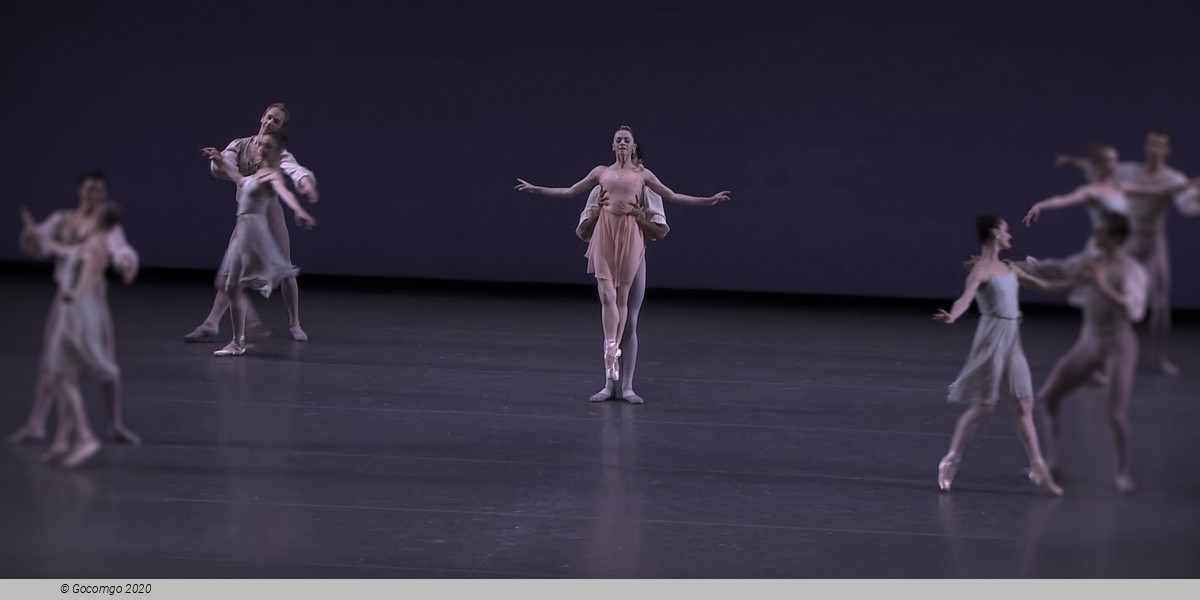
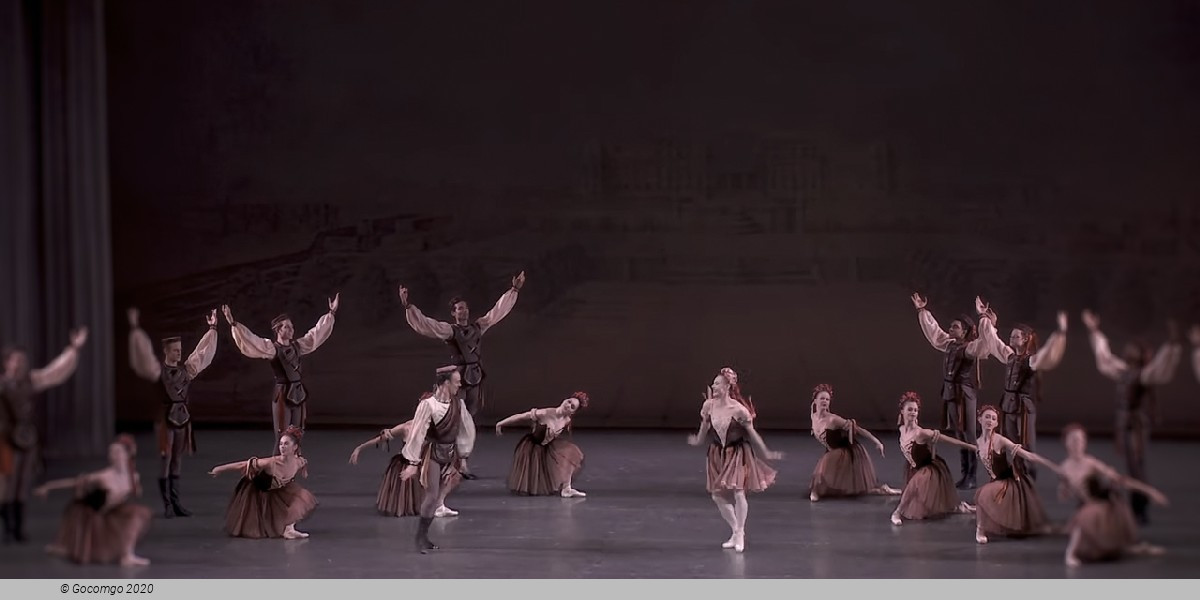
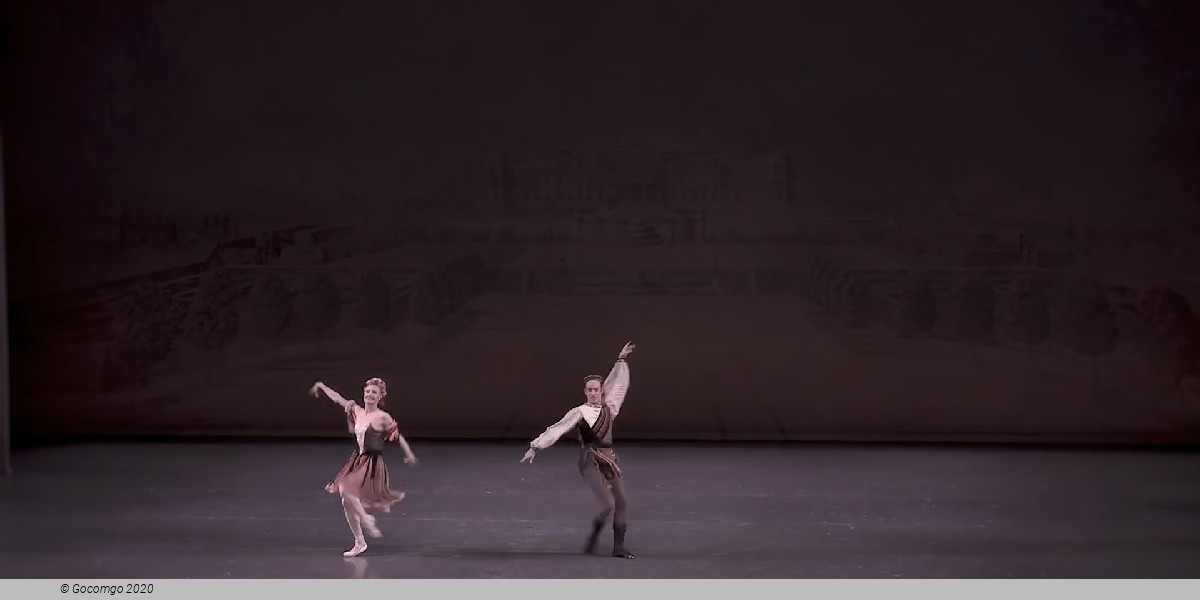
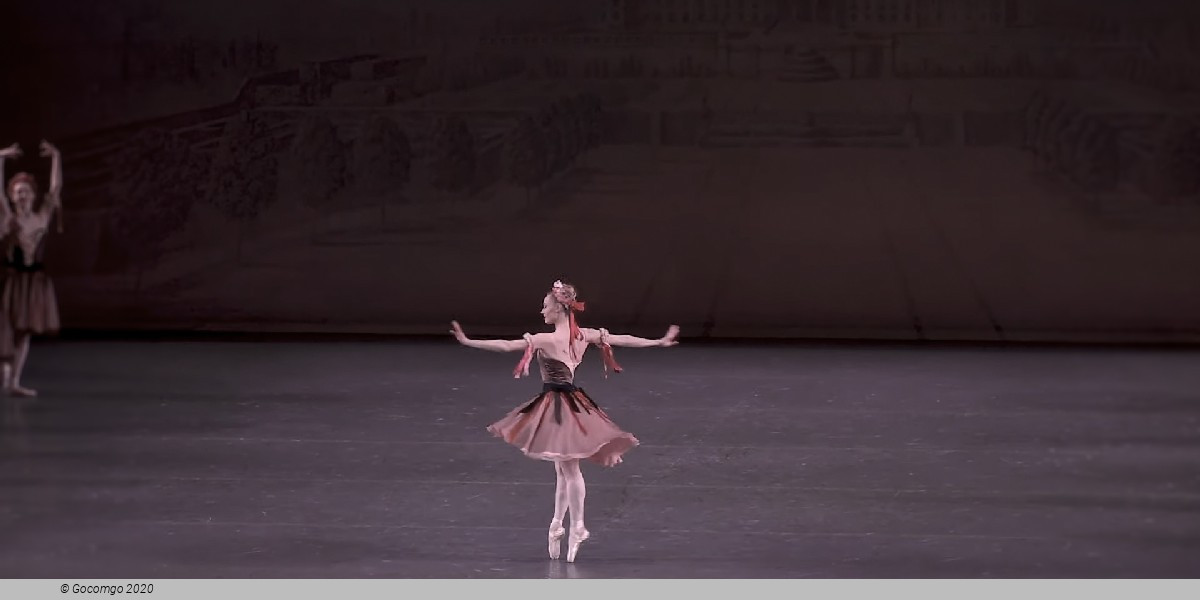
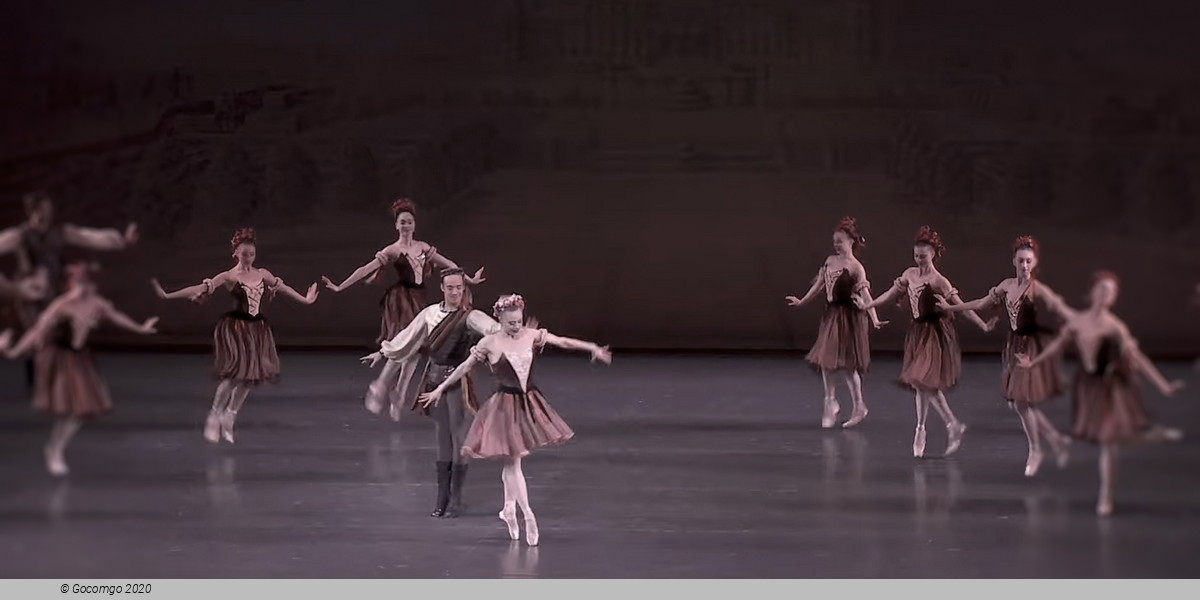
Rooted in the court dances of 18th-century France, Le Tombeau de Couperin mesmerizes with its seamless patterns and symmetrical groupings of dancers.

In 1919 Maurice Ravel composed "Le Tombeau de Couperin” (“The Tomb of Couperin”), a commemorative suite for piano in six movements, in memory of six friends who died in World War I. He was inspired by the style of François Couperin, a French Baroque composer. In 1920, Ravel orchestrated four of the pieces, which make up the score for this ballet.

Balanchine choreographed Le Tombeau de Couperin for New York City Ballet’s 1975 Ravel Festival, and, like the composer, he incorporated French Baroque style and devices into a work with a modern sensibility. The eight couples are divided into left and right quadrilles, and each quadrille forms geometric patterns — diagonals, diamonds, squares — as they dance in unison or echo the movements of the opposite side.

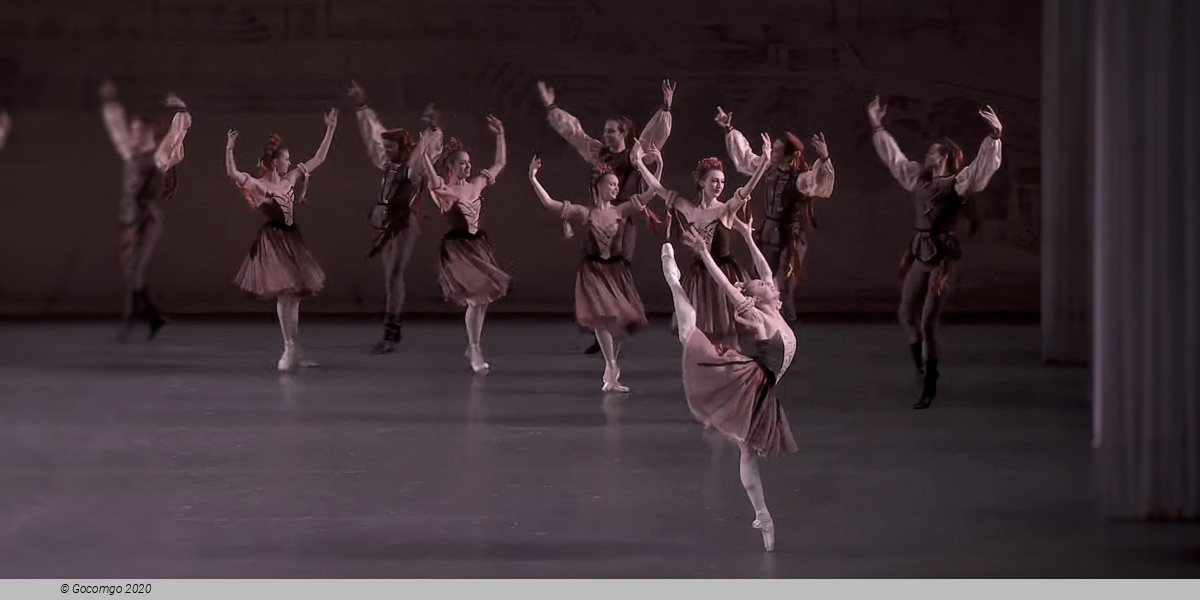
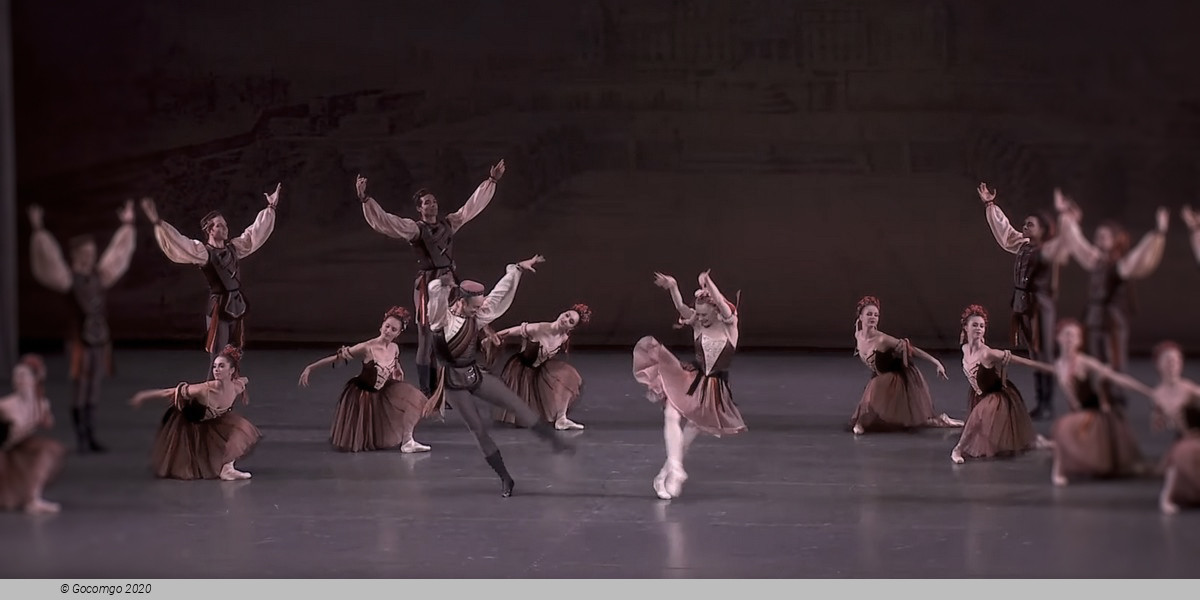
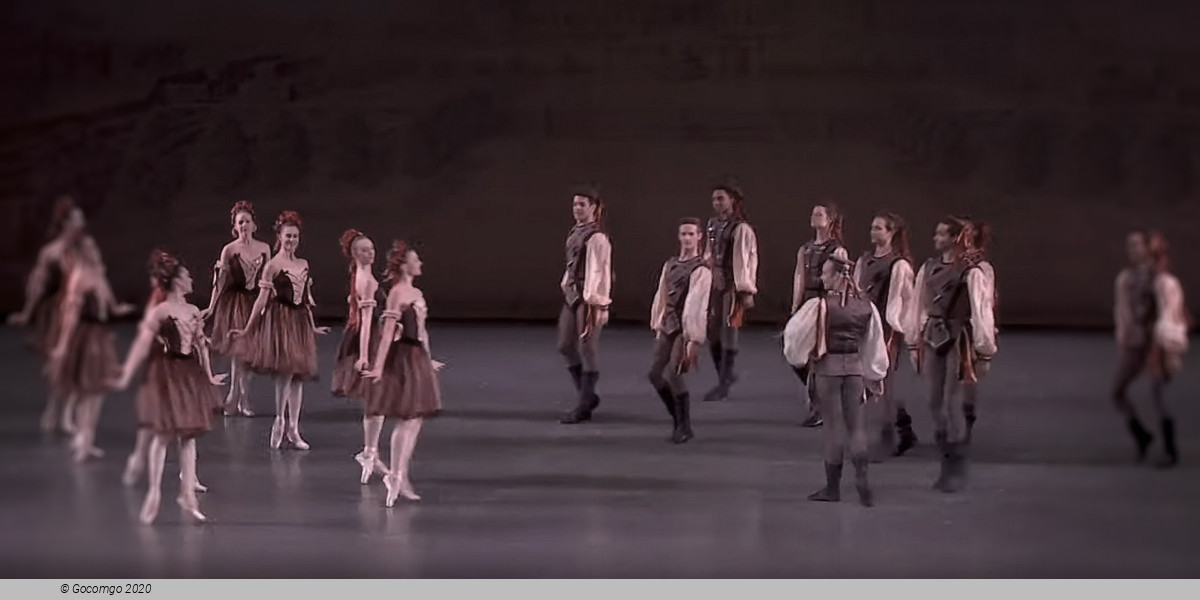
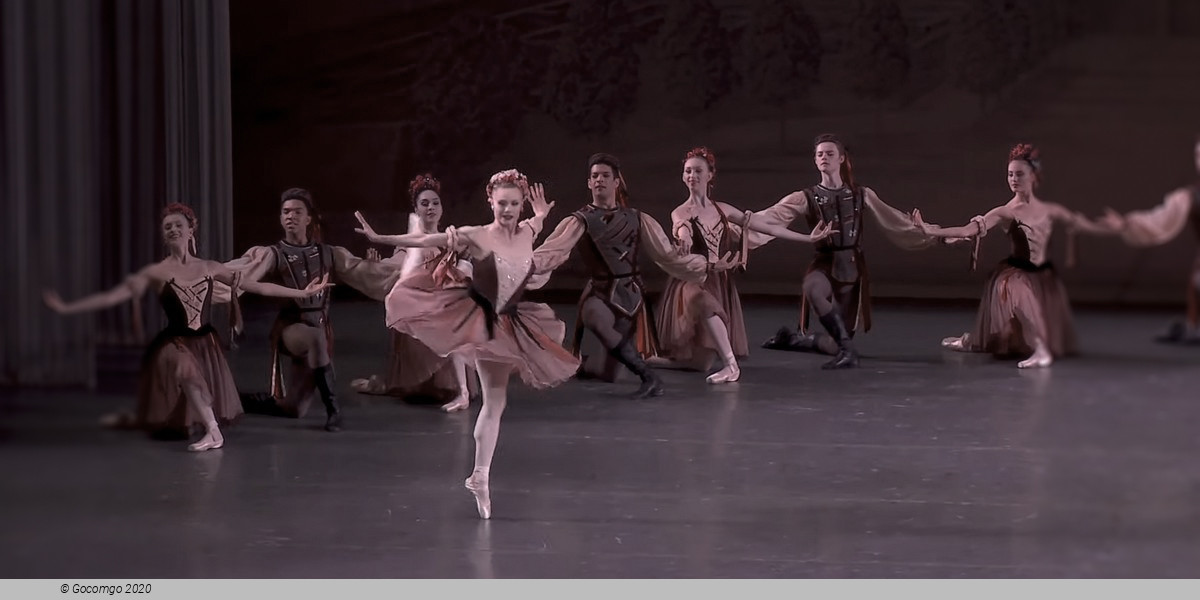
A sweeping romantic work for 55 dancers, the Austro-Hungarian-inflected Brahms-Schoenberg Quartet ends in an intoxicating finale.

Johannes Brahms’ Piano Quartet in G minor, Op. 25 (1861) marked a new development in chamber music. Though it received mixed reviews at the time of its premiere, it proved to be deeply influential for a number of 20th-century composers, laying the groundwork for atonality. Among the work’s admirers was Brahms’ great Viennese successor, Arnold Schoenberg, who in 1937 arranged the quartet for orchestra. In a letter to Dr. Alfred Frankenstein, the distinguished critic and musicologist of the San Francisco Chronicle, Schoenberg gives his reasons for this somewhat surprising undertaking: “1. I love the piece. 2. It is seldom played. 3. It is always very badly played, as the better the pianist, the louder he plays, and one hears nothing of the strings. I wanted for once to hear everything, and this I have achieved.” Balanchine often visited Stravinsky in Hollywood, and the composer would make suggestions of unfamiliar scores that might be suitable for ballet. In 1957, he played Balanchine a version of the Gounod Symphony, which the choreographer set the following year. In 1964, similarly, came the suggestion of Schoenberg’s orchestration of Brahms’ quartet, and Balanchine premiered the ballet in 1966, two years after NYCB’s move from City Center to the New York State Theater at Lincoln Center.

Music:

Piano Quartet No. 1 in G minor, Op. 25 (1861), orchestrated by Arnold Schoenberg (1937)

History
Premiere of this production: 01 March 1956, City Center of Music and Drama, New York

Allegro Brillante is characterized by what Maria Tallchief (the ballerina on whom the bravura leading role was created) calls “an expansive Russian romanticism.” The music’s vigorous pace makes the steps appear even more difficult, but the ballet relies on strong dancing, precise timing, and breadth of gesture. Balanchine said: “It contains everything I know about the classical ballet in 13 minutes.”

Premiere of this production: 12 April 1966, New York State Theater, New York

Brahms–Schoenberg Quartet is a ballet created by New York City Ballet original ballet master (and co-founder) George Balanchine to Brahms's Piano Quartet No. 1 in G minor, Op. 25 (1861) orchestrated by Arnold Schoenberg in 1937. The premiere took place Tuesday, April 12, 1966 at the New York State Theater, Lincoln Center, with costumes by Karinska, original lighting by Ronald Bates and current lighting by Mark Stanley.

Venue Info

New York City Ballet (David H. Koch Theater) - New York
Location   20 Lincoln Center Plaza

The David H. Koch Theater is the major theater for ballet, modern, and other forms of dance, part of the Lincoln Center, at the intersection of Columbus Avenue and 63rd Street in the Lincoln Square neighborhood of Manhattan in New York City. Originally named the New York State Theater, the venue has been home to the New York City Ballet since its opening in 1964, the secondary venue for the American Ballet Theatre in the fall, and served as home to the New York City Opera from 1964 to 2011.

The New York State Theater was built with funds from the State of New York as part of New York State's cultural participation in the 1964–1965 World's Fair. The theater was designed by architects Philip Johnson and John Burgee, and opened on April 23, 1964. After the Fair, the State transferred ownership of the theater to the City of New York.

Along with the opera and ballet companies, another early tenant of the theater was the now defunct Music Theater of Lincoln Center whose president was composer Richard Rodgers. In the mid-1960s, the company produced fully staged revivals of classic Broadway musicals. These included The King and I; Carousel (with original star, John Raitt); Annie Get Your Gun (revised in 1966 by Irving Berlin for its original star, Ethel Merman); Show Boat; and South Pacific.

The theater seats 2,586 and features broad seating on the orchestra level, four main “Rings” (balconies), and a small Fifth Ring, faced with jewel-like lights and a large spherical chandelier in the center of the gold latticed ceiling.

The lobby areas of the theater feature many works of modern art, including pieces by Jasper Johns, Lee Bontecou, and Reuben Nakian.

Important Info
Type: Ballet
City: New York, USA
Starts at: 19:30
Duration: 16min
Top of page