

Criterion Theatre 25 August 2021 - Amélie | GoComGo.com

Amélie

Criterion Theatre, London, Great Britain
All photos (5)
Select date and time
2:30 PM 7:30 PM
Request for Tickets
Important Info
Type: Musical
City: London, Great Britain
Starts at: 19:30
Duration: 2h 30min

E-tickets: Print at home or at the box office of the event if so specified. You will find more information in your booking confirmation email.

You can only select the category, and not the exact seats.
If you order 2 or 3 tickets: your seats will be next to each other.
If you order 4 or more tickets: your seats will be next to each other, or, if this is not possible, we will provide a combination of groups of seats (at least in pairs, for example 2+2 or 2+3).

Overview

Following a critically acclaimed and sell out tour in 2019, a Grammy® nomination and 3 Olivier Award nominations, Amélie The Musical arrives in the heart of the West End. The much loved five time Oscar® nominated film is brought to life by a cast of astonishingly talented actor musicians and set to a critically acclaimed re orchestrated score.

Times are hard for dreamers but Amélie is someone to believe in.

Hartshorn Hook Productions, Selladoor Worldwide and Broadway Asia Company present Amélie The Musical.

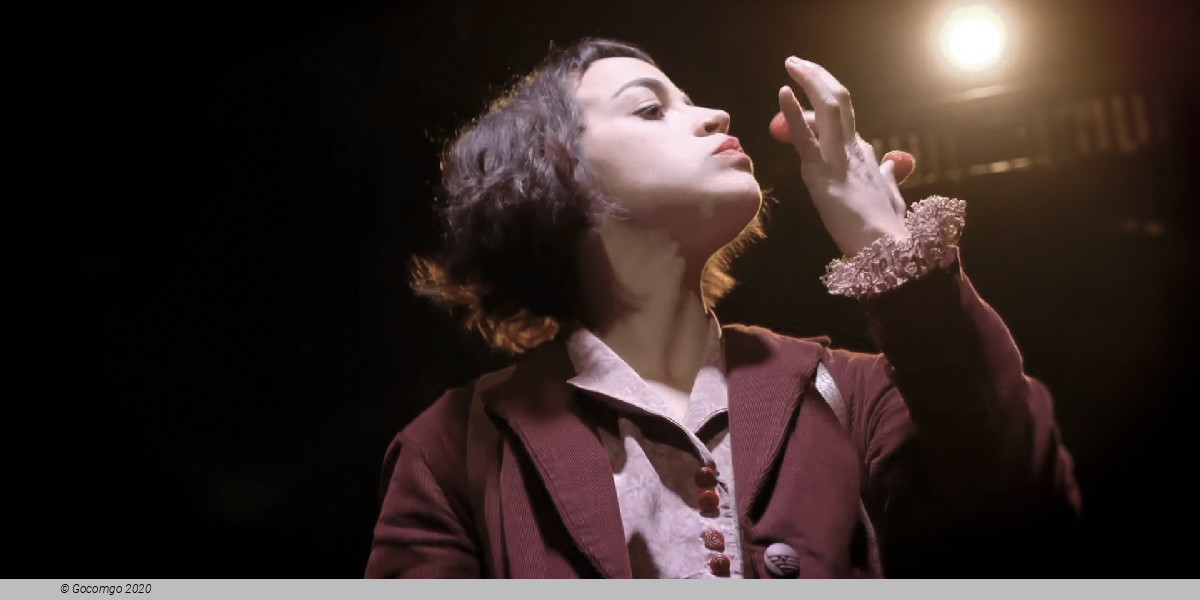
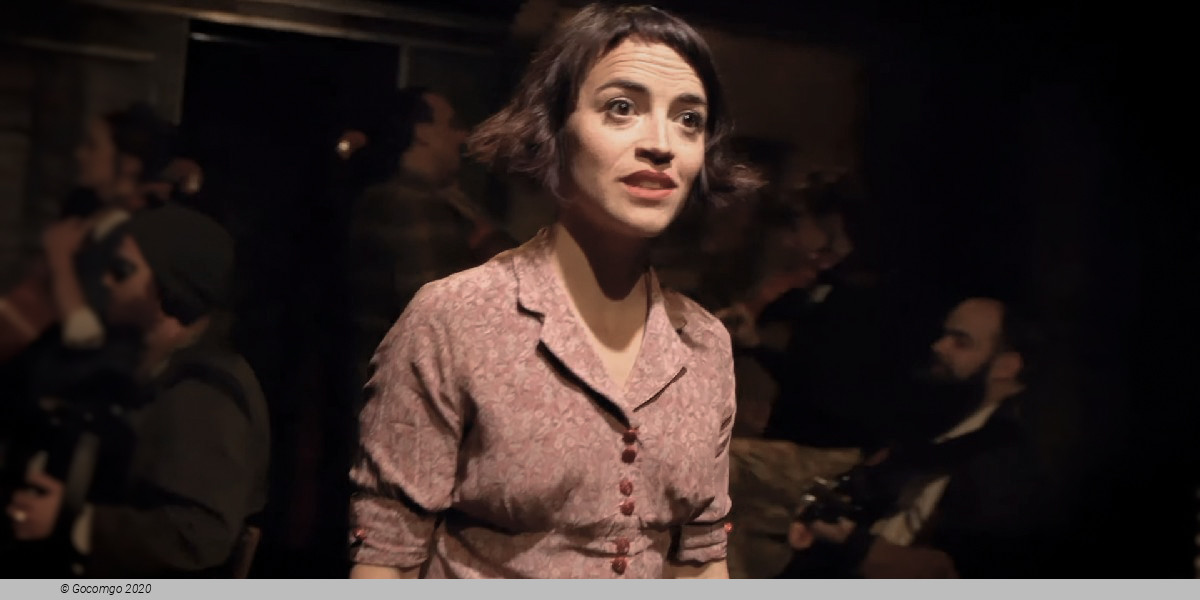
Amélie, played by the delightful, Olivier Award nominated Audrey Brisson (The Elephantom, Pinocchio and Pericles (National Theatre), The Grinning Man (Bristol Old Vic)), secretly improvises small, but extraordinary acts of kindness discovering the possibilities around every corner and bringing happiness to those she encounters. When a chance at love comes her way, Amélie realises that to find her own contentment she’ll have to risk everything and say what’s in her heart.

Experience this beautiful story and be inspired by this imaginative dreamer who discovers her voice, uncovers the power of human connection and sees possibility around every corner.

History
Premiere of this production: 31 August 2015, Berkeley Repertory Theatre

Amélie is a musical based on the 2001 romantic comedy film with music by Daniel Messé, lyrics by Messé and Nathan Tysen and a book by Craig Lucas. The musical premiered at Berkeley Repertory Theatre in September 2015.

Synopsis

The musical opens with an introduction of young Amélie and her family ("Times Are Hard For Dreamers (Prologue)"). Young Amélie is born to a germaphobe father, Raphael, and neurotic mother, Amandine, and she feels isolated and emotionally distant from her parents. She takes solace in her telescope, which she uses to view the universe from afar. Her only contact with her parents comes in the form of a monthly health check-up from her father. One day, Amélie gets so excited to see him that her heart races and Raphael misdiagnoses her with a heart condition ("World's Best Dad").

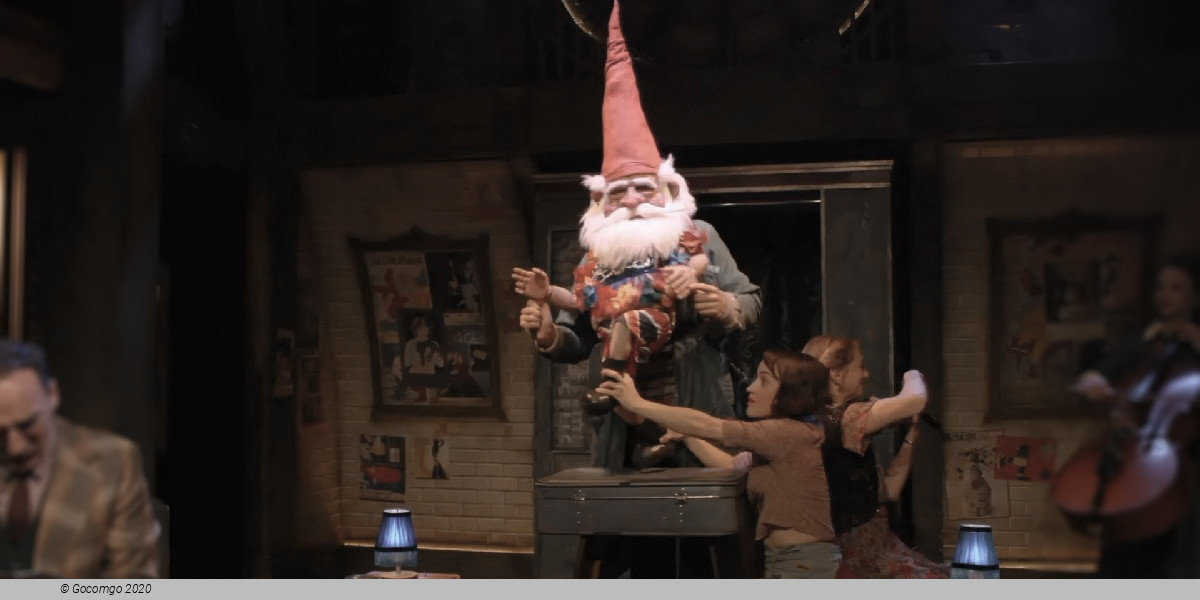
Her parents, paranoid, begin to homeschool Amélie and cut off all of her contact with the outside world. In a lesson with Amandine one day, Amélie imagines her goldfish, Fluffy, coming alive and speaking to her ("World's Best Friend"). When Amélie allows Fluffy to jump into her drinking glass, her parents panic and force Amélie to release Fluffy into the Seine, leaving her alone. Feeling bad, Amandine takes Amélie to Notre Dame to make up for what happened, and Amandine prays for guidance on how to deal with Amélie and hopes for a son ("World's Best Mom"). When they leave the cathedral, Amandine is crushed and killed by a suicidal tourist who leapt from the top of it. The death hits Raphael hard, and he builds a shrine in their home to Amandine, complete with a garden gnome.

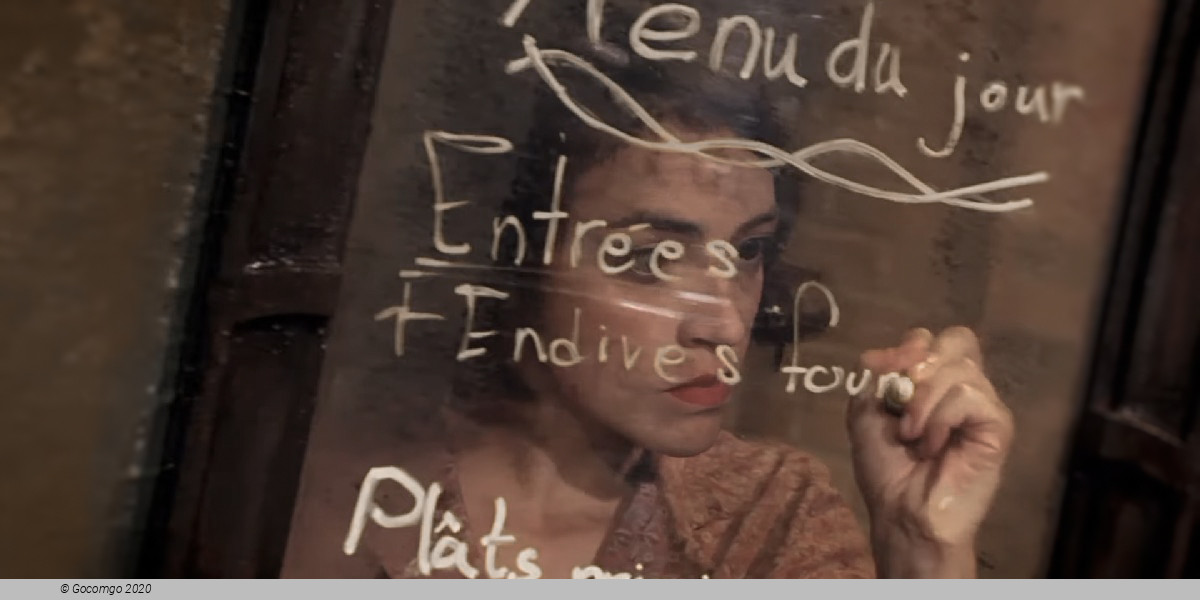
Years pass, and Amélie becomes bored with her quiet life and distant father, and she decides to leave home. Five years later, she is a waitress at a café in Montmartre ("Times Are Hard for Dreamers"). She has a quiet, happy life, and spends her time with her three co-workers: Suzanne, the café's owner and a past circus performer, Georgette, a hypochondriac, and Gina. Some of Amélie's regular customers include Gina's ex-boyfriend Joseph, Hipolito, a poet, and Philomene, an air hostess. ("The Commute")

On the night of Princess Diana's death, Amélie discovers a box of childhood treasures belonging to the man who used to own her apartment ("The Bottle Drops"). She is determined to find the owner and anonymously deliver the box to him, and if the owner is touched by her gesture, she resolves that she will become an anonymous do-gooder. She first meets with a cranky grocer, Colignon, who constantly abuses his assistant, Lucien, a mentally-ill young man that has an obsession with fruit ("Three Figs"). Colignon tells Amélie to confer with his mother on the other side of town.

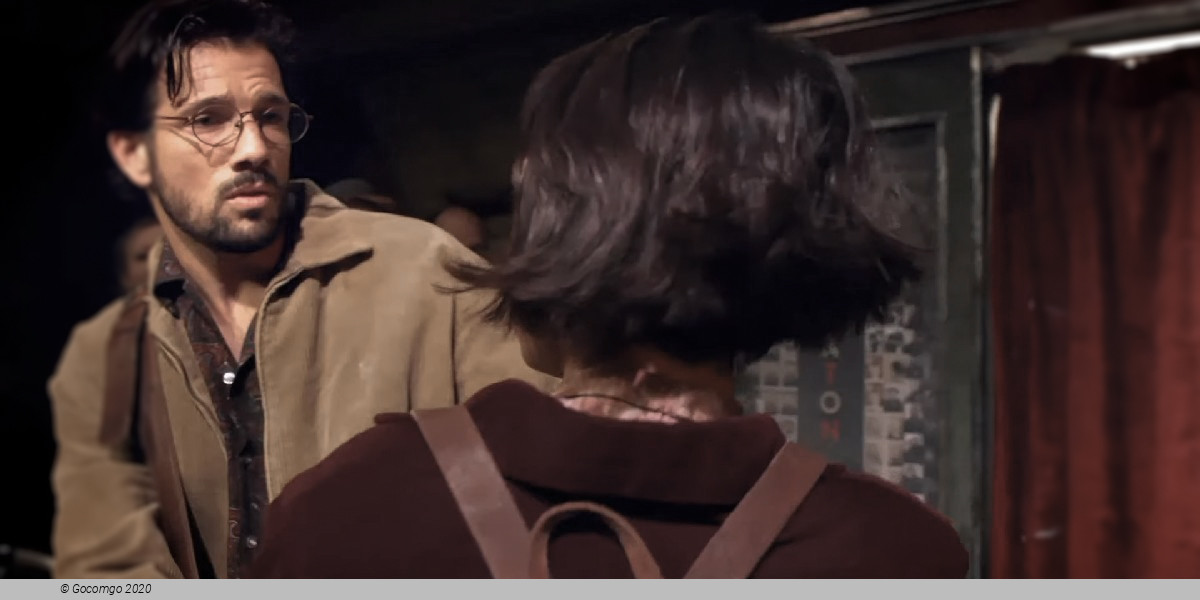
At the train station, Amélie spots a man her age, Nino, who she is attracted to. However, the train arrives before she can introduce herself to him. At Colignon's mother's home, Amélie learns the surname of the box's owner: Bredoteau. When Amélie returns home Nino spots her on the street, noticing how pretty she is and finds himself intrigued with the box.

Time passes, and Amélie's search for Bredoteau isn't working out. One day, she speaks to her neighbor, Julien Dufayel—an artist who suffers from a brittle bone disease, giving him the nickname 'The Glass Man'—and, possibly recognizing the box, tells her that Bredoteau is the incorrect name. The man was really called Bretodeau. Dufayel then shows Amélie his recreation of the painting The Luncheon of the Boating Party, remarking on Amélie's isolation ("The Girl with the Glass").

Amélie discovers Bretodeau in the phonebook and calls him from a payphone, telling him where he can pick up the box ("How To Tell Time"). When Bretodeau finds it, he reflects on his childhood and decides to call his ex-wife and arrange to meet their son. Taking it as a sign, Amélie continues her good-doing, taking a blind beggar on a tour of the streets of Paris, describing his surroundings in detail. ("Tour de France").

Later that night, Amélie has a strange dream where she imagines her lavish funeral in the style of Princess Diana's, where she is serenaded by Elton John and dubbed 'Godmother of the Unloved' – someone who gives herself to help others despite not being able to find her own love ("Goodbye Amélie"). Amélie suddenly realizes she hasn't helped her father and visits him the next day and tries to convince him to leave home ("Backyard"). He refuses, saying he can't leave the garden gnome, so Amélie secretly steals it as she leaves. On her way home, she spots Nino again at the train station, where he drops a photo album on the ground that Amélie takes.

Amélie explores the album with Dufayel, and finds it is full of photo-booth photographs, one of which is a picture of a man who appears over and over again, expressionless. Nino appears and explains the meaning of the photos to the company ("When the Booth Goes Bright"). Amélie watches him from the distance, and Dufayel, seeing her attraction to him, encourages her to give the album back and meet Nino.

Amélie seeks out his place of work, a sex shop, and goes dressed as a nun. While she waits for Nino, the other employees mock him, unknowingly painting him as a perfect match for Amélie. However, when he arrives, Amélie runs away ("Sister's Pickle"). He chases her but she escapes and reflects on her childhood, remembering how her mother told her never to get too close to anyone ("Halfway"). Amélie then calls Nino, but refuses to give him her identity, instead sending him a photo of her in another disguise and a riddle to solve.

At the café, Amélie secretly instigates a romantic encounter between Joseph and Georgette. Her father then turns up, telling Amélie about the missing gnome and how he has been getting anonymous postcards detailing the gnome's travels ("There's No Place Like Gnome"). The travels encouraged Raphael to step out of the house to look for him, and Amélie uses the opportunity to get him to relax and embrace the change, while introducing him to Suzanne, who he falls for.

Meanwhile, Nino has been searching Paris for Amélie, and handing out posters with her photo on them to anyone he sees, wondering how he's fallen for someone who doesn't want to be found ("Thin Air"). While doing another of her good deeds—spray painting a quote from one of Hipolito's poems on walls around Paris—Amélie notices the flyers and runs home, sending Nino another photo and instructions to meet her at the Montmartre Carousel.

Amélie constructs an elaborate trail to lead Nino to the album ("Blue Arrow Suite") and watches him follow it. When he finds the album, she calls out to him, asking about the man in the photo-booth. However, Nino is more interested in seeing her face, and she agrees to meet him at the café on Tuesday.

Tuesday arrives and Nino is late for the meeting, prompting Amélie to imagine an elaborate story to his reasoning ("The Late Nino Quincampoix"). Meanwhile, Georgette is overwhelmed by Joseph's clingy nature. Nino shows up, but when he recognizes Amélie, she finds herself nervous and runs from him. Hurt and tired, Nino leaves, but the girls in the café go after him just as Amélie reconsiders and returns. Asking of Nino's whereabouts, Joseph lies and says he went off with Gina. Heartbroken, Amélie returns home.

Outside the café, Gina, Georgette and Suzanne demand to know Nino's intentions with Amélie ("A Better Haircut"). Nino says he is honestly in love with her, and needs to know how she feels for him. Touched, Georgette gives him Amélie's address.

At home, Dufayel tries to talk to Amélie, but she angrily tells him to stay out of her business, not stopping to hear that he has finally gotten out of his rut and painted a unique picture: a portrait of her. As she goes inside, Nino shows up outside her door and begs a conflicted Amélie to let him inside and stop running from him ("Stay"). She is convinced to let Nino inside when Dufayel, through the apartment's window, shows Amélie his painting and insists that she'll regret not trying a relationship with Nino.

She opens the door and tells Nino she wants to be with him. He tells her he loves her, even if she cannot love him back ("Halfway (Reprise)"). They kiss and Amélie takes him to the photo booth, where she shows him the answer to the mystery of the man in the album: he's the repairman who takes a photo after fixing the booth, to check if it works properly. They go into the photo booth, taking pictures together, and reflecting on their newfound happiness and wondering what will happen next ("Where Do We Go From Here?").

Venue Info

Criterion Theatre - London
Location   218-223 Piccadilly, St. James's

The Criterion Theatre is a West End theatre at Piccadilly Circus in the City of Westminster, and is a Grade II* listed building. The Criterion is one of the few independent theatres in London’s West End.

The first production opened on 21 March 1874 under the management of Henry J. Byron & EP Hingston. The programme consisted of An American Lady written and performed by Byron and a piece by W. S. Gilbert, with music by Alfred Cellier, entitled Topsyturveydom. The event apparently did not make much of an impression on Gilbert. In a 1903 letter to Thomas Edgar Pemberton, author of the book on The Criterion, Gilbert wrote: "I am sorry to say that in my mind is an absolute blank to the opening of The Criterion. I never saw Topseyturveydom. If you happen to have a copy of it and could lend it to me for a few hours it might suggest some reminiscences: as it is I don't even know what the piece was about!" Gilbert had, however, been back at the theatre in 1877 with his farce, On Bail (a revised version of his 1874 work, Committed for Trial); in 1881, with another farce, Foggerty's Fairy; and in 1892, with a comic opera, Haste to the Wedding, with music by George Grossmith (an operatic version of Gilbert's 1873 play, The Wedding March). Haste to the Wedding was a flop, but it introduced the 18-year-old George Grossmith, Jr., the composer's son, to the London stage. The younger Grossmith would go on to become a major star in Edwardian musical comedies.

Charles Wyndham became the manager and lessee in 1875, and under his management the Criterion became one of the leading light comedy houses in London. The first production under the manager was The Great Divorce Case, opening on 15 April 1876. When Wyndham left in 1899 to open his own theatre, The Wyndham's Theatre (and then the New Theatre, now called the Noël Coward Theatre, in 1903) he remained the lessee bringing in various managements and their companies.

In March 1883, the theatre closed for alterations demanded by the Metropolitan Board of Works. The pumping of fresh air into the ten-year-old auditorium, some thirty feet below street level, was deemed unsatisfactory. Thomas Verity supervised the alterations (Verity by now had also designed the Comedy Theatre in 1881 and the Empire Theatre in 1882). The new direct access ventilation shaft meant cutting off a considerable portion of the adjoining Criterion Restaurant. New corridors were built, with several new exits. The auditorium was reconstructed and the stage re-equipped. The old dressing rooms were demolished and new ones built. Most importantly, electricity was installed. Dramatic Notes (1884) states "The Criterion Theatre, transformed from a stuffy band-box to a convenient, handsome, and well ventilated house, reopened on April 16". Further alterations and redecorations took place in 1902–03, when the theatre was closed for seven months.

Between the world wars, productions included Musical Chairs with John Gielgud and in 1936, French Without Tears which ran for 1,039 performances and launched the writing career of Terence Rattigan.

During the Second World War, the Criterion was requisitioned by the BBC – as an underground theatre it made an ideal studio safe from the Blitz – and light entertainment programmes were both recorded and broadcast live.

After the war, the Criterion repertoire included avant-garde works such as Samuel Beckett's Waiting for Godot. The early part of 1956 saw the arrival of Anouilh's popular comedy, The Waltz of the Toreadors, with impressive performances by Hugh Griffith and Beatrix Lehmann.

In the 1970s, the Criterion site was proposed for redevelopment, which caused protest, as people feared the theatre would be lost. In February 1975, the GLC Planning Committee approved the development on the condition that the theatre continued in "full, continuous and uninterrupted use" while the redevelopments took place. Throughout the 1970s and early 1980s the argument increased, and the Equity Save London's Theatre Committee organised high-profile demonstrations (campaigners included John Gielgud, Edward Woodward, Diana Rigg, Robert Morley and Prunella Scales) as they feared that the theatre would still be lost.

In the 1980s, the theatre building was purchased by Robert Bourne, a property tycoon and patron of the arts, and his wife, theatre impresario Sally Greene. The couple set up the Criterion Theatre Trust, a registered charity created to protect the Criterion's future. From 1989 to 1992 the theatre was renovated both in the back and front of the house. During that time, the block that exists today was built around it. After the refurbishment, the Criterion retains a well-preserved Victorian auditorium with an intimate atmosphere. Major productions in the last two decades of the century included Tom Foolery (1980–1981), Can't Pay? Won't Pay! (1981–1983), and the long-running Run for Your Wife (1983–1989).

From 1996 to 2005, the theatre was home to productions of the Reduced Shakespeare Company, notably The Complete Works of William Shakespeare (Abridged).

From 2006 to 2015, the Criterion hosted the long-running melodrama The 39 Steps, adapted by Patrick Barlow from John Buchan's 1915 novel, which was adapted for film by Alfred Hitchcock (1935). In 2016 Mischief Theatre's The Comedy About a Bank Robbery opened.

Important Info
Type: Musical
City: London, Great Britain
Starts at: 19:30
Duration: 2h 30min
Top of page