Act 1
On hearing that her husband, the Emperor Claudius, has died in a storm at sea, Agrippina plots to secure the throne for Nero, her son by a previous marriage. Nero is unenthusiastic about this project, but consents to his mother's wishes ("Con saggio tuo consiglio"). Agrippina obtains the support of her two freedmen, Pallas and Narcissus, who hail Nero as the new Emperor before the Senate.
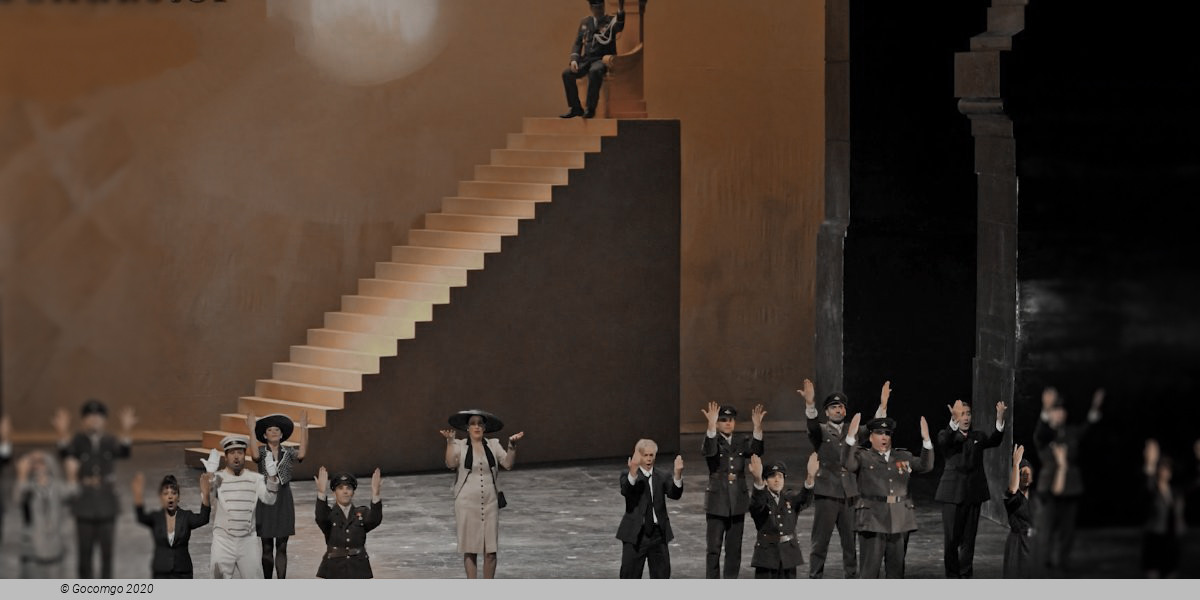
With the Senate's assent, Agrippina and Nero begin to ascend the throne, but the ceremony is interrupted by the entrance of Claudius's servant Lesbus. He announces that his master is alive ("Allegrezza! Claudio giunge!"), saved from death by Otho, the commander of the army. Otho himself confirms this and reveals that Claudius has promised him the throne as a mark of gratitude. Agrippina is frustrated, until Otho secretly confides to her that he loves the beautiful Poppaea more than he desires the throne. Agrippina, aware that Claudius also loves Poppaea, sees a new opportunity of furthering her ambitions for Nero. She goes to Poppaea and tells her, falsely, that Otho has struck a bargain with Claudius whereby he, Otho, gains the throne but gives Poppaea to Claudius. Agrippina advises Poppaea to turn the tables on Otho by telling the Emperor that Otho has ordered her to refuse Claudius's attentions. This, Agrippina believes, will make Claudius revoke his promise to Otho of the throne.
Poppaea believes Agrippina. When Claudius arrives at Poppaea's house she denounces what she believes is Otho's treachery. Claudius departs in fury, while Agrippina cynically consoles Poppaea by declaring that their friendship will never be broken by deceit ("Non ho cor che per amarti").
Act 2
Pallas and Narcissus realize that Agrippina has tricked them into supporting Nero and decide to have no more to do with her. Otho arrives, nervous about his forthcoming coronation ("Coronato il crin d'alloro"), followed by Agrippina, Nero and Poppaea, who have come to greet Claudius. All combine in a triumphal chorus ("Di timpani e trombe") as Claudius enters. Each in turns pays tribute to the Emperor, but Otho is coldly rebuffed as Claudius denounces him as a traitor. Otho is devastated and appeals to Agrippina, Poppaea, and Nero for support, but they all reject him, leaving him in bewilderment and despair ("Otton, qual portentoso fulmine" followed by "Voi che udite il mio lamento").
However, Poppaea is touched by her former beloved's grief, and wonders if he might not be innocent ("Bella pur nel mio diletto"). She devises a plan and when Otho approaches her, she pretends to talk in her sleep recounting what Agrippina has told her earlier. Otho, as she intended, overhears her and fiercely protests his innocence. He convinces Poppaea that Agrippina has deceived her. Poppaea swears revenge ("Ingannata una sol volta", alternate aria "Pur punir chi m'ha ingannata") but is distracted when Nero comes forward and declares his love for her. Meanwhile, Agrippina, having lost the support of Pallas and Narcissus, manages to convince Claudius that Otho is still plotting to take the throne. She advises Claudius that he should end Otho's ambitions once and for all by abdicating in favour of Nero. Claudius agrees, believing that this will enable him to win Poppaea.
Act 3
Poppaea now plans some deceit of her own, in an effort to divert Claudius's wrath from Otho with whom she has now reconciled. She hides Otho in her bedroom with instructions to listen carefully. Soon Nero arrives to press his love on her ("Coll'ardor del tuo bel core"), but she tricks him into hiding as well. Then Claudius enters; Poppaea tells him that he had earlier misunderstood her: it was not Otho but Nero who had ordered her to reject Claudius. To prove her point she asks Claudius to pretend to leave, then she summons Nero who, thinking Claudius has gone, resumes his passionate wooing of Poppaea. Claudius suddenly reappears and angrily dismisses the crestfallen Nero. After Claudius departs, Poppaea brings Otho out of hiding and the two express their everlasting love in separate arias.
At the palace, Nero tells Agrippina of his troubles and decides to renounce love for political ambition ("Come nube che fugge dal vento"). But Pallas and Narcissus have by now revealed Agrippina's original plot to Claudius, so that when Agrippina urges the Emperor to yield the throne to Nero, he accuses her of treachery. She then claims that her efforts to secure the throne for Nero had all along been a ruse to safeguard the throne for Claudius ("Se vuoi pace"). Claudius believes her; nevertheless, when Poppaea, Otho, and Nero arrive, Claudius announces that Nero and Poppaea will marry, and that Otho shall have the throne. No one is satisfied with this arrangement, as their desires have all changed, so Claudius in a spirit of reconciliation reverses his judgement, giving Poppaea to Otho and the throne to Nero. He then summons the goddess Juno, who descends to pronounce a general blessing ("V'accendano le tede i raggi delle stelle").
Act 1
On hearing that her husband, the Emperor Claudius, has died in a storm at sea, Agrippina plots to secure the throne for Nero, her son by a previous marriage. Nero is unenthusiastic about this project, but consents to his mother's wishes ("Con saggio tuo consiglio"). Agrippina obtains the support of her two freedmen, Pallas and Narcissus, who hail Nero as the new Emperor before the Senate.
With the Senate's assent, Agrippina and Nero begin to ascend the throne, but the ceremony is interrupted by the entrance of Claudius's servant Lesbus. He announces that his master is alive ("Allegrezza! Claudio giunge!"), saved from death by Otho, the commander of the army. Otho himself confirms this and reveals that Claudius has promised him the throne as a mark of gratitude. Agrippina is frustrated, until Otho secretly confides to her that he loves the beautiful Poppaea more than he desires the throne. Agrippina, aware that Claudius also loves Poppaea, sees a new opportunity of furthering her ambitions for Nero. She goes to Poppaea and tells her, falsely, that Otho has struck a bargain with Claudius whereby he, Otho, gains the throne but gives Poppaea to Claudius. Agrippina advises Poppaea to turn the tables on Otho by telling the Emperor that Otho has ordered her to refuse Claudius's attentions. This, Agrippina believes, will make Claudius revoke his promise to Otho of the throne.
Poppaea believes Agrippina. When Claudius arrives at Poppaea's house she denounces what she believes is Otho's treachery. Claudius departs in fury, while Agrippina cynically consoles Poppaea by declaring that their friendship will never be broken by deceit ("Non ho cor che per amarti").
Act 2
Pallas and Narcissus realize that Agrippina has tricked them into supporting Nero and decide to have no more to do with her. Otho arrives, nervous about his forthcoming coronation ("Coronato il crin d'alloro"), followed by Agrippina, Nero and Poppaea, who have come to greet Claudius. All combine in a triumphal chorus ("Di timpani e trombe") as Claudius enters. Each in turns pays tribute to the Emperor, but Otho is coldly rebuffed as Claudius denounces him as a traitor. Otho is devastated and appeals to Agrippina, Poppaea, and Nero for support, but they all reject him, leaving him in bewilderment and despair ("Otton, qual portentoso fulmine" followed by "Voi che udite il mio lamento").
However, Poppaea is touched by her former beloved's grief, and wonders if he might not be innocent ("Bella pur nel mio diletto"). She devises a plan and when Otho approaches her, she pretends to talk in her sleep recounting what Agrippina has told her earlier. Otho, as she intended, overhears her and fiercely protests his innocence. He convinces Poppaea that Agrippina has deceived her. Poppaea swears revenge ("Ingannata una sol volta", alternate aria "Pur punir chi m'ha ingannata") but is distracted when Nero comes forward and declares his love for her. Meanwhile, Agrippina, having lost the support of Pallas and Narcissus, manages to convince Claudius that Otho is still plotting to take the throne. She advises Claudius that he should end Otho's ambitions once and for all by abdicating in favour of Nero. Claudius agrees, believing that this will enable him to win Poppaea.
Act 3
Poppaea now plans some deceit of her own, in an effort to divert Claudius's wrath from Otho with whom she has now reconciled. She hides Otho in her bedroom with instructions to listen carefully. Soon Nero arrives to press his love on her ("Coll'ardor del tuo bel core"), but she tricks him into hiding as well. Then Claudius enters; Poppaea tells him that he had earlier misunderstood her: it was not Otho but Nero who had ordered her to reject Claudius. To prove her point she asks Claudius to pretend to leave, then she summons Nero who, thinking Claudius has gone, resumes his passionate wooing of Poppaea. Claudius suddenly reappears and angrily dismisses the crestfallen Nero. After Claudius departs, Poppaea brings Otho out of hiding and the two express their everlasting love in separate arias.
At the palace, Nero tells Agrippina of his troubles and decides to renounce love for political ambition ("Come nube che fugge dal vento"). But Pallas and Narcissus have by now revealed Agrippina's original plot to Claudius, so that when Agrippina urges the Emperor to yield the throne to Nero, he accuses her of treachery. She then claims that her efforts to secure the throne for Nero had all along been a ruse to safeguard the throne for Claudius ("Se vuoi pace"). Claudius believes her; nevertheless, when Poppaea, Otho, and Nero arrive, Claudius announces that Nero and Poppaea will marry, and that Otho shall have the throne. No one is satisfied with this arrangement, as their desires have all changed, so Claudius in a spirit of reconciliation reverses his judgement, giving Poppaea to Otho and the throne to Nero. He then summons the goddess Juno, who descends to pronounce a general blessing ("V'accendano le tede i raggi delle stelle").















 30 Lincoln Center