Act 1
Scene 1 (Suite)
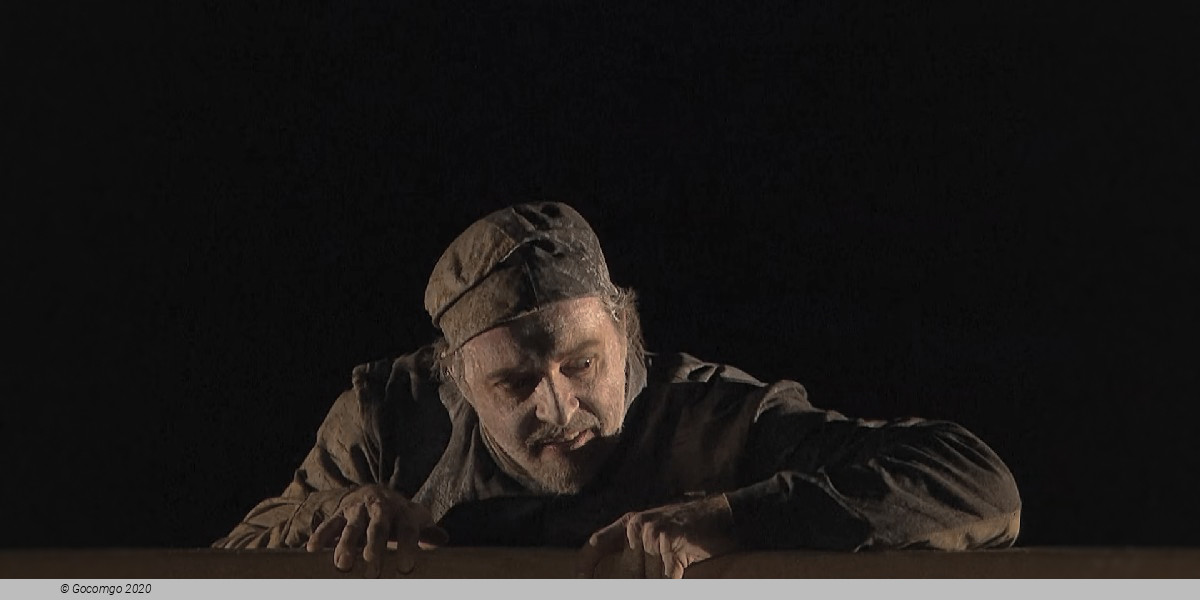
Wozzeck is shaving the Captain, who lectures him on the qualities of a "decent man" and taunts him for living an immoral life. Wozzeck slavishly replies, "Jawohl, Herr Hauptmann" ("Yes sir, Captain") repeatedly to the Captain's abuse. But when the Captain scorns Wozzeck for having a child "without the blessing of the Church", Wozzeck protests that it is difficult to be virtuous when one is poor, and entreats the Captain to remember the lesson from the gospel, "Lasset die Kleinen zu mir kommen!" ("Suffer the little children to come unto me," Mark 10:14). The Captain is confounded by Wozzeck's theological knowledge and anxiously squeaks, "What do you mean? And what sort of curious answer is that? You make me quite confused!" Wozzeck continues the discussion by positing that it would be easy to be moral if he were wealthy and that, if the poor ever "got to Heaven, we'd all have to manufacture thunder!" The flustered Captain, unable to comprehend Wozzeck, finally concedes that he is "a decent man, only you think too much!" The Captain concludes the discussion, saying it has "quite fatigued" him and again chides Wozzeck to walk slowly before finally exiting.
Scene 2 (Rhapsody and Hunting Song)
Wozzeck and Andres are cutting sticks as the sun is setting. Wozzeck has frightening visions and Andres tries unsuccessfully to calm him.
Scene 3 (March and Lullaby)
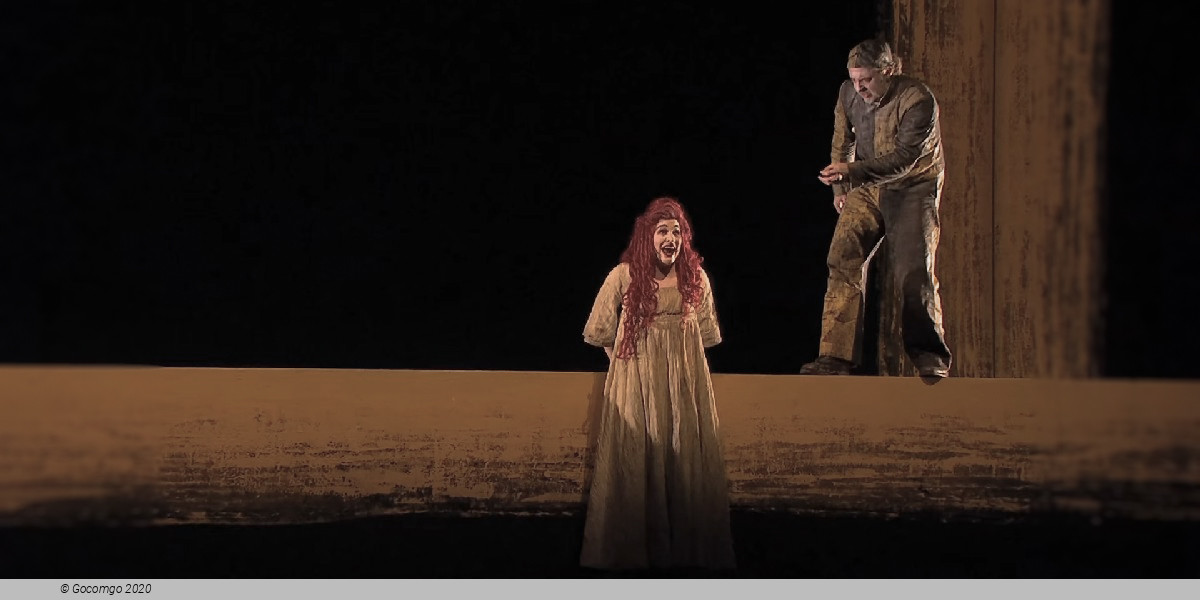
A military parade passes by outside Marie's room. Margret taunts Marie for flirting with the soldiers. Marie shuts the window and sings a lullaby to her son. Wozzeck then comes by and tells Marie of the terrible visions he has had, promptly leaving without seeing their son, much to Marie's dismay. She laments being poor.
Scene 4 (Passacaglia)
The Doctor scolds Wozzeck for not following his instructions regarding diet and behavior. But when the Doctor hears of Wozzeck's mental aberrations, he is delighted and congratulates himself on the success of his experiment.
Scene 5 (Rondo)
Marie admires the Drum Major outside her room. He makes advances on her, which she first rejects but then accepts after a short struggle.
Act 2
Scene 1 (Sonata-Allegro)
Marie is telling her child to go to sleep while admiring earrings the Drum Major gave her. She is startled when Wozzeck arrives. He asks where she got the earrings, and she says she found them. Though not convinced, Wozzeck gives her some money and leaves. Marie chastises herself for her behavior.
Scene 2 (Fantasia and Fugue on 3 Themes)
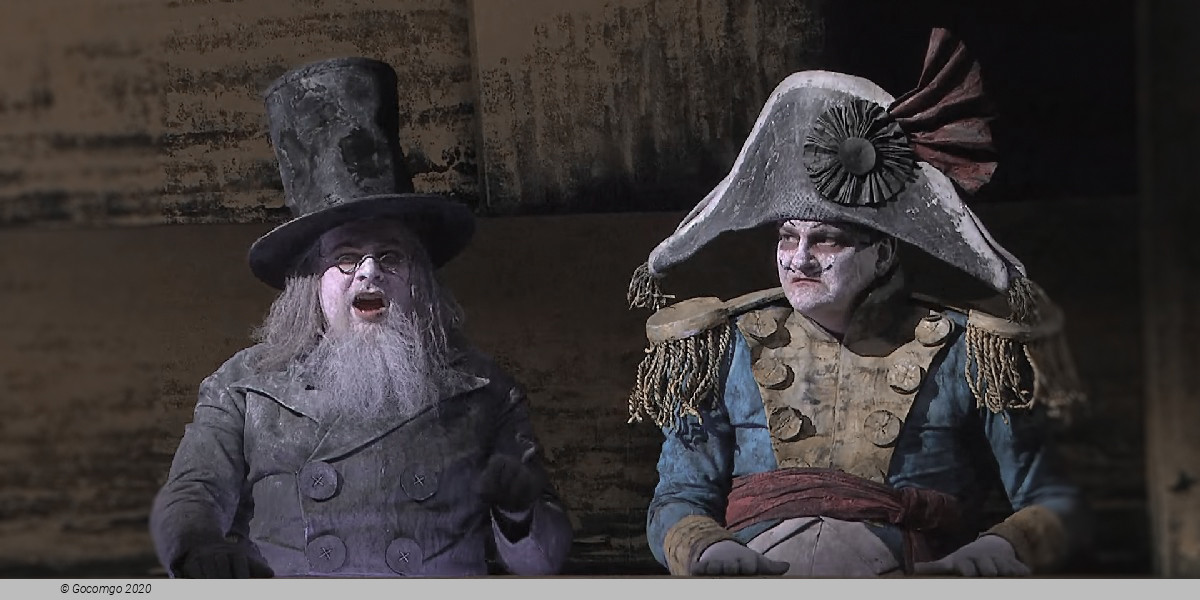
The Doctor rushes by the Captain in the street, who urges him to slow down. The Doctor then proceeds to scare the Captain by speculating about what afflictions he may have. When Wozzeck comes by, they insinuate that Marie is being unfaithful to him.
Scene 3 (Largo)
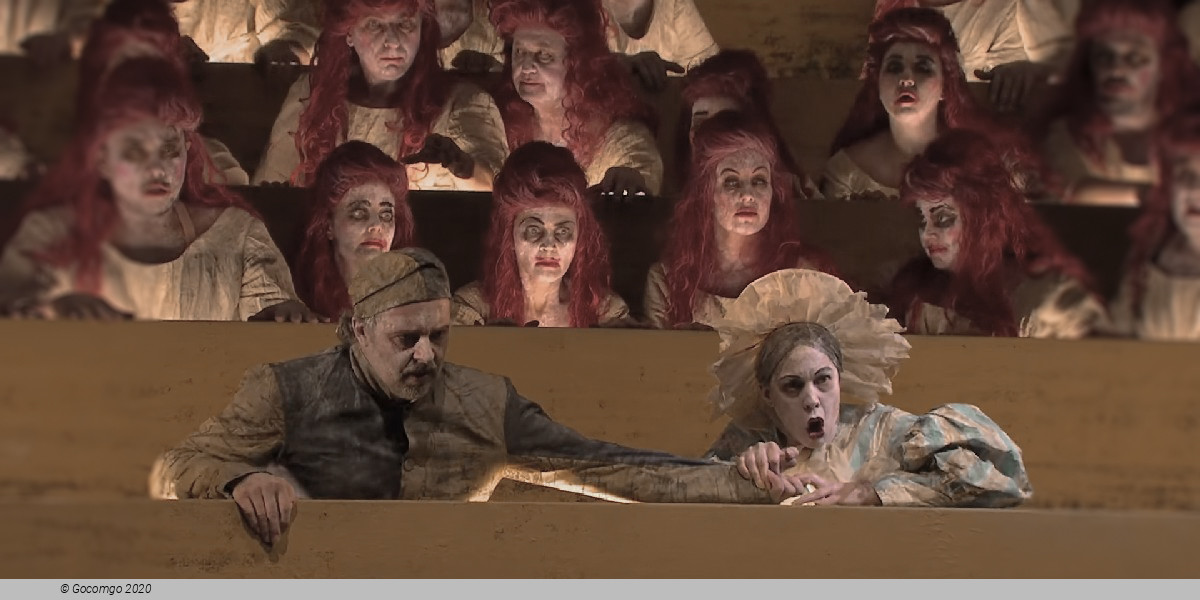
Wozzeck confronts Marie, who does not deny his suspicions. Enraged, Wozzeck is about to hit her when she stops him, saying even her father never dared lay a hand on her. Her statement "better a knife in my belly than your hands on me" plants in Wozzeck's mind the idea for his revenge.
Scene 4 (Scherzo)
Among a crowd, Wozzeck sees Marie dancing with the Drum Major. After a brief hunter's chorus, Andres asks Wozzeck why he is sitting by himself. An Apprentice delivers a drunken sermon, then an Idiot approaches Wozzeck and cries out that the scene is "Lustig, lustig...aber es riecht ...Ich riech, ich riech Blut!" ("joyful, joyful, but it reeks...I smell, I smell blood").
Scene 5 (Rondo)
In the barracks at night, Wozzeck, unable to sleep, is keeping Andres awake. The Drum Major comes in, intoxicated, and rouses Wozzeck out of bed to fight with him.
Act 3
Scene 1 (Invention on a Theme)
In her room at night, Marie reads to herself from the Bible. She cries out that she wants forgiveness.
Scene 2 (Invention on a Single Note (B))
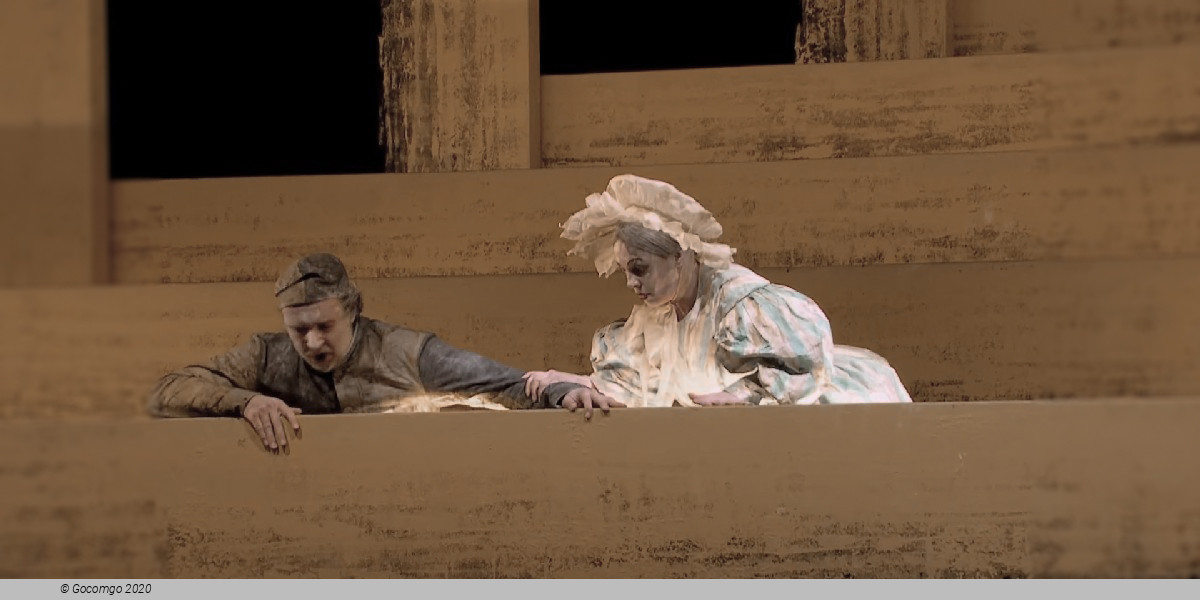
Wozzeck and Marie are walking in the woods by a pond. Marie is anxious to leave, but Wozzeck restrains her. As a blood-red moon rises, Wozzeck says that if he can't have Marie, no one else can, and stabs her.
Scene 3 (Invention on a Rhythm)
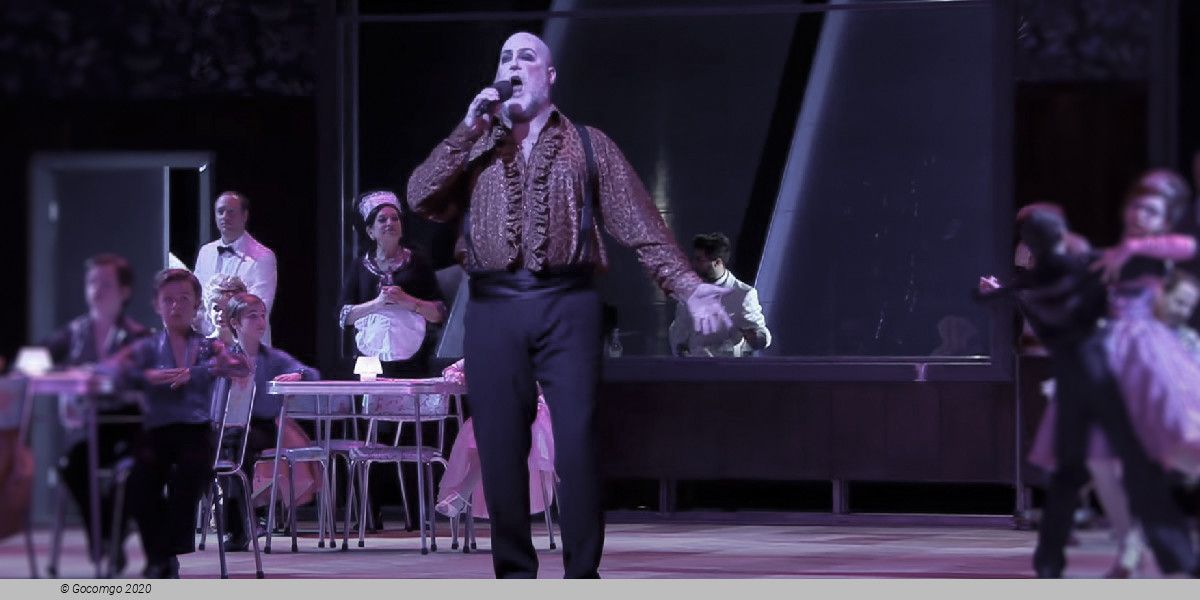
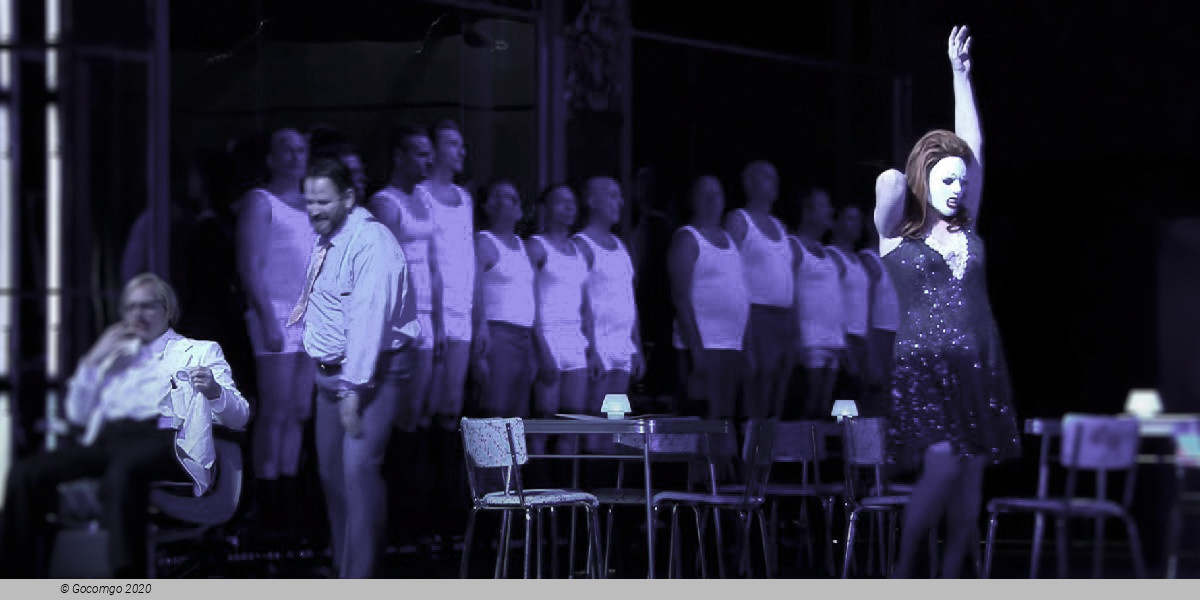
People are dancing in a tavern. Wozzeck enters, and upon seeing Margret, dances with her and pulls her onto his lap. He insults her, and then asks her to sing him a song. She sings, but then notices blood on his hand and elbow; everyone begins shouting at him, and Wozzeck, agitated and obsessed with the blood, rushes out of the tavern.
Scene 4 (Invention on a Hexachord)
Having returned to the murder scene, Wozzeck becomes obsessed with the thought that the knife he killed Marie with will incriminate him, and throws it into the pond. When the blood-red moon appears again, Wozzeck, fearing that he has not thrown the knife far enough from shore and also wanting to wash away the blood staining his clothing and hands, wades into the pond and drowns. The Captain and the Doctor, passing by, hear Wozzeck moaning and rush off in fright.
Interlude (Invention on a Key (D minor))
This interlude leads to the finale.
Scene 5 (Invention on an Eighth-Note moto perpetuo, quasi toccata)
The next morning, children are playing in the sunshine. The news spreads that Marie's body has been found, and they all run off to see, except for Marie's son, who after an oblivious moment, follows after the others.







 57th Street and Seventh Avenue