









Oslo Opera House: The Academy of opera/KHIO: Falstaff Tickets | Event Dates & Schedule | GoComGo.com

The Academy of opera/KHIO: Falstaff Tickets

Oslo Opera House, Oslo, Norway
Important Info
Type: Opera
City: Oslo, Norway
Duration: 2h with 1 interval
Intervals: 1
Sung in: Italian

E-tickets: Print at home or at the box office of the event if so specified. You will find more information in your booking confirmation email.

You can only select the category, and not the exact seats.
If you order 2 or 3 tickets: your seats will be next to each other.
If you order 4 or more tickets: your seats will be next to each other, or, if this is not possible, we will provide a combination of groups of seats (at least in pairs, for example 2+2 or 2+3).

Cast
Performers
Choose the date to see the peformers
Overview

End-of-term performance with graduating opera students

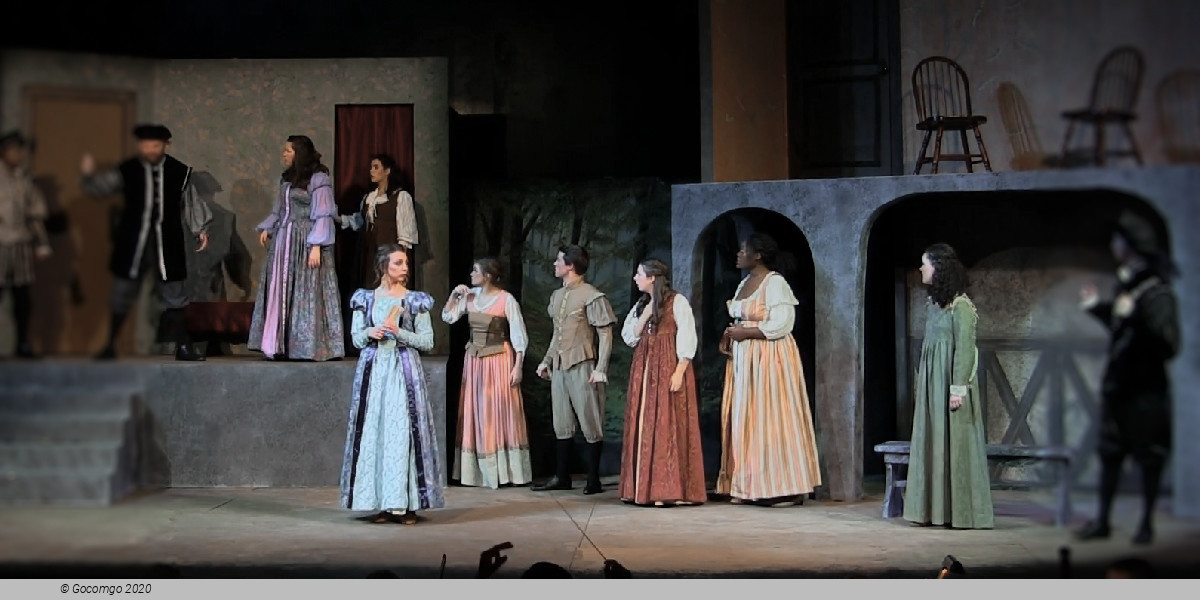
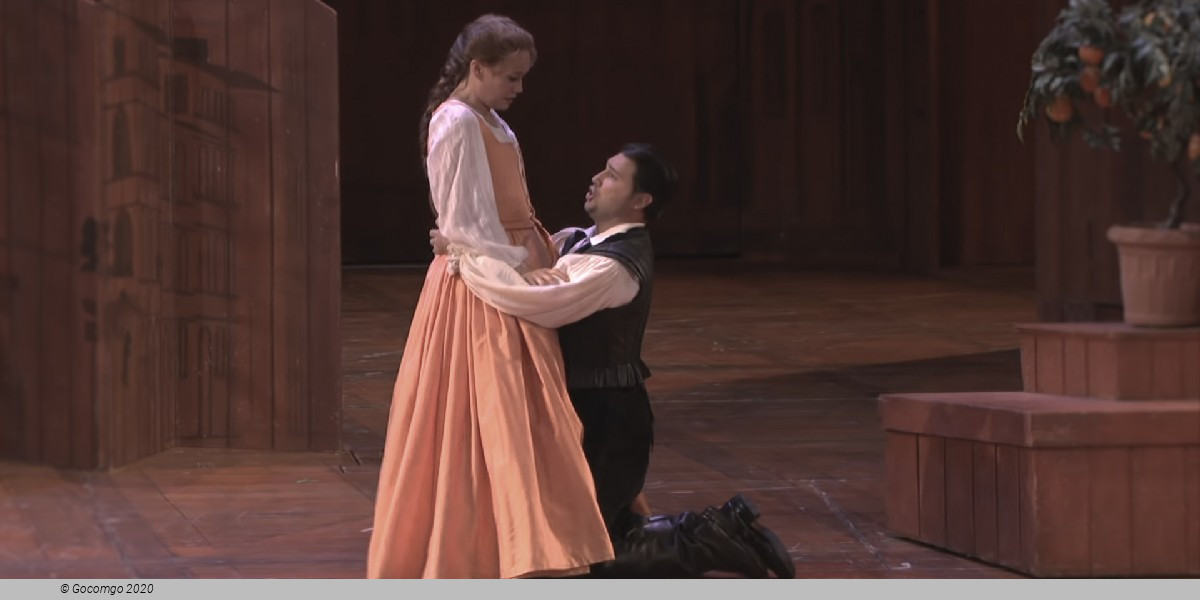
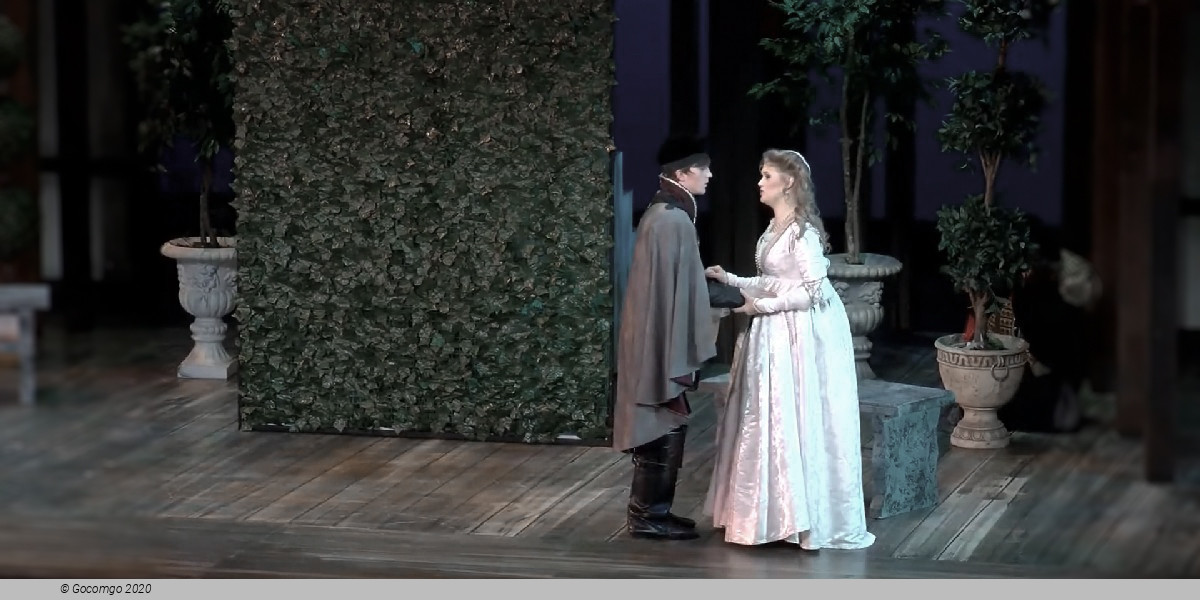
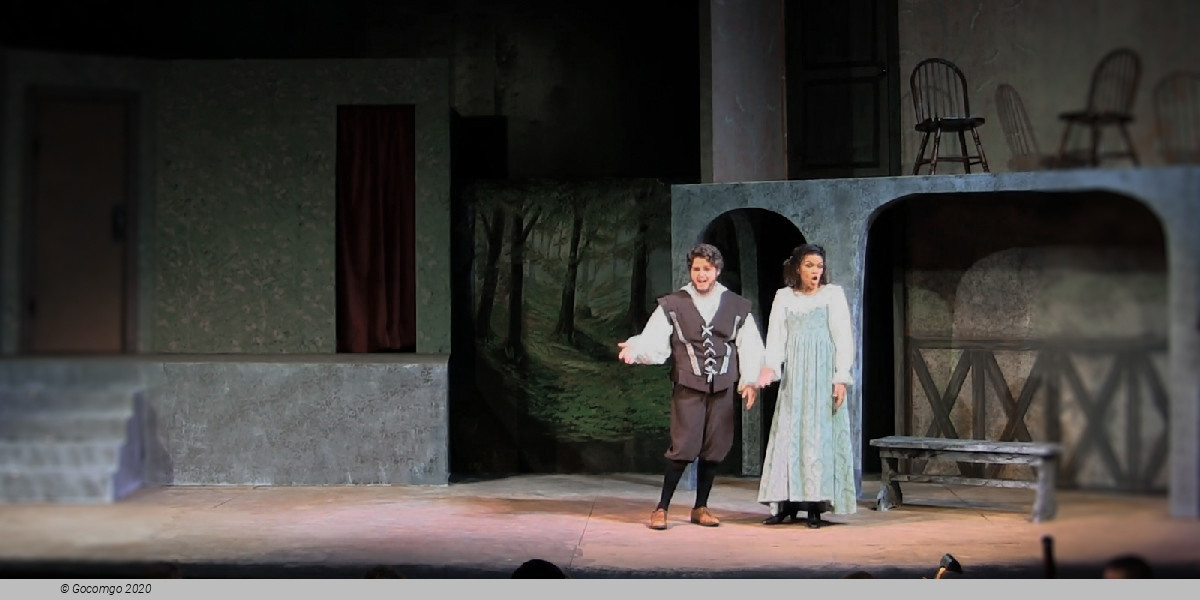
Each year the graduating students of the Academy of Opera perform an opera with which they have been working throughout the year. Stefan Herheim is affiliated with the school as a professor, and is directing this year's Falstaff by Verdi.

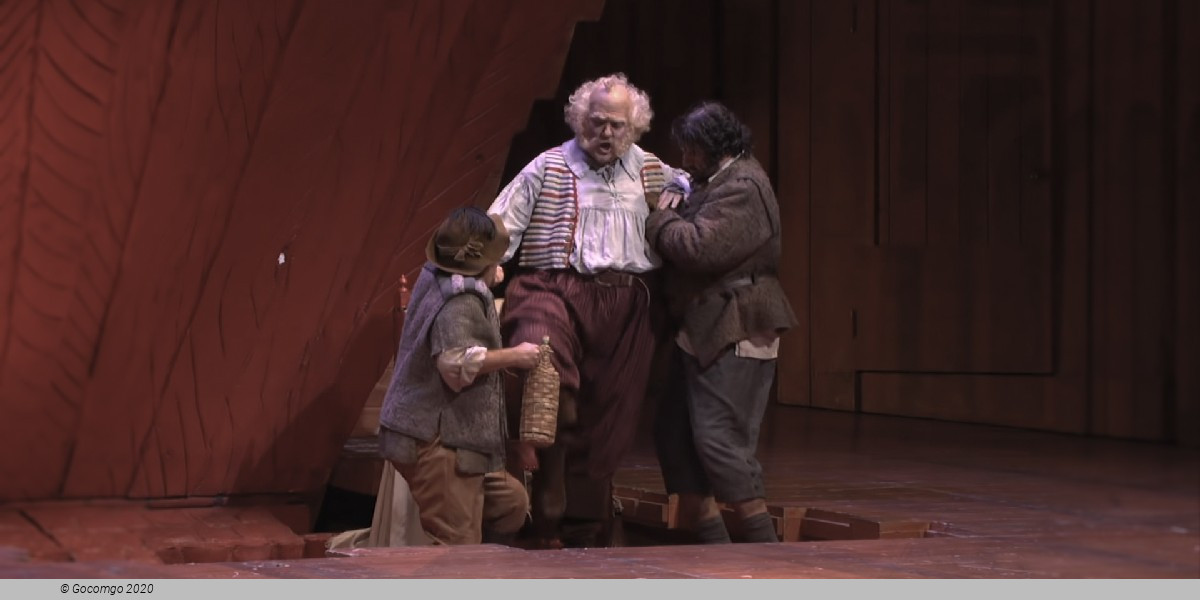
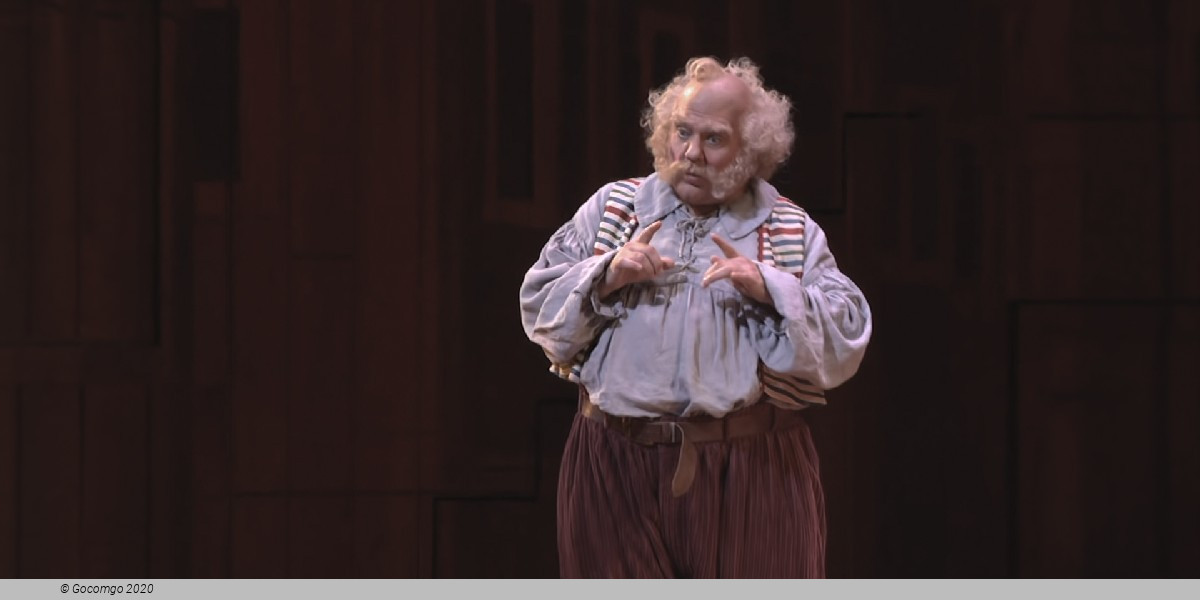
Graduating students of the Academy of Opera perform Verdi’s deeply human comedy about the attempts of the overweight knight John Falstaff to seduce two married women in order to gain access to their husbands’ riches.

“After having relentlessly massacred so many heroes and heroines, I have at last the right to laugh a little, ” said Verdi about Falstaff.

History
Premiere of this production: 09 March 1849, Königliches Opernhaus Berlin

The Merry Wives of Windsor (German: Die lustigen Weiber von Windsor) is an opera in three acts by Otto Nicolai to a German libretto by Salomon Hermann Mosenthal based on the play The Merry Wives of Windsor by William Shakespeare.

Synopsis

Act 1
Scene 1

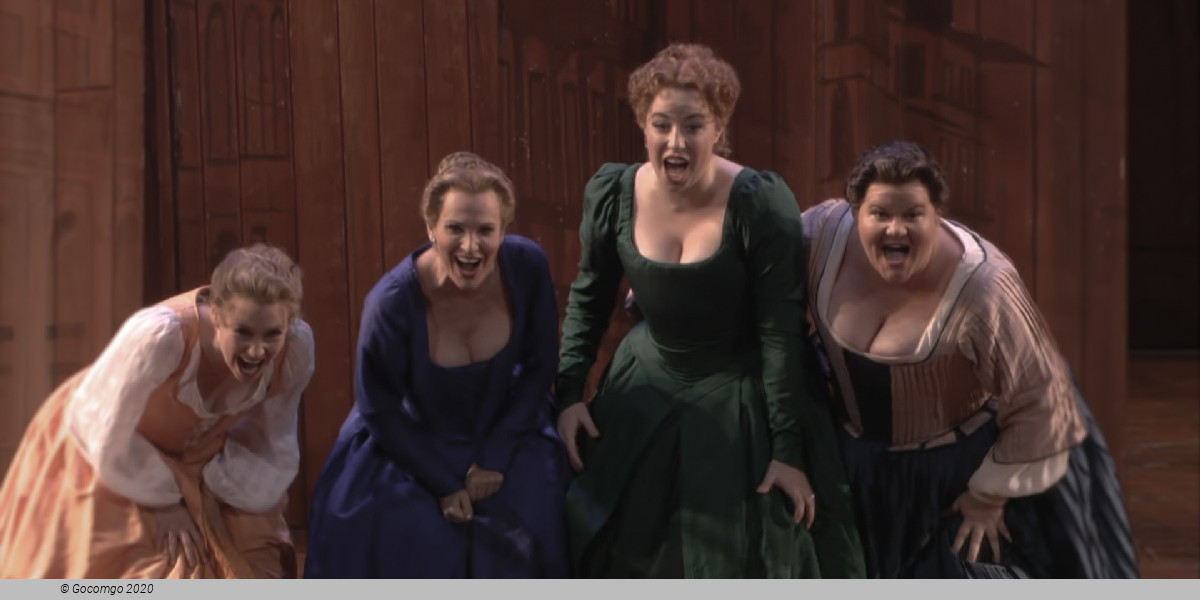
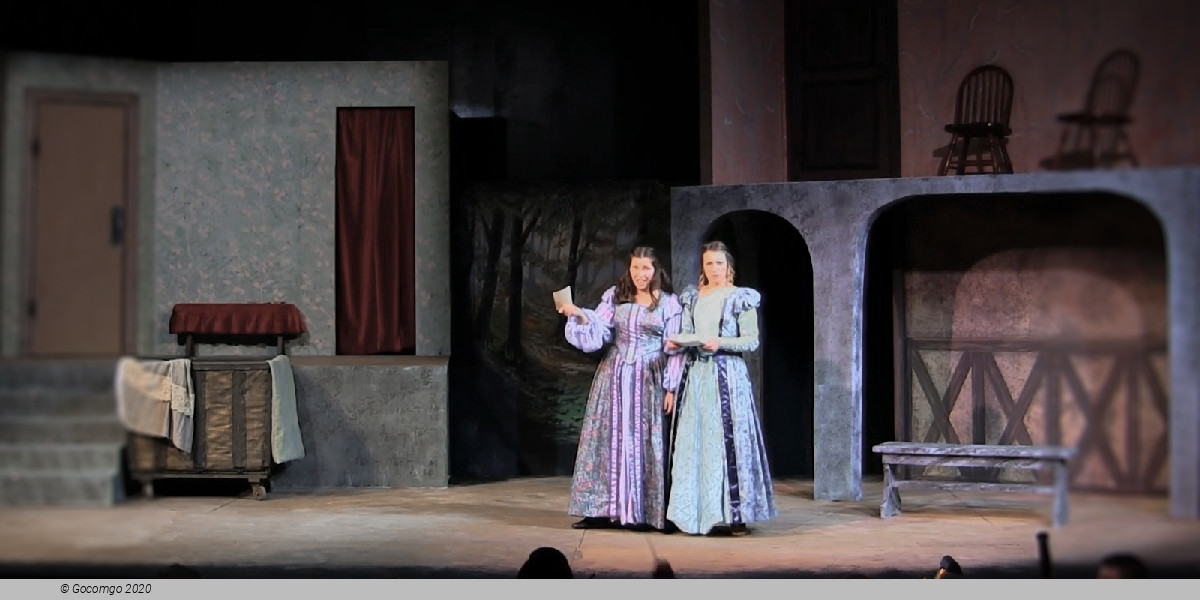
Two married ladies, Frau Fluth and Frau Reich, discover that they both received love letters from the impoverished nobleman Falstaff at the same time. They decide to teach him a lesson and withdraw to hatch a plan. Now the husbands of Frau Fluth and Frau Reich come in. Anna, Frau Reich's daughter, is of marriageable age and three gentlemen seek her hand in marriage: Dr. Cajus, a French beau, is her mother's favorite, and her father wants the shy nobleman Spärlich as his son-in-law, but Anna is in love with the penniless Fenton.

Scene 2

Frau Fluth has invited Falstaff to a supposed tryst, and he enters with grand romantic gestures and clumsily attempts to ensnare her. As Frau Reich reports the return of the distrustful Herr Fluth, which had been previously arranged, the old gentleman is hidden in a laundry basket, the contents of which are quickly emptied into a ditch. Herr Fluth has searched the whole house in the meantime without success and is forced to believe his wife, who protests her innocence.

Act 2
Scene 1

At the inn, Falstaff has recovered from his bath and sings bawdy drinking songs. A messenger brings him a letter, in which Frau Fluth proposes another rendezvous. Her husband appears in disguise and presents himself as Herr Bach to get Falstaff to talk about his trysts. He unsuspectingly brags about his affair with Frau Fluth, which provokes her husband's rage.

Scene 2

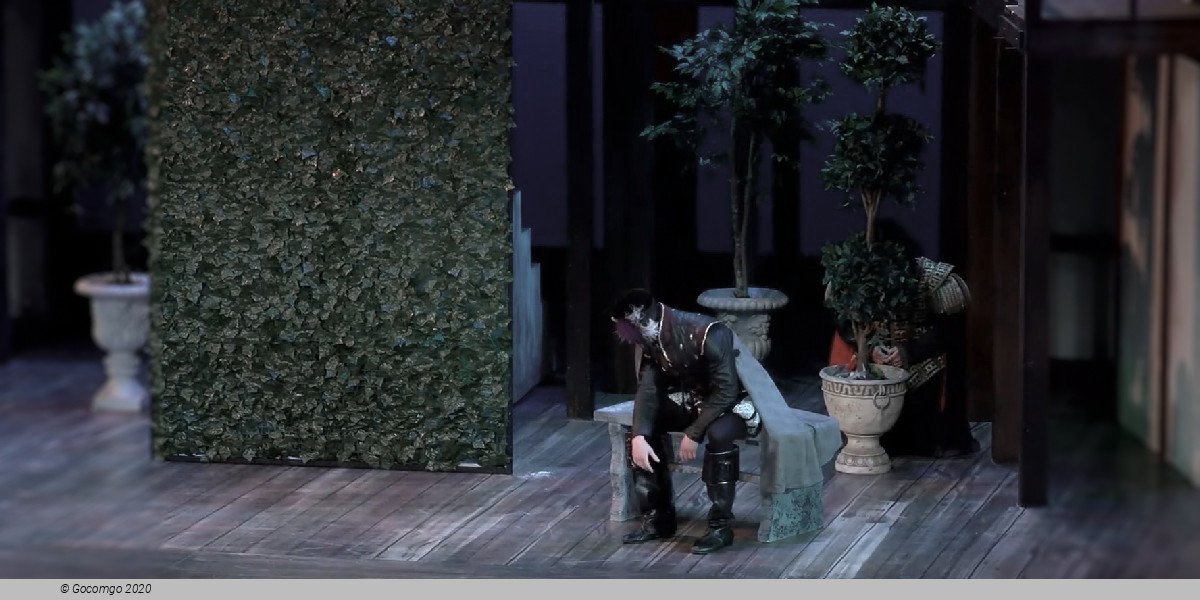
Spärlich and Cajus sneak around Anna's window, but before they attempt to go near, they hear Fenton's serenade and hide in the bushes. From there they observe a passionate love scene between the two lovers.

Scene 3

Falstaff is again with Frau Fluth, and Frau Reich again warns them both that Herr Fluth is on his way home. This time they dress the fat knight in women's clothes to try and pass him off as the maid. Herr Fluth enters and finds only the old maid, whom he angrily throws out of the house.

Act 3
Scene 1

Fluth and Reich are finally let in on the plan by their wives and the four of them decide to take Falstaff for a ride one last time. The knight is expected to show up at a grand masked ball in Windsor Forest. Additionally, Herr and Frau Reich each plan to take advantage of the confusion to marry Anna off to their preferred suitor. Instead, however, she has arranged a nighttime meeting with Fenton in the forest.

Scene 2

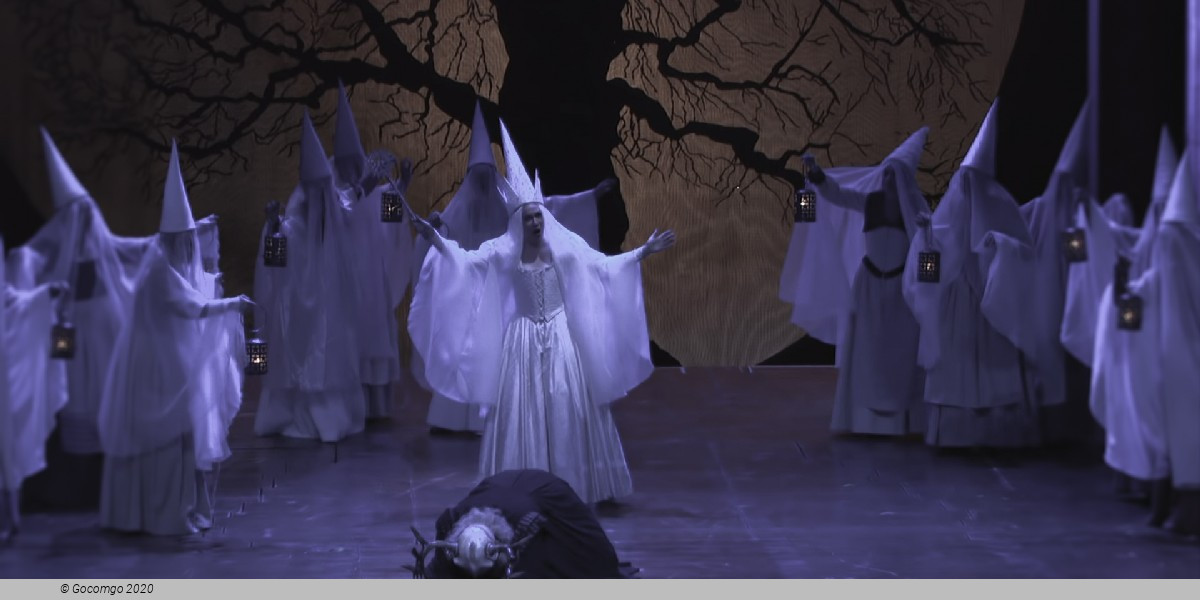
After the moonrise, depicted by the choir and orchestra, the masked ball in the forest begins. At first, Falstaff, disguised as Ritter Herne, is lured by the two women, but then he is frightened by various other guests disguised as ghosts, elves, and insects. After the masks are removed and Falstaff is mocked by everyone, Anna and Fenton, who got married in the forest chapel, appear. In a cheerful closing number all of the parties are reconciled.

Venue Info

Oslo Opera House - Oslo
Location   Kirsten Flagstads Plass 1

The Oslo Opera House is the home of The Norwegian National Opera and Ballet, and the national opera theatre in Norway. The building is situated in the Bjørvika neighbourhood of central Oslo, at the head of the Oslofjord. It is operated by Statsbygg, the government agency which manages property for the Norwegian government. The structure contains 1,100 rooms in a total area of 38,500 m2 (414,000 sq ft). The main auditorium seats 1,364 and two other performance spaces can seat 200 and 400. The main stage is 16 m (52 ft) wide and 40 m (130 ft) deep. The angled exterior surfaces of the building are covered with marble from Carrara, Italy and white granite and make it appear to rise from the water. It is the largest cultural building constructed in Norway since Nidarosdomen was completed circa 1300.

In 1999, after a long national debate, the Norwegian legislature decided to construct a new opera house in the city. A design competition was held and, of the 350 entries received, the judges chose that of Snøhetta. Construction started in 2003 and was completed in 2007, ahead of schedule and 300 million NOK (~US$52 million) under its budget of 4.4 billion NOK (~US$760 million). The gala opening on 12 April 2008 was attended by His Majesty King Harald, Queen Margrethe II of Denmark and President Tarja Halonen of Finland and other leaders. During the first year of operation, 1.3 million people passed through the building's doors.

The Opera House won the culture award at the World Architecture Festival in Barcelona in October 2008 and the 2009 European Union Prize for Contemporary Architecture.

The roof of the building angles to ground level, creating a large plaza that invites pedestrians to walk up and enjoy the panoramic views of Oslo. While much of the building is covered in white granite and La Facciata, a white Italian carrara marble, the stage tower is clad in white aluminium, in a design by Løvaas & Wagle that evokes old weaving patterns.

The lobby is surrounded by 15 m (49 ft) tall windows with minimal framing and special glass that allows maximum views of the water. The roof is supported by thin angled columns also designed not to interfere with views.

Interior surfaces are covered in oak to bring warmth to spaces in contrast to the coolness of the white exterior. The main auditorium is a horseshoe shape and illuminated by an oval chandelier containing 5,800 handmade crystals. Seats include monitors for the electronic libretto system, allowing audiences to follow opera libretti in Norwegian and English in addition to the original language.

Several art projects were commissioned for the interior and exterior of the Opera House. The most notable is She Lies, a sculpture constructed of stainless steel and glass panels by Monica Bonvicini. It is permanently installed on a concrete platform in the fjord adjacent to Opera House and floats on the water moving in response to tides and wind to create an ever-changing face to viewers. The work was unveiled by Her Majesty Queen Sonja on 11 May 2010.

A perforated wall panel which covers roof supports in the lobby was designed by Olafur Eliasson. It features hexagonal opening and is illuminated from below and behind to create the illusion of melting ice. Other artists involved in the construction include Kristian Blystad, Jorunn Sannes and Kalle Grude, who designed the shape of the pavers on the forecourt and roof; Bodil Furu and Trine Lise Nedreaas, who created a film and video project; Marte Aas, Talleiv Taro Manum, Tom Sandberg, Gerd Tinglum and Nina Witoszek Fitzpatrick, who created the art book Site Seeing; and Linus Elmes and Ludvig Löfgren, who created the foundation stone.

The main stage curtain is the work of Pae White who designed it to look like crumpled aluminum foil. White scanned a crumpled piece of foil into a computer which translated the information to a loom that wove the curtain from wool, cotton and polyester to create a three-dimensional effect. The curtain was manufactured by the German-based theatrical equipment company Gerriets GmbH. The finished curtain measures 74 ft (23 m) wide and 36 ft (11 m) and weighs 1,100 lb (500 kg).

Important Info
Type: Opera
City: Oslo, Norway
Duration: 2h with 1 interval
Intervals: 1
Sung in: Italian

E-tickets: Print at home or at the box office of the event if so specified. You will find more information in your booking confirmation email.

You can only select the category, and not the exact seats.
If you order 2 or 3 tickets: your seats will be next to each other.
If you order 4 or more tickets: your seats will be next to each other, or, if this is not possible, we will provide a combination of groups of seats (at least in pairs, for example 2+2 or 2+3).

Top of page