
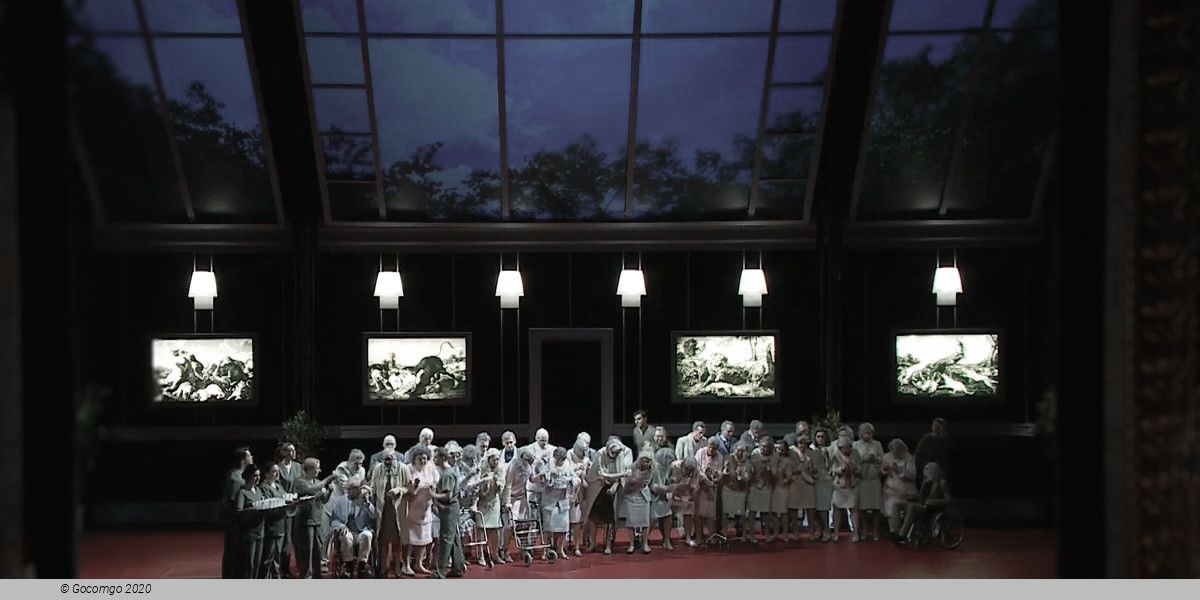
Hungarian State Opera House: Pagliacci Tickets | Event Dates & Schedule | GoComGo.com

Pagliacci Tickets

Hungarian State Opera House, Budapest, Hungary
Important Info
Type: Opera
City: Budapest, Hungary
Acts: 1
Sung in: Italian
Titles in: Hungarian,English

E-tickets: Print at home or at the box office of the event if so specified. You will find more information in your booking confirmation email.

You can only select the category, and not the exact seats.
If you order 2 or 3 tickets: your seats will be next to each other.
If you order 4 or more tickets: your seats will be next to each other, or, if this is not possible, we will provide a combination of groups of seats (at least in pairs, for example 2+2 or 2+3).

Cast
Performers
Choose the date to see the peformers
History
Premiere of this production: 21 May 1892, Teatro Dal Verme, Milan

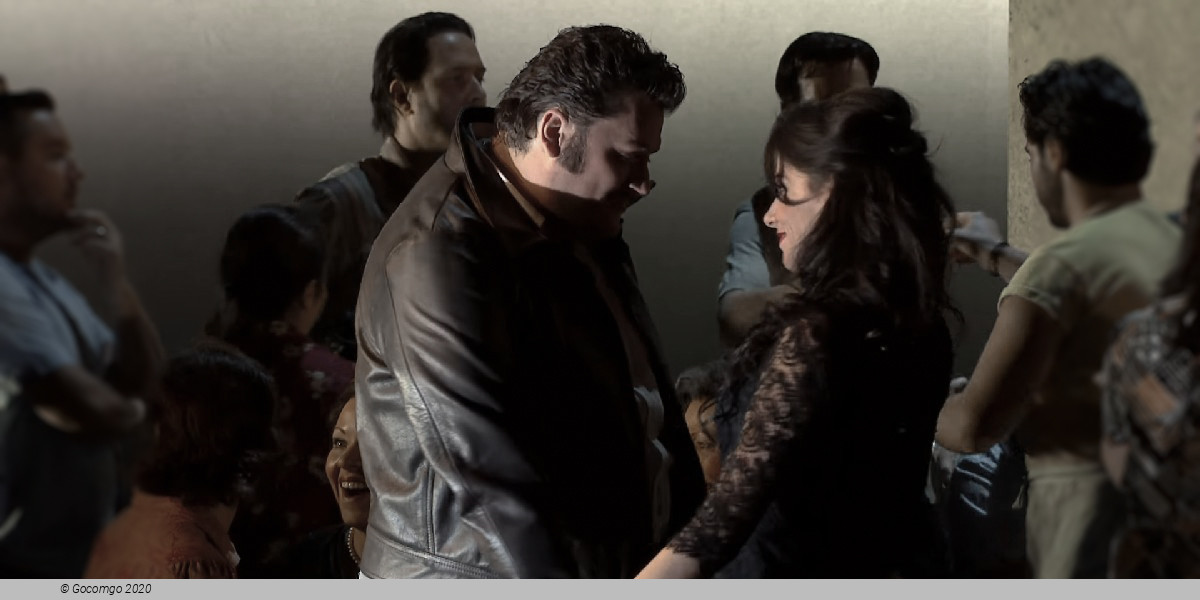
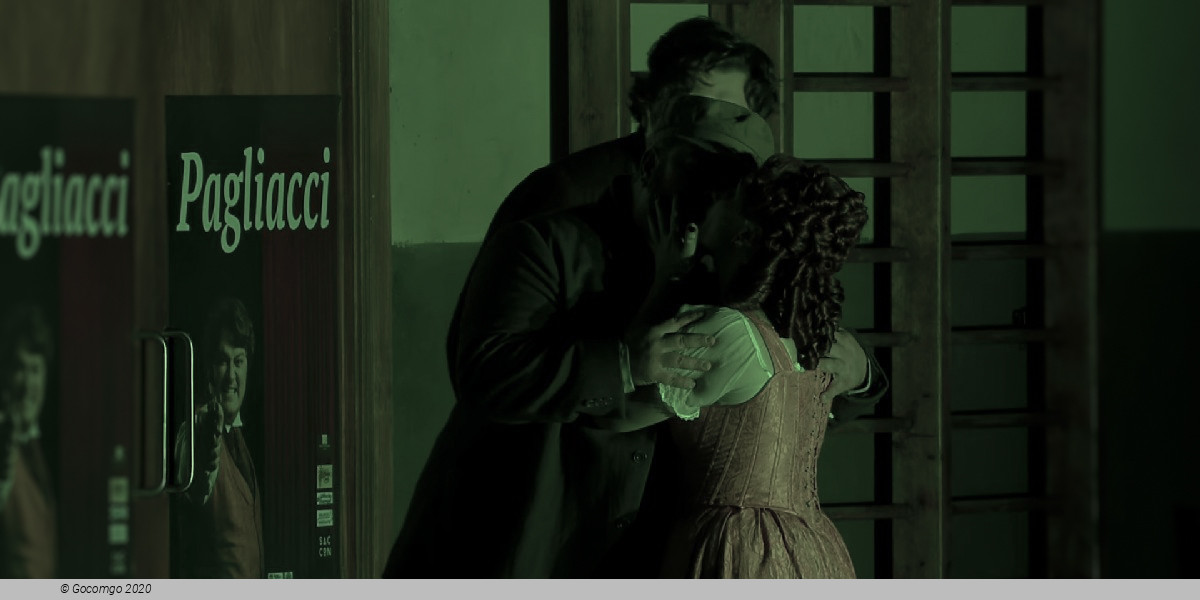
Pagliacci is an Italian opera in a prologue and two acts, with music and libretto by Ruggero Leoncavallo. It is the only Leoncavallo opera that is still widely performed. Opera companies have frequently staged Pagliacci with Cavalleria rusticana by Mascagni, a double bill known colloquially as 'Cav and Pag'.

Synopsis

Place: Calabria, near Montalto, on the Feast of the Assumption
Time: between 1865 and 1870

Prologue

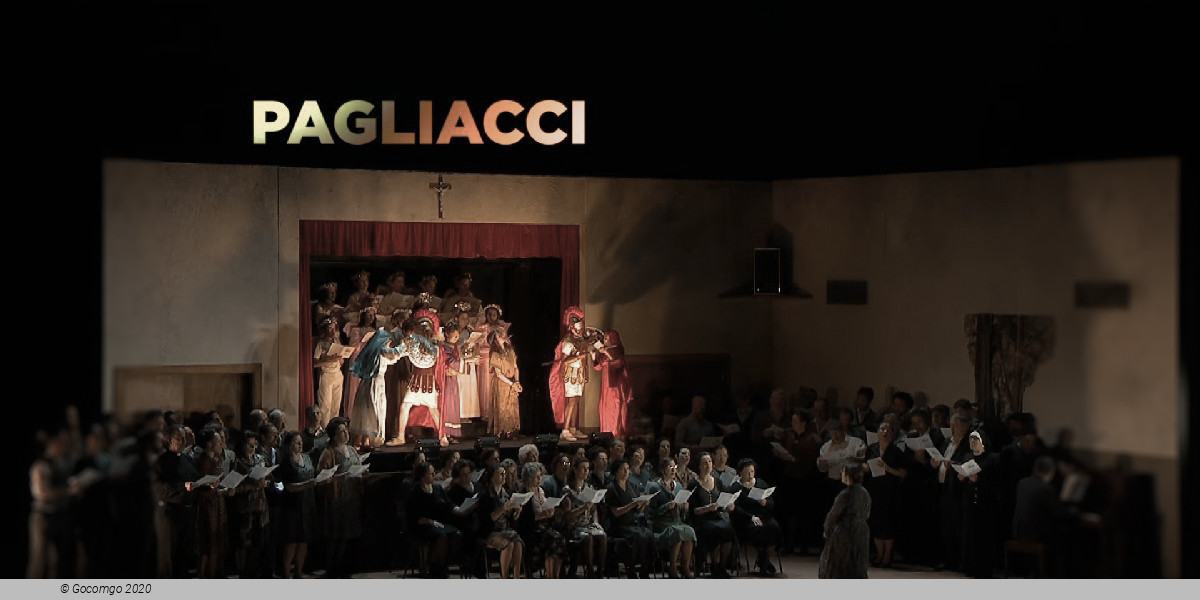
During the overture, the curtain rises. From behind a second curtain, Tonio, dressed as his commedia character Taddeo, addresses the audience (Si può?... Si può?... Signore! Signori! ... Un nido di memorie). He reminds the audience that actors have feelings too, and that the show is about real people.

Act 1

At three o'clock in the afternoon, the commedia troupe enters the village to the cheering of the villagers. Canio describes the night's performance: the troubles of Pagliaccio. He says the play will begin at "ventitré ore", an agricultural method of time-keeping that means the play will begin an hour before sunset. As Nedda steps down from the cart, Tonio offers his hand, but Canio pushes him aside and helps her down himself.

The villagers suggest drinking at the tavern. Canio and Beppe accept, but Tonio stays behind. The villagers tease Canio that Tonio is planning an affair with Nedda. Canio warns everyone that while he may act the foolish husband in the play, in real life he will not tolerate other men making advances to Nedda. Shocked, a villager asks if Canio really suspects her. He says no, and sweetly kisses her on the forehead. As the church bells ring vespers, he and Beppe leave for the tavern, leaving Nedda alone.

Nedda is frightened by Canio's vehemence (Qual fiamma avea nel guardo), but the birdsong comforts her (Stridono lassù). Tonio returns and confesses his love for her, but she laughs. Enraged, Tonio grabs Nedda, but she takes a whip, strikes him and drives him off. Silvio, who is Nedda's lover, comes from the tavern, where he has left Canio and Beppe drinking. He asks Nedda to elope with him after the performance and, though she is afraid, she agrees. Tonio, who has been eavesdropping, leaves to inform Canio so that he might catch Silvio and Nedda together. Canio and Tonio return and, as Silvio escapes, Nedda calls after him, "I will always be yours!"

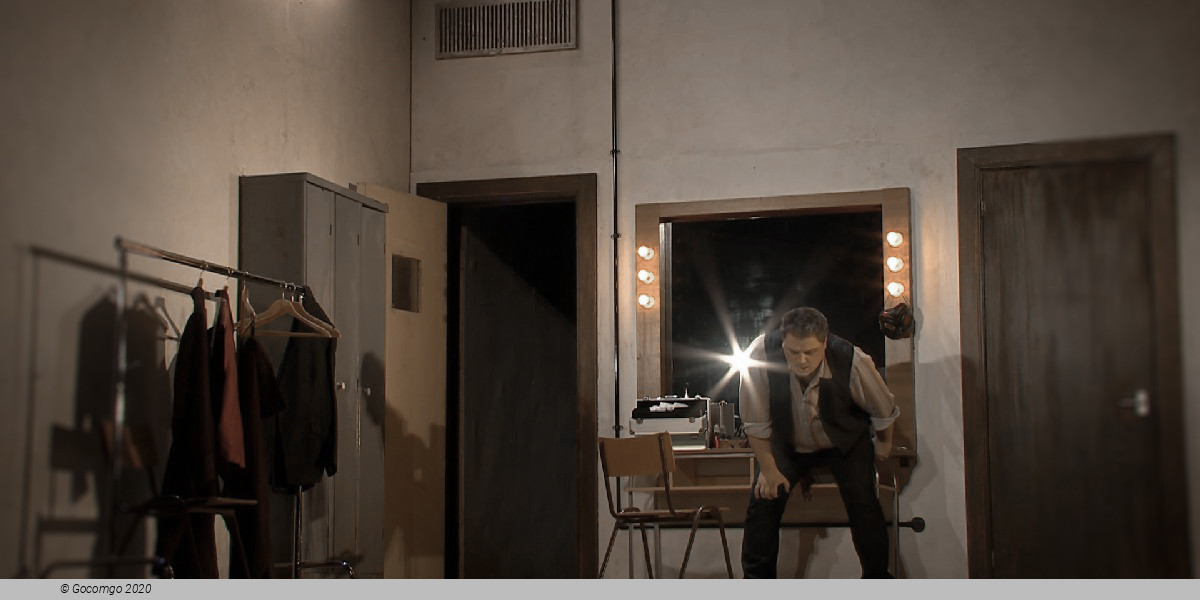
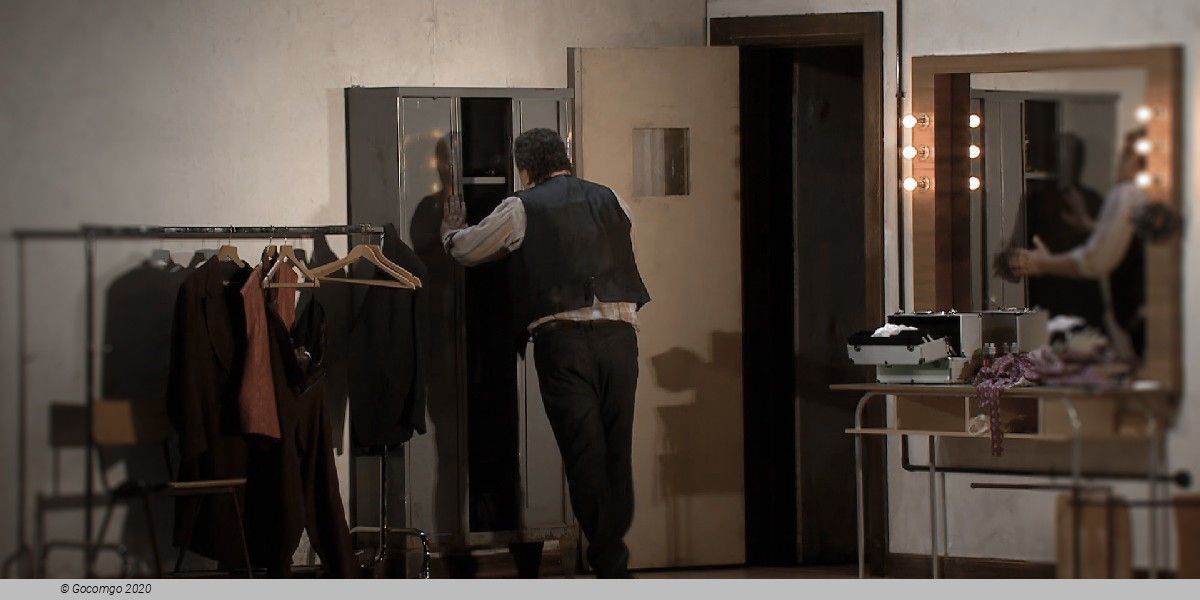
Canio chases Silvio, but does not catch him and does not see his face. He demands that Nedda tell him the name of her lover, but she refuses. He threatens her with a knife, but Beppe disarms him. Beppe insists that they prepare for the performance. Tonio tells Canio that her lover will give himself away at the play. Canio is left alone to put on his costume and prepares to laugh (Vesti la giubba – "Put on the costume").

Act 2

As the crowd arrives, Nedda, costumed as Colombina, collects their money. She whispers a warning to Silvio, and the crowd cheers as the play begins.

Colombina's husband Pagliaccio has gone away until morning, and Taddeo is at the market. She anxiously awaits her lover Arlecchino, who comes to serenade her (O Colombina) from beneath her window. Taddeo returns and confesses his love, but she mocks him. She lets Arlecchino in through the window. He boxes Taddeo's ears and kicks him out of the room, and the audience laughs.

Arlecchino and Colombina dine, and he gives her a sleeping potion to use later. When Pagliaccio returns, Colombina will drug him and elope with Arlecchino. Taddeo bursts in, warning that Pagliaccio is suspicious of his wife and is about to return. As Arlecchino escapes through the window, Colombina tells him, "I will always be yours!"

As Canio (as Pagliaccio) enters, he hears Nedda (as Colombina) and exclaims "Name of God! Those same words!" He tries to continue the play, but loses control and demands to know her lover's name. Nedda, hoping to keep to the performance, calls Canio by his stage name "Pagliaccio," to remind him of the audience's presence. He answers with his arietta: No! Pagliaccio non son! He sings that if his face is pale, it is not from the stage makeup but from the shame she has brought him. The crowd, impressed by his emotional performance, which they do not realize is real, cheers him.

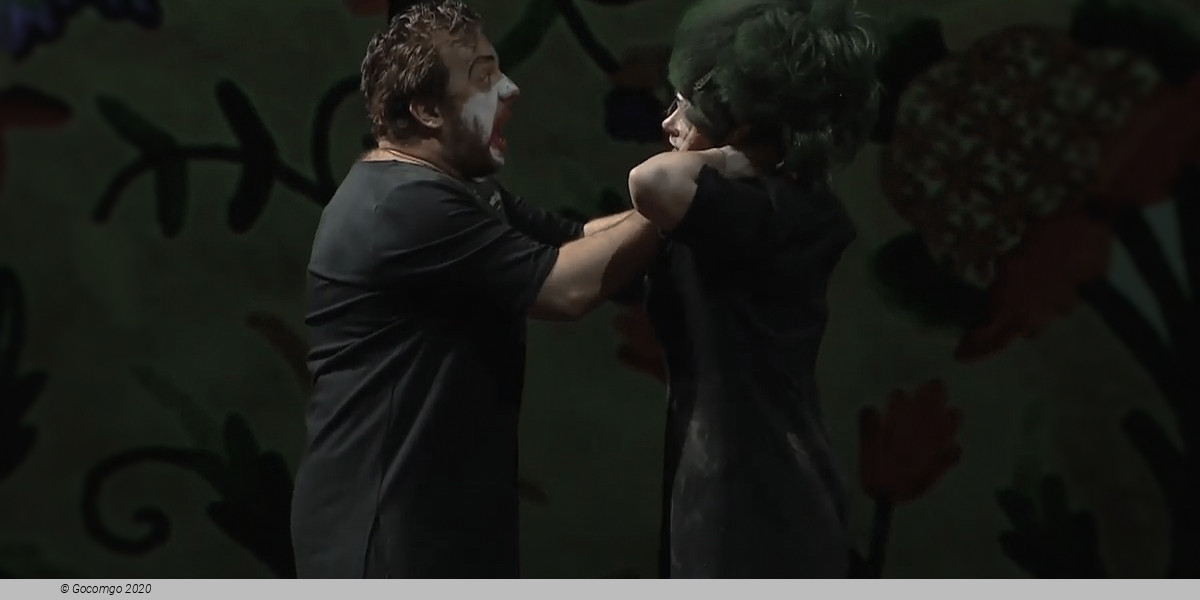
Nedda, trying to continue the play, admits that she has been visited by the innocent Arlecchino. Canio, furious and forgetting the play, demands the name of her lover. Nedda swears she will never tell him, and it becomes apparent that they are not acting. Beppe asks Tonio to intervene, but Tonio refrains and prevents Beppe from halting the action. Silvio begins to fight his way toward the stage. Canio, grabbing a knife from the table, stabs Nedda. As she dies, she calls: "Help! Silvio!" Silvio attacks Canio, but Canio kills Silvio also. The horrified audience then hears the celebrated final line:

La commedia è finita! – "The comedy is finished!"

Venue Info

Hungarian State Opera House - Budapest
Location   Andrássy út 22

The Hungarian State Opera House (Hungarian: Magyar Állami Operaház) is a neo-Renaissance opera house located in central Budapest, on Andrássy út. The Hungarian State Opera House is the main opera house of the country and the second largest opera house in Budapest and in Hungary. Today, the opera house is home to the Budapest Opera Ball, a society event dating back to 1886. The Theatre was designed by Miklós Ybl, a major figure of 19th-century Hungarian architecture.

Construction began in 1875, funded by the city of Budapest and by Emperor Franz Joseph I of Austria-Hungary, and the new house opened to the public on the 27 September 1884. Before the closure of the "Népszínház" in Budapest, it was the third largest opera building in the city; today it is the second largest opera house in Budapest and in Hungary.

Touring groups had performed operas in the city from the early 19th century, but as Legány notes, "a new epoch began after 1835 when part of the Kasa National Opera and Theatrical Troupe arrived in Buda". They took over the Castle Theatre and, in 1835, were joined by another part of the troupe, after which performances of operas were given under conductor Ferenc Erkel. By 1837 they had established themselves at the Magyar Színház (Hungarian Theatre) and by 1840, it had become the "Nemzeti Színház" (National Theatre). Upon its completion, the opera section moved into the Hungarian Royal Opera House, with performances quickly gaining a reputation for excellence in a repertory of about 45 to 50 operas and about 130 annual performances. 

Many important artists were guests here including the composer Gustav Mahler, who was director in Budapest from 1888 to 1891 and Otto Klemperer, who was music director for three years from 1947 to 1950.

It is a richly decorated building and is considered one of the architect's masterpieces. It was built in neo-Renaissance style, with elements of Baroque. Ornamentation includes paintings and sculptures by leading figures of Hungarian art including Bertalan Székely, Mór Than, and Károly Lotz. Although in size and capacity it is not among the greatest, in beauty and the quality of acoustics the Budapest Opera House is considered to be amongst the finest opera houses in the world.

The auditorium holds 1,261 people. It is horseshoe-shaped and – according to measurements done in the 1970s by a group of international engineers – has the third best acoustics in Europe after La Scala in Milan and the Palais Garnier in Paris. Although many opera houses have been built since the Budapest Opera House is still among the best in terms of acoustics.

In front of the building are statues of Ferenc Erkel and Franz Liszt. Liszt is the best-known Hungarian composer. Erkel composed the Hungarian national anthem, and was the first music director of the Opera House; he was also the founder of the Budapest Philharmonic Orchestra.

Each year the season lasts from September to the end of June and, in addition to opera performances, the House is home to the Hungarian National Ballet.

There are guided tours of the building in six languages (English, German, Spanish, French, Italian, and Hungarian) almost every day.

Important Info
Type: Opera
City: Budapest, Hungary
Acts: 1
Sung in: Italian
Titles in: Hungarian,English

E-tickets: Print at home or at the box office of the event if so specified. You will find more information in your booking confirmation email.

You can only select the category, and not the exact seats.
If you order 2 or 3 tickets: your seats will be next to each other.
If you order 4 or more tickets: your seats will be next to each other, or, if this is not possible, we will provide a combination of groups of seats (at least in pairs, for example 2+2 or 2+3).

Top of page