
Hungarian State Opera House: Dialogues des Carmélites Tickets | Event Dates & Schedule | GoComGo.com

Dialogues des Carmélites Tickets

Hungarian State Opera House, Budapest, Hungary
Important Info
Type: Opera
City: Budapest, Hungary
Duration: 3h
Acts: 3
Sung in: French
Titles in: Hungarian,English

E-tickets: Print at home or at the box office of the event if so specified. You will find more information in your booking confirmation email.

You can only select the category, and not the exact seats.
If you order 2 or 3 tickets: your seats will be next to each other.
If you order 4 or more tickets: your seats will be next to each other, or, if this is not possible, we will provide a combination of groups of seats (at least in pairs, for example 2+2 or 2+3).

Cast
Performers
Choose the date to see the peformers
Overview

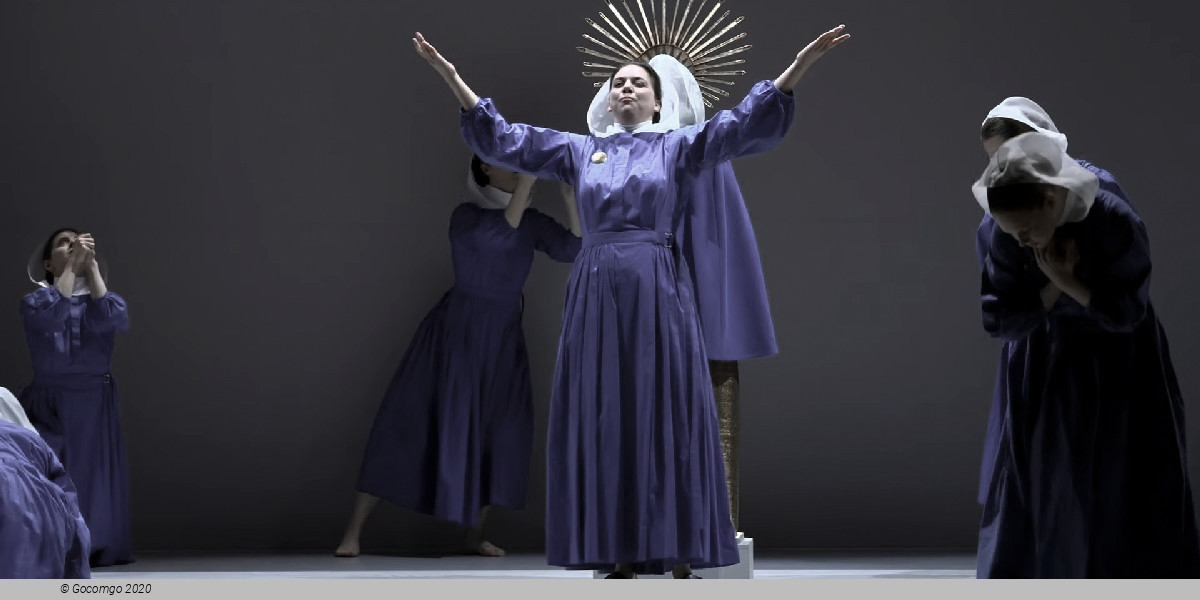
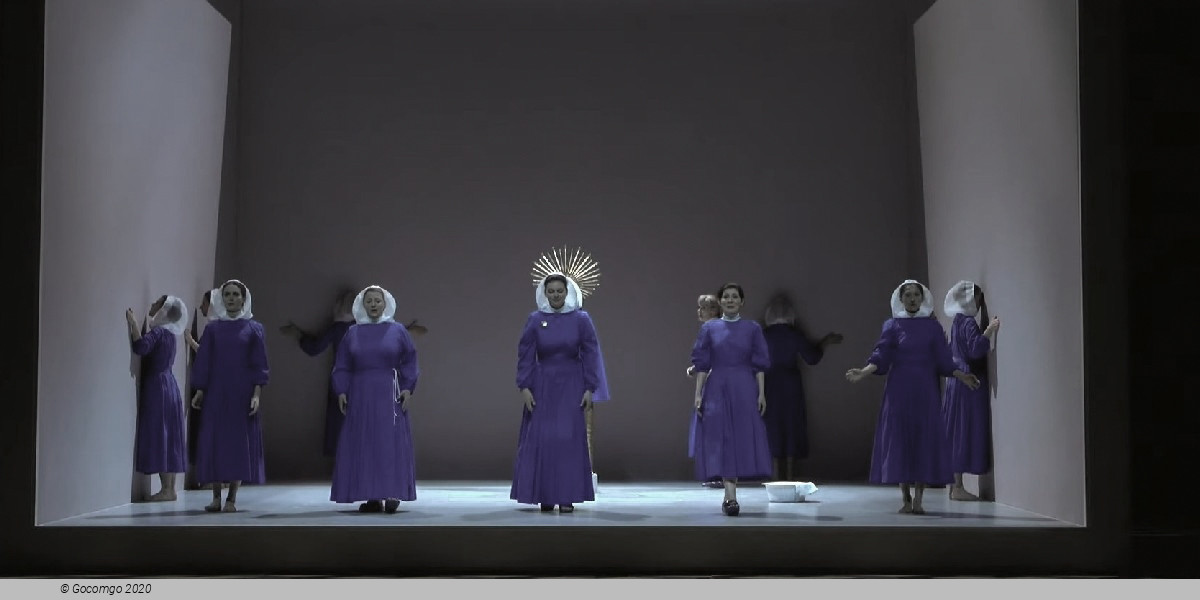
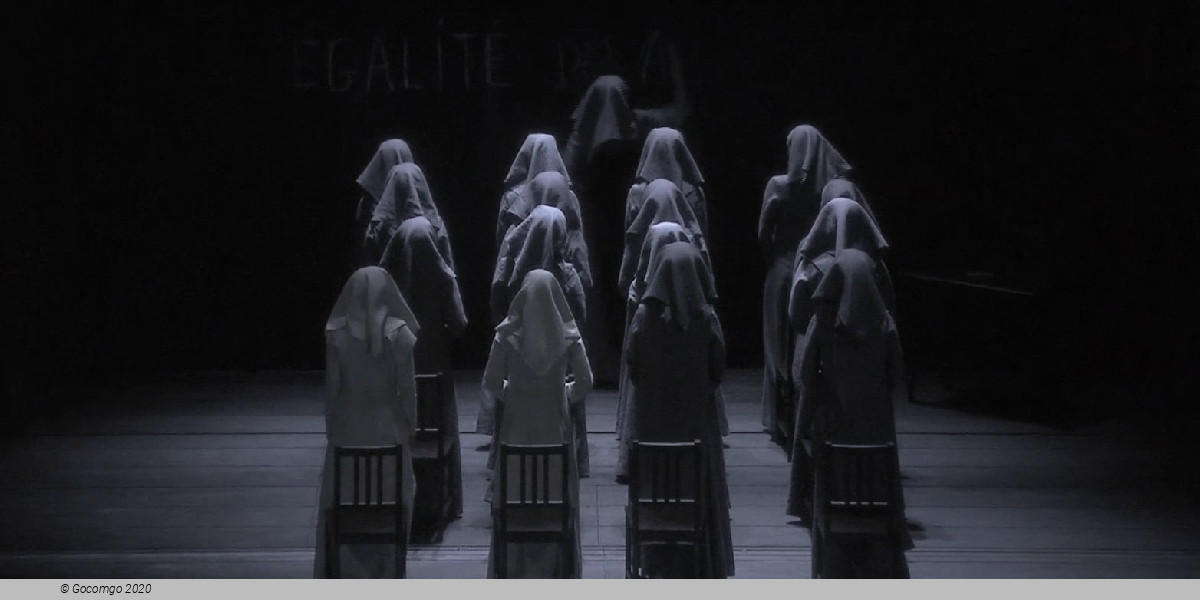
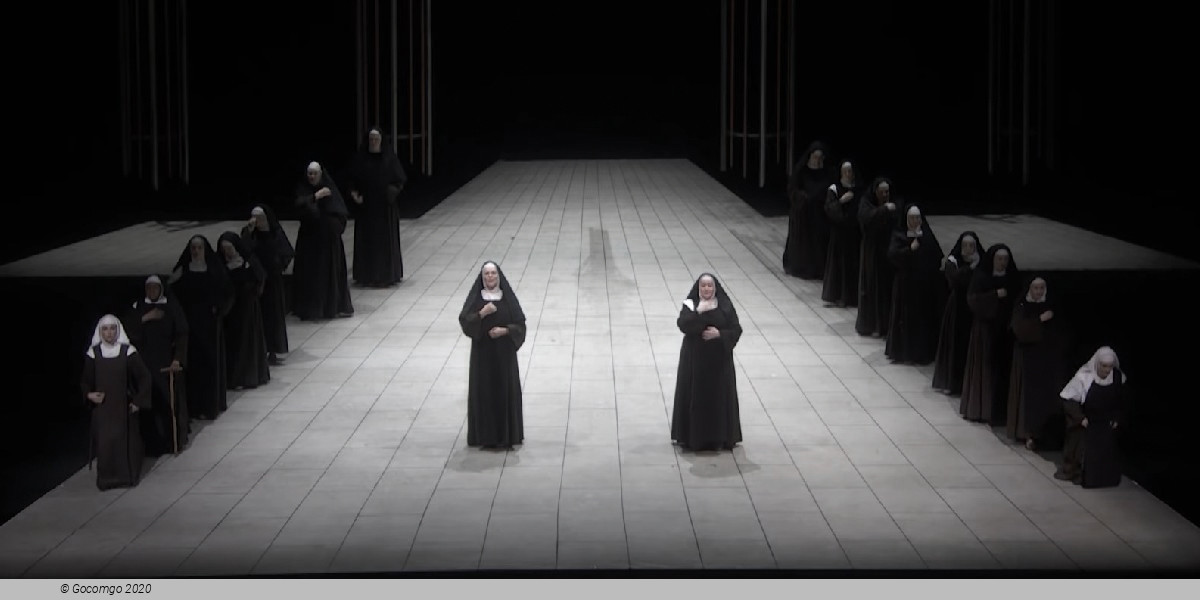
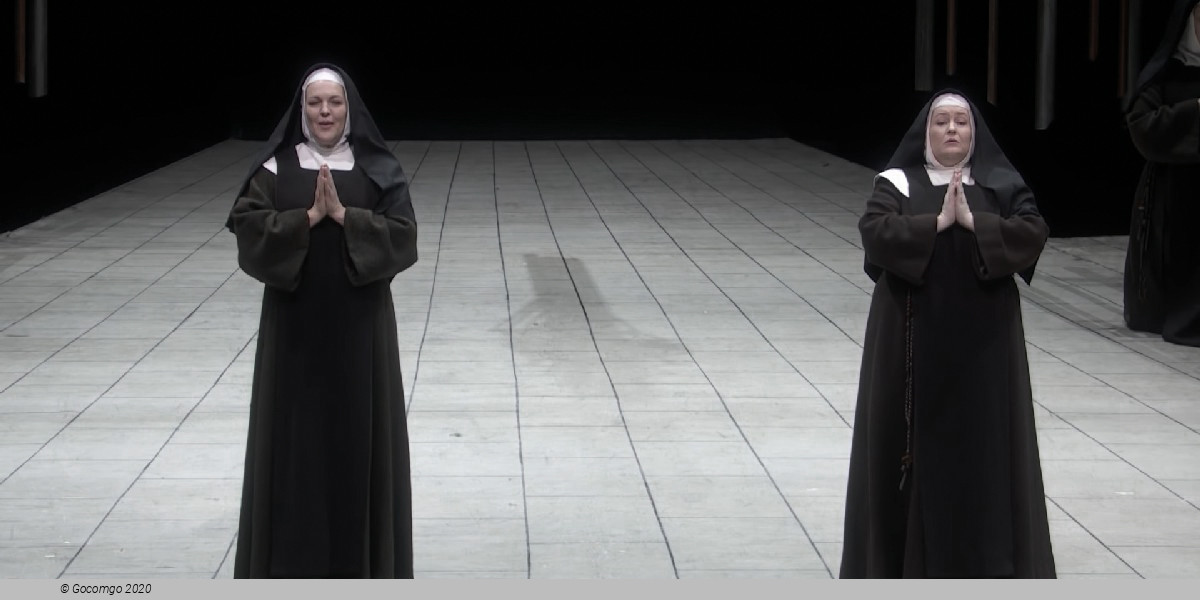
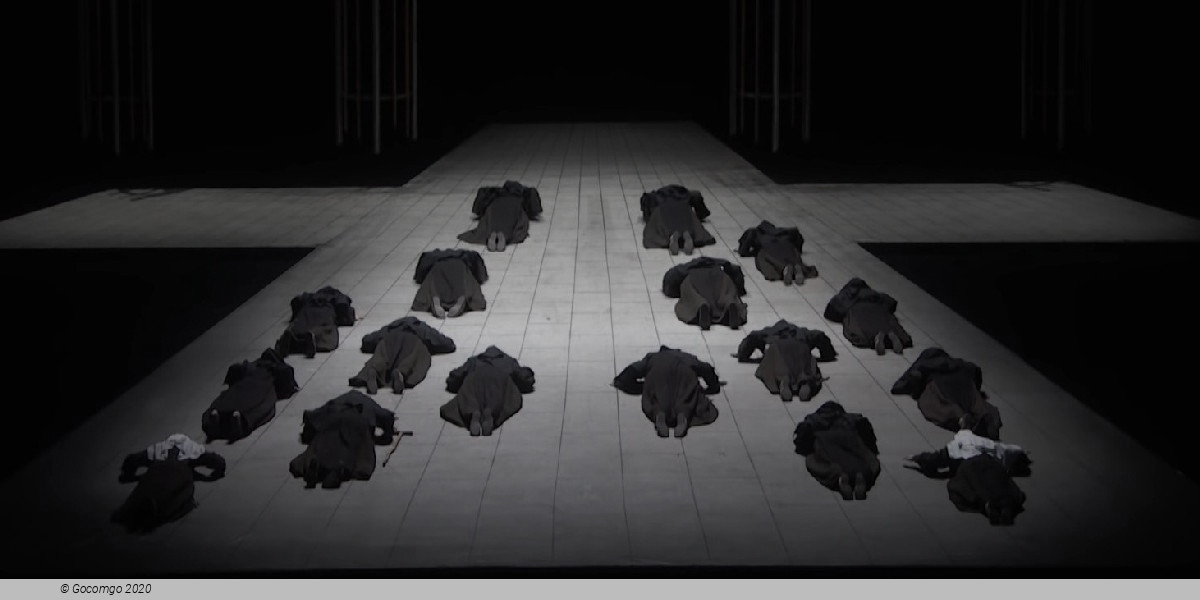
Serving as the basis for French composer Francis Poulenc's opera was the true story of the martyrs of Compiègne: during the French Revolution, the terreur and the Jacobin dictatorship's antagonism toward the Church resulted in the execution of sixteen Carmelite nuns in Paris on 17 July 1794. Their hair shorn and singing the Veni Creator Spiritus, the sisters each took their places under the guillotine. (The dictatorship came to an end exactly ten days later, with Robespierre himself being decapitated.)

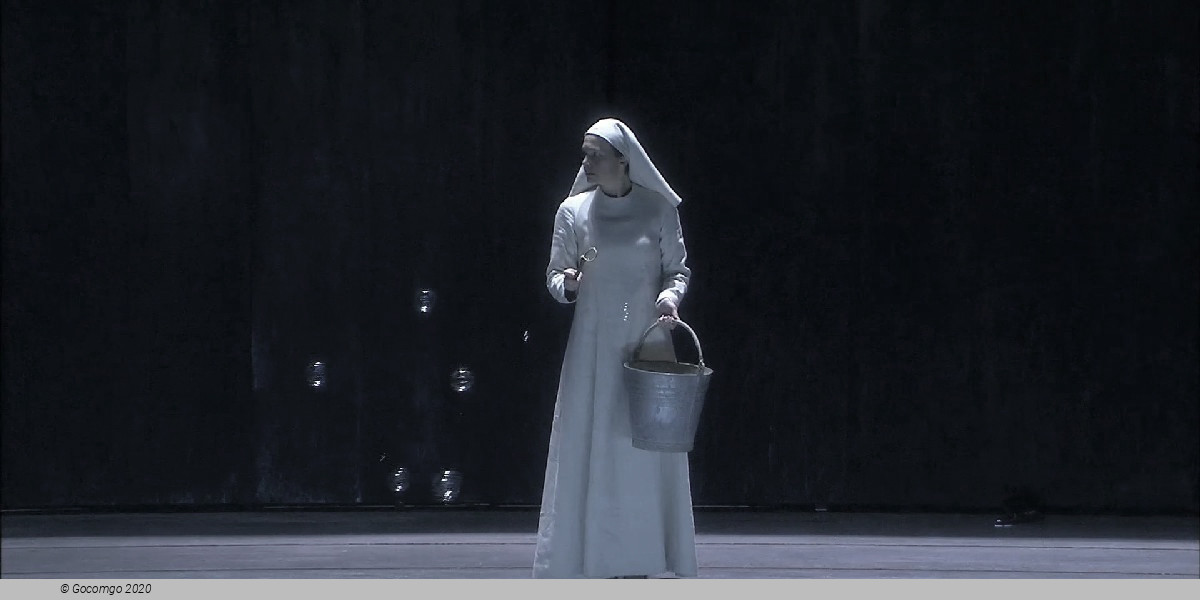
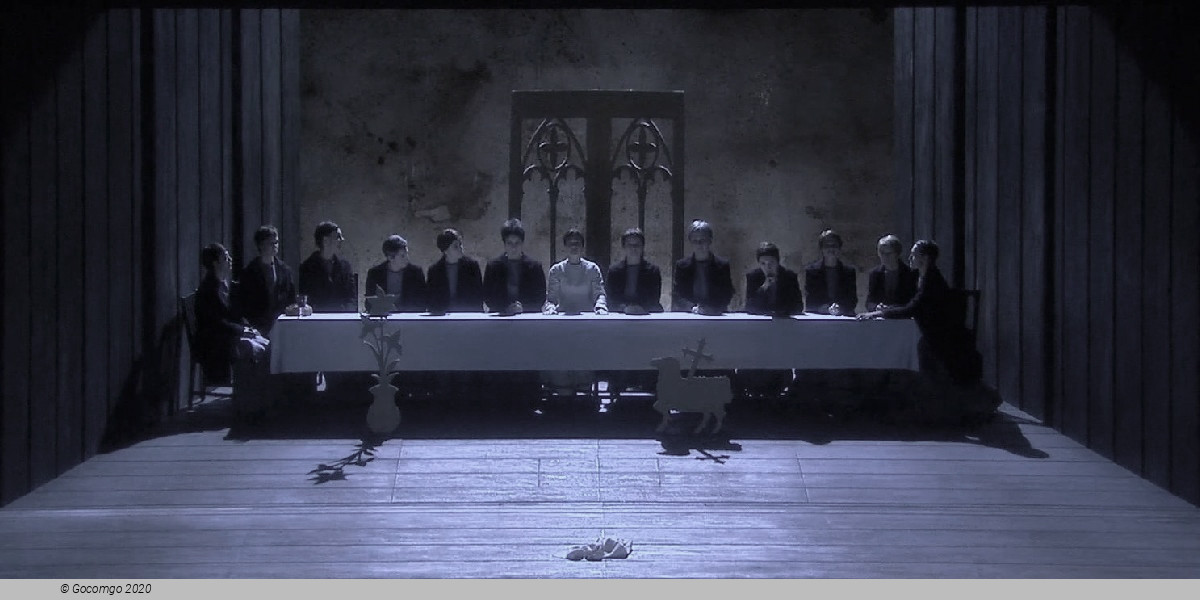
At the centre of the story stands a young aristocratic girl, Blanche de la Force, who is driven by fear to flee to the convent. Through her struggles, the composer shows the trial of faith in a work whose finale is perhaps both the most fantastic and the most shocking in the operatic literature. The work was staged by Ferenc Anger.

History
Premiere of this production: 26 January 1957, La Scala, Milan (in Italian)

Dialogues des Carmélites (Dialogues of the Carmelites) is an opera in three acts, divided into twelve scenes with linking orchestral interludes, with music and libretto by Francis Poulenc, completed in 1956. The composer's second opera, Poulenc wrote the libretto after the work of the same name by Georges Bernanos. The opera tells a fictionalised version of the story of the Martyrs of Compiègne, Carmelite nuns who, in 1794 during the closing days of the Reign of Terror during the French Revolution, were guillotined in Paris for refusing to renounce their vocation.

Synopsis

Place: Paris and Compiègne, 1789–94
Time: during the French Revolution
Act 1
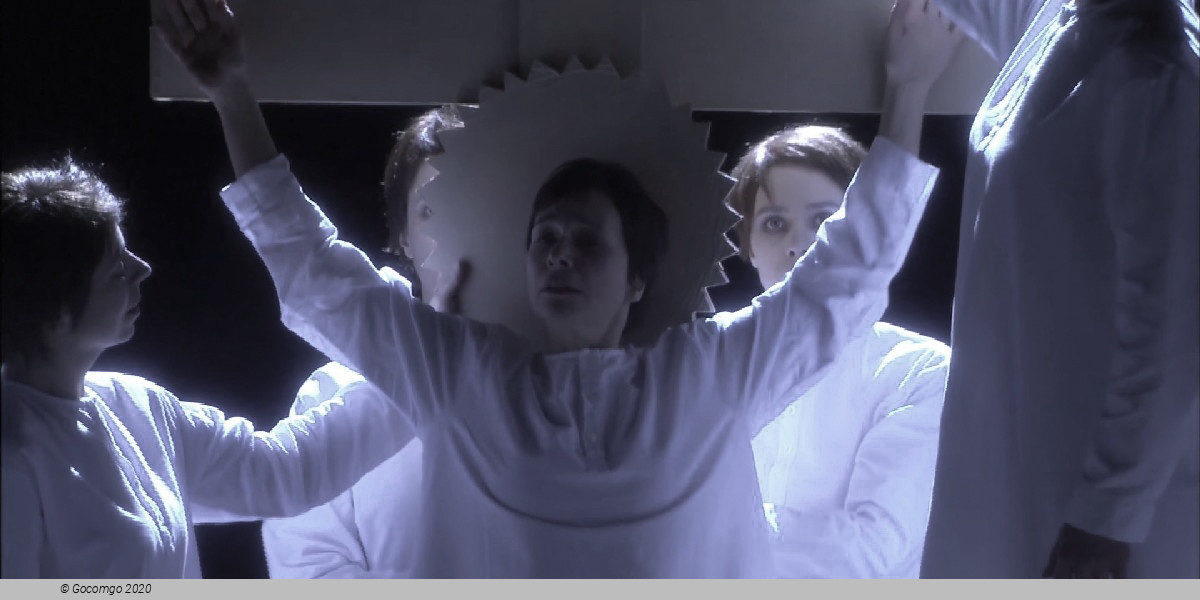
Against the setting of the French Revolution, when crowds stop carriages in the street and aristocrats are attacked, the pathologically timid Blanche de la Force decides to retreat from the world and enter a Carmelite convent. The Mother Superior informs her that the Carmelite Order is not a refuge; it is the duty of the nuns to guard the Order, not the other way around. In the convent, the chatterbox Sister Constance tells Blanche (to her consternation) that she has had a dream that the two of them will die young together. The prioress, who is dying, commits Blanche to the care of Mother Marie. The Mother Superior passes away in great agony, shouting in her delirium that despite her long years of service to God, He has abandoned her. Blanche and Mother Marie, who witness her death, are shaken.

Act 2
Sister Constance remarks to Blanche that the prioress' death seemed unworthy of her, and speculates that she had been given the wrong death, as one might be given the wrong coat in a cloakroom. She said that perhaps someone else will find death surprisingly easy. Perhaps we die not for ourselves alone, but for each other.

Blanche's brother, the Chevalier de la Force, arrives to announce that their father thinks Blanche should withdraw from the convent, since she is not safe there (being both an aristocrat and the member of a religious community, at a time of anti-aristocracy and anti-clericalism in the rising revolutionary tides). Blanche refuses, saying that she has found happiness in the Carmelite Order. Later she admits to Mother Marie that it is fear (or the fear of fear itself, as the Chevalier expresses it) that keeps her from leaving.

The chaplain announces that he has been forbidden to preach (presumably for being a non-juror under the Civil Constitution of the Clergy). The nuns remark on how fear rules the country, and no one has the courage to stand up for the priests. Sister Constance asks, "Are there no men left to come to the aid of the country?" "When priests are lacking, martyrs are superabundant," replies the new Mother Superior. Mother Marie says that the Carmelites can save France by giving their lives, but the Mother Superior corrects her: it is not permitted to choose to become a martyr; God decides who will be martyred.

A police officer arrives and announces to the community that the Legislative Assembly has nationalized the convent and its property, and the nuns must give up their religious habits. When Mother Marie acquiesces, the officer taunts her for being eager to dress like everyone else. She replies that the nuns will continue to serve, no matter how they are dressed. "The people have no need of servants," proclaims the officer haughtily. "No, but they have a great need for martyrs," responds Mother Marie. "In times like these, death is nothing," he says. "Life is nothing," she answers, "when it is so debased."

Act 3
In the absence of the new prioress, Mother Marie proposes that the nuns take a vow of martyrdom. However, all must agree, or Mother Marie will not insist. A secret vote is held; there is one dissenting voice. Sister Constance declares that she was the dissenter, and that she has changed her mind, so the vow can proceed. Blanche runs away from the convent, and Mother Marie goes to look for her, finding her in her father's library. Her father has been guillotined, and Blanche has been forced to serve her former servants.

The nuns are all arrested and condemned to death, but Mother Marie is away at the time of the arrest. Upon receiving the news, the chaplain tells Mother Marie, when they meet again, that since God has chosen to spare her, she cannot voluntarily become a martyr by joining the others in prison.

At the place of execution, one nun after another stands and slowly processes toward the guillotine, as all sing the "Salve Regina" ("Hail, Holy Queen"). At the last moment, Blanche appears, to Constance's joy, to join her condemned sisters. Having seen all the other nuns executed, as she mounts the scaffold, Blanche sings the final stanza of the "Veni Creator Spiritus," "Deo Patri sit gloria...", the Catholic hymn traditionally used when taking vows in a religious community and offering one's life to God.

Venue Info

Hungarian State Opera House - Budapest
Location   Andrássy út 22

The Hungarian State Opera House (Hungarian: Magyar Állami Operaház) is a neo-Renaissance opera house located in central Budapest, on Andrássy út. The Hungarian State Opera House is the main opera house of the country and the second largest opera house in Budapest and in Hungary. Today, the opera house is home to the Budapest Opera Ball, a society event dating back to 1886. The Theatre was designed by Miklós Ybl, a major figure of 19th-century Hungarian architecture.

Construction began in 1875, funded by the city of Budapest and by Emperor Franz Joseph I of Austria-Hungary, and the new house opened to the public on the 27 September 1884. Before the closure of the "Népszínház" in Budapest, it was the third largest opera building in the city; today it is the second largest opera house in Budapest and in Hungary.

Touring groups had performed operas in the city from the early 19th century, but as Legány notes, "a new epoch began after 1835 when part of the Kasa National Opera and Theatrical Troupe arrived in Buda". They took over the Castle Theatre and, in 1835, were joined by another part of the troupe, after which performances of operas were given under conductor Ferenc Erkel. By 1837 they had established themselves at the Magyar Színház (Hungarian Theatre) and by 1840, it had become the "Nemzeti Színház" (National Theatre). Upon its completion, the opera section moved into the Hungarian Royal Opera House, with performances quickly gaining a reputation for excellence in a repertory of about 45 to 50 operas and about 130 annual performances. 

Many important artists were guests here including the composer Gustav Mahler, who was director in Budapest from 1888 to 1891 and Otto Klemperer, who was music director for three years from 1947 to 1950.

It is a richly decorated building and is considered one of the architect's masterpieces. It was built in neo-Renaissance style, with elements of Baroque. Ornamentation includes paintings and sculptures by leading figures of Hungarian art including Bertalan Székely, Mór Than, and Károly Lotz. Although in size and capacity it is not among the greatest, in beauty and the quality of acoustics the Budapest Opera House is considered to be amongst the finest opera houses in the world.

The auditorium holds 1,261 people. It is horseshoe-shaped and – according to measurements done in the 1970s by a group of international engineers – has the third best acoustics in Europe after La Scala in Milan and the Palais Garnier in Paris. Although many opera houses have been built since the Budapest Opera House is still among the best in terms of acoustics.

In front of the building are statues of Ferenc Erkel and Franz Liszt. Liszt is the best-known Hungarian composer. Erkel composed the Hungarian national anthem, and was the first music director of the Opera House; he was also the founder of the Budapest Philharmonic Orchestra.

Each year the season lasts from September to the end of June and, in addition to opera performances, the House is home to the Hungarian National Ballet.

There are guided tours of the building in six languages (English, German, Spanish, French, Italian, and Hungarian) almost every day.

Important Info
Type: Opera
City: Budapest, Hungary
Duration: 3h
Acts: 3
Sung in: French
Titles in: Hungarian,English

E-tickets: Print at home or at the box office of the event if so specified. You will find more information in your booking confirmation email.

You can only select the category, and not the exact seats.
If you order 2 or 3 tickets: your seats will be next to each other.
If you order 4 or more tickets: your seats will be next to each other, or, if this is not possible, we will provide a combination of groups of seats (at least in pairs, for example 2+2 or 2+3).

Top of page