
Carnegie Hall: Berliner Philharmoniker: Home Match I Tickets | Event Dates & Schedule | GoComGo.com

Berliner Philharmoniker: Home Match I Tickets

Carnegie Hall, New York, USA
Important Info
Type: Classical Concert
City: New York, USA

E-tickets: Print at home or at the box office of the event if so specified. You will find more information in your booking confirmation email.

You can only select the category, and not the exact seats.
If you order 2 or 3 tickets: your seats will be next to each other.
If you order 4 or more tickets: your seats will be next to each other, or, if this is not possible, we will provide a combination of groups of seats (at least in pairs, for example 2+2 or 2+3).

Cast
Performers
Choose the date to see the peformers
Overview

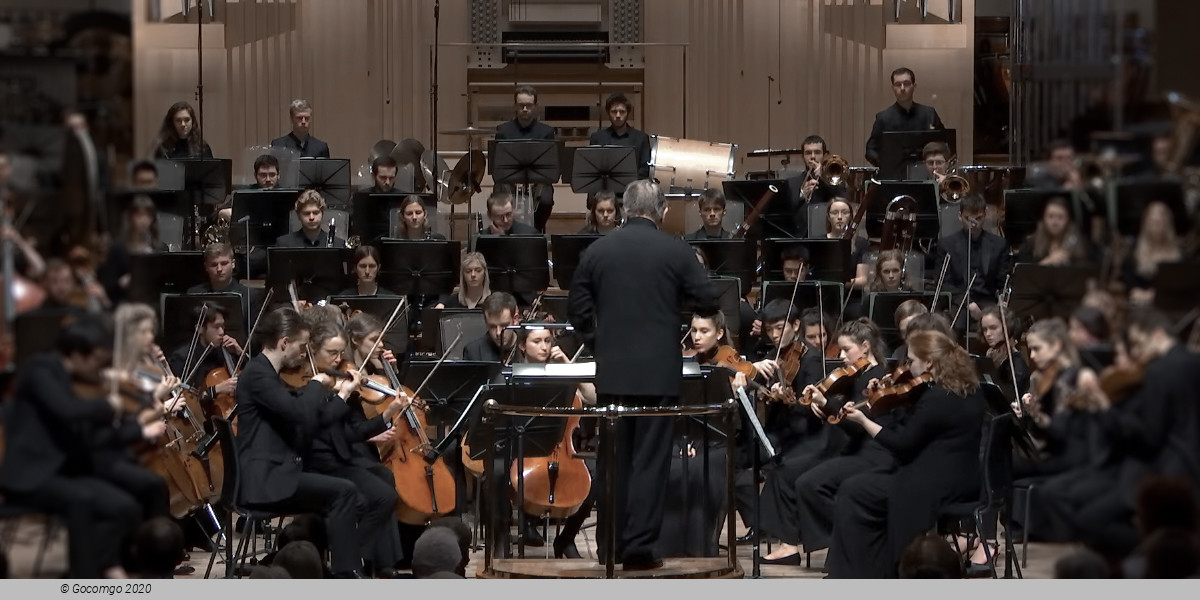
Eötvös, Xenakis and Varèse will take their audience on a journey to Andalusia, America and into the history of Kabbala. The soloist: the outstanding violin player Isabelle Faust.

Edgard Varèse, the French-Italian composer who lived both in Paris and Berlin, had been living in the US for several years when he wrote his tone poem “Amériques”. He had not yet given up his hope and faith in the land of boundless opportunities. In the “Amériques”, the dissolution of boundaries is the name of the game. The original version, which will be conducted by Peter Eötvös, demands a 140-strong orchestra, including a siren, a ship’s horn, a wind machine and lions’ roars. The border between art and the city, both landmarks of modern life, is deliberately transcended. Varèse composed a vision, powerful in its effect, clearly structured in its form and progression. He created a New World of the imagination, with sounds of reality streaming in.

Peter Eötvös was also guided by his fascination with a different, foreign world when he composed his third violin concerto, a work commissioned by the Foundation Berliner Philharmoniker and Granada Festival, Orchestre de Paris and the BBC Proms. The Alhambra, this magnificent testimony of Spanish-Moorish architecture, the landscape of Andalucia, the light in its skies – all this, the composer explains, is reflected in his work. His predilection for cryptograms led him to initially tie his imagination to the notes of G (for Granada) and the notes that correspond with letters in the word Alhambra, to develop this melodious and virtuoso work from them. The mandolin is a constant companion to the soloist. The concert is similar, says Eötvös, to a tour of the Alhambra and the ideas that it inspired.

The programme is arranged in the form of a great orchestral crescendo. It begins with the sounds of strings. The secret of the far-away place, Jerusalem, and the infernal-divine legends that twine about this holy city inspired the thoughts of Varése’s pupil Iannis Xenakis when he composed “Shaar” for the Testimonium-Festival in Israel in the year 1982.

Venue Info

Carnegie Hall - New York
Location   57th Street and Seventh Avenue

Carnegie Hall is a concert venue in Midtown Manhattan in New York City, United States, located at 881 Seventh Avenue, occupying the east side of Seventh Avenue between West 56th Street and West 57th Street, two blocks south of Central Park.

Designed by architect William Burnet Tuthill and built by philanthropist Andrew Carnegie in 1891, it is one of the most prestigious venues in the world for both classical music and popular music. Carnegie Hall has its own artistic programming, development, and marketing departments, and presents about 250 performances each season. It is also rented out to performing groups. The hall has not had a resident company since 1962, when the New York Philharmonic moved to Lincoln Center's Philharmonic Hall (renamed Avery Fisher Hall in 1973 and David Geffen Hall in 2015).

Carnegie Hall has 3,671 seats, divided among its three auditoriums.

Carnegie Hall contains three distinct, separate performance spaces.

Carnegie Hall is one of the last large buildings in New York built entirely of masonry, without a steel frame; however, when several flights of studio spaces were added to the building near the turn of the 20th century, a steel framework was erected around segments of the building. The exterior is rendered in narrow Roman bricks of a mellow ochre hue, with details in terracotta and brownstone. The foyer avoids typical 19th century Baroque theatrical style with the Florentine Renaissance manner of Filippo Brunelleschi's Pazzi Chapel: white plaster and gray stone form a harmonious system of round-headed arched openings and Corinthian pilasters that support an unbroken cornice, with round-headed lunettes above it, under a vaulted ceiling. The famous white and gold auditorium interior is similarly restrained. The firm of Adler & Sullivan of Chicago, noted for the acoustics of their theaters, were hired as consultant architects though their contributions are not known.

Important Info
Type: Classical Concert
City: New York, USA

E-tickets: Print at home or at the box office of the event if so specified. You will find more information in your booking confirmation email.

You can only select the category, and not the exact seats.
If you order 2 or 3 tickets: your seats will be next to each other.
If you order 4 or more tickets: your seats will be next to each other, or, if this is not possible, we will provide a combination of groups of seats (at least in pairs, for example 2+2 or 2+3).

Top of page