The Beijing Symphony Orchestra adheres to the guidance of Xi Jinping Thought on Socialism with Chinese Characteristics for a New Era, adheres to a people-centered work orientation, and adheres to the purpose of art serving the people. Under the strong leadership of the Municipal Party Committee and Government, the Municipal Party Committee Propaganda Department and the Municipal Culture and Tourism Bureau , always implement the mission of focusing on raising the flag, gathering the hearts of the people, educating new people, developing culture, and displaying the image, showing new responsibilities in building the soul of Bacon, achieving new achievements in keeping integrity and innovation, and shining a new look in the cultivation of Mingde. With a strong sense of duty and mission to shoulder the heavy responsibilities and great achievements, it is committed to promoting the development of China's symphony industry, playing its due active role in prospering the capital's literary and art market and promoting the construction of a cultural center.
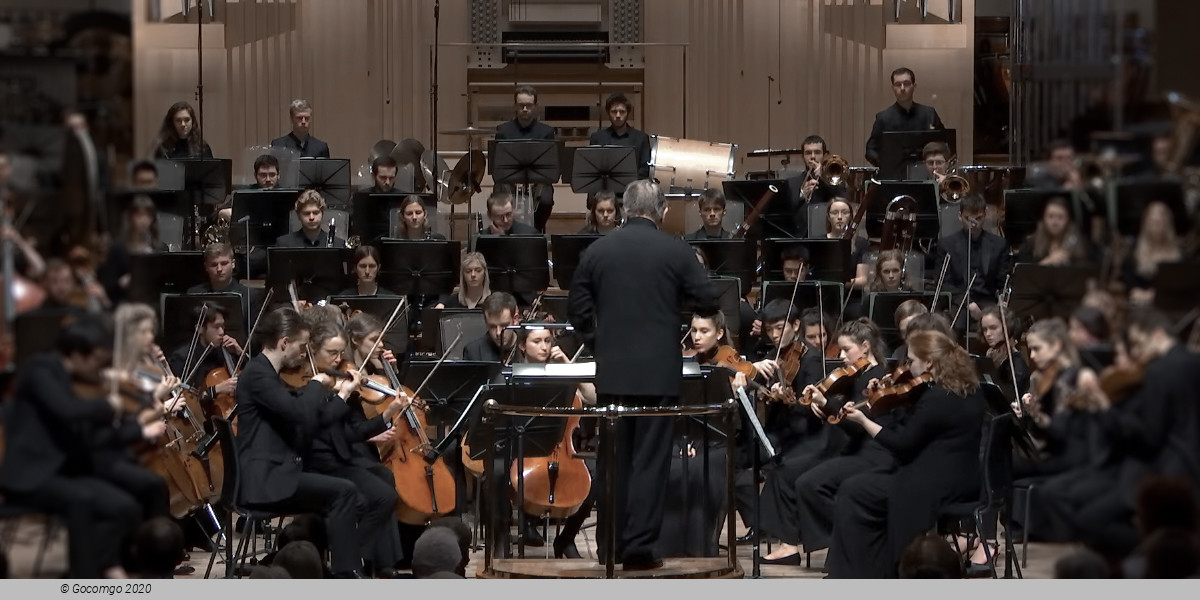
The Beijing Symphony Orchestra, known as China's "Capital Pearl Orchestra", was established in October 1977 and is affiliated to the Beijing Municipal Bureau of Culture and Tourism. The older generation of conductors Li Delun, Huang Feili, Han Zhongjie, Xu Xin, Qiuli and the first leader Li Xianglin, who have served as artistic directors of the orchestra for a long time, have made great contributions to the development of the orchestra. From the 1990s to 2018, the famous conductor Tan Lihua served as the president, artistic director and chief conductor of the Beijing Symphony Orchestra. During this period, major reforms and adjustments were carried out, and the orchestra gradually became professional. As an experiencer, witness and creator of music culture in the capital Beijing, the orchestra has relied on professional standards, rigorous performance skills, rich repertoire and profound musical accomplishment as well as all musicians' artistic pursuits in the course of decades of development. With persistent pursuit and love, it has performed nearly a thousand works including classic operas, symphonies, chamber music and contemporary orchestral music. At the same time, it has worked closely with world-renowned conductors, performers and famous Western orchestras to continuously expand the scope of repertoire and achieve the artistic level of the orchestra. Its continuous improvement has been steadily improved and it has been widely praised at home and abroad, making the Beijing Symphony Orchestra one of the most popular and internationally influential orchestras in China. The Zhongshan Park Concert Hall, located in the Royal Garden, is the main venue of the Beijing Symphony Orchestra.
Entering a new era, the Beijing Symphony Orchestra is based on the functional positioning of the capital city and insists on highlighting "famous orchestras, famous artists, and masterpieces" during the music season; commissioned creations to explore the connotation of Beijing's "three cultural belts"; national tours to showcase the style of the Capital Orchestra; and enthusiasm for charity performances. People's symphony; market expansion is aggressive, flexible and diverse... The five major sections are systematically constructed and branded, each with its own characteristics and complementing each other.
Today, the Beijing Symphony Orchestra has famous orchestras and first-class musicians on its roster: Berlin Philharmonic Orchestra, London Philharmonic Orchestra, Russian National Symphony Orchestra, Royal Philharmonic Orchestra, etc.; famous artistic masters include conductor: Gerner Dee Rozhdestvinsky, Evgeny Svetlanov, Christopher Eschenbach, Lawrence Foster, Thomas Sandrine, Andrew Davis, Leif Hilgerstein, Pavel Kogan, Tang Muhai; piano masters: Lazar Behrmann, Franz Justus, Jean-Yves Thibaudet, Zimón Barto, Yin Chengzong, Lang Lang ; Violin masters: Vadim Repin, Midori, Lu Siqing, Ning Feng, Christopher Barati, Sergei Krenov; Cello masters: Misha Maisky, Lloyd Weber, Crona Carreni, Tian Bonian; viola master Yuri Bashmet; trumpet player: Gabe Podocki; singers: Jose Carreras, Jennifer Ramo You wait.
Contemporary conductor Eschenbach once praised the Beijing Symphony Orchestra: "This is an orchestra with very high professionalism. This orchestra's extremely high musical understanding and performance status left a very deep impression on me."
In recent years, the Beijing Symphony Orchestra has participated in large-scale foreign cultural and artistic exchanges and performance service activities on behalf of the country and Beijing for many times, and has visited Germany, the United Kingdom, Switzerland, Austria, Italy, the Czech Republic, Poland, Croatia, Hungary, Turkey, and Slovenia many times , Serbia, South Korea, the United States, Canada, Montenegro and other countries. At the same time, with the increasing number of touring performances held in China and Hong Kong, Macao and Taiwan, the Beijing Symphony Orchestra's influence at home and abroad is gradually increasing.
As the capital orchestra of China, the Beijing Symphony Orchestra has always played an active and important role in promoting the development of China’s symphony industry. In terms of commissioned creations, the Beijing Symphony Orchestra strongly promotes Chinese contemporary music creation. The orchestra has planned, participated in, commissioned and premiered most of the new works of contemporary Chinese composers in China, and has premiered nearly 200 works.
In 2001, the orchestra launched its first international commercial tour since its establishment, which was also the first of its kind for a domestic symphony orchestra. From 2001 to 2017, they completed eight European tours with great acclaim and received high praise from European critics. In 2013, the orchestra made its first appearance on the American continent, conducting a two-week tour of Mexico and the United States. The headline of the Washington Post, the largest circulation newspaper in the United States, stated - "Beijing Symphony Orchestra sets off a craze for classical music."
In 2007, EMI Records, a world-famous record brand with a century-old history, chose Beijing Jiaotong University to cooperate with the China Symphony Orchestra for the first time. It released eight records for the Beijing Symphony Orchestra globally, which was a milestone.
In 2008, the Beijing Symphony Orchestra recorded a total of 212 national anthems from 207 members for the Beijing Olympic Games. The recording of the national anthem has been recognized by the International Olympic Committee and its member states. The International Olympic Committee has decided that the national anthem and anthem used at the Beijing Olympics and Paralympics will be listed as the cultural heritage of the International Olympic Committee and will be permanently preserved. Designated for use at the Vancouver Winter Olympics and the 2012 London Olympics.
In August 2010, "The Temple-like Snow Mountain - A Symphony Concert Dedicated to the Greatest Mountain in the East, the Kunlun Mountains" was held in Golmud, Qinghai. The Beijing Symphony Orchestra and the Kunlun Choir performed Chinese compositions at the Kunlun Pass at an altitude of more than 4,300 meters. Guo Wenjing's symphony works "Temple Snow Mountain" and "Ode to Joy" from Beethoven's Ninth Symphony created a feat in the history of world music and the development of Chinese culture.
In 2013, the Beijing Symphony Orchestra took the lead in launching a national tour for domestic orchestras.
In May 2019, the Beijing Symphony Orchestra joined forces with the Tianjin Symphony Orchestra, the Hebei Symphony Orchestra and the Beijing Poly Theater Management Co., Ltd. to establish the Beijing-Tianjin-Hebei Symphony Art Development Alliance in Beijing, opening a new model for inter-orchestration exchanges and cooperation between domestic orchestras and enterprises.
On October 1, 2019, the orchestra, as an important member of the "Symphony of Thousands", participated in the large-scale theatrical performance "Celebrating the 70th Anniversary of the Founding of the People's Republic of China" held in Tiananmen Square, playing the movement of the new era for New China.
In December 2020, produced by the Beijing Municipal Bureau of Culture and Tourism, funded by the Beijing Culture and Art Fund, and jointly produced by the Beijing Symphony Orchestra and the Beijing Peking Opera Theatre, the large-scale Peking Opera symphonic suite "Beijing Grand Canal" with the Beijing section of the Beijing-Hangzhou Grand Canal as the content was ranked first in the country Premiere at the Grand Theater Concert Hall. In March 2021, after refinement and polishing, four performances of "Beijing Grand Canal" were held at the Taihu Stage Culture and Art Center of the National Center for the Performing Arts, and were recorded and released in an empty concert hall.
In September 2021, "Beijing Grand Canal" opened with gongs for the opening ceremony of the 9th China Peking Opera Art Festival. The tour started in October of the same year and visited cities along the canal such as Shanghai, Hangzhou, and Nanjing, and received unanimous praise.
Beijing Symphony Orchestra has long been committed to classical music education and popularization. Since 1994, the orchestra has organized nearly 1,000 popular concerts of various types, and has visited factories and mines in the capital, communities and villages, government and military camps, universities and primary and secondary schools, as well as opera houses and concert halls in major cities such as Beijing and Shanghai, benefiting people from all walks of life. There are millions of visitors from different professions and ages. In 2016, the "Capital Citizens Concert Hall" project initiated and established by the Beijing Symphony Orchestra was officially launched. The project advocates the concept of "symphony around the people" and promotes classical music to enter the daily lives of citizens. The "Capital Citizens Concert Hall" is based in the capital and radiates across the country. Its scope has expanded from Beijing, Tianjin and Hebei to more than ten provinces, districts and cities across the country. It organizes an average of more than 50 popular concerts inside and outside Beijing every year, providing services to ordinary people all over the country. Citizens and audiences presented a feast of classical music, and the Capital Orchestra made its due contribution to meeting the people's growing spiritual and cultural needs. After years of hard work, the "Capital Citizens Concert Hall" has not only become a key cultural project to benefit the people in Beijing and a well-known brand of public cultural services in the capital, but has also become increasingly popular among music lovers and audiences across the country.
To welcome the new era and create a new future, the orchestra will continue to focus on the construction goal of "top domestic, first-class in Asia, and world-famous", adhere to the standard of art first, strive to improve performance skills and serve the people, and use the Capital Orchestra's Political position and responsibility, unremitting efforts, and striving to improve the orchestra's professional level and comprehensive construction for sustained and healthy development.











 2 W Chang'an Ave