
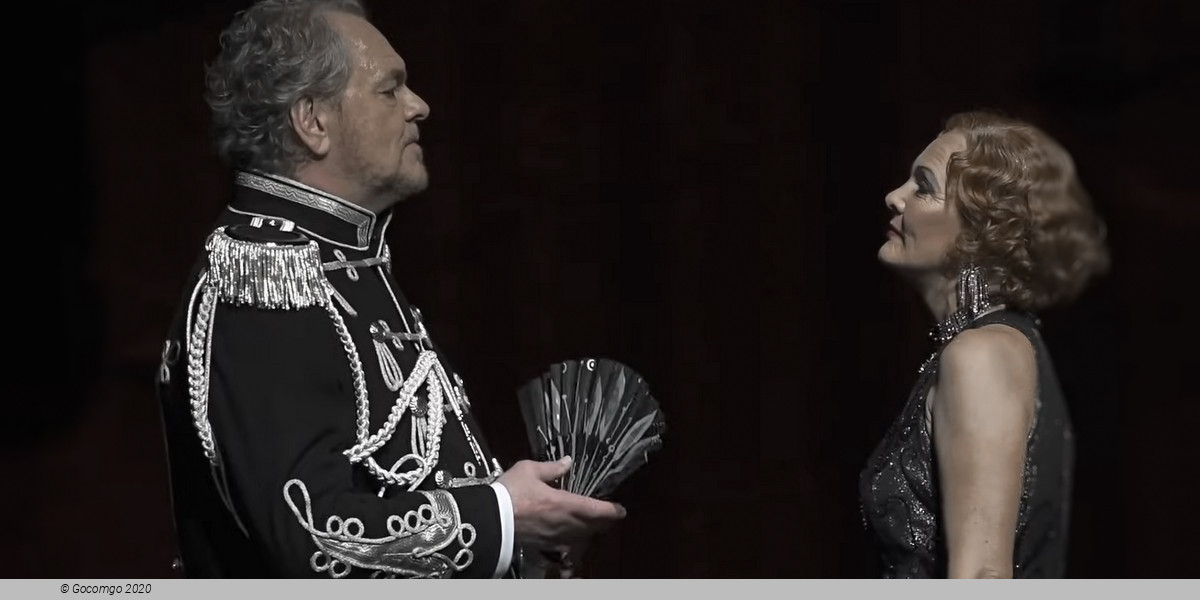
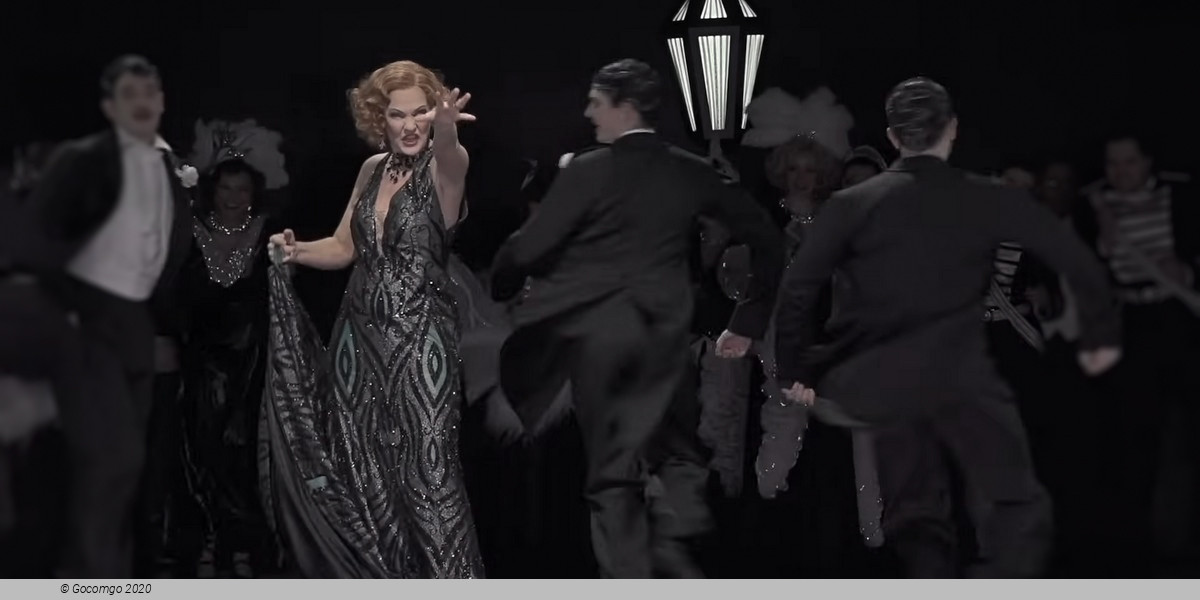
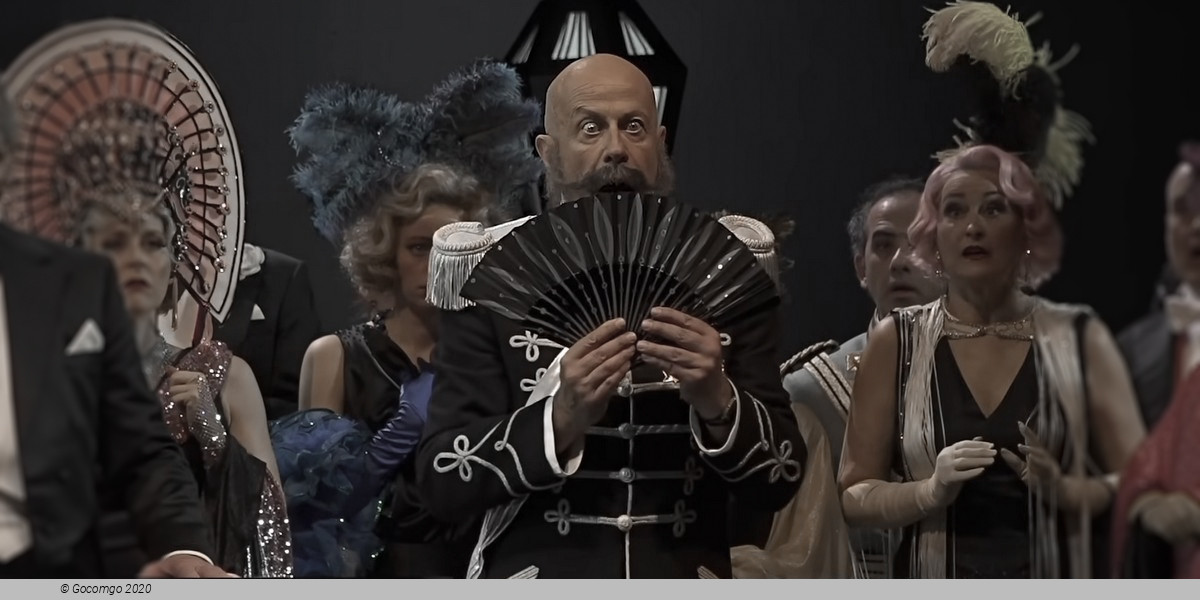
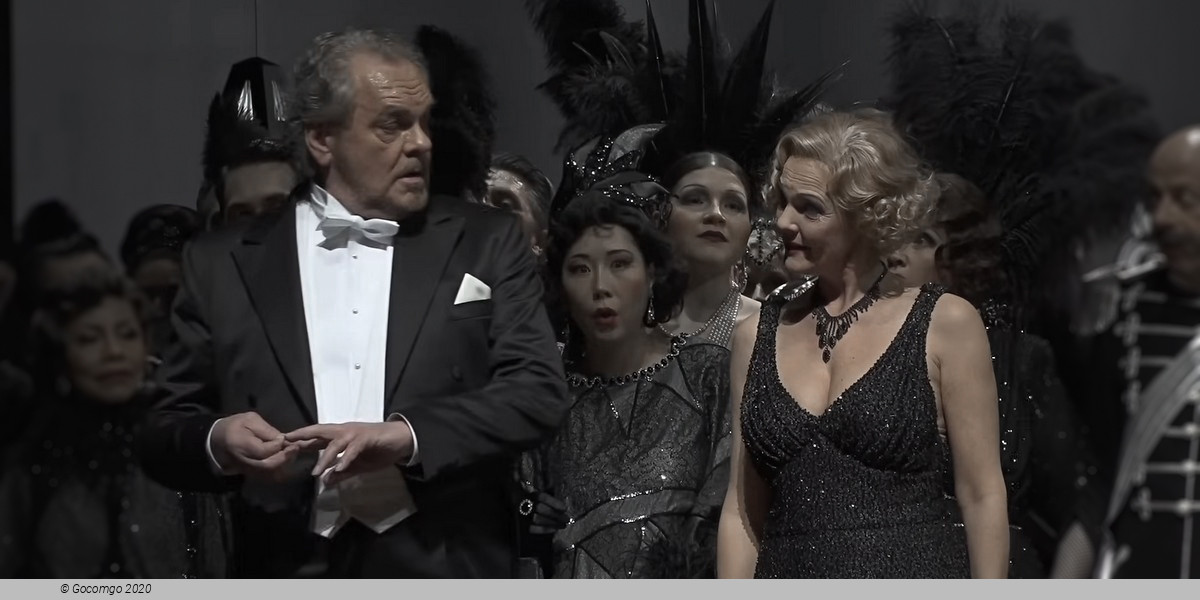
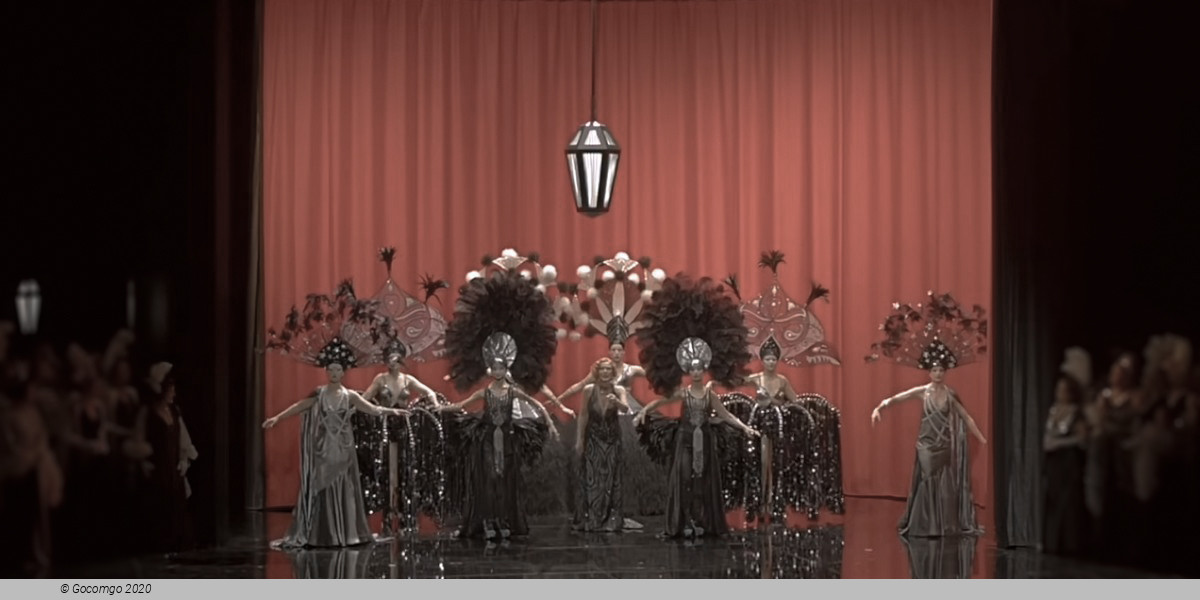
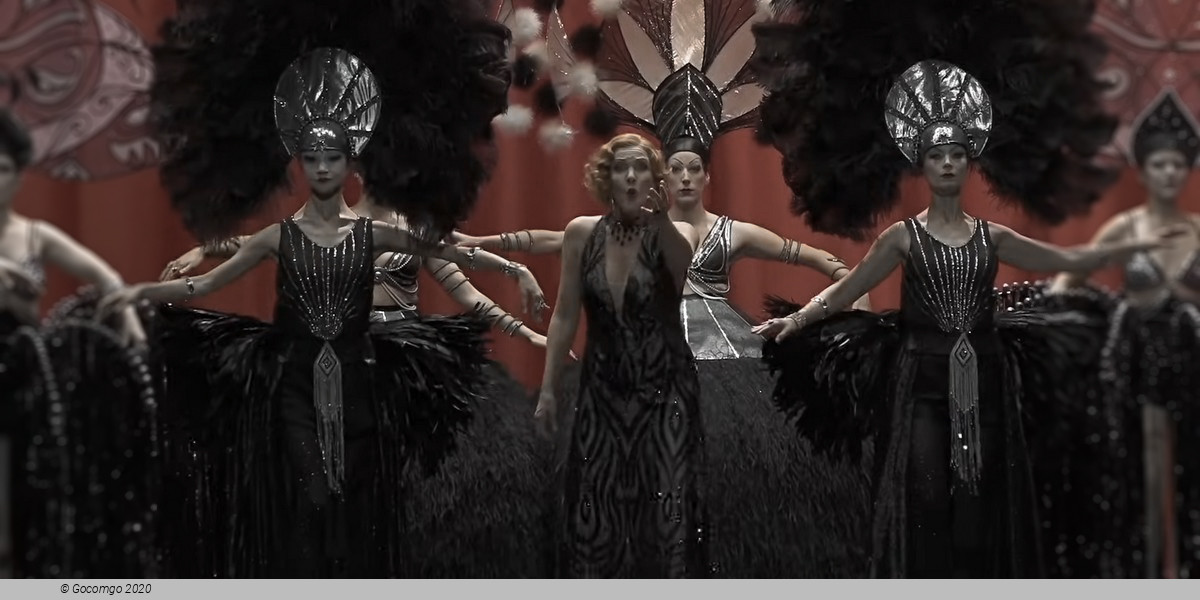
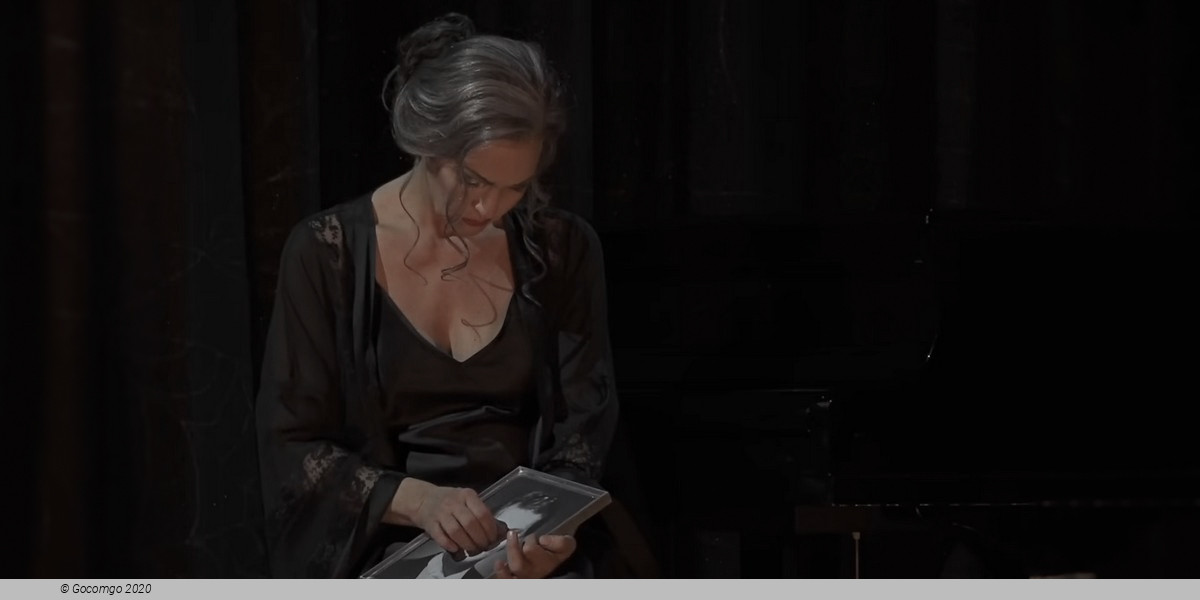
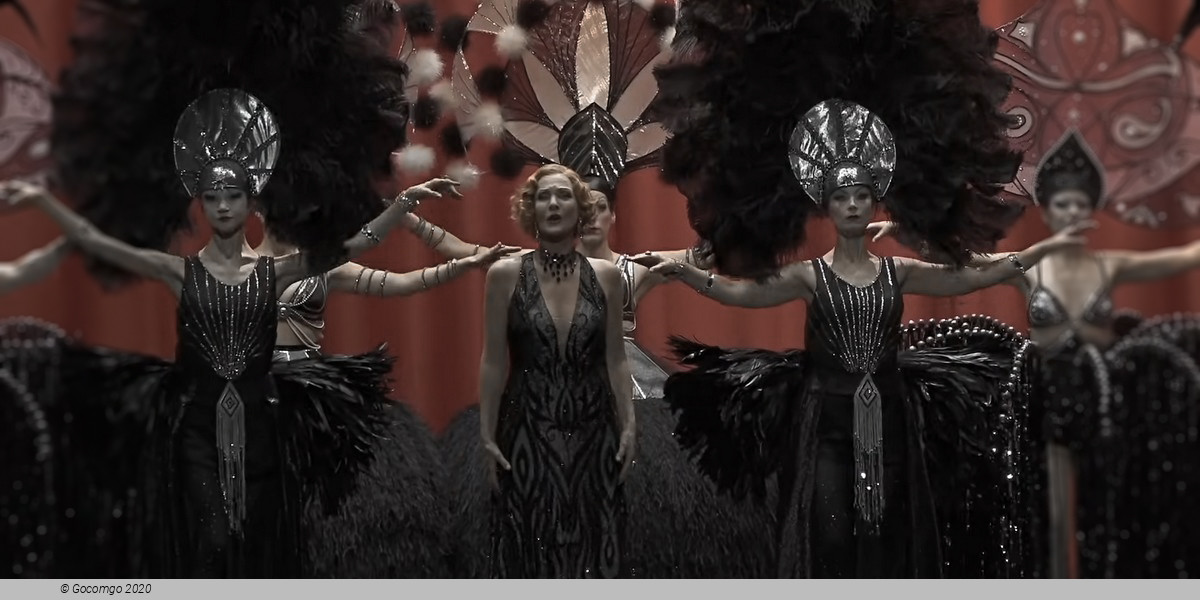
Beijing National Grand Theater (NCPA) 22 October 2023 - The Merry Widow | GoComGo.com

The Merry Widow

Beijing National Grand Theater (NCPA), Opera House, Beijing, China
All photos (17)
Select date and time
7 PM

E-tickets: Print at home or at the box office of the event if so specified. You will find more information in your booking confirmation email.

You can only select the category, and not the exact seats.
If you order 2 or 3 tickets: your seats will be next to each other.
If you order 4 or more tickets: your seats will be next to each other, or, if this is not possible, we will provide a combination of groups of seats (at least in pairs, for example 2+2 or 2+3).

Important Info
Type: Operetta
City: Beijing, China
Starts at: 19:00
Duration: 2h 20min

E-tickets: Print at home or at the box office of the event if so specified. You will find more information in your booking confirmation email.

You can only select the category, and not the exact seats.
If you order 2 or 3 tickets: your seats will be next to each other.
If you order 4 or more tickets: your seats will be next to each other, or, if this is not possible, we will provide a combination of groups of seats (at least in pairs, for example 2+2 or 2+3).

Overview

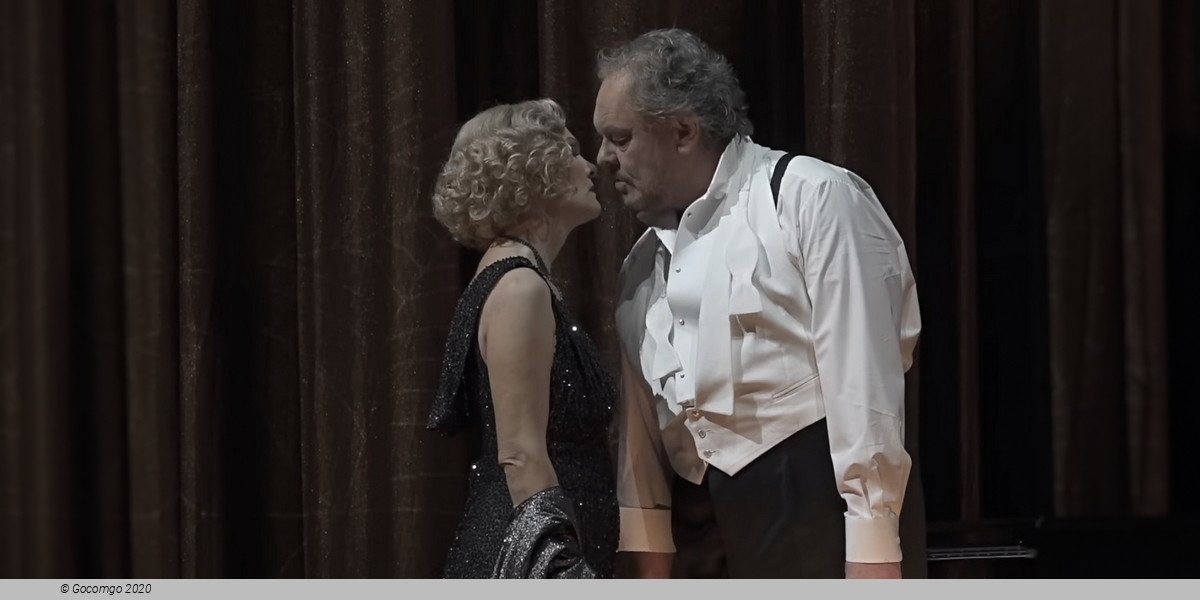
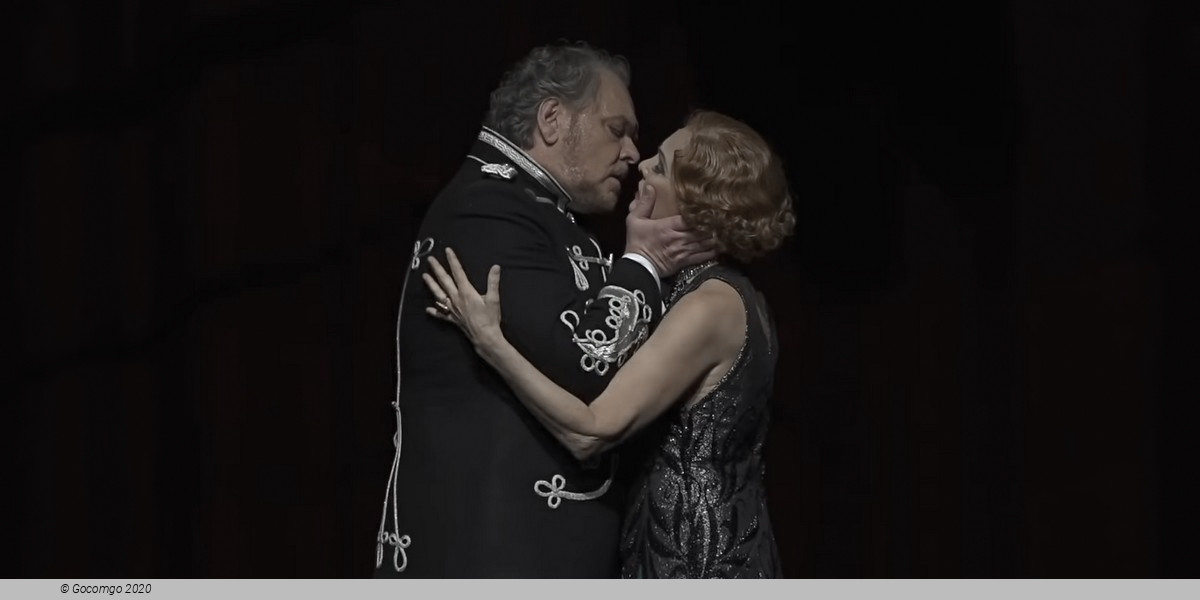
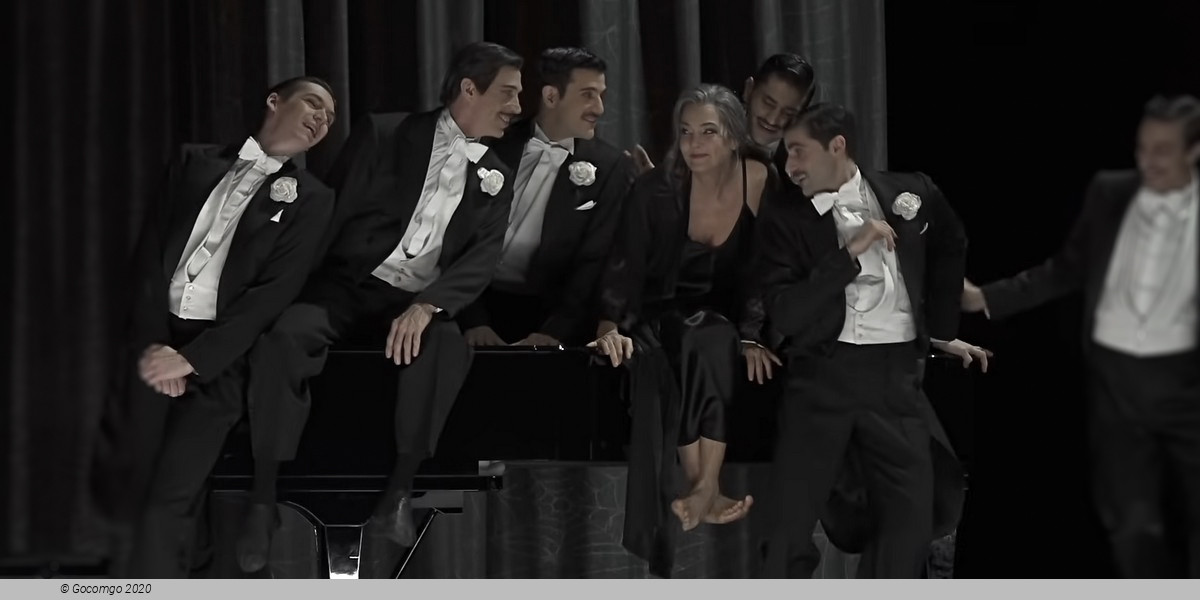
The three-act operetta "The Merry Widow" is a masterpiece of the glorious period of Viennese operetta.

Light opera was born in the middle of the 19th century. It is a relaxed and lively form of musical drama that is easier for the masses to appreciate. It has different styles and characteristics in different countries. Different from traditional European operas, operettas have bright and lively rhythms, light-hearted and humorous content, and are more entertaining and comedic. During the performance, the actors often interact with the audience. The music of operetta is as rigorous in structure as opera, although it is interspersed with dialogue, and often uses dance genres popular in society at that time, such as waltz, polka, and folk dance music of various nationalities within the scope of the Austro-Hungarian Empire at that time. Even the gypsy music, which was often used as the seasoning of operetta music at that time, had to be woven into a relatively complete music and drama structure very skillfully and meticulously.

"The Merry Widow" is based on the French Meillac's comedy "Embassy Attaché", rewritten into a play by Leon and Stein, and composed by the Hungarian composer Franz Lehar. It was first performed at the Vienna Opera House on December 30, 1905. The public performance has become a best-selling drama that has been staged 500 times in a row; at the same time, it has also won unprecedented popularity in many countries, has continued to perform, and has even been made into a movie.

The German word "lustige" in this play means "funny", and it is usually translated into English as "Merry", which means "happy". "Noble and elegant". The music of "The Merry Widow" not only maintains a relatively elegant artistic taste, but also intersperses a lot of lively, humorous but not cruel comedy episodes, and makes the music of the important characters in the play not only have distinct personalities but also It is beautiful and beautiful; the use of dance music in the play is also quite distinctive, and its waltz is more soothing than Strauss's, so it is more lyrical.

History
Premiere of this production: 30 December 1905, Theater an der Wien, Vienna

The Merry Widow (Die lustige Witwe) is an operetta by the Austro-Hungarian composer Franz Lehár. The librettists, Viktor Léon and Leo Stein, based the story – concerning a rich widow, and her countrymen's attempt to keep her money in the principality by finding her the right husband – on an 1861 comedy play, L'attaché d'ambassade (The Embassy Attaché) by Henri Meilhac.

Synopsis

Act 1
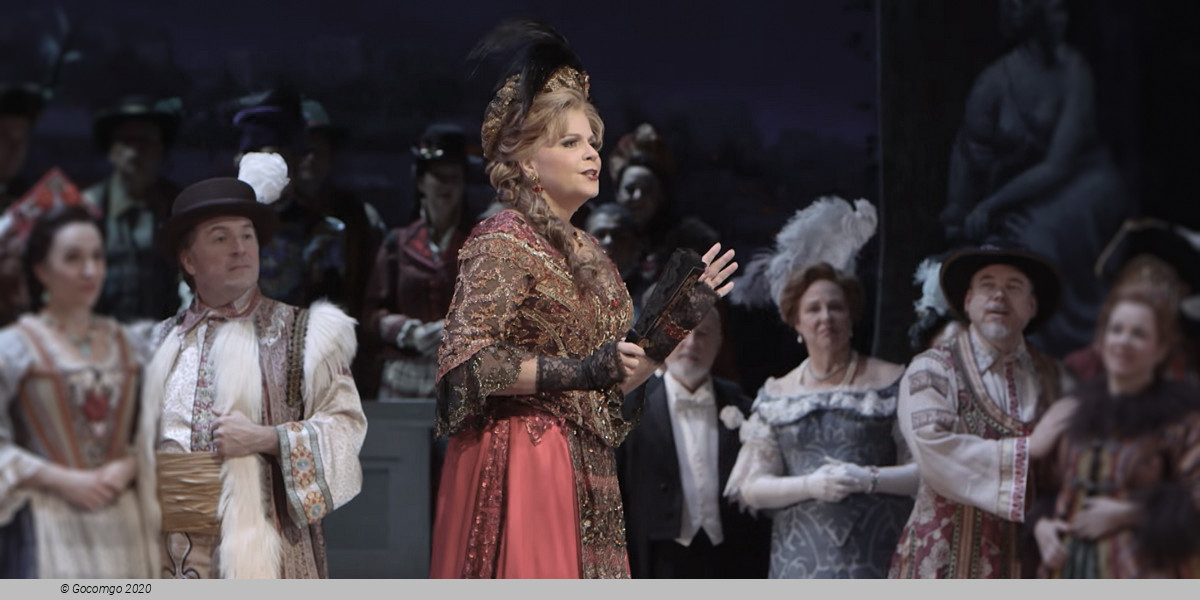
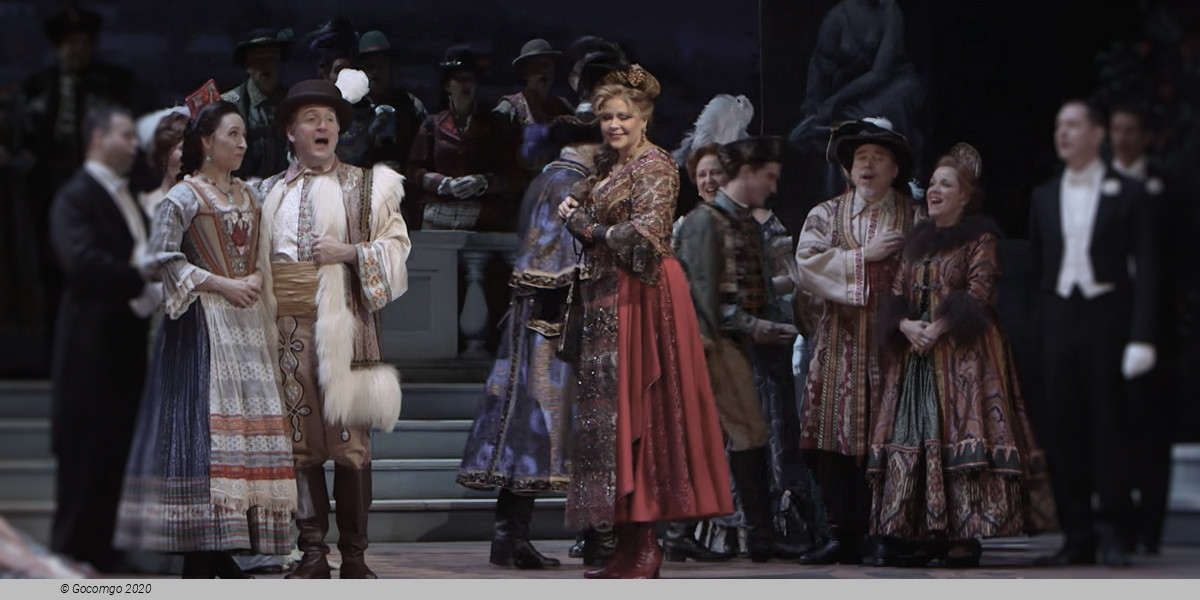
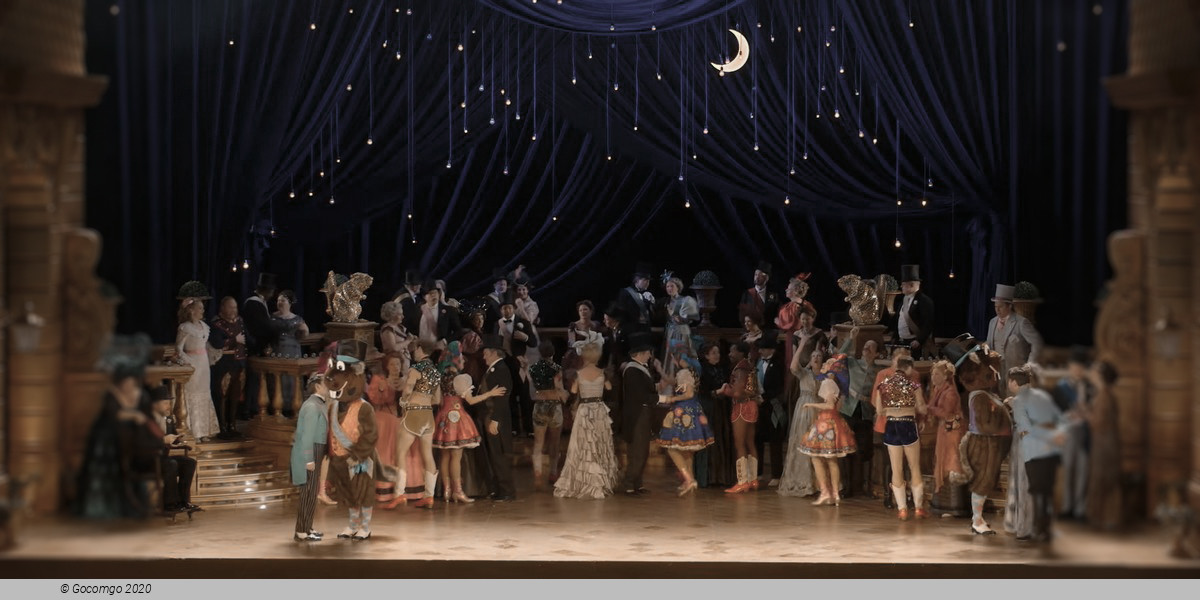
The embassy in Paris of the poverty-stricken Balkan principality of Pontevedro is holding a ball to celebrate the birthday of the sovereign, the Grand Duke. Hanna Glawari, who has inherited twenty million francs from her late husband, is to be a guest at the ball – and the Pontevedrin ambassador, Baron Zeta, is scheming to ensure that she will keep her fortune in the country, saving Pontevedro from bankruptcy. The Baron intends that Count Danilo Danilovitsch, the first secretary of the embassy, should marry the widow; unfortunately for this plan, Danilo is not at the party, so Zeta sends Danilo's assistant Njegus to fetch him from Maxim's.

Danilo arrives and meets Hanna. It emerges they were in love before her marriage, but his uncle had interrupted their romance because Hanna had had nothing to her name. Though they still love each other, Danilo now refuses to court Hanna for her fortune, and Hanna vows that she will not marry him until he says "I love you" – something he claims he will never do.

Meanwhile, Baron Zeta's wife Valencienne has been flirting with the French attaché to the embassy, Count Camille de Rosillon, who writes "I love you" on her fan. Valencienne puts off Camille's advances, saying that she is a respectable wife. However, they lose the incriminating fan, which is found by embassy counsellor Kromow. Kromow jealously fears that the fan belongs to his own wife, Olga, and gives it to Baron Zeta. Not recognising it, Baron Zeta decides to return the fan discreetly, in spite of Valencienne's desperate offers to take it "to Olga" herself.

On his way to find Olga, the Baron meets Danilo, and his diplomatic mission takes precedence over the fan. The Baron orders Danilo to marry Hanna. Danilo refuses, but offers to eliminate any non-Pontevedrin suitors as a compromise.

As the "Ladies' Choice" dance is about to begin, Hanna becomes swarmed with hopeful suitors. Valencienne volunteers Camille to dance with Hanna, privately hoping that the Frenchman will marry her and cease to be a temptation for Valencienne herself. True to his bargain with the Baron, Danilo circulates the ballroom, rounding up ladies to claim dances and thin the crowd around the wealthy widow. Hanna, however, chooses the one man who is not apparently interested in dancing with her: Danilo, who immediately announces that he will sell his dance with Hanna Glawari for ten thousand francs, with the proceeds to benefit charity. This extinguishes the remaining suitors' interest in the dance. After they have left, Danilo attempts to dance with Hanna, who refuses in annoyance. Nonchalantly he proceeds to waltz by himself, eventually wearing down Hanna's resistance, and she falls into his arms.

Act 2
Scene 1
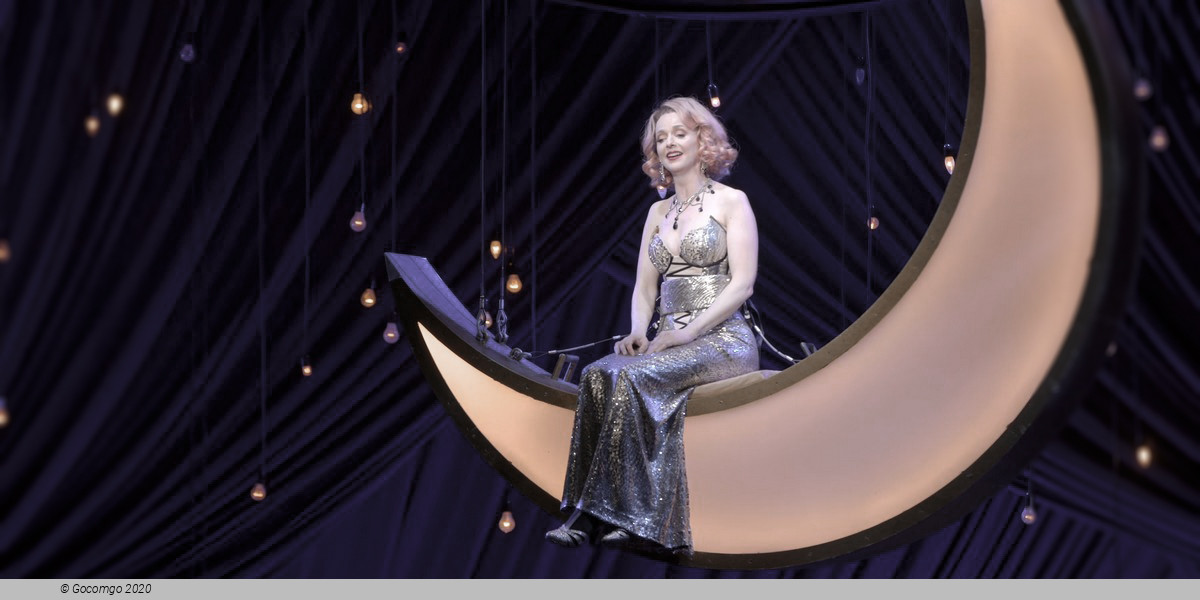
The next evening, everyone is dressed in Pontevedrin clothing for a garden party at Hanna's house, now celebrating the Grand Duke's birthday in his own country's fashion. Hanna entertains by singing an old Pontevedrin song: "Es lebt' eine Vilja, ein Waldmägdelein" ("There lived a Vilja, a maid of the woods"). Meanwhile, Baron Zeta fears that Camille will spoil his plan for Hanna to marry a Pontevedrin. Still not recognising the fan as Valencienne's, the Baron orders Danilo to discover the identity of its owner, whom he correctly assumes to be Camille's married lover. The two men, along with Njegus, arrange to meet that evening in Hanna's garden pavilion to discuss Danilo's findings, as well as the problem of securing the widow's fortune for Pontevedro. Seeing the fan, Hanna takes the message on it to be Danilo's declaration of love for her, which he denies. His inquiries regarding the fan prove fruitless, but do reveal infidelities committed by some of the wives of embassy personnel.

Scene 2
That evening, Camille and Valencienne meet in the garden, where Valencienne insists that they must part. Discovering the fan, accidentally left behind by Danilo, Camille begs Valencienne to let him have it as a keepsake. Valencienne agrees, writing "I'm a respectable wife" on it as a rejoinder to Camille's "I love you." Camille persuades Valencienne to join him in the pavilion so that they can say their goodbyes in private. This is of course the same pavilion where Danilo, the Baron, and Njegus have agreed to meet, and the latter, arriving first, locks the door when he spots people inside. Baron Zeta and Danilo follow, but Njegus quickly arranges with Hanna to change places with Valencienne. Camille emerges from the pavilion with Hanna, who announces that they plan to marry, leaving the Baron distraught at the thought of Pontevedro losing Hanna's millions and Valencienne distraught at losing Camille. Danilo is furious, and tells the story of a Princess who cheated on her Prince ("Es waren zwei Königskinder)" before storming off to seek distraction at Maxim's. Hanna realises that Danilo's anger over her engagement to another man proves that he loves her, and she rejoices amid the general despair.

Act 3
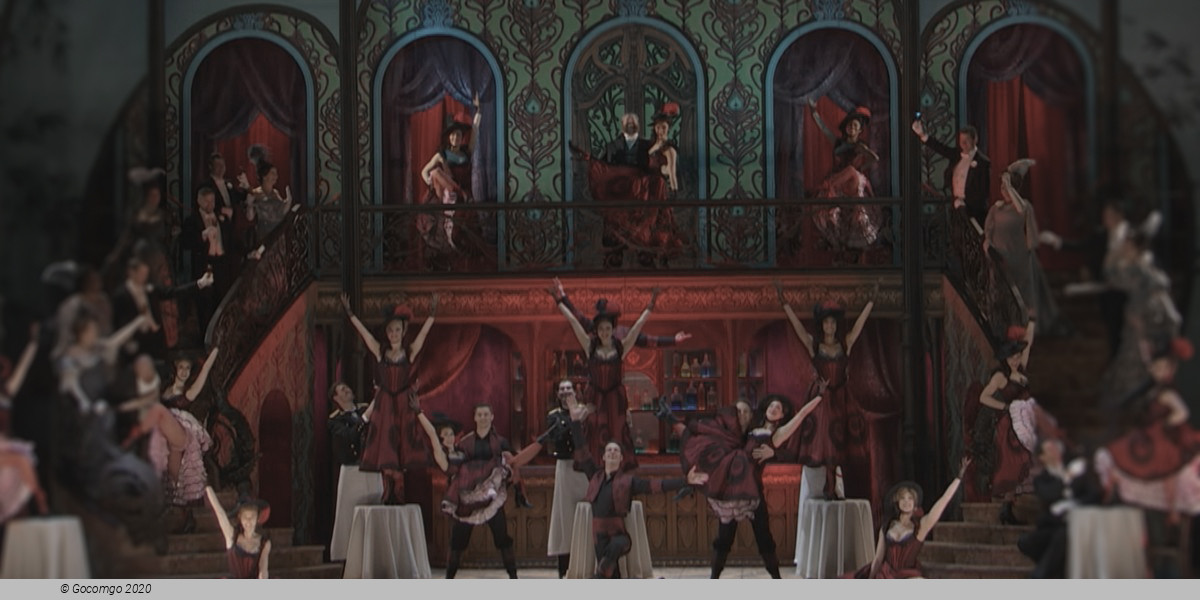
Act 3 is set at a theme party in Hanna's ballroom, which she has decorated to look like Maxim's, complete with Maxim's grisettes (can-can dancers). Valencienne, who has dressed herself as a grisette, entertains the guests ("Ja, wir sind es, die Grisetten"). When Danilo arrives, having found the real Maxim's empty, he tells Hanna to give up Camille for the sake of Pontevedro. Much to Danilo's delight, Hanna replies truthfully that she was never engaged to Camille but was protecting the reputation of a married woman. Danilo comes very close to declaring his love for Hanna, but stops himself from doing so when he remembers her money and his proud refusal to court her for it. Njegus produces the fan, which he picked up earlier, and Baron Zeta finally remembers that it belongs to Valencienne. He swears to divorce his wife and marry the widow himself, but Hanna stops him by declaring that she will lose her fortune if she remarries. At this, Danilo promptly confesses his love for her and asks Hanna to marry him. Hanna triumphantly accepts, adding that she will lose her fortune only because it will become the property of her new husband. Valencienne assures Baron Zeta of her fidelity by pointing out her reply to Camille's declaration of love written on the fan: "Ich bin eine anständige Frau" ("I'm a respectable wife"). All ends happily.

Venue Info

Beijing National Grand Theater (NCPA) - Beijing
Location   2 W Chang'an Ave

The National Centre for the Performing Arts (NCPA) is an arts centre containing an opera house in Beijing, People's Republic of China. The Centre, an ellipsoid dome of titanium and glass surrounded by an artificial lake, seats 5,452 people in three halls and is almost 12,000 m² in size. It was designed by French architect Paul Andreu. Construction started in December 2001 and the inaugural concert was held in December 2007.

The exterior of the theater is a titanium-accented glass dome that is completely surrounded by a man-made lake. It is said to look like an egg floating on water, or a water drop. It was designed as an iconic feature, something that would be immediately recognizable.

The dome measures 212 meters in east–west direction, 144 meters in north–south direction, and is 46 meters high. The main entrance is at the north side. Guests arrive in the building after walking through a hallway that goes underneath the lake. The titanium shell is broken by a glass curtain in north–south direction that gradually widens from top to bottom.

The location, immediately to the west of Tiananmen Square and the Great Hall of the People, and near the Forbidden City, combined with the theatre's futuristic design, created considerable controversy. Paul Andreu countered that although there is indeed value in ancient traditional Chinese architecture, Beijing must also include modern architecture, as the capital of the country and an international city of great importance. His design, with large open space, water, trees, was specially designed to complement the red walls of ancient buildings and the Great Hall of the People, in order to melt into the surroundings as opposed to standing out against them.

Internally, there are three major performance halls:

The Opera Hall is used for operas, ballet, and dances and seats 2,416 people.
The Music Hall is used for concerts and recitals and seats 2,017 people.
The Theatre Hall is used for plays and the Beijing opera. It has 1,040 seats.
The NCPA also distributes filmed and recorded performances of its concerts, plays and operas through the in-house label NCPA Classics, established in 2016.

The initial planned cost of the theatre was 2.688 billion yuan. When the construction had completed, the total cost rose to more than CNY3.2 billion. The major cause of the cost increase was a delay for reevaluation and subsequent minor changes as a precaution after a Paris airport terminal building collapsed. The cost has been a major source of controversy because many believed that it is nearly impossible to recover the investment. When the cost is averaged out, each seat is worth about half a million CNY. The Chinese government answered that the theater is not a for profit venture.

The government sanctioned study completed in 2004 by the Research Academy of Economic & Social Development of the Dongbei University of Finance and Economics, of the upkeep costs of the building were publicized in domestic Chinese media:

The water and electricity bills and the cleaning cost for the external surface would be at least tens of millions CNY, and with another maintenance cost, the total could easily exceed one billion CNY. Therefore, at least 80 percent of the annual operational costs must be subsidized by the government for at least the first three years after the opening, and for the rest of its operational life, at least 60 percent of the annual operational cost must be subsidized by the government.

The director of the art committee of the National Centre for the Performing Arts and the standing committee member of the Standing Committee of the Chinese People's Political Consultative Conference, Mr Wu Zuqiang (吴祖强) and the publicist / deputy director of the National Centre for the Performing Arts Mr Deng (邓一江) have announced that 70 percent of the tickets would be sold at low price for ordinary citizens, while 10% of the tickets would be sold at relatively expensive prices for separate market segments, and the 60% of annual operating cost needed to be subsidized by the government would be divided between the central government and the Beijing municipal government.

Important Info
Type: Operetta
City: Beijing, China
Starts at: 19:00
Duration: 2h 20min
Top of page