
Beijing National Grand Theater (NCPA) 29 June 2023 - The Daughter of the Party | GoComGo.com

The Daughter of the Party

Beijing National Grand Theater (NCPA), Opera House, Beijing, China
All photos (1)
Select date and time
7 PM
Request for Tickets
Important Info
Type: Opera
City: Beijing, China
Starts at: 19:00
Duration: 2h 30min

E-tickets: Print at home or at the box office of the event if so specified. You will find more information in your booking confirmation email.

You can only select the category, and not the exact seats.
If you order 2 or 3 tickets: your seats will be next to each other.
If you order 4 or more tickets: your seats will be next to each other, or, if this is not possible, we will provide a combination of groups of seats (at least in pairs, for example 2+2 or 2+3).

Overview

NCPA Opera Festival 2023

Premiere: Beijing, 1991
Premiere of NCPA Opera The Daughter of the Party: July 13th, 2021
Adapted from the script of film The Daughter of the Party created by LIN Bin

Librettists: YAN Su, WANG Jian (Actual writing), HE Dongjiu, WANG Shouyuan
Composers: WANG Zujie, ZHANG Zhuoya, YIN Qing, WANG Xiren, JI Cheng, FANG Tianxing

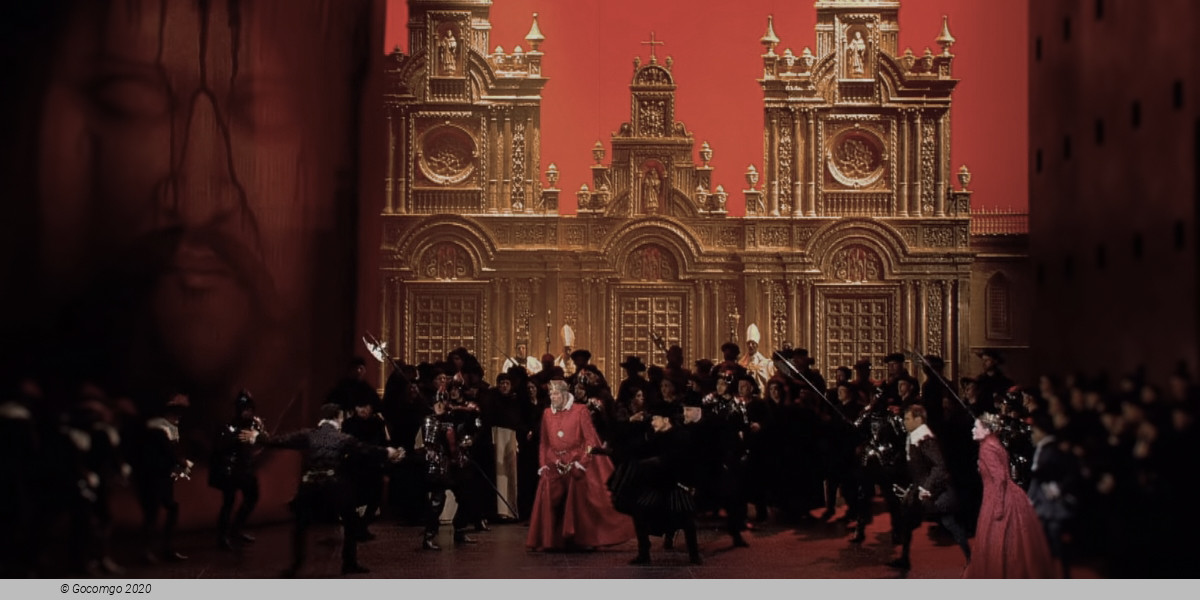
The classic national opera The Daughter of the Party was produced and set on stage by the Song and Dance Ensemble of General Political Department of the Chinese People’s Liberation Army (now known as the Chinese People’s Liberation Army Art Troupe) in 1991 in order to celebrate the 70th anniversary of the founding of the CPC. It is an important work on the theme of revolutionary history created in the 1990s and one of the most influential national classic operas of China. The opera is adapted from the film of the same title premiering in 1958. The libretto was discussed by WANG Jian, HE Dongjiu and WANG Shouyuan, but YAN Su did the actual writing. The music was composed by WANG Zujie, ZHANG Zhuoya, YIN Qing, WANG Xiren, JI Cheng and FANG Tianxing. The debut round was performed by artists including PENG Liyuan, YANG Hongji and SUN Liying. As a work jointly created by many outstanding Chinese artists, it won the Second Wenhua Award in 1992 and was performed in 1999 to celebrate the 50th anniversary of the founding of the PRC. It has won numerous national art awards. Since its premiere in 1991, the opera has been staged for over hundreds of times, receiving amazing acclaim. The classic arias in the opera, including “There is a Shining Star over the Horizon”, “Home is Full of Spring Scenery” and “Azalea”, are widely sung.

NCPA opera The Daughter of the Party (Revival) has been included in the “Fine Stage Art Creation Project for the 100th Anniversary of the Founding of the CPC” by the Ministry of Culture and Tourism, and selected for the “Excellent Stage Artwork for the 100th Anniversary of the Founding of the CPC” by the Publicity Department of the CPC, Ministry of Culture and Tourism and China Federation of Literary and Art Circles. The NCPA will produce a new effect of stage art on the basis of the premiere version according to the production principle of “cultural inheritance and innovation”. Directed by WANG Jun, who used to be a director at the Song and Dance Ensemble of General Political Department, the opera is starred by soprano LEI Jia and baritone LIAO Changyong under the baton of the conductor LI Xincao in cooperation with outstanding artists from the China NCPA Chorus, China NCPA Orchestra and China National Traditional Orchestra to pay tribute to the classic and celebrate the 100th anniversary of the founding of the CPC.

Presenter: Department of Art, Ministry of Culture and Tourism of the PRC, Publicity of Political Work Department of PRC, China National Centre for the Performing Arts

Synopsis

In 1935, the Azalea Mountain, located in Jiangxi, is heavy with white terror. The female communist TIAN Yumei escapes with her life from the execution ground under the cover of the old Party branch secretary. She reaches MA Jiahui, former secretary of the District Party Committee, and reports to him a secret told by the old Party branch secretary just before his execution—there is a traitor in the Party organisation. However, she does not know that MA Jiahui is the traitor. MA Jiahui colludes with a regimental commander of the Kuomintang in setting a trap to maul the guerrilla forces heavily, and frames Yumei for treason. At this critical juncture, Yumei, who is misunderstood, clears up her Granduncle-in-law’s doubts. Undaunted by perils, Yumei returns to the lion’s mouth and rekindles the fire of revolution in the heart of Guiying, MA Jiahui’s wife, who is almost reduced to despair. Guiying testifies against her husband MA Jiahui.

In the alpine bamboo groves, Yumei, the Granduncle-in-law and Guiying are planning to report the state of the enemy to guerrilla forces, but they have departed. At the critical moment when they’re losing contact with the superior, they form a combat squad voluntarily. The Granduncle-in-law comes forward to risk taking the message to the depth of the mountains. After receiving it, the guerrilla forces launch a counterattack on the enemy by artifice. While gathering salt, Yumei and Guiying encounter MA Jiahui. Courageously, they work together to kill the traitor, but Guiying gets shot and killed. Unexpectedly, the gunshots attract the Kuomintang. In order that CHENG should get away unscathed under her cover, Yumei is arrested by the Kuomintang and forced to lead the way to the guerrilla forces. Being fearless of death for a just cause, Yumei dies a martyr with her revolutionary ideals. Her immortal revolutionary spirit is turned into azaleas in full bloom all over the mountains.

Venue Info

Beijing National Grand Theater (NCPA) - Beijing
Location   2 W Chang'an Ave

The National Centre for the Performing Arts (NCPA) is an arts centre containing an opera house in Beijing, People's Republic of China. The Centre, an ellipsoid dome of titanium and glass surrounded by an artificial lake, seats 5,452 people in three halls and is almost 12,000 m² in size. It was designed by French architect Paul Andreu. Construction started in December 2001 and the inaugural concert was held in December 2007.

The exterior of the theater is a titanium-accented glass dome that is completely surrounded by a man-made lake. It is said to look like an egg floating on water, or a water drop. It was designed as an iconic feature, something that would be immediately recognizable.

The dome measures 212 meters in east–west direction, 144 meters in north–south direction, and is 46 meters high. The main entrance is at the north side. Guests arrive in the building after walking through a hallway that goes underneath the lake. The titanium shell is broken by a glass curtain in north–south direction that gradually widens from top to bottom.

The location, immediately to the west of Tiananmen Square and the Great Hall of the People, and near the Forbidden City, combined with the theatre's futuristic design, created considerable controversy. Paul Andreu countered that although there is indeed value in ancient traditional Chinese architecture, Beijing must also include modern architecture, as the capital of the country and an international city of great importance. His design, with large open space, water, trees, was specially designed to complement the red walls of ancient buildings and the Great Hall of the People, in order to melt into the surroundings as opposed to standing out against them.

Internally, there are three major performance halls:

The Opera Hall is used for operas, ballet, and dances and seats 2,416 people.
The Music Hall is used for concerts and recitals and seats 2,017 people.
The Theatre Hall is used for plays and the Beijing opera. It has 1,040 seats.
The NCPA also distributes filmed and recorded performances of its concerts, plays and operas through the in-house label NCPA Classics, established in 2016.

The initial planned cost of the theatre was 2.688 billion yuan. When the construction had completed, the total cost rose to more than CNY3.2 billion. The major cause of the cost increase was a delay for reevaluation and subsequent minor changes as a precaution after a Paris airport terminal building collapsed. The cost has been a major source of controversy because many believed that it is nearly impossible to recover the investment. When the cost is averaged out, each seat is worth about half a million CNY. The Chinese government answered that the theater is not a for profit venture.

The government sanctioned study completed in 2004 by the Research Academy of Economic & Social Development of the Dongbei University of Finance and Economics, of the upkeep costs of the building were publicized in domestic Chinese media:

The water and electricity bills and the cleaning cost for the external surface would be at least tens of millions CNY, and with another maintenance cost, the total could easily exceed one billion CNY. Therefore, at least 80 percent of the annual operational costs must be subsidized by the government for at least the first three years after the opening, and for the rest of its operational life, at least 60 percent of the annual operational cost must be subsidized by the government.

The director of the art committee of the National Centre for the Performing Arts and the standing committee member of the Standing Committee of the Chinese People's Political Consultative Conference, Mr Wu Zuqiang (吴祖强) and the publicist / deputy director of the National Centre for the Performing Arts Mr Deng (邓一江) have announced that 70 percent of the tickets would be sold at low price for ordinary citizens, while 10% of the tickets would be sold at relatively expensive prices for separate market segments, and the 60% of annual operating cost needed to be subsidized by the government would be divided between the central government and the Beijing municipal government.

Important Info
Type: Opera
City: Beijing, China
Starts at: 19:00
Duration: 2h 30min
Top of page