
Beijing National Grand Theater (NCPA) 16 December 2023 - The Amber Quartet | GoComGo.com

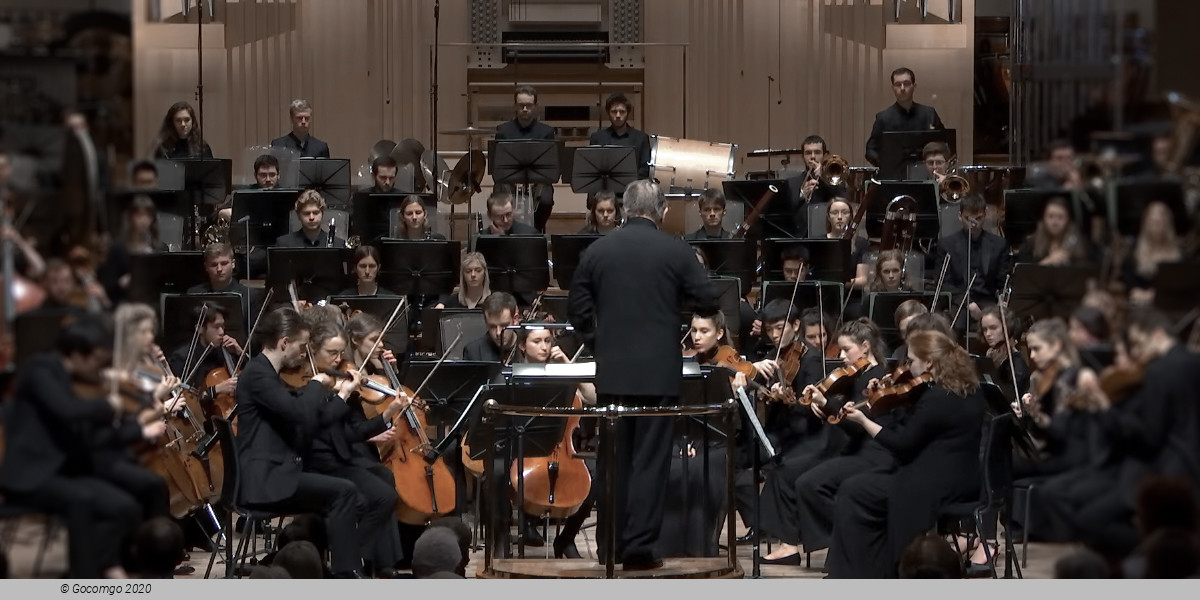
The Amber Quartet

Beijing National Grand Theater (NCPA), Concert Hall, Beijing, China
All photos (1)
Select date and time
7:30 PM
Request for Tickets
Important Info
Type: Classical Concert
City: Beijing, China
Starts at: 19:30

E-tickets: Print at home or at the box office of the event if so specified. You will find more information in your booking confirmation email.

You can only select the category, and not the exact seats.
If you order 2 or 3 tickets: your seats will be next to each other.
If you order 4 or more tickets: your seats will be next to each other, or, if this is not possible, we will provide a combination of groups of seats (at least in pairs, for example 2+2 or 2+3).

Programme
Overview

The Amber Quartet was founded in 2005, its members teaching at the Central Conservatory of Music. As an outstanding chamber ensemble in contemporary China, the Amber Quartet remains active on the international stage and has appeared at many of the world’s top music festivals, giving a series of high-standard performances on behalf of China. The Amber Quartet has a broad academic vision, its repertoire covering what were composed in every period of the 400-year string quartet history. Their students have carried off many awards in solo and chamber music competitions at home and abroad. The Amber Quartet has received high accolades from the international music scene, and is praised as “one of the leaders in the contemporary international chamber music circle” by Prof. Guenter Pichler, a chamber master at the Alban Berg Quartet.

The Amber Quartet has rewritten the history of Chinese chamber music many times. It won three awards in the Asia-Pacific Chamber Music Competition, Melbourne, including the Highest Prize, First Prize for String Quartet, and Award for the Best Interpreter of Modern Works, becoming the first Chinese ensemble to win First Prize in an international professional chamber music competition, achieving a historic breakthrough in Chinese chamber music. The Amber Quartet was also the first Asian string quartet to be invited to the world’s chamber music festival—Montreal International Quartet Festival, and first state-sponsored Chinese string quartet to be admitted to the International Chamber Music School of Madrid and graduate with full marks. It is also the only Chinese inheritor of the Alban Berg Quartet, an international legendary ensemble.

The Amber Quartet is active on the international music stage. Every year, it delivers more than 40 concerts worldwide at the invitation of a dozen countries and regions worldwide. It has given high-level performances on many state occasions. In the 2019-2020 season, the Amber Quartet was invited to the time-honoured Beethoven Festival Bonn and held a special concert there, arousing strong repercussions among all walks of life at home and abroad. Moreover, it was invited to the Great Hall of the People to perform in the Golden Hall for the Chinese and French leaders, winning high praise. It has been reported and interviewed by domestic and foreign media including the world’s authoritative music magazine The Strad, Australian Broadcasting Corporation (ABC), Radio Nacional de Espana (RNE), Upper Austria Journal and Ouhua Times Spain.

The Amber Quartet develops under the tutelage of CHEN Yun and YU Bing, professors at the Central Conservatory of Music, and Prof. Guenter Pichler, a chamber master at the Alban Berg Quartet. They have also received guidance from many international chamber music masters including Gerhard Schulz, Valentin Erben, Michael Tree, Harald Schoneweg, Wolfgang Jahn, GONG Hanxiang, etc.

Members of the Amber Quartet are the first violinist NING Fangliang, second violinist SU Yajing, violist QI Wang, and cellist YANG Yichen. In 2017, MA Weijia, Assistant Concertmaster of China NCPA Orchestra, joined the Amber Quartet as a guest second violinist.

Members of the Amber Quartet use four time-honoured Italian instruments, which are more than 1,200 years old altogether, donated by the Hong Kong China Fund. The instrument cases used by the Amber Quartet are donated by BAM CASES, an internationally renowned case manufacturer. Since 2018, the world’s top score publisher G. Henle has been offering scores gratuitously to the Amber Quartet.

Venue Info

Beijing National Grand Theater (NCPA) - Beijing
Location   2 W Chang'an Ave

The National Centre for the Performing Arts (NCPA) is an arts centre containing an opera house in Beijing, People's Republic of China. The Centre, an ellipsoid dome of titanium and glass surrounded by an artificial lake, seats 5,452 people in three halls and is almost 12,000 m² in size. It was designed by French architect Paul Andreu. Construction started in December 2001 and the inaugural concert was held in December 2007.

The exterior of the theater is a titanium-accented glass dome that is completely surrounded by a man-made lake. It is said to look like an egg floating on water, or a water drop. It was designed as an iconic feature, something that would be immediately recognizable.

The dome measures 212 meters in east–west direction, 144 meters in north–south direction, and is 46 meters high. The main entrance is at the north side. Guests arrive in the building after walking through a hallway that goes underneath the lake. The titanium shell is broken by a glass curtain in north–south direction that gradually widens from top to bottom.

The location, immediately to the west of Tiananmen Square and the Great Hall of the People, and near the Forbidden City, combined with the theatre's futuristic design, created considerable controversy. Paul Andreu countered that although there is indeed value in ancient traditional Chinese architecture, Beijing must also include modern architecture, as the capital of the country and an international city of great importance. His design, with large open space, water, trees, was specially designed to complement the red walls of ancient buildings and the Great Hall of the People, in order to melt into the surroundings as opposed to standing out against them.

Internally, there are three major performance halls:

The Opera Hall is used for operas, ballet, and dances and seats 2,416 people.
The Music Hall is used for concerts and recitals and seats 2,017 people.
The Theatre Hall is used for plays and the Beijing opera. It has 1,040 seats.
The NCPA also distributes filmed and recorded performances of its concerts, plays and operas through the in-house label NCPA Classics, established in 2016.

The initial planned cost of the theatre was 2.688 billion yuan. When the construction had completed, the total cost rose to more than CNY3.2 billion. The major cause of the cost increase was a delay for reevaluation and subsequent minor changes as a precaution after a Paris airport terminal building collapsed. The cost has been a major source of controversy because many believed that it is nearly impossible to recover the investment. When the cost is averaged out, each seat is worth about half a million CNY. The Chinese government answered that the theater is not a for profit venture.

The government sanctioned study completed in 2004 by the Research Academy of Economic & Social Development of the Dongbei University of Finance and Economics, of the upkeep costs of the building were publicized in domestic Chinese media:

The water and electricity bills and the cleaning cost for the external surface would be at least tens of millions CNY, and with another maintenance cost, the total could easily exceed one billion CNY. Therefore, at least 80 percent of the annual operational costs must be subsidized by the government for at least the first three years after the opening, and for the rest of its operational life, at least 60 percent of the annual operational cost must be subsidized by the government.

The director of the art committee of the National Centre for the Performing Arts and the standing committee member of the Standing Committee of the Chinese People's Political Consultative Conference, Mr Wu Zuqiang (吴祖强) and the publicist / deputy director of the National Centre for the Performing Arts Mr Deng (邓一江) have announced that 70 percent of the tickets would be sold at low price for ordinary citizens, while 10% of the tickets would be sold at relatively expensive prices for separate market segments, and the 60% of annual operating cost needed to be subsidized by the government would be divided between the central government and the Beijing municipal government.

Important Info
Type: Classical Concert
City: Beijing, China
Starts at: 19:30
Top of page