
Beijing National Grand Theater (NCPA) 7 December 2023 - Maisky Trio | GoComGo.com

Maisky Trio

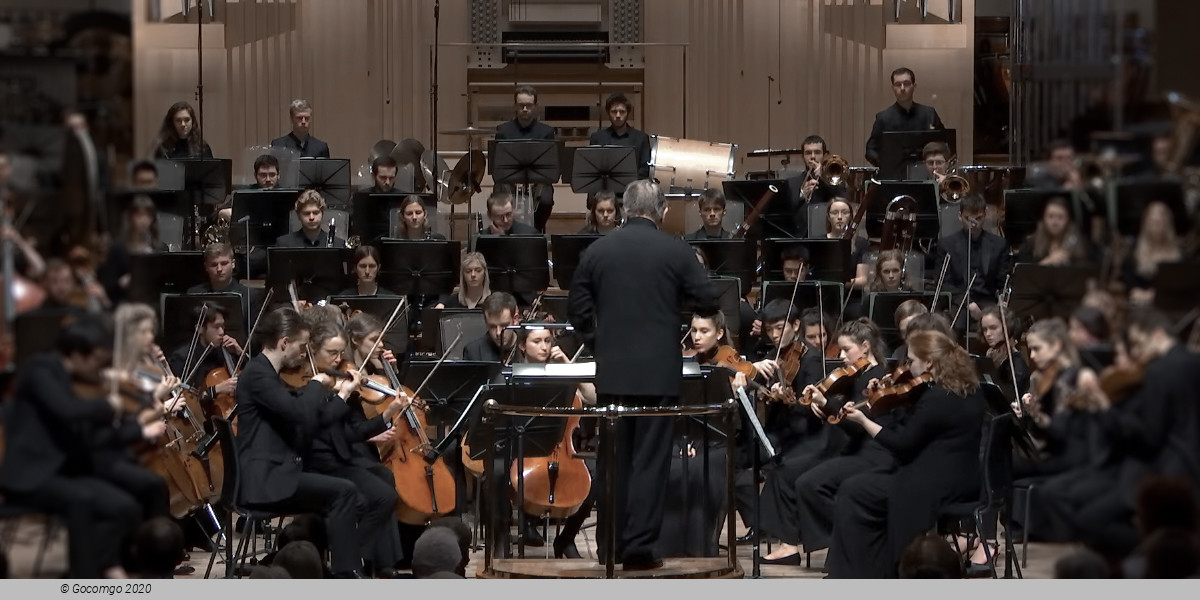
Beijing National Grand Theater (NCPA), Concert Hall, Beijing, China
All photos (1)
Select date and time
7:30 PM
Request for Tickets
Important Info
Type: Classical Concert
City: Beijing, China
Starts at: 19:30

E-tickets: Print at home or at the box office of the event if so specified. You will find more information in your booking confirmation email.

You can only select the category, and not the exact seats.
If you order 2 or 3 tickets: your seats will be next to each other.
If you order 4 or more tickets: your seats will be next to each other, or, if this is not possible, we will provide a combination of groups of seats (at least in pairs, for example 2+2 or 2+3).

Programme
Overview

Mischa Maisky
Mischa Maisky is undoubtedly one of the most representative cellists in the international classical music scene since the 1980s. He studied under famous masters, has traveled to stages in Europe, the United States, and Asia, and is deeply loved by music fans all over the world. . The famous cellist Rostropovich once commented that he is "one of the most outstanding cellists of the young generation. His playing combines poetry with elegance and sophistication with great temperament and superb technique."
Maisky, who was born in Latvia, initially studied at the Leningrad Conservatory of Music in Russia. Since then, he has gradually grown into an excellent cellist and has been enthusiastically received in London, Paris, Berlin, Vienna, New York and other major cities around the world. welcome.
Maisky considers himself a citizen of the world: "I use Italian cellos, French and German bows and Austrian and German strings. My daughter was born in France and my three sons were born in Belgium, Italy and Switzerland. I play Japanese car, a Swiss watch and an Indian necklace. Whenever someone asks me, where is your home? I always answer that as long as people enjoy classical music in a place, that place is my home."
As a world-class cellist, he has performed with many heavyweight conductors at major international music festivals, such as Leonard Bernstein, Charles Dutoit, Carlo Maria Giulini, Lorin Maazel, Zubin Mehta, Muti, James Levine, Vladimir Ashkenazy, Giuseppe Sinopoli, Daniel Barenboim, piano Homes Marta Agrizzi, Radu Rupp, Nelson Freary, Kissin, Peter Serkin, violinists Gidon Kramer, Vadim Repin, Maxim Wen Grove, Joshua Bell, Jenny Jansen, violist Yuri Bashmet, etc. have all worked closely together.
The year 2000 was a critical point in his artistic career. He completed more than a hundred Bach special tours around the world, and recorded Bach's unaccompanied cello suites for the third time to pay tribute to the master. His Bach Unaccompanied Cello Suite No. 1 has been viewed more than 45 million times on Youtube.
During his contract with Deutsche Grammophon for more than 30 years, he performed with major European and American symphony orchestras such as the Vienna Philharmonic, the Berlin Philharmonic, the London Symphony Orchestra, the Israel Philharmonic, the Paris Symphony Orchestra, and the Orpheus Chamber Orchestra of Europe. Collaborated on more than 35 albums. These records have received wide acclaim around the world and have won awards such as the Tokyo Record Academy Award, the Echo Classical Award (three times), the German Record Award, the Paris Record Award, and the Diapason d'Or of the Year. He has also been nominated for several Grammy Awards.

Lily Maisky
Lily Maisky was born in Paris in 1987 and later moved to Brussels. She has studied piano with Dean Pu since she was four years old, and has also studied piano with teachers such as Hargit Kebbell, Alana Davis, and Alan Wise. Maisky attended Purcell Music School from 2001 to 2005, where he also studied jazz piano. During this period, she participated in many master classes and received guidance from many famous experts, including Marta Argerich, Dmitry Bashkilov, Joseph Kalichstein, Pavel Kirillov, Valentin Hiedmeier et al.
In 1997, Lily Maisky made her debut on stage, performing in a charity concert for the Rainforest Foundation at Carnegie Hall; the performance was recorded and released to the public. Recent recordings include Mischa Maisky's recent album and a live performance at the Argerich Project Festival. Recordings of her performances are frequently played on radio and television stations in Europe and Asia.
She has traveled all over Europe and East Asia and is often invited to appear at major music festivals, including Verbier Festival, Lugano Argerich Festival, Edinburgh Festival, Miyazaki Festival, Florence Summer Music Festival, Bergamo-Brescia Festival, Beijing Piano Music Festival, Liszt Festival in Austria, Dubrovnik Julian Rushlin and Friendship Festival, French Scenery Music Festival, Gstaad Germany Art Festival, Schleswig-Holstein Music Festival, Berlin Art Festival and the British Chamber Orchestra Music Walk Series, etc. In addition, she has collaborated with several famous conductors, such as Leonard Slatkin, Thomas Sandlin, Gerhard Albrecht, Daniel Leskin, Alberto •Veronesi, Charles Olivieri Manro, etc. She has also performed solo or chamber music in world-renowned music venues, such as the Royal Festival Hall in London, the Konzerthaus in Vienna, the Prince Regent Theater in Munich, the Reitz Konzerthaus in Hamburg, the Konzerthaus in Berlin, the La Fenice in Venice, and Beethoven in Bonn. Concert Hall, Suntory Hall in Tokyo, Olympic Theater in Rome, Moscow Conservatory of Music, St. Petersburg Philharmonic Hall, Carnegie Hall in New York, Seoul Performing Arts Center, Central Hall of Athens, Buckingham Palace, etc.
Lily Maisky has recorded many albums with DG and EMI, which are often played on European and Asian radio and television. Her last album, released on Avanti Music, was a collaboration with Grammy Award-winning violinist Philippe Quint, which was critically acclaimed. Lily Maisky prefers chamber music performances and is a long-term partner of her father, Mischa Maisky. She also collaborates with her brother and father in the Maisky Trio. There are countless well-known soloists who have collaborated with him: Julian Rachlin, Dora Schwarzberg, Renaud Capuçon, Sergey Krylov, Marta Argerich and Shemanovsky Quartet.

Sasha Maisky
Sasha Maisky was born in Brussels on May 11, 1989. He began studying violin when he was three years old. When he was young, he studied under professors Leonid Korbel, Leon Suhuron and Igor Oistrakh. Sasha was fortunate to have Julian Rachlin, Maxim Vengerov, Felix Andreevsky, Itzhak Rashkovsky, Vadim Gruzman , with guidance from Edward Gratsch, Nam-Yoon Kim, and Dmitry Sitkovitsky. Under the tutelage of Evgen Grach, Sasha completed his studies in England with honors and moved to Vienna, where his supervisor was Boris Kuschnir. Sasha regularly performs in the world's most prestigious music venues, such as the Berlin Philharmonic, Elbphilharmonie, Cologne Philharmonic, Suntory Hall, Zurich Konzerthaus and Vienna's Musikverein, as well as with Martha Agger Ricci, Julian Rachlin, Jenny Jansen and other artists performed together with Jansen, Maxim Resanov and Yuri Bashmet at the Verbier and Lugano festivals. Sasha also plays trio repertoire with his father Misha and sister Lily, who often perform Beethoven's Triple Concertos.

Venue Info

Beijing National Grand Theater (NCPA) - Beijing
Location   2 W Chang'an Ave

The National Centre for the Performing Arts (NCPA) is an arts centre containing an opera house in Beijing, People's Republic of China. The Centre, an ellipsoid dome of titanium and glass surrounded by an artificial lake, seats 5,452 people in three halls and is almost 12,000 m² in size. It was designed by French architect Paul Andreu. Construction started in December 2001 and the inaugural concert was held in December 2007.

The exterior of the theater is a titanium-accented glass dome that is completely surrounded by a man-made lake. It is said to look like an egg floating on water, or a water drop. It was designed as an iconic feature, something that would be immediately recognizable.

The dome measures 212 meters in east–west direction, 144 meters in north–south direction, and is 46 meters high. The main entrance is at the north side. Guests arrive in the building after walking through a hallway that goes underneath the lake. The titanium shell is broken by a glass curtain in north–south direction that gradually widens from top to bottom.

The location, immediately to the west of Tiananmen Square and the Great Hall of the People, and near the Forbidden City, combined with the theatre's futuristic design, created considerable controversy. Paul Andreu countered that although there is indeed value in ancient traditional Chinese architecture, Beijing must also include modern architecture, as the capital of the country and an international city of great importance. His design, with large open space, water, trees, was specially designed to complement the red walls of ancient buildings and the Great Hall of the People, in order to melt into the surroundings as opposed to standing out against them.

Internally, there are three major performance halls:

The Opera Hall is used for operas, ballet, and dances and seats 2,416 people.
The Music Hall is used for concerts and recitals and seats 2,017 people.
The Theatre Hall is used for plays and the Beijing opera. It has 1,040 seats.
The NCPA also distributes filmed and recorded performances of its concerts, plays and operas through the in-house label NCPA Classics, established in 2016.

The initial planned cost of the theatre was 2.688 billion yuan. When the construction had completed, the total cost rose to more than CNY3.2 billion. The major cause of the cost increase was a delay for reevaluation and subsequent minor changes as a precaution after a Paris airport terminal building collapsed. The cost has been a major source of controversy because many believed that it is nearly impossible to recover the investment. When the cost is averaged out, each seat is worth about half a million CNY. The Chinese government answered that the theater is not a for profit venture.

The government sanctioned study completed in 2004 by the Research Academy of Economic & Social Development of the Dongbei University of Finance and Economics, of the upkeep costs of the building were publicized in domestic Chinese media:

The water and electricity bills and the cleaning cost for the external surface would be at least tens of millions CNY, and with another maintenance cost, the total could easily exceed one billion CNY. Therefore, at least 80 percent of the annual operational costs must be subsidized by the government for at least the first three years after the opening, and for the rest of its operational life, at least 60 percent of the annual operational cost must be subsidized by the government.

The director of the art committee of the National Centre for the Performing Arts and the standing committee member of the Standing Committee of the Chinese People's Political Consultative Conference, Mr Wu Zuqiang (吴祖强) and the publicist / deputy director of the National Centre for the Performing Arts Mr Deng (邓一江) have announced that 70 percent of the tickets would be sold at low price for ordinary citizens, while 10% of the tickets would be sold at relatively expensive prices for separate market segments, and the 60% of annual operating cost needed to be subsidized by the government would be divided between the central government and the Beijing municipal government.

Important Info
Type: Classical Concert
City: Beijing, China
Starts at: 19:30
Top of page