
Beijing National Grand Theater (NCPA) 19 May 2024 - The Ballet of the Opéra National de Bordeaux: La Sylphide & Don Quixote, Ⅲ | GoComGo.com

The Ballet of the Opéra National de Bordeaux: La Sylphide & Don Quixote, Ⅲ

Beijing National Grand Theater (NCPA), Opera House, Beijing, China
All photos (8)
Select date and time
7 PM

E-tickets: Print at home or at the box office of the event if so specified. You will find more information in your booking confirmation email.

You can only select the category, and not the exact seats.
If you order 2 or 3 tickets: your seats will be next to each other.
If you order 4 or more tickets: your seats will be next to each other, or, if this is not possible, we will provide a combination of groups of seats (at least in pairs, for example 2+2 or 2+3).

Important Info
Type: Ballet
City: Beijing, China
Starts at: 19:00

E-tickets: Print at home or at the box office of the event if so specified. You will find more information in your booking confirmation email.

You can only select the category, and not the exact seats.
If you order 2 or 3 tickets: your seats will be next to each other.
If you order 4 or more tickets: your seats will be next to each other, or, if this is not possible, we will provide a combination of groups of seats (at least in pairs, for example 2+2 or 2+3).

Overview

The Ballet of the Opéra National de Bordeaux was born in France in the century of Louis XIV and began to develop in Bordeaux in the eighteenth century, progressively acquiring a prestigious and creative dimension.

In the 1990s, the Ballet de l'Opéra de Bordeaux opened up its classical heritage to the modern era, working with many different choreographers. It now has nearly 40 dancers and has been directed by Charles Jude (1996-2017) choreographer and leading dancer with the Opéra de Paris. In addition to the classic repertory (e.g. The Nutcracker, Giselle, Sleeping Beauty, Swan Lake), the company performs the ballets it has inherited from Les Ballet Russes (Prelude to the Afternoon of a Faun, by Nijinsky, Petrushka by Fokine, etc.) but also the work of neo-classical and contemporary choreographers (Jirí Kylián, William Forsythe, Carolyn Carlson and others).

The Ballet of the Opéra National de Bordeaux is a fully-fledged member of the Opéra National de Bordeaux, which is currently directed by Marc Minkowski. It performs each season in the Grand Théâtre, but also on tour in France and abroad. It has won many prizes, including the Herald Angels award at the Edinburgh International Festival, the prize for the Best Foreign Ballet in Cuba and the prestigious Lifar Prize on two occasions (2001 and November 2014).

There were two versions of the ballet; the original choreographed by Filippo Taglioni in 1832, and a second version choreographed by August Bournonville in 1836. Bournonville's is the only version known to have survived and is one of the world's oldest surviving ballets.

The Danish ballet master August Bournonville had intended to present a revival of Taglioni's original version in Copenhagen with the Royal Danish Ballet, but the Paris Opera demanded too high a price for Schneitzhoeffer's score. In the end, Bournonville mounted his own production of La Sylphide based on the original libretto, with music by Herman Severin Løvenskiold. The premiere took place on 28 November 1836, with the prodigy Lucile Grahn and Bournonville in the principal roles.

The Bournonville version has been danced in its original form by the Royal Danish Ballet ever since its creation and remains one of Bournonville's most celebrated works.

History
Premiere of this production: 28 November 1836, Royal Danish Theatre, Copenhagen, Denmark

La Sylphide is a romantic ballet in two acts. There were two versions of the ballet; the original choreographed by Filippo Taglioni in 1832, and a second version choreographed by August Bournonville in 1836. Bournonville's is the only version known to have survived and is one of the world's oldest surviving ballets.

Synopsis

Act 1

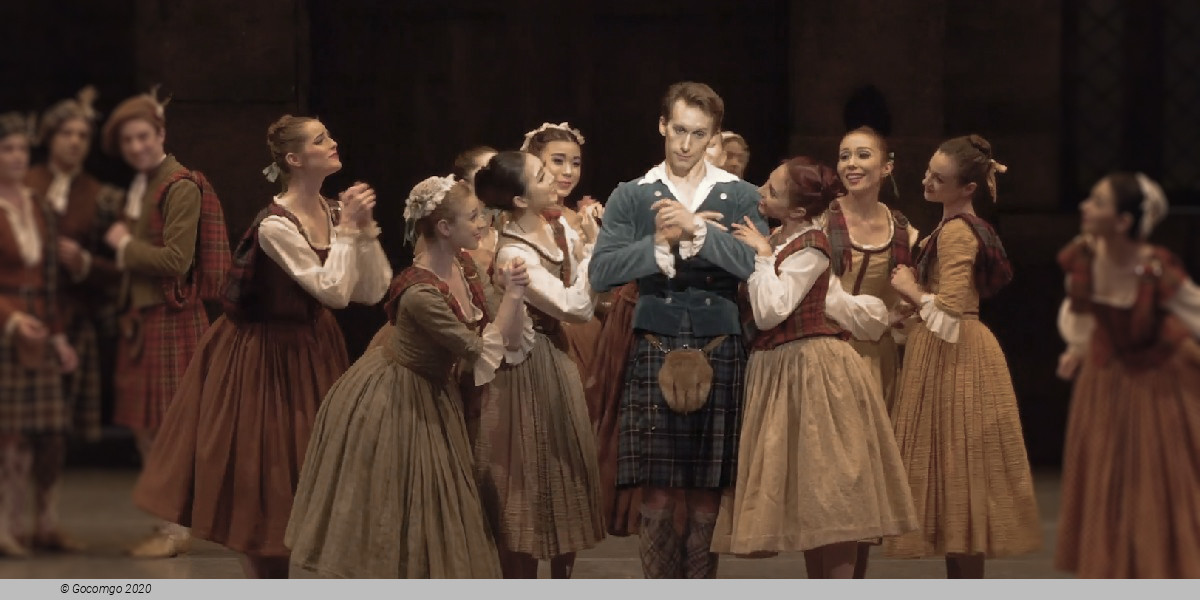
In the hall of a Scottish farmhouse, James Ruben, a young Scotsman, sleeps in a chair by the fireside. A sylph gazes lovingly upon him and dances about his chair. She kisses him and then vanishes when he suddenly wakes. James rouses his friend Gurn from sleep, and questions him about the sylph. Gurn denies having seen such a creature and reminds James that he is shortly to be married. James dismisses the incident and promises to forget it.

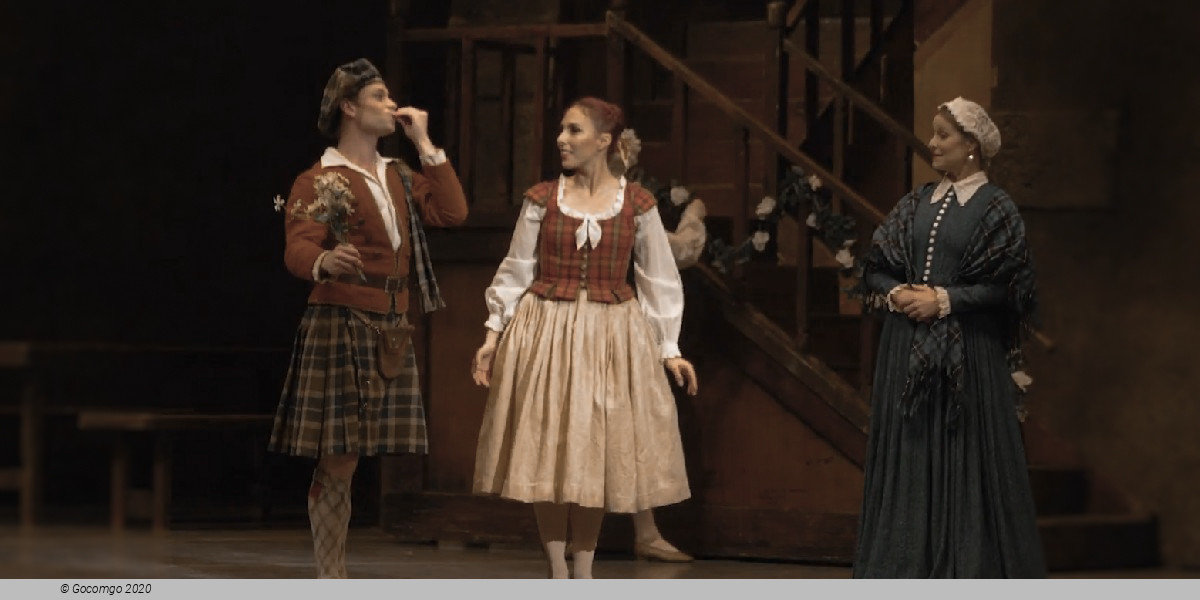
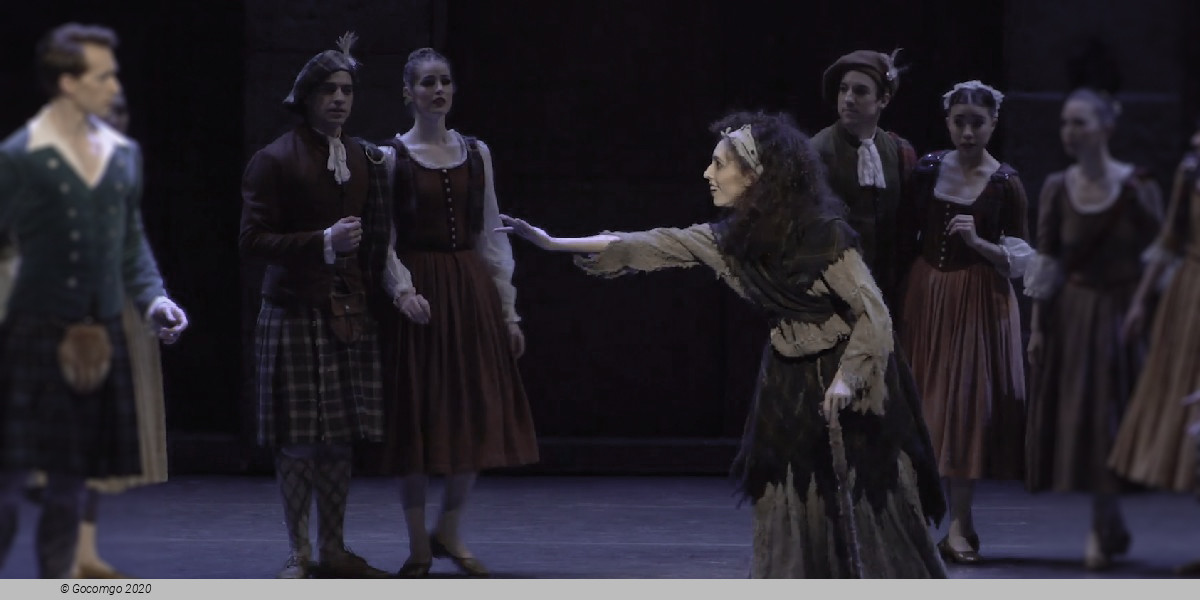
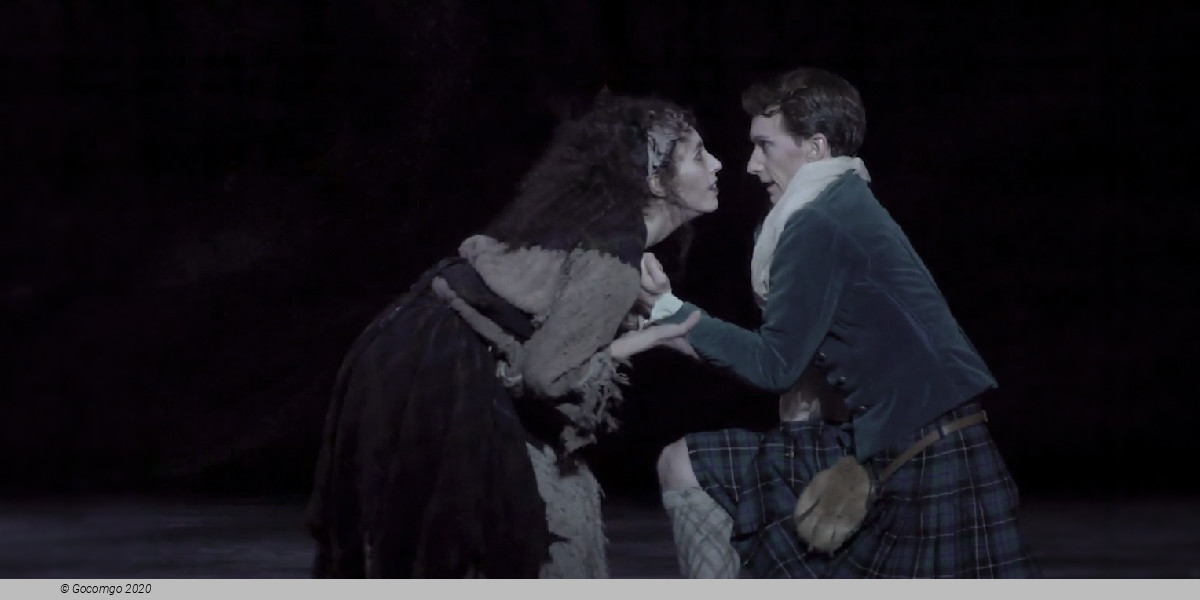
James' bride-to-be, Effie, arrives with her mother and bridesmaids. James dutifully kisses her, but is startled by a shadow in the corner. Thinking his sylph has returned, he rushes over, only to find the witch, Old Madge, kneeling at the hearth to warm herself. James is furious with disappointment.

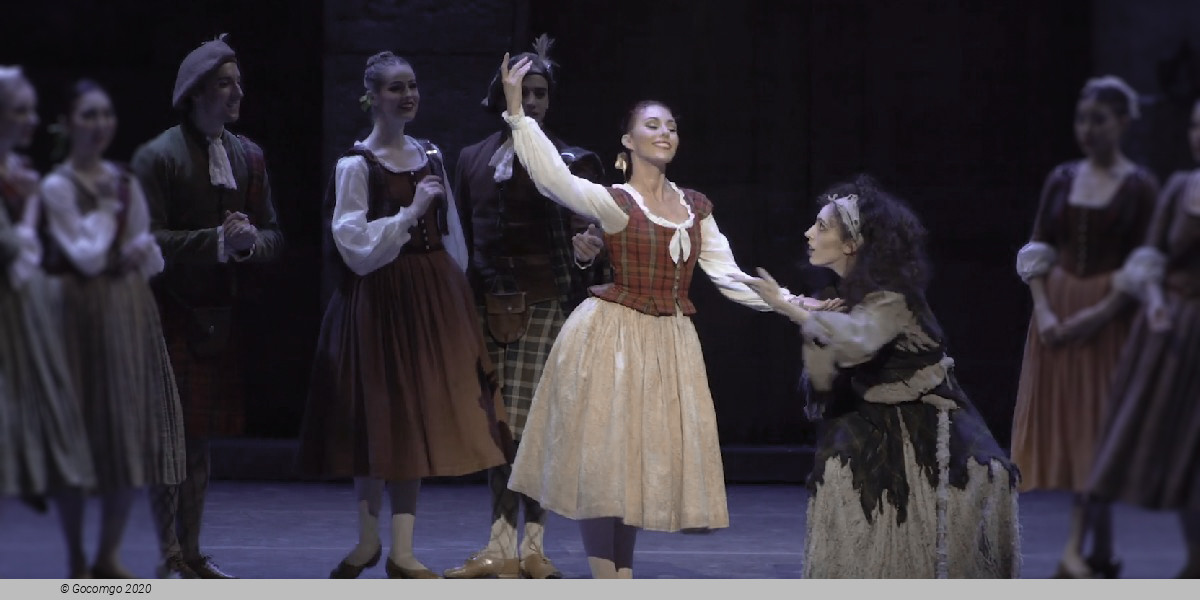
Effie and her friends beg Old Madge to tell their fortunes, and the witch complies. She gleefully informs Effie that James loves someone else and she will be united with Gurn. James is furious. He forces Madge from the hearth and throws her out of the house. Effie is delighted that James would tangle with a witch for her sake.

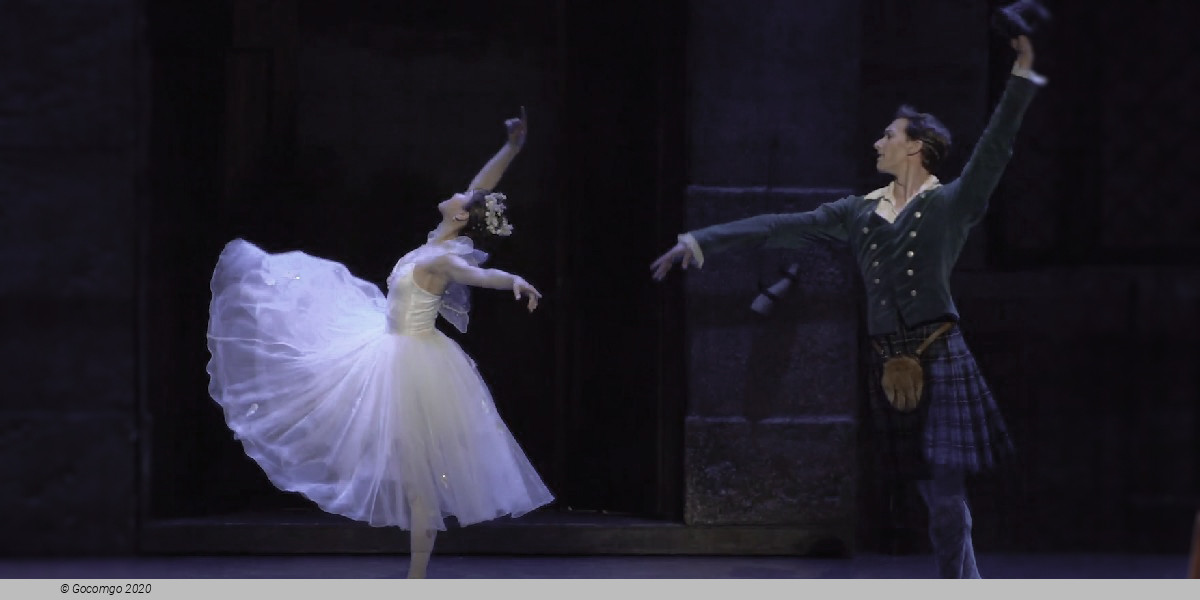
Effie and her bridesmaids hurry upstairs to prepare for the wedding, and James is left alone in the room. As he stares out the window, the sylph materializes before him and confesses her love. She weeps at his apparent indifference. James resists at first, but, captivated by her ethereal beauty, capitulates and kisses her tenderly. Gurn, who spies the moment from the shadows, scampers off to tell Effie what has happened.

When the distressed Effie and her friends enter after hearing Gurn's report, the sylph disappears. The guests assume Gurn is simply jealous and laugh at him. Everyone dances. The sylph enters during the midst of the revelry and attempts to distract James.

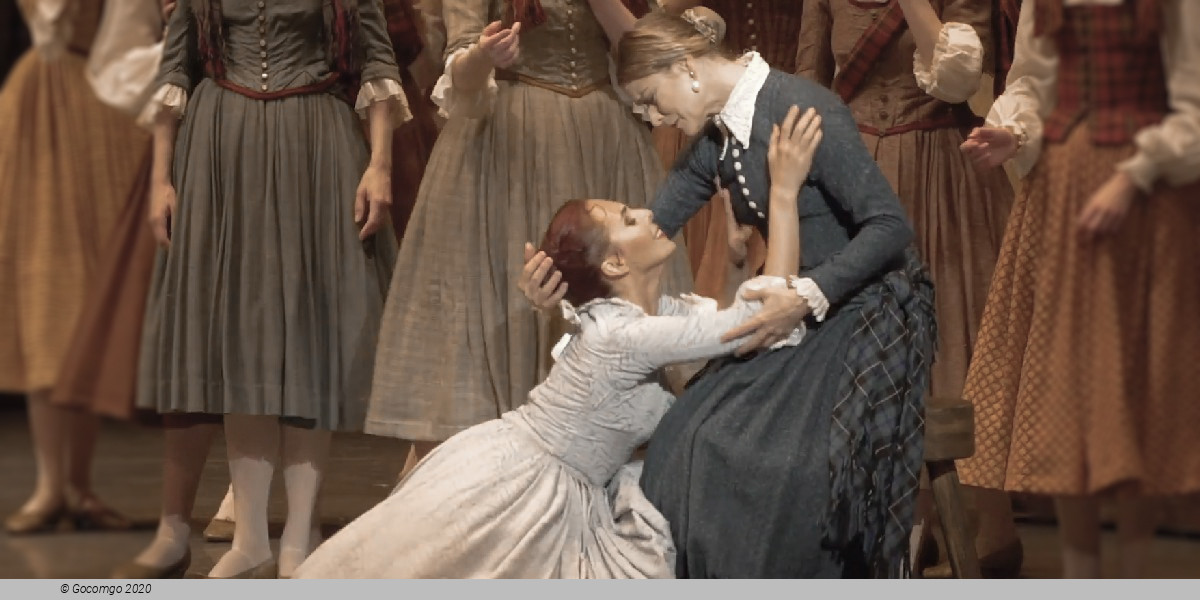
As the bridal procession forms, James stands apart and gazes upon the ring he is to place on Effie's finger. The Sylph snatches the ring, places it on her own finger, and, smiling enticingly, rushes into the forest. James hurries after her in ardent pursuit. The guests are bewildered with James' sudden departure. Effie is heartbroken. She falls into her mother's arms sobbing inconsolably.

Act 2

In a fog-shrouded part of the forest, Madge and her companion witches dance grotesquely about a cauldron. The revellers add all sorts of filthy ingredients to the brew. When the contents glow, Madge reaches into the cauldron and pulls a diaphanous, magic scarf from its depths. The cauldron then sinks, the witches scatter, the fog lifts, and a lovely glade is revealed.

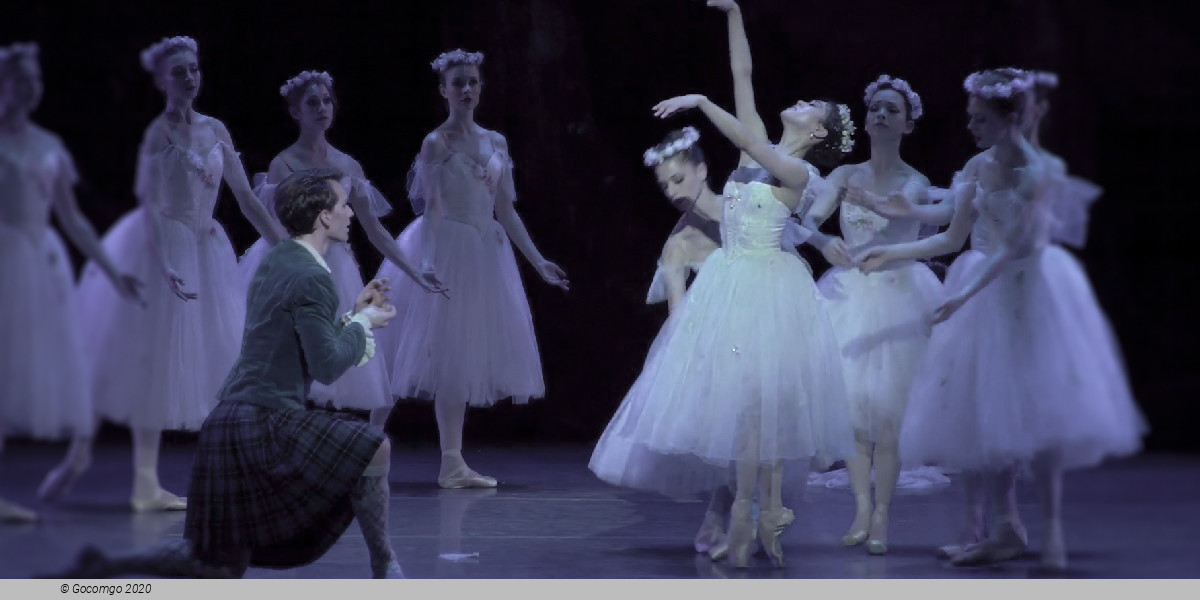
James enters with the sylph who shows him her charming, woodland realm. She brings him berries and water for refreshment but avoids his embrace. To cheer him, she summons her ethereal sisters who shyly enter and perform their airy dances. The young Scotsman is delighted and joins the divertissement before all flee for another part of the forest.

Meanwhile, the wedding guests have been searching the woodland for James. They enter the glade. Gurn finds his hat, but Madge convinces him to say nothing. Effie enters, weary with wandering about the forest. Madge urges Gurn to propose. He does and Effie accepts his proposal.

When they all have left, James enters the glade. Madge meets him, and tosses him the magic scarf. She tells the young farmer the scarf will bind the sylph to him so she cannot fly away. She instructs him to wind the scarf about the sylph's shoulders and arms for full effect. James is ecstatic. When the sylph returns and sees the scarf, she allows James to place it around her trembling form.

As James embraces the sylph passionately, her wings fall off, she shudders, and dies in James' arms. Sorrowfully, her sisters enter and lift her lifeless form. Suddenly, a joyful wedding procession led by Effie and Gurn crosses the glade. James is stunned. James directs his gaze heavenward; he sees the sylph borne aloft by her sisters. James collapses. Madge exults over his lifeless body. Justice has triumphed.

Venue Info

Beijing National Grand Theater (NCPA) - Beijing
Location   2 W Chang'an Ave

The National Centre for the Performing Arts (NCPA) is an arts centre containing an opera house in Beijing, People's Republic of China. The Centre, an ellipsoid dome of titanium and glass surrounded by an artificial lake, seats 5,452 people in three halls and is almost 12,000 m² in size. It was designed by French architect Paul Andreu. Construction started in December 2001 and the inaugural concert was held in December 2007.

The exterior of the theater is a titanium-accented glass dome that is completely surrounded by a man-made lake. It is said to look like an egg floating on water, or a water drop. It was designed as an iconic feature, something that would be immediately recognizable.

The dome measures 212 meters in east–west direction, 144 meters in north–south direction, and is 46 meters high. The main entrance is at the north side. Guests arrive in the building after walking through a hallway that goes underneath the lake. The titanium shell is broken by a glass curtain in north–south direction that gradually widens from top to bottom.

The location, immediately to the west of Tiananmen Square and the Great Hall of the People, and near the Forbidden City, combined with the theatre's futuristic design, created considerable controversy. Paul Andreu countered that although there is indeed value in ancient traditional Chinese architecture, Beijing must also include modern architecture, as the capital of the country and an international city of great importance. His design, with large open space, water, trees, was specially designed to complement the red walls of ancient buildings and the Great Hall of the People, in order to melt into the surroundings as opposed to standing out against them.

Internally, there are three major performance halls:

The Opera Hall is used for operas, ballet, and dances and seats 2,416 people.
The Music Hall is used for concerts and recitals and seats 2,017 people.
The Theatre Hall is used for plays and the Beijing opera. It has 1,040 seats.
The NCPA also distributes filmed and recorded performances of its concerts, plays and operas through the in-house label NCPA Classics, established in 2016.

The initial planned cost of the theatre was 2.688 billion yuan. When the construction had completed, the total cost rose to more than CNY3.2 billion. The major cause of the cost increase was a delay for reevaluation and subsequent minor changes as a precaution after a Paris airport terminal building collapsed. The cost has been a major source of controversy because many believed that it is nearly impossible to recover the investment. When the cost is averaged out, each seat is worth about half a million CNY. The Chinese government answered that the theater is not a for profit venture.

The government sanctioned study completed in 2004 by the Research Academy of Economic & Social Development of the Dongbei University of Finance and Economics, of the upkeep costs of the building were publicized in domestic Chinese media:

The water and electricity bills and the cleaning cost for the external surface would be at least tens of millions CNY, and with another maintenance cost, the total could easily exceed one billion CNY. Therefore, at least 80 percent of the annual operational costs must be subsidized by the government for at least the first three years after the opening, and for the rest of its operational life, at least 60 percent of the annual operational cost must be subsidized by the government.

The director of the art committee of the National Centre for the Performing Arts and the standing committee member of the Standing Committee of the Chinese People's Political Consultative Conference, Mr Wu Zuqiang (吴祖强) and the publicist / deputy director of the National Centre for the Performing Arts Mr Deng (邓一江) have announced that 70 percent of the tickets would be sold at low price for ordinary citizens, while 10% of the tickets would be sold at relatively expensive prices for separate market segments, and the 60% of annual operating cost needed to be subsidized by the government would be divided between the central government and the Beijing municipal government.

Important Info
Type: Ballet
City: Beijing, China
Starts at: 19:00
Top of page