









Beijing National Grand Theater (NCPA) 21 December 2023 - Liaoning Ballet: La Esmeralda | GoComGo.com

Liaoning Ballet: La Esmeralda

Beijing National Grand Theater (NCPA), Opera House, Beijing, China
All photos (7)
Select date and time
7 PM

E-tickets: Print at home or at the box office of the event if so specified. You will find more information in your booking confirmation email.

You can only select the category, and not the exact seats.
If you order 2 or 3 tickets: your seats will be next to each other.
If you order 4 or more tickets: your seats will be next to each other, or, if this is not possible, we will provide a combination of groups of seats (at least in pairs, for example 2+2 or 2+3).

Important Info
Type: Show
City: Beijing, China
Starts at: 19:00

E-tickets: Print at home or at the box office of the event if so specified. You will find more information in your booking confirmation email.

You can only select the category, and not the exact seats.
If you order 2 or 3 tickets: your seats will be next to each other.
If you order 4 or more tickets: your seats will be next to each other, or, if this is not possible, we will provide a combination of groups of seats (at least in pairs, for example 2+2 or 2+3).

Overview

Founded in 1980, Liaoning Ballet is one of the famous ballet companies in China.

While insisting on importing and rehearsing world classical ballet works, Liaoning Ballet is committed to creating ballet art works with Chinese characteristics, and has made remarkable achievements in exploring and establishing a Chinese school of ballet art.

Since the establishment of the troupe, it has rehearsed dozens of works such as the world-famous ballet "Swan Lake", "Sleeping Beauty", "The Nutcracker", "The Fairy", "Pirate" and "Don Quixote", and cooperated with the international ballet master Grigorovich Produced and performed the ballets "Spartacus" and "Romeo and Juliet", setting a precedent in China. While performing classic works, it is also actively cooperating with international masters to create "new classics", co-arranging a new version of the ballet "Swan Lake" with the century dancer Malakhov, and co-creating a modern ballet with the famous Portuguese choreographer Rui Manuel Lopes Graca. Ballet dance poems "Butterfly Transformation" and "Song without Words". He created and performed Chinese-style ballets "Liang Shanbo and Zhu Yingtai", "Gada Meilin", "Peacock Gallbladder", "Two Springs Reflecting the Moon" and modern ballets "The Last Emperor". In recent years, it has been committed to creating original Chinese ballet works with strong regional cultural characteristics, such as the ballet dance poem "Liaohe Lullaby" full of Liaoning regional customs, and the original Chinese ballet drama "Eight Girls Throwing into the River" reflecting the spirit of the Northeast Anti-Japanese War. The original Chinese ballet "Mulan" and other national models of filial piety, loyalty and trust have accumulated historical, artistic and popular original works for the development of Chinese ballet art.

The Ballet Dance School Affiliated to Liaoning Ballet Troupe was established in 1994, with nearly 600 students, it is currently the largest training base for professional ballet talents in the world. It has sent a large number of ballet talents at home and abroad, and its graduates are all over major ballet companies in Asia, Europe, America and China. Among the current cast members of Liaoning Ballet Troupe, more than 97% of the actors are from this school. Over the years, the troupe has produced a large number of talented performers, and has won more than 170 silver and above awards in major ballet competitions around the world, forming an artistic lineup that is currently influential in the ballet circle at home and abroad.

The Youth Ballet Troupe of the Ballet Dance School Affiliated to Liaoning Ballet was established on December 24, 2018. It is the first professional youth ballet troupe in the country. The average age of the existing troupe members is only 14 years old, and the main actors have won 7 silver awards or above in the world's major ballet competitions. With the Liaoning Ballet as the background, the dance school affiliated to the Liaoning Ballet as the basis, the company takes the scientific, systematic and professional training program as the basis, aims to cultivate outstanding young ballet talents, and adopts the method of "combining learning and acting" , to provide a platform for the future generation of Chinese ballet to exercise, show and improve.

Whether in the field of artistic creation or in the field of education, Liaoning Ballet and its affiliated ballet dance school have carried out extensive and in-depth cooperation with countries that lead the world in ballet art. Cooperating with ballet theaters and choreographers in France, Germany, Russia, the United States, South Africa, Denmark and other countries to create performances has made a useful attempt and exploration for the international exchange of Chinese ballet art. All the year round, well-known experts from home and abroad are invited to give lectures and rehearsals in groups and schools, and the footprints of visiting performances are all over Asia, Europe, Africa, Oceania, North America, and South America. Every year, he participates in various professional dance competitions at home and abroad, and wins special awards and gold medals in the four major international professional ballet competitions. While prospering artistic creation, he has cultivated talents and opened up markets.

Since the establishment of the troupe, Liaoning Ballet has always firmly believed in the social value of ballet art, and has faced various challenges brought about by development with an attitude of openness, communication and integration.

History
Premiere of this production: 09 March 1844, Her Majesty's Theatre, London

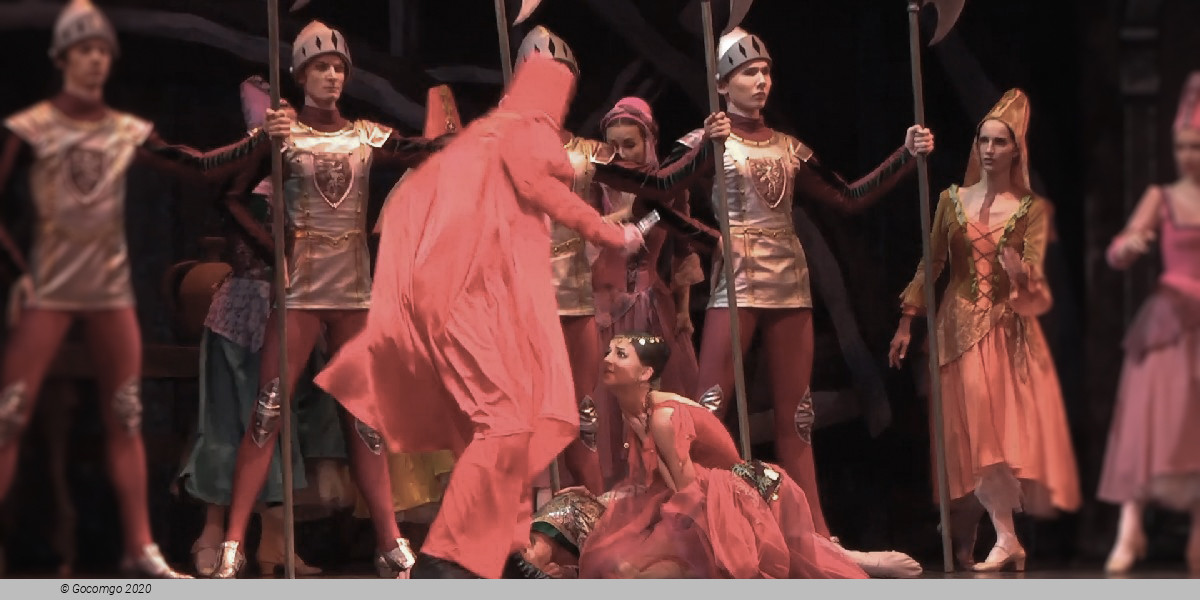
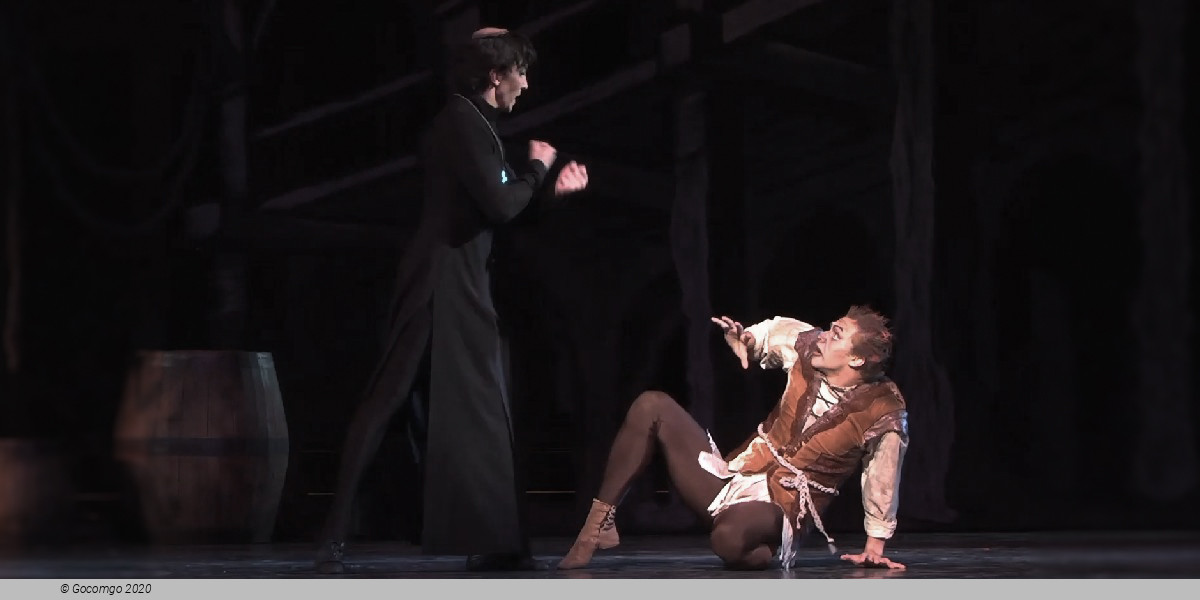
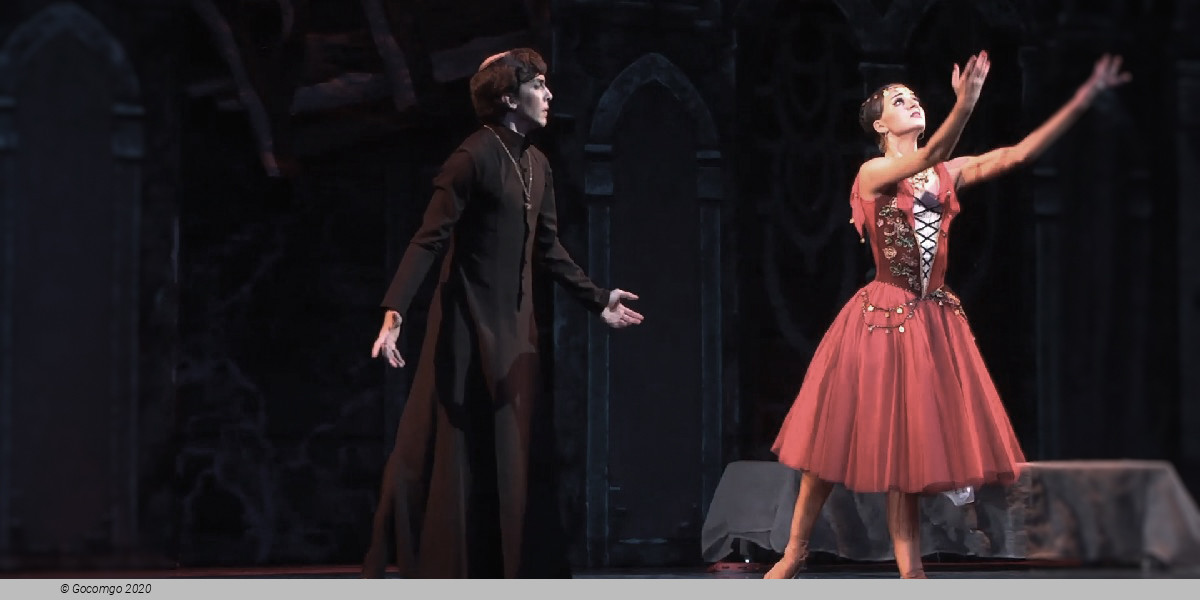
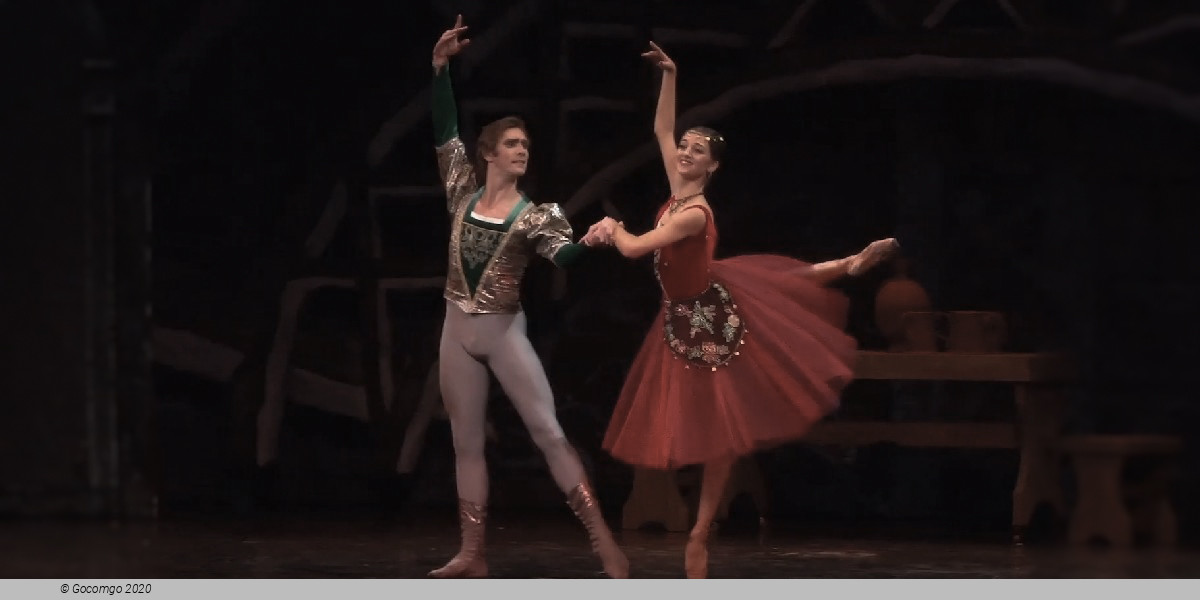
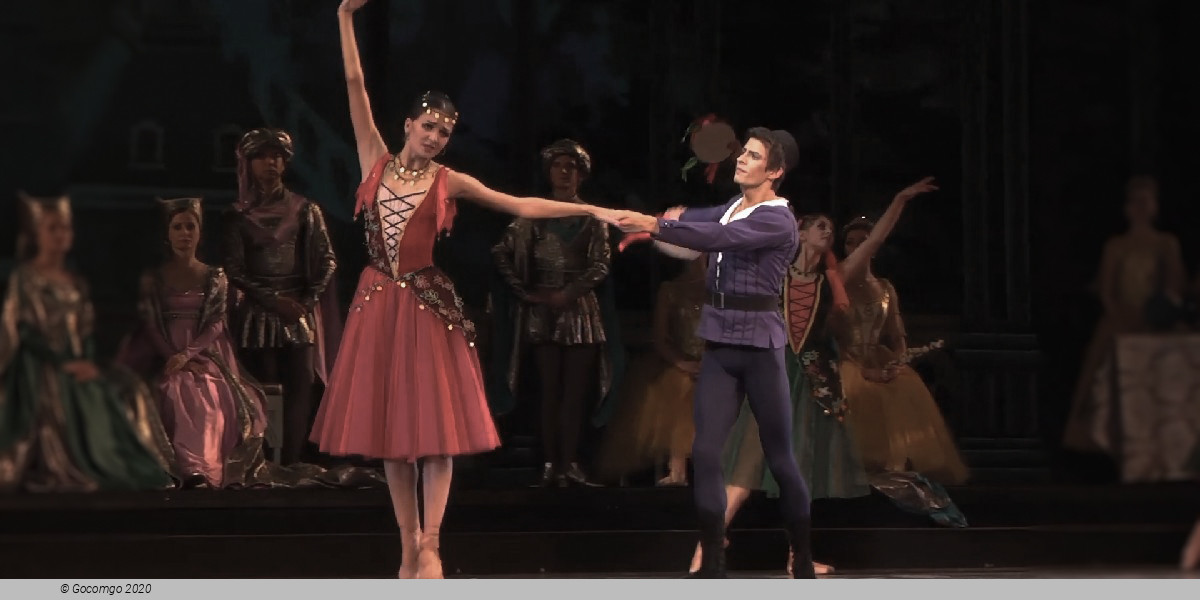
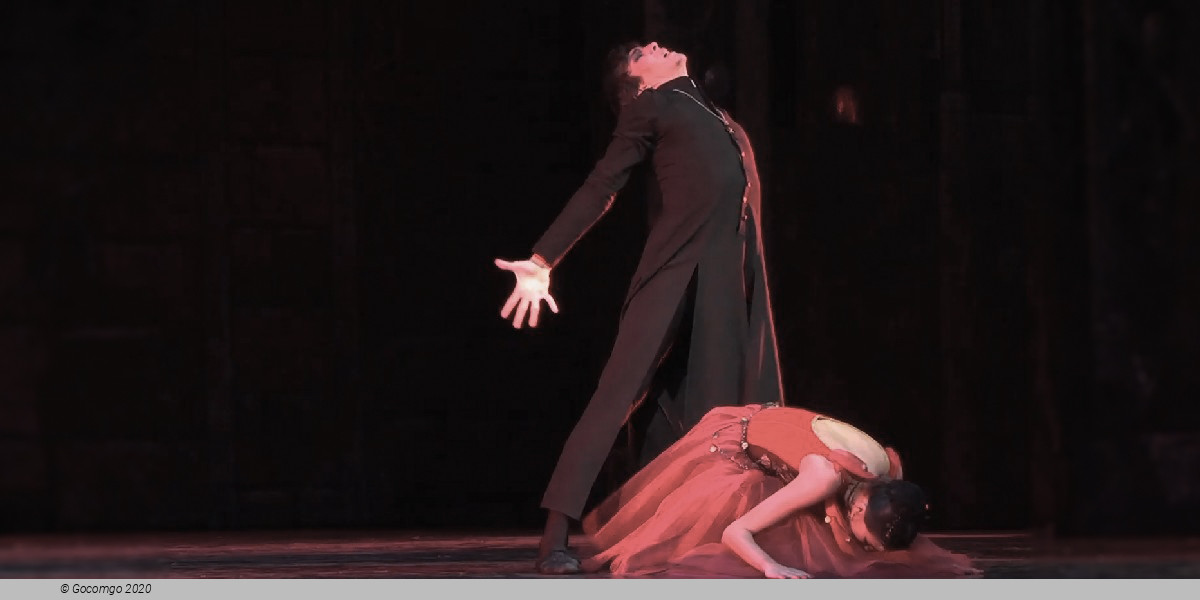
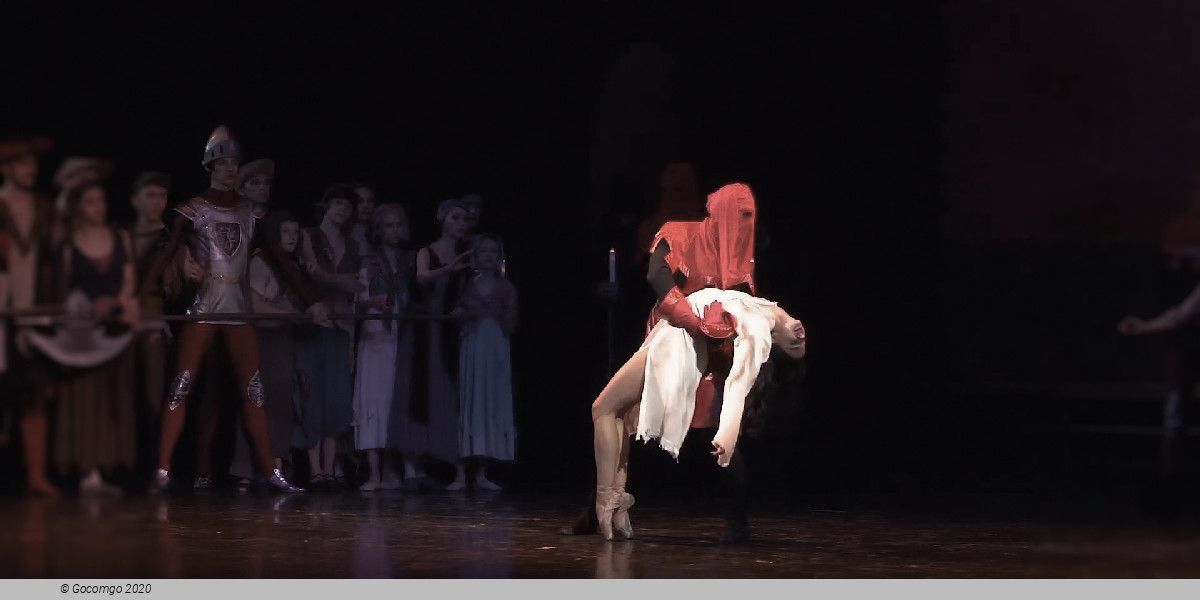
La Esmeralda is a ballet in three acts and five scenes, inspired by the 1831 novel Notre-Dame de Paris by Victor Hugo, originally choreographed by Jules Perrot to music by Cesare Pugni, with sets by William Grieve and costumes by Mme. Copère.

Synopsis

Plot outline based on the full synopsis translated by Professor Roland John Wiley:

The beautiful gypsy girl Esmeralda marries the poet Pierre Gringoire, to save him from death in the hands of the gypsy king. The groom is smitten with his new bride, but she makes it clear that the marriage is strictly one of convenience. Gringoire is not the only one infatuated with Esmeralda, the archdeacon of Notre Dame cathedral, Claude Frollo, is dangerously obsessed with the girl and orders his deformed henchman, Quasimodo, to abduct her. When Quasimodo attacks Esmeralda in the street, she is rescued by the King's Archers, led by their handsome captain Phoebus de Chateaupers, who capture Quasimodo. They plan to torture him, but Esmeralda asks for his release. The hunchback is deeply touched by her kindness. Phoebus is enchanted by the girl and gives her a scarf that was given to him by his fiancée, Fleur de Lys.

The next day, Fleur de Lys and her mother hold a grand celebration for her engagement to Phoebus, who is distracted by thoughts of Esmeralda. She arrives to entertain the guests, but is left heartbroken when she sees that Fleur de Lys' fiancé is none other than her beloved Phoebus. Fleur de Lys notices that Esmeralda is wearing the scarf that she gave to Phoebus and realising that he has fallen in love with another, angrily calls off the engagement. Phoebus leaves with Esmeralda. Alone in a tavern, the two declare their love for each other, unaware that the archdeacon Frollo is also there, eavesdropping on them. Taking a dagger that he stole from Esmeralda's room, Frollo sneaks up behind the lovers and stabs Phoebus, who falls unconscious to the ground. Frollo calls for the authorities, shows them the body of Phoebus and the dagger that was used to stab him, which is identified as Esmeralda's. The poor girl is taken away and sentenced to death.

At dawn the following morning, the Festival of Fools is under way and Esmeralda is due to be hanged for the murder of Phoebus. Her friends and Gringoire are all present and bid her farewell, while Frollo watches in triumph. Just as Esmeralda is led to the gallows, Phoebus arrives alive and well, having survived and recovered from the stabbing. He reveals the true culprit to be Frollo and announces that Esmeralda is innocent of any crime. Frollo takes a dagger and attempts to do away with them, but Quasimodo wrests the dagger from his master and stabs him to death. Esmeralda and Phoebus are happily reunited.

Venue Info

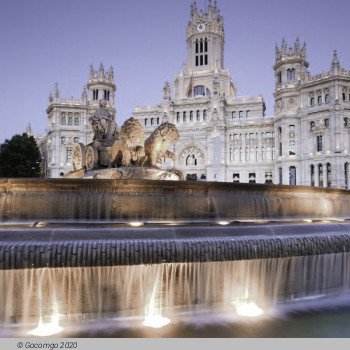
Beijing National Grand Theater (NCPA) - Beijing
Location   2 W Chang'an Ave

The National Centre for the Performing Arts (NCPA) is an arts centre containing an opera house in Beijing, People's Republic of China. The Centre, an ellipsoid dome of titanium and glass surrounded by an artificial lake, seats 5,452 people in three halls and is almost 12,000 m² in size. It was designed by French architect Paul Andreu. Construction started in December 2001 and the inaugural concert was held in December 2007.

The exterior of the theater is a titanium-accented glass dome that is completely surrounded by a man-made lake. It is said to look like an egg floating on water, or a water drop. It was designed as an iconic feature, something that would be immediately recognizable.

The dome measures 212 meters in east–west direction, 144 meters in north–south direction, and is 46 meters high. The main entrance is at the north side. Guests arrive in the building after walking through a hallway that goes underneath the lake. The titanium shell is broken by a glass curtain in north–south direction that gradually widens from top to bottom.

The location, immediately to the west of Tiananmen Square and the Great Hall of the People, and near the Forbidden City, combined with the theatre's futuristic design, created considerable controversy. Paul Andreu countered that although there is indeed value in ancient traditional Chinese architecture, Beijing must also include modern architecture, as the capital of the country and an international city of great importance. His design, with large open space, water, trees, was specially designed to complement the red walls of ancient buildings and the Great Hall of the People, in order to melt into the surroundings as opposed to standing out against them.

Internally, there are three major performance halls:

The Opera Hall is used for operas, ballet, and dances and seats 2,416 people.
The Music Hall is used for concerts and recitals and seats 2,017 people.
The Theatre Hall is used for plays and the Beijing opera. It has 1,040 seats.
The NCPA also distributes filmed and recorded performances of its concerts, plays and operas through the in-house label NCPA Classics, established in 2016.

The initial planned cost of the theatre was 2.688 billion yuan. When the construction had completed, the total cost rose to more than CNY3.2 billion. The major cause of the cost increase was a delay for reevaluation and subsequent minor changes as a precaution after a Paris airport terminal building collapsed. The cost has been a major source of controversy because many believed that it is nearly impossible to recover the investment. When the cost is averaged out, each seat is worth about half a million CNY. The Chinese government answered that the theater is not a for profit venture.

The government sanctioned study completed in 2004 by the Research Academy of Economic & Social Development of the Dongbei University of Finance and Economics, of the upkeep costs of the building were publicized in domestic Chinese media:

The water and electricity bills and the cleaning cost for the external surface would be at least tens of millions CNY, and with another maintenance cost, the total could easily exceed one billion CNY. Therefore, at least 80 percent of the annual operational costs must be subsidized by the government for at least the first three years after the opening, and for the rest of its operational life, at least 60 percent of the annual operational cost must be subsidized by the government.

The director of the art committee of the National Centre for the Performing Arts and the standing committee member of the Standing Committee of the Chinese People's Political Consultative Conference, Mr Wu Zuqiang (吴祖强) and the publicist / deputy director of the National Centre for the Performing Arts Mr Deng (邓一江) have announced that 70 percent of the tickets would be sold at low price for ordinary citizens, while 10% of the tickets would be sold at relatively expensive prices for separate market segments, and the 60% of annual operating cost needed to be subsidized by the government would be divided between the central government and the Beijing municipal government.

Important Info
Type: Show
City: Beijing, China
Starts at: 19:00
Top of page