
Beijing National Grand Theater (NCPA) 23 May 2024 - Hangzhou Philharmonic Orchestra | GoComGo.com

Hangzhou Philharmonic Orchestra

Beijing National Grand Theater (NCPA), Multi-functional Theatre, Beijing, China
All photos (1)
Select date and time

E-tickets: Print at home or at the box office of the event if so specified. You will find more information in your booking confirmation email.

You can only select the category, and not the exact seats.
If you order 2 or 3 tickets: your seats will be next to each other.
If you order 4 or more tickets: your seats will be next to each other, or, if this is not possible, we will provide a combination of groups of seats (at least in pairs, for example 2+2 or 2+3).

Important Info
Type: Classical Concert
City: Beijing, China
Starts at: 19:30

E-tickets: Print at home or at the box office of the event if so specified. You will find more information in your booking confirmation email.

You can only select the category, and not the exact seats.
If you order 2 or 3 tickets: your seats will be next to each other.
If you order 4 or more tickets: your seats will be next to each other, or, if this is not possible, we will provide a combination of groups of seats (at least in pairs, for example 2+2 or 2+3).

Programme
Overview

NCPA May Festival 2024

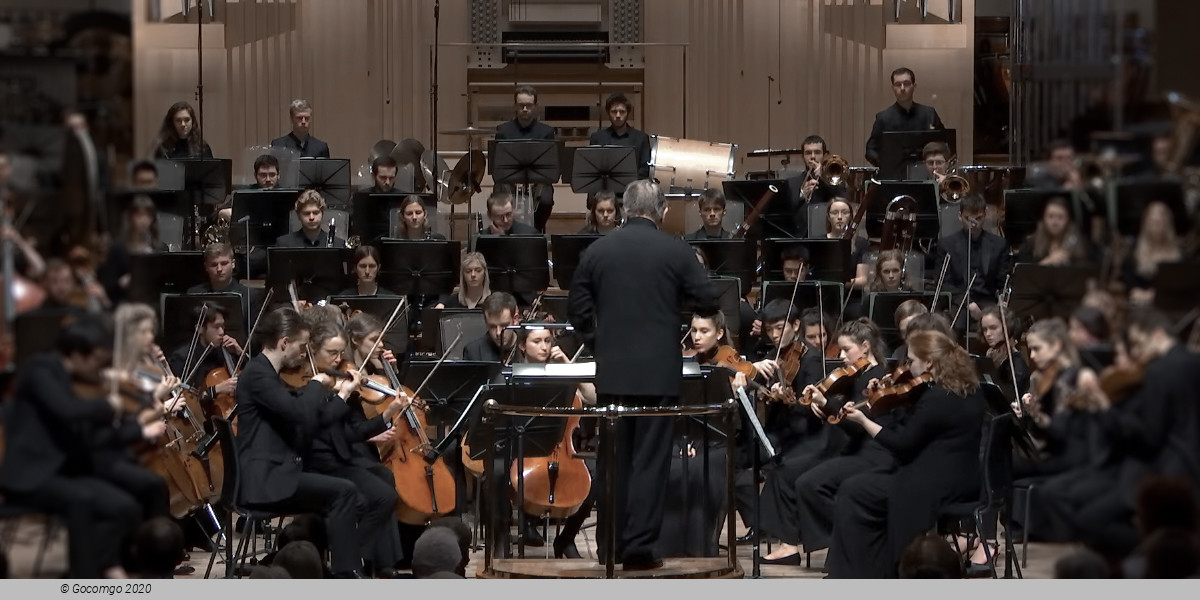
Founded on April 20th 2009, Hangzhou Philharmonic Orchestra (HPO) has established itself as one of most promising and exciting symphony orchestras in China. The orchestra has ventured to perform across all disciplines of arts in concert, opera, ballet, chamber music, film music and recording to critical acclaim.

YU Long, a distinguished Chinese conductor, praised that HPO is the best stage for Hangzhou culture to the world, and as well as the exhibition platform of global cultures in Hangzhou. “Established only seven years ago in a city 180 miles from Shanghai, the HPO is by now one of the major orchestras in China”, reported by Musical America, 2016.

Under the leadership of DENG Jingshan, its President, the orchestra has engaged YANG Yang as Music Director and Chief Conductor. In April, 2015, Maestro YU Long, the CPO Artistic Director, was appointed the director of HPO Artistic Committee. Some of the foremost names have appeared as Artists-in-residence: violinist NING Feng, cellist Li-Wei Qin, french horn player HAN Xiaoming and pianist Kun-Woo Paik, ZHANG Haochen and YANG Tianwa. WANG Jian is the Artist-in-residence currently.

An impressive array of renowned musicians in China and around the world has performed with HPO in the past years, including conductors Vladimir Fedoseyev, Paavo Järvi, Chung Myung-whun, Klaus Peter Flor, Gunther Herbig, Okko Kamu, Jesus Lopez-Cobos, Zubin Mehta, Krzysztof Penderecki, Gennady Rozhdestvensky, CHEN Xieyang, LI Xincao, Jahja Ling, Shao-Chia Lü, SHUI Lan, TAN Dun, YU Feng, YU Long, ZHANG Guoyong, ZHANG Yi, ZHANG Xian, Tung-Chieh Chuang, pianists Barry Douglas, Jean-Yves Thibaudet, Andrei Gavrilov, Gary Graffman, Kun-Woo Paik, Jon Kimura Parker, Tamas Vasary, CHEN Sa, Lang Lang, ZHANG Haochen, violinists Sarah Chang, Midori, Ryu Goto, Daniel Hope, Gidon Kremer, Shlomo Mintz, Joseph Silverstein, Lara St. John, Maxim Vengerov, Renaud Capuçon, Daishin Kashimoto, Cho-Liang Lin, LÜ Siqing, NIG Feng, Vera Tsu Wei Ling, cellists Gautier Capuçon, Alban Gerhardt, Natalia Gutman, Lynn Harrell, Li-wei Qin, WANG Jian, flutists Michael Martin Kofler, Massimo Mercelli, clarinetist Wenzel Fuchs, Manfred Preis, oboist Jonathan Kelly, WANG Liang, bassoonist Stefan Schweigert, french horn player Stefan Dohr, HAN Xiaoming, Radovan Vlatkovic, trumpet player Gabor Tarkovi, Tamas Velenczei, trombone player Christhard Gossling, classical guitarist YANG Xuefei, Chinese folk musicians MIN Huifen, SONG Fei, TANG Junqiao, ZHANG Hongyan as well as Sumi Jo, Thomas Hampson, HE Hui, HUANG Ying, SUN Xiuwei, ZHANG Liping, DAI Yuqiang, MO Hualun, WEI Song, ZHANG Jianyi, LIAO Changyong, SHEN Yang, YUAN Chenye, etc.

All over the years HPO has presented a series of concerts and operas. Some of the highlights include China Grand Canal at Peking University and Rachmaninoff’s Second Symphony at the National Centre for the Performing Arts in Beijing, ballet Marco Polo’s Last Mission during Shanghai Expo, La Bohème in concert version in Hangzhou, La Traviata in full stage co-produced with Maggio Musicale Fiorentino conducted by maestro YU Long, Benjamin Britten’s Noye’s Fludde in Shanghai and the China premiere of Peter Grimes in Beijing. HPO has contributed Verdi’s Requiem and Mahler’s Second Symphony during the composers’ centennials. HPO has also performed Brahms’s Ein Deutsches Requiem with The Bach Choir. In October, 2014, HPO was invited to Wuhan to attend The Third China Opera Festival for concert edition La Traviata. In May, 2015, HPO was invited to attend 32nd Shanghai Spring International Music Festival for Exhibition and Performance of New Artists and Programmes from Yangtze River delta, presenting HPO commissioned programme, Seven Episodes of West Lake by YE Xiaogang. On 31st December, 2015, HPO participated in CCTV “Music in the New Year, 2016 New Year Concert” as the first orchestra being invited to this programme in China.

In September, 2016, HPO had successfully participated in the Evening Gala for the G20 Leaders Summit. 2017 Hangzhou International Music Festival last from June to July, 2017 for 21 days, including six sections of concert performances, master classes, music lectures, outreach performances, China Symphony Summit and Clive Barda retrospective photographic exhibition. HPO organized the Music Festival and won critical acclaim from Phil Blech Vienna, Munich Philharmonic Chamber Orchestra, Wynton Marsalis and Jazz at Lincoln Center Orchestra and China National Opera House.

Aside from regular concerts, HPO has been engaged in major music competitions in China and drawn wide praise. Outside of China it has toured extensively to Slovenia, German, Italy, Russia and Estonia and performed at leading festivals including the prestigious Schleswig-Holstein Musik Festival and Beijing Music Festival. In Aug 2014, HPO was invited by Taormina Festival in Italy for cooperation in opera Pagliacci and Cavalleria Rusticana. In November, 2016, HPO toured to Czech, Italy, Austria and Germany.

HPO promotes contemporary music, especially programmes from Chinese composers. HPO participated in debut of China Grand Canal and commissioned TAN Dun for Water Rock and Roll in Xihu Music International Music Festival which was supported by UNESCO. In 2012, Seven Episodes of West Lake composed by YE Xiaogang debut in Hangzhou Grand Theatre. In 2013, Dwelling in the Fuchun Mountains commissioned by HPO to WEN Tao debut in Zhejiang Great Hall of the People. In 2014, HPO commissioned GUO Wenjing for The River in Red, and debut in October, 2015 on The 18th Beijing Music Festival.

Cultural exchange programme being an integral part, the orchestra has partnered with Berliner Philharmoniker’s board, Philadelphia Orchestra and Yong Siew Toh Conservatory. Each year eight members of the orchestra will be recommended to work with Berliner Philharmoniker in Berlin in order to refine their musical taste. Besides, an education programme has been initiated between HPO and Shanghai Conservatory of Music, HPO has become the Practical Training Base of Professional Degrees of Shanghai Conservatory of Music. In 2016, HPO was commissioned by Ministry of Commerce of P. R . China and CAEG for a three-month training project for Laos National Symphony Orchestra.

In October, 2014, HPO published its first recording with violinist Ning Feng by Universal Music and Channel Classics Records.

HPO is deeply rooted in the local community and has presented a series of audience outreach events as its priority. Hangzhou Philharmonic Orchestra has made great artistic achievements by establishing musical seasons. With joint efforts of all members, HPO emphasizes on professional development with Hangzhou Speed and Hangzhou Model, and has been the golden name card and icon of Hangzhou in terms of cultural construction and international exchange.

Venue Info

Beijing National Grand Theater (NCPA) - Beijing
Location   2 W Chang'an Ave

The National Centre for the Performing Arts (NCPA) is an arts centre containing an opera house in Beijing, People's Republic of China. The Centre, an ellipsoid dome of titanium and glass surrounded by an artificial lake, seats 5,452 people in three halls and is almost 12,000 m² in size. It was designed by French architect Paul Andreu. Construction started in December 2001 and the inaugural concert was held in December 2007.

The exterior of the theater is a titanium-accented glass dome that is completely surrounded by a man-made lake. It is said to look like an egg floating on water, or a water drop. It was designed as an iconic feature, something that would be immediately recognizable.

The dome measures 212 meters in east–west direction, 144 meters in north–south direction, and is 46 meters high. The main entrance is at the north side. Guests arrive in the building after walking through a hallway that goes underneath the lake. The titanium shell is broken by a glass curtain in north–south direction that gradually widens from top to bottom.

The location, immediately to the west of Tiananmen Square and the Great Hall of the People, and near the Forbidden City, combined with the theatre's futuristic design, created considerable controversy. Paul Andreu countered that although there is indeed value in ancient traditional Chinese architecture, Beijing must also include modern architecture, as the capital of the country and an international city of great importance. His design, with large open space, water, trees, was specially designed to complement the red walls of ancient buildings and the Great Hall of the People, in order to melt into the surroundings as opposed to standing out against them.

Internally, there are three major performance halls:

The Opera Hall is used for operas, ballet, and dances and seats 2,416 people.
The Music Hall is used for concerts and recitals and seats 2,017 people.
The Theatre Hall is used for plays and the Beijing opera. It has 1,040 seats.
The NCPA also distributes filmed and recorded performances of its concerts, plays and operas through the in-house label NCPA Classics, established in 2016.

The initial planned cost of the theatre was 2.688 billion yuan. When the construction had completed, the total cost rose to more than CNY3.2 billion. The major cause of the cost increase was a delay for reevaluation and subsequent minor changes as a precaution after a Paris airport terminal building collapsed. The cost has been a major source of controversy because many believed that it is nearly impossible to recover the investment. When the cost is averaged out, each seat is worth about half a million CNY. The Chinese government answered that the theater is not a for profit venture.

The government sanctioned study completed in 2004 by the Research Academy of Economic & Social Development of the Dongbei University of Finance and Economics, of the upkeep costs of the building were publicized in domestic Chinese media:

The water and electricity bills and the cleaning cost for the external surface would be at least tens of millions CNY, and with another maintenance cost, the total could easily exceed one billion CNY. Therefore, at least 80 percent of the annual operational costs must be subsidized by the government for at least the first three years after the opening, and for the rest of its operational life, at least 60 percent of the annual operational cost must be subsidized by the government.

The director of the art committee of the National Centre for the Performing Arts and the standing committee member of the Standing Committee of the Chinese People's Political Consultative Conference, Mr Wu Zuqiang (吴祖强) and the publicist / deputy director of the National Centre for the Performing Arts Mr Deng (邓一江) have announced that 70 percent of the tickets would be sold at low price for ordinary citizens, while 10% of the tickets would be sold at relatively expensive prices for separate market segments, and the 60% of annual operating cost needed to be subsidized by the government would be divided between the central government and the Beijing municipal government.

Important Info
Type: Classical Concert
City: Beijing, China
Starts at: 19:30
Top of page