
Beijing National Grand Theater (NCPA) tickets 3 December 2026 - Eifman Ballet of St. Petersburg – Crime and Punishment | GoComGo.com

Eifman Ballet of St. Petersburg – Crime and Punishment

Beijing National Grand Theater (NCPA), Opera House, Beijing, China
All photos (6)
Select date and time
7 PM
From
US$ 80

E-tickets: Print at home or at the box office of the event if so specified. You will find more information in your booking confirmation email.

You can only select the category, and not the exact seats.
If you order 2 or 3 tickets: your seats will be next to each other.
If you order 4 or more tickets: your seats will be next to each other, or, if this is not possible, we will provide a combination of groups of seats (at least in pairs, for example 2+2 or 2+3).

Important Info
Type: Modern Ballet
City: Beijing, China
Starts at: 19:00
Acts: 2
Intervals: 1
Duration: 2h 30min

E-tickets: Print at home or at the box office of the event if so specified. You will find more information in your booking confirmation email.

You can only select the category, and not the exact seats.
If you order 2 or 3 tickets: your seats will be next to each other.
If you order 4 or more tickets: your seats will be next to each other, or, if this is not possible, we will provide a combination of groups of seats (at least in pairs, for example 2+2 or 2+3).

Cast
Performers
Creators
Composer: Boris Tishchenko
Composer: Gustav Mahler
Choreographer: Boris Eifman
Overview

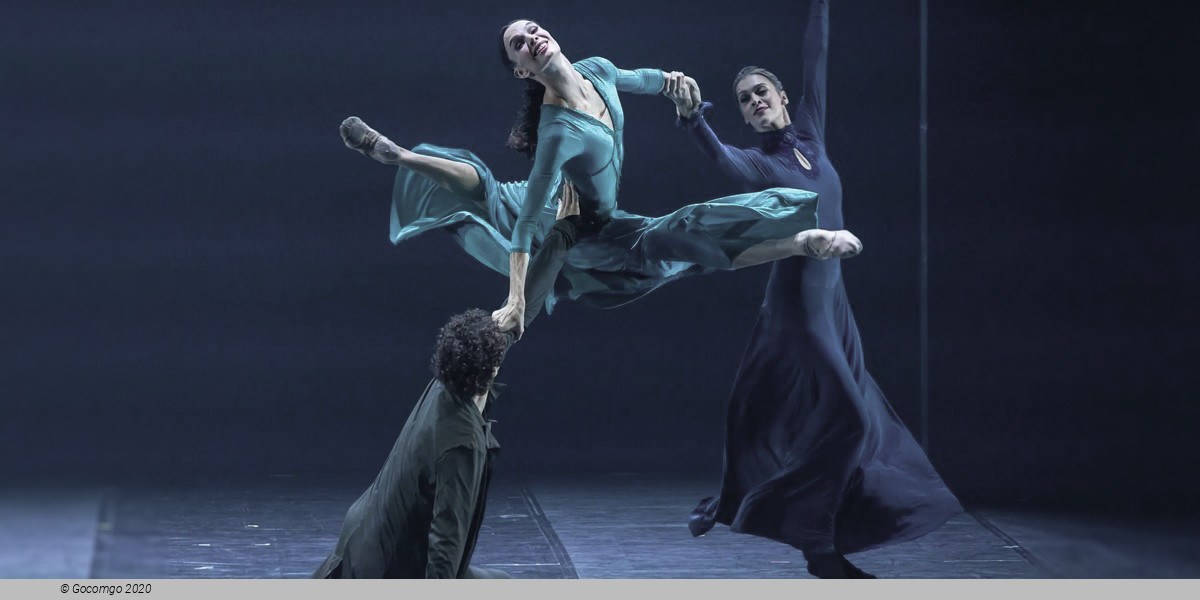
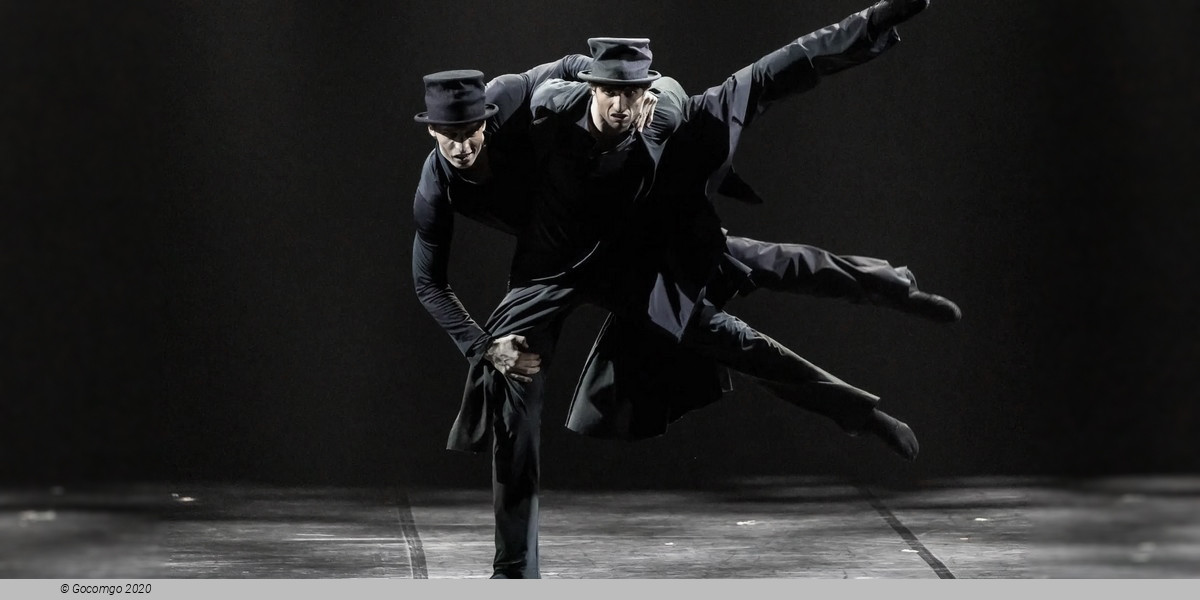
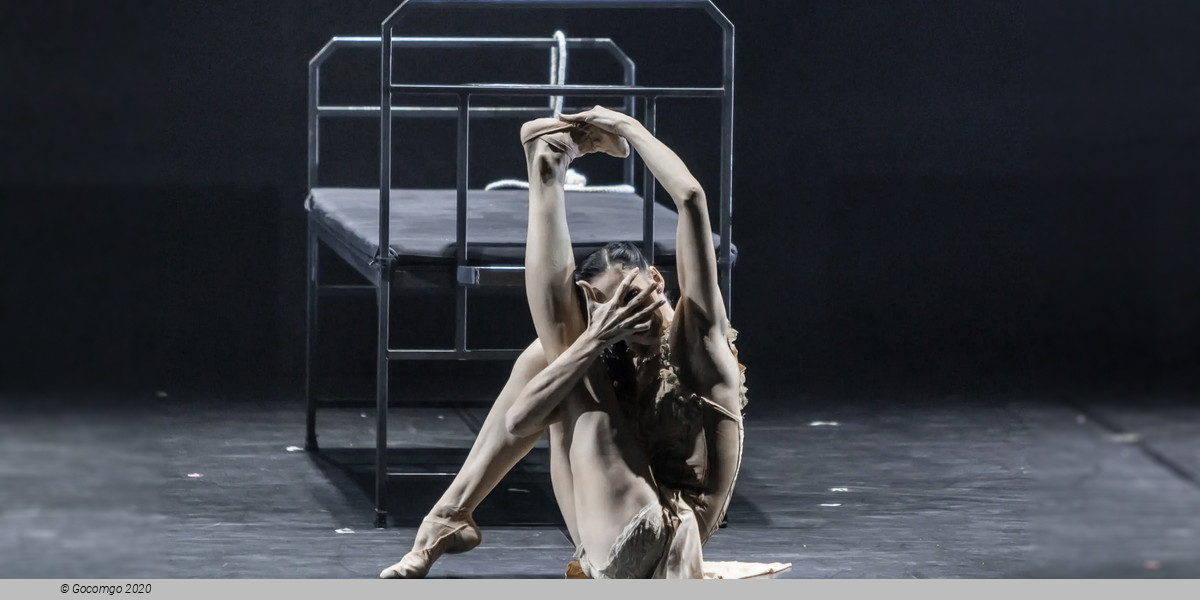
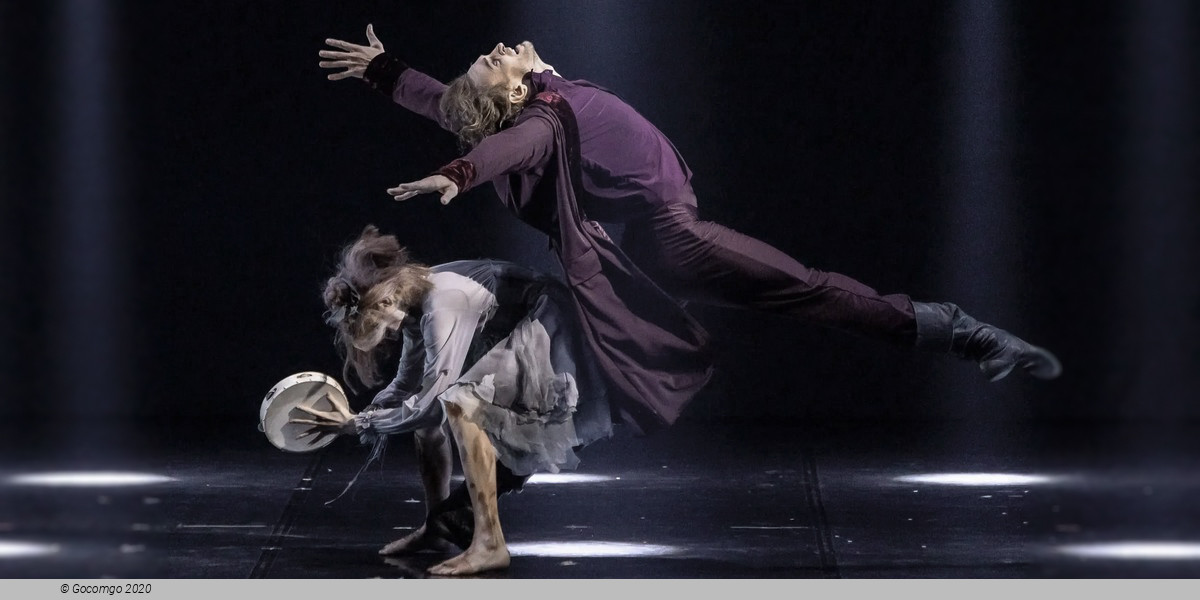
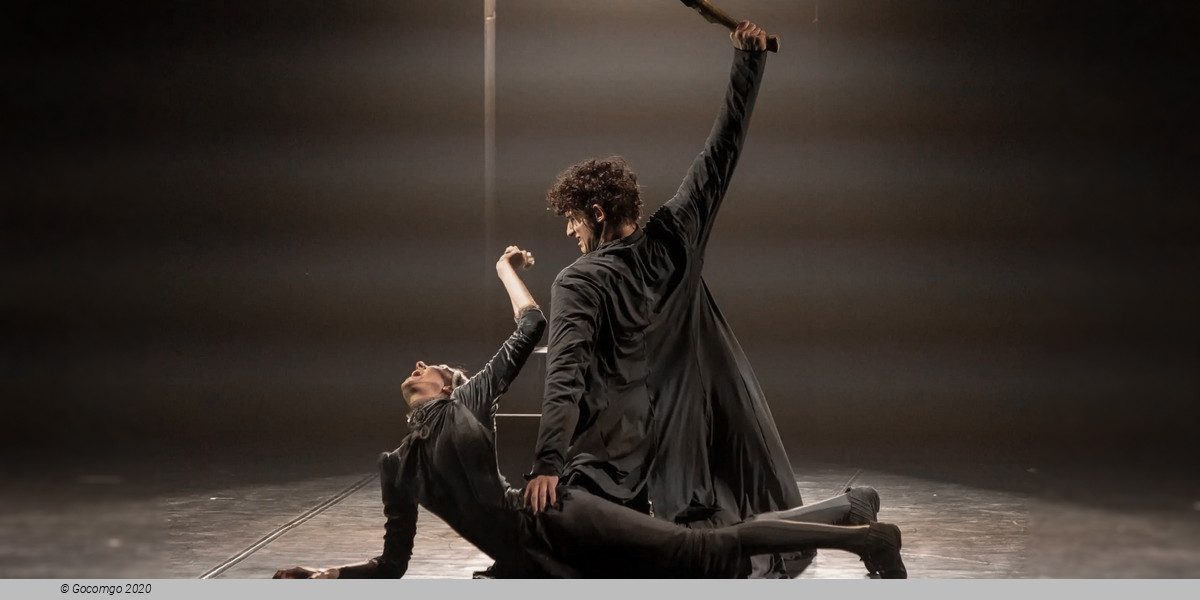
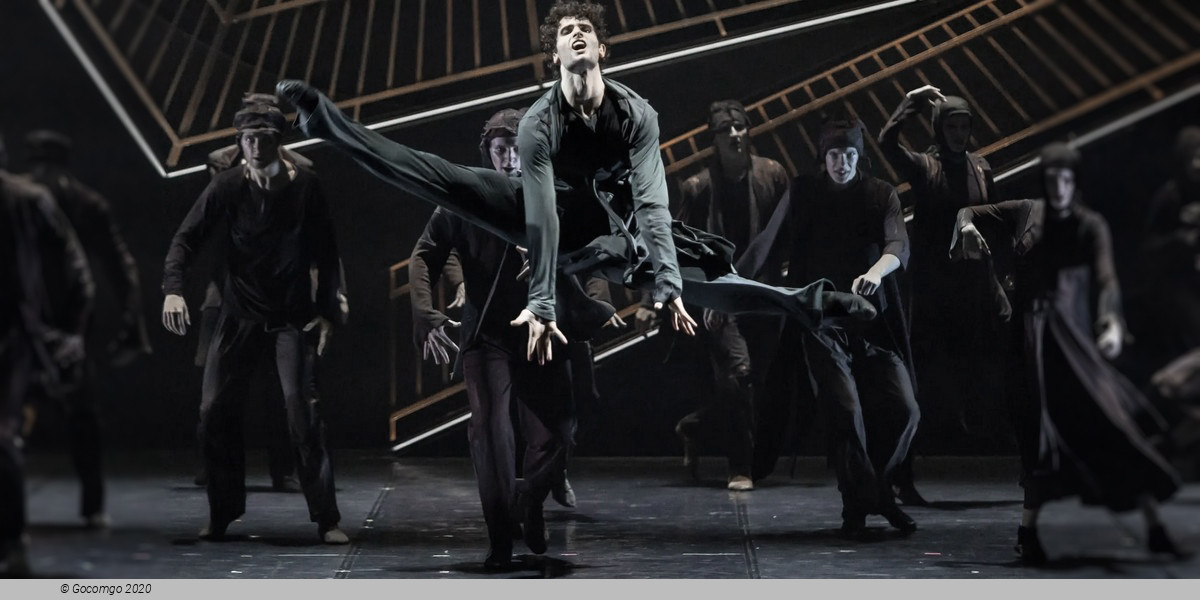
A psychological ballet by Boris Eifman based on Fyodor Dostoevsky’s novel Crime and Punishment.

Boris Eifman’s ballet interprets Dostoevsky’s Crime and Punishment through contemporary choreographic language. Rather than simply reproducing the novel’s plot, the production focuses on the psychological and philosophical world of Raskolnikov and the other characters, exploring guilt, morality, violence, suffering and spiritual rebirth. The production combines classical ballet with modern dance vocabulary and dramatic theatre.

To music by Gustav Mahler, Boris Tishchenko

“I turn to literary masterpieces not so much in search of plotlines, but rather in a quest to enrich the production with philosophical and intellectual ideas – those that do not lie on the surface of the text, but reveal themselves upon a deep dive into the essence of the work.” This creative manifesto, as expressed by Boris Eifman, eloquently explains his enduring fascination with the works of great writers, especially Fyodor Dostoevsky, who stands as one of the foremost thinkers and artists in global culture.

The first ballet inspired by the work of the Russian author, The Idiot, was created by the choreographer as far back as 1980. In later years, choreographic interpretations of The Brothers Karamazov were born. The last masterpiece by Dostoevsky inspired two of Eifman’s creations: the 1995 production The Karamazovs and the ballet Beyond Sin, which premiered 18 years later.

Crime and Punishment is the third novel of the “Great Five Books” interpreted by the choreographer through the expressive medium of dance. Remaining true to his artistic principles, Boris Eifman does not merely illustrate the canonical text. Instead, he accumulates the expressive and exploratory tools he has honed over decades of creative work to offer his own answers to profound questions about the inner nature of humanity, the significance of universal moral compasses, and the consequences of their downfall.

“Fyodor Dostoevsky’s creations serve as an endless source of wisdom, capable of brightening the darkest corners of existence with the light of innermost truth. “He that hath ears to hear, let him hear.”

Crime and Punishment marks the beginning of the author’s series of “big” novels, and it is to this work that I have been drawn throughout my conscious life, at times approaching it as if it were an impregnable citadel, and at other times retreating in doubt and indecision.

Our production does not recount the storyline of the book; rather, it interprets through dance the emotional and conceptual universe of Dostoevsky’s central characters. Each of them is a microcosm, brimming with transcendent passions and facing insoluble metaphysical contradictions.

The ballet Crime and Punishment reconstructs the arduous journey of spiritual rebirth of the novel’s protagonist, Rodion Raskolnikov, whose heightened moral sensitivity and empathy for others’ suffering provoke the emergence of a theory about the right of great individuals to “wade through blood” for the greater good. A horrific concept, taking root in the mind of a former student, evolves into his demonic compulsion and urges him toward the act of murder. In the act of committing his crime, Raskolnikov violates the ultimate moral code, but the failed Napoleon cannot overcome the essence of humanity. The downfall of the inhumane theory is inevitable. It is the selfless love of Sonya Marmeladova that brings healing to the protagonist. Passing through the crucible of redemptive suffering, this saintly sinner, like Raskolnikov, moves toward resurrection.

“Thou shalt not kill,” proclaims one of the fundamental commandments. Anyone who defies it negates the absolute value of life, the untouchable gift bestowed by God.”

Venue Info

Beijing National Grand Theater (NCPA) - Beijing
Location   2 W Chang'an Ave

The National Centre for the Performing Arts (NCPA) is an arts centre containing an opera house in Beijing, People's Republic of China. The Centre, an ellipsoid dome of titanium and glass surrounded by an artificial lake, seats 5,452 people in three halls and is almost 12,000 m² in size. It was designed by French architect Paul Andreu. Construction started in December 2001 and the inaugural concert was held in December 2007.

The exterior of the theater is a titanium-accented glass dome that is completely surrounded by a man-made lake. It is said to look like an egg floating on water, or a water drop. It was designed as an iconic feature, something that would be immediately recognizable.

The dome measures 212 meters in east–west direction, 144 meters in north–south direction, and is 46 meters high. The main entrance is at the north side. Guests arrive in the building after walking through a hallway that goes underneath the lake. The titanium shell is broken by a glass curtain in north–south direction that gradually widens from top to bottom.

The location, immediately to the west of Tiananmen Square and the Great Hall of the People, and near the Forbidden City, combined with the theatre's futuristic design, created considerable controversy. Paul Andreu countered that although there is indeed value in ancient traditional Chinese architecture, Beijing must also include modern architecture, as the capital of the country and an international city of great importance. His design, with large open space, water, trees, was specially designed to complement the red walls of ancient buildings and the Great Hall of the People, in order to melt into the surroundings as opposed to standing out against them.

Internally, there are three major performance halls:

The Opera Hall is used for operas, ballet, and dances and seats 2,416 people.
The Music Hall is used for concerts and recitals and seats 2,017 people.
The Theatre Hall is used for plays and the Beijing opera. It has 1,040 seats.
The NCPA also distributes filmed and recorded performances of its concerts, plays and operas through the in-house label NCPA Classics, established in 2016.

The initial planned cost of the theatre was 2.688 billion yuan. When the construction had completed, the total cost rose to more than CNY3.2 billion. The major cause of the cost increase was a delay for reevaluation and subsequent minor changes as a precaution after a Paris airport terminal building collapsed. The cost has been a major source of controversy because many believed that it is nearly impossible to recover the investment. When the cost is averaged out, each seat is worth about half a million CNY. The Chinese government answered that the theater is not a for profit venture.

The government sanctioned study completed in 2004 by the Research Academy of Economic & Social Development of the Dongbei University of Finance and Economics, of the upkeep costs of the building were publicized in domestic Chinese media:

The water and electricity bills and the cleaning cost for the external surface would be at least tens of millions CNY, and with another maintenance cost, the total could easily exceed one billion CNY. Therefore, at least 80 percent of the annual operational costs must be subsidized by the government for at least the first three years after the opening, and for the rest of its operational life, at least 60 percent of the annual operational cost must be subsidized by the government.

The director of the art committee of the National Centre for the Performing Arts and the standing committee member of the Standing Committee of the Chinese People's Political Consultative Conference, Mr Wu Zuqiang (吴祖强) and the publicist / deputy director of the National Centre for the Performing Arts Mr Deng (邓一江) have announced that 70 percent of the tickets would be sold at low price for ordinary citizens, while 10% of the tickets would be sold at relatively expensive prices for separate market segments, and the 60% of annual operating cost needed to be subsidized by the government would be divided between the central government and the Beijing municipal government.

Important Info
Type: Modern Ballet
City: Beijing, China
Starts at: 19:00
Acts: 2
Intervals: 1
Duration: 2h 30min
Top of page