








Oper Frankfurt: Dialogues of the Carmelites Tickets | Event Dates & Schedule | GoComGo.com

Dialogues of the Carmelites Tickets

Oper Frankfurt, Frankfurt am Main, Germany
Important Info
Type: Opera
City: Frankfurt am Main, Germany
Duration: 3h with 1 interval
Acts: 3
Intervals: 1
Sung in: French
Titles in: English,German

E-tickets: Print at home or at the box office of the event if so specified. You will find more information in your booking confirmation email.

You can only select the category, and not the exact seats.
If you order 2 or 3 tickets: your seats will be next to each other.
If you order 4 or more tickets: your seats will be next to each other, or, if this is not possible, we will provide a combination of groups of seats (at least in pairs, for example 2+2 or 2+3).

Cast
Performers
Choose the date to see the peformers
Overview

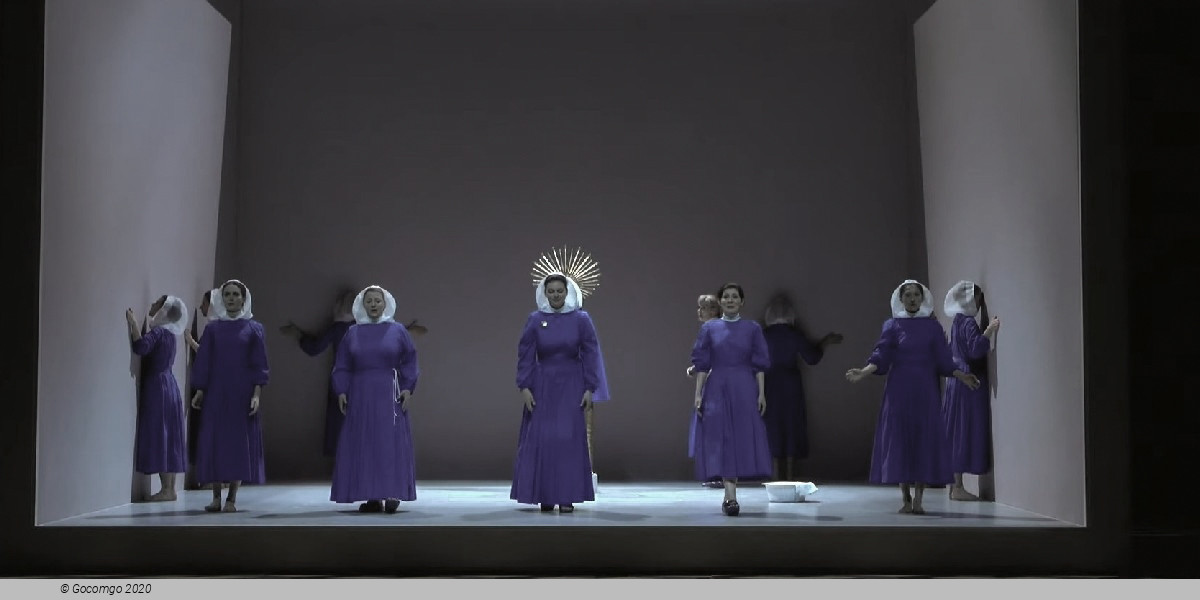
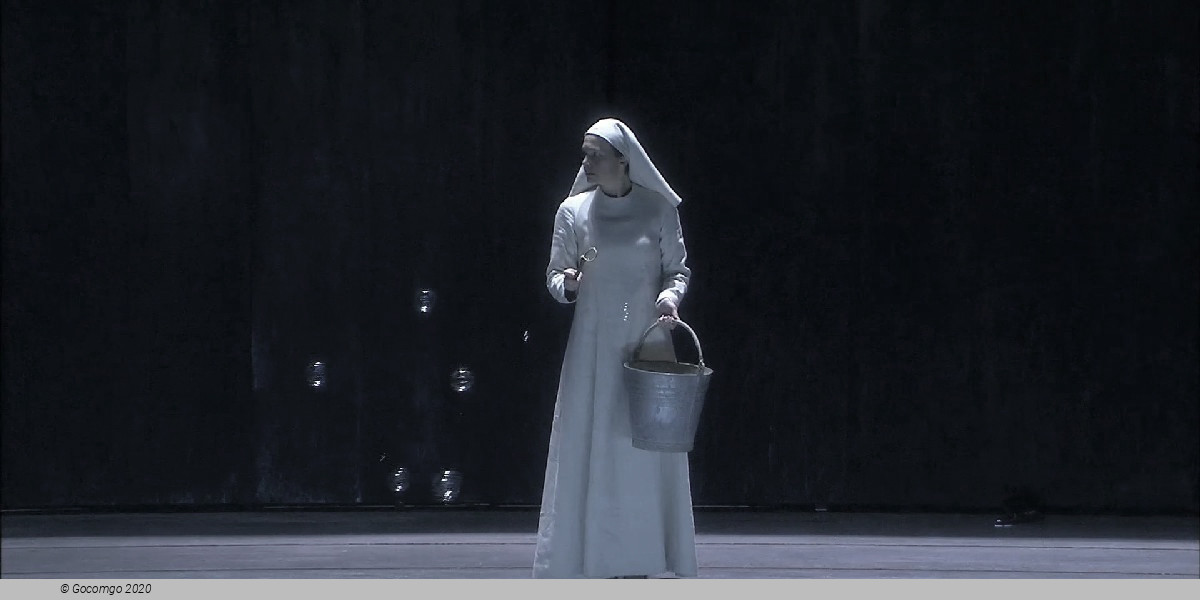
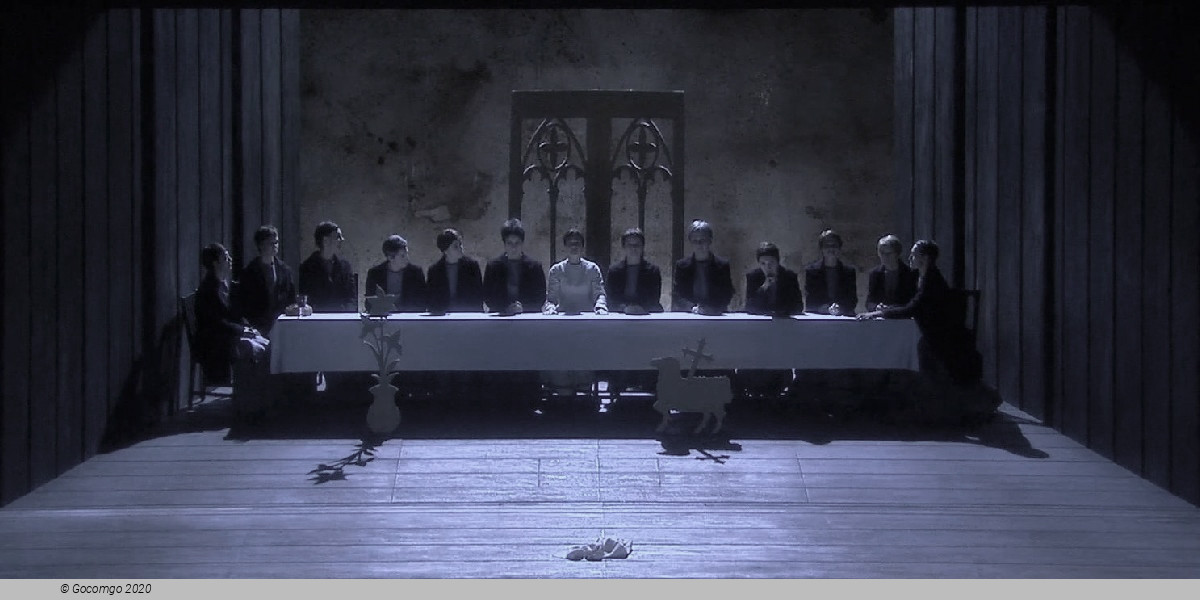
Blanche de la Force has been plagued by panic attacks since she was a small child. Were they triggered off by the circumstances of her birth? She seeks refuge in a nunnery.

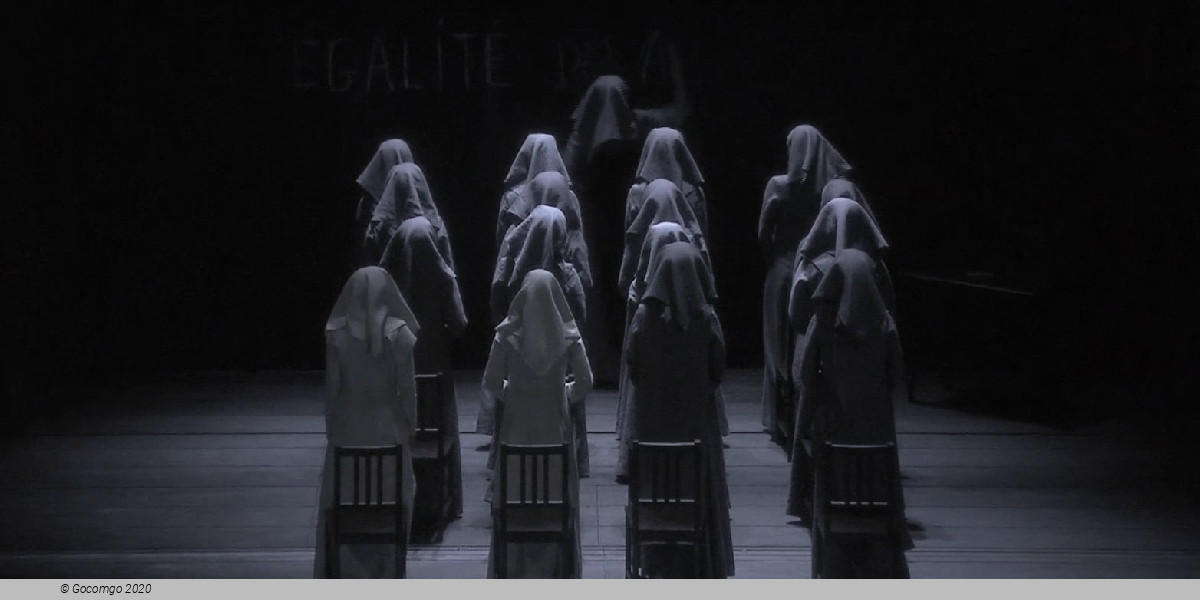
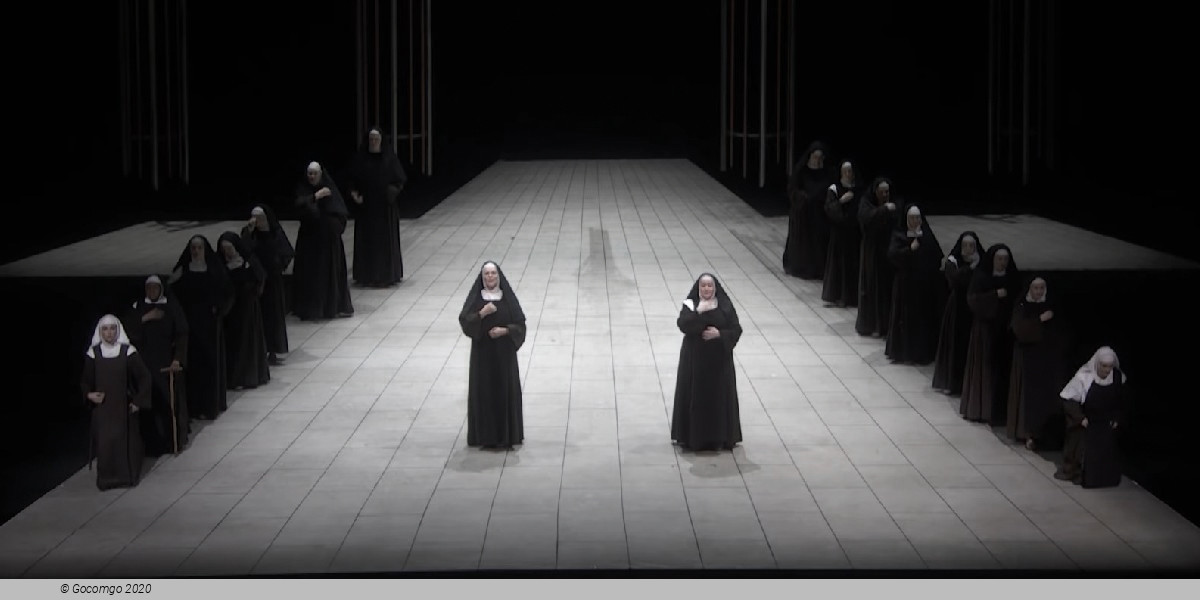
The Marquise de la Force, Blanche’s Mutter, was caught up in a violent public uprising when she was heavily pregnant. The shock caused a premature birth, during which she died. Blanche thinks she has found a way of life in a Carmelite convent. She sees how the devout but gravely ill prioress is consumed by fear at the hour of her death. The nuns are suspected by revolutionary guards of conspiring against the new regime. All cloisters are to be dissolved. The Carmelites gather for the last time and vow to be true to their faith, whatever happens. Blanche is the only one who got away before they were all arrested, but reappears at the hour of their execution, to share her sisters’ fate: faced with the guillotine, she has lost all fear.

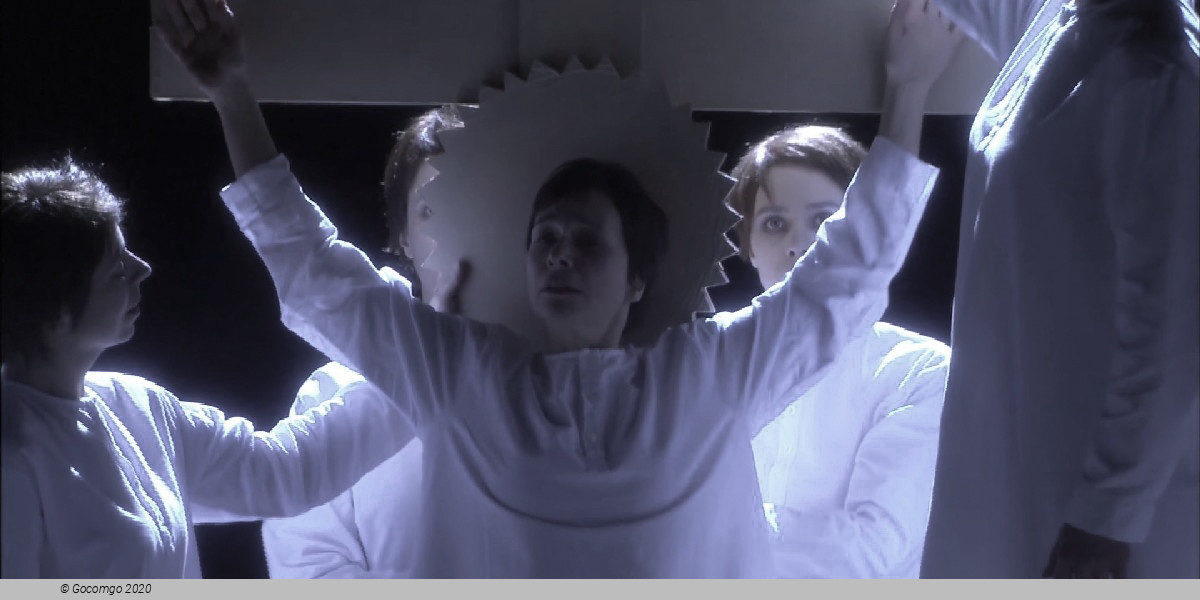
The events in Poulenc’s opera are based on historical facts: In 1794 the Carmelites of Compiègne became martyrs, singing »Veni creator« as they calmly went to the guillotine, one after the other. In 1947 the French author Georges Bernanos turned the German writer Gertrud von le Fort’s 1931 novel into a film script, upon which the libretto for Poulenc’s opera was based. The work culminates in the execution scene, whose shattering effect leaves nobody unmoved.

History
Premiere of this production: 26 January 1957, La Scala, Milan (in Italian)

Dialogues des Carmélites (Dialogues of the Carmelites) is an opera in three acts, divided into twelve scenes with linking orchestral interludes, with music and libretto by Francis Poulenc, completed in 1956. The composer's second opera, Poulenc wrote the libretto after the work of the same name by Georges Bernanos. The opera tells a fictionalised version of the story of the Martyrs of Compiègne, Carmelite nuns who, in 1794 during the closing days of the Reign of Terror during the French Revolution, were guillotined in Paris for refusing to renounce their vocation.

Synopsis

Place: Paris and Compiègne, 1789–94
Time: during the French Revolution
Act 1
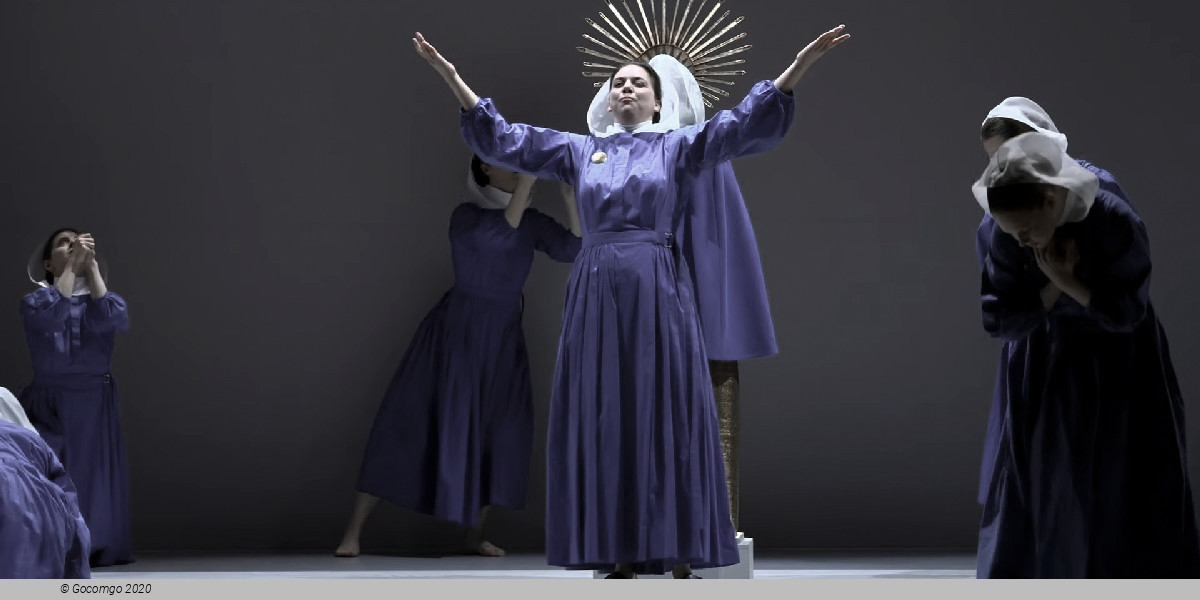
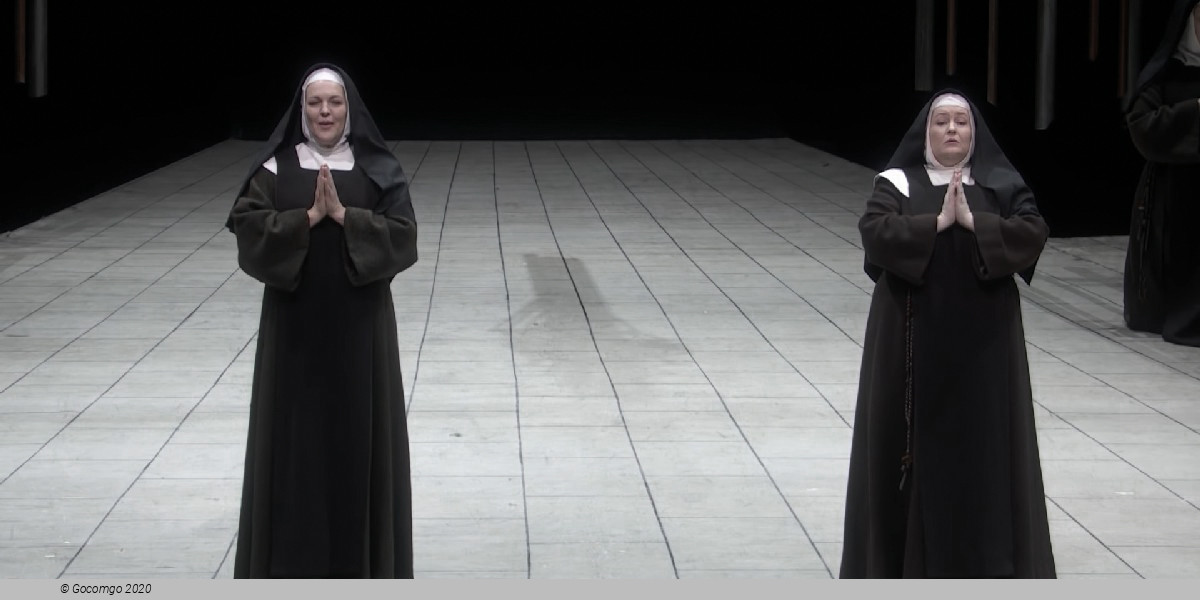
Against the setting of the French Revolution, when crowds stop carriages in the street and aristocrats are attacked, the pathologically timid Blanche de la Force decides to retreat from the world and enter a Carmelite convent. The Mother Superior informs her that the Carmelite Order is not a refuge; it is the duty of the nuns to guard the Order, not the other way around. In the convent, the chatterbox Sister Constance tells Blanche (to her consternation) that she has had a dream that the two of them will die young together. The prioress, who is dying, commits Blanche to the care of Mother Marie. The Mother Superior passes away in great agony, shouting in her delirium that despite her long years of service to God, He has abandoned her. Blanche and Mother Marie, who witness her death, are shaken.

Act 2
Sister Constance remarks to Blanche that the prioress' death seemed unworthy of her, and speculates that she had been given the wrong death, as one might be given the wrong coat in a cloakroom. She said that perhaps someone else will find death surprisingly easy. Perhaps we die not for ourselves alone, but for each other.

Blanche's brother, the Chevalier de la Force, arrives to announce that their father thinks Blanche should withdraw from the convent, since she is not safe there (being both an aristocrat and the member of a religious community, at a time of anti-aristocracy and anti-clericalism in the rising revolutionary tides). Blanche refuses, saying that she has found happiness in the Carmelite Order. Later she admits to Mother Marie that it is fear (or the fear of fear itself, as the Chevalier expresses it) that keeps her from leaving.

The chaplain announces that he has been forbidden to preach (presumably for being a non-juror under the Civil Constitution of the Clergy). The nuns remark on how fear rules the country, and no one has the courage to stand up for the priests. Sister Constance asks, "Are there no men left to come to the aid of the country?" "When priests are lacking, martyrs are superabundant," replies the new Mother Superior. Mother Marie says that the Carmelites can save France by giving their lives, but the Mother Superior corrects her: it is not permitted to choose to become a martyr; God decides who will be martyred.

A police officer arrives and announces to the community that the Legislative Assembly has nationalized the convent and its property, and the nuns must give up their religious habits. When Mother Marie acquiesces, the officer taunts her for being eager to dress like everyone else. She replies that the nuns will continue to serve, no matter how they are dressed. "The people have no need of servants," proclaims the officer haughtily. "No, but they have a great need for martyrs," responds Mother Marie. "In times like these, death is nothing," he says. "Life is nothing," she answers, "when it is so debased."

Act 3
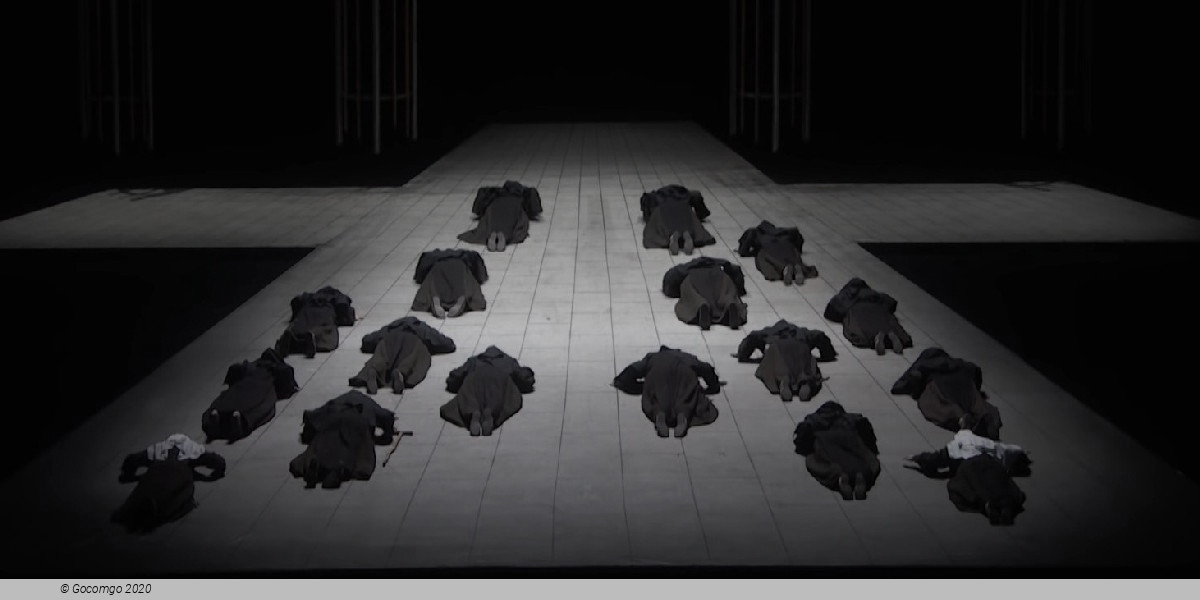
In the absence of the new prioress, Mother Marie proposes that the nuns take a vow of martyrdom. However, all must agree, or Mother Marie will not insist. A secret vote is held; there is one dissenting voice. Sister Constance declares that she was the dissenter, and that she has changed her mind, so the vow can proceed. Blanche runs away from the convent, and Mother Marie goes to look for her, finding her in her father's library. Her father has been guillotined, and Blanche has been forced to serve her former servants.

The nuns are all arrested and condemned to death, but Mother Marie is away at the time of the arrest. Upon receiving the news, the chaplain tells Mother Marie, when they meet again, that since God has chosen to spare her, she cannot voluntarily become a martyr by joining the others in prison.

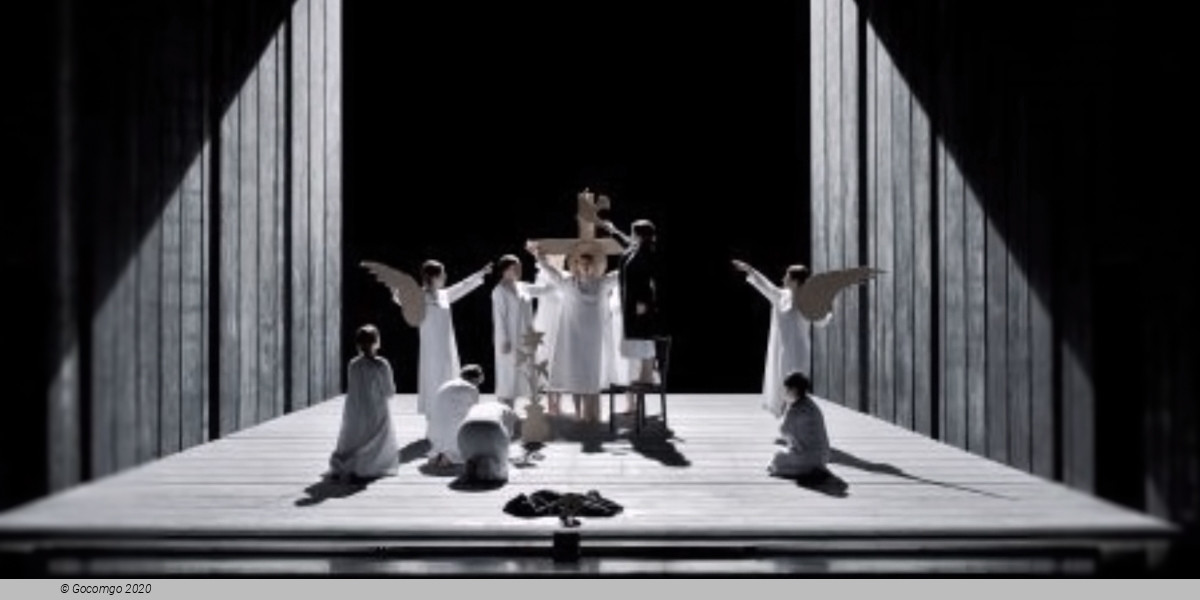
At the place of execution, one nun after another stands and slowly processes toward the guillotine, as all sing the "Salve Regina" ("Hail, Holy Queen"). At the last moment, Blanche appears, to Constance's joy, to join her condemned sisters. Having seen all the other nuns executed, as she mounts the scaffold, Blanche sings the final stanza of the "Veni Creator Spiritus," "Deo Patri sit gloria...", the Catholic hymn traditionally used when taking vows in a religious community and offering one's life to God.

Venue Info

Oper Frankfurt - Frankfurt am Main
Location   Untermainanlage 11

The Oper Frankfurt (Frankfurt Opera) is one of the leading opera companies in Europe, and voted best "Opera house of the year" several times since 1996.

Opera in Frankfurt am Main has a long tradition, with many world premieres such as Franz Schreker's Der ferne Klang in 1912, Fennimore und Gerda by Frederick Delius in 1919, and Carl Orff's Carmina Burana in 1937. Frankfurt's international recognition began in the Gielen Era, 1977 to 1987, when Michael Gielen and stage directors such as Ruth Berghaus collaborated.

A historic opera house from 1880 was destroyed in World War II, and reconstructed as a concert hall, Alte Oper. The present opera house, built in 1963, is under one roof with the stage for drama. The opera orchestra is called Frankfurter Opern- und Museumsorchester. Today's venue for Baroque and contemporary opera is the Bockenheimer Depot, a former tram depot.

Oper Frankfurt is part of the Städtische Bühnen Frankfurt.

Frankfurt's first opera was Johann Theile's Adam und Eva, performed in 1698 by Johann Velten's touring company. The young Goethe's first operas in his home town of Frankfurt were productions by Theobald Marchand's company.

1782 – 1880
Opened in 1782, the Comoedienhaus was the first permanent venue of the Frankfurt Theater (drama and opera). In 1878 German violinist Willy Hess took up the leadership of the Oper Frankfurt. He resigned from that post in 1886 to take up a professorship in the Rotterdam Conservatorium voor Muziek.

1880 – 1944
The first representative opera house of the city was inaugurated in Frankfurt in 1880 at Opernplatz. Under the direction of the first Intendant Emil Claar and the first Kapellmeister Felix Otto Dessoff, the house was opened with Mozart's opera Don Giovanni.

During the 1920s, the opera in Frankfurt had more prominent Jewish singers than any other company in Germany, including the tenor Hermann Schramm, bass Hans Erl (the first King in Schreker's Der Schatzgräber), baritone Richard Breitenfeld and contralto Magda Spiegel, who also toured with Frankfurt Opera performing Wagner in the Netherlands. These singers were forced to leave the opera in June 1933. Orff's Carmina Burana was premiered at Oper Frankfurt in 1937. Jewish members of the opera company among those rounded up at 9 November 1938 at the Festhalle Frankfurt, where Erl sang In diesen Heilgen Hallen, from the Magic Flute for the deportees. Members of Frankfurt Opera were sent to Auschwitz and other camps where they perished.

1945 – 1970s
The opera house was damaged in an air raid in January 1944, and then almost completely destroyed in March. A new house for opera and play was built, completed in 1963 at the Theaterplatz (now Willy-Brandt-Platz). In 1952, Georg Solti became Generalmusikdirektor (GMD) and Intendant of the Oper Frankfurt, where he remained in charge for nine years.

The Gielen Era
From 1977 to 1987, Frankfurt Opera was led by Michael Gielen. This decade became known as the "Gielen Era", notable for the music of a conductor who was also a composer, and directors including Ruth Berghaus and Hans Neuenfels, whose productions of standard works such as Verdi's Aida and Wagner's Ring Cycle were thought-provoking. Operas which received their world premieres at the house were also performed again, including Franz Schreker's Die Gezeichneten.

1987 – present
The stage of the opera house was destroyed by a fire in November 1987. The opera house was rebuilt and opened in April 1991. Many famous singers started their career with the company, including Franz Völker, Edda Moser, Cheryl Studer and Diana Damrau, and many established artists have been engaged there in recent seasons including Christian Gerhaher, whose roles here have included Monteverdi's L'Orfeo and his first Wolfram in Wagner's Tannhäuser, Piotr Beczała in Massenet's Werther and Jan-Hendrik Rootering in Wagner's Parsifal.

Since 2002, Bernd Loebe has served as Intendant of the company. The company's current GMD is Sebastian Weigle, since 2008. Weigle has made commercial recordings of opera with the company for the OEHMS Classics label. He is scheduled to stand down as GMD of Oper Frankfurt at the close of the 2022–2023 season. In October 2021, the company announced the appointment of Thomas Guggeis as the next GMD of the company, effective with the 2023–2024 season, with an initial contract of 5 years.

Oper Frankfurt was voted 1996, 2003, 2015, 2018 and 2020 "Opera House of the Year" by the magazine Opernwelt.

Important Info
Type: Opera
City: Frankfurt am Main, Germany
Duration: 3h with 1 interval
Acts: 3
Intervals: 1
Sung in: French
Titles in: English,German

E-tickets: Print at home or at the box office of the event if so specified. You will find more information in your booking confirmation email.

You can only select the category, and not the exact seats.
If you order 2 or 3 tickets: your seats will be next to each other.
If you order 4 or more tickets: your seats will be next to each other, or, if this is not possible, we will provide a combination of groups of seats (at least in pairs, for example 2+2 or 2+3).

Top of page