Act 1
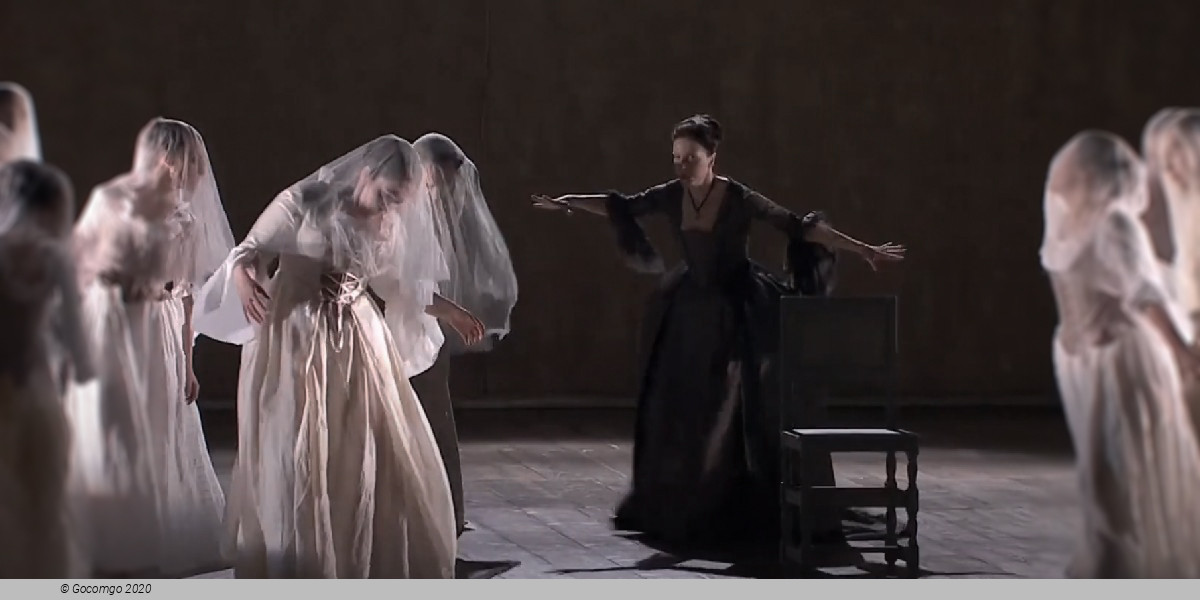
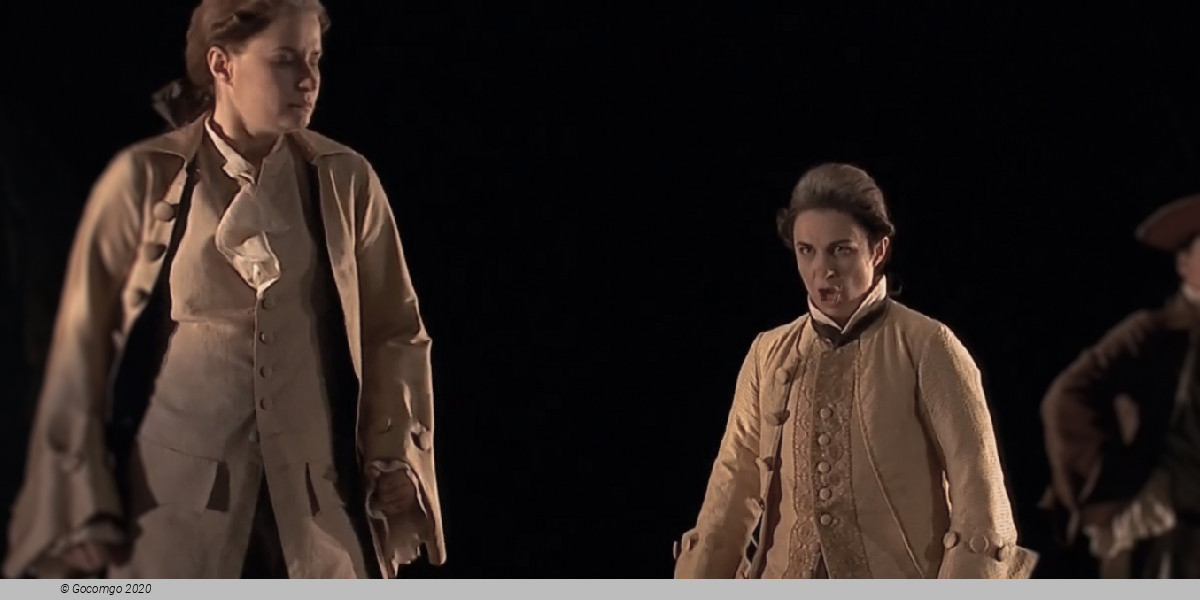
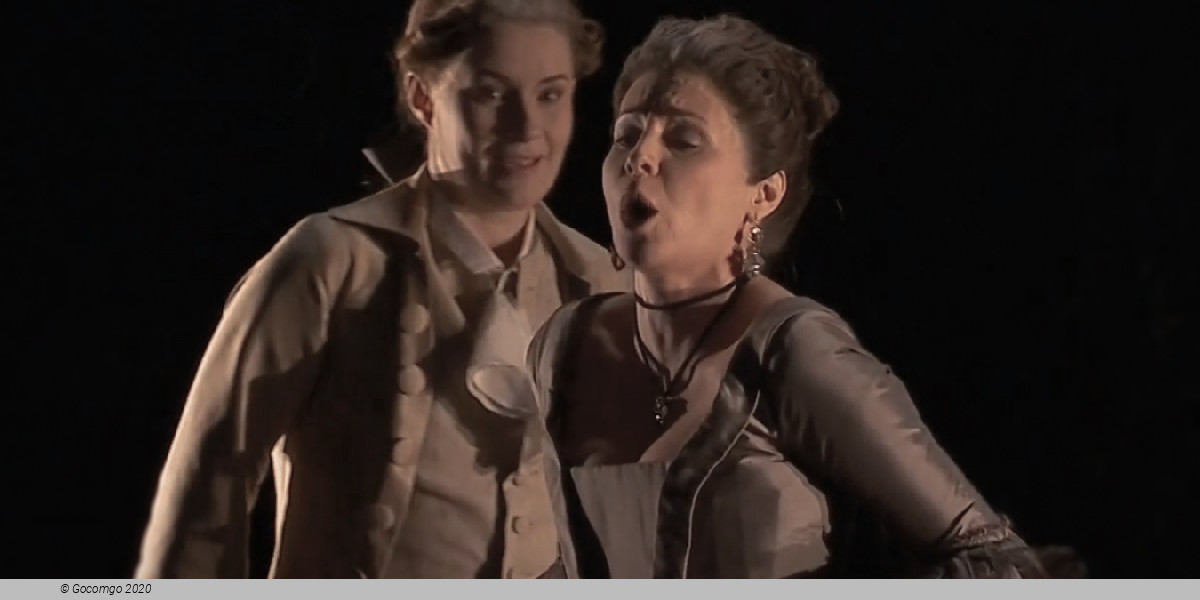
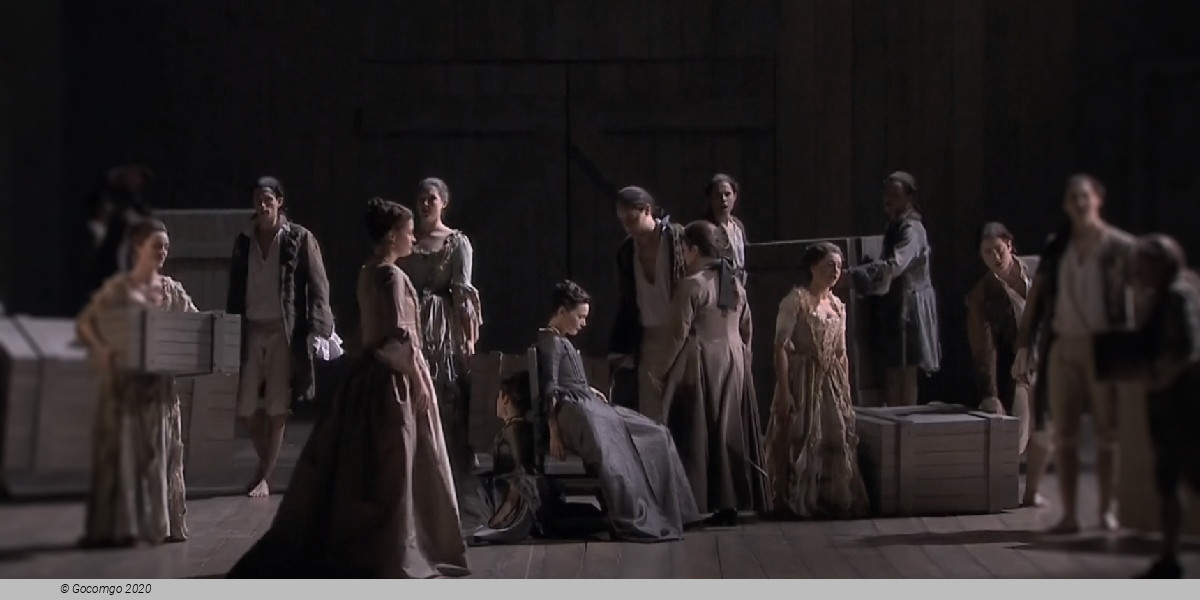
Bradamante’s husband Ruggiero has left her. She believes he has fallen for the sorceress Alcina. Bradamante, therefore, disguises herself as her brother Ricciardo and sets off with her confidant Melisso to rescue Ruggiero. In Alcina’s realm, they encounter Morgana, Alcina’s sister who immediately falls in love with the supposed Ricciardo. Surrounded by her admirers, Alcina welcomes the visitors and asks Ruggiero to tell Ricciardo and Melisso about their very great love for each other and the places where they have indulged their love to the full. A sorrowful young boy, Oberto, asks them to help him search for his father who has disappeared in Alcina’s realm. Disguised as Ricciardo, Bradamante speaks to Ruggiero and reminds him of his wife but Ruggiero wishes to know nothing more of his previous life. He is only interested in Alcina. Morgana’s friend Oronte accuses Ricciardo of wanting to steal Morgana, whom he loves, from him. Oronte and Morgana argue. Morgana tries to approach Ricciardo by making a speech on the nature of love and jealousy. In order to rid himself of his supposed rival, Oronte tells Ruggiero that Alcina is having an affair with Ricciardo. Alcina is shocked when she learns of Ruggiero’s doubts. Melisso interrupts any further exchange of words between Ruggiero and Ricciardo before Ricciardo reveals ‘himself’ to be Bradamante. To placate Ruggiero, Ricciardo says he is in love with Morgana and therefore awakes in the overjoyed Morgana false expectations.
Melisso succeeds in making Ruggiero call to mind his previous life with Bradamente. When Ruggiero then encounters his wife, he is overwhelmed by the situation and suspects she is one of Alcina’s illusions. Deeply hurt, Bradamante threatens to take revenge.
Act 2
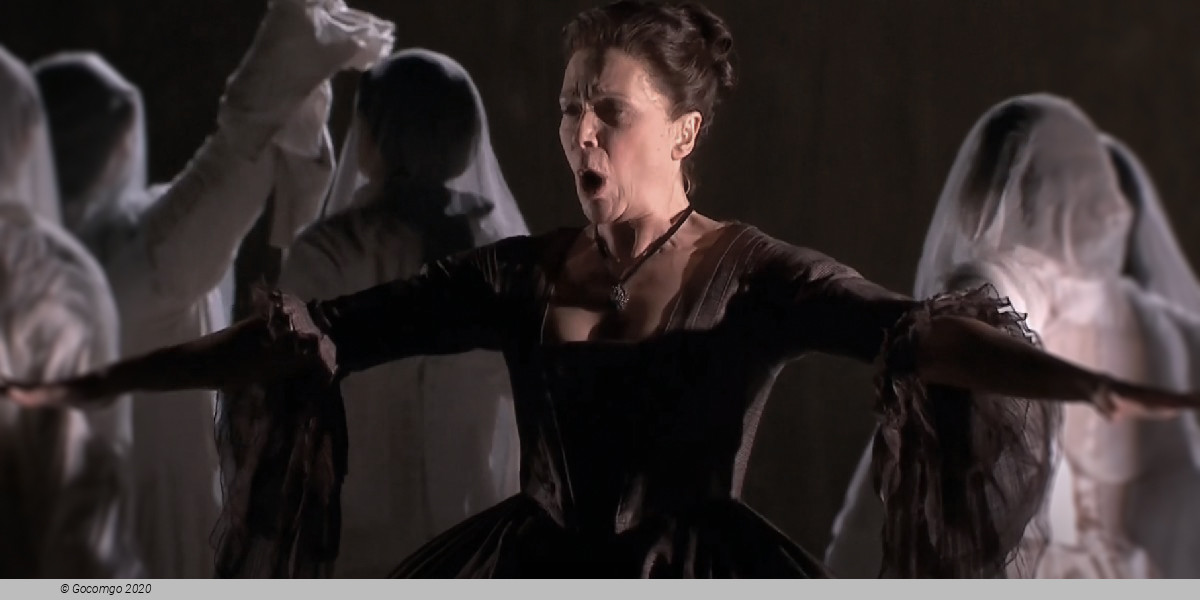
Oronte has discovered Bradamante’s identity but Morgana who is in love does not believe him. Ruggiero continues to doubt his own perception. He can no longer differentiate between reality and imagination. Oronte reveals to Alcina, that Ruggiero is planning to escape with Bradamante and Melisso. Alcina’s fear that she may lose Ruggiero plunges her into fear and doubt which she resists one last time by wielding power and self-assertion. Full of optimism, however, Bradamante believes she has achieved her aim. Ruggiero perceives the transient nature of Alcina’s realm and bids farewell to it. Alcina has to realise that she has lost her magic powers. Oronte claims that he loves another woman. Morgana suspects that this is an attempt to make her jealous. She declares her love for Oronte and her pain. Oronte remembers their shared past. Confronting Alcina directly, Ruggiero confesses that he is going to leave her. Alcina’s furious rage is proof for Melisso and Bradamante that they have to render Alcina harmless. Full of self-confidence, Ruggiero celebrates his planned return to the bourgeois world. Melisso tells Oberto to murder Alcina but she turns his anger on one of her admirers. Oberto, however, recognises in him his enchanted father. Alcina insistently warns Ruggiero and Bradamante of the fate facing them but Ruggiero is forced to destroy Alcina’s realm.
Prologue
The background of the opera comes from the poem Orlando Furioso. The heroic knight Ruggiero is destined to a short but glorious life, and a benevolent magician is always whisking him away from the arms of his fiancée, Bradamante. Bradamante is not the type to put up with the constant disappearance of her lover, and she spends vast portions of the poem in full armor chasing after him. Just before the opera begins she has rescued him from an enchanted castle, only to have her flying horse (a hippogriff) take a fancy to Ruggiero and fly off with him. Ruggiero and the hippogriff land on an island in the middle of the ocean. As the hippogriff begins to eat the leaves of a myrtle bush, Ruggiero is startled to hear the bush begin to speak. The bush reveals that it was once a living soul named Sir Astolfo, and the island belongs to the sister sorceresses Alcina and Morgana. The beautiful Alcina seduces every knight that lands on her isle, but soon tires of her lovers and changes them into stones, animals, plants, or anything that strikes her fancy. Despite Astolfo's warning, Ruggiero strides off to meet this sorceress – and falls under her spell.
Act 1
Bradamante, again searching for her lover, arrives on Alcina's island with Ruggiero's former tutor, Melisso. Dressed in armor, Bradamante looks like a young man and goes by the name of her own brother, Ricciardo. She and Melisso possess a magic ring which enables the wearer to see through illusion, which they plan to use to break Alcina's spells and release her captives.
The first person they meet is the sorceress Morgana. Barely human and with no understanding of true love, she immediately abandons her own lover Oronte for the handsome 'Ricciardo.' Morgana conveys the visitors to Alcina's court, where Bradamante is dismayed to discover that Ruggiero is besotted with Alcina and in a state of complete amnesia about his previous life. Also at Alcina's court is a boy, Oberto, who is looking for his father, Astolfo, who was last seen heading toward this island. Bradamante guesses that Astolfo is now transformed into something, but she holds her peace and concerns herself with Ruggiero. Bradamante and Melisso rebuke Ruggiero for his desertion, but he can't think of anything except Alcina.
Meanwhile, Oronte discovers that Morgana has fallen in love with 'Ricciardo,' and challenges 'him' to a duel. Morgana stops the fight, but Oronte is in a foul mood and takes it out on Ruggiero. He tells the young man exactly how Alcina treats her former lovers and adds that, as far as he can tell, Alcina has fallen in love with the newcomer, Ricciardo (Semplicetto! A donna credi? Nr. 12). Ruggiero is horrified and overwhelms Alcina with his jealous fury. Things get even worse when 'Ricciardo' enters and pretends to admire Alcina. Alcina calms Ruggiero (Sì, son quella Nr. 13), but Bradamante is so upset at seeing her fiancé wooed before her very eyes that she reveals her true identity to Ruggiero (La bocca vaga, quell'occhio nero Nr. 14). Melisso hastily contradicts her and Ruggiero becomes very confused.
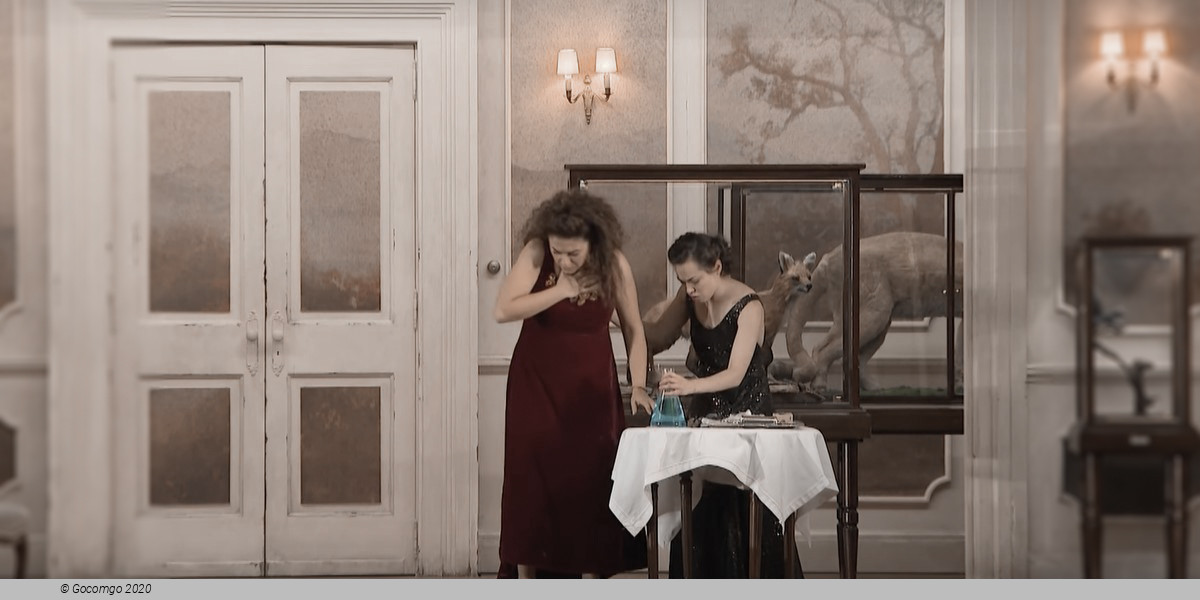
Alcina tells Morgana that she plans to turn Ricciardo into an animal, just to show Ruggiero how much she really loves him. Morgana begs Ricciardo to escape the island and Alcina's clutches, but 'he' says he'd rather stay, as he loves another. Morgana believes that this other person is herself, and the act ends with Morgana's aria "Tornami a vagheggiar". (In some productions, this aria is sung by Alcina.)
Act 2
Melisso recalls Ruggiero to reason and duty by letting him wear the magic ring: under its influence, Ruggiero sees the island as it really is—a desert, peopled with monsters. Appalled, he realizes he must leave, and sings the famous aria "Verdi prati" ("Green meadows") where he admits that even though he knows the island and Alcina are mere illusion, their beauty will haunt him for the rest of his life.
Melisso warns Ruggiero that he cannot just leave; Alcina still wields immense power, and he should cover his escape by telling her that he wishes to go hunting. Ruggiero agrees, but, thoroughly bewildered by the magic and illusion surrounding him, he refuses to believe his eyes when he at last sees Bradamante as herself, believing that she may be another of Alcina's illusions. Bradamante is in despair, as is Alcina. Convinced of Ruggiero's indifference, she enters to turn Ricciardo into an animal, and Ruggiero has to pull himself together quickly and convince the sorceress that he does not need any proof of her love. It is at this point that the audience realises that Alcina genuinely loves Ruggiero; from now until the end of the opera, she is depicted sympathetically.
Oronte realizes that Ricciardo, Melisso and Ruggiero are in some sort of alliance, and Morgana and Alcina realise they are being deceived. But it is too late: Alcina's powers depend on illusion and, as true love enters her life, her magic powers slip away. As the act ends, Alcina tries to call up evil spirits to stop Ruggiero from leaving her, but her magic fails her.
Act 3
After this the opera finishes swiftly. Morgana and Oronte try to rebuild their relationship; she returns to him and he rebuffs her but (once she is offstage) admits he loves her still. Ruggiero returns to his proper heroic status and sings an aria accompanied by high horns; Oberto is introduced to a lion, to whom he feels strangely attached, and Alcina sings a desolate aria in which she longs for oblivion.
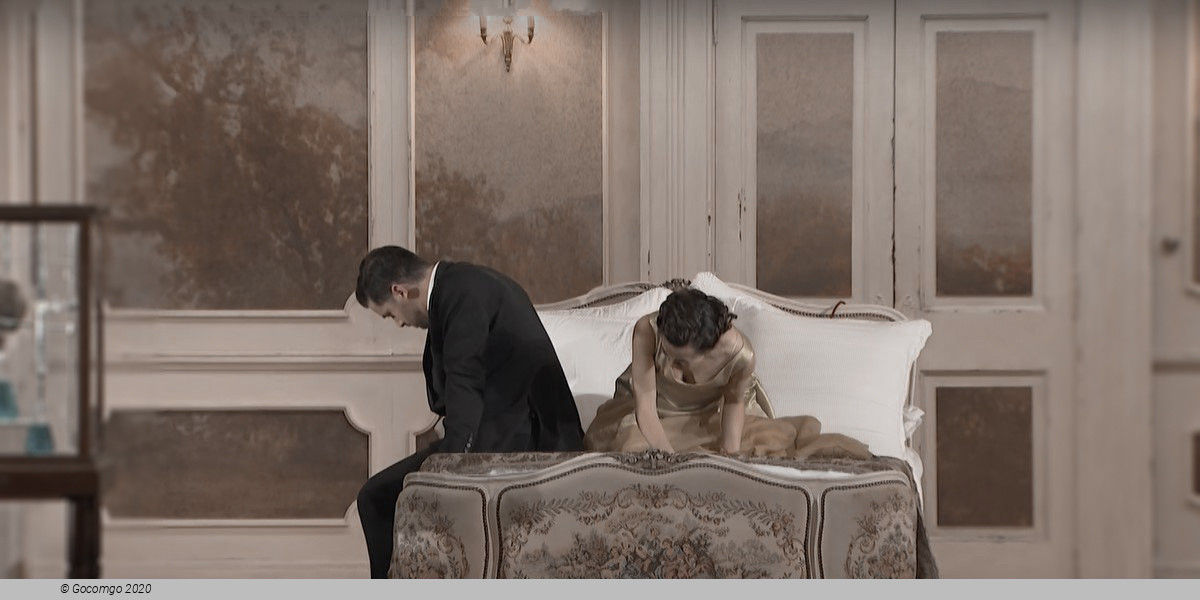
Bradamante and Ruggiero decide that they need to destroy the source of Alcina's magic, usually represented as an urn. Alcina pleads with them, but Ruggiero is deaf to her appeals and smashes the urn. As he does so, everything is both ruined and restored. Alcina's magic palace crumbles to dust and she and Morgana sink into the ground, but Alcina's lovers are returned to their proper selves. The lion turns into Oberto's father, Astolfo, and other people stumble on, "I was a rock," says one, "I a tree" says another, and "I a wave in the ocean..." All the humans sing of their relief and joy, and Alcina is forgotten.



 Theaterplatz 2