Beneath the majestic colonnade of the historic Alexandrinsky Theatre — one of Europe’s oldest national stages and a symbol of Russian theatrical heritage — masterpieces acquire new life and new urgency. For nearly two centuries, this legendary venue has welcomed bold artistic experiments alongside timeless classics, offering audiences encounters that resonate far beyond the auditorium. It is within these storied walls that a ritual of elemental power unfolds.
Premiere in St. Petersburg
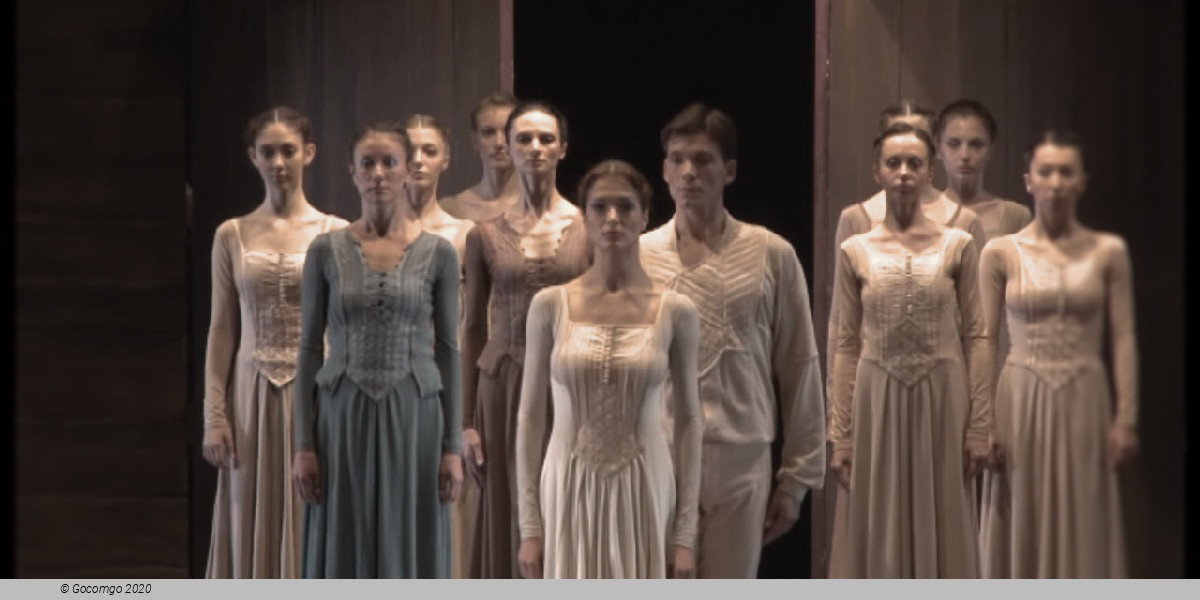
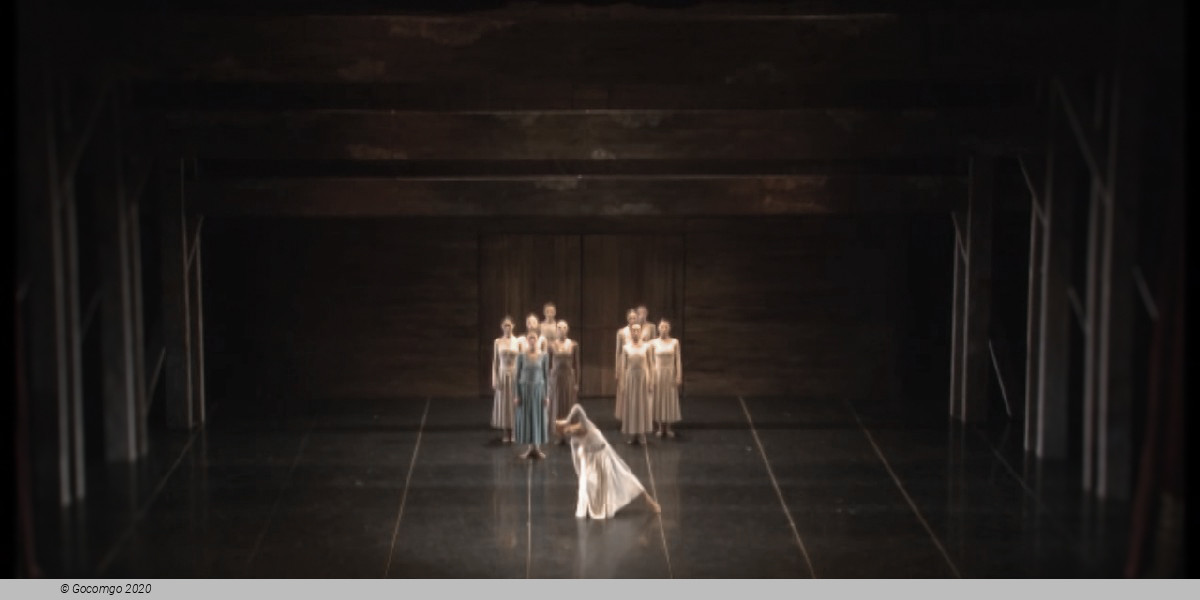
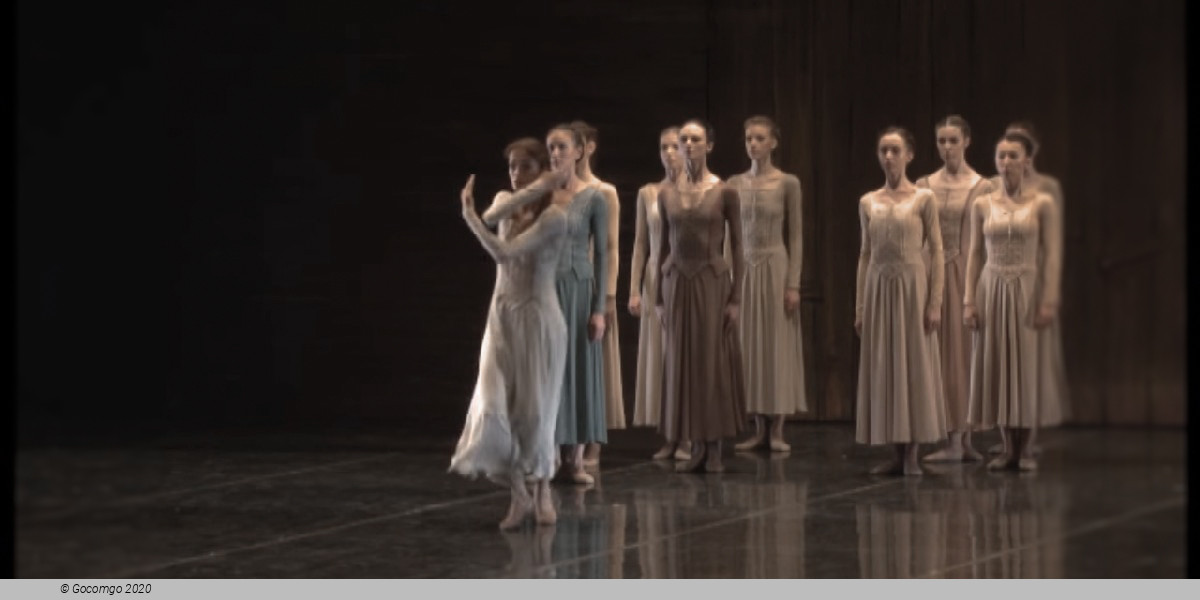
A blazing ritual reborn on stage — Les Noces by Igor Stravinsky as envisioned by Ballet Moscow — is not merely a performance, but an elemental force. Awarded the Grand Prix of the Moscow Art Prize, this production stands among the most striking achievements of contemporary Russian theatre.
Conceived as a “Russian choreographic scene with singing and music,” the work becomes a fiery cantata — a spellbinding rite in which dance, word, and sound merge into a single, almost primordial surge of jubilation and despair, hope and inevitability. One of the country’s boldest and most intellectually daring companies turns to musical archaeology to reveal the authentic power of ritual — stripped of folklore gloss, raw and unadorned.
The depth of ancient folk laments multiplies through the fierce energy of the body. Movement grows out of the archaic rhythms of traditional wedding chants and incantations, performed live on stage by the folklore ensemble Hodila Izba. Their voices, together with authentic wind instruments, create a rare sonic atmosphere — that fragile half-breath preceding song, the trembling threshold between silence and sound. Choreography becomes a conduit for the collective unconscious, while the refined physical language of the 21st century serves as an open generational code through which archaic memory finds a living voice.
True to Stravinsky’s original vision, the piano parts are performed on disklaviers — mechanical pianos that restore the composer’s intended percussive sharpness. Contemporary composer Nikolai Popov contributes a specially written prologue and epilogue, while choreographer Pavel Glukhov creates a conceptual dialogue between Les Noces and Alexander Ostrovsky’s The Storm, returning the piece to a startling authenticity. (novayaopera.ru)
Critics have отмечали the production’s remarkable synthesis. Anna Gordeeva (TASS) writes of “embraces, embraces, embraces — diverse, candid, awkward, sincere,” capturing the nervous tension embedded in Stravinsky’s score while allowing the dancers to embody the joy that newlyweds are meant to feel. Svetlana Naborshchikova (Kultura) describes a stage glowing like a bride’s dowry chest — rich, textured, brimming with detail and life. Tatiana Kuznetsova (Kommersant) observes that the singers are not mere participants but living metaphors — the very pillars of tradition against which youthful bodies pulse and rebel.
What unfolds is not nostalgia, but revelation. Ritual becomes theatre; theatre becomes collective memory. In Les Noces, Ballet Moscow invites audiences into a world where archaic chant meets contemporary physicality, where inevitability and ecstasy intertwine — and where the wedding rite burns with undiminished, electrifying force.
Music: Igor Stravinsky
Musical Director and Conductor: Dmitry Volosnikov
Composer (Prologue, Epilogue) and Author of the Musical Concept: Nikolai Popov
Choreographer: Pavel Glukhov
Set Designer: Larisa Lomakina
Costume Designer: Svetlana Tegin
Lighting Designer: Ksenia Koteneva
Video Designer: Alexey Bychkov
Chorus Master: Yulia Senyukova



 Alexandra Palace Way