
Teatro Alla Scala: The Little Sweep Tickets | Event Dates & Schedule | GoComGo.com

The Little Sweep Tickets

Teatro Alla Scala, Milan, Italy
Important Info
Type: Opera
City: Milan, Italy

E-tickets: Print at home or at the box office of the event if so specified. You will find more information in your booking confirmation email.

You can only select the category, and not the exact seats.
If you order 2 or 3 tickets: your seats will be next to each other.
If you order 4 or more tickets: your seats will be next to each other, or, if this is not possible, we will provide a combination of groups of seats (at least in pairs, for example 2+2 or 2+3).

Cast
Performers
Choose the date to see the peformers
Overview

Teatro alla Scala Production

History
Premiere of this production: 14 June 1949, Aldeburgh Festival

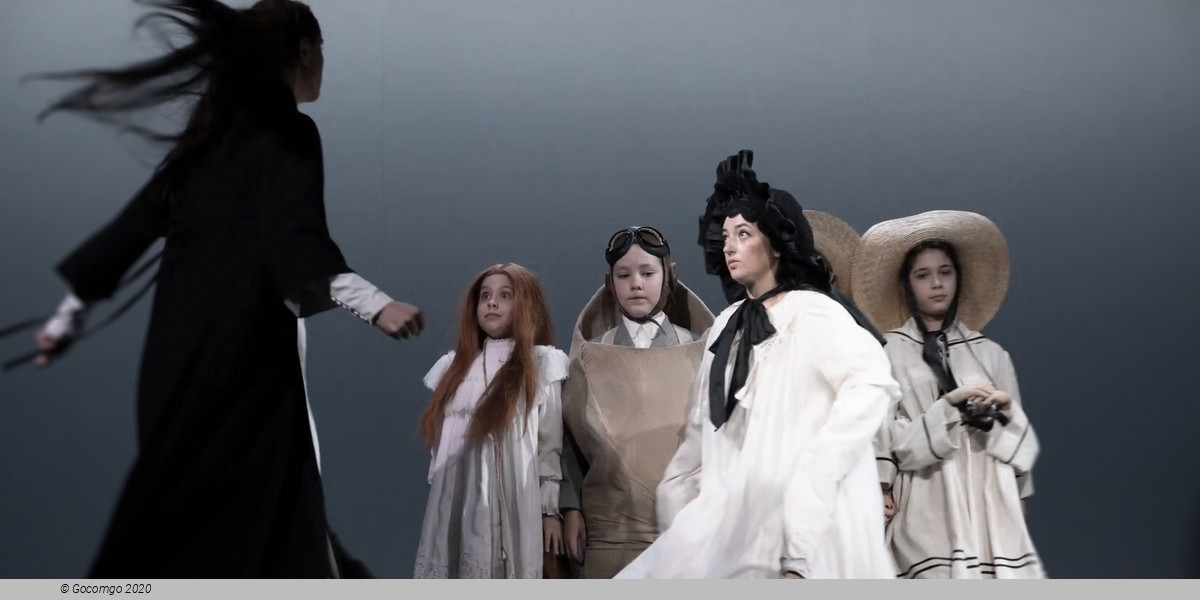
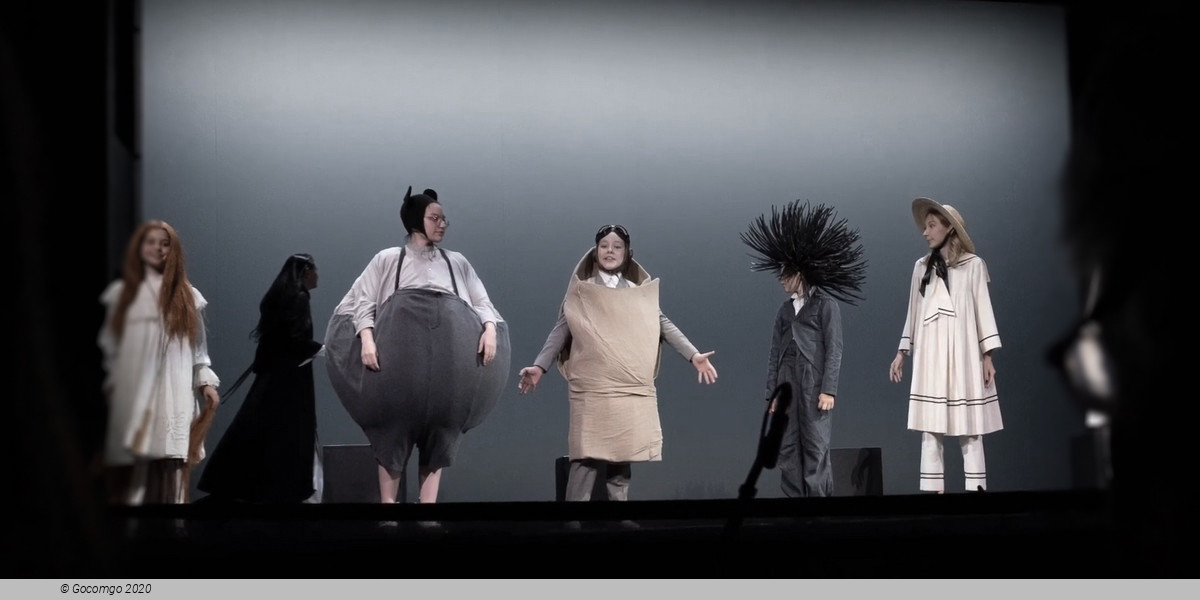
The Little Sweep is an opera for children in three scenes by the English composer Benjamin Britten, with a libretto by Eric Crozier.

Synopsis

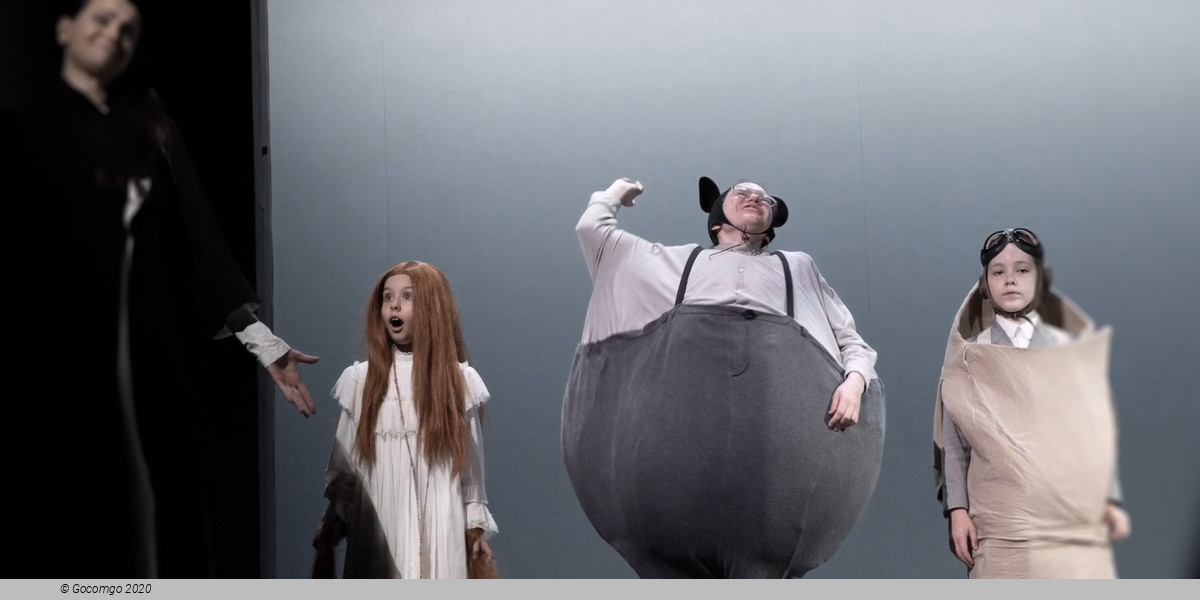
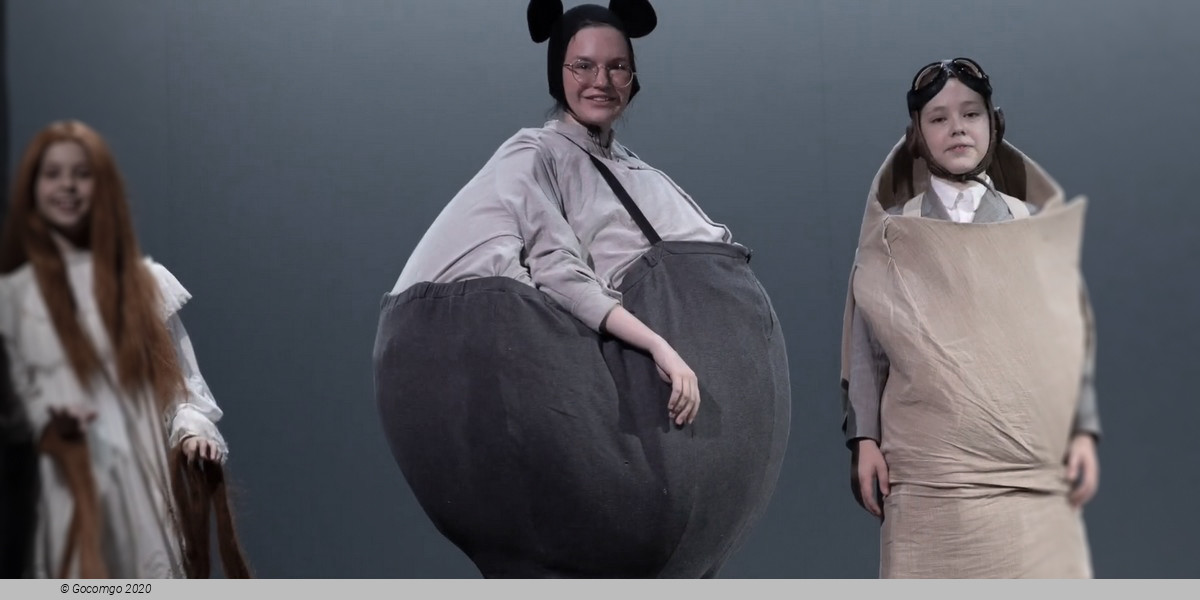
While their mother is absent "seeing papa off to join his ship", the three Brook children of Iken Hall have been playing host to their three Crome cousins, together with their nursery-maid. The visit is due to end the following day.

Scene 1

The first Audience Song is sung before the curtain rises to reveal the children's nursery at Iken Hall, which Rowan the nursery-maid is covering in dust-sheets in preparation for a visit from the chimney-sweeps. Miss Baggot, the elderly sharp-tongued housekeeper, escorts in Black Bob, the master-sweep, and his son Clem, "a sullen apprentice as black as his dad". Last of all Sam trails in, a small white figure struggling with an armful of buckets and rope. While Miss Baggot gives the instructions, Rowan is shocked by the wretchedness of the little boy, and begs the sweeps not to send him up the chimney. The sweeps mock her and pallid white Sammy as they drive him up his first chimney, to be transformed into a black, "chimbley-stack" boy. Rowan runs from the room in distress, and the sweeps leave to prepare the next chimney.

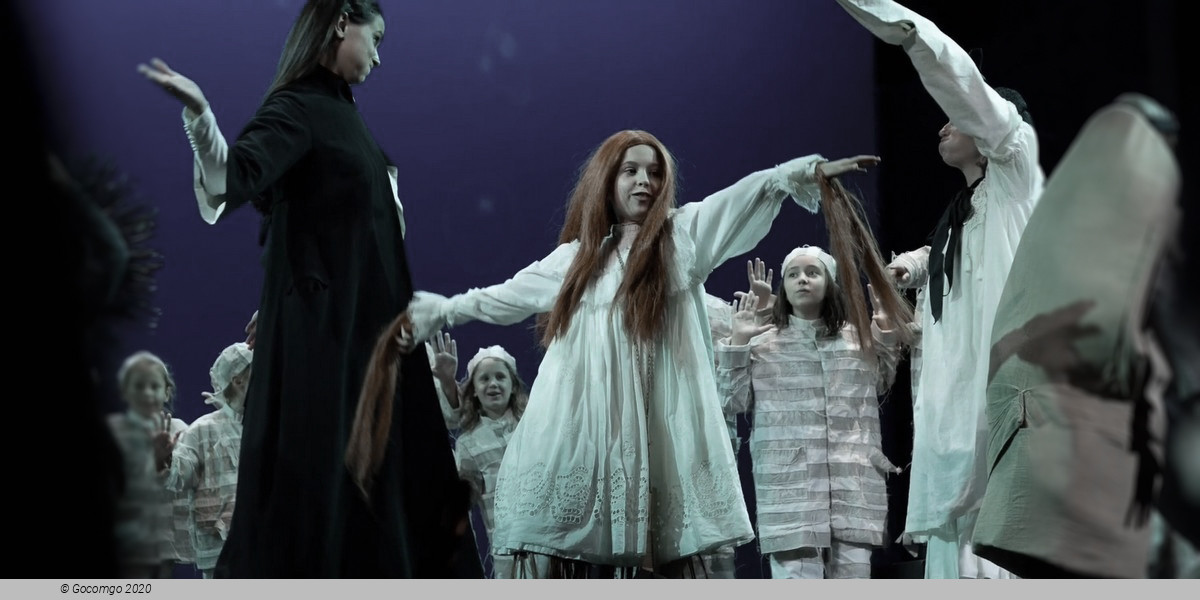
The door opens and Juliet enters furtively, before climbing into an armchair and covering herself with a dust-sheet. The children are playing hide-and-seek, apparently the version known as sardines. Jonny finds Juliet and joins her in her hiding-place, but their game is interrupted by a cry of distress from Sammy, who has become stuck in the chimney. The commotion attracts the other four children, and they succeed in extricating the sweep-boy from his predicament while singing the shanty Pull the rope gently. Like Rowan, the children are horrified by Sammy's condition. They decide to hide him in the nursery while faking up a line of footprints to make it seem as if he has escaped through the window.

Miss Baggott and Rowan return with the sweeps, and are thoroughly taken in by the ruse. Black Bob and Clem run off in search of Sammy, pursued by Miss Baggott insisting that they get on with the job. Thinking herself alone, Rowan sings an aria (Run, poor sweep-boy) expressing her wish that she could help Sam escape. Overhearing this, the children gradually emerge from under the dust-sheets and set about persuading her to help them get Sam away from the sweeps. A decision is taken to feed him and bath him, and the curtain falls on the preparations for the bath.

Scene 2

The second Audience Song is again sung to a closed curtain, vividly describing the splashing and scrubbing which is happening out of sight. The curtain rises to reveal Sam, "whiter than swans as they fly", and Juliet begins to question him about his background. He reveals that his father is a waggoner who broke his hip so that he couldn't work, and Sammy was sold into an apprenticeship with the sweeps because "there wasn't anything to eat". Sammy stoically declares that it was time he began work, as "I shall be nine next birthday", and the wealthy children become even more dismayed. Sam reveals that his home is in the village of Little Glemham, which by coincidence is also Rowan's home.

Jonny conceives the plan of smuggling Sam into his travelling-trunk so that he can be carried out of the house unseen when the Crome children leave the following day. Rowan agrees, just as Miss Baggott returns in a furious rage over her treatment by the sweeps, who have accused her of hiding their apprentice. There is a mad scramble to hide Sammy and look as innocent and natural as possible as Miss Baggott enters the room. At the spectacle of the grubby, sooty, untidy state of the nursery, the housekeeper's ire is redirected towards the children. Seeing toys lying around she approaches the toy-cupboard where Sammy is hiding, reaching for the door-handle. In desperation Juliet fakes a fainting fit, which has the desired effect. Everyone fusses around Juliet, who is eventually carried to her bedroom, as Jonny reassures Sam and urges him to "sit tight, and tomorrow you're a free man."

Scene 3

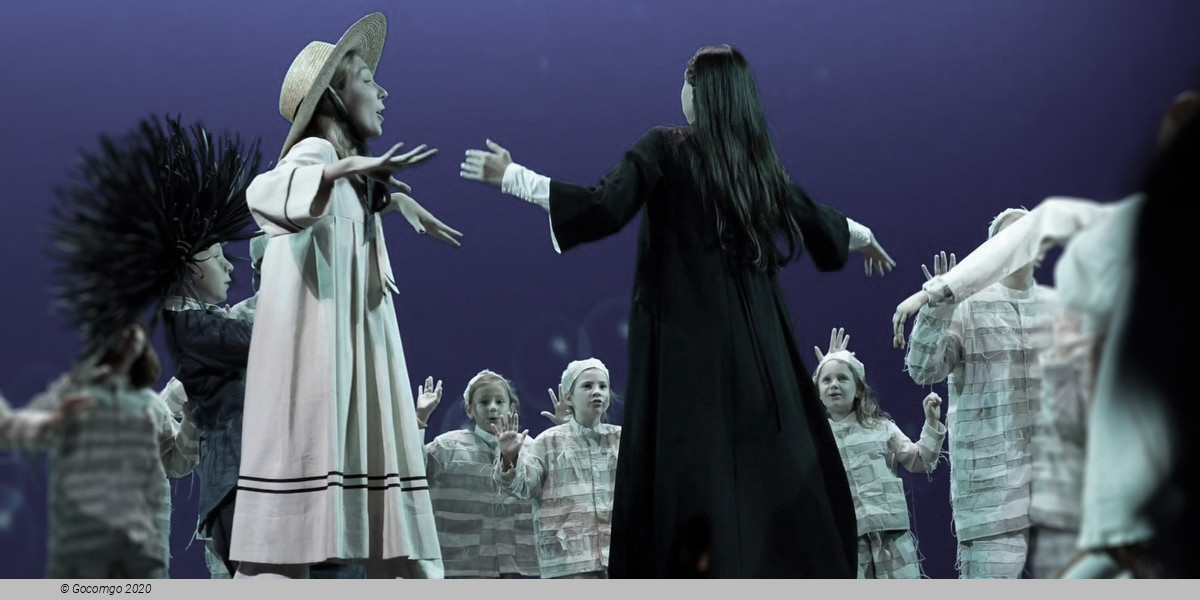
The third Audience Song evokes the passing of the night. For this, the audience is divided into four groups, taking the parts of owls, herons, turtle-doves and chaffinches engaging in a singing competition. The curtain rises to reveal Juliet sitting in her dressing-gown, as Rowan enters carrying a tray with her breakfast. They call Sammy out of the cupboard and feed him Juliet's breakfast, while Juliet sings a charming farewell aria. Sammy tries to refuse the money Juliet gives him, but she is insistent. The other children enter, the three Cromes ready to leave for home. They pack Sammy into Jonny's trunk, with yet more food, only to run into a problem when it proves to be too heavy for Tom the coachman and Alfred the gardener to lift. The children and Rowan break into the growing argument between Miss Baggot and the men, and offer to help lift the trunk. The extra manpower does the trick, and Juliet, Gay and Sophie watch from the window as it is loaded into the coach taking Jonny and the twins away.

As soon as the coach has notionally departed, the entire cast returns to the stage for the Coaching Song. They form a tableau with a rocking-horse and chairs arranged to form a coach, and sing together with the audience, describing Sammy's journey to safety and freedom.

Venue Info

Teatro Alla Scala - Milan
Location   Via Filodrammatici, 2

Teatro Alla Scala is an opera house in Milan. Most of Italy's greatest operatic artists, and many of the finest singers from around the world, have appeared at La Scala. The theatre is regarded as one of the leading opera and ballet theatres globally. It is home to the La Scala Theatre Chorus, La Scala Theatre Ballet, La Scala Theatre Orchestra, and the Filarmonica della Scala orchestra.

The Teatro alla Scala was founded, under the auspices of the Empress Maria Theresa of Austria, to replace the Royal Ducal Theatre, which was destroyed by fire on 26 February 1776 and had until then been the home of opera in Milan. The cost of building the new theatre was borne by the owners of the boxes at the Ducal, in exchange for possession of the land on which stood the church of Santa Maria alla Scala (hence the name) and for renewed ownership of their boxes. Designed by the great neoclassical architect Giuseppe Piermarini, La Scala opened on 3 August 1778 with Antonio Salieri's opera L'Europa riconosciuta, to a libretto by Mattia Verazi.

With the advent of Rossini in 1812 (La pietra del paragone), the Teatro alla Scala was to become the appointed place of Italian opera seria: of its history dating back more than a century and of its subsequent tradition up till the present. The catalogue of Rossini's works performed until 1825 included: Il turco in Italia, La Cenerentola, Il barbiere di Siviglia, La donna del lago, Otello, Tancredi, Semiramide and Mosé. During that period the choreographies of Salvatore Viganò (1769-181) and of Carlo Blasis (1795-1878) also widened the theatre's artistic supremacy to include ballet.

An exceptional new season of serious opera opened between 1822 and 1825, with Chiara e Serafina by Gaetano Donizetti (1797-1848) and Il pirata by Vincenzo Bellini (1801-1835). The later operas of Donizetti performed at La Scala were (until 1850) Anna Bolena, Lucrezia Borgia, Torquato Tasso, La fille du régiment, La favorita, Linda di Chamonix, Don Pasquale, and Poliuto. These were followed (until 1836) by Bellini's I Capuleti e i Montecchi, Norma, La sonnambula, Beatrice di Tenda and I puritani.

In 1839 Oberto Conte di San Bonifacio inaugurated the cycle of operas by Giuseppe Verdi (1813-1901), the composer whose name is linked more than any other to the history of La Scala. After the dismal failure of Un giorno di regno, Nabucco was performed in 1842. It was the first, decisive triumph of Verdi's career. At the same time, the strong patriotic feelings stirred by Nabucco founded the "popularity" of opera seria and identified its image with the Scala.

Arturo Toscanini (1867-1957) became the artistic director and introduced radical reform into the theatre, both in its organisational aspects and in its relations with the public. Toscanini, one of the greatest conductors of all time, took up Verdi's musical inheritance and launched a tradition of interpretation that continued uninterruptedly and was renewed during the twentieth century. It was he who reappraised and regularly performed at the Scala the works of Richard Wagner (hitherto only belatedly and inadequately recognised). He also firmly extended the Scala's orchestral repertoire to include symphonic music.

In 1948 maestro Guido Cantelli (1920-1956) made his debut and established himself as one of the leading postwar conductors. Numerous opera performances productions (the Wagnerian cycle conducted in 1950 by Wilhelm Furtwängler, the Verdi repertoire by Victor De Sabata, etc), concerts (Herbert von Karajan, Dimitri Mitropoulos, Bruno Walter, etc), singers (Maria Callas, Renata Tebaldi, Giuseppe Di Stefano, Mario Del Monaco, etc), ballet performances (Margot Fonteyn, Serge Lifar, Maya Plissetskaya, Rudolf Nureyev), and productions (Luchino Visconti, Giorgio Strehler) belong not only to the history of the Scala, but to that of the history of musical theatre since the war.

In 1965 Claudio Abbado made his début at the Scala and in 1972 was named conductor of the Scala Orchestra. Until 1986 he directed among other works Il barbiere di Siviglia, Cenerentola, L'Italiana in Algeri by Rossini, Simon Boccanegra, Macbeth and Don Carlo by Verdi, the recent Al gran sole carico d'amore by Luigi Nono, and Pelléas et Mélisande by Claude Debussy. He also conducted numerous concerts. The chorus-master was Romano Gandolfi. In 1975 the ballet dancer Oriella Dorella debuted at La Scala. Among other contemporary composers, up till 1986 the Theatre continued to give works by Luciano Berio (La vera storia), Franco Donatoni (Atem) and Karlheinz Stockhausen (Samstag aus Licht).

In 1981 Riccardo Muti debuted at the Scala as an opera conductor (Mozart, Le nozze di Figaro). Giulio Bertola was appointed to direct the Chorus. In 1982 the Orchestra Filarmonica della Scala was established. In 1985 Alessandra Ferri made her debut at the Scala. In 1986 Riccardo Muti was appointed musical director. From 1989 to 1998 he reintroduced the best-loved works (Rigoletto, La traviata, Macbeth, La forza del destino) and numerous other titles by Verdi including Falstaff and Don Carlo.

In 1991 Roberto Gabbiani took over the directorship of the chorus. In 1997 La Scala was converted into a Foundation under private ownership, thus opening a decisive phase of modernisation.

On 7 December 2001 a new production of Otello, conducted by Muti, concluded the Verdi Year and, for the time being, performances at Piermarini’s original building in Piazza Scala. Major restoration and modernisation works of the Theatre began in January 2002.

The 2005-2006 Season, dedicated to the 250th anniversary of Mozart’s birth, was inaugurated by Idomeneo conducted by Daniel Harding. The 2006/07 season saw the return on 7 December of an opera by Verdi, Aida, conducted by Riccardo Chailly, and the launch of the Celebrations for the 50th Anniversary of Arturo Toscanini’s Death. On 7 December 2007 the 2007/08 season opened with Tristan und Isolde conducted by Daniel Barenboim. The opera marked the beginning of a closer collaboration between the Teatro alla Scala and the Israeli-Argentinian Maestro.

Important Info
Type: Opera
City: Milan, Italy

E-tickets: Print at home or at the box office of the event if so specified. You will find more information in your booking confirmation email.

You can only select the category, and not the exact seats.
If you order 2 or 3 tickets: your seats will be next to each other.
If you order 4 or more tickets: your seats will be next to each other, or, if this is not possible, we will provide a combination of groups of seats (at least in pairs, for example 2+2 or 2+3).

Top of page