
Warsaw Grand Theatre - Polish National Opera (Teatr Wielki): Médée Tickets | Event Dates & Schedule | GoComGo.com

Médée Tickets

Warsaw Grand Theatre - Polish National Opera (Teatr Wielki), Warsaw, Poland
Important Info
Type: Opera
City: Warsaw, Poland
Acts: 3
Sung in: French
Titles in: Polish,English

E-tickets: Print at home or at the box office of the event if so specified. You will find more information in your booking confirmation email.

You can only select the category, and not the exact seats.
If you order 2 or 3 tickets: your seats will be next to each other.
If you order 4 or more tickets: your seats will be next to each other, or, if this is not possible, we will provide a combination of groups of seats (at least in pairs, for example 2+2 or 2+3).

Cast
Performers
Choose the date to see the peformers
Overview

What kind of circumstances can lead a mother to commit infanticide? The story of Medea has fascinated artists for centuries, opera creators included.

The libretto of Luigi Cherubini’s work, originally staged in Paris in 1797, is a condensation of the tale known from classical mythology. It barely touches upon the beginning of Medea and Jason relationship, the Golden Fleece, or Argonauts. We find ourselves right in the middle of a romantic conflict: Dircé is getting anxiously ready to marry Jason who left his ex-wife for her. The wedding ceremony is interrupted by Medea, who is trying to get her husband and children back. Rejected and helpless, she has planned revenge: she presents Dircé with a poison-infused crown and robe and murders her sons.  
Cherubini’s opera was well-received, yet did not win wider recognition and was pulled after twenty performances. Despite earning considerable popularity in Germany, it did not make a big comeback until the mid-20th century when Maria Callas stunned the world with her interpretation of the title character. Medea remained one of the soprano’s signature roles until her death. Ever since then, the opera is regularly staged across the world, putting the abilities of the greatest sopranos to the test.

The score straddles classicism and romanticism. It is governed by proportions and moderation (the beginning sounds like it could have been written by Wolfgang Amadeus Mozart or Christoph Willibald Gluck), while also going with the flow of extreme emotions (Act 3 focuses on Medea and her crime). The opera was often described as solemn and as full of pathos, carrying the weight of the tragic story. It was also praised for its extraordinary portrayal of the character’s feelings. There was, in particular, great admiration for the challenging title role, which had originally been written for Julie-Angélique Scio, an artist celebrated both for her vocal and acting merit. The singer suffered from tuberculosis which ultimately lead to her untimely death, yet – reportedly – added an extra expressive quality to her voice and body. Thanks to Scio’s abilities, the role stuns to this day: Medea is a complex character that epitomises both power and delicacy, anguish and determination.

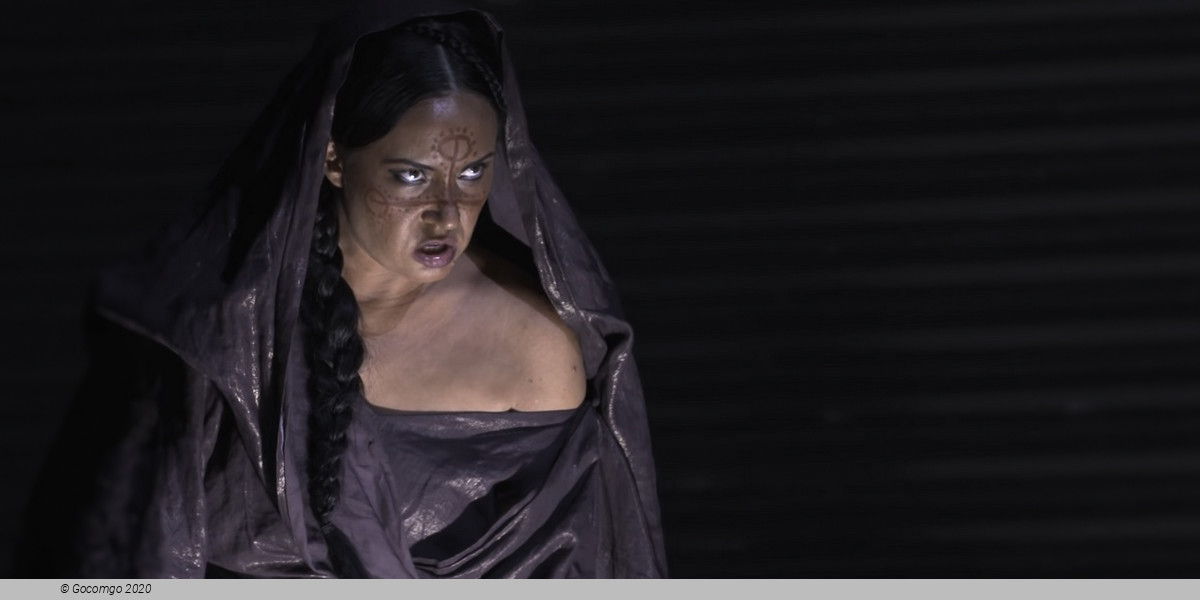
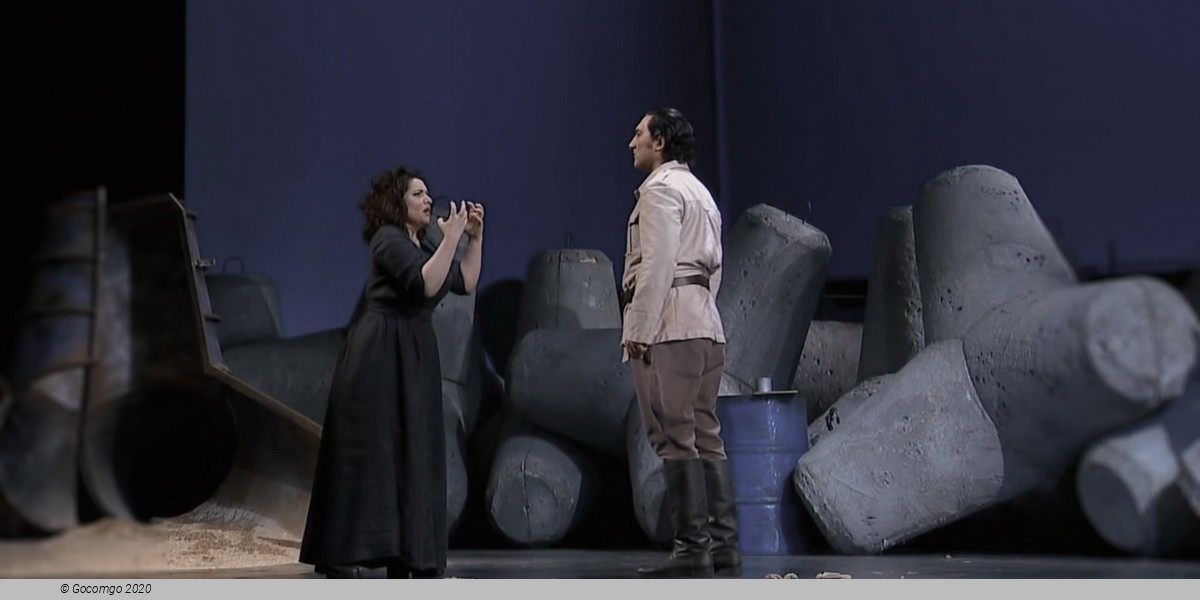
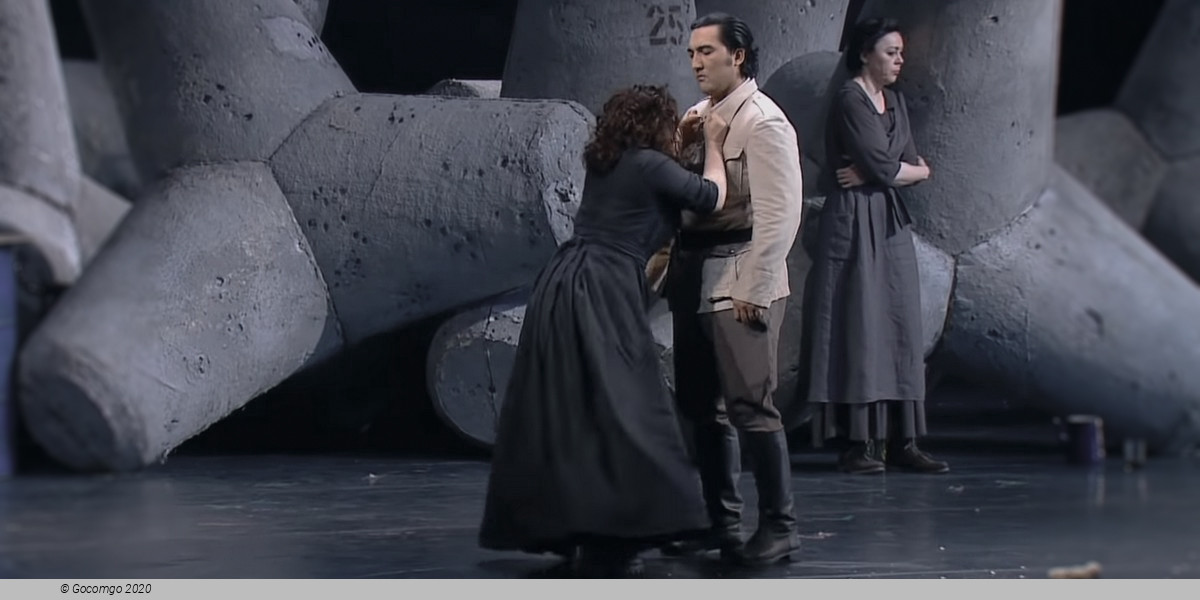
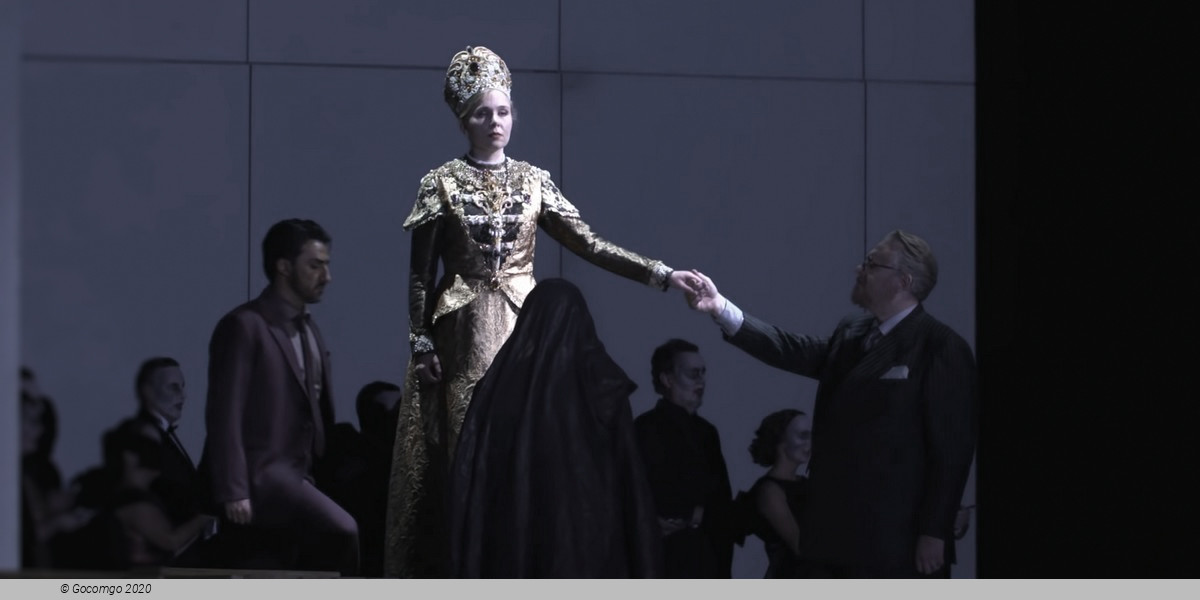
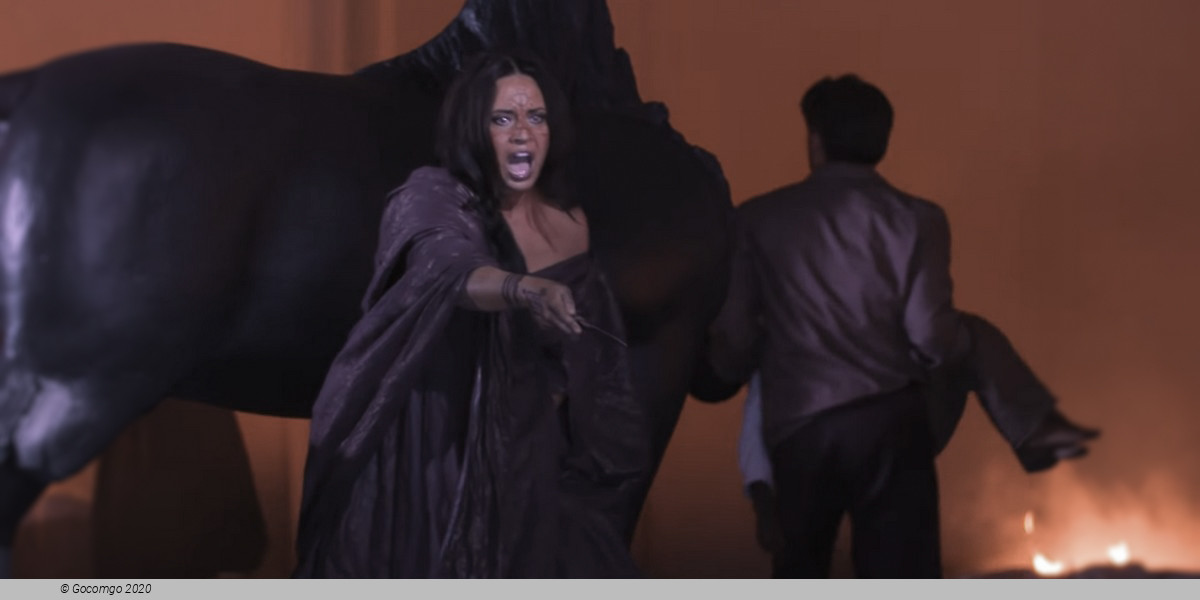
This staging was co-produced by the Polish National Opera and the Salzburg Festival. Its original presentation in Warsaw was postponed due to the pandemic. The production was deemed a directorial success: Simon Stone managed to modernise the story and give it a cinematic flair. He achieved that with the use of hyperrealistic set design, black-and-white projections summarising complex emotional relationships, and replacing spoken dialogue with excerpts of phone conversations. Médée follows people in positions of power: in Stone’s production financial elites take the place of ancient rulers. The director zeroes in on the title character, yet portrays her not as the Colchian witch but a contemporary woman who fell prey to marital betrayal. She is a foreigner living in Austria, the wife of a rich and influential Jason, who abandons her for a better catch. The director looks at the mechanics of exclusion: following Medea as she becomes an outsider and falls into despair. Stone proves that Medea’s story is painfully relevant: the opera shows how quickly martial bliss may turn into a family disaster. The twist ending feels like watching a thriller. In the original version Medea was swallowed up by Hell against the backdrop of a burning church. The composer subsequently changed the final scene, allowing his protagonist to flee in a chariot of fire. The director of this production came up with a completely different finale which, nevertheless, corresponds with the original.

A co-production with the Salzburger Festspiele

History
Premiere of this production: 13 March 1797, Théâtre Feydeau, Paris

Médée - French language opéra-comique by Luigi Cherubini. Libretto by François-Benoît Hoffman (Nicolas Étienne Framéry) was based on Euripides' tragedy of Medea and Pierre Corneille"Médée". It is set in the ancient city of Corinth.

Synopsis

Place: Corinth
Time: Antiquity

Act 1
Outside the palace of King Créon

Dircé is preparing for her wedding to Jason. Years ago, Jason had stolen the golden fleece with the help of Médée, who had betrayed her family and established a relationship with Jason, the result of which was two children. Although Jason has since abandoned Médée, she reappears and demands that he return to her. Jason refuses and Médée curses him, swearing vengeance.

Act 2
Inside the palace

In despair, Médée is encouraged by her slave, Néris, to leave the city. Créon then appears and orders that Médée leave. She asks for one more day with her children and, after the king agrees, she appears to be calmer and gives Néris two wedding presents to take to her rival.

Act 3
Between the palace and the temple

Néris brings the two children out to where Médée is waiting. Sounds of lamentation are heard from within the palace and it is discovered that one of Médée's wedding presents has poisoned Dircé. An angry crowd gathers and Néris, Médée, and the children take refuge in the temple. From the temple, the two women reappear with Médée grasping a blood-stained knife with which she has killed her two children. Médée curses Jason and disappears into the air. The temple goes up in flames and the crowd flees in terror.

Venue Info

Warsaw Grand Theatre - Polish National Opera (Teatr Wielki) - Warsaw
Location   plac Teatralny 1

The Grand Theatre in Warsaw is a theatre and opera complex situated on the historic Theatre Square in central Warsaw. The Warsaw Grand Theatre is home to the Polish National Ballet and is one of the largest theatrical venues in the world.

The Theatre was built on Theatre Square between 1825 and 1833, replacing the former building of Marywil, from Polish classicist designs by the Italian architect Antonio Corazzi of Livorno, to provide a new performance venue for existing opera, ballet and drama companies active in Warsaw. The building was remodeled several times and, in the period of Poland's political eclipse from 1795 to 1918, it performed an important cultural and political role in producing many works by Polish composers and choreographers.

It was in the new theatre that Stanisław Moniuszko's two best-known operas received their premieres: the complete version of Halka (1858), and The Haunted Manor (1865). After Frédéric Chopin, Moniuszko was the greatest figure in 19th-century Polish music, for in addition to producing his own works, he was director of the Warsaw Opera from 1858 until his death in 1872.

While director of the Grand Theatre, Moniuszko composed The Countess, Verbum Nobile, The Haunted Manor and Paria, and many songs that make up 12 Polish Songbooks.

Also, under Moniuszko's direction, the wooden Summer Theatre was built close by in the Saxon Garden. Summer performances were given annually, from the repertories of the Grand and Variety (Rozmaitości) theatres. Józef Szczublewski writes that during this time, even though the country had been partitioned out of political existence by its neighbors, the theatre flourished: "the ballet roused the admiration of foreign visitors; there was no equal troupe of comedians to be found between Warsaw and Paris, and Modrzejewska was an inspiration to drama."

The theatre presented operas by Władysław Żeleński, Ignacy Jan Paderewski, Karol Szymanowski and other Polish composers, as well as ballet productions designed by such choreographers as Roman Turczynowicz, Piotr Zajlich and Feliks Parnell. At the same time, the repertoire included major world opera and ballet classics, performed by the most prominent Polish and foreign singers and dancers. It was also here that the Italian choreographer Virgilius Calori produced Pan Twardowski (1874), which (in the musical arrangement first of Adolf Sonnenfeld and then of Ludomir Różycki) has for years been part of the ballet company's repertoire.

During the 1939 battle of Warsaw, the Grand Theatre was bombed and almost completely destroyed, with only the classical façade surviving. During the Warsaw Uprising of 1944 the Germans shot civilians in the burnt-out ruins. The plaque to the right of the main entrance commemorates the suffering and heroism of the victims of fascism.

Important Info
Type: Opera
City: Warsaw, Poland
Acts: 3
Sung in: French
Titles in: Polish,English

E-tickets: Print at home or at the box office of the event if so specified. You will find more information in your booking confirmation email.

You can only select the category, and not the exact seats.
If you order 2 or 3 tickets: your seats will be next to each other.
If you order 4 or more tickets: your seats will be next to each other, or, if this is not possible, we will provide a combination of groups of seats (at least in pairs, for example 2+2 or 2+3).

Top of page