









Warsaw Grand Theatre - Polish National Opera (Teatr Wielki): La Bayadère Tickets | Event Dates & Schedule | GoComGo.com

La Bayadère Tickets

Warsaw Grand Theatre - Polish National Opera (Teatr Wielki), Warsaw, Poland
Important Info
Type: Ballet
City: Warsaw, Poland
Duration: 3h with 2 intervals
Acts: 3
Intervals: 2

E-tickets: Print at home or at the box office of the event if so specified. You will find more information in your booking confirmation email.

You can only select the category, and not the exact seats.
If you order 2 or 3 tickets: your seats will be next to each other.
If you order 4 or more tickets: your seats will be next to each other, or, if this is not possible, we will provide a combination of groups of seats (at least in pairs, for example 2+2 or 2+3).

Cast
Performers
Choose the date to see the peformers
Overview

A beautiful Hindu tale of love and its power to transcend death.

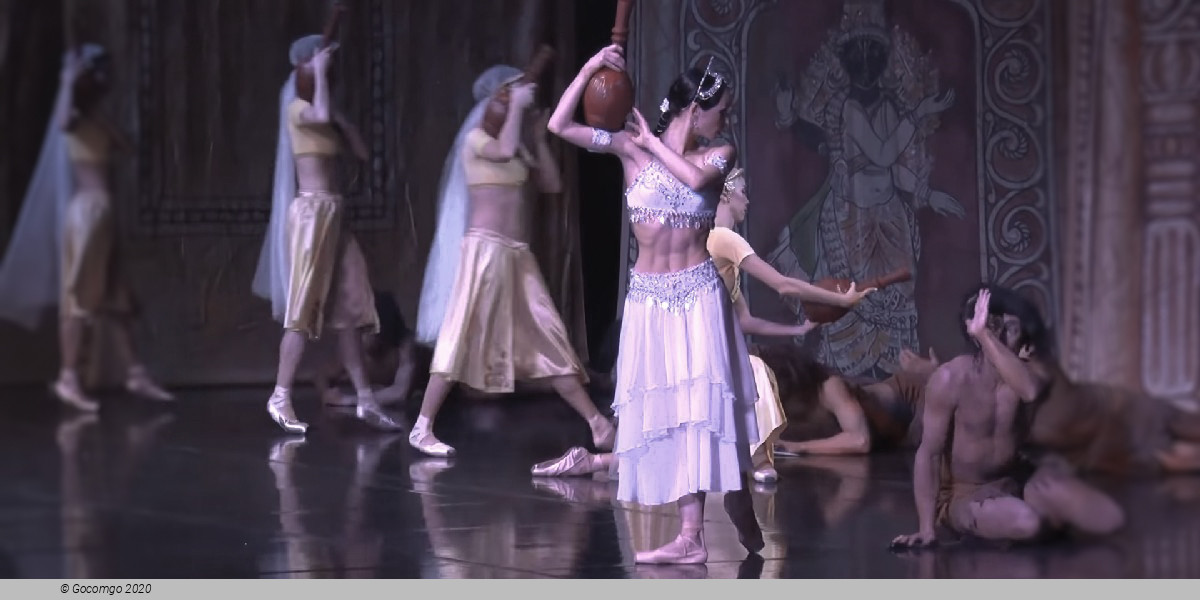
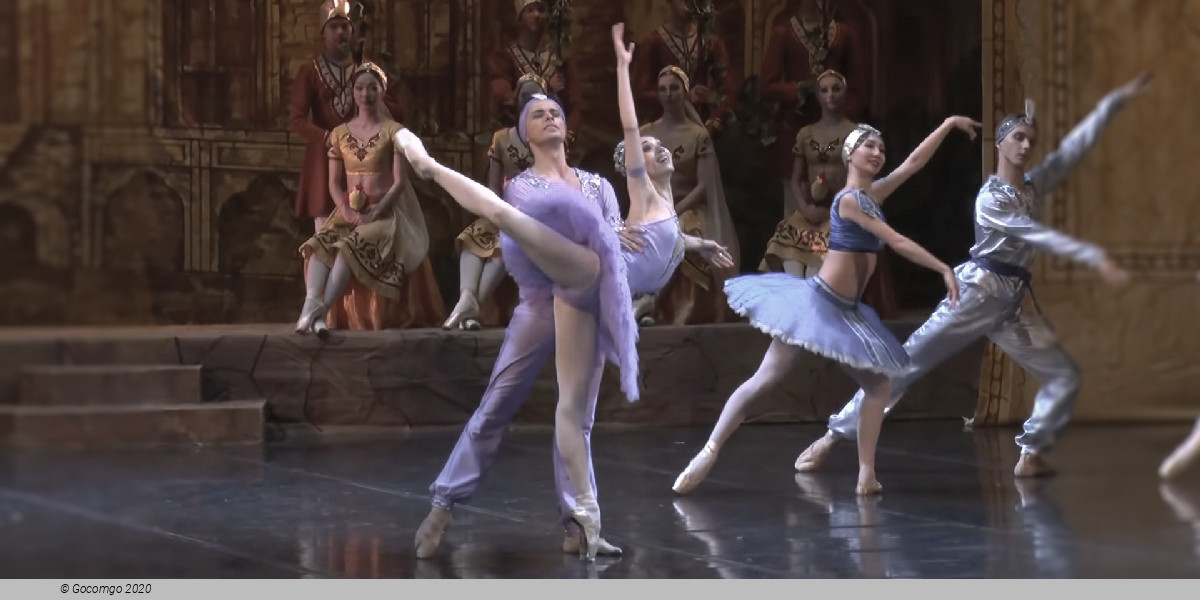
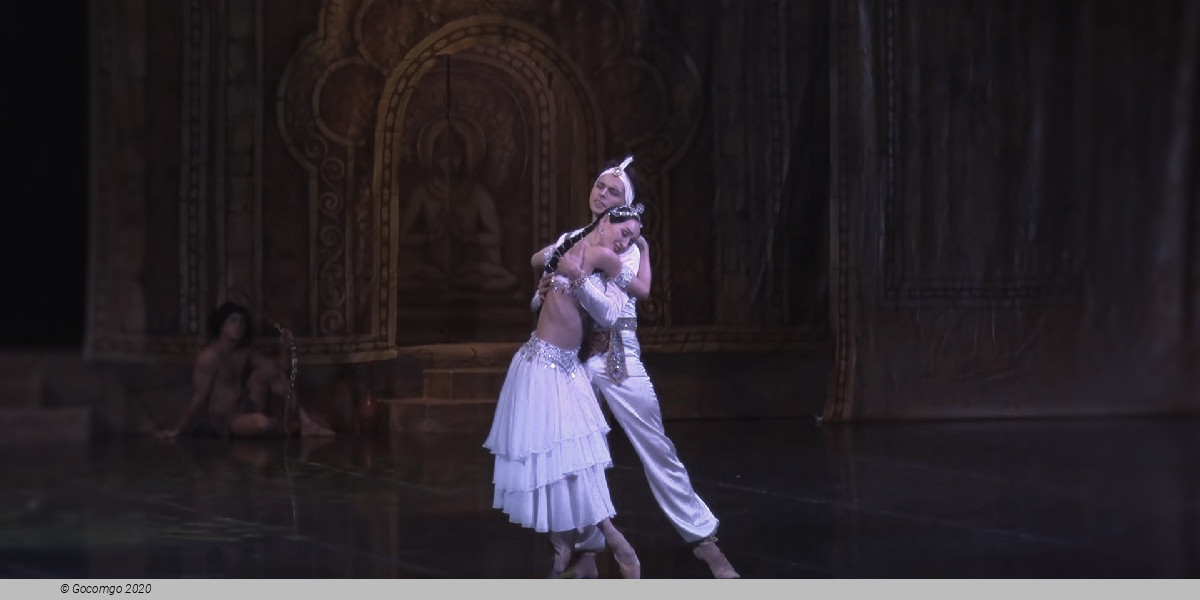
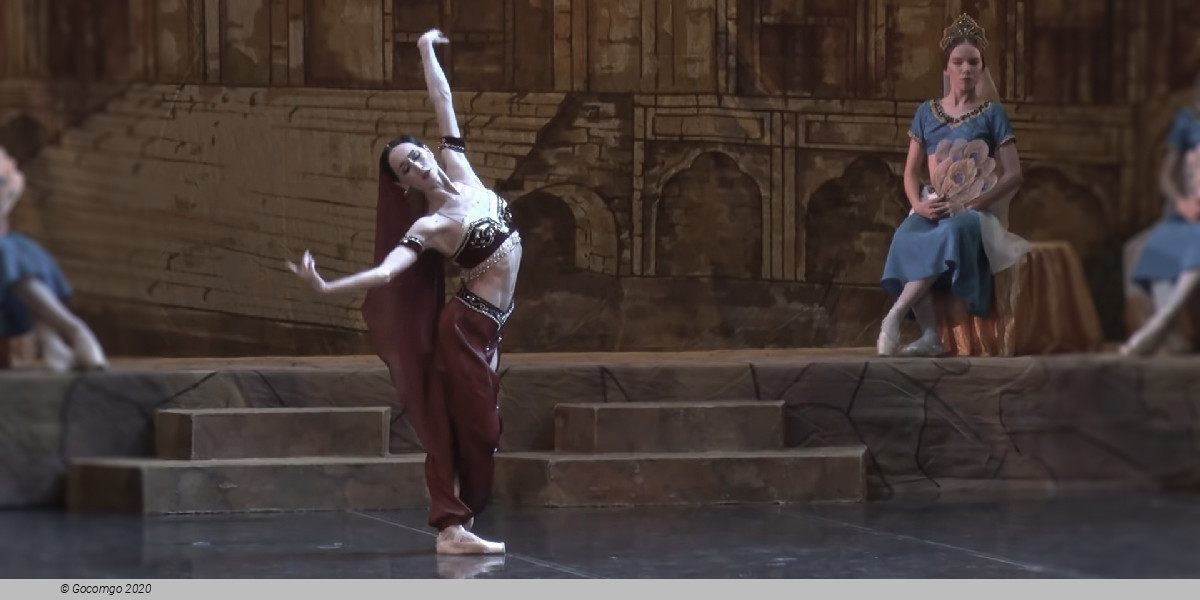
The legendary ballet star Natalia Makarova staged La Bayadère at Teatr Wielki according to the best St. Petersburg standards. She meticulously recreated and polished the original choreographic version of the great Marius Petipa from 1877, while retaining his original unmatched choreography of the Kingdom of the Shades scene – one of the most phenomenal pieces in classical ballet heritage. She first created her La Bayadère for the American Ballet Theatre in New York, and then revived it several times with the best classical dance companies. This colorful, romantic show captivates the audience with its scale; it is deeply moving and leaves a lasting impression. It is full of wonderful solo performances and ensemble scenes. It is an excellent test of the academic craftsmanship of every ballet company. Also the Polish National Ballet and its leading soloists.

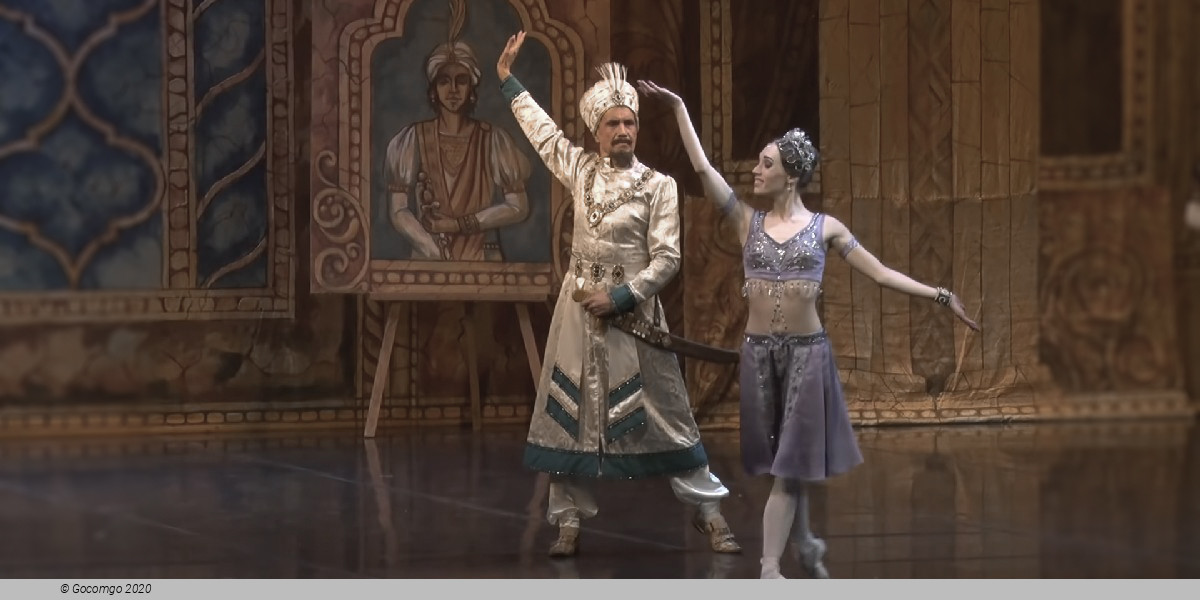
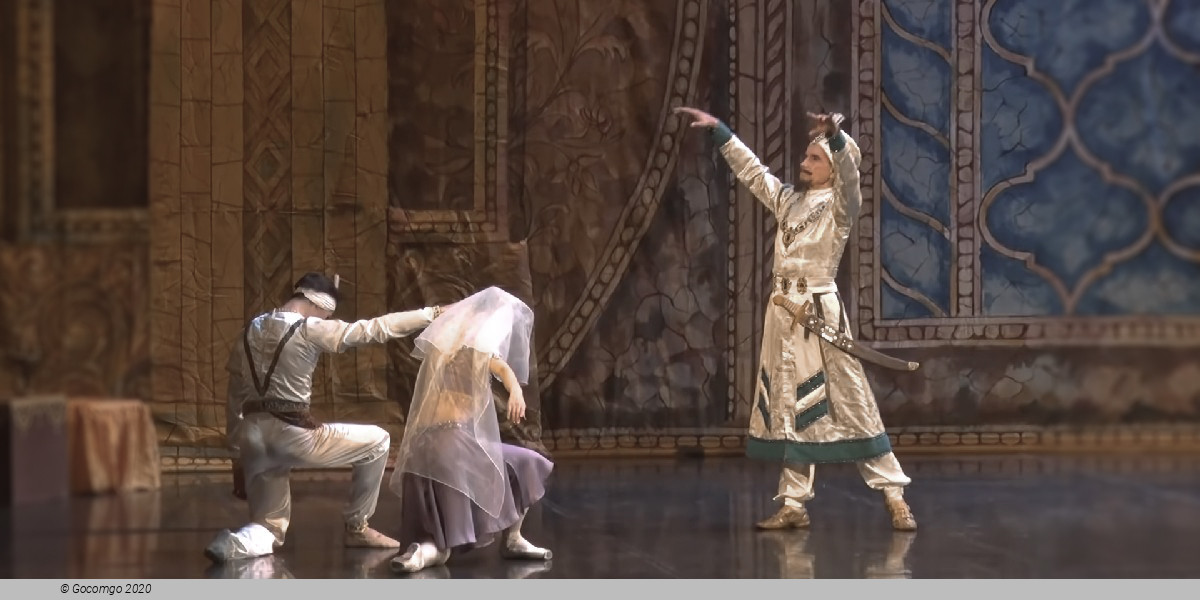
La Bayadère, one of the most splendid ballets of the 19th century, glorified the exotic Orient at a time when foreign travel was only available to the privileged few. The world renowned ballerina and choreographer Natalia Makarova’s production, which honours the original choreography, is the first version of La Bayadère to be seen in the Western world. Pier Luigi Samaritani’s magnificent sets and Anna Kontek’s opulent costumes carry the audience into a world of fairy tales – just like at the Imperial Ballet of St. Petersburg back in 1877.

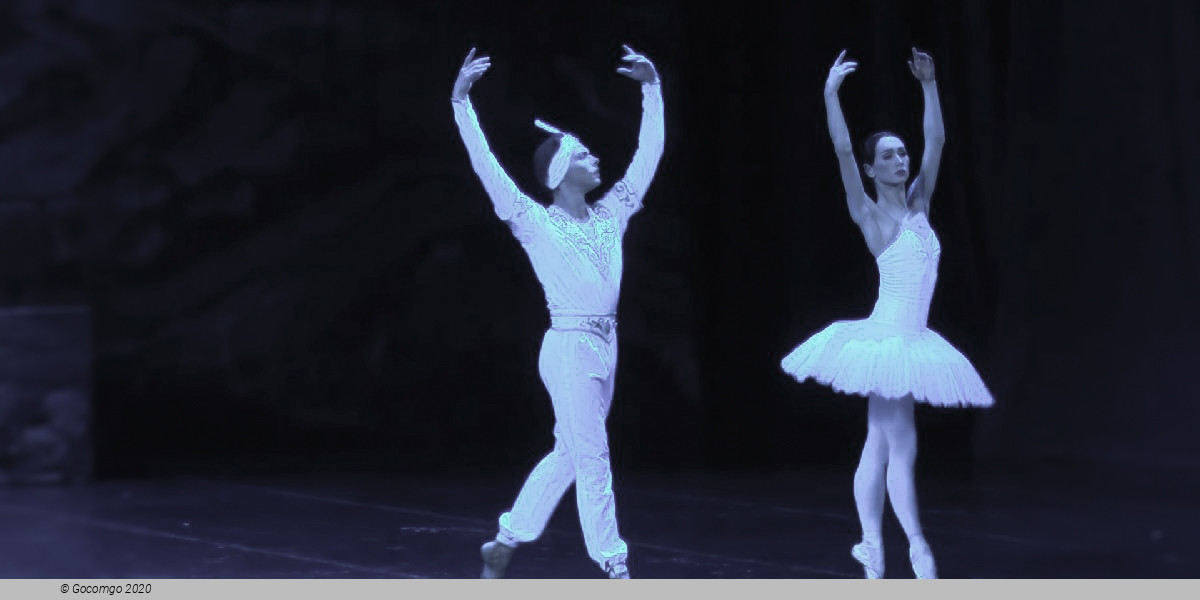
“Elegantly simple and purely geometrical, the Kingdom of the Shades reveals the wonderful mastery of the young Petipa. This scene is especially difficult for the corps de ballet, because every move must be executed in precise unison.”

– Natalia Makarova, choreographer

History
Premiere of this production: 23 January 1877, Imperial Bolshoi Kamenny Theatre in St. Petersburg, Russia

La Bayadère (en. The Temple Dancer) is a ballet, originally staged in four acts and seven tableaux by French choreographer Marius Petipa to the music of Ludwig Minkus. The ballet was staged especially for the benefit performance of the Russian Prima ballerina Ekaterina Vazem, who created the principal role of Nikiya.

Synopsis

Set in the Royal India of the past, La Bayadère is a story of eternal love, mystery, fate, vengeance, and justice.  The ballet relates the drama of a temple dancer (bayadère), Nikiya, who is loved by Solor, a noble warrior.  She is also loved by the High Brahmin, but does not love him in return, as she does Solor.

Act I

Scene I, Outside Temple in the Sacred Forest.

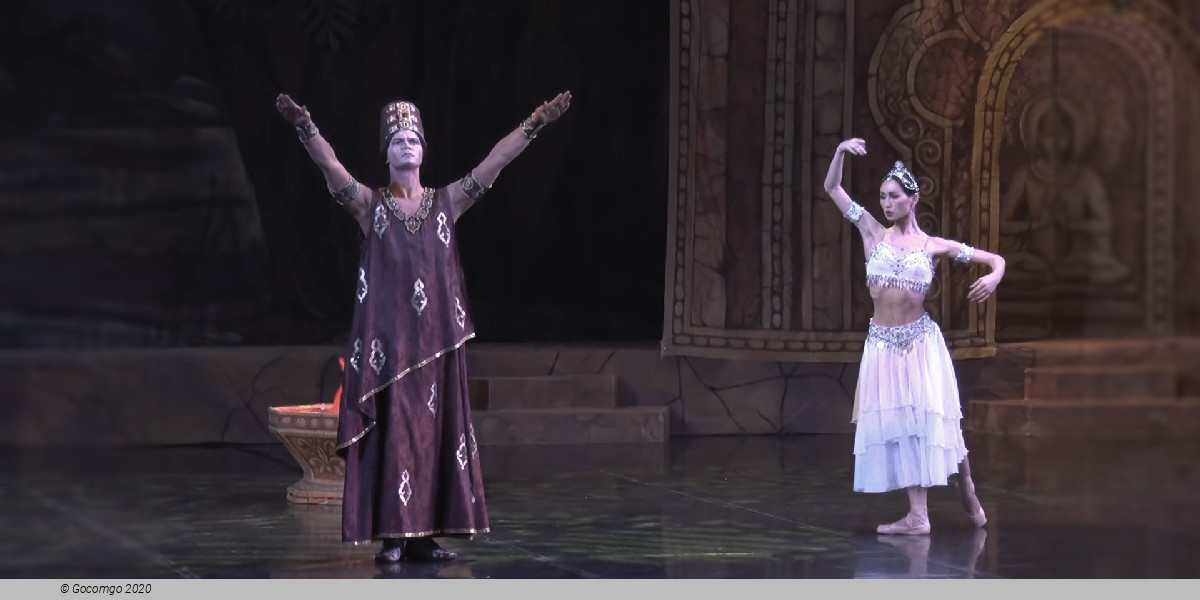
The High Brahmin, priests, and temple dancers are celebrating the Indian Ritual of Fire.  Nikiya, the most beautiful of the bayadères, has been chosen to be consecrated the lead temple dancer.  The High Brahmin declares his love for Nikiya, but is rejected by her.  Nikiya meets secretly with Solor later that evening.  They dance together and swear eternal love over the Sacred Fire, but are discovered by the jealous High Brahmin, who vows to kill Solor.

Scene II, A Room in the Palace.

The Rajah has decided to reward Solor’s valor and decrees that the warrior will marry his daughter, Gamzatti.  Gamzatti falls in love with Solor’s portrait, and when they meet, he is overwhelmed by her beauty.  Even though he has sworn eternal love to Nikiya, he cannot defy the wishes of the Rajah and agrees to marry Gamzatti.  The High Brahmin informs the Rajah of Nikiya and Solor’s secret love, hoping that the Rajah will do away with Solor.  Instead, the Rajah decides to kill Nikiya.

This conversation is overhead by Gamzatti, who summons Nikiya to her rooms and attempts to bribe Nikiya to give up Solor.  Refusing, Nikiya frantically attempts to kill  Gamzatti.  Nikiya flees and Gamzatti swears to destroy her.

Scene III, The Garden of the Palace.

At the betrothal of Solor and Gamzatti, Nikiya is commanded to dance.  Gamzatti presents her with a basket of flowers that Nikiya believes to be from Solor, and which conceals a deadly snake.  Nikiya is bitten, and when Solor leaves with Gamzatti, she refuses the proffered antidote and dies.

Act II. The Tent of Solor.

Solor, grief‑stricken and under the influence of opium, dreams of being reunited with Nikiya in the Kingdom of the Shades.  Awakening, he realizes that he must prepare to marry Gamzatti.

Act III. The Temple.

The vision of Nikiya remains with Solor as the wedding ceremony begins at the Sacred Temple.  As Solor and Gamzatti say their vows and are blessed by the High Brahmin, the vengeance of the gods is unleashed, and the temple and all the celebrants are destroyed.  Nikiya and Solor are once again united in eternal love.

Venue Info

Warsaw Grand Theatre - Polish National Opera (Teatr Wielki) - Warsaw
Location   plac Teatralny 1

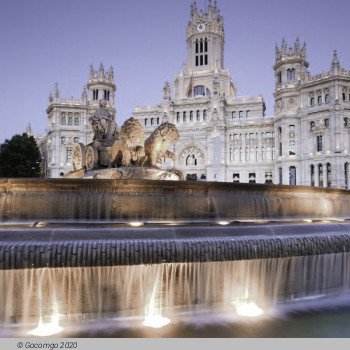
The Grand Theatre in Warsaw is a theatre and opera complex situated on the historic Theatre Square in central Warsaw. The Warsaw Grand Theatre is home to the Polish National Ballet and is one of the largest theatrical venues in the world.

The Theatre was built on Theatre Square between 1825 and 1833, replacing the former building of Marywil, from Polish classicist designs by the Italian architect Antonio Corazzi of Livorno, to provide a new performance venue for existing opera, ballet and drama companies active in Warsaw. The building was remodeled several times and, in the period of Poland's political eclipse from 1795 to 1918, it performed an important cultural and political role in producing many works by Polish composers and choreographers.

It was in the new theatre that Stanisław Moniuszko's two best-known operas received their premieres: the complete version of Halka (1858), and The Haunted Manor (1865). After Frédéric Chopin, Moniuszko was the greatest figure in 19th-century Polish music, for in addition to producing his own works, he was director of the Warsaw Opera from 1858 until his death in 1872.

While director of the Grand Theatre, Moniuszko composed The Countess, Verbum Nobile, The Haunted Manor and Paria, and many songs that make up 12 Polish Songbooks.

Also, under Moniuszko's direction, the wooden Summer Theatre was built close by in the Saxon Garden. Summer performances were given annually, from the repertories of the Grand and Variety (Rozmaitości) theatres. Józef Szczublewski writes that during this time, even though the country had been partitioned out of political existence by its neighbors, the theatre flourished: "the ballet roused the admiration of foreign visitors; there was no equal troupe of comedians to be found between Warsaw and Paris, and Modrzejewska was an inspiration to drama."

The theatre presented operas by Władysław Żeleński, Ignacy Jan Paderewski, Karol Szymanowski and other Polish composers, as well as ballet productions designed by such choreographers as Roman Turczynowicz, Piotr Zajlich and Feliks Parnell. At the same time, the repertoire included major world opera and ballet classics, performed by the most prominent Polish and foreign singers and dancers. It was also here that the Italian choreographer Virgilius Calori produced Pan Twardowski (1874), which (in the musical arrangement first of Adolf Sonnenfeld and then of Ludomir Różycki) has for years been part of the ballet company's repertoire.

During the 1939 battle of Warsaw, the Grand Theatre was bombed and almost completely destroyed, with only the classical façade surviving. During the Warsaw Uprising of 1944 the Germans shot civilians in the burnt-out ruins. The plaque to the right of the main entrance commemorates the suffering and heroism of the victims of fascism.

Important Info
Type: Ballet
City: Warsaw, Poland
Duration: 3h with 2 intervals
Acts: 3
Intervals: 2

E-tickets: Print at home or at the box office of the event if so specified. You will find more information in your booking confirmation email.

You can only select the category, and not the exact seats.
If you order 2 or 3 tickets: your seats will be next to each other.
If you order 4 or more tickets: your seats will be next to each other, or, if this is not possible, we will provide a combination of groups of seats (at least in pairs, for example 2+2 or 2+3).

Top of page