

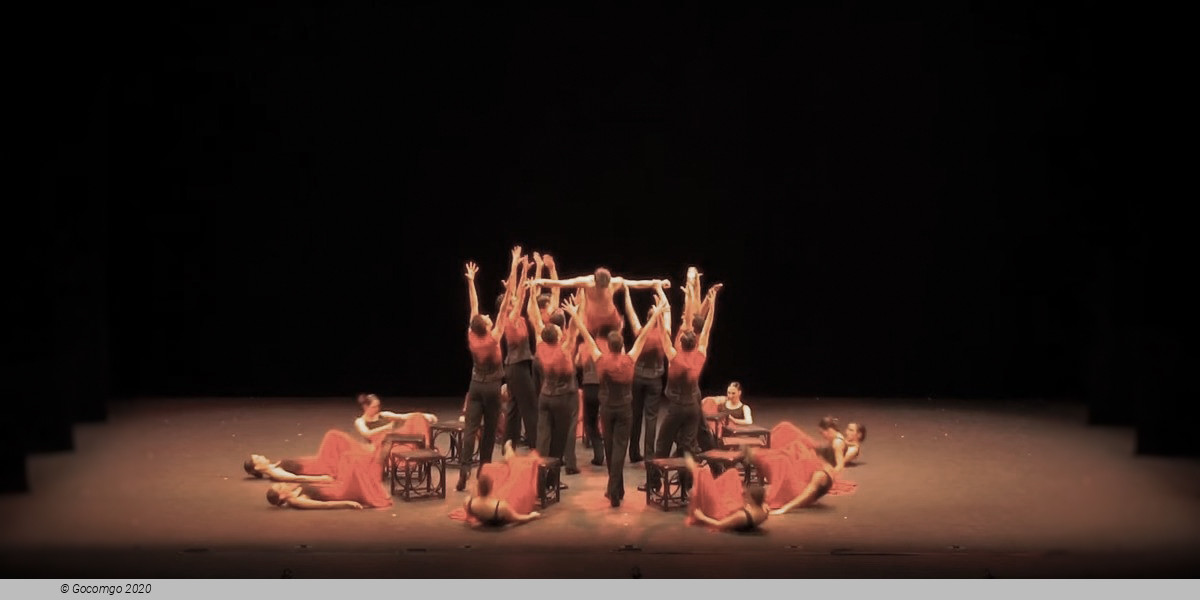
Warsaw Grand Theatre - Polish National Opera (Teatr Wielki): An evening of modern ballets "Bolero+": Moving Rooms. Kilar Concerto. Bolero Tickets | Event Dates & Schedule | GoComGo.com

An evening of modern ballets "Bolero+": Moving Rooms. Kilar Concerto. Bolero Tickets

Warsaw Grand Theatre - Polish National Opera (Teatr Wielki), Warsaw, Poland
Important Info
Type: Modern Ballet
City: Warsaw, Poland

E-tickets: Print at home or at the box office of the event if so specified. You will find more information in your booking confirmation email.

You can only select the category, and not the exact seats.
If you order 2 or 3 tickets: your seats will be next to each other.
If you order 4 or more tickets: your seats will be next to each other, or, if this is not possible, we will provide a combination of groups of seats (at least in pairs, for example 2+2 or 2+3).

Cast
Performers
Choose the date to see the peformers
Overview

There are ballets which disappear from the stage unnoticed, while others are dearly missed when replaced by newer productions. This applies in particular to the academic classics and contemporary triple bills.

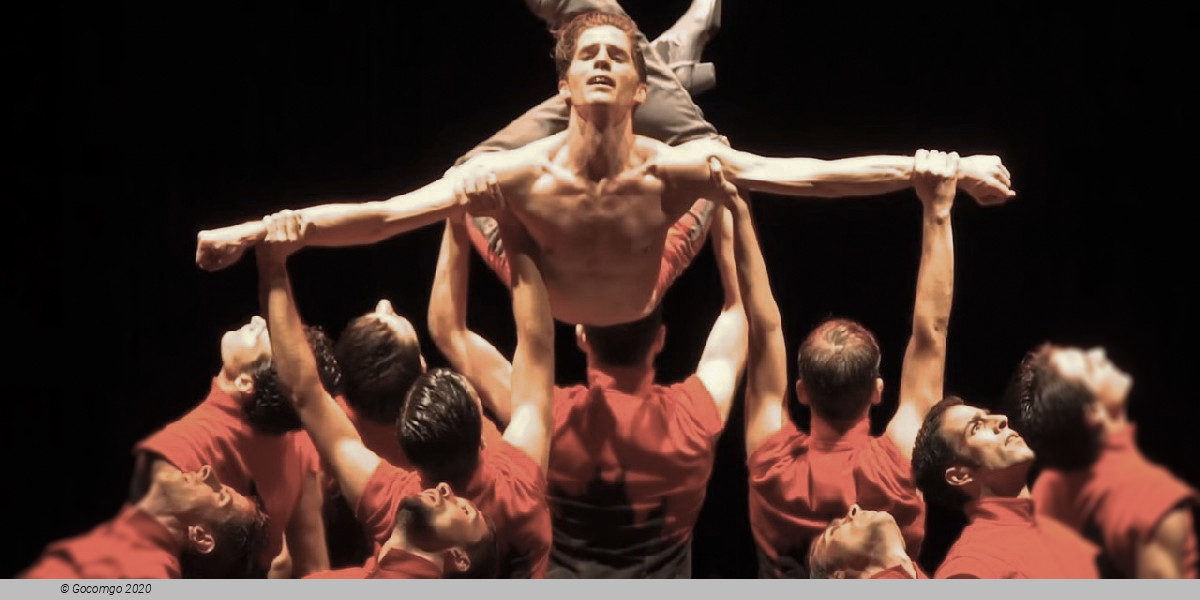
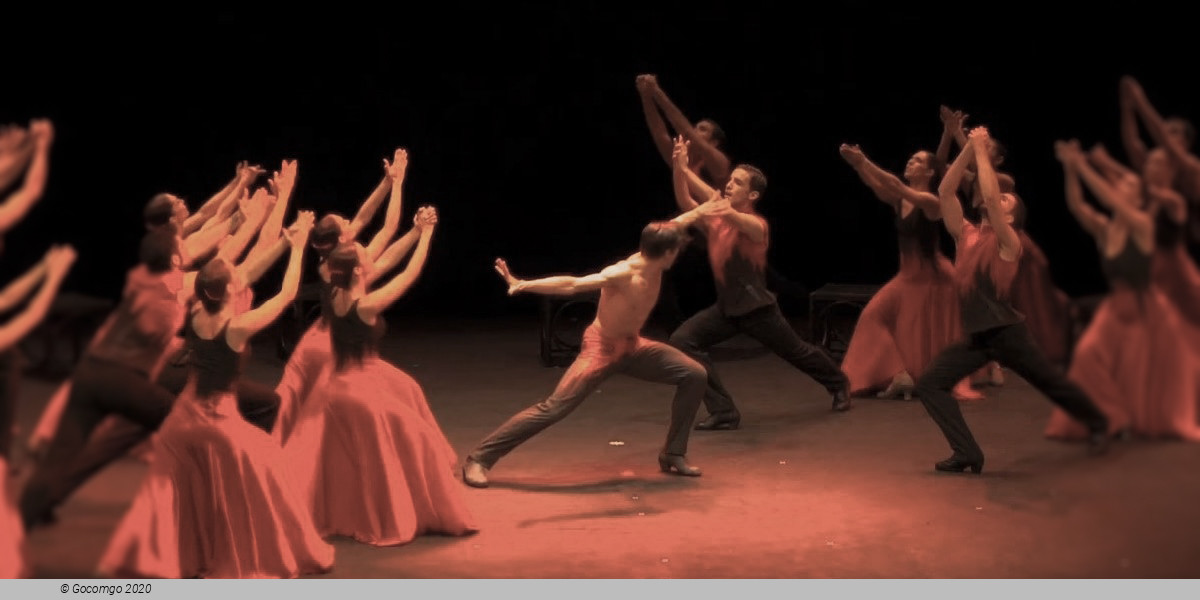
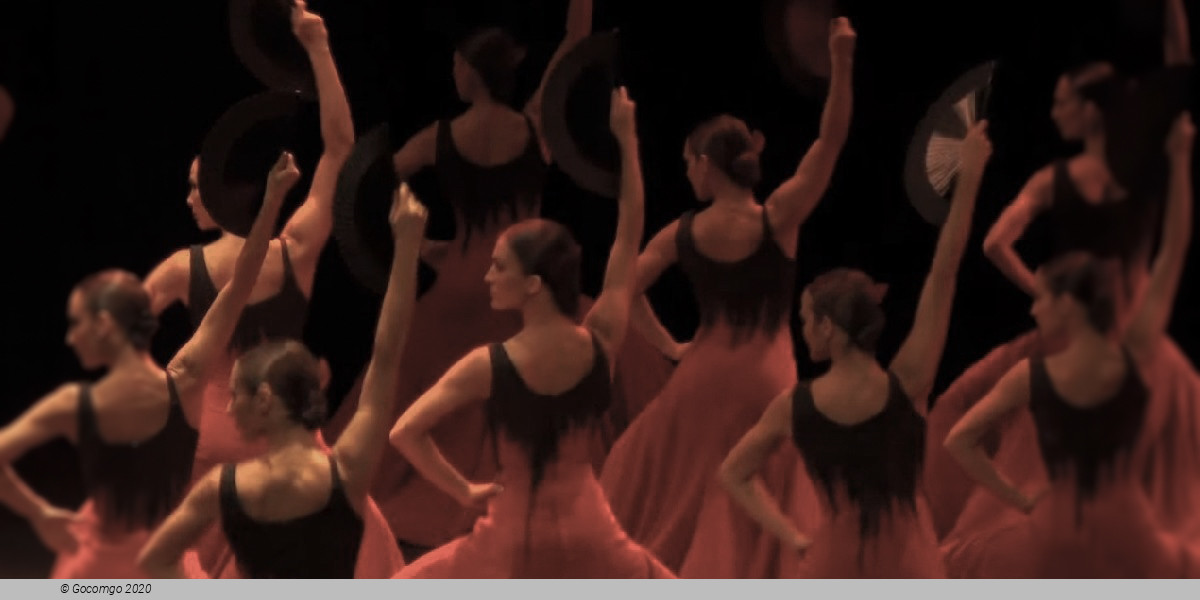
Virtually all ballet companies see this happen and consequently revive the venerated canonical works or audience favourites. The Polish National Ballet also tries to follow that principle in its programming decisions. This season see the return of La Bayadère after Marius Petipa as well as Bolero+, a triple bill of Krzysztof Pastor’s choreographies: his admired Moving Rooms and Bolero and a new work, Kilar Concerto, that builds up on his earlier choreographic works set to fragments of Wojciech Kilar’s Piano Concerto.

Pastor created the expressive Moving Rooms in 2008 for the Dutch National Ballet. Danced to the exquisite Harpsichord Concerto by Henryk Mikołaj Górecki, which is preceded by a fragment of Alfred Schnittke’s Concerto Grosso No. 1, the choreography is set in a crealy-drawn space that is constantly transformed by changing light. The ballet became an instant hit in Amsterdam and was subsequently performed by the company in Russia and China. It was also one of the first foreign-made pieces staged by Krzysztof Pastor with the Polish National Ballet, becoming a staple of the company’s repertoire. To date, it has been successfully presented on both stages at the Teatr Wielki in Warsaw, other Polish theatres, as well as in New York, Washington, Houston, the Czech Republic, Finland, and twice in Lithuania.

Thoroughly enjoyed by dancers, it enables them to showcase their technique, yet leaves room for individual expression and letting their personality shine through during the performance. As it proceeds, the ballet elicits growing emotion from the audience, eventually bringing them to their feet and ending with a long ovation.

In his choreographic work, Krzysztof Pastor likes to choose clear musical forms, which he portrays through the use of neoclassical, highly expressive dance language, inspired by his Dutch masters. His seemingly abstract ballets convey a plethora of moods, subtexts, relationships and emotions. He does not only fill the stage with dance but offers an original interpretation of the score. A good point in case is Wojciech Kilar’s Piano Concerto No. 1. The choreographer took a particular liking to the piece a few years back and subsequently used it in three of his works, bringing us choreographic settings of the Prelude and Toccata and including fragments of the Concerto in his the full-length ballet Dracula. As he had not worked with the Corale before, Pastor decided to mark the composer’s tenth death anniversary in 2023 with a ballet setting of the Concerto as a whole.

The Polish National Opera’s first all-Pastor triple bill culminates in the choreographer’s stunning take on Ravel’s Bolero. Created in 2012 for the Dutch National Ballet, the work premiered on our stage four years later. It is also danced by the national ballet companies of Lithuania and Estonia. In 2023 it becomes a part of the repertoire of the Ballet of the Teatro dell’Opera di Roma.  

Bolero+ celebrates the 15th anniversary of the establishment of the Polish National Ballet in its current organisational and artistic formula. The jubilee is a moment of great satisfaction for all of us on both sides of the footlight.

History
Premiere of this production: 22 November 1928, Paris Opéra

Boléro is a one-movement orchestral piece by the French composer Maurice Ravel (1875–1937). Originally composed as a ballet commissioned by Russian actress and dancer Ida Rubinstein, the piece, which premiered in 1928, is Ravel's most famous musical composition.

Venue Info

Warsaw Grand Theatre - Polish National Opera (Teatr Wielki) - Warsaw
Location   plac Teatralny 1

The Grand Theatre in Warsaw is a theatre and opera complex situated on the historic Theatre Square in central Warsaw. The Warsaw Grand Theatre is home to the Polish National Ballet and is one of the largest theatrical venues in the world.

The Theatre was built on Theatre Square between 1825 and 1833, replacing the former building of Marywil, from Polish classicist designs by the Italian architect Antonio Corazzi of Livorno, to provide a new performance venue for existing opera, ballet and drama companies active in Warsaw. The building was remodeled several times and, in the period of Poland's political eclipse from 1795 to 1918, it performed an important cultural and political role in producing many works by Polish composers and choreographers.

It was in the new theatre that Stanisław Moniuszko's two best-known operas received their premieres: the complete version of Halka (1858), and The Haunted Manor (1865). After Frédéric Chopin, Moniuszko was the greatest figure in 19th-century Polish music, for in addition to producing his own works, he was director of the Warsaw Opera from 1858 until his death in 1872.

While director of the Grand Theatre, Moniuszko composed The Countess, Verbum Nobile, The Haunted Manor and Paria, and many songs that make up 12 Polish Songbooks.

Also, under Moniuszko's direction, the wooden Summer Theatre was built close by in the Saxon Garden. Summer performances were given annually, from the repertories of the Grand and Variety (Rozmaitości) theatres. Józef Szczublewski writes that during this time, even though the country had been partitioned out of political existence by its neighbors, the theatre flourished: "the ballet roused the admiration of foreign visitors; there was no equal troupe of comedians to be found between Warsaw and Paris, and Modrzejewska was an inspiration to drama."

The theatre presented operas by Władysław Żeleński, Ignacy Jan Paderewski, Karol Szymanowski and other Polish composers, as well as ballet productions designed by such choreographers as Roman Turczynowicz, Piotr Zajlich and Feliks Parnell. At the same time, the repertoire included major world opera and ballet classics, performed by the most prominent Polish and foreign singers and dancers. It was also here that the Italian choreographer Virgilius Calori produced Pan Twardowski (1874), which (in the musical arrangement first of Adolf Sonnenfeld and then of Ludomir Różycki) has for years been part of the ballet company's repertoire.

During the 1939 battle of Warsaw, the Grand Theatre was bombed and almost completely destroyed, with only the classical façade surviving. During the Warsaw Uprising of 1944 the Germans shot civilians in the burnt-out ruins. The plaque to the right of the main entrance commemorates the suffering and heroism of the victims of fascism.

Important Info
Type: Modern Ballet
City: Warsaw, Poland

E-tickets: Print at home or at the box office of the event if so specified. You will find more information in your booking confirmation email.

You can only select the category, and not the exact seats.
If you order 2 or 3 tickets: your seats will be next to each other.
If you order 4 or more tickets: your seats will be next to each other, or, if this is not possible, we will provide a combination of groups of seats (at least in pairs, for example 2+2 or 2+3).

Top of page